

Support us by contributing to StratNewsGlobal on the following UPI ID
ultramodern@hdfcbank

Strategic affairs is our game, South Asia and beyond our playground. Put together by an experienced team led by Nitin A. Gokhale. Our focus is on strategic affairs, foreign policy and international relations, with higher quality reportage, analysis and commentary with new tie-ups across the South Asian region.
You can support our endeavours. Visit us at www.stratnewsglobal.com and follow us on YouTube, Twitter, Facebook and Instagram.
र 500 per month
र 1000 per month
र 5000 per year
र 10000 per year
Donate an amount of your choice
र 500 per month
Donate र 500 per month

र 1000 per month
Donate र 1000 per month
र 5000 per year
Donate र 5,000 per year
र 10000 per year
Donate र 10,000 per year
Donate an amount of your choice
Donate an amount of your choice
TikTok US Valued At $14 Billion As Trump Pushes Sale Plan
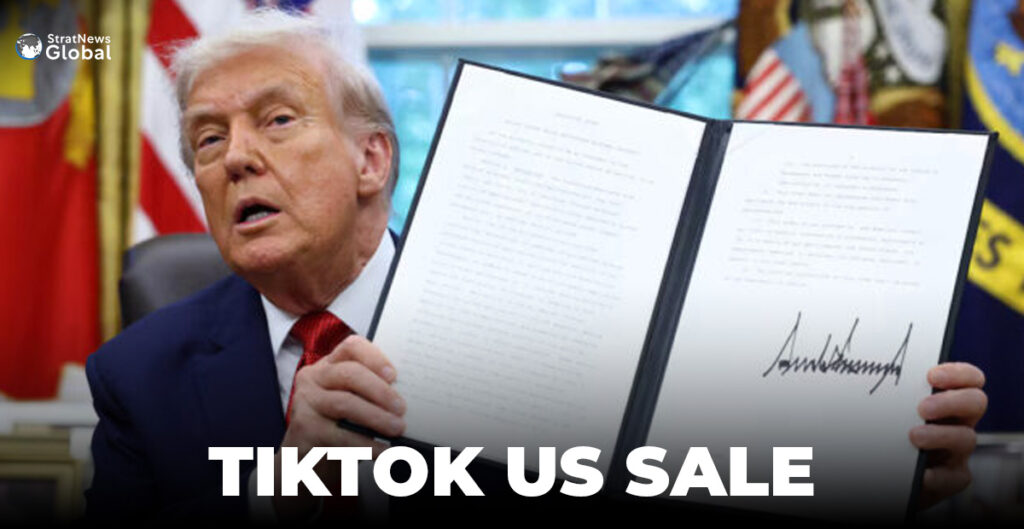
On Thursday, President Donald Trump signed an executive order affirming that his plan to sell Chinese-owned TikTok’s US operations to American and global investors will meet the national security requirements set out in the 2024 law.
The new US company will be valued at around $14 billion, Vice President JD Vance said, putting a price tag on the popular short video app far below some analyst estimates.
Trump on Thursday delayed until January 20 enforcement of the law that bans the app unless its Chinese owners sell it amid efforts to extract TikTok’s US assets from the global platform, line up American and other investors, and win approval from the Chinese government.
Slow Progress, Details Need To Be Fleshed Out
The publication of the executive order shows Trump is making progress on the sale of TikTok’s US assets, but numerous details need to be fleshed out, including how the US entity would use TikTok’s most important asset, its recommendation algorithm.
“There was some resistance on the Chinese side, but the fundamental thing that we wanted to accomplish is that we wanted to keep TikTok operating, but we also wanted to make sure that we protected Americans’ data privacy as required by law,” Vance told reporters at an Oval Office briefing.
Trump’s order says the algorithm will be retrained and monitored by the US company’s security partners, and operation of the algorithm will be under the control of the new joint venture.
Trump said Chinese President Xi Jinping had indicated approval of the plans. “I spoke with President Xi,” Trump said. “We had a good talk, I told him what we were doing and he said go ahead with it.”
The Chinese embassy in Washington did not immediately respond to a request for comment. TikTok did not immediately comment on Trump’s action.
Investors Named
Trump has credited TikTok, which has 170 million US users, with helping him win reelection last year. Trump has 15 million followers on his personal TikTok account. The White House also launched an official TikTok account last month.
“This is going to be American-operated all the way,” Trump said.
He said that Michael Dell, the founder, chairman and CEO of Dell Technologies; Rupert Murdoch, the chairman emeritus of Fox News owner Fox Corp and newspaper publisher News Corp, and “probably four or five absolutely world-class investors” would be part of the deal.
The White House did not discuss how it came up with the $14 billion valuation.
TikTok’s Chinese parent, ByteDance, currently values itself at more than $330 billion, according to its new employee share buyback plan. TikTok contributes a small percentage of the company’s total revenue.
According to Wedbush Securities analyst Dan Ives, TikTok was estimated to be worth $30 billion to $40 billion without the algorithm as of April 2025.
Alan Rozenshtein, a professor at the University of Minnesota Law School, said the executive order left unanswered questions, including whether ByteDance would still control the algorithm.
“The problem is that the president has certified the deal, but he has not provided a lot of information on the algorithm,” he said.
Chinese media on Friday also painted a different picture of the TikTok agreement, suggesting ByteDance would continue to play a major or operational role.
ByteDance will set up a new US company as part of the restructuring of TikTok’s US operations, Chinese media outlet LatePost reported, citing sources.
The new company to be set up by ByteDance will be responsible for e-commerce, branding operations and interconnection with international operations, the report said.
The report also said the joint venture, as described by the White House and valued at $14 billion, would be responsible for US digital security, safeguarding content and software as well as related local businesses.
Another Chinese financial magazine, Caixin, also reported, citing people close to the deal, that ByteDance planned to set up a TikTok US entity that will receive some revenue from the new TikTok joint venture.
The White House and ByteDance did not immediately respond to a request for comment.
Oracle And Others To Own TikTok In The US
A group of three investors, including Oracle and private-equity firm Silver Lake, will take a roughly 50% stake in TikTok US, two sources familiar with the deal said on Thursday.
A group of existing shareholders in ByteDance will hold a roughly 30% stake, one of the sources said. Among ByteDance’s current investors are Susquehanna International Group, General Atlantic and KKR.
Given intense investor interest in TikTok, the 50% stake may still shift, the source noted.
Oracle and Silver Lake did not immediately respond to requests for comment.
CNBC reported earlier, citing sources, that Abu Dhabi-based MGX, Oracle and Silver Lake are poised to be the main investors in TikTok US with a combined 45% ownership.
MGX did not immediately respond to a Reuters request for comment on the CNBC report.
Republican House of Representatives lawmakers said they wanted to see more details of the deal to ensure it represented a clean break with China. “As the details are finalized, we must ensure this deal protects American users from the influence and surveillance of CCP-aligned groups,” said US Representatives Brett Guthrie, Gus Bilirakis and Richard Hudson.
The agreement on TikTok’s US operations includes the appointment by ByteDance of one of seven board members for the new entity, with Americans holding the other six seats, a senior White House official said on Saturday.
ByteDance would hold less than 20% in TikTok US to comply with requirements set out in the 2024 law that ordered it shut down by January 2025 if ByteDance did not sell its US assets.
(With inputs from Reuters)
Trump Slaps Fresh Tariffs On Drugs, Trucks, Furniture
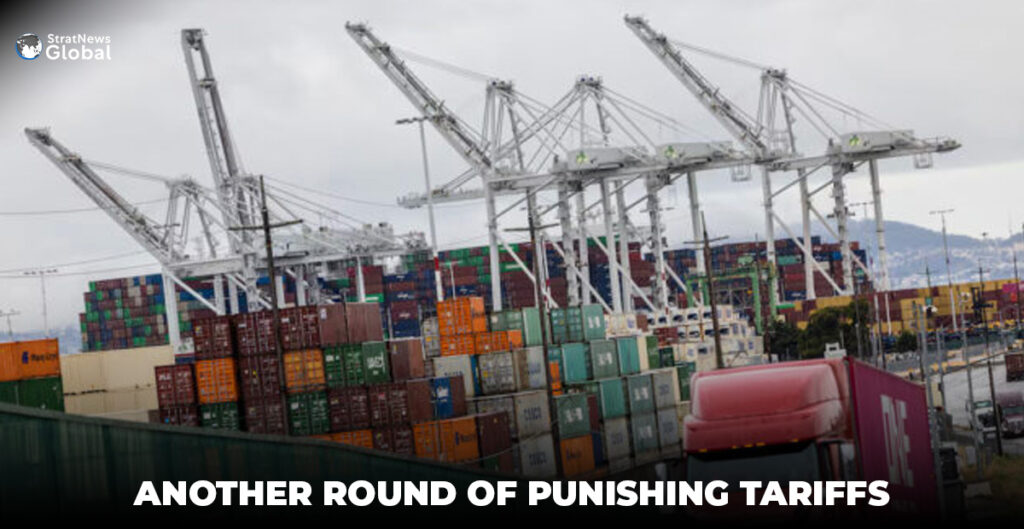
On Thursday, President Donald Trump announced a new wave of steep tariffs on a wide range of imported goods, including a 100% duty on branded pharmaceuticals and a 25% tariff on heavy-duty trucks, set to take effect next week.
Tariffs have been a feature of Trump’s second term, with sweeping duties on trading partners ranging from 10% to 50% and other targeted levies on a wide variety of products, casting a shadow over the global economic outlook and paralyzing business decision-making.
The announcements, made on Truth Social, did not include details about whether the new levies would apply on top of national tariffs or whether economies with trade deals such as the European Union and Japan would be exempted. Tokyo said it was still analyzing the potential impact of the new measures.
Trump also said he would start charging a 50% tariff on kitchen cabinets and bathroom vanities and a 30% tariff on upholstered furniture, with all the new duties to take effect from October 1.
“The reason for this is the large scale “FLOODING” of these products into the United States by other outside Countries,” Trump said on Truth Social of the tariffs on household goods.
Stocks Hit
Stocks of pharmaceutical companies across Asia sank as investors reacted to the news, with Australia’s CSL hitting a six-year low, Japan’s Sumitomo Pharma tumbling more than 5% and Hong Kong’s Hang Seng Biotech Index down about 2.5%.
An index tracking Chinese-listed furniture makers also dropped 1.1%.
The new actions are seen as part of the Trump administration’s shift to better-established legal authorities for its tariff actions, given the risks associated with a case before the Supreme Court on the legality of his sweeping global tariffs.
The new 100% tariff on any branded or patented pharmaceutical product will apply to all imports unless the company has already broken ground on building a manufacturing plant in the United States, Trump said.
The Pharmaceutical Research and Manufacturers of America, an industry group, said companies “continue to announce hundreds of billions in new US investments. Tariffs risk those plans”.
The Trump administration has opened a dozen probes into the national security ramifications of imports of wind turbines, airplanes, semiconductors, polysilicon, copper, timber and lumber and critical minerals to form the basis of new tariffs.
Trump this week announced new probes into personal protective equipment, medical items, robotics and industrial machinery.
Foreign Policy Tool
Trump has made the levies a key foreign policy tool, using them to renegotiate trade deals, extract concessions and exert political pressure on other countries. His administration has touted tariffs as a significant revenue source, with Treasury Secretary Scott Bessent saying Washington could collect $300 billion by the end of the year.
Trump previously imposed national security tariffs on steel and aluminum and derivatives, light-duty autos and parts, and copper.
The Trump administration’s trade deals with Japan, the EU, and the United Kingdom include provisions that cap tariffs for specific products, suggesting the new higher national security tariffs likely won’t raise it above agreed rates.
Japan is assessing how the new measures relate to its deal, the country’s chief trade negotiator Ryosei Akazawa told a press conference on Friday.
He stressed, however, that tariffs imposed on Japanese drugs would not be higher than those from other countries as Tokyo had secured most-favoured nation status on those items and others.
The US pharmaceutical trade group said earlier this year that 53% by value of the $85.6 billion in ingredients used in medicines consumed in the United States was manufactured in the US with the remainder from Europe and other US allies.
When it comes to furniture, imports to the United States hit $25.5 billion in 2024, up 7% from the year prior. About 60% of those imports came from Vietnam and China, according to Furniture Today, a trade publication.
Trump in August had promised to impose new furniture tariffs, saying it “will bring the Furniture Business back” to North Carolina, South Carolina and Michigan.
Furniture and wood products manufacturing employment in the US has halved since 2000 to around 340,000 today, according to government statistics.
Inflation Pressure
Higher tariffs on commercial vehicles could put pressure on transportation costs just as Trump has vowed to reduce inflation, especially on consumer goods such as groceries.
Trump said the new heavy-duty truck tariffs were to protect manufacturers from “unfair outside competition” and said the move would benefit companies such as Paccar-owned Peterbilt and Kenworth and Daimler Truck-owned Freightliner.
The US Chamber of Commerce earlier urged the department not to impose new truck tariffs, noting the top five import sources are Mexico, Canada, Japan, Germany, and Finland “all of which are allies or close partners of the United States posing no threat to US national security.”
Mexico is the largest exporter of medium- and heavy-duty trucks to the United States. A study released in January said imports of those larger vehicles from Mexico have tripled since 2019.
Mexico has opposed new tariffs, telling the Commerce Department in May that all Mexican trucks exported to the United States have on average 50% US content, including diesel engines.
Chrysler-parent Stellantis is among companies that produces heavy-duty Ram trucks and commercial vans in Mexico.
Last year, the United States imported almost $128 billion in heavy vehicle parts from Mexico, accounting for approximately 28% of total US imports in the category, Mexico said.
(With inputs from Reuters)
US-Turkiye Ties Warm As Trump Mulls Lifting F-35 Sanctions
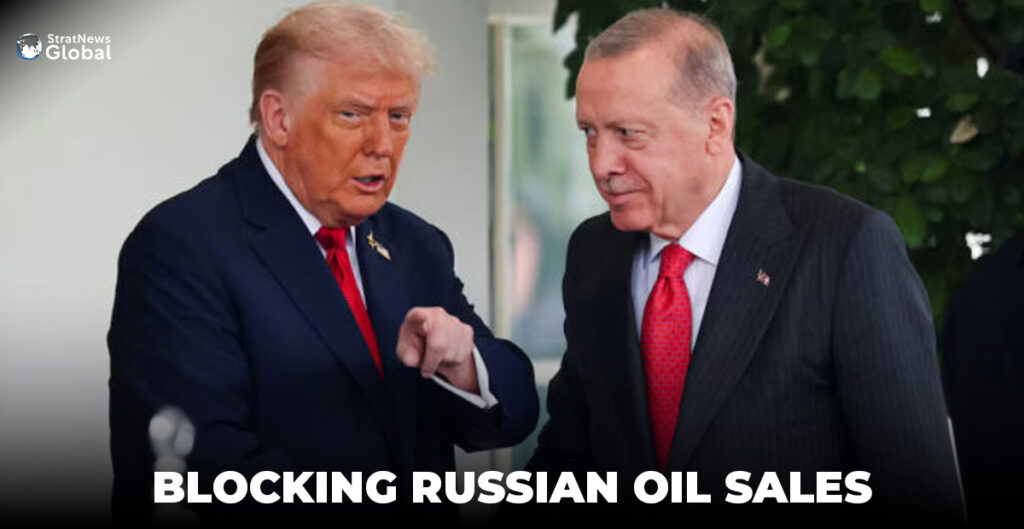
On Thursday, President Donald Trump expressed confidence that Turkiye would agree to his request to halt Russian oil purchases, adding that he may consider lifting US sanctions on Ankara to facilitate its purchase of advanced American F-35 fighter jets.
Trump told reporters after his two hours of talks with Turkiye’s President Tayyip Erdogan that their meeting was “very conclusive” on a variety of issues but offered no further details about an announcement he said would be made later.
Trump has been pressing European nations to stop purchases of Russian oil in exchange for his agreement to impose tough sanctions on Moscow to try to dry up funding for Russia’s invasion of Ukraine.
Frustrated by Russia’s refusal to halt the fighting, Trump this week in a major shift said it was possible Ukraine could reclaim all the territory it has lost to Russia.
‘I Believe He Will Stop It’
Asked if Turkiye will stop purchasing Russian oil, Trump sounded confident.
“I believe he will stop it, yeah. You know why? Because he can buy it from a lot of other people,” Trump said of Erdogan.
Two other European nations, Hungary and Slovakia, also buy Russian oil. Trump seemed to give them a pass, saying they have limited ability to get energy elsewhere.
Ankara Hoping For Closer US Ties Under Trump
Erdogan came to the White House for his first visit in about six years seeking Trump’s approval to lift US sanctions to allow for purchases of F-35 fighters.
Seated side by side in the Oval Office, Trump called Erdogan a “very tough man” and said they remained friends while his predecessor Joe Biden was in office. Biden kept Turkiye at arm’s length partly over what he saw as the fellow NATO member’s close ties with Russia.
Ankara is keen to leverage the friendly personal relationship with Trump to further national interests and take advantage of a US administration eager to make deals in return for big-ticket arms and trade agreements.
When Trump and Erdogan took questions from reporters during their meeting, Trump sounded willing to make a deal to sell the F-35s.
“I think he’ll be successful in buying the things that he wants to buy,” Trump said. Trump also said he could lift sanctions against Turkiye “very soon,” and that “if we have a good meeting, almost immediately.”
Trump and Erdogan – both seen as increasingly autocratic by their critics at home – had a checkered relationship during the Republican president’s first term. But since Trump’s return to the White House, their interests have aligned on Syria – the source of the biggest bilateral strain in the past – where the US and Turkiye now both strongly back the central government.
US Sanctions Block F-35 Sales
A warming trend in ties has renewed Turkish hopes that Trump and Erdogan, who have exchanged mutual praise, can find a way around US sanctions imposed by Trump himself in 2020 over Turkiye’s acquisition of Russian S-400 missile defences.
That, in turn, could pave the way for Ankara to buy Lockheed Martin’s advanced F-35 fighter jets, for which it was both a buyer and manufacturer until it was barred over the S-400s.
Erdogan had said the defense industry, including the topic of F-35s and ongoing negotiations over 40 F-16 jets Ankara also wants, would be a focus of the meeting, along with regional wars, energy and trade.
Turkiye, NATO’s second-largest army, wants to ramp up air power to counter what it sees as growing threats in the Middle East, Eastern Mediterranean and the Black Sea, where it neighbours Russia and Ukraine.
(With inputs from Reuters)
Development Aid Shrinks As Donors Feel Budget, Geopolitical Pinch
The economic and financial situation in the world is a lot more difficult for a lot of countries, which means the world’s big donor states when it comes to development assistance, will have less to give away either as loans or grants.
That’s the word coming out of Europe, which in 2023 provided 95 billion Euro in official development assistance directed at poverty alleviation, sustainable development, clean and renewable energy and so on.
That makes Europe the world’s larges donor of development aid. It has set a target of spending 0.7% of its gross national income as development assistance by 2030, but politics has an ugly way of catching up.
“Public finances in the G7 are under pressure,” Stratnewsglobal was told by a cross-section of diplomats, officials and development experts in Paris. “The budgetary situation is tight with public debt rising and this is happening at a time when money is required for the green transition.”
France, which takes over the presidency of the G7 from Canada at the summit next year, is hoping to build coalitions that will reform the current system of international development. The idea is find innovative new ways to fund development by tapping private capital.
It flows from French President Emmanuel Macron’s push for international partnerships in resolving some of the key issues of our time: climate change, gender equality and health. But he faces an uphill climb.
Diplomats in Europe point to the “brutalisation of international relations”, and more confrontation between countries and groups as one of the reasons. But they also admit that the “unprecedented changes posed by big powers to the principles of international relations,” is the biggest challenge.
“Persuading the current US administration is a huge task since the US has pulled out of international development financing. For the US it is ‘America First’,” a diplomat noted.
Witness the Trump administration shutting down the activities of agencies such as USAID. Add to that the refusal to give any leeway to poorer countries, forcing unfair trade terms on them and demanding they hand over their natural resources while giving nothing or little in return.
“Principles are being challenged in the G7 also,” he said ad ding that, “there is a rethinking process now to keep the US on board while ensuring that policies help the donor and the receiver. Our internal thinking is that development policy not only benefits receiving countries, but also donors.”
Europe is also up against the North-South divide, although the view is the dynamics of this discussion can be changed by building new non-traditional coalitions. Here it is important to avoid any situation resulting in US vs the rest.
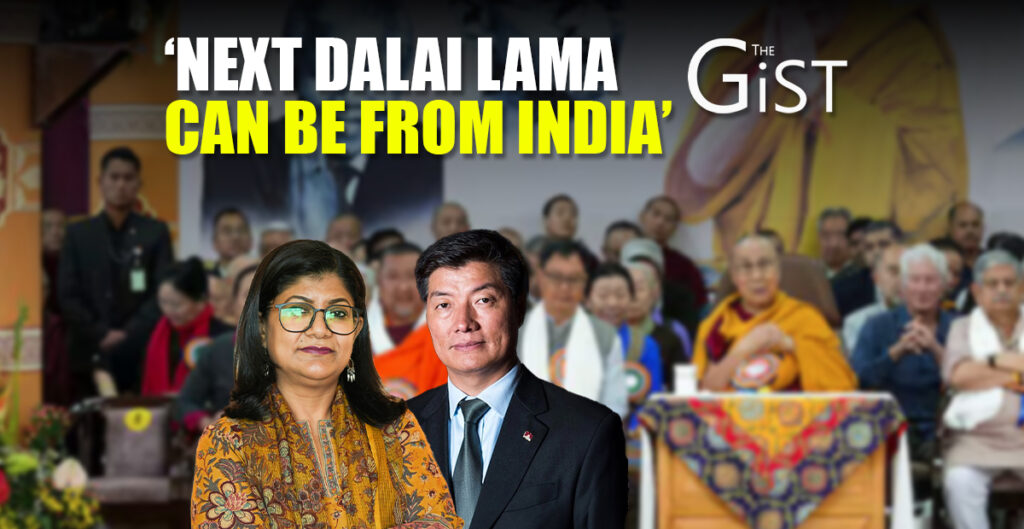
China’s Claim To Decide Dalai Lama’s Successor Is Fake: Lobsang Sangay
Tibetan Buddhists around the world have urged China to not to get itself involved in the reincarnation process of the Dalai Lama, because the Beijing’s choice will be considered “fake”, said Lobsang Sangay, former President of the Tibetan Government-in-Exile in India, also known as the Central Tibetan Administration (CTA).
Speaking exclusively to StratNewsGlobal during his recent visit to India, Sangay said, as New Delhi has resumed dialogue with China, it should tell Beijing “don’t interfere in the reincarnation process. It is for the Dalai Lama to decide and that he has decided that he will not be born inside China. He will be born in free world…
“They (China) don’t believe in religion. The Communist Party says religion is poison and they have vilified and criticized His Holiness throughout his life. It’s none of their business,” said Sangay, now Senior Visiting Fellow at Harvard Law School.
Post the 2020 border standoff in eastern Ladakh between India and China, which also saw the deadly Galwan clash, both countries are once again taking steps to normalize stressed ties. Prime Minister Narendra Modi and Chinese President Xi Jinping have held two bilateral meetings in less than a year even as the two countries are seeking to work out an “early harvest” on the boundary delimitation.
“China has no right, no legitimacy in interfering in the process of reincarnation. It is for Tibetans to decide, and we will decide, we will choose the next Dalai Lama,” he added.
Being considered a Living Buddha in Tibetan Buddhism, the Dalai Lama is chosen by the process of reincarnation.
China, which calls the Dalai Lama a “separatist”, has said it has the sole authority to select the 14th Dalai Lama’s successor. China has said it will follow the ancient Qing Dynasty tradition of selecting the Dalai Lama through the golden urn system of drawing lots, which will then be approved by the government in Beijing.
Next Dalai Lama In India?
Marking his 90th birthday this July in Dharamshala, the Dalai Lama said the institution will continue after him, recognition of his reincarnation will be decided by the Gaden Phodrang Trust only. He has also said that his successor will be born in the “free world”.
“China is not part of the free world. North Korea is not part of the free world. So that has made it very clear. And then, yes, it (the next Dalai Lama) could be in India as well,” Sangay said.
He also said if such a scenario arises where there will be two Dalai Lamas, one elected by China and the other outside of that country, then the one Beijing selects will be considered “fake” by Tibetan Buddhists around the world.
On the issue of India-China rapprochement, the Tibetan politician said Beijing will not stop needling New Delhi with repeated border incursions.
“China’s strategy has always been two steps forward, one step backwards. So the border incursion is very real. Chinese troops are moving into the border areas of India for 60 plus years and they will continue to do so,” he warned.
“I’ve always said this that Tibet is a palm. They will come up for the five fingers – Ladakh, Nepal, Bhutan, Sikkim, Arunachal Pradesh. They will keep coming after five fingers because anyone who controls the Himalaya, China says, will dominate South Asia or India. So that’s their plan. They will keep coming after you and then they will say we must have mutual respect and we must build our relationship.”
White House Requests Contingency Plans For Mass Layoffs Amid Government Shutdown Threat
On Wednesday, the White House instructed federal agencies to prepare strategies for large-scale employee dismissals in the event of a government shutdown next week. The move signals a break from previous shutdowns, when workers were generally placed on temporary furlough.
The White House’s Office of Management and Budget (OMB) sent the memo to federal agencies and asked them to identify programs, projects and activities where discretionary funding will lapse on October 1 if the U.S. Congress does not pass legislation to keep the federal government open.
“Programs that did not benefit from an infusion of mandatory appropriations will bear the brunt of a shutdown,” the OMB said in the memo, which the White House provided.
It was not clear whether the White House was trying to take advantage of a possible shutdown to advance President Donald Trump’s push to slash the federal workforce, or whether it was a negotiating tactic to force Democrats to agree to pass the Republicans’ funding legislation.
“This is an attempt at intimidation,” Senate Democratic leader Chuck Schumer said in a statement late Wednesday. “Donald Trump has been firing federal workers since Day One – not to govern, but to scare.”
He predicted any firings will be overturned in court, as others have been.
Agencies were told to submit their proposed reduction-in-force plans to the OMB and to issue notices to employees.
The OMB memo was earlier reported by Politico.
Trump Cancelled Meeting With Democrats
Trump on Tuesday scrapped a meeting with top congressional Democratic leaders to discuss government funding, raising the risk of a partial government shutdown next week. Republicans and Democrats have blamed each other for the impasse.
Upon taking office in January, Trump launched a campaign to downsize the 2.4 million-member federal civilian workforce, which he says is bloated and inefficient.
Roughly 300,000 federal civilian workers will have left their jobs by the end of 2025, Office of Personnel Management Director Scott Kupor said in August.
About 154,000 of those employees accepted a buyout and are slated to drop off the U.S. government’s payroll on September 30, the last day of the federal government’s fiscal year. That date is also the deadline for Trump and Congress to reach an agreement on federal spending to avert a shutdown.
(With inputs from Reuters)
Chinese Drone Experts Collaborated With Sanctioned Russian Arms Firm: Sources
Chinese drone experts travelled to Russia to assist with military drone development at a state-owned, Western-sanctioned weapons manufacturer, according to two European security officials and Reuters documents.
The Chinese experts have visited arms maker IEMZ Kupol on more than half a dozen occasions since the second quarter of last year. During that time, Kupol also received shipments of Chinese-made attack and surveillance drones via a Russian intermediary, according to the documents and two officials.
In September last year, Reuters documented that Kupol had developed a new drone, the Garpiya-3, in China with the help of local specialists. Now the news agency is the first to report specific details of the extensive involvement of Chinese experts in tests and technological work on military-use drones inside Russia.
The officials, who asked that neither they nor their organisation be identified due to the sensitivity of the information, said the collaboration suggested a deepening relationship between Kupol and Chinese companies in developing drones, which have proven to be critically important to Russia’s war in Ukraine.
China’s foreign ministry said it was unaware of the collaboration.
“China has always maintained an objective and fair position on the question of the Ukraine crisis, never providing lethal weapons to any party in the conflict and strictly controlling dual-use items, including drone exports,” the ministry said in a statement.
The Kremlin, the Russian defence ministry, and IEMZ Kupol did not respond to requests for comment.
The documents, including business invoices and bank statements, showed that Kupol received more than a dozen one-way attack drones last year, produced by Sichuan AEE, a Chinese drone maker.
The drones were supplied by Russian defence procurement company TSK Vektor, which is under U.S. and EU sanctions, according to the officials and documents. TSK Vektor and Sichuan AEE did not respond to requests for comment.
The U.S. and European governments have repeatedly expressed concern at Chinese companies supplying Russian arms makers, and have imposed sanctions on some of them.
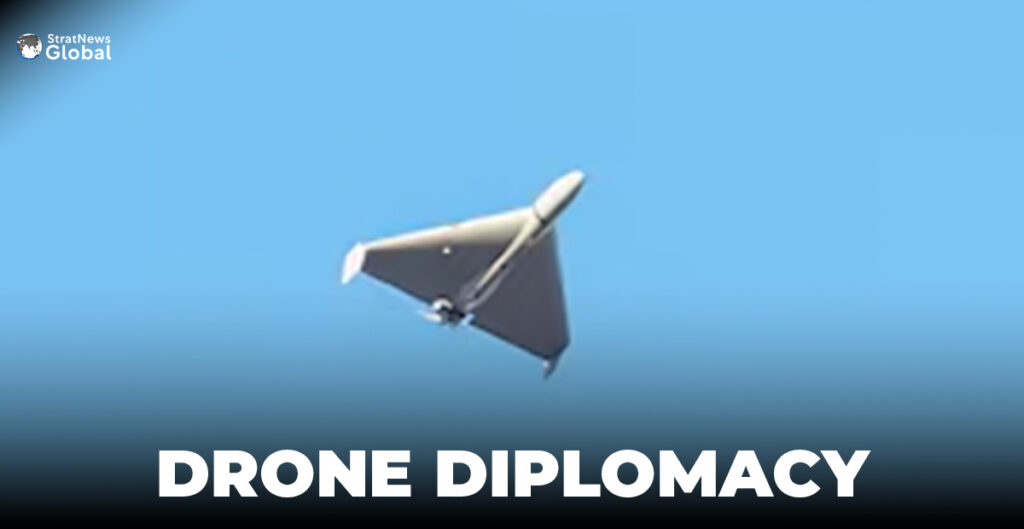
Reuters reported in July that Kupol was producing thousands of Garpiya one-way attack drones using Chinese parts, including engines. Garpiyas – which are modelled on Iran’s Shahed drone – can fly hundreds of miles to pre-programmed targets before diving out of the sky and exploding on impact. Kyiv has said around 500 are being used each month in Ukraine.
The two European officials said the shipments of small numbers of Chinese attack drones and the presence of Chinese experts could indicate Kupol’s interest in expanding production to new drone models.
Reuters was unable to confirm independently the reason behind the drone shipments, nor the exact nature of the work carried out by the Chinese experts.
Samuel Bendett, an adjunct senior fellow at the Centre for a New American Security, a Washington-based think tank, said China had become a vital part of Russia’s military supply chain.
“There is just such an enormous role and influence and impact of Chinese components in Russian military systems…especially in aerial drones,” Bendett said.
Deliveries Of Chinese Attack Drones
A letter from TSK Vektor to Kupol, reviewed by Reuters, showed that in the second quarter of 2024, the procurement company billed the weapons manufacturer for more than half a dozen drones produced by AEE. The European sources requested that specifics of the letter, as well as the other documents shown to Reuters, be withheld, including their dates.
An AEE corporate document detailing shipments to TSK Vektor, seen by Reuters, confirmed the delivery of the A140 and A900 one-way attack drones. It also listed more than half a dozen other drones – the A60, A100 and A200 – due for delivery.
Kupol reports seen by Reuters describe flight tests of the A60, A100 and A200 drones at the Chebarkul military test site in Russia’s Chelyabinsk region in the last quarter of 2024.
A group of Chinese experts visited Kupol’s facilities in the city of Izhevsk to assemble the drones and train Kupol staff to use them, a Kupol document said. The experts then visited Chebarkul, it added. Airline bookings seen by Reuters showed the Chinese experts were due to fly out of Chelyabinsk the day after the tests.
The letter and flight reports described the Chinese experts as employees of TSK Vektor, the Russian procurement company. However, the European officials said they assessed that the individuals were AEE staff.
They cited AEE’s response to feedback from the test flights of the A200 drones, reviewed by Reuters, which said it was drawing on information from AEE technicians.
Subsequently, AEE billed TSK Vektor more than 5 million yuan ($700,000) for several A200s fitted with anti-jamming equipment as well as other goods in the second quarter of 2025, according to an invoice and an account statement reviewed by Reuters.
Second Chinese Company Supplied Drones
In another Kupol link to a Chinese drone manufacturer, a flight test report approved by the Russian weapons manufacturer and TSK Vektor assessed the performance of an HW52V drone – made by Chinese firm Hunan Haotianyi – in the third quarter last year.
The HW52V is a vertical take-off and landing (VTOL) drone that can be used militarily for intelligence, surveillance and reconnaissance, and as a strike drone, the European security officials said.
Air tickets seen by Reuters showed that Liu Mingxing, the CEO of Hunan Haotyanyi, and Artem Vysotksy, head of TSK Vektor’s drone department, flew out of the Irkutsk airport in Siberia in adjacent seats in June following the last day of an event where the company’s drones were displayed.
Hunan Haotyanyi and TSK Vektor did not respond to requests for comment. Reuters was unable to reach the executives.
A separate Kupol document from the third quarter last year described a visit to its facilities by Chinese citizens, including engineers and technical staff, described as TSK Vektor employees.
The European security officials said they assessed that the Chinese citizens were staff of Hunan Haotianyi because several of the experts who visited Kupol on that occasion – and on other trips in 2024 and 2025 – had accompanied the Hunan Haotianyi CEO during his visit to Russia. Reuters couldn’t confirm they were Hunan Haotianyi staff.
The purpose of the experts’ third-quarter visit, the document said, was to adapt a new Chinese flight control computer and a new engine for the Garpiya.
Several other letters between Vektor and Kupol described over half a dozen week-long visits by Chinese and Russian experts in 2024 and 2025. The groups, the letters said, would be conducting work on a flight control computer.
A final letter, which described a visit by Chinese experts from the same group in the third quarter of 2025, said they would also conduct work on a new drone, referred to as the GA-21. The European officials assess that the GA-21 is a version of Iran’s Shahed-107, which can be used for surveillance or as an attack drone.
(With inputs from Reuters)
Germany: Defence Startup Helsing Unveils Autonomous ‘Europa’ Combat Drone
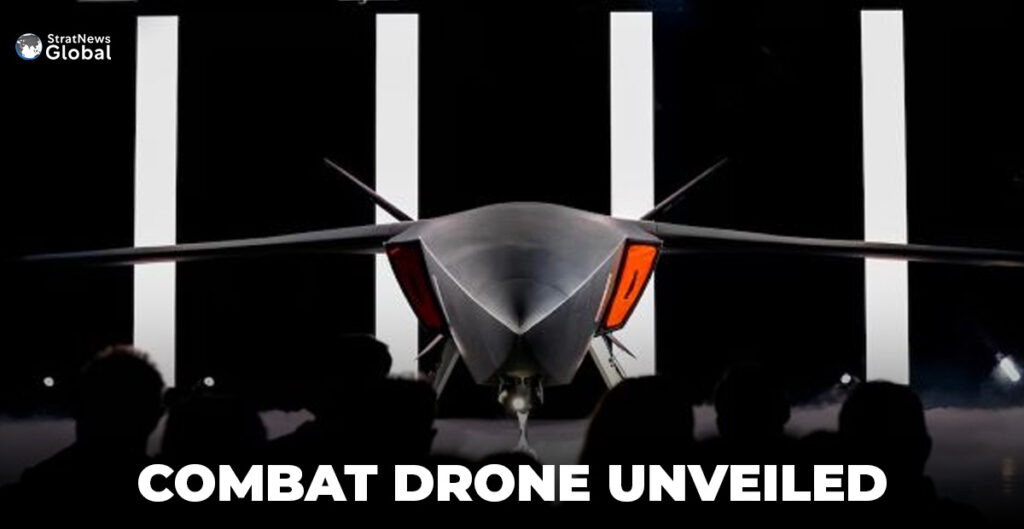
On Thursday, German defence startup Helsing launched its new autonomous combat drone, marking its entry into the growing competition to develop remote-piloted systems.
The “Europa” drone is designed to operate in coordinated swarms with other drones or work alongside manned aircraft, a capability seen as central to the future of aerial warfare.
Unveiling a full-size model of the angular, V-tailed drone at a factory outside Munich, Helsing said the “CA-1 Europa” would stage a first flight in 2027 and become available for military operations within the following four years.
Helsing is the latest military tech firm to make a pitch to become a primary manufacturer of weapon systems in competition with heavyweight arms companies, reflecting the increasing role of AI and pressing demands for faster development times.
Unmanned Combat Aerial Vehicles
Weighing four tonnes, the CA-1 Europa belongs to a fast-developing category called Unmanned Combat Aerial Vehicles that are cheaper and more dispensable than classic fighters as air forces face harshly contested environments and higher costs.
Helsing said the AI-powered drone would operate alone, in clusters of other uncrewed vehicles or at the direction of advanced fighter jets in a so-called “wingman” formation.
Last year, the U.S. Air Force selected California-based startup Anduril and Reaper drone manufacturer General Atomics to develop the first fleet of “Collaborative Combat Aircraft”, which can perform missions such as jamming or act as decoys.
In June, Airbus presented a lifesize model of its own concept for a drone designed to fly alongside the current generation of jets like the Eurofighter Typhoon.
Helsing said it was planning investments of hundreds of millions of euros in the project, which would involve collaboration with other unspecified European companies.
It declined to say what weapons it would be able to carry or how much it would cost, other than saying it would be a “fraction” of the cost of an ordinary fighter jet.
Founded in 2021, Helsing specialises in AI software and has also pivoted to providing systems for smaller strike drones for Ukraine in the wake of Russia’s 2022 full-scale invasion.
(With inputs from Reuters)
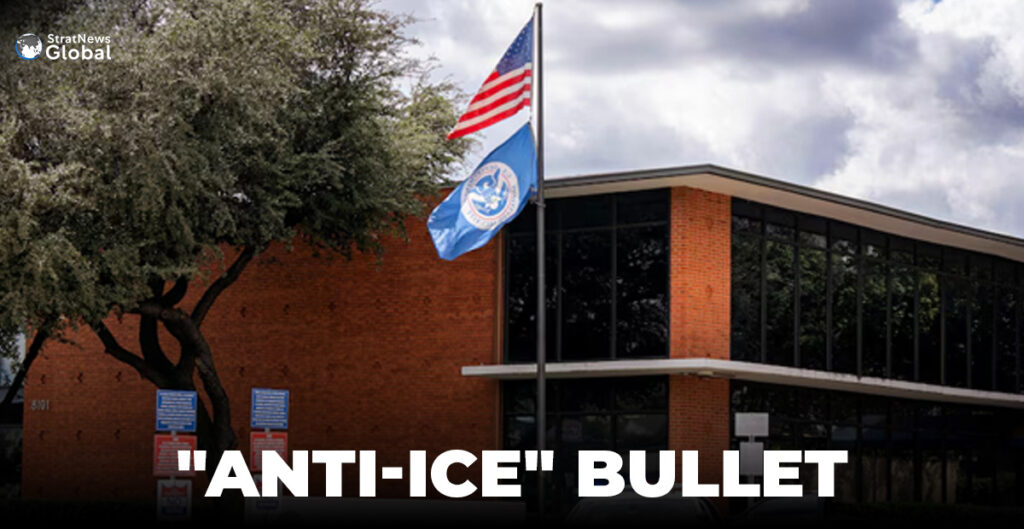
Gunman Marked Bullet ‘ANTI-ICE’ Before Deadly Dallas ICE Shooting
A gunman, marking an unused bullet “ANTI-ICE,” opened fire from a nearby rooftop on a Dallas ICE field office on Wednesday, killing a detainee, seriously wounding two others, and then taking his own life, officials said.
U.S. President Donald Trump and members of his administration seized on the attack as the latest instance of what they characterised as an escalation of politically motivated violence incited by the left.
They accused California Governor Gavin Newsom and other Democrats of stirring hate by unfairly vilifying law enforcement and conservative political figures.
FBI Director Kash Patel posted a photo on X showing what he said was the suspect’s unused ammunition. The shell casing of one round was inscribed with “ANTI-ICE.”
“While the investigation is ongoing, an initial review of the evidence shows an ideological motive behind this attack,” Patel wrote. U.S. Homeland Security Secretary Kristi Noem later said in a Fox News interview that the gunman “was targeting ICE,” based on “evidence so far in this case.”
On his Truth Social platform, Trump accused “Radical Left Democrats” of stoking anti-ICE violence by “constantly demonising Law Enforcement, calling for ICE to be demolished, and comparing ICE Officers to Nazis.”
Invoking the recent assassination of conservative political activist Charlie Kirk, Trump said that “radical left terrorists” pose a “grave threat” to law enforcement and “must be stopped.”
Trump said he would sign an executive order this week to “dismantle these domestic terrorism networks.” He offered no evidence to support the notion that “networks,” rather than individuals, were behind recent acts of political violence, or that left-wing perpetrators were any more prevalent than those on the right in recent years.
In a statement about the Texas shooting, the Department of Homeland Security said the suspect fired “indiscriminately” at the ICE facility, including at a van in the building’s secured entryway where the victims were shot. DHS said one detainee was killed and two others were in critical condition.
Officials have not disclosed the identities of the victims.
Noem later appeared on Fox and confirmed media reports that the suspected gunman had been identified as Joshua Jahn, 29. She said he had fired into the building from a nearby rooftop.
Jahn’s older brother, Noah, spoke with a Reuters reporter earlier in the day as Joshua Jahn’s name began circulating online in connection with the shooting.
Noah Jahn, 30, said he was not aware that his brother harboured any negative feelings about ICE.
“I didn’t know he had any political intent at all,” said the older brother, who lives in McKinney, Texas, around 30 miles north of Dallas, as did his sibling.
Shooting Followed Kirk’s Assassination
The shooting in Dallas came two weeks after Kirk, co-founder of the conservative student political group Turning Point USA and a close ally of Trump, was shot dead by a sniper during a speaking event on September 10 in Orem, Utah, fueling fears of a new wave of political violence in the United States.
Kirk’s murder set off a firestorm of political recriminations and deepened concerns among Trump’s critics that the Republican president would use that killing to justify further cracking down on his perceived opponents.
A 22-year-old technical college student from Utah has been charged with murder in the Kirk assassination, though authorities have not suggested a precise motive for the attack.
Trump, Vice President JD Vance and other administration officials have blamed, without proof, liberal organisations for fomenting unrest and inciting violence against the right.
On Monday, Trump signed an executive order declaring the anti-fascist movement antifa a domestic “terrorist organisation” despite the fact that there has been no evidence made public linking antifa to Kirk’s death.
White House adviser Stephen Miller posted a video on X of California Governor Gavin Newsom describing ICE raids by “masked men, jumping out of unmarked cars” with “no due process” and calling such tactics “authoritarian actions by an authoritarian government.”
Above the clip, taken from Newsom’s guest appearance on Tuesday on CBS’s “The Late Show with Stephen Colbert,” Miller wrote: “This language incites violence and terrorism.”
Perpetrators of political violence “feel like they get cover when you have leaders in this country going out there and defending those types of actions,” Noem said on Fox.
At a news briefing earlier on Wednesday, Joseph Rothrock, special agent in charge of the FBI’s Dallas field office, said investigators were treating the pre-dawn attack at the ICE office as an “act of targeted violence.”
The site was an ICE field office where immigration officers conduct short-term processing of recently arrested detainees.
The Trump administration’s aggressive use of ICE agents as part of its crackdown on undocumented immigrants has sparked outcries from Democrats and liberal activists. ICE detention facilities have increasingly become flashpoints of unrest, with heavily armed agents deploying pepper ball guns, tear gas and other chemical agents in clashes with protesters.
An ICE facility in suburban Chicago, where protesters have gathered daily since a Trump administration immigration surge began earlier this month, erected fencing on Monday after several demonstrators, including the mayor of Evanston, Illinois, were injured in a clash with agents last week.
Wednesday’s attack was the third shooting this year in Texas at a DHS facility. A police officer was shot in July at an ICE detention centre in Prairieland, and a Michigan man was shot dead by agents after opening fire on a U.S. Border Patrol station in McAllen in July.
(With inputs from Reuters)
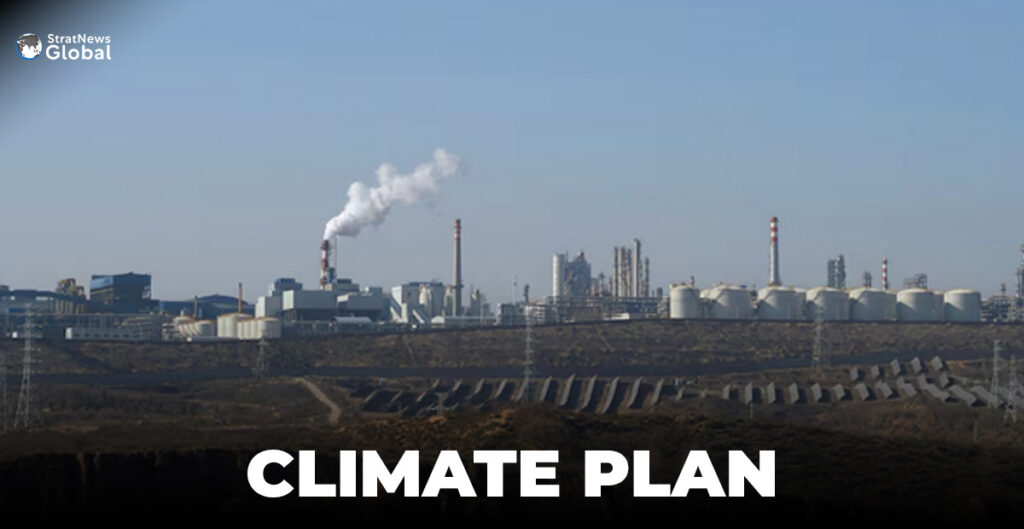
China Takes Lead On New Climate Plans Amid US Denial
China, joined by several nations, unveiled new climate plans on Wednesday while delivering a subtle rebuke of the U.S. president’s anti-climate remarks at the U.N. General Assembly.
Addressing a climate leaders’ summit hosted by U.N. Secretary-General Antonio Guterres, Chinese President Xi Jinping said in a live video message from Beijing that by 2035 his country would cut its greenhouse gas emissions by 7%-10% from its peak.
In addition, Xi said China planned to increase its wind and solar power capacity by six times from its 2020 levels within the next 10 years – helping to boost its share of non-fossil fuels in domestic energy consumption to over 30%.
China’s reduction target marked the first time the world’s biggest emitter pledged a cut in emissions, rather than just limiting their growth, though the reduction was less than many observers had expected.
Xi urged stronger climate action from the world’s developed countries. He referred, though not by name, to the United States for moving away from the goals of the Paris Agreement on climate change.
“Green and low-carbon transformation is the trend of our times. Despite some countries going against the trend, the international community should stay on the right track, maintain unwavering confidence, unwavering action, and undiminished efforts,” Xi said.
On Tuesday, U.S. President Donald Trump used his U.N. General Assembly speech to blast climate change as a “con job”, to call scientists “stupid” and to criticise EU member states and China for embracing clean energy technologies.
Trump ordered a second withdrawal by Washington from the 10-year-old Paris treaty, which aimed to prevent global temperatures from rising beyond 1.5 degrees Celsius through national climate plans. The U.S. is the world’s largest historical greenhouse gas emitter and the second-largest current emitter, behind China.
Ian Bremmer, a political scientist with the Belfer Centre, said Trump’s climate denial speech had effectively ceded the market for post-carbon energy to the Chinese.
“Trump wants fossil fuels and the United States is indeed a powerful petro-state,” Bremmer said. “But letting China become the world’s sole powerful electro-state is the opposite of making America great again … at least if you care about the future.”
Observers had been hoping that China would seize on the U.S. retreat as a moment to announce a reduction target of at least 30% to stay in line with its past goal of net-zero emissions by 2060.
Li Shuo, director of the China Climate Hub at the Asia Society, said China’s announcement was underwhelming in light of its rapid production of renewable energy and electric vehicles.
“Beijing’s commitment represents a cautious move that extends a long-standing political tradition of prioritising steady, predictable decision-making but also hides a more significant economic reality,” he said.
Li noted, however, that China’s dominance in green technology and Washington’s retreat could push China toward a more proactive role on the global stage.
World Is Still Short On Ambition
Despite pressure for significant new climate commitments ahead of this year’s COP30 summit in Brazil, Wednesday’s announcements failed to impress.
Environmental groups and observers said pledges by some of the world’s biggest economies fell well short of where they should be in emissions reductions, given the rapidly worsening impacts of climate change.
Brazilian President Luis Inacio Lula da Silva warned that countries’ commitments made ahead of the U.N. climate summit in November would show the world “whether or not we believe in what the science is showing us.”
Brazil has committed to reducing emissions by 59%-67% by 2035 and to stepping up efforts to combat deforestation.
“Society is going to stop believing its leaders,” Lula said. “And all of us will lose because denialism may actually win.”
Guterres, who hosted the summit on the sidelines of the U.N. General Assembly, assured that the world was making progress in the energy transition, even if it was slow.
“The Paris Agreement has made a difference,” Guterres said in prepared remarks, noting that actions taken under the 2015 treaty had lowered the projected rise in the average global temperature from 4 degrees C to 2.6 degrees C.
That’s still far from the treaty’s stated goal of holding to 1.5 degrees C. Already, the world has warmed more than 1.2 degrees C from the preindustrial average.
“Now, we need new plans for 2035 that go much further, much faster,” Guterres said.
The European Union has not yet reached agreement on its new U.N.-mandated climate target, instead drafting plans to submit a temporary goal, which could change.
EU President Ursula Van der Leyen told the summit the EU was on track to reach its 2030 target of slashing emissions 55% by 2030, and the bloc’s 2035 reduction goal would range between 66% and 72%.
Australia, which plans to host a 2026 UN climate summit, has announced a pledge to slash greenhouse gas emissions by between 62% and 70% below 2005 levels by 2035.
“We want to bring the world with us on climate change, not by asking any nation to forgo the jobs or security that its people deserve, but by working with every nation to seize and share those opportunities,” Australian Prime Minister Anthony Albanese said.
The South Pacific island nation of Palau, representing the 39-member Alliance of Small Island States, announced its own goal of slashing emissions to 44% of 2015 levels by 2035.
Palau’s President Surangel Whipps reminded leaders of the advisory opinion issued by the International Court of Justice earlier this year, affirming an “obligation grounded in international law” for countries to take stronger measures to curb their emissions.
“Those with the greatest responsibility and the greatest capacity to act must do far more,” he said, in reference to the world’s industrialised nations.
(With inputs from Reuters)