

Support us by contributing to StratNewsGlobal on the following UPI ID
ultramodern@hdfcbank

Strategic affairs is our game, South Asia and beyond our playground. Put together by an experienced team led by Nitin A. Gokhale. Our focus is on strategic affairs, foreign policy and international relations, with higher quality reportage, analysis and commentary with new tie-ups across the South Asian region.
You can support our endeavours. Visit us at www.stratnewsglobal.com and follow us on YouTube, Twitter, Facebook and Instagram.
र 500 per month
र 1000 per month
र 5000 per year
र 10000 per year
Donate an amount of your choice
र 500 per month
Donate र 500 per month

र 1000 per month
Donate र 1000 per month
र 5000 per year
Donate र 5,000 per year
र 10000 per year
Donate र 10,000 per year
Donate an amount of your choice
Donate an amount of your choice
UN Security Council To Reinstate Iran Sanctions; Tehran Issues Sharp Warning
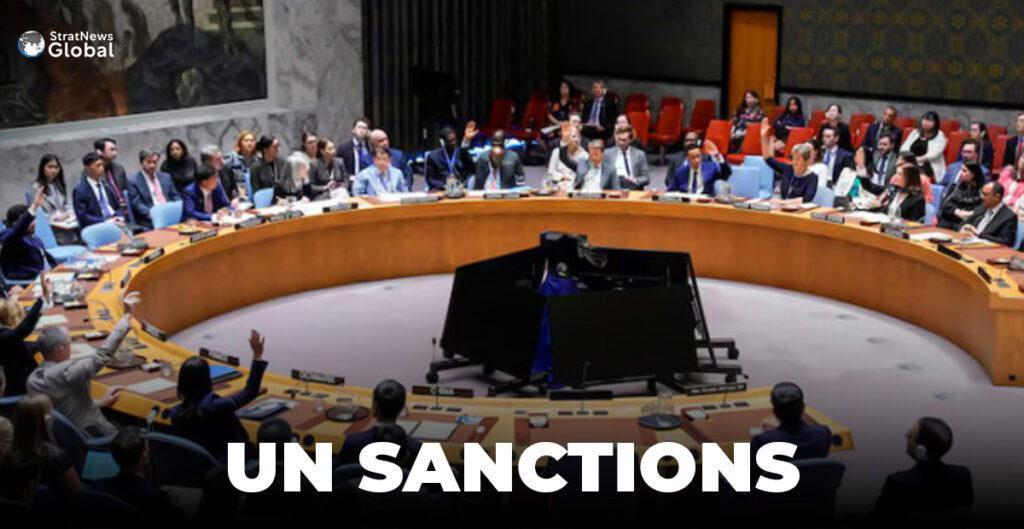
In a key diplomatic move, Britain’s envoy to the United Nations said on Friday that UN sanctions on Iran would be reimposed from Saturday, after a Russian-Chinese resolution to delay the action failed to pass in the Security Council. Tehran, reacting sharply, warned that the West would bear full responsibility for any consequences arising from the decision.
The decision to restore sanctions by Western powers is likely to exacerbate tensions with Tehran, which has already warned that the action would be met with a harsh response and open the door to escalation.
The Russian and Chinese push to delay the return of sanctions on Iran failed at the 15-member UN Security Council after only four countries supported their draft resolution.
“This council does not have the necessary assurance that there is a clear path to a swift diplomatic solution,” Britain’s envoy to the United Nations, Barbara Wood, said after the vote.
“This council fulfilled the necessary steps of the snapback process set out in resolution 2231, therefore UN sanctions targeting Iranian proliferation will be reimposed this weekend,” she said.
‘Will Never Seek Nuclear Weapons’
Iranian President Masoud Pezeshkian told a group of journalists and analysts that Iran had no intention to leave the Non-Proliferation Treaty as a reaction to the revival of the UN sanctions.
“Iran will never seek nuclear weapons … We are fully prepared to be transparent about our highly enriched uranium,” Pezeshkian said.
All UN sanctions on Iran are due to return at 8 p.m. EDT on Saturday (0000 GMT) after European powers, known as the E3, triggered a 30-day process accusing Tehran of violating a 2015 deal meant to prevent it from developing a nuclear weapon.
Iran denies seeking nuclear weapons.
Diplomats had said the resolution to delay sanctions for six months had been unlikely to pass, after last-ditch talks between Iran and Britain, France and Germany failed to break a deadlock.
Nine countries voted no, while two abstained.
Russia’s deputy envoy to the United Nations accused the Western powers of burying the diplomatic path.
US Betrayed Diplomacy, E3 Buried It, Iran Says
“The US has betrayed diplomacy, but it is the E3 which have buried it,” Araqchi told the council, saying the snapback was “legally void, politically reckless and procedurally flawed.”
“Diplomacy will never die, but it will be more difficult and more complicated than before,” he told reporters after the Security Council meeting.
The European powers had offered to delay reinstating sanctions for up to six months to allow space for talks on a long-term deal if Iran restored access for UN nuclear inspectors, addressed concerns about its stock of enriched uranium, and engaged in talks with the United States.
The US representative at the council said Iran had failed to address E3 concerns meaning a return of sanctions was inevitable, although she left the door open for diplomacy.
France said the return of sanctions was not the end of diplomacy.
UN sanctions would come into force immediately on Saturday, while European Union sanctions would return next week.
Existing Sanctions Hurting Iran
Iran’s economy is already struggling with crippling sanctions reimposed since 2018 after US President Donald Trump ditched the pact during his first term.
The sanctions would restore an arms embargo, a ban on uranium enrichment and reprocessing, a ban on activities with ballistic missiles capable of delivering nuclear weapons, a global asset freeze and travel bans on Iranian individuals and entities and would also hit its energy sector.
Addressing the UN General Assembly earlier on Friday, Israeli Prime Minister Benjamin Netanyahu, whose country bombed Iran’s nuclear installations with the United States in June, said the world should not allow Iran to rebuild its nuclear and military programmes.
“We lifted a dark cloud that could have claimed millions and millions of lives, but ladies and gentlemen, we must remain vigilant,” Netanyahu told the General Assembly on Friday.
“We must not allow Iran to rebuild its military nuclear capacities, Iran’s stockpile of enriched uranium. These stockpiles must be eliminated, and tomorrow UN Security Council sanctions on Iran must be snapped back,” he said.
(With inputs from Reuters)
Counter-Insurgency, Jungle Warfare Masterclass: Meet The CIJWS Commandant. Vairengte Warriors, Episode I
Inside CIJWS Vairengte: India’s Elite Counter-Insurgency and Jungle Warfare School
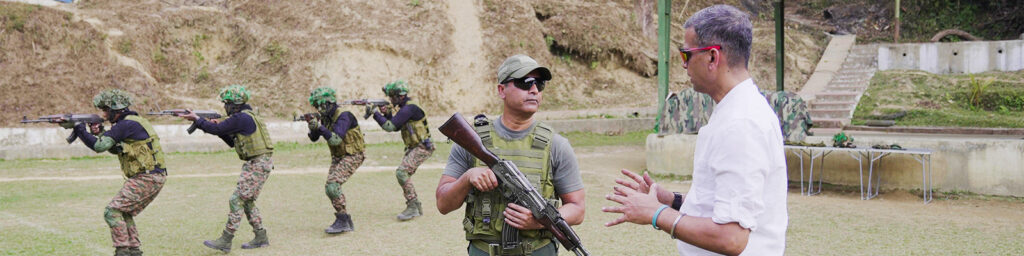
Nestled in the misty hills of Vairengte, Mizoram is the Counter Insurgency and Jungle Warfare School (CIJWS). It stands proudly as one of the world’s most formidable military training institutions. CIJWS is known for its uncompromising motto: “Fight the Guerrilla Like a Guerrilla”. The School has, since 1970, shaped soldiers into masters of asymmetric warfare, counter-insurgency operations, and jungle survival tactics.
In Episode 1 of our documentary series, we journey into the heart of CIJWS to explore its legacy, its philosophy, and the brutal realism of its training. Part I is an extensive conversation with Major General Vinod Kumar Nambiar, the CIJWS Commandant. “This is the only training establishment in the Indian Army that has fought a war,” he tells BSI’s Amitabh P. Revi. That was the 1971 Bangladesh Liberation War. CIJWS instructors were deployed directly into combat, a rare distinction that sets this school apart globally.
BSI Team At CIJWS
A BharatShakti/StratNews Global team of Amitabh P. Revi, Rohit Pandita and Ankit Mattoo filmed extensive footage and interactions at CIJWS to bring you this series. Purnima Singh and Deepankar Verma provide the graphics that add punch to these documentaries.
Series In 4K
Watch this series in 4K. Click the gear icon in YouTube’s settings and choose 2160p/4K, if your device is compatible. We recommend big screen viewing for the best experience.
Training That Breaks and Builds Warriors
“Our exercises simulate insurgent ambushes, IED threats, and red vs blue force-on-force missions — all under live conditions, often for 96 hours straight,” says Maj Gen Nambiar. The philosophy here is not just about firepower. “We train soldiers to fight the guerrilla like a guerrilla, not just with firepower, but with patience, terrain mastery, and psychological edge, the Commandant explains”. He’s also crystal clear when he points out, “The jungle teaches you humility. It doesn’t care about rank or technology — it rewards awareness, adaptability, and instinct.”
A Global Hub for Military Cooperation
CIJWS trains not only Indian Army units but also foreign contingents, making it a hub of international military cooperation. For every soldier who passes through its gates, the lessons learned here shape missions across the Northeast, Jammu and Kashmir and naxal affected areas, UN deployments, and future battlefields yet unseen.
So, DON’T MISS this fascinating documentary series: CIJWS — where grit meets jungle, and warriors are forged in silence, sweat, and strategy.
China’s Great Firewall Now Orbits Earth
China has taken its model of digital control beyond Earth’s atmosphere with the launch of the world’s first prototype “Satellite Internet Firewall,” a development that rights advocates say represents the extension of Beijing’s Great Firewall into orbit.
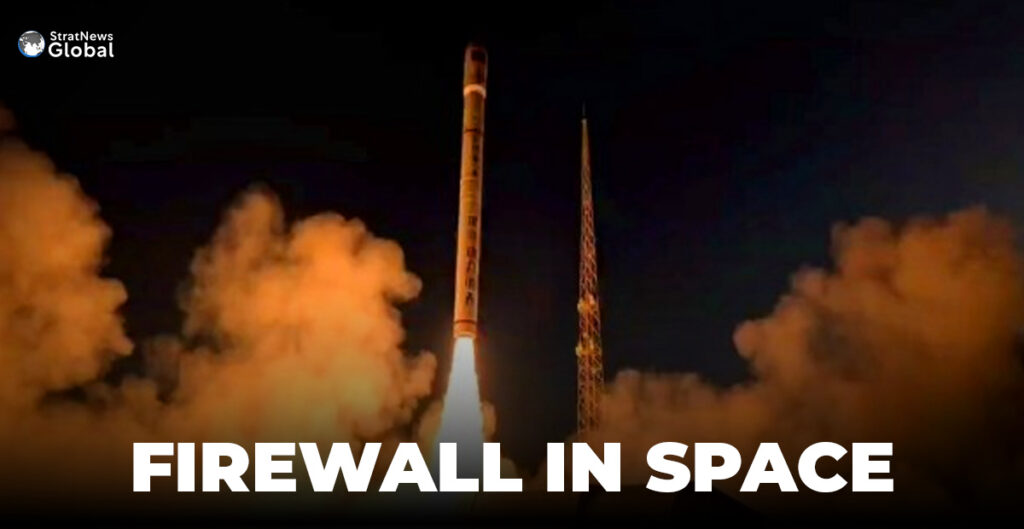
According to Human Rights in China (HRIC), a New York-based nongovernmental organization founded in 1989, the payload was launched on September 5, 2025, aboard a Ceres-1 (Yao-15) carrier rocket from the Jiuquan Satellite Launch Center. The project was developed by the Beijing University of Posts and Telecommunications (BUPT) and integrates a mix of artificial intelligence, anomaly detection, on-board inspection, autonomous decision-making, and even “intelligent deception” designed to mislead potential attackers.
HRIC described the launch as a milestone in China’s vision of cyber-sovereignty, with far-reaching implications for both national security and global internet governance. “By embedding censorship, surveillance logic, and active defense techniques directly into space infrastructure, China is shaping the rules of the satellite internet race in ways that challenge open-network models such as Starlink,” the group said.
In a detailed account, Beiyou News, the university’s news platform, reported that the firewall payload was one of three satellites launched on September 5. The “Satellite Internet Firewall” was independently developed by the National Key Laboratory of Information Photonics and Optical Communications at BUPT, under the leadership of Professors Zhao Yongli and Zhang Jie, and guided by Academician Guo Shize.
Beiyou News said the project marked “a historic step forward” for China in satellite internet security, describing it as the world’s first multi-dimensional integrated security payload capable of protecting both the physical and network layers of satellite internet systems.
The payload integrates several advanced technologies:
- Multi-dimensional rule engine for filtering and detection.
- AI-powered abnormal behavior sensing to detect suspicious activity.
- Onboard inspections conducted in real time.
- Large-scale autonomous decision-making models capable of running 14-billion-parameter optimization tasks.
- Intelligent trapping mechanisms designed to lure and study attackers.
This combination allows the satellite to detect and block cyberattacks in real time, safeguarding critical business and government communications. The system reportedly has the capacity to manage traffic at 10 Gbps concurrency, with more than 70,000 threat detection rules embedded.
The firewall is designed to act as the first line of defense for satellite-to-ground and intersatellite communications. By providing onboard computing power and a real-time defense orchestration environment, the payload creates what Beiyou News called “an in-orbit firewall” that protects against high-volume and sudden traffic surges.
The system also conducts automatic health checks of satellite ports and key services every minute, ensuring constant monitoring and protection. By linking network-layer threat detection with physical-layer monitoring, the firewall establishes a closed-loop defense mechanism.
Beiyou News emphasized that the payload represented “a comprehensive improvement” of China’s satellite internet security capabilities, blending artificial intelligence and cybersecurity technologies into a lightweight but powerful defense system.
HRIC warned that the satellite firewall extends the reach of China’s censorship and surveillance regime. Unlike traditional ground-based systems, which operate within national borders, the deployment of firewalls in orbit could impact global information flows, especially if China offers “secure” satellite internet to partner states under its Belt and Road Initiative or other strategic frameworks.
“Who gets to decide what information flows freely in orbit?” HRIC asked in its analysis. The group argued that embedding such technology into the very infrastructure of space networks could consolidate Beijing’s control over not only its own population but also foreign users who depend on Chinese satellite services.
The rights organization also highlighted the potential conflict between China’s satellite firewall and open-network systems like SpaceX’s Starlink, which are premised on unrestricted access to the internet. The deployment of censorship logic in orbit, HRIC said, could reshape competition in the satellite internet sector by making “secure but restricted” services an exportable model.
For Beijing, the launch signals both a scientific breakthrough and a political statement. The successful development of the prototype firewall demonstrates China’s ability to integrate artificial intelligence into space-based cybersecurity systems despite limited onboard resources. It also reflects the government’s long-standing goal of fusing technological advancement with national security priorities.
Beiyou News noted that the project was achieved after “repeated program demonstrations, technical breakthroughs, and payload optimization.” The team overcame challenges such as limited computing power in space and the need for real-time intelligent decision-making.
The news outlet described the achievement as supporting China’s mission of “serving national needs, targeting international frontiers, focusing on scientific and technological innovation, and supporting major scientific and technological projects and national security needs.”
HRIC underscored the symbolic dimension of the launch: the export of the “Great Firewall” from terrestrial networks to orbital systems. What began in the 1990s as a domestic mechanism for controlling access to foreign websites has now, with the September 5 launch, reached beyond Earth’s atmosphere.
By moving censorship into orbit, China is positioning itself not just as a global power in space technology but as a rule-setter in the future governance of the satellite internet. As HRIC noted, “This is a milestone in China’s vision of extending cyber-sovereignty into orbit.”
Xi Courts Kim Jong-Un As Korean Peninsula Heats Up
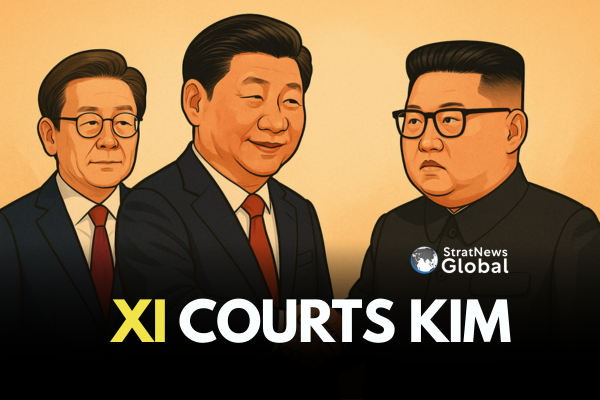
Is the visit of North Korea’s Foreign Minister Choe Sun-hui to Beijing on Saturday, linked to a request from South Korea that China help restart a Seoul-Pyongyang dialogue? The signals do suggest that could be the case.
Seoul’s Push for Dialogue
South Korea’s new President Lee Jae Myung has resumed closer engagements with China since taking office in June this year. His foreign minister Cho Hyun was in Beijing only last week where he called for re-starting the dialogue with North Korea.
According to a report in the South China Morning Post, he stressed the need for “denuclearisation and peace on the Korean peninsula.” Would Pyongyang have any interest in talks aimed at its denuclearisation? Those very nuclear weapons are seen to have ensured the regime of Kim Jong-un survives and thrives.
Last year North Korea amended its constitution to declare South Korea “a hostile state,” and its “principal enemy”. Looked at that way, the stakes seem loaded against any peace pipe being lit much less smoked. In fact, by sending troops to help the Russians in Ukraine in return for food aid and a defence pact that has helped him upgrade his ageing military including nuclear weapons, Kim has strengthened his position.
Observers say his presence at the parade held in Beijing earlier this month marking 80 years since the end of World War II reflected shared interests. There standing along with him were Xi Jinping and Vladimir Putin. In fact, some scholars believe the Pyongyang-Beijing equation bears closer scrutiny.
Chinese state media reported effusively on Kim Jong-un’s presence at the parade, widely carrying Xi’s remarks affirming its “traditional friendship” with North Korea, pledging to safeguard stability on the Korean Peninsula and expand cooperation.
“No matter how the international situation changes, this position will not change,” media reports quoted Xi telling Kim.
Add to that Wang Yajun, China’s ambassador to North Korea saying that Beijing is “open to thoroughly implementing the important understanding reached between the two countries’ leaders,” aiming for what he called “bigger-than-ever development in bilateral relations.”
Kim was more restrained, stating that his government would “as ever invariably support and encourage the stand and efforts of the Communist Party of China and the government of the PRC.”
Expert Perspectives
Jenny Town, Senior Fellow at the Stimson Center and Director of 38 North, says ties between Pyonyang and Beijing have been “rather cold and perfunctory”. China wants stability on the Korean peninsula and has struggled to tame Kim’s nuclear weapon ambitions.
But with the possibility of changes in US–Russia relations if the Ukraine war winds down, and Donald Trump signalling interest in reviving diplomacy with Kim Jong Un, Beijing is working to ensure it is not sidelined.
“As we saw ahead of the first Trump–Kim summit in 2018, China doesn’t want to be left out of the mix. Xi quickly moved to engage Kim then, to remind him of Chinese interests, and seems to be doing the same now. We can expect further proactive measures from Beijing, especially on political and economic fronts, though it remains to be seen how warmly Pyongyang will respond,” she said.
Strategic Stakes Ahead
Analysts expect China to follow up with additional steps to rebuild cooperation with Pyongyang in the coming months. For Beijing, the foreign minister’s visit builds on the momentum of Kim’s talks with Xi and serves as a reminder to Washington that China intends to remain an indispensable player in shaping the strategic future of Northeast Asia. South Korea may well be left to its own devices.
India-Qatar To Begin FTA Talks, Trade Deal With Oman Nearly Done
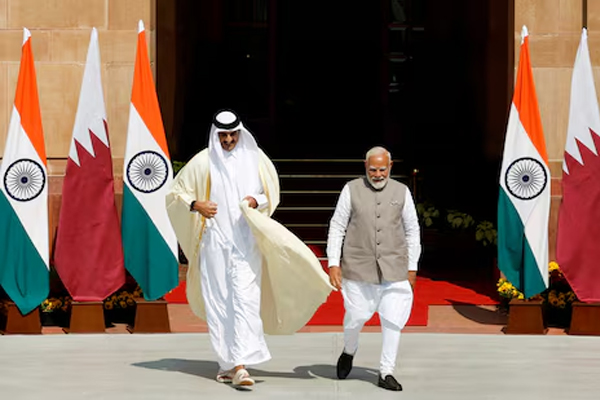
Groundwork for trade talks with Qatar, a key member of the Gulf Cooperation Council (GCC), has been laid, and negotiations are expected to commence soon. Officials said the discussions aim to establish a comprehensive framework for reducing trade barriers and enhancing bilateral economic cooperation across sectors.
This initiative follows increasing interest among GCC countries to establish bilateral trade agreements with India, bypassing the slower-paced regional negotiations.
Qatar, with its substantial sovereign wealth, energy reserves, and rising interest in global investment, could be a key partner for India, especially in sectors like energy, LNG supply security, infrastructure, services, and sovereign fund partnerships.
Oman FTA
India and Oman have concluded negotiations for a Comprehensive Economic Partnership Agreement (CEPA), and officials on both sides indicate that the deal is now in its final “administrative” phase. A formal signing is expected in the next few weeks.
A significant breakthrough in the deal came when both countries agreed on India’s demand for safeguards from frequent revisions under Oman’s labour localisation policy, known as “Omanisation.” The policy mandates companies to employ a certain percentage of local workers, a rule that has often changed, creating uncertainty for Indian businesses operating in the country.
India has successfully negotiated for the current Omanisation thresholds to be frozen for Indian companies, allowing for more predictable operating conditions. This provision is expected to ensure smoother mobility of professionals, a key element of the CEPA, and to safeguard future Indian investments in the Omani market.
FTA Scope
The India-Oman CEPA is expected to offer India access to over 98% of its goods exports, and also deeper cooperation in services and investment flows. This agreement goes beyond the India-UAE CEPA signed in 2022 in terms of liberalisation, signalling a shift toward more ambitious trade partnerships in the region.
Oman currently applies tariffs ranging from 0% to 100%, with steeper duties on sensitive items like meat, alcohol, and tobacco. For India, the CEPA could significantly reduce tariffs on labour-intensive exports such as textiles, leather goods, and engineering products, segments already reeling under steeper tariffs from the United States.
India’s exports to Oman reached $4.07 billion in FY25, while imports surged to $6.55 billion, mainly driven by petroleum products and fertilisers, leading to a trade deficit of $2.48 billion. The CEPA could help re-balance trade while opening new opportunities in sectors like pharmaceuticals, chemicals, digital services, and food processing.
Why the Gulf Matters
India’s expanding trade ties with the Gulf come at a critical time. Following steep tariff hikes by the US on several Chinese and Asian imports, including select Indian goods, New Delhi has intensified efforts to secure alternate markets. The Gulf region, with its high per capita income, strategic location, and complementary economic interests, offers a natural alternative.
The CEPA with the UAE, signed in early 2022, has already demonstrated the benefits of such pacts. Bilateral trade between India and the UAE rose from $43.3 billion in FY21 to over $100 billion in FY25, with notable gains in sectors like gems and jewellery, which saw exports surge over 60% since the agreement took effect.
India now aims to replicate that success across other GCC nations. With the Oman deal nearing completion and Qatar talks imminent, Saudi Arabia remains a key pending partner. However, Riyadh has linked progress on the FTA to the conclusion of a Bilateral Investment Treaty, which India prefers to treat as a separate track. This could delay timelines but not necessarily the broader momentum toward a regional trade architecture.
Beyond Trade
The India-Oman dialogue has also extended into strategic domains. India has been granted access to a dedicated zone at Oman’s Duqm Port—offering logistical, commercial, and even naval docking capabilities. Discussions have also covered cooperation in satellite launches, renewable energy, and green hydrogen, underscoring the growing strategic convergence between the two nations.
Over 6,000 India-Oman joint ventures already operate in the Sultanate, with Indian investments particularly concentrated in industrial zones like Sohar and Salalah. Omani investments into India have also grown steadily, reaching over $600 million by March 2025.
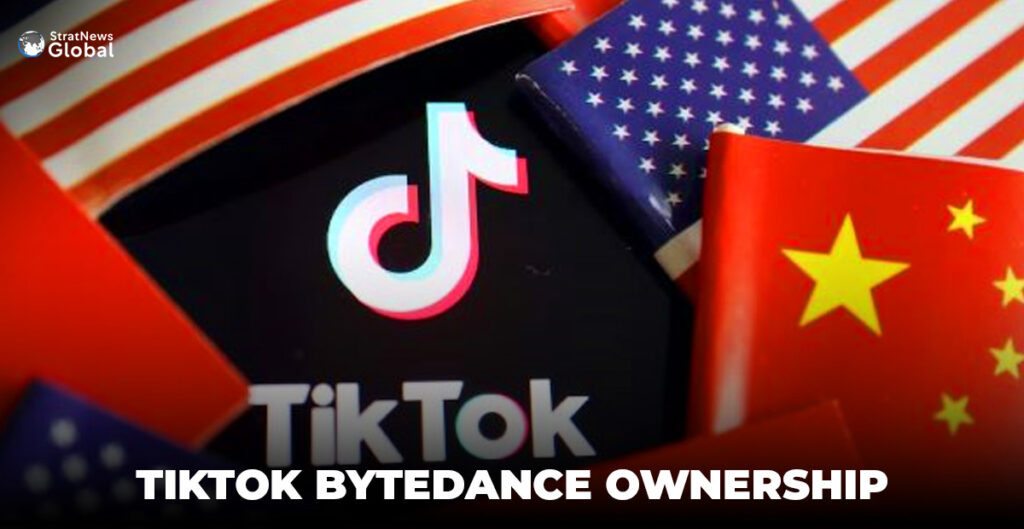
ByteDance To Retain Ownership of TikTok US: Reports
ByteDance, the China-based parent company of TikTok, will retain ownership of the app’s US operations while handing over control of its data, content, and algorithm to a newly formed joint venture, according to three people familiar with the development.
ByteDance’s bigger-than-expected role in the new TikTok entity lays out the continued and significant involvement of the China-based global tech giant.
Trump’s Executive Orders
On Thursday, US President Donald Trump signed an executive order declaring a plan to sell the China-based company’s TikTok US operations to a consortium of investors that include Oracle, Silver Lake and others to satisfy national security requirements.
The details about the ownership structure under discussion may raise questions in Congress and among critics about whether the deal approved by Trump represents a qualified divestiture of all of TikTok’s US assets as required under a 2024 law, which required ByteDance to divest its US operations or face a ban.
On Friday after a Reuters report, the chair of the House Select Committee on China John Moolenaar, a Republican, said he will conduct full oversight over the deal, adding that the deal should “preclude operational ties between the new entity and ByteDance”.
“The law also set firm guardrails that prohibit cooperation between ByteDance and any prospective TikTok successor on the all-important recommendation algorithm,” Moolenaar said.
The structure is still under discussion and could yet change, these sources said.
The White House did not reply to a request for comment. ByteDance did not reply to a request for comment after Asia business hours. TikTok in the US did not immediately respond to a request for comment.
Two Companies?
Sources said the new US TikTok would be divided into two companies. The joint venture that was announced by Trump will serve as the backend operations to the US company and handle US user data and algorithm. ByteDance is expected to be the single largest minority shareholder in the joint venture, sources said.
A separate division that will continue to be wholly owned by ByteDance will control the revenue-generating business operations such as e-commerce and advertising, these sources said.
The new US company will be valued at around $14 billion, Vice President JD Vance said.
Reports in Chinese media published on Friday described a two-part structure in which ByteDance will continue to own the part of TikTok US that will be responsible for e-commerce, branding operations and interconnection with international operations, while a separate new joint venture will handle the user data and algorithm. The reports by Chinese media outlets LatePost and Caixin were taken down later on Friday.
Saving TikTok in the US is important to Trump. He talks about TikTok often and how it has helped him reach young voters. He has credited TikTok, which has 170 million US users, with helping him win reelection last year, and has 15 million followers on his personal TikTok account. The White House also launched an official TikTok account last month.
(With inputs from Reuters)
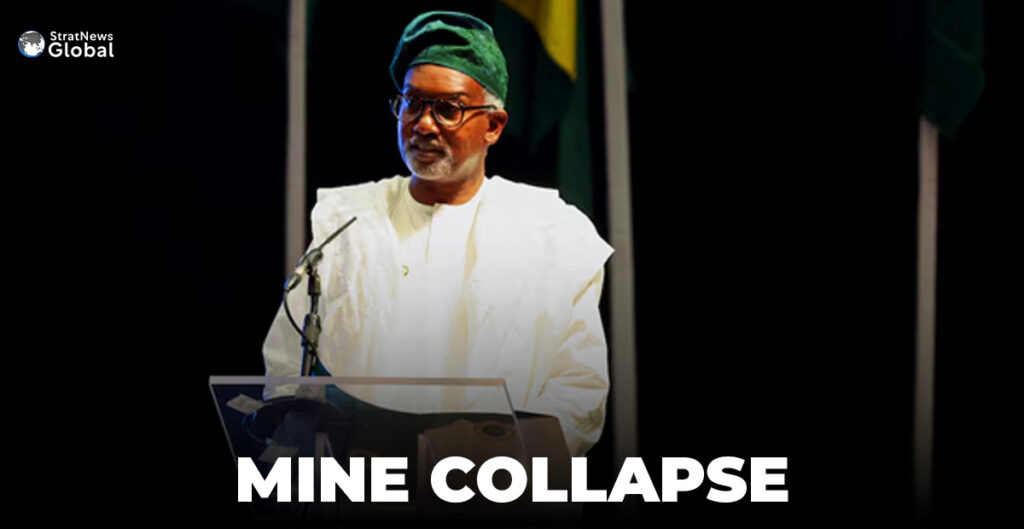
At Least 100 Feared Dead After Gold Mining Pit Collapses In Nigeria’s Zamfara
At least 100 people are feared dead after a gold mining pit collapsed in Nigeria’s Zamfara State, according to survivors and local residents on Friday.
The pit at the Kadauri mining site in the Maru local government area caved in on Thursday while scores of artisanal miners were working underground, witnesses told Reuters. Rescue operations continued into Friday.
15 Rescued
Sanusi Auwal, a local resident involved in rescue efforts, said at least 13 bodies had been retrieved from the rubble, including that of his cousin. “Over 100 miners were involved during the collapse,” Auwal told Reuters by phone.
“We are lucky to be rescued alive. Out of more than 100 people, only 15 of us were rescued,” said Isa Sani, who is currently receiving treatment for injuries.
Muhammadu Isa of the Zamfara State miners association confirmed the incident, adding that some rescuers also suffocated while trying to dig out victims.
Zamfara police spokesperson Yazid Abubakar did not immediately respond to calls and text messages seeking comment.
Illegal mining is common in Zamfara, where armed gangs often control gold fields, fuelling violence and deadly accidents.
Indonesia Mine Accident
Indonesia’s government has reached an agreement with Freeport Indonesia to halt operations at the Grasberg mine to give priority to the search for trapped workers, the country’s mining minister said on Friday.
A large mud flow earlier this month trapped seven workers at the Grasberg Block Cave underground mine. Two of the workers were found dead on September 20, Freeport said.
Production at Freeport Indonesia, which is majority owned by Indonesia’s government but operated by U.S. mining giant Freeport McMoRan, has not resumed after the incident, and the stoppage is impacting both output and revenue, minister Bahlil Lahadalia told reporters.
Asked when production would be resumed, Bahlia said the government and Freeport will discuss the matter.
He added that Indonesia and Freeport had also discussed extending its mining permit beyond 2041.
Freeport-McMoRan on Wednesday declared force majeure at the Grasberg mine and said it was expecting consolidated sales to be lower for copper and gold in the third quarter.
The announcement has sent copper prices in Shanghai to a six-month high on Tuesday due to concerns about tight supply.
The company said a phased restart and ramp-up of operations at Grasberg, one of the world’s largest gold and copper mines, may occur in the first half of 2026.
(With inputs from Reuters)
Slain Hezbollah Chief’s Son Says His Father Spent Final Days In Rage
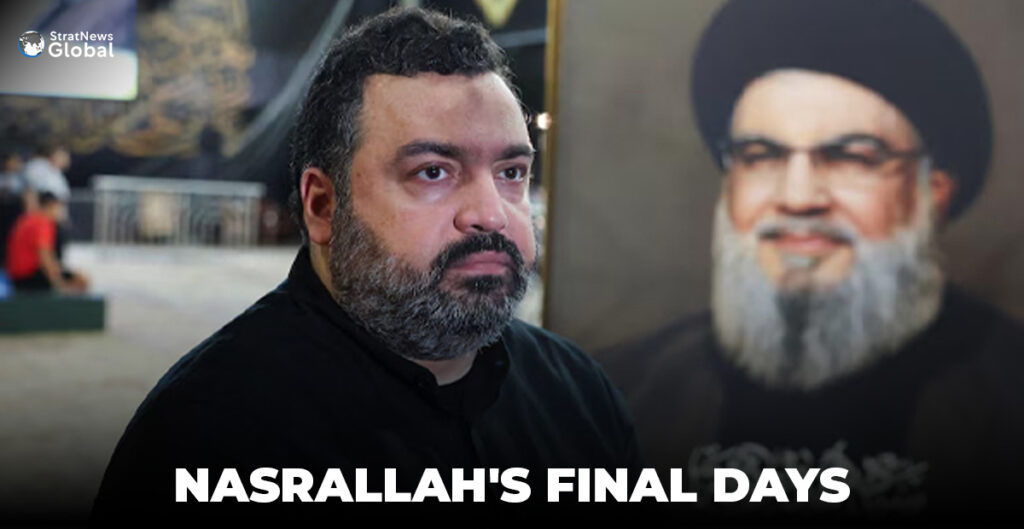
Hezbollah chief Hassan Nasrallah’s son said his father was gripped by rage this time last year after Israel detonated pagers worn by his fighters across Lebanon; just days later, Israel assassinated him.
The pager explosions and Nasrallah’s killing in an Israeli air attack on the southern suburbs of Beirut in September 2024 turned out to be the opening salvos of an Israeli assault that killed more than 4,000 people across Lebanon and destroyed swathes of the country’s south.
The war, which Israel said it conducted to end Hezbollah’s cross-border attacks in support of its ally Hamas in Gaza, shook Hezbollah’s hold on power in Lebanon, where the group is now under pressure to give up its arms.
Those developments were unimaginable a year ago when Hezbollah’s then-leader was confronted with the major intelligence breach in the communication devices that killed dozens of the group’s members and maimed thousands of others.
“He was upset, angry, resentful – there was a lot of resentment and thinking, ‘How could this happen?’ He considered himself entrusted with those lives,” Jawad Nasrallah, Nasrallah’s second-oldest son, told Reuters in an interview at his father’s grave.
Security was tight around Nasrallah at the time. Jawad, like more than a million Lebanese, had been displaced by Israeli air strikes and had not seen his father for three months.
“You can say we took it day by day. Nothing was certain,” Jawad said.
‘Shocking’
Nasrallah’s last televised speech was on September 19. Eight days later, a string of Israeli bunker-busting bombs on a Hezbollah complex in Beirut’s southern suburbs killed Nasrallah, who had led the powerful Shi’ite religious, political and military group for more than 30 years.
“We found out on the news like everyone else. It was shocking, but we couldn’t cry – no one in the house could scream or express their feelings,” Jawad said, explaining that other tenants in the apartment building where they were temporarily staying were unaware of their links to the Hezbollah leader.
At the time, Israeli strikes targeted displaced Shi’ite Muslims dozens of kilometres from Lebanon’s southern border, raising the spectre of civil war as Sunni or Christian towns regarded fleeing Shi’ite Muslims with open suspicion.
“We felt a moment of alienation like everyone else, in addition to the horrors of that time, which was terrible for everyone: war, bombing, brutality – and on top of that, alienation,” Jawad said.
With Israel escalating strikes across Lebanon and sending ground troops into its south, Nasrallah’s body could not be moved into a morgue for several days before a temporary burial. A formal ceremony was held months later during a truce.
The war with Israel that left Hezbollah badly weakened was followed by the toppling of the group’s Syrian ally, Bashar al-Assad, and a new government in Lebanon that has pledged to enforce a state monopoly on all arms.
Hezbollah has refused to give up its arsenal – a stance that Jawad, a businessman with no formal position in the group but who is sanctioned by the U.S., reiterated.
“Never in your fantasies or dreams,” he said, adding that he still asks his father for guidance.
“I ask him to solve some dilemmas. I tell him: ‘You have to solve this problem for us and help me with it,'” he said.
(With inputs from Reuters)
Talks Between Israel And Syria Falter Amid Humanitarian Corridor Disagreement: Sources
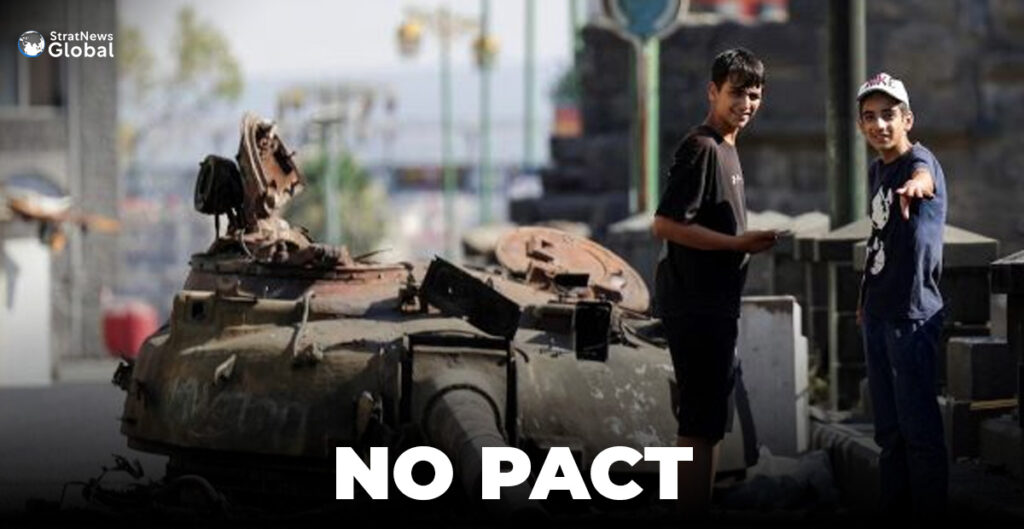
Negotiations aimed at finalizing a security deal between Israel and Syria have stalled, according to four sources. The deadlock centers on Israel’s insistence on opening a humanitarian corridor into Syria’s southern Sweida province, a demand Damascus has resisted.
Syria and Israel had come close in recent weeks to agreeing the broad outlines of a pact after months of U.S.-brokered talks in Baku, Paris and London that accelerated in the lead-up to the United Nations General Assembly in New York this week.
The pact was intended to create a demilitarized zone that would include the province of Sweida, where sectarian violence in July killed hundreds of people from the Druze, an offshoot of Islam.
Israel Says It Will Protect Syria’s Druze
Israel, which has a 120,000-strong Druze minority whose men serve in the Israeli military, has said it will protect the sect and carried out military strikes in Syria under the banner of defending it.
In earlier talks in Paris, Israel asked to open a land corridor to Sweida for aid, but Syria rejected the request as a breach of its sovereignty.
Israel reintroduced the demand at a late stage in the talks, according to two Israeli officials, a Syrian source and a source in Washington briefed on the talks.
The Syrian source and the source in Washington said the renewed Israeli demand had derailed plans to announce a deal this week. The new sticking point has not been previously reported.
The State Department, the office of Israeli Prime Minister Benjamin Netanyahu and Syria’s foreign ministry did not respond to questions on the contours of the deal or the sticking points.
No Talks Since Last Week
U.S. envoy Tom Barrack, who has been brokering the talks between Syria and Israel, said on Tuesday the longtime foes were close to striking a “de-escalation agreement” in which Israel would stop its attacks and Syria would agree not to move any machinery or heavy equipment near the border with Israel.
He said it would serve as the first step towards the security deal that the two countries have been negotiating. One diplomat familiar with the matter said it appeared that the U.S. was “scaling down from a security deal to a de-escalation deal.”
Speaking shortly before Barrack at an event in New York, Syrian President Ahmed al-Sharaa, a former al Qaeda leader who led rebel forces that seized Damascus last year, expressed concern that Israel may be stalling the talks.
“We are scared of Israel. We are worried about Israel. It’s not the other way around,” he said.
A Syrian official said that conversations before the U.N. General Assembly began were “positive,” but there had been no further conversations with Israeli officials this week.
Netanyahu’s office said on Wednesday that concluding ongoing negotiations was “contingent on ensuring the interests of Israel, which include, inter alia, the demilitarization of south-western Syria and preserving the safety and security of the Druze in Syria.”
Foes Since 1948
Syria and Israel have been foes since Israel’s founding in 1948. A disengagement agreement in 1974 created a narrow demilitarized zone monitored by the United Nations.
But since rebels toppled Syria’s then-leader Bashar al-Assad last December 8, Israel has carried out unprecedented strikes on Syria’s military assets across the country and sent troops into the country’s south.
Israel has expressed open hostility towards Sharaa, citing his former links to al Qaeda, and has lobbied the United States to keep Syria weak and decentralized.
In months of talks, Syria had been advocating for a return to the 1974 disengagement agreement. In mid-September, Sharaa described the deal to journalists as a “necessity.” He said then that Israel would need to respect Syria’s airspace and territorial unity but raised the possibility of Israeli breaches.
“We could reach a deal at any moment, but then another problem arises which is: will Israel commit to and implement it? We will see this in the next phase,” he said.
(With inputs from Reuters)
EU, Japan Hope For Exemption From US Pharma Tariffs
On Friday, the European Union (EU) and Japan expressed confidence that they had successfully secured limits on the US tariffs on pharmaceuticals, which President Donald Trump announced would be imposed next week at a 100% rate.
The European Commission referred to a joint statement agreed with the US following its end-July trade deal, which states that the tariff for pharmaceuticals, semiconductors and lumber would not exceed 15%.
“This clear all-inclusive 15% tariff ceiling for EU exports represents an insurance policy that no higher tariffs will emerge for European economic operators,” a Commission spokesperson said.
Cautious Optimism That Cap Will Apply
European Trade Commissioner Maros Sefcovic, speaking in Hanoi, said he expected the commitment to be respected, noting that Washington had followed through in lowering car tariffs.
Japan also referred to its joint statement with Washington, which said that US tariff rates on Japanese semiconductors and pharmaceuticals would not exceed those applied to others such as the EU.
A lobbyist for a major drugmaker with large European exports to the United States said Trump’s threat of 100% tariffs on branded drug imports was worrying, but the industry hoped the 15% rate agreed under the US-EU trade deal would apply.
“Nothing is clear yet but we hope the EU-US deal stands,” the lobbyist said.
The EU’s pharma lobby group, EFPIA, said it was working on the assumption that the EU-US deal applied and that it was still pushing on exemptions for medicines.
Europe and the US have tightly linked medicine supply chains, with Ireland, Switzerland and Germany among top exporters.
EU medicinal and pharmaceutical exports to the United States totalled 119.7 billion euros ($134.0 billion) in 2024, according to EU statistics agency Eurostat, some 37% worth from Ireland.
Trump’s Truth Social Bomb
In a post on Truth Social on Thursday, Trump announced a fresh round of tariffs that also covered trucks at 25% and furniture at 30-50%.
Trump said the pharmaceutical tariff of 100% would apply to branded or patented drugs unless a given pharmaceutical company was building a manufacturing plant in the United States.
A source at a large European drugmaker said the company was quietly optimistic it would avoid 100% tariffs given the major US investments it has pledged this year.
Novo Nordisk CEO Mike Doustdar said on Friday it was uncertain how the 100% tariff decision aligned with the EU-US trade deal. The Danish maker of weight-loss drug Wegovy and diabetes treatment Ozempic said it exported more active pharmaceutical ingredients from the US than it imported.
Swiss companies Roche and Novartis flagged on Friday that they did not expect to be hit by pharmaceutical tariffs because they are in the process of building new US sites and investing there.
Drugmakers are also scrambling to cut cash prices for some US drugs after Trump’s demand that they do so ahead of a September 29 deadline, with tariffs threatened if he is not satisfied.
(With inputs from Reuters)