

Support us by contributing to StratNewsGlobal on the following UPI ID
ultramodern@hdfcbank

Strategic affairs is our game, South Asia and beyond our playground. Put together by an experienced team led by Nitin A. Gokhale. Our focus is on strategic affairs, foreign policy and international relations, with higher quality reportage, analysis and commentary with new tie-ups across the South Asian region.
You can support our endeavours. Visit us at www.stratnewsglobal.com and follow us on YouTube, Twitter, Facebook and Instagram.
र 500 per month
र 1000 per month
र 5000 per year
र 10000 per year
Donate an amount of your choice
र 500 per month
Donate र 500 per month

र 1000 per month
Donate र 1000 per month
र 5000 per year
Donate र 5,000 per year
र 10000 per year
Donate र 10,000 per year
Donate an amount of your choice
Donate an amount of your choice
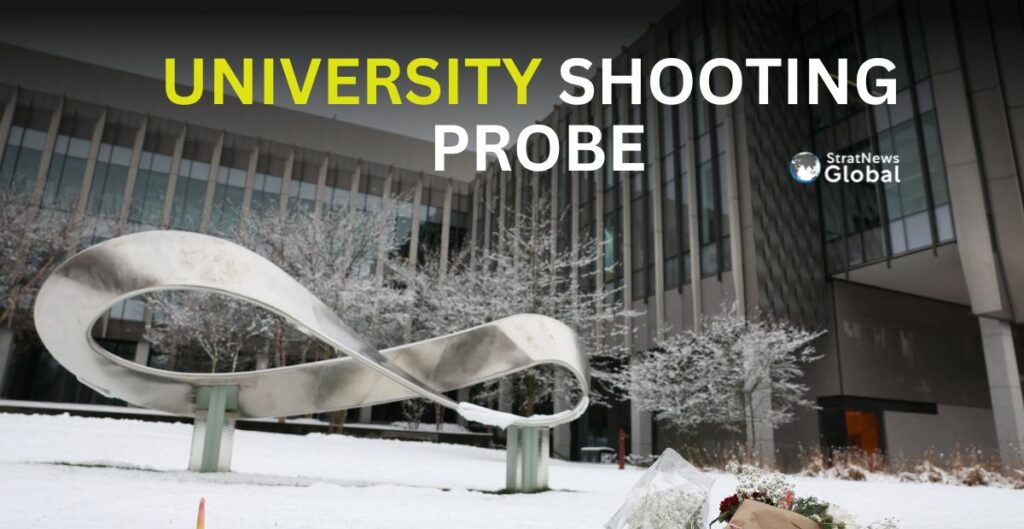


Authorities Release Person Of Interest In Brown University Mass Shooting
The man held as a “person of interest” in the Brown University shooting that left two students dead and nine injured will be released from custody, authorities said on Sunday night.
Providence Police Chief Oscar Perez said earlier at a midday news conference that a man in his 20s had been taken into custody in connection with Saturday’s gun violence but gave no further details.
But at a late-night news conference hours later, Providence Mayor Brett Smiley and other state and local officials told reporters the man detained would be released from custody, saying the investigation was going into a “different direction.”
Authorities said they believed an unidentified person pictured in surveillance footage to be the person they were still looking for.
FBI Director Kash Patel said earlier Sunday in a post on X that the person of interest had been detained in a hotel room in the Rhode Island town of Coventry, a 30-minute drive from the Brown campus. An FBI team specializing in cellular data analysis used geolocation information to track the suspect, Patel said.
The mass shooting — the latest of nearly 400 in the U.S. this year, according to the Gun Violence Archive — shook the community at the university, one of the oldest in the United States. The school canceled exams, and classes, for the rest of the year and the campus was quiet on Sunday as a light snowfall blanketed the city.
Authorities Release Video Of Suspect
Seven people injured at Brown University were in stable condition, Smiley said. One remained in critical but stable condition, while another had been discharged, he added.
Shelter-in-place orders at the university and nearby areas were lifted on Sunday. Smiley said earlier in the day that residents should expect a visible police presence across the city.
Officials said a gunman fled after shooting students in Brown’s Barus & Holley engineering building, which had unlocked doors during exams. Authorities released video of a person in black near the site, possibly masked, though not confirmed.
(With inputs from Reuters)
China Approves First Level‑3 Self‑Driving Cars
On Monday, China’s industry regulator authorized two domestically made cars equipped with level-3 autonomous driving technology, marking the first time such vehicles have been officially approved for nationwide mass adoption.
The Ministry of Industry and Information Technology approved the two electric sedans from state-owned automakers Changan Auto and BAIC Motor in its latest automobile product entry category.
Push for Autonomous Leadership
The two models are allowed to activate conditional autonomous driving in designated areas of Chongqing and Beijing with speed limits of 50km/h and 80km/h, respectively, the ministry said in a statement. The automakers will conduct trial operation with the cars on the specific roads via their ride-hailing units, it added.
The auto industry has defined five levels of autonomous driving, from cruise control at level one to fully self-driving cars at level five, and level three allows drivers to take their eyes and hands off the road in certain situations.
The move underscored China’s ambition to lead the development and adoption of autonomous driving, a technology poised to disrupt the auto industry globally. Last year, China lined up nine automakers for public tests to advance the adoption of self-driving cars.
Stricter Rules
Chinese regulators earlier this year had sharpened scrutiny of the assisted driving technologies following an accident involving a Xiaomi SU7 sedan in March. That incident killed three occupants when their car crashed seconds after the driver took control from the assisted-driving system.
But government officials are pressing Chinese automakers to rapidly deploy even more advanced systems. In their level-3 push, Chinese regulators also are upping the regulatory ante by holding automakers and parts suppliers liable if their systems fail and cause an accident.
Autonomous driving developers such as Pony AI and WeRide have been testing their level-4 cars with licenses granted by local governments across China.
Tesla’s Full Self-Driving, a level-2 driver assistance system, has been partially approved in China since February and falls short of its capabilities in the United States.
(With inputs from Reuters)
Taiwan Premier Blocks Opposition Spending Plan
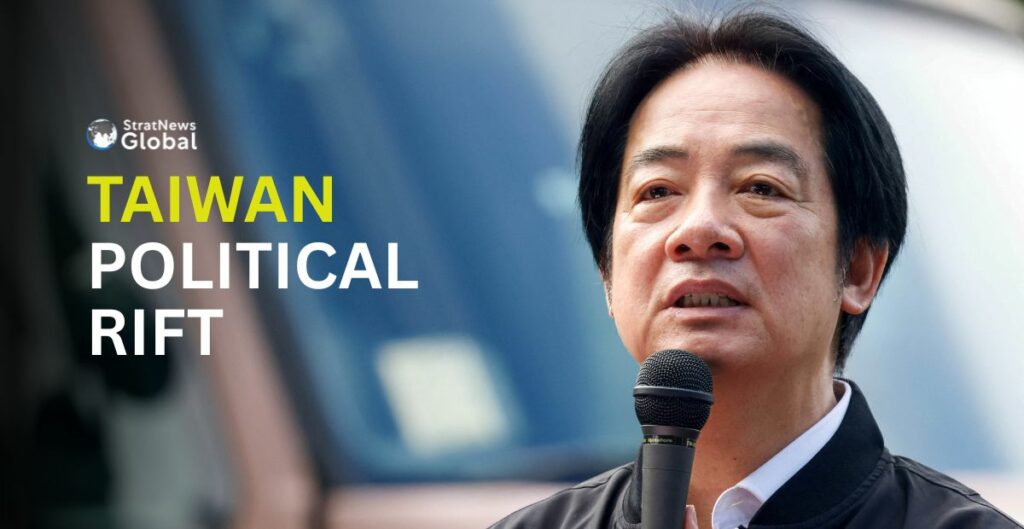
Taiwan’s premier announced on Monday that he would reject local government spending proposals approved by the opposition-led parliament, arguing they were financially irresponsible and inviting lawmakers to challenge his decision through a no-confidence vote.
While Lai Ching-te won the presidential election last year, his Democratic Progressive Party (DPP) lost its parliamentary majority to the Kuomintang (KMT) and its much smaller ally the Taiwan People’s Party.
Since the DPP controls the presidency it also runs the government in Taiwan’s system, but the opposition has used its parliamentary majority to pass its own legislation and stymie government plans.
Power Struggle Between DPP and KMT
The current standoff between the government and opposition stems from opposition-passed amendments last month to a revenue allocation law, which granted more funds to local governments.
Speaking to reporters in Taipei, Premier Cho Jung-tai said if the changes were to be enacted the government would need to borrow an unsustainable T$264.6 billion ($8.44 billion) next year to cover it, and that the opposition had forced the legislation through without proper consultation.
Lawmakers could pass a no confidence motion to remove him if they wanted, Cho said, announcing he would not enact the legislation.
“As premier, if I am brought down by a parliament and political parties that trample on the constitution and throw governance into chaos, that will be the democratic medal of honour of my life,” he said.
Were such a motion to be passed, Cho would have 10 days to submit his resignation to Lai, or Cho could instead ask the president to dissolve parliament, which would lead to new elections within 60 days.
Opposition Angered
The KMT and TPP say the government is acting dictatorially by refusing to enact the legislation and is trampling on rule of law.
“Lai and Cho have set a bad precedent of unconstitutionality and will go down in history as criminals,” the KMT said in a statement.
But KMT lawmakers, speaking earlier on Monday, signalled a vote of no confidence was not something they were considering.
“Bringing down the premier and dissolving parliament creates costs for society. It does not resolve the constitutional government deadlock,” lawmaker Yeh Yuan-chih told a news conference held by the party’s parliamentary caucus.
(With inputs from Reuters)
China To Cover Childbirth Costs Nationwide
China’s national healthcare security administration said that it will cover all out-of-pocket expenses related to childbirth next year as authorities try to incentivise more young couples to have children.
Childbirth Cost Cover
By 2026, China will aim to offer nationwide full reimbursement for all policy-covered medical expenses related to childbirth, including prenatal checkups, the administration said.
It would “improve the level of medical expense coverage for prenatal examinations, striving to achieve ‘no out-of-pocket expenses’ for childbirth,” it said in a report on Saturday.
The move comes as Beijing grapples with how to boost the country’s flagging population.
China’s population dropped for the first time in decades in 2022 and has continued to slide through to 2024.
Demographers expect the trend to continue due to declining birth rates, while the country’s shrinking workforce and growing elderly population is likely to create additional strains for already indebted local governments.
Population Decline
China’s birth rates have been falling for decades as a result of the one-child policy that was in place from 1980-2015, as well as rapid urbanisation. The high cost of childcare and education, as well as job uncertainty and a slowing economy, have also discouraged many young Chinese from getting married and starting a family.
Some Chinese provinces, including in Jilin, Jiangsu and Shandong, have already unveiled policies to make childbirth almost free of charge.
China said in March that it would “actively” respond with policies for its rapidly growing elderly and its young people, including providing childcare subsidies and making preschool education free.
Authorities have previously tried to encourage couples to have babies by expanding maternity leave, financial and tax benefits, and housing subsidies.
(With inputs from Reuters)
Fuel Blockade At Laos As Thai-Cambodian Clashes Intensify
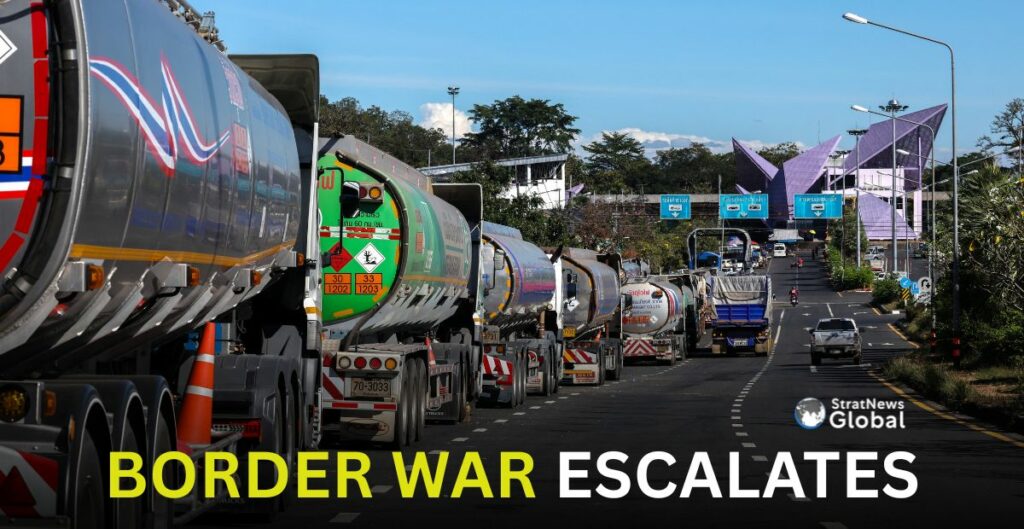
On Monday, Thailand military announced that it has stopped fuel shipments passing through a border checkpoint with Laos stating fear of being diverted to Cambodia.
The Thai and Cambodian militaries are clashing at multiple locations along their 817 km (508 mile) land border, both sides said, with no signs of the fighting abating despite international efforts to negotiate a ceasefire, including calls by U.S. President Donald Trump.
A special meeting of Southeast Asian foreign ministers that was scheduled to take place on Tuesday had been pushed back to December 22 at Thailand’s request, the Malaysian foreign ministry said in a statement.
The neighbours have long disputed sections of the frontier, but the scale and intensity of the latest clashes – that stretch from forested inland areas near the Laos border to coastal provinces – are unprecedented in recent history.
Over half a million people have been displaced by the fighting, which has killed at least 38 on both sides over the past eight days, according to national authorities, who mounted a round of evacuations in July when the neighbours clashed for five days before Trump helped broker a truce.
Restrictions At Laos Border Crossing
Thailand’s military has restricted the movement of all fuel supplies through the Chong Mek border crossing into Laos after receiving intelligence that these were being routed to Cambodian troops, said Thai defence ministry spokesperson Rear Admiral Surasant Kongsiri.
The military is also considering limiting the movement of Thai vessels into “high-risk areas” in Cambodian waters where they could be fired upon, a navy official said, adding that any such measures would not impact shipments from other countries.
Drone Attacks and Airstrikes
Fighting is continuing at least nine locations along the frontier, with heavy exchanges of firing across four border provinces, including at the coast, Thai defence ministry spokesperson Surasant said.
Cambodia said Thai forces had used drones and heavy artillery at multiple areas, alongside deploying its F-16 fighter jets for airstrikes in Siem Reap Province, which houses the country’s second-largest city and the major tourist centre of Angkor Wat.
Thailand and Cambodia accuse each other of moves that led to a breakdown of July’s Trump-brokered truce, which was expanded into a wider agreement to help settle the conflict in October.
(With inputs from Reuters)
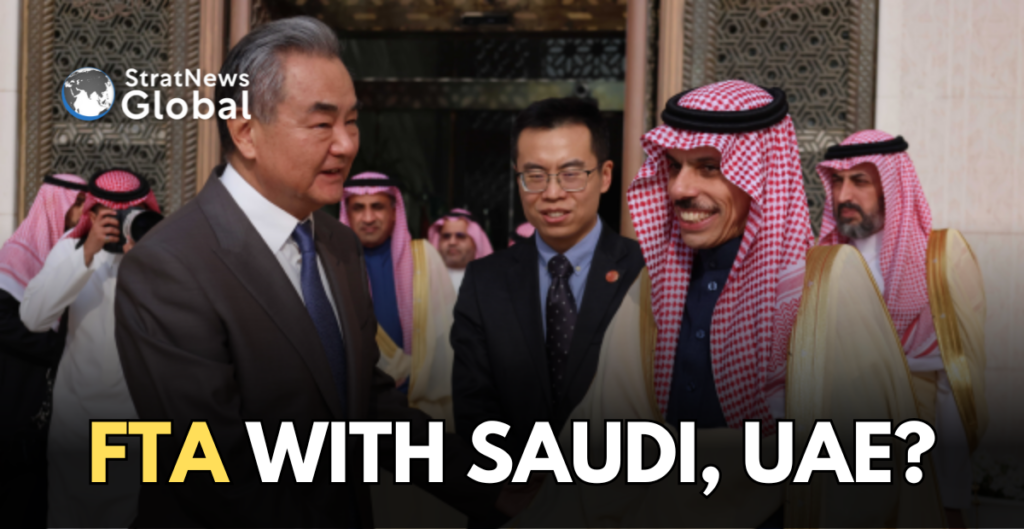
China Urges UAE, Saudi Arabia To Seal FTA
China’s foreign minister has pressed the Gulf Cooperation Council to conclude long-running talks on a free trade agreement with China, attributing the urgency to rising protectionism and unilateralism as free trade comes “under attack”, according to a Monday statement from the ministry.
Chinese Foreign Minister Wang Yi is on a three-nation tour in the Middle East that began in the United Arab Emirates and is expected to end in Jordan. He met GCC Secretary-General Jasem Mohamed Albudaiwi in Riyadh on Sunday, when he also met top Saudi officials separately.
“The talks have lasted for more than 20 years, and conditions for all aspects are basically mature; it is time to make a final decision,” he said during a meeting with Albudaiwi, according to the Chinese foreign ministry.
A successful FTA will send a “strong signal to the world about defending multilateralism,” Wang said, adding that China was supportive of the bloc strengthening its strategic autonomy and coordination, and advancing its integration process.
China has interests in deepening cooperation in the economy, trade, investment and other fields with the GCC as well, Wang said.
Closer Saudi Ties
China and Saudi Arabia agreed to closer communication and coordination on regional and international issues, with Beijing lauding Riyadh’s role in Middle East diplomacy and security, statements following a meeting between the nations’ foreign ministers showed.
Wang’s meeting with Saudi Arabia’s Foreign Minister Prince Faisal bin Farhan Al-Saud also took place on Sunday in the Saudi capital.
A joint statement published by China’s official news agency Xinhua did not elaborate on the issues where the two countries would strengthen coordination, but mentioned China’s support for Saudi Arabia and Iran enhancing their relations, as well as support from both sides for the “comprehensive and just settlement” of the Palestinian issue.
“(China) appreciates Saudi Arabia’s leading role and efforts to achieve regional and international security and stability,” said the statement released on Monday.
Wang told his Saudi counterpart that China regarded Saudi Arabia as a “priority for Middle East diplomacy” and an important partner in global diplomacy, a Chinese foreign ministry statement on Monday said.
He also encouraged more cooperation in energy and investments, as well as in the fields of new energy and green transformation.
In a separate meeting with Saudi Crown Prince Mohammed bin Salman, Wang underscored China’s readiness to play a part as the “most reliable partner” in the Middle Eastern country’s revitalisation, as well as “inject more stabilising factors” to realise peace and security in the region, another foreign ministry statement showed.
The countries have agreed to mutually exempt visas for diplomatic and special passport holders from both sides, according to the joint statement.
(with inputs from Reuters)
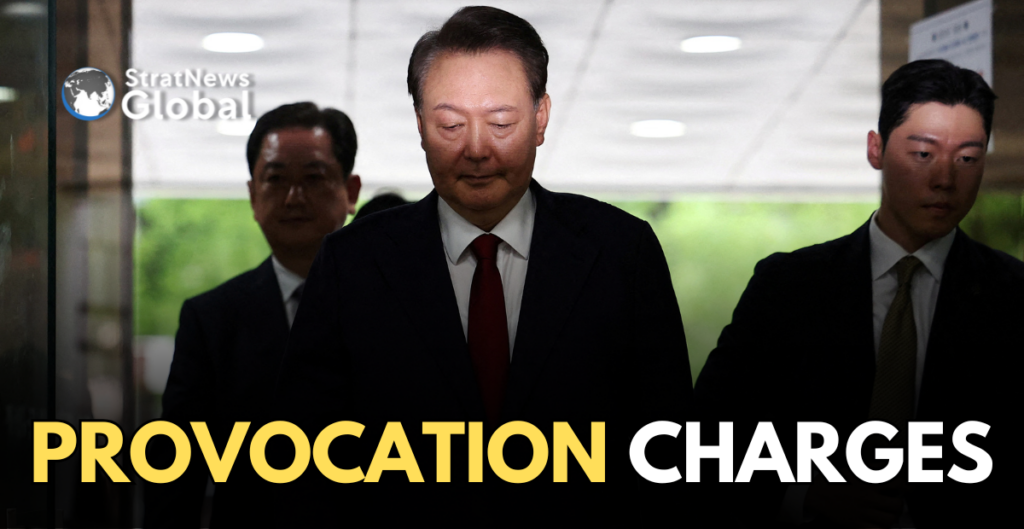
Prosecutor Says Yoon Tried To Provoke North Korea Into Armed Aggression
Former South Korean President Yoon Suk Yeol tried to provoke North Korea into mounting an armed aggression to justify his December 2024 martial law declaration and eliminate political opponents, a special prosecutor said on Monday.
The special prosecutor, Cho Eun-seok, told a briefing that his team had indicted 24 people, including Yoon and five cabinet members, on insurrection charges following a six-month investigation.
“We know well from historic experience the justification given by those in power for a coup is only a facade and the sole purpose is to monopolise and maintain power,” Cho said.
Justification For Martial Law
Cho said his team has confirmed an elaborate scheme allegedly masterminded by Yoon and his defence minister, Kim Yong-hyun, going back to October 2023 to suspend the powers of parliament and replace it with an emergency legislative body.
“To create justification for declaring martial law, they tried to lure North Korea into mounting an armed aggression, but failed as North Korea did not respond militarily,” he said.
The special prosecutor’s team has previously accused Yoon and his military commanders of ordering a covert drone operation into the North to inflame tensions between the neighbours.
Subsequently, Yoon conspired to brand political opponents, including the then-leader of his conservative People Power Party, as anti-state forces and declared martial law without justification, Cho said.
Cho was among three special prosecutors appointed after President Lee Jae Myung was elected president in a snap election called after Yoon’s removal by the Constitutional Court in April.
Yoon’s Penalty
Yoon is currently on trial for insurrection, which, on conviction, is punishable by life in prison or even the death penalty. His former ministers and other officials face various charges stemming from the failed martial law attempt.
Parliament, controlled by the liberal Democratic Party, voted to void Yoon’s decree within hours of his declaration late at night on December 3 last year and later impeached him for violating the duties of his office.
His wife, Kim Keon Hee, is under a separate special prosecutor probe for corruption stemming from activities during and before Yoon’s presidency.
Yoon may have been compelled to act in part because of the unrelenting political pressure he was under stemming from allegations of bribery against his wife, but there was no evidence to suspect Kim was involved in the conspiracy, Park Ji-young, a spokesperson for the special prosecutor’s team, said.
The ousted president’s spy chief was scheduled to travel to the U.S. the day after the decree to preemptively stifle Washington’s objections, Park said, adding that December last year was likely chosen to take advantage of the distraction of the presidential transition after Donald Trump’s election win.
Yoon has said it was within his powers as president to declare martial law, and he did it to sound the alarm over the opposition parties’ abuse of parliamentary control that was crippling the work of government. He said no harm was done to the country by his martial law decree.
(with inputs from Reuters)
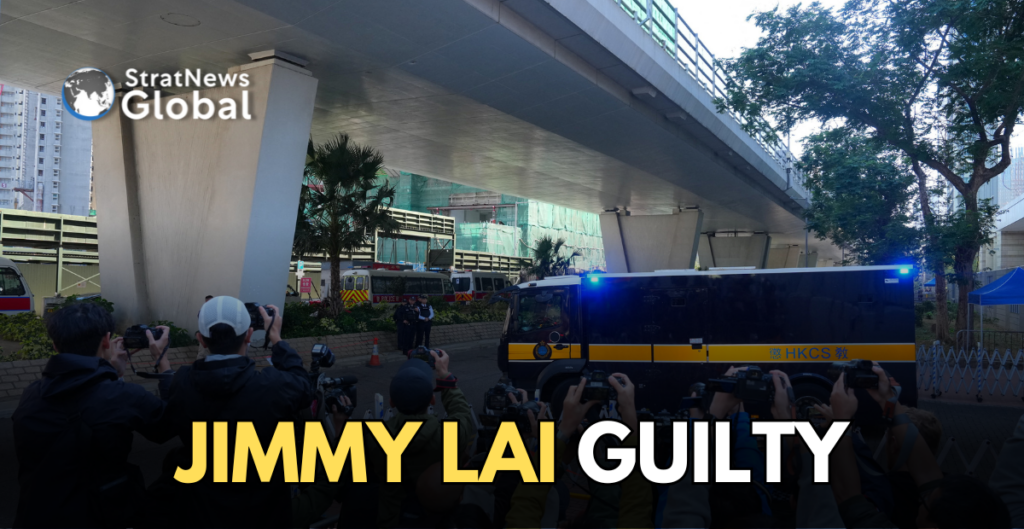
Hong Kong: Jimmy Lai Found Guilty In Landmark Security Trial
Hong Kong’s High Court on Monday found pro-democracy campaigner Jimmy Lai guilty of conspiracy to collude with foreign forces and to publish seditious material under a China-imposed national security law that could see him jailed for life.
The landmark case has drawn international scrutiny of Hong Kong’s judicial independence amid a years-long crackdown on rights and freedoms in the global financial hub after 2019 pro-democracy protests that Beijing saw as a challenge to its rule.
While Lai’s supporters see him as a freedom fighter, Beijing sees him as a mastermind of the protests and a conspirator advocating for U.S. sanctions against Hong Kong and the mainland. Chinese authorities have rejected accusations of eroding the city’s rule of law.
“There is no doubt” that Lai had harboured his resentment and hatred of China for many of his adult years, Judge Esther Toh told a packed courtroom as the tycoon, wearing a pale green jumper and a grey jacket, sat with his arms folded.
The two other judges in his case were Alex Lee and Susana D’Almada Remedios.
Sentencing Next Year
Lai, the founder of the now-shuttered Apple Daily newspaper and one of the most prominent critics of China’s Communist Party leadership, has faced a slew of litigation, including cases under the sweeping security legislation that Beijing enacted in response to the 2019 protests.
Lai, who has already spent five years in jail pending the outcome of his case, will be sentenced at a later date. A pre-sentencing hearing where Lai can plead for leniency is scheduled for January 12.
His lawyer, Steven Kwan, said Lai will decide whether to appeal after the sentencing.
The 78-year-old, who suffers from health issues including diabetes and high blood pressure, had pleaded not guilty to the three charges – one of conspiracy to publish seditious material, and two of conspiracy to collude with foreign forces.
Lai’s verdict bookends a year that marked the essential disappearance of Hong Kong’s democratic opposition, with the city’s largest opposition, the Democratic Party, voting to disband on Sunday under pressure from Beijing.
Outside the courthouse, people overnight formed a queue more than a block long, some with camping gear, seeking one of the 507 tickets to the courthouse.
Police were monitoring the area around the courthouse.
Rights Group Criticise
Lai’s trial began in December 2023 and is the highest-profile use of Beijing’s sweeping national security law in the former British colony that reverted to Chinese rule in 1997, with the verdict looming as a potential fresh diplomatic flashpoint.
Countries including the U.S. and Britain, as well as rights groups, say the trial is politically motivated and have called for Lai’s immediate release. U.S. President Donald Trump praised Lai’s case with Xi in a meeting in October and has said he would do his utmost to “save” Lai.
Beh Lih Yi, Asia-Pacific director of the Committee to Protect Journalists, called the verdict a “sham conviction” and “a disgraceful act of persecution.”
“The ruling underscores Hong Kong’s utter contempt for press freedom,” she said. “Jimmy Lai’s only crime is running a newspaper and defending democracy.”
Media advocacy group Reporters Without Borders also described Lai’s trial as “a sham.”
Lai’s Health
The Chinese and Hong Kong governments have said that Jimmy Lai was receiving a fair trial and that the national security law treats all equally. They have said no freedoms are absolute when it comes to safeguarding national security.
Lai’s family say his health has worsened after more than 1,800 days in solitary confinement, and that he suffers from diabetes, high blood pressure and heart palpitations.
Jimmy Lai ‘s verdict comes at a delicate moment for Hong Kong, where residents have been mourning after a fire last month killed at least 160 people in one of the worst blazes in a residential complex globally in recent years.
Chinese national security authorities have warned they would crack down on any “anti-China” individuals who tried to use the fire to “plunge Hong Kong back into the chaos” of 2019, when massive pro-democracy protests triggered a political crisis.
(with inputs from Reuters)
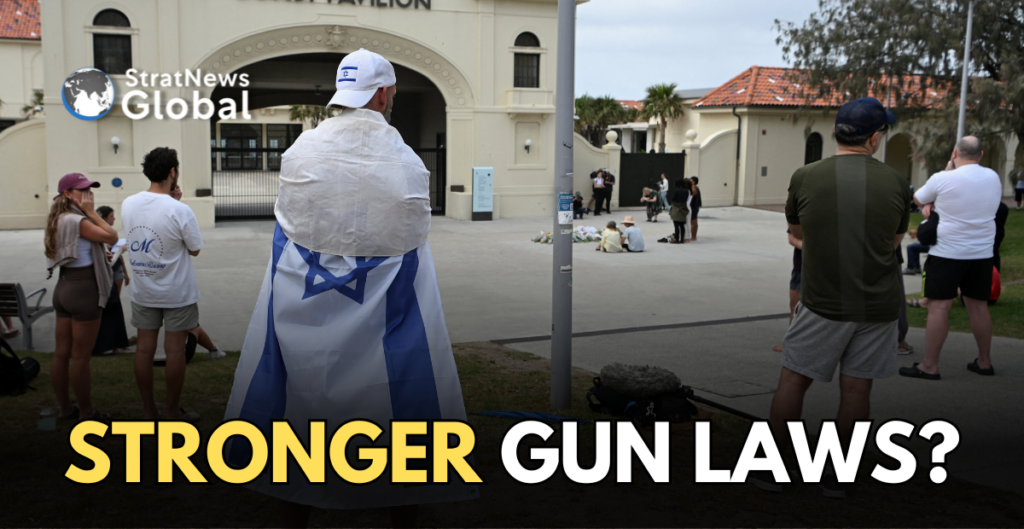
Bondi Beach Shooting: Australian PM Calls For Stronger Gun Laws
Sunday’s shooting at a Jewish celebration in Sydney’s Bondi Beach, which left 15 people dead, as well as one of the two gunmen, has raised questions about whether Australia’s gun laws, already among the toughest in the world, remain fit for purpose.
After Australia’s worst mass shooting in 1996, it took the government 12 days to ban semi-automatic weapons, organise a gun buyback scheme and introduce a licensing system to weed out people considered unfit to carry a weapon.
This time, Prime Minister Anthony Albanese said he would ask Cabinet to consider limits on the number of weapons permitted by a gun licence, and how long a licence should last.
“People’s circumstances can change,” he told reporters on Monday as police investigated what they called the terrorist attack on Sydney’s waterfront.
“People can be radicalised over a period of time. Licences should not be in perpetuity.”
Rise In Gun Ownership
Australia’s gun ownership system has been widely credited with one of the lowest per capita gun homicide rates.
But the number of guns held legally has risen steadily for more than two decades and now, at four million, exceeds the number before the 1996 crackdown, think tank the Australia Institute said earlier this year.
“Events like this feel unimaginable here, which is a testament to the strength of our gun laws,” said Gun Control Australia president Tim Quinn in a blog post about Sunday’s attack.
“It is essential that we ask careful, evidence-based questions about how this attack occurred, including how any weapons were obtained and whether our current laws and enforcement mechanisms are keeping pace with changing risks and technologies.”
Chris Minns, New South Wales state premier, whose jurisdiction includes Sydney, said he would consider recalling state parliament to fast-track new gun legislation.
“It’s time we have a change to the law in relation to the firearms legislation … but I am not ready to announce it today. You can expect action soon,” Minns told reporters, without going into detail.
Gun-Related Crime Low
As things stood, the licence held by one of the suspects entitled him to own the weapons he had, NSW Police Commissioner Mal Lanyon told reporters.
Maya Gomez, a lecturer in criminology at Swinburne University of Technology, said NSW gun licence holders must first prove a genuine reason for needing a weapon.
In the aftermath of the Bondi shooting, “questions may turn on the genuine reason provided in terms of the amount, as well as the reasons linked to the types of guns registered and used in the attack”, Gomez said in an email.
Although Australia’s gun numbers are rising, gun-related crime remains low by global standards. In the year to June 2024, 33 Australians died in gun homicides, according to the latest published data from the Australian Institute of Criminology.
That compares with 49 gun homicides per day in the United States through 2023, according to the Centres for Disease Control and Prevention.
Bondi Beach Shooting
The two alleged gunmen in the Bondi Beach shooting were a father and son, police said on Monday, as Australia began mourning victims of its worst gun violence in almost 30 years.
The father, a 50-year-old, was killed at the scene, taking the number of dead to 16, while his 24-year-old son was in a critical condition in hospital, police said at a press conference on Monday. The father and son were identified as Sajid Akram and Naveed Akram, respectively, by state broadcaster ABC and other local media outlets.
Officials have described Sunday’s shooting as a targeted antisemitic attack.
Forty people remain in hospital following the attack, including two police officers who are in a serious but stable condition, police said. The victims were aged between 10 and 87.
Witnesses said the attack at the famed beach, which was packed on a hot evening, lasted about 10 minutes, sending hundreds of people scattering along the sand and into nearby streets.
Australia ‘s police said around 1,000 people had attended the targeted Hanukkah event, which was held in a small park off Bondi Beach.
Australia’s Jewish diaspora is small but deeply embedded in the wider community, with about 150,000 people who identify as Jewish in the country of 27 million. About one-third of them are estimated to live in Sydney’s eastern suburbs, including Bondi.
(with inputs from Reuters)
Australia: 12 Killed In Attack On Jewish Festival, Pak-Origin Shooter Identified
Prime Minister Modi has condemned the attack in Australia where a Pakistani-origin Naveed Akram, has been identified as one among two shooters who killed 12 people belonging to the Jewish community in Sydney’s Bondi Beach. Those killed were celebrating the Jewish festival of Hannukah.
In the exchange of fire with police, one of the shooters was killed and the other was reported in critical condition in hospital.
The death toll is likely to go up as 29 others were injured when the shooting began in the evening, local time. Those undergoing treatment include a child and two police officers, both of whose condition was described as critical by police.
Akram is not known to the police but his home in the Sydney suburb of Bonnyrigg was raided. Police are yet to release the name of the other person. They are yet to establish if a third person was involved in the shooting or if there were other accomplices.
New South Wales Premier Chris Minns confirmed that the attack deliberately targeted the Jewish community. A vehicle in Campbell Parade, Bondi, was found to contain several improvised explosive devices. A bomb disposal unit was working on the vehicle.
New South Wales police Commissioner Mal Lanyon said “The types of weapons… some of the other items we found at the scene – as I said, we have found the improvised explosive device in a car which is linked to the deceased offender.”
He described the incident as a “terrorist attack, and praised a bystander who wrested the rifle from one of the attacker’s, identified as Akram, and pointed it at him. The big question circulating at this point is where the rifles were procured from.
“I have just spoken to the AFP Commissioner and with the NSW Premier,” said Prime Minister Anthony Albanese. “We are working with the NSW Police and will provide further updates as more information is confirmed. I urge people in the vicinity to follow information from the NSW Police.”
Israeli Prime Minister Benjamin Netanyahu accused the Australian government of having fuelled antisemitism in the period leading up to Sunday’s shooting in Sydney. “Three months ago I wrote to the Australian prime minister that your policy is pouring oil on the fire of antisemitism,” he said.