

Support us by contributing to StratNewsGlobal on the following UPI ID
ultramodern@hdfcbank

Strategic affairs is our game, South Asia and beyond our playground. Put together by an experienced team led by Nitin A. Gokhale. Our focus is on strategic affairs, foreign policy and international relations, with higher quality reportage, analysis and commentary with new tie-ups across the South Asian region.
You can support our endeavours. Visit us at www.stratnewsglobal.com and follow us on YouTube, Twitter, Facebook and Instagram.
र 500 per month
र 1000 per month
र 5000 per year
र 10000 per year
Donate an amount of your choice
र 500 per month
Donate र 500 per month

र 1000 per month
Donate र 1000 per month
र 5000 per year
Donate र 5,000 per year
र 10000 per year
Donate र 10,000 per year
Donate an amount of your choice
Donate an amount of your choice

Canada Rolls Out Welcome Mat for Skilled Indians as U.S. Tightens H-1B
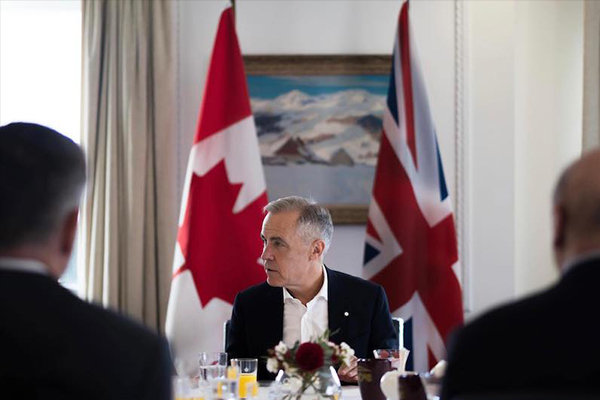
In a strategic pivot to capture global tech talent, Canada’s Prime Minister Mark Carney has confirmed that his government will soon unveil a “clear offering” aimed at foreign workers squeezed out by the new U.S. H-1B regime.
In mid-September, the Trump administration unveiled a sweeping reform requiring new H-1B petitioners to pay US$100,000 annually per visa — a dramatic escalation in cost.
Though later clarified to impact fresh petitions filed after September 21, the policy change sparked widespread uncertainty in the global tech sector, especially among Indian professionals who represent over 70 percent of H-1B beneficiaries.
Corporations and industry observers warned that the change could curb U.S. competitiveness in attracting foreign innovation talent.
Canada’s pitch: “An opportunity”
Speaking in London, PM Carney framed the situation as a chance: “Not as many H-1B visa holders will get visas in the U.S. … These people are skilled, and this is an opportunity for Canada … We will soon bring a proposal on this.”
The proposed offering is expected to target technology and engineering professionals who may have previously depended on the U.S. for employment mobility. Canada is already attempting to position itself as a more predictable and accessible alternative — in contrast to the sudden visa upheaval in the U.S.
Across the Atlantic, nations such as the U.K. and Germany have also begun public appeals to displaced tech talent, signaling an intensifying global competition for skilled immigrants.
Many Indian H-1B holders now face a cost-benefit calculus: remain uncertain in the U.S. or explore immigration paths elsewhere.
Canada’s existing Indian diaspora and tech ecosystem may ease transitions, especially for those already familiar with cross-border mobility.
The move could accelerate talent inflows and boost innovation capacity, especially in cities like Toronto, Vancouver, and Montreal.
But, Canada watchers say, there are also risks of saturation: integrating large cohorts may strain housing, public services, and local labor markets.
Canadian labor groups may raise concerns about wage competition or displacement in certain sectors.
U.S. tech and immigration policy
The H-1B fee surge may provoke backlash from industry, academic institutions, and foreign governments.
The U.S. risks losing its status as the default magnet for global STEM talent if such disruptions continue.
Social media buzz
Videos and commentary on social platforms (e.g., X) are running strong: clips of Carney’s remarks and expert analysis are gaining traction among tech and diaspora communities.
One viral YouTube video highlights how the new H-1B fee “is crushing onsite hopes” for Indian tech workers, particularly among students and women.
Canada’s move to court Indian H-1B professionals comes at a moment of acute discontent in U.S. immigration policy circles. If the proposed initiative is robust and well-executed, Canada could pull ahead in the global war for tech talent. But success will hinge on speed, clarity, and balancing aspirations with on-the-ground capacity, experts say.
UK, Germany welcome Indian techies
Following the U.S.’s H-1B fee hike and tighter visa rules, both the UK and Germany have moved to position themselves as more welcoming alternatives for skilled Indian professionals. In the UK, Finance Minister Rachel Reeves has pledged to ease immigration routes for high-skill workers, amid plans by the government’s “global talent task force” to cut or even drop visa fees (especially for those with elite credentials).
Meanwhile, Germany’s Ambassador to India, Philipp Ackermann, has issued public invitations to Indian IT, science, and tech professionals, emphasizing that Germany’s migration system is “reliable, modern, predictable” and highlighting job opportunities and comparatively high earnings.
(With inputs from IBNS)
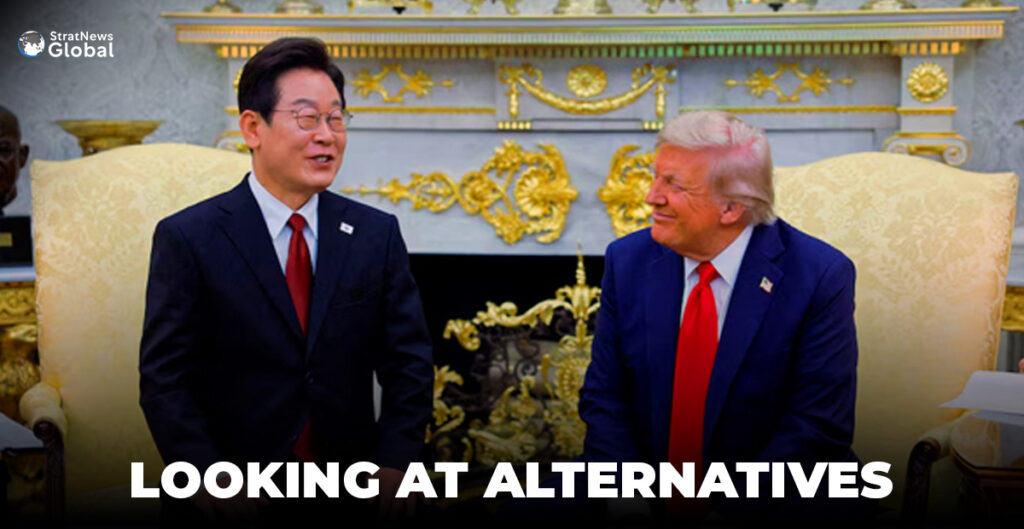
South Korea Says It Can’t Pay $350 Billion Upfront To US
South Korea on Saturday said it cannot pay the $350 billion upfront investment in the US as suggested by President Donald Trump under a proposed tariff-cutting deal, and is now exploring alternative solutions, according to a senior presidential adviser.
Since a handshake deal by the allies’ leaders in July to lower US tariffs to 15% from 25%, as Trump earlier imposed, South Korea has said the $350 billion in investment would be in the form of loans and loan guarantees as well as equity.
Trump in remarks this week said South Korea would provide the investment “upfront”, despite Seoul’s contention that kind of outlay could plunge Asia’s fourth largest economy into a financial crisis.
‘Not A Negotiating Tactic’
“The position we’re talking about is not a negotiating tactic, but rather, it is objectively and realistically not a level we are able to handle,” South Korea’s National Security Adviser Wi Sung-lac said on Channel A News television.
“We are not able to pay $350 billion in cash,” he said.
South Korea, which pledged $350 billion toward US projects in July, has balked at US demands for control over the funds and South Korean officials say talks to formalise their trade deal are at a deadlock.
On Thursday, Trump touted the amount of money he said his sweeping tariffs are bringing into the United States, saying: “We have in Japan it’s $550 billion, South Korea’s $350 billion. That’s upfront.”
‘Discussing Alternatives’
Last week South Korean President Lee Jae Myung told Reuters that without safeguards such as a currency swap, South Korea’s economy, with foreign exchange reserves of $410 billion, would plunge into a crisis if it were made to make a massive outlay.
Wi, the top security adviser to Lee, said nobody would question South Korea’s position on the feasibility of the amount if it were required as a cash payment upfront.
“We’re discussing alternatives,” he said, adding Seoul is targeting a summit of the Asia-Pacific Economic Cooperation (APEC) grouping hosted by South Korea next month, which Trump is expected to attend, to finalise the trade deal with Washington.
(With inputs from Reuters)
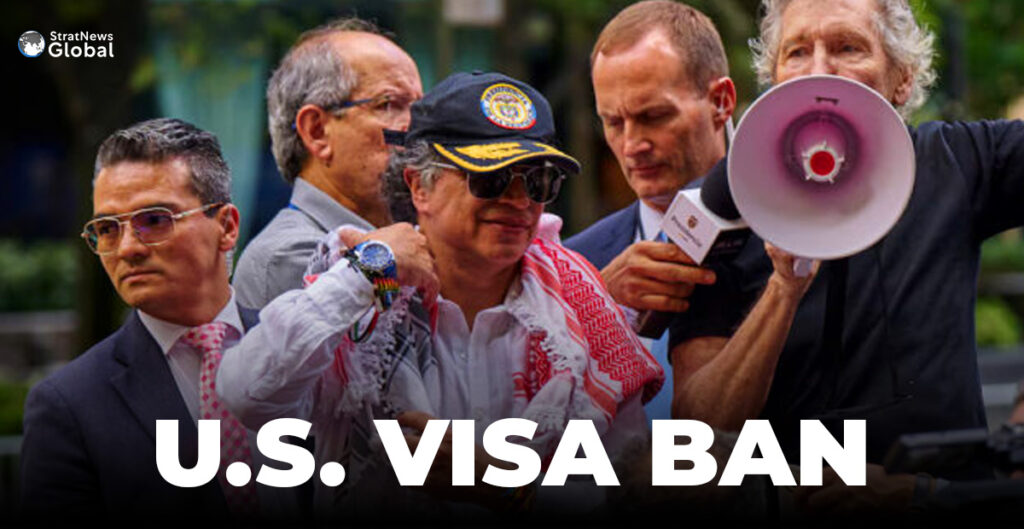
Petro Dismisses US Visa Ban, Says He Doesn’t Need It
Colombian President Gustavo Petro on Saturday dismissed the US decision to revoke his visa and accused Washington of violating international law over his criticism of Israel’s actions in Gaza.
The US said on Friday it would revoke Petro’s visa after he took to New York’s streets on Friday to join a pro-Palestinian demonstration and urged US soldiers to disobey President Donald Trump’s orders.
‘I Don’t Need A Visa’
“I no longer have a visa to travel to the United States. I don’t care. I don’t need a visa… because I’m not only a Colombian citizen but a European citizen, and I truly consider myself a free person in the world,” Petro said on social media.
“Revoking it for denouncing genocide shows the US no longer respects international law,” he added on a post on X.
Israel has repeatedly denied genocide charges over its actions in Gaza and says it is acting in self-defence.
Defying Trump
Petro, addressing a crowd of pro-Palestinian protesters outside U.N. headquarters in Manhattan, called for a global armed force with the priority to liberate Palestinians, adding “this force has to be bigger than that of the United States.”
“That’s why from here, from New York, I ask all the soldiers of the army of the United States not to point their guns at people. Disobey the orders of Trump. Obey the orders of humanity,” Petro said in Spanish.
Petro is not the first Colombian president to have his US visa revoked. In 1996, then-President Ernesto Samper’s visa was canceled over a political scandal involving allegations that the Cali drug cartel had funded his presidential campaign.
Icy Relations
Relations between Bogota and Washington have frayed since Trump returned to office. Earlier this year, Petro blocked deportation flights from the US, prompting threats of tariffs and sanctions. The two sides later reached a deal.
In July, both countries recalled their ambassadors after Petro accused US officials of plotting a coup, a claim Washington called baseless.
Petro cut diplomatic ties with Israel in 2024 and banned Colombian coal exports to the country.
(With inputs from Reuters)
ICE Operations Heighten Tensions Across New York, Chicago, Other Cities
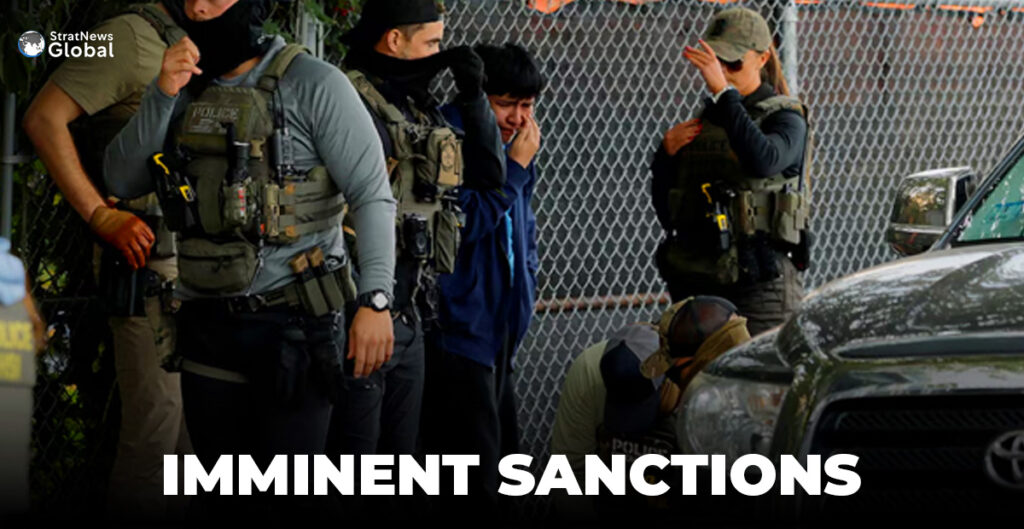
A U.S. immigration officer shoved a woman to the floor inside a New York City courthouse, while protesters outside an ICE detention centre in Chicago were dispersed with tear gas, and another woman was injured during an arrest near Boston.
The incidents on Thursday and Friday highlight the growing tensions in major U.S. cities over President Donald Trump‘s aggressive immigration crackdown, days after a shooting targeting an Immigration and Customs Enforcement facility in Dallas left one detainee dead and two others seriously wounded.
Trump, a Republican, aims to deport record numbers of immigrants living in the U.S. illegally, framing the push around criminals but arresting many without criminal records. Residents in New York, Chicago, Washington, and other Democrat-leaning metro areas have pushed back in recent months as ICE has ramped up enforcement.
Some Hispanic residents have said they are being stopped solely because of their appearance, allegations rejected by the Trump administration. The Supreme Court earlier this month lifted a lower court injunction that had restricted ICE from stopping a person based solely on ethnicity, language or other factors in the Los Angeles area.
Milagros Barreto, a worker advocate with La Colaborativa, a pro-immigrant group in Chelsea, Massachusetts, said she witnessed ICE throw a Guatemalan woman to the ground on Friday despite her being a permanent resident.
Reuters captured images of the woman on the ground, her hands pinned behind her back, being detained by federal agents while her son stood nearby crying. Further images showed her in distress as she was taken away by emergency responders.
The woman was accompanying an extended family member to a court hearing when ICE officers stopped their pickup truck, smashed two of the windows, and took the family member into custody, Barreto said.
The woman’s shoulder was scratched, and she aggravated an existing back injury, requiring her to be hospitalised, Barreto said. She gave the woman’s name only as Hilda.
“It doesn’t matter where you come from. If you look like a Latino, you’re a target,” said Barreto, a U.S. citizen originally from Puerto Rico.
Reuters was unable to immediately confirm the details of Barreto’s account or establish the immigration status of the woman detained.
DHS and ICE did not immediately respond to requests for comment.
Standoffs In Major Cities
California Governor Gavin Newsom, one of the leading Democratic critics of Trump’s immigration crackdown, signed legislation last week that would prevent ICE officers from wearing masks to hide their identities. Critics of mask-wearing say it stifles accountability.
However, Trump officials say officers need to wear them to avoid being targeted. U.S. authorities said on Thursday that the deceased suspect in the Dallas shooting intended to kill and “terrorise” ICE agents.
In a New York City courthouse hallway on Thursday, an ICE officer charged at a woman who begged for officers not to take away her husband, according to ProPublica, which shared video of the incident online.
The woman, Monica Moreta-Galarza from Ecuador, is seeking asylum in the U.S., ProPublica said.
In a rare Trump-era rebuke of ICE, U.S. Department of Homeland Security spokesperson Tricia McLaughlin said on Friday that the officer had been “relieved of current duties” pending an investigation.
“The officer’s conduct in this video is unacceptable and beneath the men and women of ICE,” she said.
DHS largely gutted its oversight offices as part of broad government layoffs and firings at the start of the Trump administration, including the office charged with investigating civil rights violations by personnel.
In the Chicago suburb of Broadview on Friday, ICE used tear gas, less-lethal rounds, flash bang grenades and pepper balls to quell protests outside an immigration detention centre, the latest standoff in what have become near-daily demonstrations calling to close the facility.
Heavily armed ICE agents paced the rooftop of the detention facility and fired volleys of pepper-balls, pellets that shatter on impact and release clouds of pepper spray, at protesters who were chanting and holding signs.
“People were peacefully standing behind the fence, and for absolutely no reason, pepper balls were fired,” Reverend Beth Brown, a pastor at Lincoln Park Presbyterian Church, said amid the sharp cracking sounds of rounds being fired and helicopters buzzing overhead.
DHS said in a statement that “over 200 rioters” blocked access to one of the facility’s gates and that 30 “swarmed another gate” and attempted to enter the property.
Meanwhile, in Michoacan, Mexico, the funeral was set to take place on Friday for Silverio Villegas Gonzalez, who was pulled over in a Chicago suburb earlier this month and shot dead by an ICE agent.
DHS has said the agent feared for his life, although in bodycam footage, the agent can be heard saying that his injuries were nothing major.
(With inputs from Reuters)
Hamas Denies Receiving Trump Ceasefire Proposal As Israel Widens Gaza City Offensive
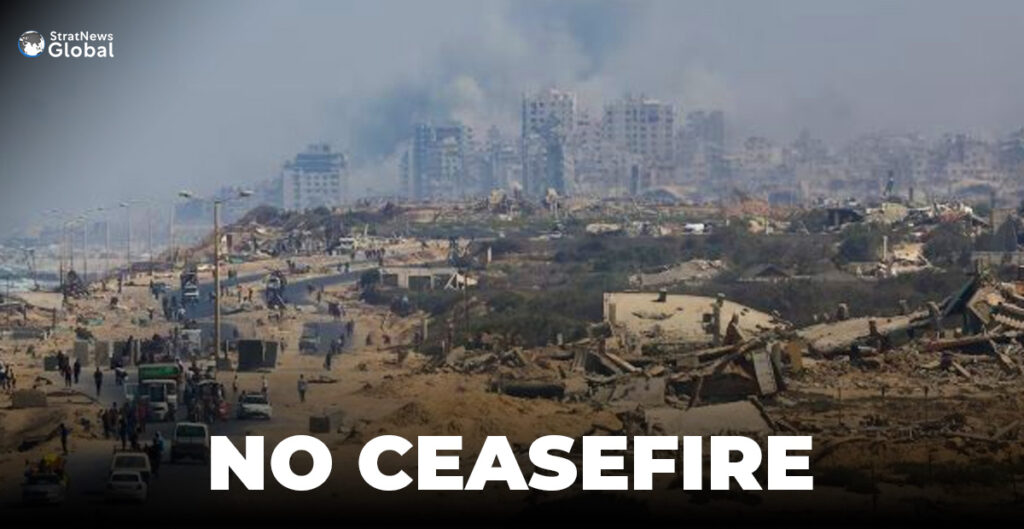
Hamas, the Palestinian group governing Gaza, stated on Saturday that it has not received U.S. President Donald Trump‘s proposed ceasefire plan, amid the ongoing escalation by Israeli forces in Gaza City.
The comments came after Israeli newspaper Haaretz cited sources saying Hamas had agreed in principle to release all the Israeli hostages it holds in return for hundreds of Palestinian prisoners and the gradual withdrawal of Israeli troops under Trump’s plan.
Also included in the proposal were the end of Hamas rule in Gaza, and Israel agreeing not to annex the territory and drive out Palestinians living there, Haaretz reported.
“Hamas has not been presented with any plan,” a Hamas official who asked not to be named said.
In his comments to reporters on Friday in which he said “it’s looking like we have a deal on Gaza”, Trump offered no details of its contents and gave no timetable. Israel has not yet made any public response to Trump’s comments.
Trump Due To Meet Netanyahu
The U.S. President is due on Monday to meet Israeli Prime Minister Benjamin Netanyahu, who heads a hard-right governing coalition opposed to ending the Gaza war until Hamas is destroyed.
Trump also said on Friday talks on Gaza with Middle Eastern nations were intense and would continue as long as required.
His special envoy Steve Witkoff said the U.S. president had presented proposals to the leaders of multiple Muslim-majority countries this week that included a 21-point Middle East peace plan.
In Gaza meanwhile, the fighting continued.
The Israeli military said its aircraft struck 120 targets across the strip over the past day as troops pressed deeper into Gaza City. The Palestinian Health Ministry said 74 people were killed in Gaza in the last 24 hours.
In a post on social media platform X, the military’s Arabic spokesman repeated calls for Gaza City residents to evacuate.
The U.N. World Food Programme estimates that some 350,000-400,000 Palestinians have left since Israel began its expanded ground offensive in Gaza City a couple of weeks ago, but hundreds of thousands remain.
Medical Facilities Closed
Doctors Without Borders/Medecins Sans Frontieres said late on Friday it had been forced to suspend its medical activities in Gaza City because its clinics were encircled by Israeli forces.
The group said the move was the “last thing” it wanted, saying that vulnerable people such as infants in neonatal care and people with life-threatening illnesses are unable to move and are in grave danger.
Four health facilities in Gaza City have shut down so far this month, according to the World Health Organization, and the U.N. says some malnutrition centres have also closed.
Israel began its assault on Gaza nearly two years ago after an attack led by Hamas killed about 1,200 people, with 251 taken hostage, according to Israeli tallies.
Since then, Israeli forces have killed more than 65,000 Palestinians in the enclave, according to Gaza’s health authorities, displaced the entire population, and crippled the territory’s health system.
A global hunger monitor says famine has taken hold in parts of Gaza, while multiple rights experts say Israel’s conduct in the war amounts to genocide.
Israel strongly denies this, saying the war is in self-defence.
(With inputs from Reuters)
Latvia Demands Stronger NATO Air Protection Following Russian Violations In Baltic Skies
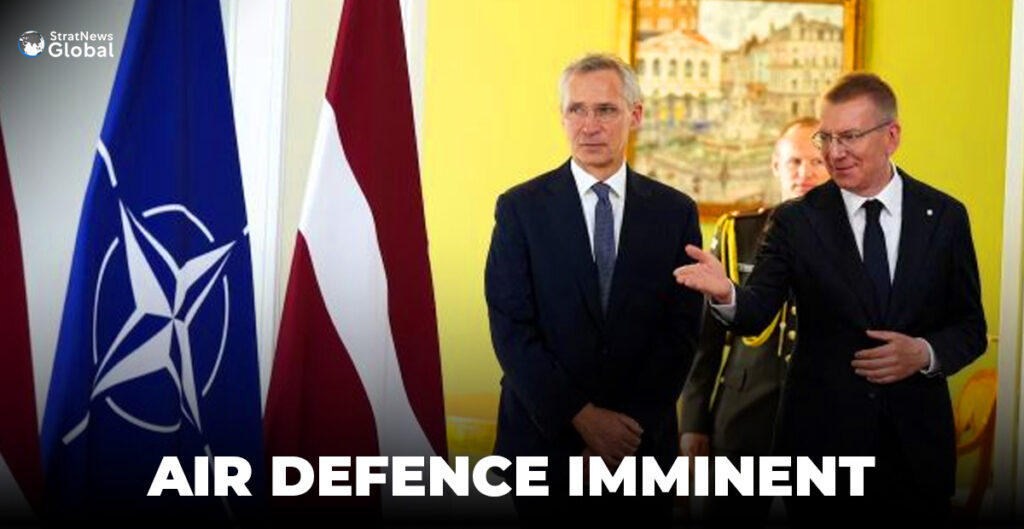
Latvian President Edgars Rinkevics on Saturday called on NATO to step up air defence measures for the Baltic States, pointing to repeated Russian airspace violations. His appeal echoed similar concerns recently raised by neighboring Lithuania.
European leaders have said Russia has repeatedly violated NATO airspace, including in the Baltic States and Poland, where earlier this month around 20 Russian drones entered airspace, prompting NATO jets to shoot some of them down.
Rinkevics urged turning the Baltic air policing mission into a full air defence role with stronger rules of engagement.
“Russia continues a pattern of provocations, most recently recklessly violating the airspace of Poland and Estonia,” Rinkevics told a meeting of NATO’s military committee in the Latvian capital, Riga.
“Transforming Baltic air policing to a Baltic air defence mission with respective rules of engagement should be a priority,” he said.
Lithuanian Defence Minister Dovile Sakaliene earlier this month said Vilnius has prepared a position paper on a change in mission to include additional capabilities “such as ground-based air defence assets, sensors and detectors”.
Russia has disputed that Russian jets violated Estonia’s airspace and said that its drones had not planned to hit targets in Poland.
NATO Air Defence
NATO jets have been patrolling the skies over the Baltic States since 2004 and are on standby to scramble and intercept aircraft that intrude into alliance airspace or fly near its borders.
After the incident over Poland, NATO launched an operation named Eastern Sentry to bolster defences all along its eastern flank. But Baltic officials have said they still need more protection.
NATO makes decisions by consensus among its 32 members and has yet to respond to calls to change the mission. It did not immediately respond to a request for comment on Rinkevics’ remarks.
Just over a week ago, Estonia reported of its airspace violations by three Russian MiG-31 fighter jets for 12 minutes before NATO fighter jets escorted them out.
(With inputs from Reuters)
Iran Stands Firm On Restored Sanctions, Recalls Ambassadors
Iranian President Masoud Pezeshkian dismissed the reimposition of global sanctions over Iran‘s nuclear programme as “not like the sky is falling” while returning from New York on Saturday, where he was unsuccessful in persuading Western powers to postpone the measures.
Iran’s immediate reaction to the resumption of United Nations sanctions came with the announcement earlier on Saturday that it was recalling its ambassadors to Britain, France, and Germany for consultations, but it has warned that a harsher response awaits.
“It is not like the sky is falling. If we are weak, they will crush us. But if we are united, there is no fear from this crisis,” Pezeshkian told Iranian state television before leaving New York, where he was attending the United Nations General Assembly.
All U.N. sanctions on Iran are due to be restored overnight, after the three European powers, known as the E3, triggered a 30-day process accusing Tehran of violating a 2015 deal meant to prevent it from building a nuclear bomb.
Iran denies seeking nuclear weapons.
It has warned Western countries they will face “serious consequences” for restoring the sanctions, but Pezeshkian has also said Iran has no intention of quitting the nuclear Non-Proliferation Treaty.
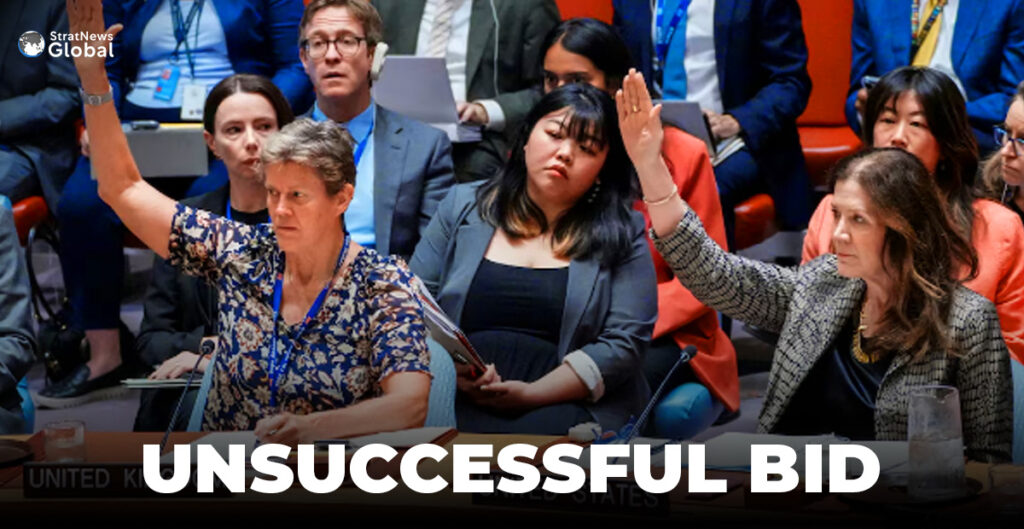
Russia and China mounted a last-ditch effort at the U.N. Security Council on Friday to delay the sanctions snapback, warning it could prompt escalation in the Middle East, but only four of the 15 council members supported their draft resolution.
Iranian Rial Continues To Fall
Meanwhile, Iran’s rial currency continued to decline over fears of new sanctions. The rial fell to 1,123,000 per U.S. dollar, a new record low, on Saturday, from about 1,085,000 on Friday, according to foreign exchange websites, including Bon-bast.com.
The return of the U.N. sanctions, including asset freezes and travel bans, will mean further trouble for the Islamic Republic’s ailing economy, which is already labouring under a separate list of U.S. sanctions. European sanctions will resume next week.
The returning U.N. sanctions will also include an arms embargo, a ban on uranium enrichment and reprocessing and a ban on activities with ballistic missiles capable of delivering nuclear weapons.
Iran’s nuclear programme has already been set back by Israeli airstrikes in June that pounded major atomic facilities as well as targeting military bases and individuals involved in the nuclear programme.
It remains unclear how far the strikes succeeded in derailing Iran’s nuclear work, which Tehran says is purely for peaceful purposes such as generating electricity, but which Western countries believe is aimed at building a bomb.
(With inputs from Reuters)
India Torches Pakistan’s Lies at the UNGA
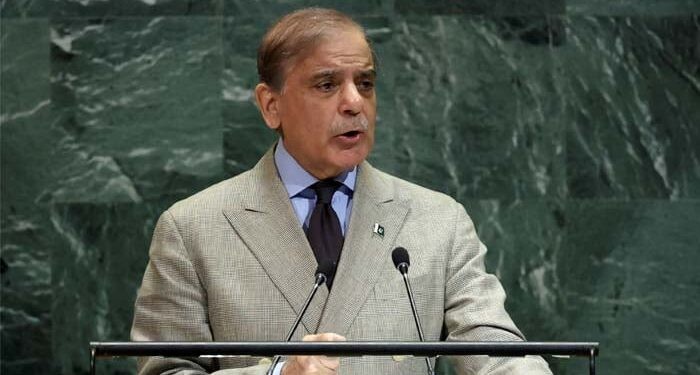
When Pakistan Prime Minister Shehbaz Sharif wrapped up his speech at the United Nations General Assembly on Friday, one could almost hear the rustle of old, moth-eaten scripts being dusted off in Islamabad.
But it didn’t take long for India to respond. Exercising its right of reply, First Secretary in India’s Permanent Mission to the UN Petal Gahlot delivered a withering rebuttal that tore apart Sharif’s speech word by word.
Sharif’s UNGA address was a familiar cocktail of grievances: accusations that India was violating the Indus Water Treaty, sermons on Kashmir’s right to self-determination “under UN auspices”, and the obligatory denunciation of “Hindutva extremism”. Gahlot’s reply was not just a rebuttal, it was a demolition job.
Sharif had tried to style himself as a statesman offering dialogue and peace, warning that disputes over Kashmir and water resources remained “volatile”, and vowing that “one day soon, inshallah, India’s tyranny in Kashmir will come to a grinding halt.” But his pitch was immediately undercut by the reality Gahlot spotlighted: Pakistan continues to glorify militants killed in Indian counter-terror operations, paying public tribute to men the rest of the world recognises as terrorists.
If Sharif hoped to impress the UN by invoking U.S. President Donald Trump as a “man of peace” whose “courageous and decisive leadership” had allegedly secured a ceasefire between India and Pakistan, he failed spectacularly. India has flatly, consistently denied any such mediation. The May 2025 cessation of hostilities was the outcome of direct talks between the Directors General of Military Operations of the two countries — nothing more, nothing less. No third party, no magical Trump wand, and certainly no Nobel-worthy diplomacy.
Yet, Islamabad has gone so far as to nominate Trump for the 2026 Nobel Peace Prize, apparently for doing what he never did. It’s the sort of logic only Pakistan could champion: award medals for imagined victories while reality stares back unflatteringly. After all, Army Chief Syed Asim Munir had promoted himself to Field Marshal after Indian missiles flattened several terrorist hideouts and Pakistani airbases during Operation Sindoor in May, in response to the cold-blooded slaughter of 26 civilians in Pahalgam, Kashmir, on 22 April by Pakistani terrorists who targeted Hindu tourists, though a Christian tourist and a local Muslim were also killed.
No Pakistani fantasy would be complete without a symbol to obsess over. Enter the fighter jet lapel pin. When Trump wore the pin during his Oval Office meeting with Sharif and Asim Munir, speculation in Islamabad soared: was this a subtle endorsement of Pakistan’s claim that it had downed multiple Indian jets?
The truth, of course, was more banal — and more embarrassing. Trump had donned the pin earlier in the day during his meeting with Turkish President Recep Tayyip Erdogan, where he was pushing Ankara on the sale of F-16s and F-35s. The pin had nothing to do with Pakistan, India, or any imagined dogfight triumphs. But in Islamabad, self-delusion is a full-time occupation, and the sight of the pin was seized upon as validation. As Gahlot put it, Pakistan’s theatrics cannot substitute for decades of enabling terrorism.
Sharif’s UNGA theatrics were the climax of a months-long charm offensive aimed at Washington. On September 8, he presided over the signing of two MoUs alongside Munir, one of which promised Pakistan would supply critical minerals and rare earth elements to the US — sweetened by a $500 million American investment. This came on the heels of Trump’s July pledge to help Pakistan develop its “massive oil reserves”.
The two countries have also stitched up a trade agreement imposing a 19 per cent tariff on Pakistani imports. By the numbers, US goods and services trade with Pakistan reached USD 10.1 billion in 2024, a 6.3 per cent increase from 2023. US exports to Pakistan grew by 3.3 per cent; imports rose by 4.8 per cent. The overall deficit? A cool USD 3 billion, up nearly 6 per cent.
For Islamabad, however, these numbers are less about trade and more about political oxygen. After years of being cold-shouldered by Washington — former President Joe Biden didn’t bother to even call a Pakistani prime minister during his tenure — Sharif now gets to bask in the glow of three separate Washington visits by Munir and his own White House appearance.
The price? A willingness to let Trump spin fables about having single-handedly stopped a nuclear war in South Asia.
Predictably, Sharif’s UNGA sermon wasn’t all trade deals and Trump worship. The standard playbook was back: Kashmir’s right to self-determination, accusations of India violating the Indus Water Treaty, and dramatic warnings that India’s alleged actions “represent an act of war”.
But as Gahlot’s rebuttal underscored, these claims are neither new nor credible. They are the tired tropes of a state that cannot speak about economic growth, governance, or innovation on the world stage — so it falls back on demonising India.
If Sharif provided the theatre, Defence Minister Khawaja Asif delivered the farce.
Speaking at the UN’s AI Innovation Dialogue earlier, Asif stumbled, stammered, and mispronounced his way into viral infamy. “Risk” became “riks”, “development” turned into “developend”, and “six pillars” emerged as “six pip-pillars”. Social media had a field day: “Operation Sindoor shook him,” quipped one user. “Arre kehna kya chahte ho? (“What exactly do you want to say)?” wondered another.
Amid the laughter, Asif did manage to warn about the dangers of AI in warfare. But his incoherence only reinforced the contrast Gahlot had drawn: India engages the world with facts and accountability; Pakistan with theatrics, delusions, and, increasingly, slapstick.
India’s right of reply ensured that Sharif’s grandstanding did not go unanswered. Gahlot’s blunt words cut through the fog: “Sharif’s attempts to rewrite history, glorify terrorists, and claim unearned credit at international forums is a study in diplomatic delusion. Facts, accountability, and moral clarity do not bend to theatrics.”
That, ultimately, is the difference. Pakistan can drape itself in the illusion of global relevance, pin its hopes on lapel badges, and hail imaginary diplomatic victories. But when confronted with facts — and with India’s refusal to indulge its fantasies — the performance collapses, leaving only the echo of empty rhetoric in the UN chamber.
Sarkozy Sentence Deepens French Divisions Ahead Of Le Pen Appeal
Former President Nicolas Sarkozy’s prison sentence has intensified debates in France over judicial treatment of political misconduct, coming months before far-right leader Marine Le Pen seeks to overturn her embezzlement conviction and pursue the presidency.
A Paris court jolted the political sphere on Thursday when it handed Sarkozy a five-year sentence for criminal conspiracy over attempts to raise campaign funds from Libya. He will soon become the country’s first post-war president to be imprisoned.
Ludovic Friat, the president of the USM, the largest union representing French prosecutors and judges, said the ruling demonstrated that no one was above the law – even if some might choose to question the court’s motivation.
“There will clearly be a before and after this decision,” he said. “In high-profile political-financial trials, some inevitably see judges stepping onto the political stage. What I regret is that … too often, this becomes a smokescreen that diverts attention from the offences actually committed.”
Judges Cracking Down On Political Wrongdoing
As Sarkozy left the court, he reiterated his innocence and said the ruling would undermine faith in France’s judiciary.
“What happened today … is of extreme gravity in regard to the rule of law, and for the trust one can have in the justice system,” he said.
Sarkozy’s prison sentence is enforceable immediately, with the former president given a short time to put his affairs in order, but not allowed to avoid prison pending an appeal, as some French politicians have done in the past.
Appeals can take years, fuelling a sense of impunity for those in power, so judges are increasingly handing out “provisional execution” sentences that start immediately, lawyers and politicians have told Reuters.
“For several decades, there has been a growing democratic demand for integrity among elected officials,” Judith Allenbach, the president of another judicial union, told Reuters.
She said 89% of jail terms over two years were enforced ahead of any appeals process and that judges were enacting laws passed by parliament mandating tougher sanctions for this type of crime.
In a sign of the tensions, the Paris prosecutor’s office said on Saturday it had launched investigations into threatening messages directed at the head judge in this week’s ruling on Sarkozy.
The lead judge in Le Pen’s conviction earlier this year also received threats and was placed under police protection.
What Does It Mean For Le Pen?
Le Pen, the far-right leader of the National Rally (RN) party, was given a “provisional execution” in March, when she was convicted of embezzling EU funds. She got a five-year political ban that bars her from running in the 2027 election.
Le Pen, whose January appeal will determine whether she can run in 2027, said Sarkozy’s conviction showed that “the generalisation of provisional executions by certain jurisdictions represents a great danger”.
Judicial sources said Le Pen and Sarkozy’s cases were distinct, and it was impossible to say how one might influence the other.
Friat said the Sarkozy ruling showed judges were not wavering in their fight against political crime.
“I can understand her concern,” he said of Le Pen, while emphasising that he did not know what the appeals court would decide.
Le Pen’s allies say right-wing politicians receive harsher treatment from judges, highlighting the case of former centrist Prime Minister Francois Bayrou, who was acquitted of fraud last year over the alleged misuse of EU funds.
Le Pen’s plight also caught the attention of U.S. President Donald Trump, who said she was a victim of “lawfare” and sent a diplomatic delegation to offer support.
‘Requirement To Be Honest’
Brigitte Bareges, a right-wing former mayor, was convicted of embezzlement in 2021 and given a five-year political ban with “provisional execution”. She was acquitted on appeal.
“What we see today is that the justice system – or at least a part of it – has become the weapon of those in power,” she said. “Once, I had faith in justice; today, I’m afraid.”
The justice ministry did not immediately respond to a request for comment on Bareges’ remarks.
After Sarkozy’s conviction, conservative Senate chief Gerard Larcher said, “There is growing debate within society regarding the provisional execution of a conviction while appeals have not yet been exhausted, and I share this concern”.
Left-wing lawmakers, however, applauded the Sarkozy ruling.
“The requirement to be honest and respect the law is not reserved for the public. It also applies to those in power,” said Manuel Bompard of the France Unbowed party.
Amid calls for the “provisional execution” measure to be repealed, Prime Minister Sebastien Lecornu said in Le Parisien on Friday that “if a law gives rise to debate, it is up to parliament to address it”.
(With inputs from Reuters)
Closure Of Aid Route Intensifies Shortages In Famine-Hit Northern Gaza
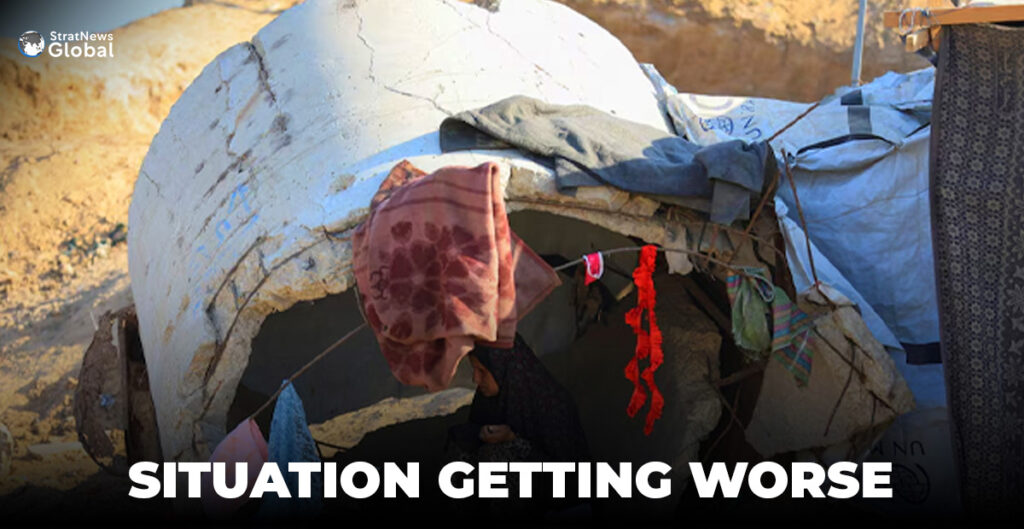
Since Israel announced the closure of a crucial corridor into famine-stricken northern Gaza ahead of its intensified ground offensive this month, residents and U.N. agencies report that community kitchens and health clinics have shut down, and the flow of essential food supplies has slowed.
The Zikim Crossing was shut on September 12, days ahead of an Israeli ground offensive on Gaza City in the north of the territory, prompting warnings from aid agencies.
Since then, the U.N. World Food Programme (WFP) told Reuters it had not managed to bring any supplies through Zikim, previously the route for half its food deliveries into Gaza.
The number of daily meals served as aid in northern Gaza had dropped to 59,000 as of September 22 from 155,000 as of August 30, as some kitchens serving the free meals shut, according to Amjad Al-Shawa, head of the Palestinian NGOs Network, and U.N. data.
Gazans Say Food Is Scarcer
Residents say conditions are getting worse. Hundreds of thousands have been displaced by the latest offensive, though others have stayed put despite Israeli evacuation orders, citing fears about security and hunger if they move.
“The situation is becoming more difficult,” said Um Zaki, a mother of five who has stayed in Sabra, Gaza City, describing rising food prices and increasing scarcity. “People who sell things like food…have left to the south,” she said.
Ismail Zayda, a 40-year-old with a week-old baby girl and two young boys displaced from Gaza City to a camp near the coast, said he was making ends meet with canned supplies.
“There are no vegetables at all,” he said.
Gaza City municipality says it also faces a worsening water crisis, with supplies meeting less than 25% of daily needs. Fuel shortages and security risks have curtailed water deliveries.
Israel says there is no quantitative limit on food aid entering Gaza and accuses Hamas, which it has been at war with for nearly two years, of stealing aid — accusations the Palestinian militant group denies.
COGAT, the arm of the Israeli military that oversees aid flows into the enclave, said humanitarian aid to the northern Gaza Strip continues and that it seeks to expand the capacity of Kissufim crossing into central Gaza threefold.
Hard To Distribute Aid
COGAT said around 300 aid trucks, mostly carrying food, have entered Gaza daily in recent weeks, and that it was coordinating the transfer of fuel for desalination facilities and water wells. When asked if Zikim would open, it said the entry of trucks would be facilitated “subject to operational considerations.”
Israel says responsibility for distributing aid in Gaza lies with international agencies, which COGAT said it was trying to help.
However, the WFP said it faced logistical challenges moving food from southern to northern Gaza due to congestion on the sole access road.
OCHA said Israel had denied 40% of requested movements to northern Gaza in the 10 days after Zikim’s closure.
“Zikim being closed makes famine, to those who are left behind, even more deadly,” said Ricardo Pires, spokesperson for the U.N. children’s agency UNICEF in Geneva.
“Children are literally wasting away in front of our eyes while the world normalises their suffering,” he said.
A global hunger monitor confirmed last month that famine had taken hold in Gaza City and was likely to spread, a finding disputed by Israel.
Health Facilities Struggling
Those needing treatment for malnutrition have few options.
Four health facilities in Gaza City have shut down so far this month, according to the World Health Organisation, and the U.N. says some malnutrition centres have also closed. Hospitals in southern Gaza cannot absorb more patients fleeing.
A spokesperson at al-Aqsa Martyrs Hospital in central Gaza’s Deir al-Balah, Khalil al-Dakran, told Reuters it was at capacity and lacked medicines, supplies, and fuel.
Mass displacement from the north is also straining food stocks in Khan Younis and Deir al-Balah in southern Gaza – areas at risk of famine, said Antoine Renard, WFP Palestine country director.
(With inputs from Reuters)