

Support us by contributing to StratNewsGlobal on the following UPI ID
ultramodern@hdfcbank

Strategic affairs is our game, South Asia and beyond our playground. Put together by an experienced team led by Nitin A. Gokhale. Our focus is on strategic affairs, foreign policy and international relations, with higher quality reportage, analysis and commentary with new tie-ups across the South Asian region.
You can support our endeavours. Visit us at www.stratnewsglobal.com and follow us on YouTube, Twitter, Facebook and Instagram.
र 500 per month
र 1000 per month
र 5000 per year
र 10000 per year
Donate an amount of your choice
र 500 per month
Donate र 500 per month

र 1000 per month
Donate र 1000 per month
र 5000 per year
Donate र 5,000 per year
र 10000 per year
Donate र 10,000 per year
Donate an amount of your choice
Donate an amount of your choice




Pentagon Sends 200 National Guard Troops To Portland Following Trump Order
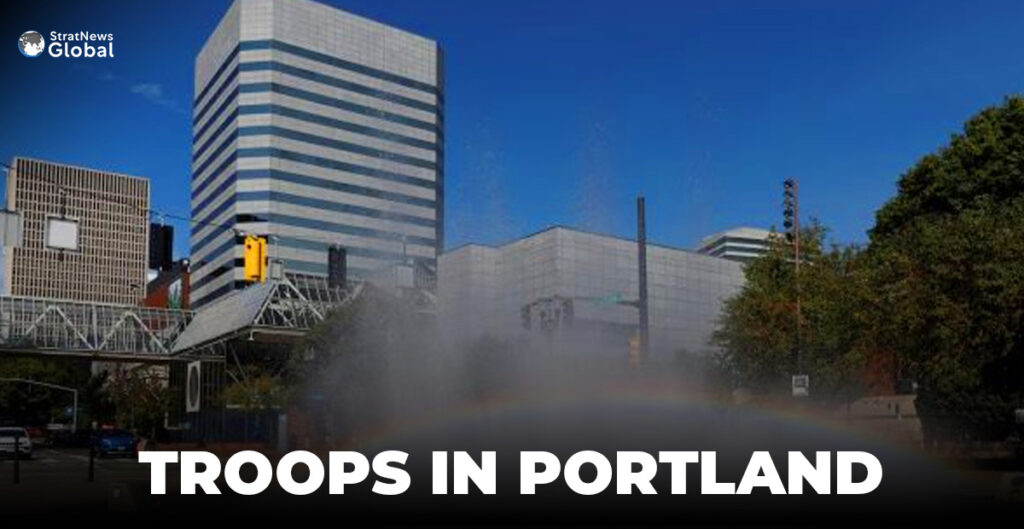
U.S. Defence Secretary Pete Hegseth on Sunday authorized the deployment of 200 Oregon National Guard troops under federal command, as the state simultaneously filed a lawsuit contesting President Donald Trump’s decision to send military forces into Portland, a city governed by Democrats.
Trump on Saturday announced plans to send troops into Portland, saying they would be used to protect federal immigration facilities against “domestic terrorists” and that he was authorizing them to use “full force, if necessary.”
Trump’s deployments of military forces into other municipalities led by Democrats, including Los Angeles and Washington, D.C., have spurred legal challenges and protests.
Oregon’s suit was filed against Trump, Hegseth and Homeland Security Secretary Kristi Noem in federal court in Portland on Sunday by Democratic Oregon Attorney General Dan Rayfield. The suit accused Trump of exceeding his powers.
“Citing nothing more than baseless, wildly hyperbolic pretext – the President says Portland is a ‘War ravaged’ city ‘under siege’ from ‘domestic terrorists.’ Defendants have thus infringed on Oregon’s sovereign power to manage its own law enforcement activity and National Guard resource,” the lawsuit said.
The lawsuit stated that protests against the Immigration and Customs Enforcement agency in Portland have been small and relatively contained since June.
Trump’s planned deployment caught many at the Pentagon by surprise, six U.S. officials said, speaking on condition of anonymity. On Sunday, Hegseth signed a memo ordering 200 Oregon National Guard troops deployed under federal authority. The memo was made public as an attachment to Oregon’s lawsuit.
The Pentagon did not immediately respond to a request for comment.
“Sending in 200 National Guard troops to guard a single building is not normal,” Rayfield said in a statement, apparently referring to an ICE facility.
Portland Crimes On The Decline
Violent crime in Portland has dropped in the first six months of 2025, according to preliminary data released by the Major Cities Chiefs Association in its Midyear Violent Crime Report. Homicides fell by 51% compared to the same period a year earlier, according to these statistics.
Since returning to the presidency in January, Trump has made crime a major focus of his administration even as violent crime rates have fallen in many U.S. cities.
In 2020, protests erupted in downtown Portland, the Pacific Northwest enclave with a reputation as a liberal city, following the killing in Minneapolis of a Black man named George Floyd by a white police officer. The protests dragged on for months, and some civic leaders at the time said they were spurred rather than quelled by Trump’s deployment of federal troops.
It was unclear whether Trump’s warning that U.S. troops could use “full force” on the streets of Portland meant he was somehow authorizing lethal force and, if so, under what conditions. U.S. troops are able to use force in self-defence on domestic U.S. deployments.
Portland Mayor Keith Wilson, like other Oregon officials, learned of Trump’s order from social media on Saturday.
Many in Trump’s own Pentagon were caught off guard.
“It was a bolt from the blue,” one of the U.S. officials said, adding that the military was previously focused on carrying out prudent planning for potential deployments of troops by Trump into cities such as Chicago and Memphis.
There have been growing tensions in major U.S. cities over Trump’s aggressive immigration crackdown days after a shooting targeting an Immigration and Customs Enforcement facility in Dallas left one detainee dead and two others seriously wounded.
(With inputs from Reuters)
Typhoon Bualoi Hits Vietnam, Leaves One Dead, 12 Missing
Typhoon Bualoi struck north-central Vietnam in the early hours of Monday, unleashing heavy rains and strong winds that damaged homes, disrupted power lines, and left at least one person dead and 12 fishermen missing amid rising floods and rough seas.
The typhoon was over Nghe An province as of 0800 (0100 GMT), with maximum wind speeds weakening to 88 kph from 117 kph when it made landfall hours earlier, according to the national weather forecast agency.
Waves As High As 26 Feet
Before making landfall, Bualoi had moved along the country’s coastline for several hours, causing waves as high as eight metres, according to the national weather agency.
One person died after being caught in floodwater in Hue city, while 12 fishermen were missing after huge waves sank four fishing boats off Quang Tri province, state media reported.
Nearly 30,000 People Evacuated
Ahead of the typhoon’s landfall, the government evacuated over 28,500 people, while hundreds of flights were cancelled or delayed. Four airports in the central provinces, including Da Nang International Airport, were closed, and several flight departure times were adjusted, the Civil Aviation Authority said.
The cyclone has triggered heavy rains across most of Vietnam since Saturday, and authorities have warned of the risk of severe floods and landslides.
Rainfall in several parts of the country was forecast to hit 500 millimetres from Sunday night through Tuesday, according to the weather agency.
Deadly Typhoon
With a long coastline facing the South China Sea, Vietnam is prone to typhoons that are often formed east of the Philippines, where at least 10 people died after Bualoi hit last week.
Earlier, Vietnam said that schools in the typhoon-affected area will be closed on Monday, with closures potentially extended if necessary, according to news site VnExpress.
Heavy rain has already caused flooding in Hue and Quang Tri, the government said.
(With inputs from Reuters)
Mass Shooting In Michigan Church Leaves Four Dead, Eight Injured
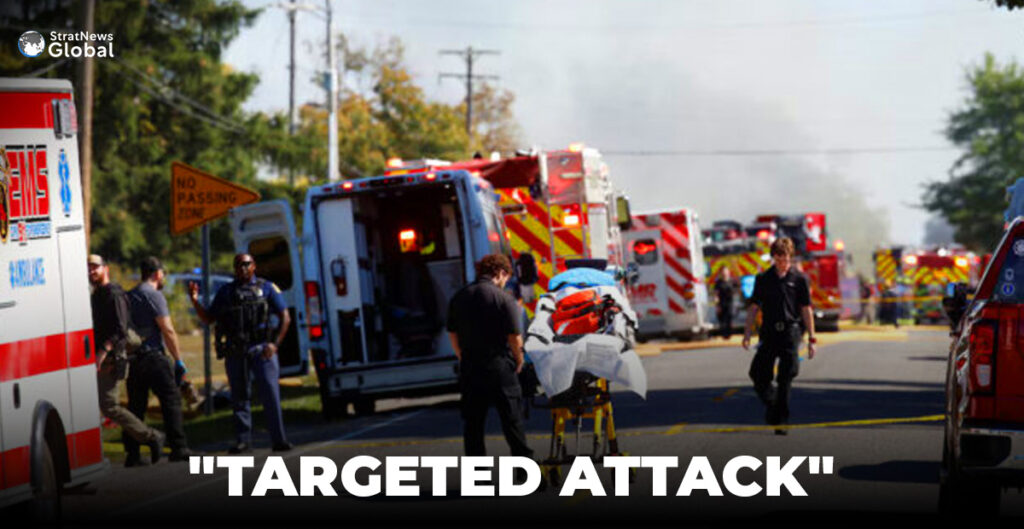
In a shocking incident in Michigan, a man rammed his vehicle into a church, opened fire with an assault rifle, and set the building on fire — leaving at least four dead and eight injured before being killed in an exchange of fire with police, officials confirmed.
Police said the perpetrator, identified as Thomas Jacob Sanford, 40, a former US Marine from the nearby town of Burton, deliberately set fire to the Church of Jesus Christ of Latter-day Saints, which was engulfed in flames and billowing smoke.
Two of the shooting victims died and eight others were hospitalized, officials said. Several hours after the shooting, police reported finding at least two more bodies in the charred remains of the church, which had not yet been cleared and may contain other victims.
‘Act Of Targeted Violence’
“There are some that are unaccounted for,” Grand Blanc Township Police Chief William Renye told a press conference.
An official with the US Bureau of Alcohol, Tobacco, Firearms and Explosives said investigators believe the shooter used an accelerant – probably gasoline – to fuel the fire, and that some explosives were recovered. The FBI said it was leading the investigation of what it considered “an act of targeted violence”.
Hundreds of people were in the church when Sanford drove into the building, Renye said.
Two law enforcement officers rushed to the scene within 30 seconds of receiving emergency calls and engaged the suspect in an exchange of gunfire, shooting him dead in the parking lot about eight minutes after the incident began, Renye said.
Investigators will search the shooter’s home and phone in search of a motive, Renye said.
US military records show Sanford was a US Marine from 2004 to 2008 and an Iraq war veteran.
North Carolina Shooting
Coincidentally, another 40-year-old Marine veteran who served in Iraq is a suspect in a North Carolina shooting that killed three people and wounded five others less than 14 hours before the Michigan incident.
Police in Southport, North Carolina, accused Nigel Max Edge of firing on a waterfront bar from a boat on Saturday night. Edge has been charged with three counts of first-degree murder and five counts of attempted murder, police said.
According to court records, a federal lawsuit that Edge had filed against the US government, and others, describes him as a decorated Marine who suffered severe wounds including traumatic brain injury in Iraq. The lawsuit, which was dismissed, showed Edge was previously known as Sean William DeBevoise before changing his name.
‘I Lost Friends’
In Michigan, one witness told WXYZ television she heard “a big bang and the doors blew”.
“I lost friends in there and some of my little primary children that I teach on Sundays were hurt. It’s very devastating for me,” said the woman, who gave her name as Paula.
President Donald Trump in a statement on Truth Social said that the shooting “appears to be yet another targeted attack on Christians in the United States of America” and that, “THIS EPIDEMIC OF VIOLENCE IN OUR COUNTRY MUST END, IMMEDIATELY!”
The Church of Jesus Christ of Latter-day Saints, informally known as the Mormon church, follows the teachings of Jesus and also the prophecies of Joseph Smith, a 19th-century American.
Grand Blanc, a town of 7,700 people, is about 60 miles (100 km) northwest of Detroit.
The Michigan rampage marked the 324th mass shooting in the US in 2025, according to the Gun Violence Archive.
It was also the third US mass shooting in less than 24 hours, including the North Carolina incident and a shooting a few hours later at a casino in Eagle Pass, Texas, that killed at least two people and injured several others.
(With inputs from Reuters)
Kim Jong Un Backs Stronger China Ties As North Korea Eyes Return To World Stage
North Korean Foreign Minister Choe Son Hui held talks with China’s top diplomat Wang Yi in Beijing on Sunday, marking her second visit to the Chinese capital within a month, according to official reports from both countries.
Wang told Choe that “China is willing to strengthen coordination and cooperation with the Democratic People’s Republic of Korea in international and regional affairs,” the Chinese foreign ministry said in a statement, using the diplomatically isolated state’s full name.
Seeking A Return To World Stage
North Korea’s Kim Jong Un is seeking a return to the world stage, analysts say. The reclusive leader travelled with Choe to Beijing in early September to attend a massive military parade that offered an unprecedented opportunity to stand beside Chinese leader Xi Jinping and Russian President Vladimir Putin, and gain implicit support for his banned nuclear weapons.
Choe delivered a message from Kim Jong Un that the bilateral relationship between two countries is unchanging and should develop to meet the demands of the times, North Korea’s official news agency KCNA reported.
Choe said China’s Xi and North Korea’s Kim, at their latest summit on the sidelines of the parade, set up a basic direction and principle for the bilateral relationship that meets the needs of changing international affairs, according to KCNA.
Seeking Closer Ties
Wang told Choe that the two Communist Party-led countries should step up exchanges on governance, and briefed her on the world’s second-largest economy’s domestic situation, the readout from Wang’s ministry said.
While in Beijing, Kim told Xi that Pyongyang would keep supporting China in protecting its ally’s sovereignty, according to KCNA.
The meeting between the two foreign ministers came as Xi is expected to visit South Korea to attend the Asia-Pacific Economic Cooperation (APEC) summit scheduled for October 31-November 1 in Gyeongju.
South Korea also believes US President Donald Trump is likely to visit the country for the APEC event, although Washington has not officially confirmed his attendance.
(With inputs from Reuters)
Seychelles Presidential Elections 2025: What Is At Stake For India?
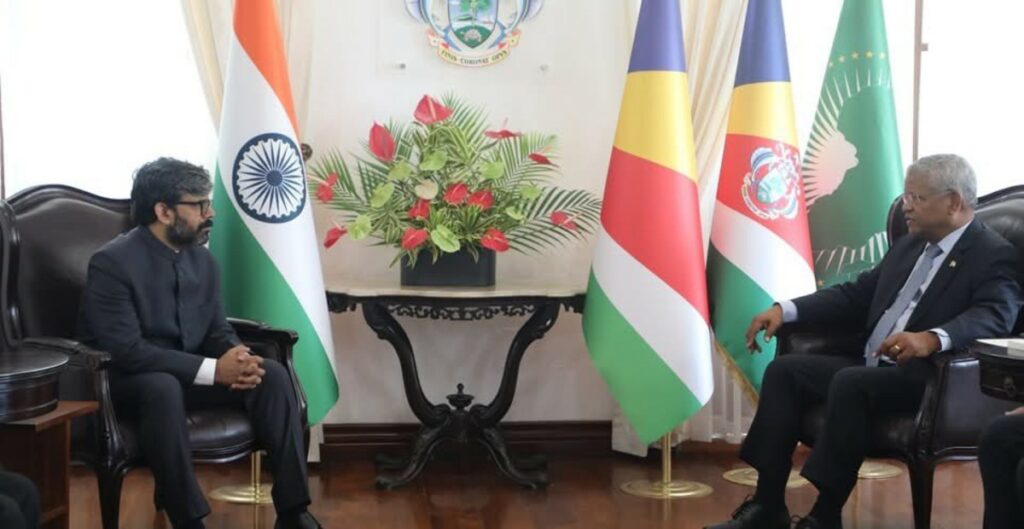
The 2025 presidential elections in Seychelles have entered a decisive phase, with results now forcing a runoff between the leading contenders. For Seychelles’ external partners—particularly India—the outcome holds significant implications for security cooperation, developmental engagement and the evolving balance of influence among competing powers in the Indian Ocean. As the second round approaches, New Delhi must assess how best to safeguard its interests while remaining sensitive to Seychelles’ sovereignty and developmental aspirations.
Seychelles Presidential Election: Second Round
The first round of presidential elections, held between 25–27 September, 2025, has confirmed that no candidate secured the 50 per cent threshold required for outright victory. This paves the way for a runoff between the two leading aspirants. Incumbent President Wavel Ramkalawan, leader of Linyon Demokratik Seselwa Party, who unseated Danny Faure of the United Seychelles Party in 2020, remains in contention but faces a strong challenge from Patrick Herminie, leader of the United Seychelles party.
The contest in the second round will be between Ramkalawan and Herminie who bagged 46.4 and 48.8 percentage of the vote share respectively in the first round. While Ramkalawan emphasises governance reforms and touts an anti-corruption drive, Herminie has revived some of the nationalist developmental narratives rooted in the policies of past leaders like France-Albert René and Danny Faure.
The fragmented vote has opened possibilities for realignments. In the first round, two other notable candidates included Alain St Ange, a seasoned tourism executive and former minister with ties to Faure, and Ahmed Afif, representing new voices seeking reforms. Potentially, Alain St Ange’s voter base—largely overlapping with Faure loyalists—could gravitate toward Herminie in the runoff, giving him a critical edge.
India’s Stakes In Election Result
India has historically shared deep political and cultural connections with Seychelles. These date back to the anti-colonial struggle and the period of de-colonisation that followed. The close ties were visible most dramatically during the mid-1980s when Prime Minister Rajiv Gandhi lent his aircraft from Harare (where he was attending the Non Aligned Movement summit) to help President France Albert René return urgently to Mahe (Port Victoria) to quash a coup attempt.
At various junctures after Seychelles’ independence, Indian support quietly helped stabilise the islands against challenges to political order. In the decades since, Indian-origin communities in Seychelles have remained active contributors to commerce, administration and local culture, cementing people-to-people links.
Successive Indian governments have also maintained steady diplomatic engagement through the High Commission in Victoria, which has played a vital role in coordinating development assistance, scholarships and technical help. As the elections steer toward a second round, India’s stakes are both strategic and reputational.
A Ramkalawan victory could mean continuity in bilateral ties, but lingering distrust and his past posturing over the Assumption Island project complicates matters. Herminie’s ascent, on the other hand, may reopen the conversation on security partnership — albeit under new, mutually acceptable terms. For New Delhi, the challenge lies in staying invested while signaling respect for Seychelles’ sensitivities about sovereignty and external influence.
The Growing Importance Of Seychelles
Under Prime Minister Narendra Modi, India articulated its SAGAR doctrine in 2015 (during Modi’s official tour to Seychelles and Mauritius) and reframed it under the MAHASAGAR concept early this year, again in Mauritius. Both visions emphasise inclusive regional security and maritime cooperation.
Seychelles holds a special position in this matrix. Geographically, the archipelago sits astride key sea lanes linking the Western Indian Ocean with broader global trade. It is proximate to important waterways like the Mozambique Channel and close enough to monitor maritime activities extending to the Gulf of Aden. This makes Seychelles critical for deterring piracy, countering narcotics trafficking and ensuring freedom of navigation.
Diplomatically, Seychelles is both a littoral state and a pivotal member of groupings such as the African Union, Southern Africa Developmental Community, Indian Ocean Commission and the Small Island Developing States (SIDS). Ensuring close relations allows India to act as a partner linking African and Indo-Pacific security concerns, while advancing its claim as a net security provider or preferred security partner.
Strategic Imperatives Of Seychelles
As a SIDS nation, Seychelles combines vulnerabilities with strategic strengths. Climate change, rising sea levels, high dependence on tourism and limited natural resources are issues in its development agenda. Yet it commands an Exclusive Economic Zone (EEZ) of nearly 1.4 million square kilometres. This EEZ gives Seychelles leverage over fisheries, seabed resources and maritime routes, making its future tied to harnessing of its blue economy.
Increasingly, Seychelles has become the object of geopolitical courting by larger powers. The United States, looking for new Indian Ocean access after the UK-Mauritius agreement on Chagos, has widened its footprint and influence. France retains historic ties based on its territories in the western Indian Ocean. The UAE and Qatar wield financial influence, with the controversial leasing of Assumption Island to a Qatari company exemplifying how Gulf capital intersects with sovereignty issues. Meanwhile, China has stepped up aid, including grants for new infrastructure, security assets and healthcare initiatives, signaling intent to build long-term clout. For India, Seychelles represents both an opportunity and a test case: if New Delhi can build trust without fueling perceptions of overreach, it can secure a durable security-development partnership in the Indian Ocean.
Seychelles’ Development Needs
Despite middle-income status, Seychelles requires ongoing development support across critical sectors. India has responded consistently, extending assistance in housing, renewable energy, digital connectivity and healthcare (especially vaccine diplomacy during the Covid-19 pandemic). Notable contributions include the gifting of medicines during health crises, scholarships for Seychellois students and concessional loans for infrastructure. Symbolically, India has remained a reliable partner during lean periods. The tradition of an Indian Navy vessel calling at Port Victoria during Seychelles’ Independence Day celebrations underscores continuity of trust and friendship through decades. For whichever candidate wins the runoff, sustaining development while diversifying external partnerships will be a priority. This gives India the chance to project itself as a non-intrusive partner invested in Seychellois resilience.
The Importance Of Security Cooperation
Security cooperation remains the bedrock of bilateral relations. India has consistently provided patrol vessels, gifted a coastal radar system and offered training for the Seychelles People’s Defence Forces. Maritime domain awareness, information sharing, technical cooperation and joint counter-narcotics and counter-piracy operations have also drawn Seychelles into cooperative frameworks with India, alongside regional navies. However, security cooperation has not been devoid of friction.
The Assumption Island project, originally conceptualised under President Danny Faure, sought to develop infrastructure for Seychelles Coast Guard with Indian support. Ramkalawan’s rejection of this initiative stemmed from concerns that it resembled a military base. Matters grew more complicated with reports that the same island was later leased to a Qatari company, raising questions about strategic consistency.
The next administration will need to balance domestic sensitivities with external security requirements. If Herminie—who has worked with former President Faure—wins, there may be room to revisit the agreement in a restructured form, with emphasis on civilian or dual-use infrastructure to support blue economy and marine safety goals rather than serving military ends.
India’s Long-Term Options
Looking beyond the election cycle, India must hedge its options in Seychelles carefully. If Ramkalawan returns for a second term, continuity in bilateral ties will coexist with prevailing constraints. India will need to avoid pushing overt military projects and instead strengthen people-centric initiatives such as climate resilience, renewable energy, digital platforms and tourism revival. A gradualist approach in maritime cooperation—without pressing for permanent facilities—will help rebuild trust. If Herminie wins, New Delhi may find an opportunity to reset the priorities. A recalibrated plan to develop facilities for Seychelles Coast Guard, sans overt military framing and cast as a civil capacity building project, could gain traction. Moreover, Herminie’s base within the Faure network may enable more pragmatic security dialogues, especially if Alain St Ange voters consolidate behind him in the run-off.
Conclusion
The 2025 presidential runoff in Seychelles, pitting Ramkalawan against Herminie after a fragmented first round, is about more than domestic politics. It is a test for how small island states navigate pressures of sovereignty, development and great power competition while balancing their domestic priorities. India may find an opening to revive structured security partnerships, provided it frames its approach in alignment with Seychellois development needs. In the end, New Delhi’s ability to adapt with patience, foresight and sensitivity will determine whether Seychelles continues as one of its closest Indian Ocean partners or drifts toward other suitors. With the U.S. pivoting stronger into the western Indian Ocean post-Chagos, China experimenting with aid push and Gulf states leveraging financial clout, Seychelles will remain crowded geography. India’s success depends on projecting itself not as a hegemon but as a steady, trustworthy partner.
So Called ‘Gen Z’ Uprisings Had Different Issues At Their Core
It would be a mistake to assume that the mass uprisings or so called Gen Z uprisings against the ruling establishments in a swathe of countries, from Indonesia and the Philippines to Nepal, Bangladesh and Sri Lanka, had the same or similar origins.
“The fact that a number of civic disturbances happened close to each other doesn’t mean they are interconnected … the causes in Indonesia are different from those in Nepal … the history of each is different and the actors are different,” says Satish Mishra, CEO of the Arthashastra Institute in Bali, Indonesia.
He was a guest on The Gist, analysing the so called Gen Z uprisings that have varied in scale. In Sri Lanka three years ago, in Bangladesh last year and in Nepal earlier this month, it resulted in the overthrow of the ruling establishments.
Comparatively, those in Indonesia last month and in the Philippines earlier this month, died down quickly with ruling politicians making amends.
The protests in Indonesia over MPs giving themselves lavish pay rises took place early in President Prabowo’s tenure. But Mishra believes whether it was Prabowo or somebody else, the issue of corruption goes deep in the country, as it does in most of Asia.
“It (corruption) has been simmering for quite some time,” Mishra noted “and because Indonesia is very decentralised, it (violence) went from one district to another, one province to another and it ended with a lot of looting and destruction of public property.”
In the case of the Philippines, he said, the idea of “people power” as a way of changing regimes has been a popular strategy, so it is considered a legitimate form of popular action. But the question is how much corruption is one prepared to tolerate?
Zero tolerance of corruption that politicians keep mouthing does not exist. In fact, it is just a slogan, nobody has bothered to define it. So society tends to ignore it because that is the way societies and businesses function.
This is also the case with inequalities, how much inequality is okay? In the case of Bangladesh and Nepal, inequalities were wide and growing. It was reflected in the scale of both uprisings.
Tune in for more in this conversation with Satish Mishra, CEO Arthasastra Institute, Indonesia
United Nations Reimposes Arms Embargo, Sanctions Iran
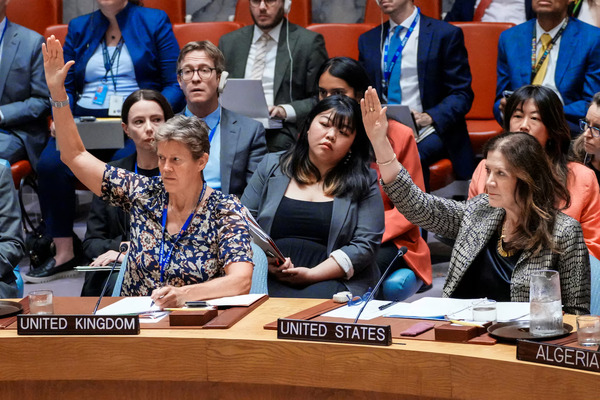
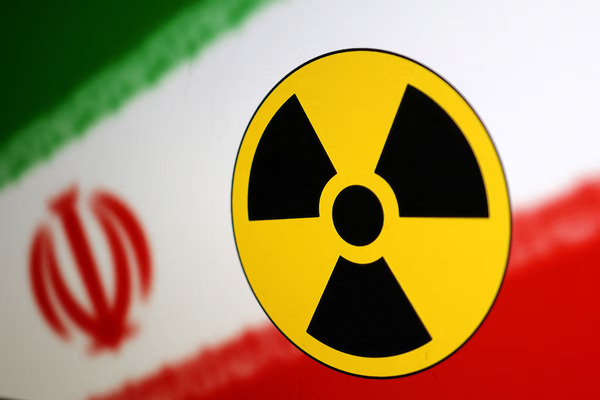
The United Nations on Saturday reinstated an arms embargo and other sanctions on Iran after a process triggered by key European powers, prompting Tehran to warn of a harsh response.
Britain, France and Germany triggered the return of sanctions on Iran at the U.N. Security Council over accusations the country has violated a 2015 deal that aimed to stop it developing a nuclear bomb. Iran denies seeking nuclear weapons.
The end of the decade-long nuclear deal originally agreed by Iran, Britain, Germany, France, the United States, Russia and China is likely to exacerbate tensions in the Middle East, just months after Israel and the U.S. bombed Iranian nuclear sites.
U.N. sanctions imposed by the Security Council in resolutions adopted between 2006 and 2010 were reinstated at 8 p.m. EDT Saturday (0000 GMT). Attempts to delay the return of all sanctions on Iran failed on the sidelines of the annual gathering of world leaders at the U.N. this week.
“We urge Iran and all states to abide fully by these resolutions,” the foreign ministers of France, Britain and Germany said in a joint statement after the deadline passed.
Tehran has warned of a harsh response. But Iranian President Masoud Pezeshkian said on Friday that Iran had no intention of leaving the Non-Proliferation Treaty. Iran said on Saturday it was recalling its ambassadors to Britain, France and Germany for consultations.
Russia has disputed the return of U.N. sanctions on Iran.
“It is unlawful, and it cannot be implemented,” Russian Foreign Minister Sergei Lavrov told reporters at the U.N. earlier on Saturday, adding that he had written to U.N. Secretary-General Antonio Guterres warning that it would be “a major mistake” for him to acknowledge a return of U.N. sanctions on Iran.
The U.N. Security Council website, opens new tabwas swiftly updated on Saturday evening to reflect the return to sanctions.
Diplomacy Still An Option
The European powers had offered to delay reinstating sanctions for up to six months to allow space for talks on a long-term deal if Iran restored access for U.N. nuclear inspectors, addressed concerns about its stock of enriched uranium, and engaged in talks with the United States.
“Our countries will continue to pursue diplomatic routes and negotiations. The reimposition of U.N. sanctions is not the end of diplomacy,” the foreign ministers of Britain, France and Germany said. “We urge Iran to refrain from any escalatory action and to return to compliance with its legally binding safeguards obligations.”
U.S. President Donald Trump has been clear that diplomacy is still an option for Iran and a deal remains the best outcome for the Iranian people and the world, U.S. Secretary of State Marco Rubio said in a statement after the U.N. sanctions were reimposed.
“For that to happen, Iran must accept direct talks, held in good faith, without stalling or obfuscation,” he said, stressing that until there was a new deal it was important that countries implemented sanctions “immediately in order to pressure Iran’s leaders to do what is right for their nation, and best for the safety of the world.”
Iran’s economy is already struggling with crippling U.S. sanctions reimposed since 2018 after Trump ditched the pact during his first term.
Iran’s rial currency continued to decline over fears of new sanctions. The rial fell to 1,123,000 per U.S. dollar, a new record low, on Saturday, from about 1,085,000 on Friday, according to foreign exchange websites, including Bon-bast.com.
With the return of U.N. sanctions, Iran will again be subjected to an arms embargo and a ban on all uranium enrichment and reprocessing activities and any activity related to ballistic missiles capable of delivering nuclear weapons, including launches.
Other sanctions to be reimposed include a travel ban on dozens of Iranian individuals, an asset freeze on dozens of Iranian individuals and entities and a ban on the supply of anything that could be used in Iran’s nuclear program.
All countries are authorized to seize and dispose of any items banned under U.N. sanctions and Iran will be prohibited from acquiring an interest in any commercial activity in another country involving uranium mining, production or use of nuclear materials and technology.
(With inputs from Reuters)
39 Dead In Tamil Nadu Stampede At Actor Vijay’s Election Rally
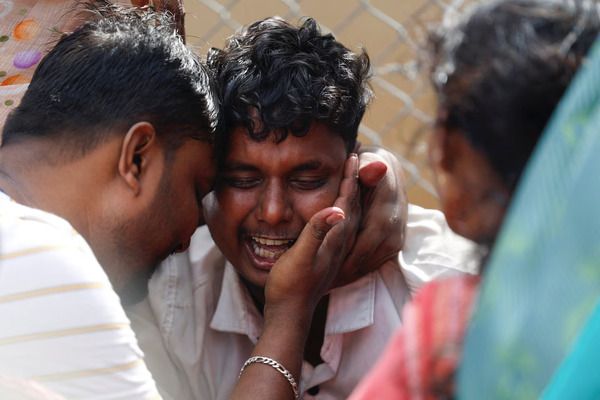
At least 39 people were killed and more than 50 injured Saturday in a stampede at a rally by Tamil actor and politician Vijay, who is campaigning for election, according to Tamil Nadu’s chief minister.
“So far, 39 people have died, including 13 men, 17 women, 4 boys, and 5 girls — while 51 people, including 26 men and 25 women, are receiving intensive treatment,” Tamil Nadu Chief Minister M.K. Stalin told reporters in Karur, the district where the incident occurred during a political rally held by Tamilaga Vettri Kazhagam, Vijay’s party.
Earlier, state lawmaker Senthil Balaji told reporters that 58 people were hospitalised.
Massive Crowds
Vijay, one of Tamil cinema’s most bankable actors for three decades, has drawn massive crowds to his public meetings since launching his political party, Tamilaga Vettri Kazhagam, in 2024, which has targeted both the state ruling party DMK and Prime Minister Narendra Modi‘s Bharatiya Janata Party.
He is campaigning ahead of state elections that are to be held in early 2026.
Videos from local media show thousands of people surrounding a large campaign vehicle on top of which Vijay is seen standing and speaking.
During the rally, visuals showed Vijay throwing water bottles from the top of the vehicle to fainting supporters and calling for police help when the crowd became uncontrollable.
“My heart is broken; I am in unbearable, indescribable pain and sorrow,” Vijay wrote on X.
“I express my deepest sympathies and condolences to the families of my dear brothers and sisters who lost their lives in Karur. I pray for a speedy recovery for those who are undergoing treatment in the hospital.”
At least 44 doctors from the nearby districts of Tiruchirappalli and Salem were sent to Karur, media reports said.
When asked about the cause of the stampede during a press briefing early on Sunday, Stalin said “Tamil Nadu has appointed a commission headed by retired judge Aruna Jagadeesan to investigate the incident and submit a report to the government, after which further action will be taken.”
He earlier announced 20 lakh each to the families of the victims who died in the incident.
This is not the first time Vijay’s rallies have faced safety concerns.
At least six deaths were reported by media following the first meeting of his political party when it was launched in October last year.
Despite police-imposed restrictions, including limits on convoy size and venue changes, the sheer scale of public turnout has repeatedly overwhelmed local infrastructure.
“The unfortunate incident during a political rally in Karur, Tamil Nadu, is deeply saddening,” Prime Minister Narendra Modi said in a post on X.
(With inputs from Reuters)
Iran’s Clerical Leaders Face Crisis As Nuclear Deal Stalls
Iran’s clerical rulers are facing one of their most serious challenges since the 1979 Islamic Revolution, with mounting domestic unrest and a stalled nuclear deal deepening the country’s isolation and divisions.
The United Nations reimposed sanctions on Iran on Saturday after last-ditch talks between Tehran and European powers Britain, France and Germany failed to resolve the latest of decades of standoffs over Iran’s nuclear programme.
Without a breakthrough in talks with the West, four Iranian officials and two insiders predicted Iran’s economic isolation would further intensify, stoking public fury.
Yet accepting the West’s demands risks fracturing the ruling elite and sidelining the Islamic Republic’s revolutionary beliefs in “not succumbing to Western pressure” that define Tehran’s unbowed stance, they said.
Concerns Mount In Tehran
“The clerical establishment is trapped between a rock and a hard place. The existence of the Islamic Republic is in peril,” one official said, adding that “Our people cannot handle more economic pressure or another war.”
Adding to these strains are mounting concerns in Tehran over potential renewed Israeli strikes on Iranian nuclear sites if nuclear diplomacy with the West fails, a second official said.
A 12-day war in June that began with Israeli airstrikes, followed by U.S. strikes on three Iranian nuclear installations, shocked Tehran, kicking off just a day before a planned sixth round of talks with Washington over Tehran’s nuclear program.
U.S. President Donald Trump and Israeli Prime Minister Benjamin Netanyahu have warned they will not hesitate to hit Iran again if it resumes enrichment of uranium, a possible pathway to developing nuclear weapons.
“I think the chances of war breaking out are significant, given Israel’s aggressive posture and the strong support it currently receives from the United States,” former lawmaker Gholamali Jafarzade Imenabadi told Iranian media on Thursday.
Britain, France and Germany triggered the snapback of U.N. sanctions on August 28, accusing Iran of violating its 2015 nuclear pact with world powers. The measures took effect on Saturday after failed negotiating efforts to delay it this week during the U.N. General Assembly.
The United States, its European allies and Israel accuse Tehran of using its nuclear program as a veil for efforts to try to develop the capability to produce weapons. Iran says its nuclear program is for peaceful purposes only.
Tougher Nuclear Stance
Iranian authorities have said renewed sanctions will push them toward a tougher nuclear stance, but the threat of Israeli attacks has left them with scant room to manoeuvre.
A former moderate senior Iranian official doubted Tehran would take drastic steps as the leadership understands the risks amid its weakened regional position, mounting domestic pressures and the potential cost of further escalation.
Rifts are widening within Iran’s ruling elite over how to navigate the crisis — some push for a tougher line while others resist, fearing it could trigger the Islamic Republic’s collapse.
With Trump’s speedy revival of a “maximum pressure” campaign on Tehran since February with new sanctions and threats of further military action, a second official said some decision-makers in Tehran believe “maintaining the status quo — no war, no deal and continued talks — is the best option without offering further concessions.”
The new measures could significantly increase pressure on Iran’s economy, further restricting its trade with countries that have previously disregarded unilateral U.S. sanctions.
The U.N. sanctions include limitations on Iran’s oil, banking and finance sectors; an arms embargo; a ban on uranium enrichment and reprocessing; a ban on activities with ballistic missiles capable of delivering nuclear weapons; a global asset freeze and travel bans on Iranian individuals and entities.
Popular anger mounts
Compounding Tehran’s challenges, Iran’s clerical establishment is grappling with mounting popular anger over deepening economic woes.
Many Iranians, like primary school teacher Shima, fear that revival of U.N. sanctions will further cripple the economy, already under worsening strain because of years of sanctions and mismanagement.
“We already struggle to make ends meet. More sanctions mean more economic pressure. How are we going to survive?” Shima, 36, a mother of two, told Reuters from Tehran by telephone.
The clerical leadership is increasingly concerned that mounting public anger over economic hardships could erupt into mass protests that would “further harm its position on the international stage,” the second official said.
Iran’s official inflation rate is around 40%, and some estimate it is over 50%. Iranian media in recent months have reported a significant rise in food prices and costs of housing and utilities, driven by the rial currency’s steep fall and soaring raw material costs.
Iran has staved off economic collapse largely thanks to China, the main buyer of its oil and one of the few nations still trading with Tehran despite sanctions reimposed since 2018, when then-president Trump ditched Tehran’s 2015 nuclear pact.
Yet uncertainty looms over the sustainability of the exports with the revived U.N. sanctions.
(With inputs from Reuters)
Argentina: Brutal Killing Of Women Sparks Protests In Buenos Aires
The brutal killing of three females – two women and a 15-year-old girl – has sparked mass protests in Argentina’s capital Buenos Aires, with thousands demanding justice, media reports said.
The victims were identified as Morena Verdi, Brenda del Castillo, and 15-year-old Lara Gutierrez. They were tortured and murdered, allegedly by members of a drug-trafficking gang. The killings were reportedly live-streamed on social media.
Bodies found buried
The bodies were discovered buried at a property in a southern suburb of Buenos Aires on Wednesday, five days after the victims went missing, reports said.
National Security Minister Patricia Bullrich told reporters that police had arrested five suspects – three men and two women – but the suspected ringleader, a 20-year-old Peruvian man, remains at large, according to the BBC.
Murders live-streamed
Buenos Aires Province Security Minister Javier Alonso told TV channel TN, as quoted by the Buenos Aires Herald, that the victims had links with a gang in the Buenos Aires neighbourhood of Flores.
They were lured by someone they trusted to attend an event, Alonso said.
“All that session of murder and torture was transmitted live on social media, and apparently 45 people who are on an Instagram account saw it,” Alonso said.
He added that gang members are believed to have carried out the murders as punishment. The group’s leader reportedly told viewers: “This is what happens to anyone who steals drugs from me,” according to Alonso.
Families demand protection for women
Relatives of the victims joined protests in Buenos Aires, demanding greater protection for women.
“Women must be protected more than ever,” Brenda’s father, Leonel del Castillo, told reporters at the protest, as quoted by the BBC.
Antonio del Castillo, grandfather of the 20-year-old cousins, broke down in tears, calling the killers “bloodthirsty.”
“You wouldn’t do what they did to them to an animal,” he told the British media.
(With inputs from IBNS)