

Support us by contributing to StratNewsGlobal on the following UPI ID
ultramodern@hdfcbank

Strategic affairs is our game, South Asia and beyond our playground. Put together by an experienced team led by Nitin A. Gokhale. Our focus is on strategic affairs, foreign policy and international relations, with higher quality reportage, analysis and commentary with new tie-ups across the South Asian region.
You can support our endeavours. Visit us at www.stratnewsglobal.com and follow us on YouTube, Twitter, Facebook and Instagram.
र 500 per month
र 1000 per month
र 5000 per year
र 10000 per year
Donate an amount of your choice
र 500 per month
Donate र 500 per month

र 1000 per month
Donate र 1000 per month
र 5000 per year
Donate र 5,000 per year
र 10000 per year
Donate र 10,000 per year
Donate an amount of your choice
Donate an amount of your choice



India Taps Mongolia For Critical Minerals, Energy
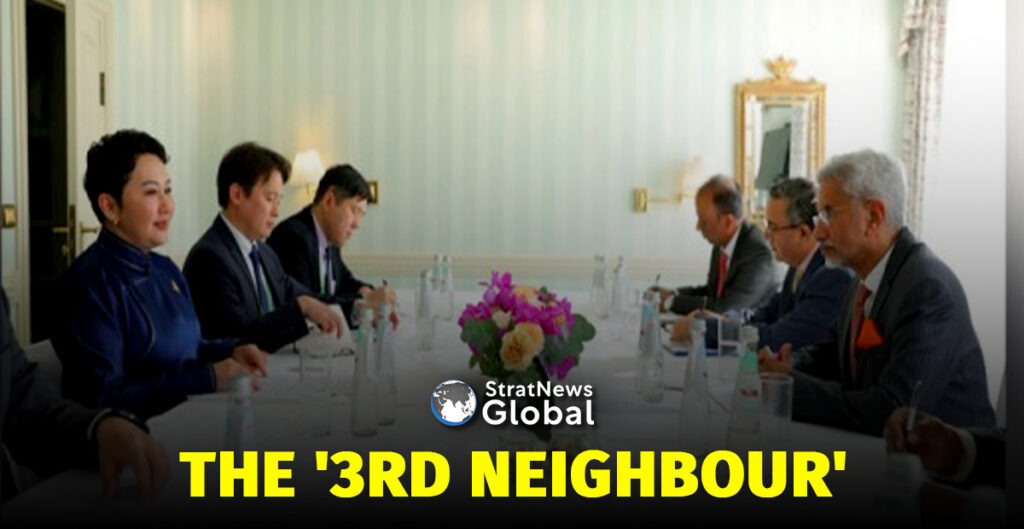
India is stepping up engagement with Mongolia to secure critical resources and strengthen long-term economic ties. The upcoming visit of Mongolian President Ukhnaagiin Khürelsükh to India, expected next month, is set to highlight this growing partnership across mining, energy, infrastructure, and technology.
For India, access to reliable mineral supplies has become a strategic priority. Rising demand for copper, coking coal, and other industrial resources—driven by manufacturing, construction, renewable energy, and electric vehicles—has pushed mineral security high on the policy agenda. Mongolia, with its untapped reserves, has emerged as an attractive partner.
A memorandum of understanding on cooperation in geology and exploration is reportedly in its final stages. Once signed, it would open the way for joint mineral surveys, investment projects, and eventual sourcing of materials. Several Indian companies, including Adani, Hindalco, and Vedanta, have already shown interest in Mongolia’s mining sector, which offers opportunities for joint ventures and direct supply agreements.
Reducing reliance on a narrow set of mineral exporters is central to India’s diversification strategy. By expanding ties with Mongolia, New Delhi seeks to limit vulnerability to global supply disruptions and price fluctuations.
Logistics, however, remain a challenge given Mongolia’s landlocked location. Both sides are working to identify viable transport routes. Current discussions focus on the Russian Far Eastern port of Vladivostok as a preferred gateway for trade, rather than a shorter route through China. This choice aligns with India’s broader connectivity vision, including the Indo-Pacific Oceans Initiative, which emphasizes resilient trade corridors that bypass potential chokepoints or politically sensitive routes.
Energy cooperation continues to be a cornerstone of the bilateral relationship. India is financing Mongolia’s first oil refinery in Dornogovi with a $1.7 billion soft loan. The refinery, being developed with technical support from Engineers India Ltd as the project management consultant, is expected to be operational by 2026. Once complete, it will reduce Mongolia’s dependency on imported fuel, particularly from Russia, and demonstrate India’s role as a development partner focused on infrastructure that builds local economic resilience.
Beyond minerals and energy, India and Mongolia are looking to widen cooperation into agriculture, digital technologies, and education. Mongolia has expressed openness to adopting Indian agri-tech solutions suited to its harsh climate, while discussions are underway on deploying Indian English-language teachers and supporting Mongolia’s digital education initiatives. These initiatives reflect a model of partnership that goes beyond trade, emphasizing knowledge sharing and capacity building.
Cultural and civilizational ties provide a steady foundation for the relationship. Mongolia regards India as its “third neighbor,” a term that acknowledges shared democratic values and deep Buddhist connections. Events such as the 2022 exposition of the Kapilvastu relics in Ulaanbaatar have reinforced these bonds.
This year marks 70 years of diplomatic ties between the two nations. India, among the first democracies to establish relations with Mongolia in 1955, also supported Ulaanbaatar’s entry into the United Nations. As both countries prepare for a new phase of cooperation, minerals, energy, and cultural links are set to shape the next chapter in their long-standing partnership.
Tear Gas Fired As Thousands Protest Against Madagascar Government
Fresh unrest gripped Madagascar’s capital on Monday as police fired tear gas at thousands protesting water and power outages, with the youth-led demonstrations entering their third day and calls growing for the government to step down.
Inspired by the so-called “Gen Z” protests in Kenya and Nepal, the demonstrations are the largest the Indian Ocean island has seen in years, and the most serious challenge President Andry Rajoelina has faced since his re-election in 2023.
Authorities declared a dusk-to-dawn curfew on Thursday after protests in the capital Antananarivo turned violent.
“There are unfortunately individuals taking advantage of the situation to destroy other people’s property,” General Angelo Ravelonarivo, who heads a joint security body that includes the police and the military, said in a statement he read on privately owned Real TV late on Thursday.
Placards, National Anthem At Protests
Protesters on Monday gathered at a university in Antananarivo where they waved placards and sang the national anthem before attempting to march through town, footage from 2424.MG news channel showed.
In another part of town, police cleared rocks and telephone poles that protesters had used to barricade roads, and fired teargas to disperse the crowd, footage broadcast on Real TV showed.
Many in the crowd called for the resignation of Prime Minister Christian Ntsay, his government, and Rajoelina.
‘Looking For Ways To Correct Everything’
The latest protests come after Rajoelina said on Sunday he would thoroughly review and reform the governance in the country.
“If there have been mistakes, I recognise them, and I am now looking for ways to correct everything,” he said in a speech in the Anosibe neighbourhood of Antananarivo, where some looting and vandalism took place on Friday.
The protesters have adapted a flag used in Nepal where protesters forced the prime minister to resign this month and have also used similar online organisation tactics as protests in Kenya last year that culminated in the government scrapping proposed tax legislation.
(With inputs from Reuters)
Canada PM Carney Confronts Dual Trade Wars In Six Months With Limited Influence
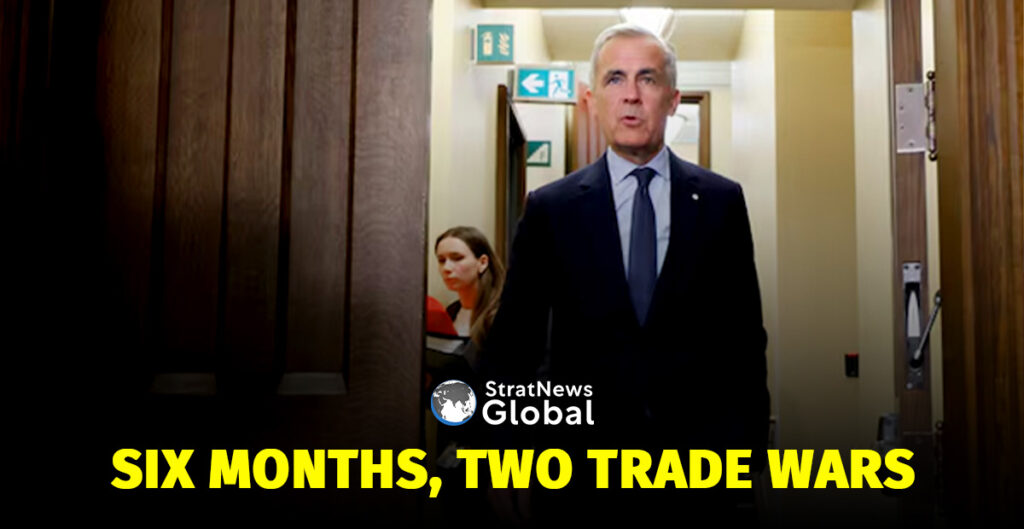
Six months into his tenure, Canada’s Prime Minister Mark Carney confronts a sluggish economy and rising challenges while navigating trade disputes with the nation’s two largest partners.
Carney has not sealed a new economic relationship with the United States, as promised during an election campaign defined by President Donald Trump’s tariff and annexation threats, and is locked in a trade war with Canada’s No. 2 trading partner, China.
While his minority government has passed one key piece of promised legislation, his policies have angered some of his Liberal Party’s progressive wing, including migrant advocates and environmentalists.
Carney, elected in April, arguing he was best-placed to negotiate with Trump and steer Canada’s economy through crisis, was widely seen as a test case for how other global leaders might stand up to the U.S. president’s trade demands.
But his administration has made concessions to the U.S., such as removing many retaliatory tariffs and dropping much of the fiercely patriotic language that mobilised Canadians against their southern neighbour. The moves suggest Carney has few options to exert pressure on the U.S., the destination for nearly three-quarters of Canadian exports.
Tariffs have hit Canada’s steel, aluminium and auto sectors, and while Canada has avoided a recession, some analysts warn economic malaise might broaden in the coming months.
Polls suggest nearly six in 10 Canadians approve of Carney and recognise the unique challenges of his job, though some show his approval rating has slipped in recent months.
“Carney cannot realistically control the pace of any discussions with Donald Trump,” said Nik Nanos, chief data scientist at Nanos Research, which shows 50.7% of Canadians favour Carney’s leadership versus 28.6% for the opposition Conservatives led by Pierre Poilievre.
Carney said last week that talks with Trump would mostly move to a future review of the trade agreement between the U.S., Canada and Mexico.
His office did not respond to further requests for comment.
Carney is also negotiating with China, which slapped import duties on Canadian canola in August, in response to Canada imposing tariffs on Chinese electric vehicles last year.
Canada’s trade minister, Maninder Sidhu, is expected to travel to China in November in an effort to lower trade tensions.
“Canada is living in the land of bad options,” said Michael Kovrig, a geopolitical advisor and former Canadian diplomat, adding that capitulating to China to counter the damage being done by the U.S. would be dangerous.
Canadian officials last year concluded that China interfered in at least two federal elections.
Few Palatable Options
The Nanos poll showed a rising unemployment rate, and the economy has replaced U.S. relations as Canadians’ primary concern.
Carney has said Canada “needed the rupture” with the U.S. and that it can thrive despite the rift.
“We have what the world wants,” Carney said last week, referencing Canada’s natural resources and its expertise in artificial intelligence.
A former UN Special Envoy on climate and finance, Carney supports increasing Canada’s energy production, hoping to export oil and liquefied natural gas to new markets.
Earlier this month, several thousand protesters gathered in various cities to protest Carney’s policies on issues from Indigenous rights to climate to migrants.
“We’ve got a Prime Minister who I know knows very well about climate change and the threat, but he’s still supporting pipelines and LNG,” said environmentalist David Suzuki.
Jeremy Paltiel, a political science professor at Carleton University, said there were few palatable options for Carney amid continued uncertainty.
“Canada does not have a lot of leverage with Trump or China, and so we have to use state investment to substitute for foreign investment,” he said. “We’ve got to figure out how to keep up investment and prepare for whatever might be coming next.”
(With inputs from Reuters)
UAE Confronts Netanyahu Over Trump Gaza Proposal And Annexation Threat
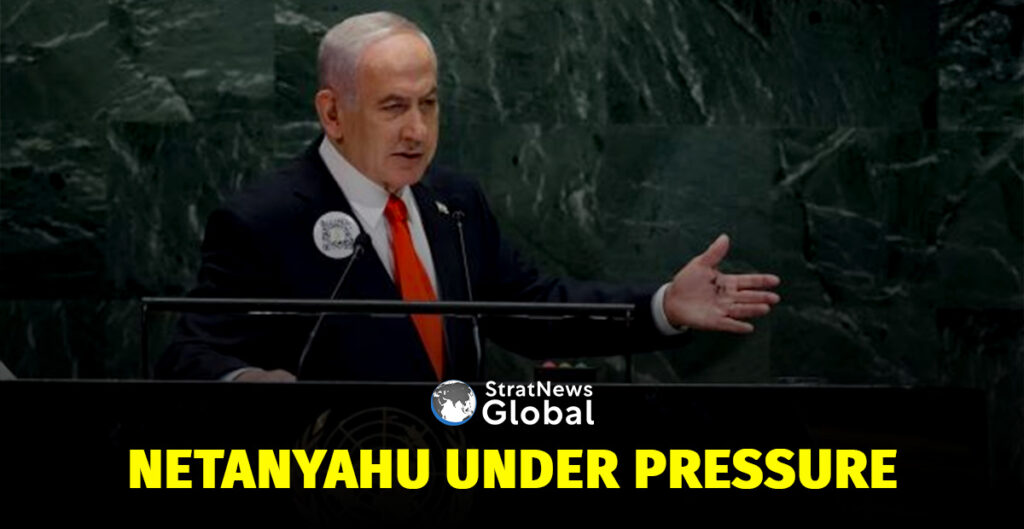
At their meeting on Monday, the United Arab Emirates has urged Israeli Prime Minister Benjamin Netanyahu to endorse President Donald Trump’s Gaza peace initiative and to give up any plan for West Bank annexation, a delegate said.
The UAE, the most prominent Arab country to normalise ties with Israel under the Abraham Accords, warned Netanyahu that annexation would shut the door to further Israeli normalisation with leading Arab and Muslim nations, including Saudi Arabia and Indonesia, the delegate added.
The Israeli leader faces pressure to annex the West Bank from far-right politicians who want to extend sovereignty over the area and snuff out hopes for a Palestinian state.
A senior Israeli official has said that Netanyahu will give Israel’s response to Trump’s Gaza peace proposal when he meets the U.S. leader at the White House on Monday.
Israel’s Role In Trump Plan
The UAE position on Trump’s Gaza peace plan was communicated to Netanyahu by its Foreign Minister Sheikh Abdullah bin Zayed in a meeting with the Israeli leader on the sidelines of the U.N. General Assembly in New York on Friday, the delegate said.
The contents of Sheikh Abdullah’s remarks to Netanyahu at the meeting have not been previously reported.
In Jerusalem, there was no immediate response from Netanyahu’s office to a request for comment.
Sheikh Abdullah, whose country wields diplomatic sway across the Middle East due to its wealth, strategic location and assertive foreign policy, said the UAE backs the U.S. plan, describing it as offering significant benefits to all parties.
He called on Netanyahu to engage seriously with the Trump administration to move the plan forward to implementation, the delegate said.
Trump met several Arab and Muslim leaders on the sidelines of the U.N. General Assembly in New York last week to promote his 21-point framework to end the nearly two-year-old Israel-Hamas war and win freedom for hostages still held by the Palestinian terrorist group.
On Sunday, Trump said he hoped that at the Monday meeting he would get Netanyahu’s agreement on the framework. The White House said on Monday that Israel and Hamas are “very close” to agreeing a framework deal to end the Gara war.
Abdulaziz al-Sager, Chairman of Saudi-based Gulf Research Center think tank, said Saudi Arabia welcomed two key commitments he said Trump had made: No forced deportation from Gaza and No annexation of the West Bank.
‘Annexation Untenable’
He said the kingdom’s message to Trump has been consistent and unequivocal: Saudi Arabia will not normalise relations with Israel or join the Abraham Accords without a firm commitment to a two-state solution, including a viable Palestinian state.
According to the Arab delegate, Arab and Muslim states successfully persuaded Trump himself at their meeting that annexation was untenable — prompting the U.S. president to publicly disavow the idea. The message to Netanyahu was blunt: if Israel wants the benefits of being a “normal country” with regional ties, it must not sabotage them, the delegate said.
According to three regional sources, the 21-point Trump framework marks a shift in Washington’s approach to Gaza. It not only encourages Palestinians to remain in the Strip but also, the three sources said, it lays out a conditional pathway toward Palestinian statehood — an idea the Trump administration had previously avoided.
The reported shift stands in contrast to Trump’s earlier proposal to relocate Gaza’s entire population, a suggestion that provoked widespread international condemnation.
In Washington, there was no immediate response from the White House and the State Department to a request for comment on the reported content of the peace framework.
The three sources said the plan tries to balance Palestinian aspirations with Israel’s security demands, including Hamas’s disarmament and Gaza’s demilitarization — conditions likely to face resistance from Hamas and Netanyahu’s right-wing government, which has long opposed Palestinian statehood.
It envisions a reformed Palestinian Authority eventually governing a redeveloped Gaza, and outlines the formation of a transitional Palestinian technocratic government.
A temporary stabilization force would train a new Palestinian police force, and Israel would gradually withdraw from occupied areas, the three sources said. A U.S.-led international body would oversee redevelopment, they said.
Israel’s assault on Gaza has killed more than 66,000 Palestinians, according to medical authorities in the territory. Most homes have been damaged or destroyed and the 2.3 million residents are living in a severe humanitarian crisis.
The war began after Hamas-led terrorists attacked Israeli territory in October 2023, killing around 1,200 people and capturing 251 hostages, according to Israeli tallies. Forty-eight hostages are still in Gaza, 20 of whom Netanyahu says are still alive.
(With inputs from Reuters)
Italy: Meloni’s Popularity Holds In Marche Regional Election
Italian Prime Minister Giorgia Meloni received a fresh boost to her nearly three-year-old right-wing government as her candidate secured victory in an election in the central region of Marche, according to vote projections released on Monday.
Incumbent regional governor Francesco Acquaroli, a member of Meloni’s Brothers of Italy party, was seen at over 50% of the vote while centre-left rival Matteo Ricci was on around 45%, projections showed as counting was still ongoing.
First Hurdle Crossed
Polling company Youtrend “called” the result for Acquaroli, saying the size of his lead meant the outcome was no longer in doubt.
The Marche contest was the first in a series of regional votes that will test Meloni’s popularity at the local and national level ahead of the next general election due in 2027.
“Voters have rewarded someone who has worked tirelessly for his region and its citizens over the years. I am sure he will continue his commitment with the same passion and determination,” Meloni wrote on social media platform X.
Voter Turnout Down
Turnout in Marche was around 50%, down from 59.7% in the previous regional election. Brothers of Italy was seen coming out as the single most popular party with around 24% of the vote, with the main opposition Democratic Party on roughly 20%.
The rightist bloc – comprising Brothers of Italy, the League, and Forza Italia – governs 14 of Italy’s 20 regions.
The right has maintained a solid lead in national opinion polls over the past three years, with Meloni’s Brothers of Italy comfortably the most popular group in the country.
Upcoming Challenges
Since winning power in 2022, Meloni has won most of the regional votes contested, though the centre-left opposition snatched two in 2024, Umbria in central Italy, and on the island of Sardinia.
The next regional votes are scheduled in the southern Calabria and central Tuscany regions early next month, offering further clues to the national mood.
(With inputs from Reuters)
China Introduces New K Visa To Attract Foreign Tech Talent Amid US H-1B Fee Hike
China’s new visa programme for foreign tech talent launches this week, aiming to strengthen Beijing’s position against Washington as U.S. visa changes push applicants to seek alternatives.
While China has no shortage of skilled local engineers, the programme is part of an effort by Beijing to portray itself as a country welcoming foreign investment and talent, as rising trade tensions due to U.S. tariffs cloud the country’s economic outlook.
China has taken a series of measures to boost foreign investment and travel, opening more sectors to overseas investors and offering visa waivers for citizens from most European countries, Japan and South Korea, among others.
“The symbolism is powerful: while the U.S. raises barriers, China is lowering them,” said Iowa-based immigration attorney Matt Mauntel-Medici, referring to China’s new visa category, called the K visa, which launches on Wednesday.
‘Exquisite’ Timing
The K visa, announced in August, targets young foreign science, technology, engineering and mathematics (STEM) graduates and promises to allow entry, residence and employment without a job offer, which could appeal to foreign workers looking for alternatives to U.S. job opportunities.
Earlier this month, the Trump administration said it would ask companies to pay $100,000 per year for H-1B worker visas, widely used by tech companies to hire skilled foreign workers.
“The U.S. has definitely shot itself in the foot on H-1Bs, and the timing is exquisite for China’s K visa,” said Michael Feller, chief strategist at Geopolitical Strategy.
Other countries, including South Korea, Germany and New Zealand, are also loosening visa rules to attract skilled migrants.
Immigration experts say the main attraction of the K visa is no requirement of a sponsoring employer, which has been regarded as one of the biggest hurdles for those seeking H-1B visas.
The H-1B visa requires employer sponsorship and is subject to a lottery system, with only 85,000 slots available annually. The new $100,000 fee could further deter first-time applicants.
“It’s an appealing alternative for Indian STEM professionals seeking flexible, streamlined visa options,” said Bikash Kali Das, an Indian student at Sichuan University.
India was by far the largest beneficiary of H-1B visas last year, accounting for 71% of approved beneficiaries.
Language Barriers And Unanswered Questions
Despite its promise, the K visa faces hurdles. Chinese government guidelines mention vague “age, educational background and work experience” requirements.
There are also no details on financial incentives, employment facilitation, permanent residency, or family sponsorship. Unlike the U.S., China does not offer citizenship to foreigners except in rare cases.
China’s State Council did not respond to a request for comment asking for more details on the logistics and underlying strategy of the K visa.
Language is another barrier: most Chinese tech firms operate in Mandarin, limiting opportunities for non-Chinese speakers.
Political tensions between Delhi and Beijing could also become a factor that could limit the number of Indian K visa applicants China is willing to accept, experts said.
“China will need to ensure Indian citizens feel welcome and can do meaningful work without Mandarin,” said Feller.
K Visa: An Alternative For Whom?
China’s talent recruitment has traditionally focused on China-born scientists abroad and overseas Chinese.
Recent efforts include home-purchase subsidies and signing bonuses of up to 5 million yuan ($702,200). These have drawn back U.S.-based Chinese STEM talent, especially amid Washington’s growing scrutiny of ties to China.
“The recruitment effort targeting Indian tech talent in China is growing but remains moderate compared to the more intensive, well-established, and well-funded initiatives aimed at repatriating Chinese STEM talent,” said Sichuan University’s Das.
A Chinese STEM graduate who recently got a job offer from a Silicon Valley-based tech company was also sceptical about the K visa’s prospects.
“Asian countries like China don’t rely on immigration and local Chinese governments have many ways to attract domestic talent,” he said, declining to be named for privacy reasons.
The U.S. has over 51 million immigrants — 15% of its population — compared to just 1 million foreigners in China, less than 1% of its population.
While China is unlikely to significantly alter its immigration policy to allow in millions of foreign workers, analysts say the K visa could still boost Beijing’s fortunes in its geopolitical rivalry with Washington.
“If China can attract even a sliver of global tech talent, it will be more competitive in cutting-edge technology,” Feller said.
(With inputs from Reuters)
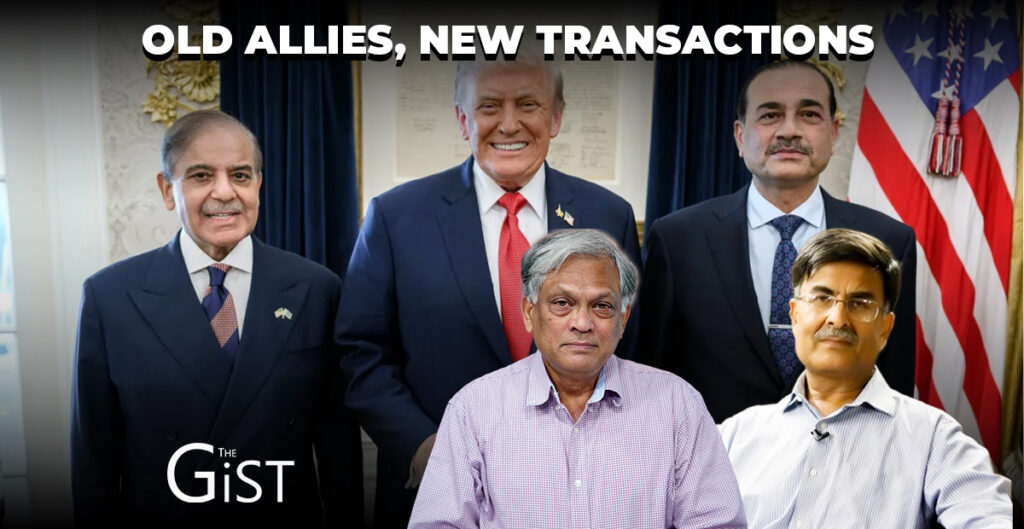
Pakistan’s US Deal Underscores Transactional Ties: Sharat Sabharwal
Pakistan is not yet in a sweet spot, says Sharat Sabharwal, former Indian high commissioner to that country, referring to its growing proximity to US President Trump, the defence deal with Saudi Arabia and so on.
In a chat on The Gist, Ambassador Sabharwal noted that “Pakistan has gone through cycles. Sometimes it comes up a little, then goes into a tight spot … but it is emerging from a geopolitical tight spot in which it had found itself for over two decades now.”
Even so, he observed that Pakistan’s internal issues are still there. While things have improved in terms of the economy avoiding sovereign default, civil military problems remain although Imran Khan is no longer a challenge.
China remains solidly behind Pakistan, he said, underscoring the support given during Operation Sindoor and the use of new Chinese weapon systems.
But what explains the new deal with the US?
“They have come together in a new phase, in a specific situation, in a transactional relationship but each of these transactional relationships has been characterised by two elements.”
During the Cold War, while the treaty relationship with Pakistan was directed against the then USSR, which is how the US saw it, for Pakistan it was a hedge against India. Even in Afghanistan, they worked at cross-purposes, the US to keep the Taliban out and Pakistan to keep the Taliban in play.
What does the US or rather Donald Trump hope to get out of this?
“It seems the business interests of the Trump family in the crypto business in Pakistan has given Islamabad a direct connection to the White House,” Sabharwal said, “and that has resulted in an American company signing an agreement earlier this month with the Frontier Works Organisation, which is a subsidiary of the army.”
The Pakistani’s will sell anything, he said, and while the conventional wisdom is that there are no “massive reserves” of oil in that country, as long as it keeps Trump interested, it’s good for business.
Tune in for more in this conversation with Sharat Sabharwal, former Indian high commissioner to Pakistan.
Federal Drug Prosecutions Drop To Decades-Low as Trump Prioritises Deportations
The number of federal drug law prosecutions has fallen to a decade-low this year, following the Trump administration’s directive to prioritise immigrant deportations, according to a Reuters review of nearly two million court records.
So far this year, about 10% fewer people have been prosecuted for drug violations compared to the same period of 2024, court records show, a drop of about 1,200 cases and the slowest rate since at least the late 1990s. The pullback was more dramatic for the types of conspiracy and money-laundering cases often used to pursue higher-level traffickers. The number of people charged with money laundering dropped by 24%, according to Reuters’ analysis.
Shortly after taking office in January, U.S. President Donald Trump launched the broadest overhaul of U.S. law enforcement since the attacks of September 11, 2001. He ordered thousands of federal agents to focus on fending off what he described as an “invasion” of illegal immigration.
The shift has produced a coast-to-coast slowdown in the types of investigations and prosecutions that the government had long viewed as central to taking on criminal networks, including the drug cartels whose products killed more than 80,000 people last year, as agents focused instead on quick-hit immigration raids, interviews, and court documents show.
“We’re seeing a reduced amount of time on long-term investigations so agents can go out in their raid gear and be seen supporting immigration raids,” said a senior Justice Department official involved in those investigations, who, like others, asked not to be identified because of the sensitivity of the subject.
Despite Trump’s promises to take a tougher approach to drug enforcement, even high-priority cases have stalled as a result, four officials familiar with the cases told Reuters. One prosecutor said a fentanyl investigation he supervised was at a standstill because the agents who were leading it had been ordered to focus on deportations instead. Another official said investigations of drug rings have been delayed.
White House spokeswoman Abigail Jackson said that Trump’s “highly successful efforts at closing the border and removing dangerous criminal illegal aliens from our communities, along with prosecuting violent drug traffickers and targeting transnational cartels, means less illegal drugs are circulating in American communities.”
“Focusing on the number of charges does not accurately reflect the great work our attorneys are doing to hold the most serious offenders accountable,” said Justice Department spokesperson Natalie Baldassarre. She said efforts to pursue organised crime are long-term and that “our focus has been to eliminate transnational drug cartels, prosecute violent drug traffickers,” and help with immigration enforcement.
Drug Prosecutions At Historic Low
To measure the effect of law enforcement’s new marching orders, Reuters gathered the dockets for every publicly available case filed in federal court since 1998 from Westlaw, an online legal research service that is a division of Thomson Reuters. Reuters compared the number of cases filed between January 1 and September 15 to the same period in previous years.
In some cases, Reuters used artificial intelligence to classify the charges people faced. A review of a random set of records showed the methodology to be 98% accurate.
Reuters also interviewed more than 15 current and former law enforcement officials, nearly all of whom spoke on condition of anonymity to discuss internal deliberations or for fear of retaliation. Together, they offered the most comprehensive picture to date of the impact of Trump’s overhaul.
Their accounts show drug enforcement has bogged down at almost every stage. Investigators have been slower to develop new cases and less available to work on existing ones. And prosecutors, too, have shifted their focus to work on criminal violations of immigration laws, leaving them less time to pursue other cases, the sources said.
Although overdose deaths in the United States have been dropping since 2023, driven at least in part by the widespread availability of the overdose antidote naloxone, there is little sign that the drug trade itself is drying up. The total amount of drugs seized by U.S. Customs and Border Protection so far this year was up about 6% from last year.
But the number of people charged with importing drugs into the United States dropped about 6% this year to the lowest point in at least 25 years, according to court records. The number of people charged in drug conspiracies fell by about 15%.
The impact of diverting so many agents has rippled beyond drugs: Prosecutions for violating laws that prohibit criminals and others from owning guns or from using them during drug crimes fell about 5% this year.
The drop in gun cases is likely to grow because investigations opened now might not reach a courtroom for a year or more. Sidelining so many agents “is going to have a huge effect,” said Jeff Cohen, who was a top lawyer for the U.S. Bureau of Alcohol, Tobacco, Firearms and Explosives, the agency in charge of enforcing gun laws, before he retired in July.
“You cannot conduct thorough, multi-agency drug investigations if you’re running around doing this other stuff,” said a former U.S. Drug Enforcement Administration official who supervised its shift to immigration enforcement.
The change has been dramatic: For the first time in decades, nearly half of the people charged with federal crimes this year were accused of immigration violations, court dockets show. About 700 more federal prosecutors have been assigned to work on at least some immigration matters, more than one of every 10 prosecutors, those records show.
(With inputs from Reuters)
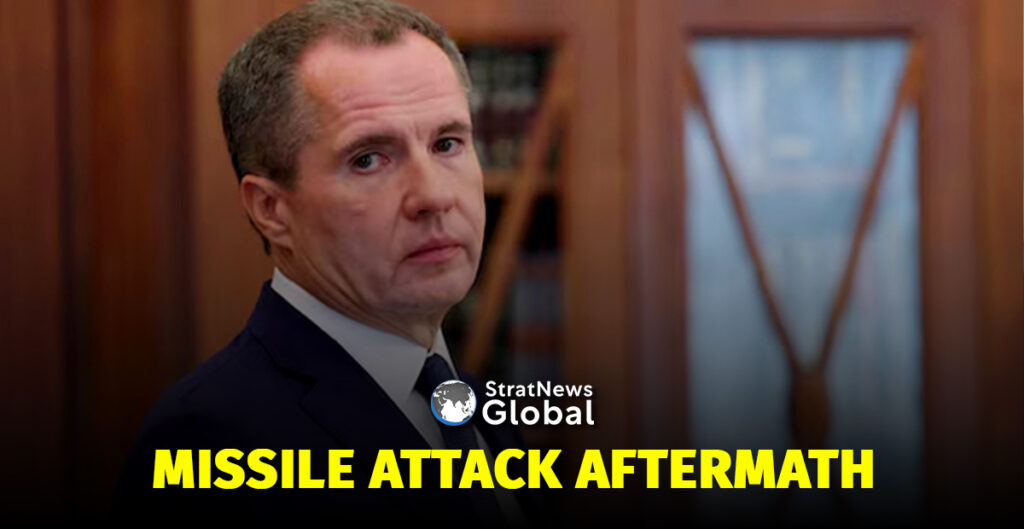
Russia’s Belgorod Region Races To Restore Power Following Ukrainian Missile Strike
Russia’s Belgorod region is restoring electricity and hot water after Ukrainian missile strikes caused widespread outages and injured at least three civilians, the governor said on Monday.
Vyacheslav Gladkov said Ukraine had targeted the region’s infrastructure, forcing certain facilities to switch to backup power generators and had twice struck the regional capital – Belgorod – with six warheads in total.
Unverified social media footage showed what looked like a powerful missile attack on a power station in Belgorod, with a series of loud explosions followed by smoke rising into the sky.
Reuters could not verify the footage, and there was no immediate comment from Ukraine, whose own power infrastructure comes under regular attack from Russia.
Gladkov said Kyiv’s forces had shelled other parts of the region, which borders Ukraine, and had launched at least 76 attack drones in the last 24 hours, some of which had been shot down near residential areas.
The Russian Defence Ministry said it had shot down 21 Ukrainian drones over Belgorod overnight.
Gladkov, who posted footage of Belgorod’s philharmonic orchestra playing by torchlight during one of the missile attacks, said emergency repair crews had worked through the night to restore power.
Russia Strikes Kyiv
Meanwhile, early on Sunday, Russia unleashed hundreds of drones and missiles on Kyiv and other regions, killing at least four and injuring dozens in one of the capital’s most sustained assaults since the war began.
Neighbouring Poland closed its airspace near two southeastern cities and its air force scrambled jets in response until the danger had passed.
Ukraine’s military said that Russia launched 595 drones and 48 missiles overnight, and its air defences shot down 568 drones and 43 missiles. It noted that the main target of the strike was the capital Kyiv.
President Volodymyr Zelenskyy said the attack, which lasted more than 12 hours, killed four people, including a child, with two of the deaths occurring at a Kyiv cardiology clinic.
He said 80 people were injured in the strikes and factories, residential buildings and energy-generating sites were damaged.
Russia’s defence ministry said on Sunday it had carried out a “massive” attack on Ukraine using long-range air- and sea-based weapons and drones to target military infrastructure, including airfields.
(With inputs from Reuters)
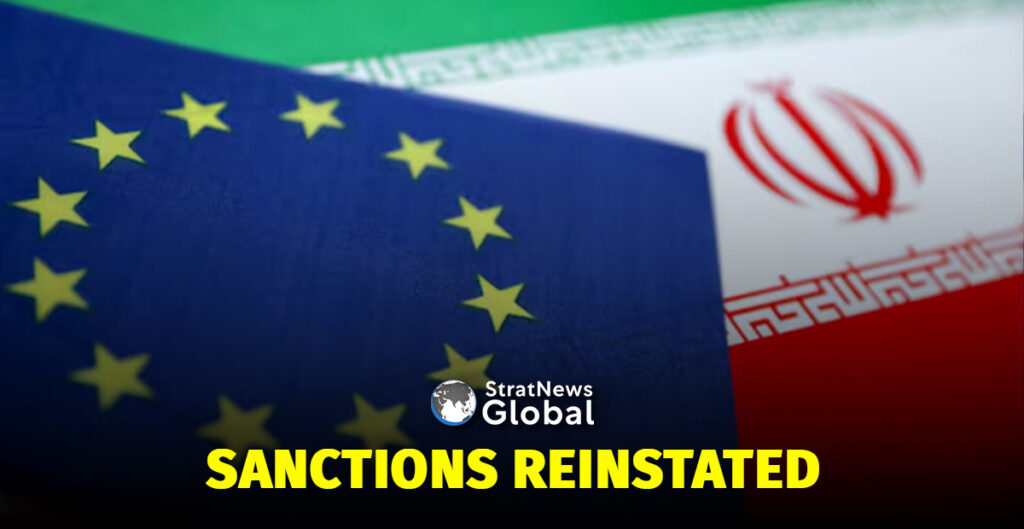
EU Confirms Reinstatement Of Sanctions Against Iran
The European Union (EU) confirmed on Monday that it has reinstated sanctions on Iran, following a comparable action by the United Nations (UN).
“Today, the EU reinstated sanctions against Iran in response to its continued non-compliance with the nuclear agreement. The door for diplomatic negotiations remains open,” said the EU presidency in a statement.
The EU said the sanctions included freezing the assets of the Iranian Central Bank and other Iranian banks, as well as travel bans on certain Iranian officials.
The EU was also banning Iran’s purchase and transportation of crude oil and the sale or supply of gold and certain naval equipment.
UN Arms Embargo
On Sunday, the United Nations reinstated an arms embargo and other sanctions on Iran over its nuclear programme following a process triggered by European powers that Tehran has warned will be met with a harsh response.
Britain, France and Germany initiated the return of sanctions on Iran at the U.N. Security Council over accusations it had violated a 2015 deal that aimed to stop it from developing a nuclear bomb. Iran denies seeking nuclear weapons.
The end of the decade-long nuclear deal originally agreed by Iran, Britain, Germany, France, the United States, Russia and China is likely to exacerbate tensions in the Middle East, just months after Israel and the U.S. bombed Iranian nuclear sites.
U.N. sanctions imposed by the Security Council in resolutions adopted between 2006 and 2010 were reinstated at 8 p.m. EDT on Saturday (0000 GMT on Sunday).
Attempts to delay the return of all sanctions on Iran failed on the sidelines of the annual gathering of world leaders at the U.N. this week.
Joint Statement
“We urge Iran and all states to abide fully by these resolutions,” the foreign ministers of France, Britain and Germany said in a joint statement after the deadline passed.
European Union foreign policy chief Kaja Kallas confirmed in a statement on Sunday that the bloc would “now proceed to implement the re-imposition of all previously lifted UN and EU nuclear-related sanctions without delay”.
Israel hailed the reimposition of sanctions on its arch foe as a “major development”, citing what it called Tehran’s ongoing violations of the nuclear programme.
(With inputs from Reuters)