

Support us by contributing to StratNewsGlobal on the following UPI ID
ultramodern@hdfcbank

Strategic affairs is our game, South Asia and beyond our playground. Put together by an experienced team led by Nitin A. Gokhale. Our focus is on strategic affairs, foreign policy and international relations, with higher quality reportage, analysis and commentary with new tie-ups across the South Asian region.
You can support our endeavours. Visit us at www.stratnewsglobal.com and follow us on YouTube, Twitter, Facebook and Instagram.
र 500 per month
र 1000 per month
र 5000 per year
र 10000 per year
Donate an amount of your choice
र 500 per month
Donate र 500 per month

र 1000 per month
Donate र 1000 per month
र 5000 per year
Donate र 5,000 per year
र 10000 per year
Donate र 10,000 per year
Donate an amount of your choice
Donate an amount of your choice






Gaza Flotilla Reports Unlit Vessels, Raises Security Alert
The international flotilla attempting to deliver aid to Gaza reported on Wednesday that several of its boats were approached by unidentified vessels, some travelling without lights.
The Global Sumud Flotilla said in a post on Telegram that the vessels have departed, and participants implemented security protocols in anticipation of a possible interception.
Italy Pulls Back Naval Escort
Italy’s defence ministry announced on Tuesday that its navy will withdraw from escorting the Gaza-bound flotilla once the vessels approach within 150 nautical miles (278 km) of the enclave, citing security risks of a possible Israeli strike.
The Global Sumud Flotilla, made up of more than 40 civilian boats carrying parliamentarians, lawyers, and activists — including Swedish climate campaigner Greta Thunberg — is seeking to challenge Israel’s long-running blockade of Gaza.
Once the convoy reaches the 150 nautical miles limit, the Italian frigate accompanying it will stop, “as communicated several times in recent days,” the ministry said in a statement.
The ship will issue two warnings to activists, with the second and final one foreseen at around 00:00 GMT, when the flotilla is expected to get within the stated distance, the statement added.
‘A Diplomatic Incident’
Earlier on Tuesday, an Italian spokeswoman for the flotilla, Maria Elena Delia, said that activists had been informed about the government’s plans to have the navy ship stop and turn back to avoid “a diplomatic incident” with Israel.
She said the flotilla had no intention of heeding Italy’s warnings not to get closer to the shore.
Italy and Spain deployed navy vessels last week to assist the flotilla, after it was hit by drones armed with stun grenades and irritants in international waters off Greece, but without any intention to engage militarily.
Delia said activists were bracing for another strike in the coming hours. “Israel will probably attack us tonight, because all the signals point to this happening,” she said in a video on Instagram.
Israel did not respond to flotilla accusations that it was behind last week’s attacks, but it has vowed to use any means to prevent the boats from reaching Gaza, arguing that its blockade is legal as part of its war against Hamas militants.
Italian Defence Minister Guido Crosetto has said he expects flotilla boats to be intercepted in the open sea and activists to face arrest.
On Tuesday, Crosetto made a “last appeal” to flotilla members to accept a compromise proposal to drop aid in Cyprus and avoid a confrontation with Israeli forces. Flotilla representatives have repeatedly refused the offer.
Israel began its Gaza offensive after the October 7, 2023, Hamas-led attack on Israel in which some 1,200 people were killed and 251 taken as hostages, according to Israeli tallies. The offensive has since killed over 66,000 Palestinians, Gaza health authorities say.
(With inputs from Reuters)
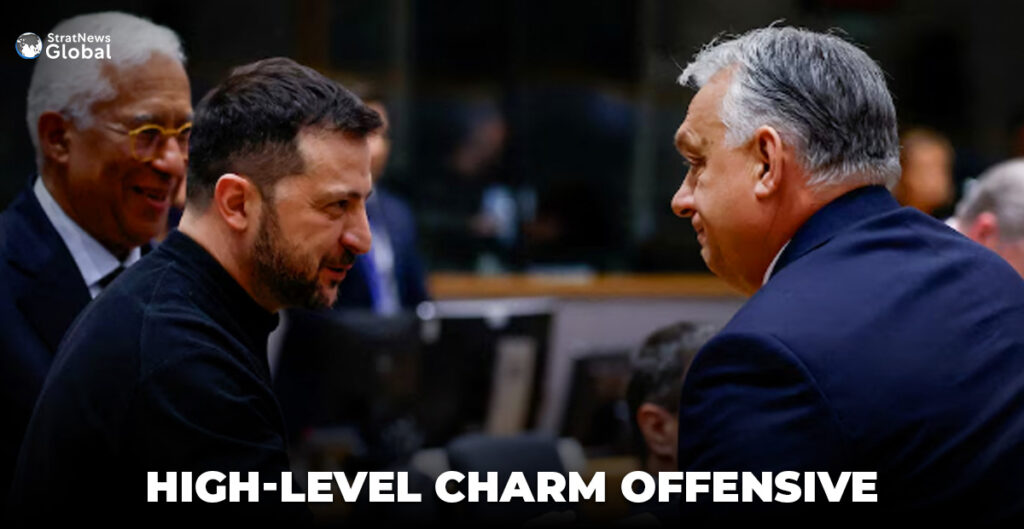
EU Launches Charm Offensive In Ukraine Amid Hungary’s Blockade
The European Union (EU) is conducting a high-level charm offensive in Ukraine this week, engaging with the Hungarian minority in western Ukraine to ease tensions with Hungary that are jeopardising Kyiv’s accession bid.
Ukraine wants to accelerate work on joining the 27-member bloc, which it considers its most realistic path to economic prosperity and to creating a buffer against the threat posed by Russia since its 2022 invasion.
But gaining membership is not easy, with Brussels setting a high bar on a number of measures that Ukraine will struggle to clear and Hungary’s opposition to the idea hardening.
Budapest Worried About Hungarian Minority’s Rights
Hungary’s government has cited concerns, including the language rights of ethnic Hungarians and what it has described as the security and economic dangers to Hungary if Ukraine accedes.
“There is no enlargement without protection of minorities,” European Enlargement Commissioner Marta Kos told minority representatives on Monday in Uzhhorod in western Ukraine, where she visited Hungarian and Slovak minority schools.
Relations between Hungary and Ukraine have worsened in recent weeks after Ukraine said drones in its airspace could have come from Hungary, prompting Hungary to suggest President Volodymyr Zelenskyy was “losing his mind.
Both sides have expelled diplomats, barred news outlets and banned entry for at least one military official. Orban on Monday questioned the sovereignty of Ukraine.
In a school where students study Hungarian, Ukrainian and English, Kos spoke to teenagers about the EU, asked a student to read out loud from a Hungarian textbook and watched children perform Hungarian folk dances in traditional clothing.
“We are 27, and we hope that Ukraine will be soon also,” she told them.
In a Slovak school, a teenager asked Kos about Ukraine’s prospects for joining the EU. “Very good,” she replied. “Perhaps one of you will be the commissioner.”
Orban Makes Ukraine Stance A Campaign Issue
Hungarian Prime Minister Viktor Orban, who is closer to the Kremlin than most European leaders and faces a tough election next year, opposes Kyiv moving to the next stage of talks and has made his stance on Ukraine a campaign issue.
Officials in some European capitals see it as a cynical way to prevent Ukraine from progressing toward membership.
“Hungary is asking for rights these minorities never had before and never claimed for themselves,” said a European official who spoke anonymously to discuss sensitive issues. “Romania also has minorities in Ukraine – never been an issue.”
Ukraine and nearly all EU states want to start initial negotiations on six “clusters” covering areas such as rights and economic policy. Hungary is blocking the process, which requires unanimous backing from the bloc’s 27 members.
Ukraine passed a law in 2017 requiring all schools to teach students over the age of 10 in Ukrainian.
Some changes were made in 2023, but critics say the adjustments did not go far enough. Brussels is encouraging Ukraine to fully implement an action plan on minority rights adopted in May.
Speaking to the minority representatives, Kos said the European Commission will act as guarantor and supervise the commitments made by Kyiv.
“Believe me, I will be very strict,” she said.
Message To Ukraine And Hungary
The EU executive wants Kos’s trip to send a gesture of support for minority rights and a political message to Kyiv and Budapest as it encourages Ukraine to continue reforms and urges Hungary to lift its veto.
“The message for Budapest is that we take the concerns from our member states seriously,” Kos told Reuters in an interview in western Ukraine.
She said Hungary’s concerns could be resolved in the cluster negotiations on minorities.
“Not even wanting to start negotiating on this, I don’t think that this is fair,” she said.
Ukraine is pushing for negotiations to begin and says it has met all the requirements.
“Much remains to be resolved, but the process is moving in the right direction,” said László Zubanics, president of the Democratic Alliance of Hungarians in Ukraine.
Hungary’s foreign ministry and EU affairs minister did not immediately respond to requests for comment.
A Hungarian government spokesman said, “We hope that the relationship between Hungary and Ukraine will develop better over the next 10 years than it did in the past decade.”
He added that this “depends entirely on Kyiv and Ukraine”.
EU Seeks A Workaround
Kos said she felt that, based on her talks, minority representatives see the benefits of EU accession, but some also raised concerns about how Ukraine’s minority action plan would work in education and healthcare.
She also had a message for Ukraine’s government in Kyiv.
“The central message is that all the minorities are enriching for the European Union. They should take it very seriously,” Kos said.
European Council President Antonio Costa has floated an idea for opening the clusters without unanimity across the EU, officials said, thereby bypassing Hungary’s objection. Changing the rules, however, requires the backing of all 27 states.
(With inputs from Reuters)
Japan’s Far-Right Party Woos Trump Allies, Promises Restraint
Japan’s far-right Sanseito party has launched an international wing to court Trump allies like Steve Bannon and similar groups in Europe, hoping global conservative backing will help it disrupt Japan’s traditional politics, four party officials said.
Launched during the COVID-19 pandemic, spreading conspiracy theories about vaccinations and the perceived influence of global elites, Sanseito broke into mainstream politics in a July election with fiery warnings about foreigners.
Now, as Japan’s long-ruling Liberal Democratic Party picks a new leader to steady its shaky administration, Sanseito is seeking to raise its international profile to lend credibility to its challenge for power and influence.
“It’s clear that we no longer live in an era where Japan can determine its course alone,” party leader Sohei Kamiya told Reuters in an interview. “So we want to get our message out abroad first,” he said, adding that this would help circumvent what he considers a pro-establishment domestic media.
To spearhead this effort, the party established an international division in Tokyo in September to accelerate a strategy of engaging with people in President Donald Trump’s orbit and European right-wing figures, according to Kamiya and three other Sanseito officials as well as U.S. disclosure documents.
Details of Sanseito’s global outreach, some of which predates the international division, haven’t been previously reported.
The strategy marks a step change for Japan’s otherwise insular far-right politics and may give Sanseito staying power where other challengers have failed, said Jeffrey Hall, an academic specialising in Japanese politics at Kanda University.
“A lot of what Sanseito talk about is about how immigration has destroyed other countries in the world. By meeting with figures who are saying those things in the West and being recognised by them, it does help Kamiya stand out,” he said.
Japan’s foreign resident population hit a record 3.8 million last year, which at 3% of the total is far lower than in the United States or Western Europe.
Nevertheless, Sanseito’s warnings of a “silent invasion” resonated with some voters angry about rising living costs in July’s upper house election, catapulting the party’s tally in the 248-seat chamber to 15 seats from one previously.
The LDP and its coalition partner lost their majority, leading Prime Minister Shigeru Ishiba to resign.
A September 8 poll by public broadcaster NHK showed Sanseito is now Japan’s most popular opposition party, leading the main opposition Constitutional Democratic Party.
Sanseito aims to win 30 to 40 seats in the next lower-house election, to add to the three currently, giving it enough members to submit bills and possibly enter a power-sharing arrangement, Kamiya said.
He hopes that whoever wins the LDP leadership race on October 4 – likely either hardline nationalist Sanae Takaichi or the more moderate Shinjiro Koizumi – will call a snap election to test public appetite for their premiership.
Koizumi told Reuters he would engage with all opposition parties, but if elected, he had no plans “at this time” to call an election. Takaichi’s office said she wasn’t available to comment.
Outreach To Kirk, Bannon, Carlson
An oft-cited Japanese proverb warns that “the nail that sticks out gets hammered down” – meaning those who break from the norm are criticised or pressured to conform.
But international recognition can help Kamiya avoid that fate, said Sen Yamanaka, a U.S.-educated former banker turned Sanseito lawmaker who heads the party’s new international arm.
That is one reason the party arranged for U.S. influencer Charlie Kirk, who played a key role in driving youth support for Trump, to speak at an event in Tokyo in September. Kirk was fatally shot less than a week later.
Appearing alongside Kamiya at a packed conference hall, Kirk said it wasn’t too late for Japan to avoid the mass migration ruining the West, said Yamanaka, who represented Sanseito at Kirk’s memorial in Arizona. Turning Point USA, the advocacy group Kirk founded, didn’t respond to a request for comment.
Sanseito had been in talks for Kamiya to appear at Kirk’s year-end America Fest conference, headlined by Trump in 2024, Yamanaka said. Kamiya added that the party plans to invite prominent right-wing voices from France, Germany and Britain to conferences in Japan this year and next.
Kamiya also asked to appear on podcast shows hosted by Bannon, Trump’s former strategist, and conservative commentator Tucker Carlson in 2024, according to U.S. public disclosures submitted under the Foreign Agents Registration Act.
Matthew Braynard, a former Trump campaign staffer, submitted the requests on Kamiya’s behalf, the disclosures show. Braynard told Reuters he helped the party on a voluntary basis and wasn’t paid.
More recently, Bannon’s show requested an interview with Kamiya after the July election, but that didn’t materialise due to scheduling conflicts, the Sanseito leader said.
Bannon told Reuters he’s “working to get him on.” “This could be a revolutionary force in Japanese politics,” he said.
Carlson told Reuters he supported Sanseito’s efforts to restrict immigration, seeing it as key to protecting Japanese culture. He said he wanted to connect with Kamiya and would “have my guys call him right now.”
In August, Kamiya met with the co-head of Germany’s far-right AfD party in Tokyo and said he received a message of encouragement for Sanseito’s policies. AfD didn’t respond to a request for comment.
(With inputs from Reuters)
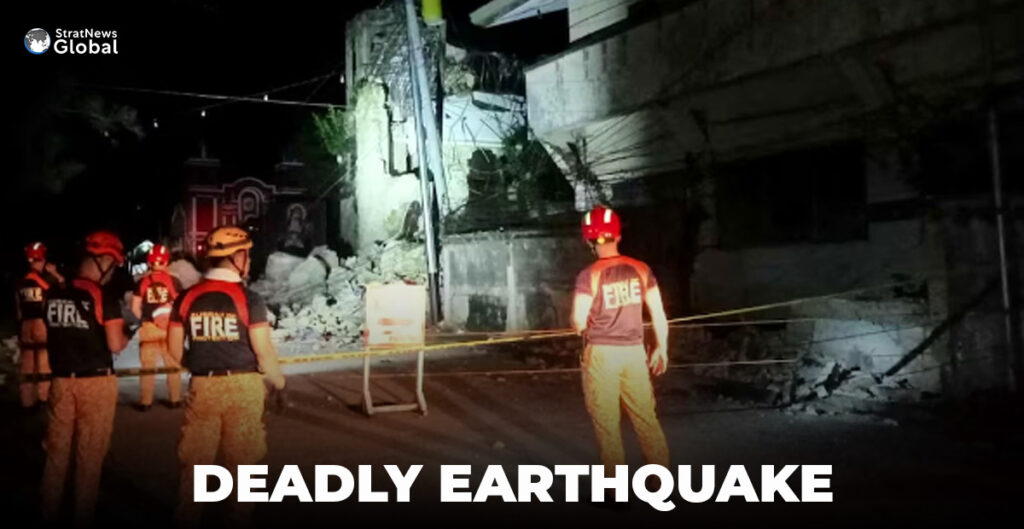
Death Toll Rises To 69 After Powerful 6.9-Magnitude Quake Jolts Philippines
The death toll from the powerful 6.9-magnitude earthquake in the central Philippines has climbed to 69 as government agencies work to restore power and water while searching for survivors, a disaster official said on Wednesday.
In Bogo city in the north of Cebu province, which was near the epicentre of the shallow quake that struck off the coast just before 10 p.m. on Tuesday, the hospital has been “overwhelmed,” Civil Defence official Raffy Alejandro told reporters.
The death toll of 69 was based on data from the Cebu provincial disaster office and was subject to validation, said Jane Abapo, an information officer at the regional Civil Defence office. Another official said more than 150 people were injured.
President Assures Assistance
President Ferdinand Marcos Jr assured survivors of swift assistance, saying cabinet secretaries were on the ground directing relief operations, as he expressed his condolences to those who lost loved ones.
Cebu, one of the Philippines’ most popular tourist destinations, is home to 3.4 million people. Despite the damage, Mactan-Cebu International Airport, the country’s second busiest gateway, remained operational.
Another hard-hit town, San Remigio, was placed under a state of calamity to help the response and relief efforts. Vice Mayor Alfie Reynes appealed for food and water for evacuees, as well as heavy equipment to aid search and rescue workers.
“It is raining heavily and there is no electricity, so we really need help, especially in the northern part because there’s a scarcity of water after supply lines were damaged by the earthquake,” Reynes told DZMM radio.
In the nearby town of Pilar, resident Archel Coraza said most of his family were asleep when their house began to shake violently.
“I woke them up and we all rushed outside into the street,” he told DZMM. Coraza, who lives close to the shoreline, said he saw seawater recede after the tremor.
Panic And Destruction
Local media posted videos of people rushing out of their homes as the ground shook and buildings collapsed, including a church that was more than 100 years old.
Reynes said among the deceased were some people who had been playing basketball in a sports complex in San Remigio when it partially collapsed due to the quake.
Earthquake monitoring agencies put the quake’s depth at around 10 km (6.2 miles) and recorded multiple aftershocks, the strongest having a magnitude of 6. There was no tsunami threat following the quake.
The Philippines lies in the Pacific “Ring of Fire,” where volcanic activity and earthquakes are common. The country had two major earthquakes in January, with no casualties reported. In 2023, a 6.7 magnitude offshore earthquake killed eight people.
(With inputs from Reuters)
US Government Enters Partial Shutdown As Budget Standoff Deepens
The US government began a partial shutdown on Wednesday after bitter political deadlock blocked a funding deal between Congress and the White House, triggering what could become a prolonged standoff with thousands of federal jobs at risk.
There was no clear path out of the impasse, while agencies warned that the 15th government shutdown since 1981 would halt the release of a closely watched September employment report, slow air travel, suspend scientific research, withhold pay from US troops and lead to the furlough of 750,000 federal workers at a daily cost of $400 million.
US President Donald Trump, whose campaign to radically reshape the federal government is already on track to push out some 300,000 workers by December, warned congressional Democrats that a shutdown could clear the path for “irreversible” actions including cutting more jobs and programs.
The shutdown commenced hours after the Senate rejected a short-term spending measure that would have kept government operations afloat through November 21.
Democrats opposed the legislation over Republicans’ refusal to attach an extension of health benefits for millions of Americans that are due to expire at the end of the year. Republicans say the issue must be addressed separately.
At issue on the government funding front is $1.7 trillion for agency operations, which amounts to roughly one-quarter of the government’s total $7 trillion budget. Much of the remainder goes to health and retirement programs and interest payments on the growing $37.5 trillion debt.
Independent analysts warn the shutdown could last longer than the budget-related closures of the past, with Trump and White House officials threatening to punish Democrats with cuts to government programs and the federal payroll.
Trump budget director Russell Vought, who has called for “less bipartisan” appropriations, threatened permanent layoffs last week in the event of a shutdown.
Wall Street futures slipped, gold struck a record high and Asian stocks wavered as investors worried about delays in the release of key data and the impact of job losses. The dollar hovered near a one-week low versus major peers.
Record Dates To First Trump Term
The longest government shutdown in US history stretched over 35 days during December 2018 and January 2019 during Trump’s first term in office, in a dispute over border security.
“All they want to do is try to bully us. And they’re not going to succeed,” Senate Democratic leader Chuck Schumer said in a floor speech a day after a White House meeting with Trump and other congressional leaders that ended with the two parties far apart.
Senate Majority Leader John Thune described the failed short-term spending bill as a “nonpartisan” measure devoid of partisan policy riders that Democrats have had no problem accepting in years past.
“What’s changed is, President Trump is in the White House. That’s what this is about. This is politics. And there isn’t any substantive reason why there ought to be a government shutdown,” the South Dakota Republican told reporters.
Trump’s Republicans hold majorities in both chambers of Congress, but legislative rules require 60 of the 100 senators to agree on spending legislation. That means that at least seven Democrats are needed to pass a funding bill.
Democrats Focus On Healthcare Funding
Democrats are under pressure from their frustrated supporters to score a rare victory ahead of the 2026 midterm elections that will determine control of Congress for the final two years of Trump’s term.
The healthcare push has given them a chance to unite behind an issue that resonates with voters.
Along with the extended health subsidies, Democrats have also sought to ensure that Trump will not be able to undo those changes if they are signed into law. Trump has refused to spend billions of dollars approved by Congress, prompting some Democrats to question why they should vote for any spending legislation at all.
University of Chicago professor Robert Pape said the unusually polarized US political climate in the aftermath of conservative activist Charlie Kirk’s assassination and the growing power on the extreme wings of both parties could make it harder for party leaders to agree on a deal to reopen the government.
“The rules of politics are radically changing and we can’t know for sure where all of this is going to end,” said University of Chicago political science professor Robert Pape, who studies political violence.
“Each side would have to backtrack against tens of millions of truly aggressive supporters, their own constituents, which is going to be really hard for them to do,” he said.
Before the shutdown, Trump reached out to his own supporters with a deepfake video showing manipulated images of Schumer appearing to criticize Democrats while top House Democrat Hakeem Jeffries stood next to him, with a crudely drawn sombrero and mustache imposed over his face.
“It was childish. It was petty,” Schumer told reporters. “It’s something that a 5-year-old would do, not a president of the United States. But it shows how unserious they are. They don’t give a damn about the harm they will cause with their shutdown.”
(With inputs from Reuters)
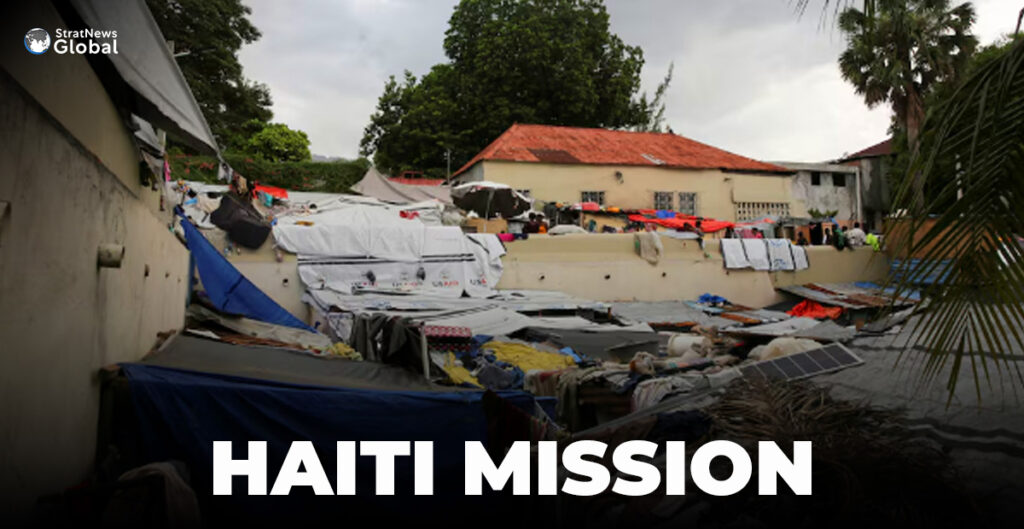
UN Security Council Backs Larger Force In Haiti To Combat Gangs
The United Nations Security Council on Tuesday approved a U.S.-backed plan to more than double the size of Haiti’s 15-month-old international security mission, long plagued by underfunding and understaffing, drawing sharp criticism of Washington from China and Russia.
Armed gangs have taken control of almost all of Haiti’s capital, Port-au-Prince, in a conflict that has forced some 1.3 million people from their homes and fueled famine-level hunger. UNICEF said last month that children make up an estimated 50% of gang members in the Caribbean country.
“This dramatic expansion of gang violence has jeopardised the very existence of the Haitian state,” U.S. Ambassador to the U.N. Mike Waltz told the council.
Russia, China and Pakistan abstained from the vote on the measure put forward by the United States and Panama. The remaining 13 council members voted in favour.
New Force, Same Problems?
The new force will still rely on voluntary contributions of personnel and funding, but the leadership structure will be different. It will be led by a group of representatives from countries that have contributed personnel, plus the U.S. and Canada. The force will also be supported by a new U.N. field office.
It remains unclear how the new force will overcome the challenges faced by the current Kenyan-led Multinational Security Support mission.
Kenyan President William Ruto told an event at the U.N. last week that the mission has struggled with staffing and logistics. While he praised Washington for stepping up, he said the vehicles it provided “were second-hand vehicles, and therefore they broke down a lot.” However, he said Kenya was ready to participate in the new mission.
“Today’s vote is a recognition that, due to the lack of true burden sharing, the international community had failed to deliver a mission that was fit for purpose. It lacked the scale, scope and resources needed to take the fight to the gangs and restore a baseline of security in Haiti,” Waltz said.
Russia and China were both critical of the United States, accusing it of failing to stop an illicit flow of weapons to Haiti from the U.S. and not providing enough funding for the initial MSS mission. They also said the United States had rushed through a resolution that was ambiguous on several critical issues, including rules of engagement.
“Let us be frank, if that contributor failed to provide the promised funds for the MSS, what guarantees are there that things will be different with this new mission?” asked Russia’s U.N. Ambassador Vassily Nebenzia, describing the money needed for Haiti as very modest compared to the billions of dollars spent by countries to send weapons to Ukraine.
Russia invaded neighbouring Ukraine in February 2022.
Venezuela Concerns
He also echoed concern raised by Russian Foreign Minister Sergei Lavrov on Saturday about how the United States could interpret the GSF mandate. The resolution adopted on Tuesday authorises countries taking part in the GSF to take all necessary measures to carry out its mandate – code for the use of force.
“We have no certainty that the authors of today’s text will not come up with some kind of – quote, unquote – creative way to link their military activity to allegedly combating drug cartels,” Nebenzia said.
The U.S. mission to the U.N. did not immediately respond to a request for comment on the remarks.
China’s U.N. Ambassador Fu Cong said Beijing did not veto the resolution on Tuesday “in light of Haiti’s dire security situation and the concerns and appeals of the international community.”
“This represents the utmost goodwill that China could demonstrate. At the same time, we must point out that our questions and concerns remain. We are deeply worried about the operation and prospects of the GSF,” he added.
A top U.S. official in Haiti last week said that continued U.S. funding for the current U.N.-backed security force in Haiti would not be guaranteed if the Security Council rejected Washington’s proposal to restructure and expand the mission.
(With inputs from Reuters)
Portugal: Right-Wing Majority Pushes Immigration Changes
Portugal’s right-leaning parliament on Tuesday passed a revised immigration bill, aiming to control rising inflows after the Constitutional Court struck down an earlier version for being too tough on family reunification.
All the left-wing parties voted against the bill, which offers a slight easing of such restrictions, addressing only the most critical points raised by the Constitutional Court, which could create further obstacles to its coming into force.
Changing Trend Across Europe
The legislation reflects the rightward shift in politics across much of Europe, as governments try to fend off the rise of the far right by being tougher on immigration.
The revision was proposed by the ruling centre-right coalition and has the support of the far-right, anti-immigration Chega party despite its initial objections to immigrants having access to social security payments from the moment they start contributing.
While parliament kept the general requirement of a two-year period of valid residency for immigrants to request permission for spouses to join them in Portugal, that period can now be halved for couples who were together for more than a year before moving to Portugal.
Immigrants can now also request that children under 18 or dependants with disabilities join them regardless of the applicant’s legal residency period.
Seeking The Right Balance
Cabinet Minister Antonio Leitao Amaro said the revised bill “ensures that the right balance is struck – neither with doors wide open to immigrants, nor closed,” as the country seeks to control immigration according to its labour market needs and integration capacity.
“… but the time for an irresponsible (immigration) policy is over,” he told lawmakers before the vote.
The Iberian country of around 10.5 million people has seen a significant increase in immigration in recent years.
The migration and asylum agency AIMA estimates that more than 1.5 million foreign citizens were legally residing in Portugal last year, double the number three years earlier.
Brazilians are the largest group, with over 450,000 legal immigrants.
(With inputs from Reuters)
Romania, Ukraine To Jointly Build Defensive Drones For EU, NATO
Romania is looking to swiftly launch joint production of defensive drones with Ukraine, aiming to serve both domestic needs and those of EU and NATO partners, Foreign Minister Oana Toiu said in an interview.
Toiu told Reuters talks with Ukraine began before a spate of airspace incursions that the region has blamed on Russia in recent weeks.
‘Believe In Our Capacity’
“We believe it is strategic for the eastern flank to be better protected, especially in air defence. So what we are doing in that direction is to create the partnerships needed, for example, with Ukraine to build defensive drones for the future,” she said.
“We believe in our capacity to make it a reality fast,” she said on the sidelines of the annual gathering of world leaders at the UN General Assembly that ended on Monday.
Tensions with Moscow edged up in recent weeks as Estonia accused Russia of sending fighter jets into its airspace and NATO jets shot down drones over Poland. Romania also said its jets almost engaged a drone that entered its airspace.
Russia has said it has never targeted EU or NATO nations and has no plans to do so in the future.
‘Drone Wall’
Her remarks about joint production come as Ukraine has moved to relax restrictions on exporting its weapons, which it has used and honed on the battlefield against Russia.
Ukrainian President Volodymyr Zelenskyy touted these weapons as he addressed the UN General Assembly last week, in an effort to shore up allied support and show that supporting close ties with Kyiv is a two-way street.
The European Union has backed the idea of creating a “drone wall” to shield the region.
Approval For US Troops
Toiu also said that Romania had approved an increased US troop presence on its territory to support Middle East refuelling operations, though she declined to provide numbers.
Since Trump’s return to power, European allies have been concerned about potential cuts to around 80,000 US troops in Europe as their worries about the threat from Russia mount.
Romania, which borders Ukraine, hosts a number of US troops and plans to invest more than 2.5 billion euros ($2.9 billion) into its Mihail Kogalniceanu Air Base in the coming years, expanding its capacity to accommodate 10,000 Romanian and allied troops.
Romania has decided to allow an increased US presence in its NATO military bases, she said, noting air refueling could be necessary “in the case of a reaction needed in the volatile Middle East”.
The Pentagon did not respond to a request for comment about its plans.
(With inputs from Reuters)
Denmark Cracks Down On Student Visas For Bangladeshi And Nepali Applicants
Denmark is tightening its immigration rules to combat the misuse of student permits as a backdoor to the local job market.
Prompted by a surge in foreign student numbers, especially from Bangladesh, the Ministry of Immigration and Integration has announced a series of tough new measures.
These initiatives will make it significantly more difficult for applicants from “third countries,” such as Bangladesh and Nepal, to be admitted to Danish universities without proper qualifications, and will eliminate the option for these students to bring family members with them.
“It will be significantly more difficult for citizens from third countries, such as Bangladesh and Nepal, to be admitted to Danish universities if they do not have the right academic qualifications. With the new initiatives, the government will, among other things, tighten the requirements for admission and remove the possibility of bringing family members for students from third countries. In addition, control of foreign educational documents will be strengthened,” an official statement read, reported Times Now.
Authorities also said universities would be allowed to impose stricter entry requirements for master’s programmes, such as entrance exams or targeted language tests.
Cheating controls will be tightened, with harsher penalties for violations.
“A national requirement is introduced that universities must verify foreign educational documents before they can offer admission to a degree program. For students who are admitted and are in the country on a study residence permit, stricter control of study activity is introduced, so that students who do not follow their studies in practice are sent home more quickly.
“In addition, students from third countries must pay a larger part of the payment for their education already in connection with the start of their studies,” the statement added.
The government will also scrap the option for foreign students to bring family members and reduce the post-study job search period from three years to one.
The National ID Center will assist universities in verifying foreign credentials, with authority to review existing permits for Bangladeshi and Nepali nationals to check for false documents.
Official figures show Bangladeshi students formed the largest group of international master’s entrants in 2024, followed by Germans and Italians.
However, family-linked residence permits are disproportionately high among Bangladeshi (58%) and Nepali (74%) students, compared with just 1% for Chinese and 2% for American students.
Immigration Minister Kaare Dybvad Bek said the measures were necessary due to a sharp rise in applicants from Bangladesh and Nepal.
“At the same time, they work more than other foreign students, and to a much greater extent this is unskilled work. When you come to Denmark on a curriculum, the main purpose should of course be to study. That goes without saying,” he said.
Education Minister Christina Egelund stressed that study visas must be used solely for academic purposes.
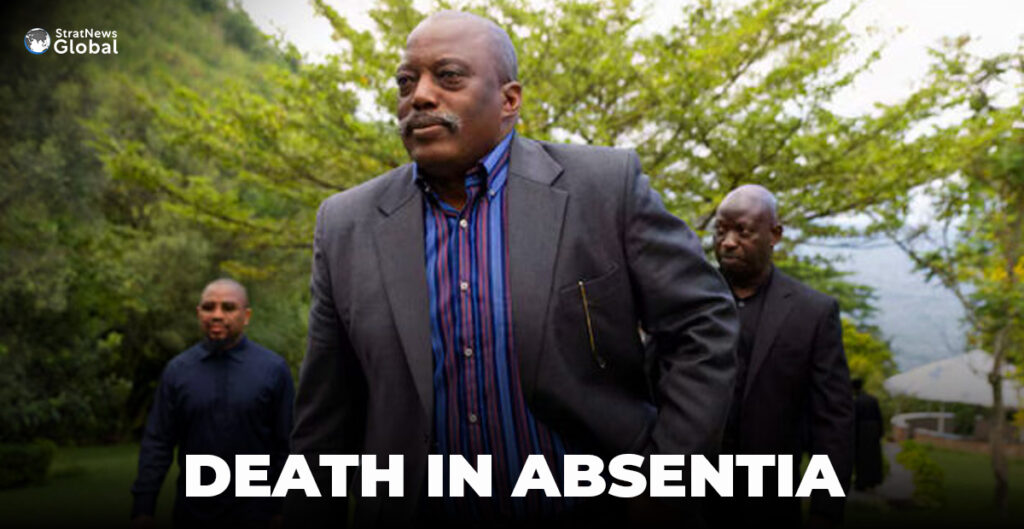
Congo: Ex-President Kabila Gets Death Sentence, $50Bn Fine Over M23 Rebel Ties
In a landmark ruling on Tuesday, a military court in the Democratic Republic of Congo sentenced former president Joseph Kabila to death in absentia, convicting him of war crimes, treason, and crimes against humanity.
The case stems from his alleged role in backing the advance of Rwanda-backed M23 rebels in Congo’s volatile east. Kabila, who led Congo from 2001 to 2019, has denied wrongdoing and said the judiciary has been politicised.
Lieutenant-General Joseph Mutombo Katalayi, presiding over the tribunal in Kinshasa, said Kabila was found guilty of charges that included murder, sexual assault, torture, and insurrection.
Kabila did not attend the trial and was not represented by legal counsel. Neither he nor his representatives were immediately available for comment. His whereabouts were not immediately known.
Ordered To Pay $50 Billion In Damages
“In applying Article 7 of the Military Penal Code, it imposes a single sentence, namely the most severe one, which is the death penalty,” Katalayi said while delivering the verdict.
He was also ordered to pay around $50 billion in various damages to the state and victims.
The verdict could fuel further divisions in the vast mineral-rich central African nation that has endured decades of conflicts.
Fallout, Allegations
Kabila spent almost two decades in power and only stepped down after deadly protests against him. Since late 2023, he has been residing mostly in South Africa, though he did appear in rebel-held Goma in eastern Congo in May.
He entered into an awkward power-sharing deal with his successor, Felix Tshisekedi, but their relationship soon soured.
As M23 marched on east Congo’s second-largest city of Bukavu in February, Tshisekedi told the Munich Security Conference that Kabila had sponsored the insurgency.
M23 now controls much of North Kivu and South Kivu provinces. The fighting killed thousands and displaced hundreds of thousands more this year. The two sides signed a US-brokered peace agreement in June, although they are both reinforcing their positions and blaming one another for flouting the accord, sources have told Reuters.
Rwanda, which has long denied helping M23, says its forces act in self-defence against Congo’s army and ethnic Hutu militiamen linked to the 1994 Rwandan genocide.
Tshisekedi’s government has moved to suspend Kabila’s political party and seize the assets of its leaders.
(With inputs from Reuters)