

Support us by contributing to StratNewsGlobal on the following UPI ID
ultramodern@hdfcbank

Strategic affairs is our game, South Asia and beyond our playground. Put together by an experienced team led by Nitin A. Gokhale. Our focus is on strategic affairs, foreign policy and international relations, with higher quality reportage, analysis and commentary with new tie-ups across the South Asian region.
You can support our endeavours. Visit us at www.stratnewsglobal.com and follow us on YouTube, Twitter, Facebook and Instagram.
र 500 per month
र 1000 per month
र 5000 per year
र 10000 per year
Donate an amount of your choice
र 500 per month
Donate र 500 per month

र 1000 per month
Donate र 1000 per month
र 5000 per year
Donate र 5,000 per year
र 10000 per year
Donate र 10,000 per year
Donate an amount of your choice
Donate an amount of your choice




US Government Has Shut Down: What Happens Now?
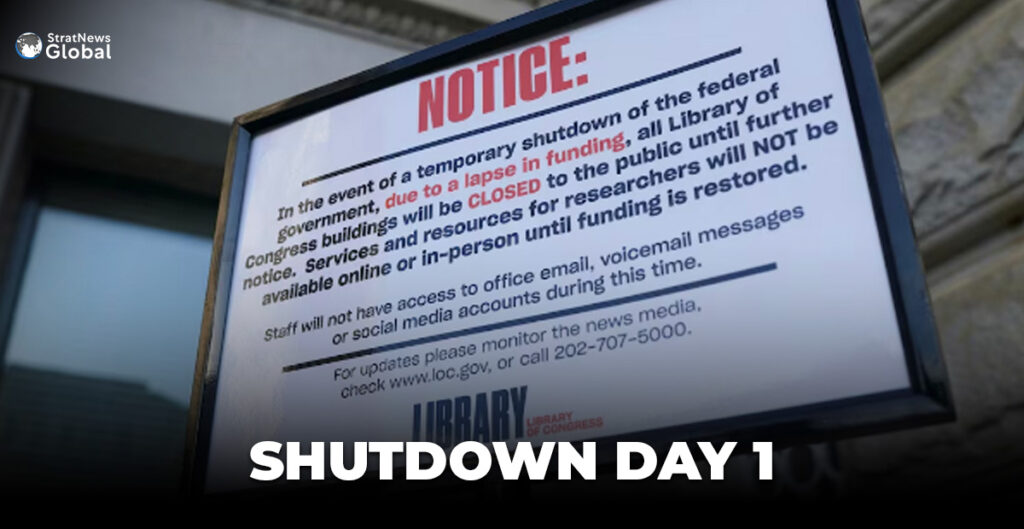
The U.S. government has been forced into a partial shutdown after President Donald Trump’s Republican Party failed to reach an agreement with Democrats on a new spending bill, cutting off funding and leaving federal operations in limbo.
The shutdown, which began at 12:01 a.m. on Wednesday (04:01 GMT), is the first in nearly seven years and underscores the sharp divisions in Washington.
Although government shutdowns are a familiar feature of American politics, this one comes at a particularly volatile moment, as Trump pushes to shrink federal agencies and portrays the funding lapse as an opportunity to make permanent cuts.
Why Did The Shutdown Happen?
The shutdown stems from a failure of Republicans and Democrats to agree on funding beyond the end of the fiscal year. While Republicans control both chambers of Congress, the Senate’s rules require 60 votes to pass major spending legislation. That leaves Democrats with enough leverage to block a bill they oppose.
The core of the dispute lies in healthcare spending. Democrats have refused to support a Republican plan they argue would make it harder for Americans to access affordable healthcare. They are demanding an extension of tax credits—due to expire—that help millions of Americans pay for health insurance, as well as a reversal of cuts to Medicaid and health agencies enacted under Trump.
A stopgap funding bill passed the House of Representatives, but stalled in the Senate, where Democrats held firm. With neither side backing down, funding expired, and parts of the federal government were forced to shut their doors.
How Long Will The Shutdown Last?
The duration of the shutdown remains uncertain. In 2018, the last shutdown dragged on for 35 days, the longest in U.S. history, costing the economy billions and disrupting services nationwide.
Ending a shutdown requires compromise—something in short supply in Washington. Republicans could agree to extend healthcare subsidies, or Democrats might eventually yield to pressure if the disruption becomes severe. But so far, both camps are entrenched.
Trump and his advisers appear confident Democrats will shoulder the blame for withholding votes, while Democrats argue their defence of healthcare subsidies is popular with the public and energises their political base.
Impact On Services And Staff
A shutdown does not mean the entire government halts. Essential services, such as border protection, law enforcement, air traffic control, and in-hospital medical care, will continue—though employees in those sectors may be forced to work without pay until the impasse is resolved.
Social Security and Medicare checks will still go out, but benefit verification and card issuance could be delayed. Federal workers deemed “non-essential” will be placed on unpaid leave. Historically, furloughed workers have received back pay once shutdowns end, though uncertainty looms this time.
Every day, Americans could feel the effects in multiple ways. The Centres for Disease Control and Prevention (CDC) and the National Institutes of Health (NIH) are expected to halt many ongoing projects, jeopardising research and clinical trials. National parks may technically remain open, but without staff to manage them, vandalism and neglect are real risks, as seen during past shutdowns.
Air travel could face delays if flight systems slow down due to staff shortages, and passport applications may take longer to process. Museums, federal pre-schools, and food assistance programs are also likely to be curtailed.
The Congressional Budget Office (CBO) estimates that roughly 750,000 federal workers—around 40% of the workforce—could be placed on unpaid leave each day.
Trump’s Unorthodox Approach
Unlike previous presidents, Trump has openly embraced the shutdown as a political weapon. Rather than seeking a quick resolution, his administration has suggested the funding lapse could serve as a test of which government functions are “essential” and which could be eliminated permanently.
“We’ll be laying off a lot of people,” Trump declared earlier this week, signalling a willingness to go beyond temporary furloughs.
Over the past nine months, Trump has already cut back spending and scaled down the federal workforce. This shutdown, some analysts argue, could accelerate those efforts, turning what has historically been a temporary disruption into an opportunity for structural downsizing.
History Of Government Shutdowns
Government shutdowns have become a recurring feature of modern U.S. politics. Trump himself presided over three during his first term, including the record-breaking 35-day standoff in late 2018 over funding for a border wall with Mexico. That shutdown ended after mass sick calls from unpaid air traffic controllers disrupted flights nationwide, forcing lawmakers back to the table.
Other presidents have also grappled with shutdowns. Bill Clinton endured a 21-day shutdown in 1995, Barack Obama faced a 16-day one in 2013, and Ronald Reagan oversaw eight shorter shutdowns in the 1980s.
Unlike many other democracies, where a budget vote is tied directly to the government’s survival, the U.S. system requires both Congress and the White House to agree on spending bills. This separation of powers, combined with partisan divides, often makes deadlock more likely.
Economic Fallout
The full economic impact of the current shutdown will hinge on its length. Analysts estimate that each week of government closure could shave 0.1 to 0.2 percentage points off economic growth, though much of that might be recouped once federal workers are paid and delayed spending resumes.
The 2018-2019 shutdown cost the economy an estimated $11 billion, with $3 billion in losses never recovered. This time, the stakes could be higher. Trump’s threats to fire workers outright, rather than furlough them, suggest some losses could be permanent.
The shutdown also injects uncertainty into an economy already rattled by trade disputes, artificial intelligence disruptions, and fluctuating markets. The likely delay of crucial government reports, such as monthly jobs data, could further unsettle investors and businesses.
What Comes Next?
For now, Washington remains at a standstill. Democrats are betting that public opinion will side with their push to protect healthcare subsidies, while Republicans hope frustration over closed services will push voters to blame the opposition.
But for the hundreds of thousands of federal workers facing missed paychecks, and for the millions of Americans who depend on government services, the political stalemate has already become a personal crisis.
(With inputs from IBNS)
U.S. Reaffirms South Korea Investment Ties, Clarifies Worker Visa Rules
The United States has reaffirmed its commitment to strengthening U.S.–South Korea investment ties while clarifying rules on short-term worker visas.
The move follows a major immigration raid at a South Korean-run battery facility in Georgia last month.
But U.S. officials at a working group meeting offered no new answers to South Korea’s argument for wider access to U.S. visas for specialty workers, despite reaffirming a commitment to advance the trade and investment partnership, the ministry said.
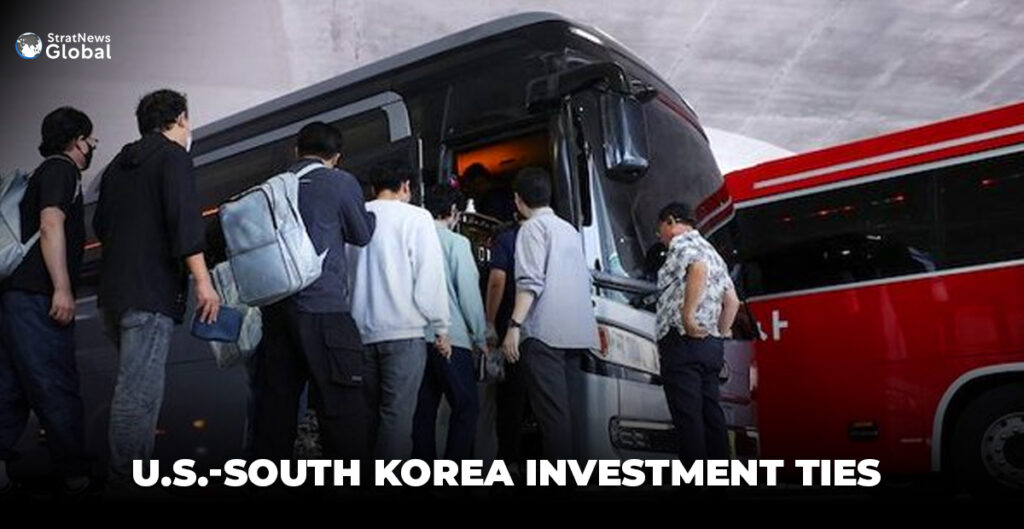
The working group was set up in the aftermath of a massive immigration raid at a Hyundai Motor (005380.KS), car battery facility under construction in the U.S. state of Georgia in September, where hundreds of South Korean workers were arrested.
The arrests, which stunned the South Korean government and public, highlighted the lack of access to the right class of U.S. visas for specialised South Korean workers needed at investment sites.
The U.S. side, made up of officials from the Departments of State, Homeland Security and Commerce, made clear that South Korean workers can install, service and repair equipment needed as part of South Korean business investment in the U.S., using the ESTA visa waiver programme and the B-1 temporary visas, South Korea’s foreign ministry said.
“The clarification on B-1 visas essentially confirms the route we were already using for short-term assignments under six months, such as equipment installation,” Mira B. Park, head of the immigration department at the Visa Service Company, told Reuters.
“However, in practice, even with a visa properly issued by a U.S. consulate and supported by the right documentation, we continue to see cases where workers are denied entry at the port of entry…That said, this measure does not solve the deeper issue,” she said.
A new section dedicated to visas related to South Korean businesses will be set up at the U.S. embassy in Seoul and U.S. immigration authorities will open a new channel with South Korean missions to better coordinate visa matters, according to the foreign ministry.
The move can be a short-term fix to visa issues, but the U.S. needs to create a new visa type or increase visa quotas for skilled workers in Korea, said Park Tae-sung, vice chairman of Korea Battery Industry Association, whose member companies include LG Energy Solution.
“This would help alleviate uncertainty about workers entering the U.S. and their fears about getting denied U.S. entries at U.S. airports,” Park told Reuters.
LG Energy Solution (373220.KS), opens new tab, which suspended work on its joint Georgia factory with Hyundai after the September raid, said: “We are grateful for the government’s prompt support, and we will thoroughly prepare and work hard to normalise the construction and operation of our plants in the United States”.
Legal Constraints
The U.S. officials said a more fundamental change to U.S. visa systems to accommodate Seoul’s demand for clearer and more certain access for its specialty workers faced “practical legislative constraints,” the South Korean ministry said.
South Korea has pushed for years for a bill that would create or expand visa categories to accommodate skilled South Korean nationals who need to visit the United States.
That bill has had difficulty getting through Congress because visas are linked to immigration, one of the most sensitive subjects in the United States, according to South Korea’s foreign ministry.
U.S. Deputy Secretary of State Christopher Landau stressed the “critical role” of the skilled workers of South Korean companies investing in the U.S. during the group’s first meeting in Washington, the State Department separately said.
The U.S. was committed to encouraging investment by companies from South Korea as one of the leading foreign investors in the country, the department said.
The U.S. is working with Seoul on “processing appropriate visas for qualified ROK visitors to continue investing in America, in compliance with U.S. laws,” it said in a statement, referring to South Korea.
The working group will hold further meetings, South Korea’s foreign ministry said.
(With inputs from Reuters)
Aid Groups Warn Of Impending Hunger Catastrophe In Myanmar’s War-Torn Rakhine
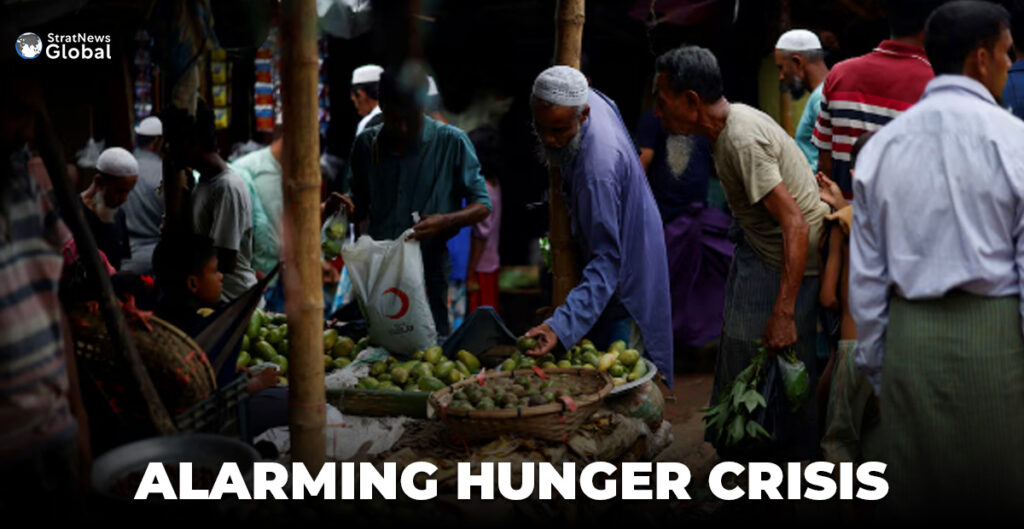
The United Nations’ World Food Programme said Myanmar’s Rakhine state—a western coastal region long scarred by conflict and ethnic violence against the Rohingya Muslim minority—is now facing an “alarming” hunger crisis driven by a “deadly combination of conflict, blockades, and funding cuts.”
At a high-level U.N. conference in New York on Myanmar’s minority groups on Tuesday, the United States and Britain announced that they would provide $96 million in further assistance to support the Bangladesh refugee camps that house over a million Rohingya who fled Rakhine.
Neither Medicine Nor Food
After Ajib Bahar’s six-month-old son fell sick last year in Myanmar’s war-torn Rakhine state, the 38-year-old Rohingya mother said she had no medicine or food to give him. The boy died in her arms.
“My children cried all night from hunger. I boiled grass and gave it to them just to keep them quiet,” Bahar said from a refugee camp in Bangladesh’s Cox’s Bazar, where she and her family sought safety after fleeing violence and starvation in Myanmar.
Surviving On Leaves
Myanmar has been in crisis since the military seized power in 2021 and brutally cracked down on protests, prompting a nationwide armed uprising and re-igniting a simmering conflict in Rakhine between the junta and a powerful armed group, the Arakan Army.
Five Rohingya, including Ajib Bahar and her husband, told Reuters they had survived on leaves, roots and grass in Rakhine before escaping to Bangladesh in the last six months.
More than 100,000 children in Rakhine are suffering from acute malnutrition, with less than 2% able to access treatment, according to previously unreported data provided by aid workers.
They declined to be identified for fear of retribution. Myanmar’s ruling junta has suppressed information about the crisis by pressuring researchers not to collect data about hunger and aid workers not to publish it, Reuters reported last year.
Security fears and restrictions by the junta and the Arakan Army mean the United Nations is unable to move food beyond Sittwe, the junta-controlled state capital, into the central and northern parts of Rakhine, said Michael Dunford, the acting UN head in Myanmar.
“This is obviously contributing to the spike in hunger that we are seeing,” said Dunford, who is also the country representative for WFP.
“We’re desperately frustrated because we know that there are populations that require our support.”
A spokesperson for the Arakan Army, Khine Thu Kha, said the junta was blocking the flow of aid, including food and medicine, and that the group was cooperating with the UN and aid agencies.
Their data suggested one in four children is malnourished, but it had not reached famine levels, he said, blaming the military blockade. He said the conflict made it difficult to provide medical treatment, but the Arakan Army was trying to keep the prices of necessities as low as possible and reduce taxes.
A Myanmar junta spokesman did not respond to a request for comment.
Aid Blocked
A combination of conflict, near-empty markets, a stalled economy, and blockades is squeezing Rakhine’s population like never before, aid workers say.
The situation is particularly dire in camps for tens of thousands of internally displaced people in the state, many of them Rohingya who fled their homes during previous waves of violence and face severe restrictions on their movement.
The data provided by aid workers showed acute malnutrition was widespread in the camps, with parents skipping meals to feed their children. It shows the number of people living in these conditions increased nearly tenfold between September 2023 to August this year.
Dunford said he spoke to residents at a Rohingya camp outside Sittwe earlier this year. The agency had supported them before funding cuts forced them to limit food supplies.
“I had one gentleman, in tears, tell me that, ‘If WFP can’t feed us and the authorities won’t support us, then please drop a bomb on us. Put us out of our misery,'” he said.
‘Severe Wasting’
Rohingya are arriving in Bangladesh in much poorer health than previous waves of refugees, with high rates of malnutrition, particularly among children under five and pregnant and lactating women, the International Rescue Committee, a nonprofit working in the refugee camps, said last month.
The increase in new arrivals coincided with a critical aid funding shortfall worldwide and overstretched health and nutrition services, the IRC said.
“There was hardly any food to eat. Most days, we had only one meal,” said Mohammed Idris, Bahar’s husband, a farmer from Buthidaung township, adding that he gave his food to the children and ate their leftovers.
Food prices surged, and sometimes there was nothing to buy, he said.
“I can’t remember the last time we ate an egg or meat.”
Bahar is now eight months pregnant. Although the family is grateful to be living in peace, conditions in the camp are difficult, she said.
“I wonder – will this child be born hungry too?”
(With inputs from Reuters)
Israel Intensifies Gaza City Assault As Hamas Mulls Over Trump’s ‘Bitter Choices’ Plan
Hamas is weighing U.S. President Donald Trump‘s proposal to end the conflict in Gaza, a plan described by one official as presenting “only bitter choices,” as Israel ramps up its military offensive across Gaza City.
Trump’s Peace Plan
The militant group’s review of the plan—which Israel’s Prime Minister Benjamin Netanyahu supports and which calls for a Hamas surrender—has stretched into a third day, with Trump having given the group a narrow window to respond.
Meanwhile, Israeli planes and tanks pounded residential areas overnight, killing at least 35 people on Wednesday, as the Israeli military issued new orders barring people from returning to northern Gaza, effectively tightening the encirclement around Gaza City.
Trump on Tuesday gave Hamas “three or four days” to respond to the plan he outlined this week with Israeli Prime Minister Benjamin Netanyahu, who has backed the proposal to end Israel’s almost two-year war with the Palestinian militant group.
“Accepting the plan is a disaster, rejecting it is another, there are only bitter choices here, but the plan is a Netanyahu plan articulated by Trump,” a Palestinian official, familiar with Hamas’ deliberations with other factions, told Reuters.
“Hamas is keen to end the war and end the genocide and it will respond in the way that serves the higher interests of the Palestinian people,” he said, without elaborating.
New Orders To Leave For The South
Israeli planes and tanks pounded residential neighbourhoods throughout the night, residents in Gaza City said. Local health authorities said that at least 35 people across Gaza had been killed by the military on Wednesday, most of them in Gaza City.
A strike on the old city in northwestern Gaza City killed seven people, while six people sheltering in a school in another part of the city were killed in a separate strike, medics said.
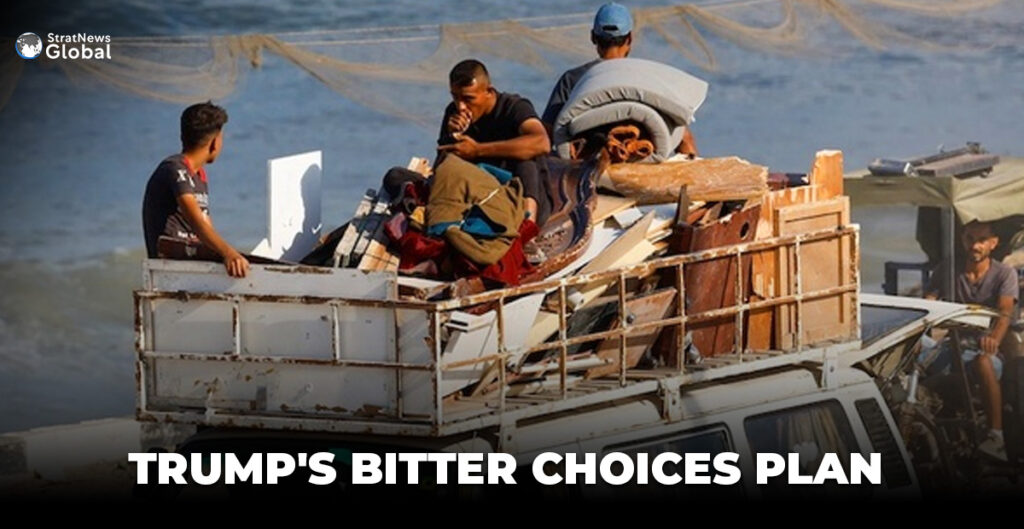
Meanwhile, the Israeli military issued new orders for people to leave for the south and said it would no longer allow those to return to the north, as Gaza City came under heavy bombing.
Defence Minister Israel Katz described the move as “tightening the encirclement around Gaza on the way to defeating Hamas”, saying Palestinians willing to leave to the south would have to go through army vetting.
“This is the last opportunity for Gaza residents who wish to do so to move south and leave Hamas operatives isolated in Gaza City itself in the face of the IDF’s continuing full-scale operations,” Katz said.
The Israeli military also said that starting on Wednesday it would no longer allow people to use a coastal road to move from the south to communities in the north.
It would remain open for those fleeing south, it said. Witnesses said Israeli tanks began moving towards the coastal road coming from the east, but were not yet there.
In recent weeks, few people have moved from the south to the north as the military has intensified its siege on Gaza City.
However, the decision will put pressure on those who are yet to leave Gaza City and also prevent hundreds of thousands of residents who have fled south from returning to their homes, likely deepening fears in Gaza of permanent displacement.
The military took similar measures in the early months of the war, completely separating north and south, before later easing those measures in January during a temporary ceasefire.
UN Says More Aid Needed
Two more Palestinians, including a child, have died of malnutrition and starvation in Gaza in the past 24 hours, the territory’s health ministry said on Wednesday, raising deaths from such causes to at least 455 people, including 151 children, since the war started.
Gaza City and surrounding areas are suffering from famine that will likely spread, afflicting more than half a million Palestinians, according to an August report by the IPC global hunger monitor.
Israel, which blocked all food from entering Gaza for almost three months this year, eased restrictions in July by allowing in more aid.
The U.N. says far more aid is needed and says it is unable to reliably distribute supplies in Gaza, blaming Israeli military restrictions on movements and a breakdown of law and order.
Israel says there is no quantitative limit on food aid entering Gaza and accuses Hamas of stealing aid, accusations the Palestinian militant group denies.
Hamas Under Pressure On Plan
Hamas is yet to publicly comment on Trump’s plan, which demands that the militant group release the remaining hostages, surrender its weapons and have no future role in running Gaza.
The plan sees Israel making few concessions in the near term and does not lay out a clear path to a Palestinian state, one of the key demands of not only Hamas but the Arab and Muslim world.
The plan states that Israel would eventually withdraw from Gaza but does not define a time frame. Hamas has long demanded that Israel must fully withdraw from Gaza for the war to end.
Three smaller Palestinian militant factions in Gaza have rejected the plan, including two that are allies of Hamas, arguing that it would destroy the “Palestinian cause” and would grant Israel’s control of Gaza international legitimacy.
Many world leaders have publicly supported Trump’s plan.
A source who is close to Hamas told Reuters on Tuesday the plan was too heavily weighted towards Israel’s interest and did not take significant account of the militant group’s demands.
Many elements of the 20-point plan have been included in numerous ceasefire proposals previously backed by the U.S., including some that have been accepted and then subsequently rejected at various stages by both Israel and Hamas.
(With inputs from Reuters)
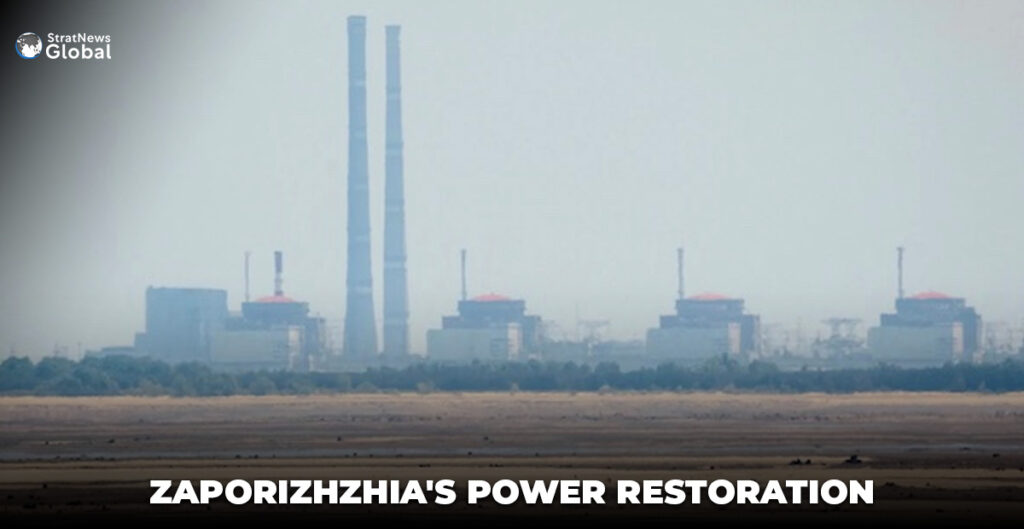
Russia Warns Ukraine’s Zaporizhzhia Nuclear Plant Needs Power Restored
Russia stated on Wednesday that external power must be urgently restored to the vast, Russian-occupied Zaporizhzhia nuclear power plant in southern Ukraine.
Zaporizhzhia Nuclear Plant
The plant, which relies on vital cooling systems, is currently being maintained by emergency diesel generators after a key external power line was severed during nearby fighting.
Intense warfare—including drone and artillery strikes—around several of Ukraine’s Soviet-era nuclear stations has repeatedly drawn grave warnings from the United Nations’ nuclear agency about the severe risk of a major nuclear accident.
The plant’s Russian-installed management said that backup electricity supply was sufficient for now and that radiation levels were normal, but that it was important that external power was restored as soon as possible.
“The situation at the station is under control,” said Yevgeniya Yashina, a spokeswoman for the plant, adding that the staff at the plant knew what to do and that radiation levels were normal.
Risk Of Meltdown
The Russian management said that Ukrainian shelling cut the last remaining power line, the high-voltage Dneprovskaya line, on September 23 and that Ukrainian shelling was preventing its repair.
Ukraine said that Russian shelling was preventing the restoration of external power.
Power is needed to pump water around the plant to cool the reactors and spent fuel, the International Atomic Energy Agency (IAEA) said.
“Europe’s largest nuclear power plant has been without external power for more than a week now, which is by far the longest lasting such event during more than three and a half years of war,” IAEA Director General Rafael Grossi said.
The Russian management said the emergency generators were sufficient for now and that only some were being used. All equipment was functioning as normal, it said.
The Zaporizhzhia plant has six Soviet-designed VVER-1000 V-320 water-cooled and water-moderated reactors containing Uranium 235.
All reactors are currently shut down so they are cooler than usual.
The risk is that without any power – external or supplied by the emergency generators – the nuclear fuel which sits just 500 km (300 miles) from the site of the world’s worst nuclear accident, the 1986 Chernobyl disaster, would not be cooled and would risk a meltdown.
“The current status of the reactor units and spent fuel is stable as long as the emergency diesel generators are able to provide sufficient power to maintain essential safety-related functions and cooling,” Grossi said.
“It is extremely important that offsite power is restored.”
Russian forces seized the plant in 2022 shortly after President Vladimir Putin sent tens of thousands of troops into Ukraine. Russia has controlled the plant ever since.
(With inputs from Reuters)
Taiwan Accuses China Of Misusing UN Resolution To Justify Attack
Taiwan’s government on Wednesday accused China of attempting to justify a future attack through a “misleading” interpretation of a key UN resolution, amid rising tensions over the island’s sovereignty.
China says that 1971’s U.N. resolution 2758, which led to Taiwan’s expulsion from the body and Beijing assuming a seat at the U.N., gives international legal backing to its claims over the island, and reiterated that point in a long foreign ministry statement late on Tuesday.
Taiwan, formally called the Republic of China and whose government fled to the island in 1949 after losing a civil war with Mao Zedong’s communists, says that it is nonsense given that the resolution made no mention of Taiwan and that, in any case, the People’s Republic of China has never ruled the island.
China ‘Misleading International Community’
Taiwan’s foreign ministry said in a statement that China was “deliberately misleading” the international community with its characterisation of the resolution.
“This aims to create a legal basis for altering the status quo across the Taiwan Strait and for future military assault against Taiwan,” it said.
“Only Taiwan’s democratically elected government can represent the 23 million people of Taiwan within the United Nations system and multilateral international mechanisms,” the ministry added.
China’s foreign ministry did not immediately respond to a request for comment. China has never renounced the use of force to bring Taiwan under its control, and regularly sends its military into the waters and skies around the island.
China says Taiwan is merely one of its provinces.
‘Rightful Inheritor’
Its foreign ministry’s statement on Tuesday, full of Cold War-era language about the “reactionary” Republic of China government and its late leader Chiang Kai-shek’s “clique”, said the People’s Republic was the rightful inheritor to governing all of China, including Taiwan, following the 1949 revolution.
“Any attempt to challenge resolution 2758 constitutes not only a challenge to China’s sovereignty and territorial integrity, but also a challenge to the authority of the U.N.,” it said.
China has been incensed by remarks from the United States and some of its allies about the resolution.
The U.S. State Department, in comments provided to Reuters about the latest Chinese statement on the subject, said the “intentional mischaracterisation and misuse of resolution 2758” was part of China’s broader “coercive attempts to isolate Taiwan from the international community resolution”.
The resolution puts no limits on any country’s sovereign choice to engage substantively with Taiwan, the State Department added.
(With inputs from Reuters)
No Indians, China For Chinese As Anger Over K-Visa Sweeps Social Media
China has begun officially issuing the new K-visa to skilled foreign techies, but the knives are already out on social media. One angry user posted: “China belongs to the Chinese people, not just a single government. We firmly oppose the K visa!”
Thousands flocked to the website of the National People’s Congress to register their complaint, and the rush forced the authorities to take it offline rather than see it crash. (Screenshot below) More disturbing is how public anger against the K-visa in China is turning against India even though the visa is open to all skilled foreign nationals.

Social media feeds were flooded with posts recalling PLA soldiers killed in clashes with Indian troops. Some users went further, declaring that India was an enemy and insisting that Indians must be barred from entering China under the new visa scheme.
A netizen bluntly wrote: “Enemy India should not enter.” Another recalling the Galwan clashes, warned the authorities directly: “Do you really want our soldiers to die again?” Both comments reflected how opposition to the K-visa has fused with simmering nationalist anger towards India.
Another post targeted India: “Don’t let the thieves (referring to India) be happy,” alongside an image of a PLA soldier killed in the Galwan clashes. “Don’t think I won’t protest this on the streets,” one user warned.
India-themed memes are circulating widely on Weibo.



Many netizens who once mocked Donald Trump as a clown are now praising him as a visionary (given his crackdown on immigrants and H-1B visas that have gone mostly to Indians). When opportunities dry up at home, even the “mad king,” as he was once called, begins to sound like the only one willing to speak uncomfortable truths.
While much of the outrage is couched in terms of nationalism, the sense is it also reflects Chinese racial insecurity or antipathy to the outsider. If immigration debates in the West carried such hostility, they would be branded toxic.
There has been government push-back. People’s Daily dismissed the anger against the K-visa as “wrong in both speech and thought” and “highly harmful.”
The paper argued the visa is vital to address China’s reported shortage of 30 million factory workers. It identified four strands of opposition — those who believe China has enough domestic talent, those fearing job losses, those warning of an immigration crisis, and those citing security risks, rejecting all as narrow, unnecessary, groundless, or lacking confidence.
Criticism of the K-visa is increasingly getting wrapped in historical allegory, which has political implications. The debate is comparing today’s leaders to past emperors who, surrounded by sycophants, lost their grip on reality and collapsed their dynasties.
In a country where dissent is quickly censored and little if no space is allowed for voicing diverse opinions, the K-visa controversy may blow up into something far bigger, which the authorities probably fear the most. It has become a lightning rod for a generation squeezed by unemployment and hardened by a strident state-driven nationalism that demands nothing less than unquestioning obedience.
The concerns and anxieties about China’s future cannot be underestimated. For Beijing, the dilemma is stark: opening the door to global talent may come at the cost of the Communist Party losing trust at home.
Morocco’s Gen Z Protests Turn Violent As Youths Clash With Police
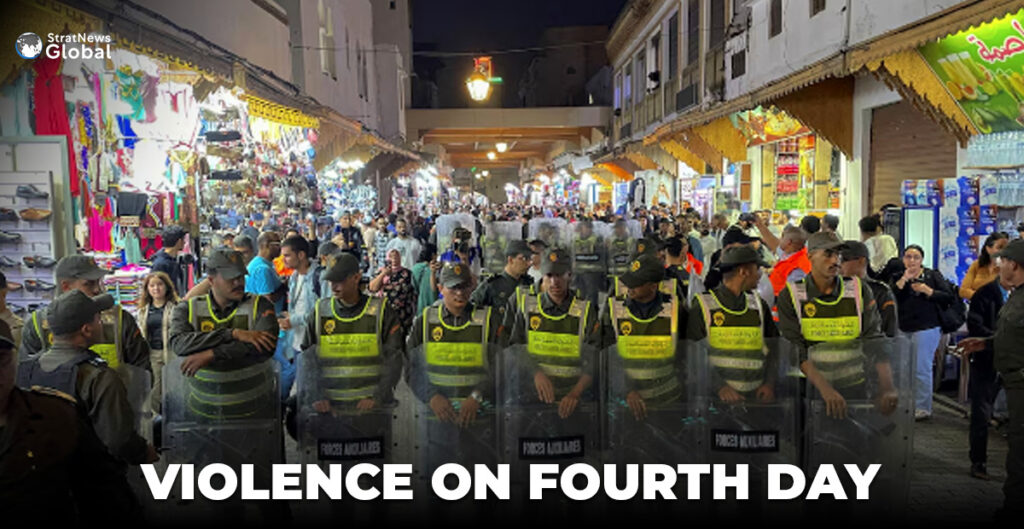
Youth-led protests in Morocco demanding improved education and healthcare turned violent on Tuesday evening, escalating into clashes with security forces for the fourth consecutive day across multiple cities.
The protests were organised online by a loosely formed, anonymous youth group calling itself “GenZ 212,” using platforms including TikTok, Instagram and the gaming application Discord.
Protesters Clash With Police
In the southern cities of Tiznit, Inzegane, and Ait Amira, as well as the eastern city of Oujda, and Temara near the capital Rabat, hundreds of young protesters hurled stones at security forces attempting to disperse the gatherings, according to local media reports and witness accounts.
In Ait Amira, 560 km (350 miles) south of Rabat, demonstrators overturned and damaged several law enforcement vehicles and burned down a bank, footage shared by local media outlets showed.
In Inzegane, videos circulating on social media showed masked protesters setting fire to a bank, while others clashed with police who deployed water cannons.
Some cars were torched, and a group of protesters attempted to storm into a main supermarket, according to witnesses and videos shared online.
Further south in Tiznit, dozens of protesters threw stones at law enforcement officers as they tried to break up the rally, witnesses told Reuters.
Protesters briefly chanted slogans, including “The people want an end to corruption,” they said.
In Oujda, a protester suffered serious injuries after he was hit by a security forces’ car, state news agency MAP reported.
Youth Protesters Arrested
In Rabat, police arrested dozens of young people as they attempted to begin chanting slogans in a densely populated neighbourhood, a Reuters witness reported.
The Moroccan Association for Human Rights (AMDH) said 37 youths were on bail, pending an investigation.
Hakim Saikuk, head of the AMDH section in Rabat, condemned the arrests as unconstitutional.
In Casablanca, 24 protesters who blocked a highway on Sunday were under judicial investigation, according to the public prosecutor.
The government coalition issued a statement on Tuesday expressing willingness to engage in dialogue with youth “within institutions and public spaces to find realistic solutions”.
It also praised what it called “the balanced reaction of security authorities in line with relevant legal procedures”.
The interior ministry was not immediately available to comment on the incidents.
(With inputs from Reuters)
European Leaders To Discuss ‘Drone Wall’ In Denmark Following Airspace Breaches
European Union (EU) leaders are set to discuss plans for a “drone wall” to safeguard the continent at a Copenhagen summit on Wednesday, following recent airspace intrusions by unidentified drones that temporarily closed Danish airports.
The summit will also be the first opportunity for leaders of the EU’s 27 countries to debate a proposal to use Russian assets frozen in Europe to fund a loan of 140 billion euros ($164.37 billion) to Ukraine.
France, Germany, Sweden, Norway, the Netherlands, Britain, Finland and Ukraine have committed troops and anti-drone systems to help Denmark protect the leaders, many of whom have accused Russia of brazen violations of European airspace with recent incursions by drones over Poland and fighter jets over Estonia.
Denmark has stopped short of saying who it believes is responsible for the incidents in its airspace last week, which disrupted air traffic at six airports, but Prime Minister Mette Frederiksen has suggested it could be Moscow.
Russia has denied responsibility for the drones over Denmark, disputed that its fighter jets entered Estonian airspace and said it did not intend to send drones into Poland.
But the incidents prompted European leaders to step up calls to bolster the continent’s defences and boost support for Ukraine in its fight against Russia’s invasion. U.S. President Donald Trump has demanded the EU take more responsibility on both fronts.
At the summit, European leaders will discuss proposals for four flagship defence projects, including a “drone wall” – a network of sensors and weapons designed to detect, track, and neutralise intruding unmanned aircraft.
European Commission President Ursula von der Leyen floated the idea last month, just hours after some 20 Russian drones entered Polish airspace, although officials say it had been in the works before then.
The Commission, the EU’s executive body, has not yet produced a detailed plan, leaving open questions about the cost and practicalities. But NATO Secretary General Mark Rutte praised the idea on Tuesday as “timely and necessary”.
The incursion into Poland exposed gaps in Europe’s ability to defend against drones, officials and analysts said. NATO forces deployed fighter jets, helicopters and a Patriot air defence system in their response, shooting down several drones.
“We cannot spend millions of euros or dollars on missiles to take out drones, which only cost a couple of thousand dollars,” Rutte said.
Commission Floats Frozen Assets Plan
European leaders have vowed to turn up pressure on Moscow, including through a proposed 19th package of EU sanctions that would phase out Russian liquefied natural gas imports by the start of 2027.
The European Commission last week proposed using Russian funds frozen due to sanctions to finance a “Reparation Loan” that would bolster Kyiv’s war effort just as U.S.-funded military aid dwindles.
“We are at a moment where decisive action on our side can lead to a turning point in this conflict,” von der Leyen said on Tuesday.
Under the Commission’s plan, Kyiv would pay back the loan if Russia paid reparations to Ukraine for the war. But European officials say the plan raises complex legal and technical questions that have yet to be clarified.
German Chancellor Friedrich Merz voiced support last week for the general concept of using the frozen funds for a loan to Ukraine.
But Belgian Prime Minister Bart De Wever, whose country holds most of the assets in the Euroclear securities depository, sounded a strong note of caution.
“If countries see that central bank money can disappear if European politicians see fit, they might decide to withdraw their reserves from the euro zone,” he said last week, according to Belgian news agency Belga.
(With inputs from Reuters)
Gaza Flotilla Reports Unlit Vessels, Raises Security Alert
The international flotilla attempting to deliver aid to Gaza reported on Wednesday that several of its boats were approached by unidentified vessels, some travelling without lights.
The Global Sumud Flotilla said in a post on Telegram that the vessels have departed, and participants implemented security protocols in anticipation of a possible interception.
Italy Pulls Back Naval Escort
Italy’s defence ministry announced on Tuesday that its navy will withdraw from escorting the Gaza-bound flotilla once the vessels approach within 150 nautical miles (278 km) of the enclave, citing security risks of a possible Israeli strike.
The Global Sumud Flotilla, made up of more than 40 civilian boats carrying parliamentarians, lawyers, and activists — including Swedish climate campaigner Greta Thunberg — is seeking to challenge Israel’s long-running blockade of Gaza.
Once the convoy reaches the 150 nautical miles limit, the Italian frigate accompanying it will stop, “as communicated several times in recent days,” the ministry said in a statement.
The ship will issue two warnings to activists, with the second and final one foreseen at around 00:00 GMT, when the flotilla is expected to get within the stated distance, the statement added.
‘A Diplomatic Incident’
Earlier on Tuesday, an Italian spokeswoman for the flotilla, Maria Elena Delia, said that activists had been informed about the government’s plans to have the navy ship stop and turn back to avoid “a diplomatic incident” with Israel.
She said the flotilla had no intention of heeding Italy’s warnings not to get closer to the shore.
Italy and Spain deployed navy vessels last week to assist the flotilla, after it was hit by drones armed with stun grenades and irritants in international waters off Greece, but without any intention to engage militarily.
Delia said activists were bracing for another strike in the coming hours. “Israel will probably attack us tonight, because all the signals point to this happening,” she said in a video on Instagram.
Israel did not respond to flotilla accusations that it was behind last week’s attacks, but it has vowed to use any means to prevent the boats from reaching Gaza, arguing that its blockade is legal as part of its war against Hamas militants.
Italian Defence Minister Guido Crosetto has said he expects flotilla boats to be intercepted in the open sea and activists to face arrest.
On Tuesday, Crosetto made a “last appeal” to flotilla members to accept a compromise proposal to drop aid in Cyprus and avoid a confrontation with Israeli forces. Flotilla representatives have repeatedly refused the offer.
Israel began its Gaza offensive after the October 7, 2023, Hamas-led attack on Israel in which some 1,200 people were killed and 251 taken as hostages, according to Israeli tallies. The offensive has since killed over 66,000 Palestinians, Gaza health authorities say.
(With inputs from Reuters)