

Support us by contributing to StratNewsGlobal on the following UPI ID
ultramodern@hdfcbank

Strategic affairs is our game, South Asia and beyond our playground. Put together by an experienced team led by Nitin A. Gokhale. Our focus is on strategic affairs, foreign policy and international relations, with higher quality reportage, analysis and commentary with new tie-ups across the South Asian region.
You can support our endeavours. Visit us at www.stratnewsglobal.com and follow us on YouTube, Twitter, Facebook and Instagram.
र 500 per month
र 1000 per month
र 5000 per year
र 10000 per year
Donate an amount of your choice
र 500 per month
Donate र 500 per month

र 1000 per month
Donate र 1000 per month
र 5000 per year
Donate र 5,000 per year
र 10000 per year
Donate र 10,000 per year
Donate an amount of your choice
Donate an amount of your choice





Taiwan Says Military Can React Instantly to Any Sudden Chinese Attack
Taiwan’s military can swiftly respond to any sudden assault from China under a decentralised command system that allows individual units to act without waiting for top-level approval, the island’s defence ministry said in a report submitted to lawmakers.
Decentralised Command for Rapid Response
The ministry said Taiwan’s armed forces are prepared to shift immediately from regular alert status to combat readiness if Chinese drills suddenly turn into live military operations. “If the enemy suddenly launches an attack, all units are to implement ‘distributed control’ without waiting for orders and, under a ‘decentralised’ mode of command, carry out their combat missions,” the report stated.
Officials did not elaborate on operational specifics but said the mechanism ensures that field units can maintain communication, coordination and continuity of command even if higher-level systems are disrupted during an assault.
The move reflects growing concerns in Taipei that Beijing could exploit the island’s constant vigilance by converting routine military exercises into real attacks without warning.
Escalating Chinese Military Pressure
Beijing, which claims Taiwan as part of its territory, has increased military pressure over the past year through near-daily flights and naval manoeuvres around the island. Taiwan’s defence ministry described these operations as part of a “grey zone” campaign sustained military harassment designed to exhaust Taiwan’s forces and morale without triggering open conflict.
According to the report, the frequency and intensity of China’s “joint combat readiness patrols” continue to rise. The ministry warned that China’s forces have expanded their reach, sending warships deeper into the Pacific and towards Australia and New Zealand as part of joint service drills increasingly focused on real-combat conditions.
“The Chinese communists have never renounced the use of force to annex Taiwan,” the ministry said, adding that the People’s Liberation Army (PLA) has evolved its exercises from symbolic demonstrations to integrated, multi-domain operations.
Beijing Accuses Taipei of “Peddling War Anxiety”
China’s defence ministry dismissed the concerns, accusing Taiwan’s President Lai Ching-te of “hyping up” the threat from the mainland and “peddling war anxiety.” In a statement, Beijing urged “Taiwan compatriots to clearly recognise the extreme danger and harmfulness of the Lai authorities’ frantic ‘preparing for war to seek independence’.”
Taiwan’s government, however, maintains that only its citizens have the right to determine the island’s future, rejecting Beijing’s sovereignty claims. Defence Minister Wellington Koo is scheduled to brief lawmakers further on the report on Wednesday.
As both sides continue their rhetorical and military escalation, Taiwan’s emphasis on decentralised readiness signals an attempt to ensure it can respond instantly even if caught off guard by a sudden shift from drill to war.
(with inputs from Reuters)
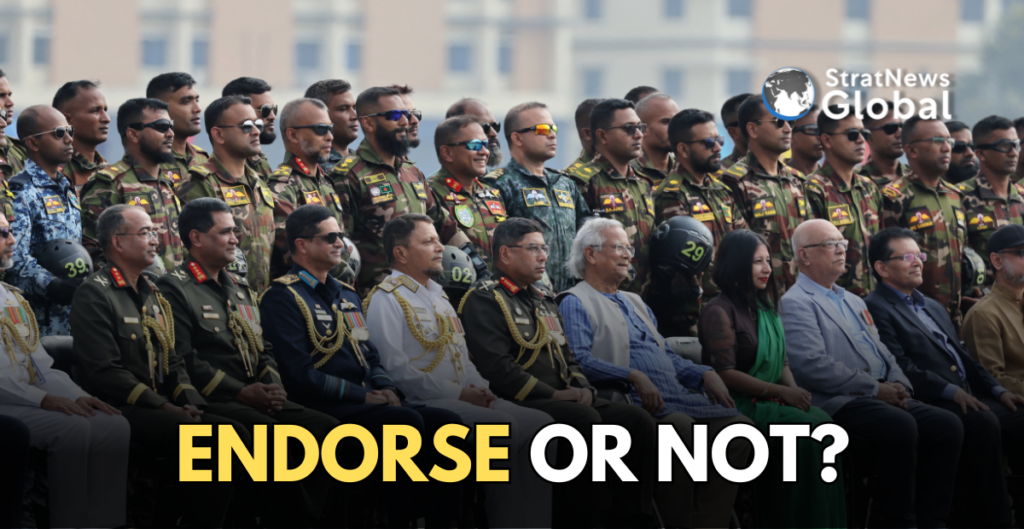
What If India Does Not Endorse Bangladesh’s Election Result?
Should India endorse whatever the result of the elections in Bangladesh next February?
Veena Sikri, former high commissioner to Bangladesh, believes that “India must insist on inclusion of all parties because if there is no transparency, there will be continuing instability, continuing chaos, continuing exodus, as we saw in 1971.”
Sikri was referring to how the Awami League was not being allowed to contest, in effect removing a key political player from the hustings. She was speaking at a dialogue on Bangladesh organised by the ORF.
Another speaker, senior journalist Kanchan Gupta, warned of the possibility of rigging, noting strong support from the US and Europe for Interim Adviser Mohammad Yunus. He said there seemed little doubt of the role of the American establishment in the regime change that led to Hasina’s ouster. He noted continued support for Yunus despite crimes against minorities.
Both Sikri and Gupta felt that Bangladesh was moving into a situation similar to that in 1971, when, despite Mujibur Rahman winning the election in East Pakistan, the result was denied by the army ruling in the West.
Journalist and author Deep Halder struck a note of caution, pointing out that although the BNP is the single largest party in the election, the rise of the Jamaat-e-Islami cannot be ignored. In his view, young people remain vehemently anti-Hasina, but there may come a time when civil society does a rethink, that the Hasina years were better than what came after.
Halder says it is too early to tell whether the next PM will be a BNP leader, a Jamaat leader, or a BNP leader who is actually a Jamaat guy. Everything points to a Jamaat element in the upcoming elections.
As for India, whether it endorses the elections in Bangladesh or not, New Delhi would have to find a way to engage with the next government in Dhaka.
Myanmar: Junta Uses Human-Wave, Drones To Fight Rebels
For seven days, rebel fighter Khant and his comrades held the line as Myanmar junta pounded their positions with artillery and drone strikes.
Khant is a veteran of numerous battles against Myanmar’s junta since it seized power in a 2021 coup, but he had seen nothing like the intensity of the fighting in central Myanmar in October.
The strikes were followed by wave after wave of infantry, according to Khant and Htike, a fellow rebel who was also present at the battle for Pazun Myaung, a village roughly halfway between Myanmar’s largest city and its political capital.
“It was essentially an offensive using all the power they could muster,” Htike said of one particularly tough five-hour period of fighting.
After a week, the rebels’ losses became too painful to bear, and they retreated to a nearby base.
Myanmar’s Rebel Offensive
Two years after a major rebel offensive left much of Myanmar ‘s borderlands in resistance hands, the junta has found its footing on the battlefield, according to Reuters’ interviews with six rebel fighters and three security analysts, including some who interact regularly with the military.
The junta has reshaped its tactics by introducing conscription and expanding its drone fleet, enabling it to reclaim some territory after defeats or stalemates on the battlefield. The generals have also been boosted by the backing of China, which has applied diplomatic and financial pressure on resistance groups to stop fighting.
Three rebel fighters, including Htike and Khant, said they had witnessed the junta using “human wave” manoeuvres to overwhelm rebel defences, reflecting new battlefield tactics in Myanmar that have not previously been reported.
“After one soldier died, another one came up to take his place,” said Khant of the October battle, adding that some appeared to be threatened at gunpoint by their commanders. Junta troops had previously been quick to flee once losses started to mount, two rebel fighters told Reuters.
A spokesperson for Myanmar’s military did not respond to questions about changes in its strategy. The National Unity Government, a parallel anti-junta administration that includes members of Nobel laureate Aung San Suu Kyi’s ousted government, also did not return requests for comment.
The changes have helped the military mount a limited comeback in at least three states, according to a November briefing by the ISEAS-Yusof Ishak Institute in Singapore. But the junta’s battlefield gains are uneven, and it faces various rebel armies that have differing levels of strength, the think-tank said, meaning no single entity dominates frontlines nationwide.
The push by Myanmar’s generals to regain lost territory coincides with a general election scheduled to begin on December 28 that United Nations chief Antonio Guterres and international rights groups have said will be neither free nor fair. Key opposition figures like Suu Kyi remain in detention, and many other anti-junta political groups have said they will boycott the election.
The junta is likely to be further emboldened to seek to reclaim more territory as momentum shifts along the frontline, which stretches hundreds of kilometres from China to the Bay of Bengal, said Min Zaw Oo, executive director of the Myanmar Institute for Peace and Security think-tank.
“We will see more armed clashes and more attempts from the military to retake territories in the coming three years,” he said.
Conscripts And Drones
Myanmar’s junta made military service mandatory for young people in February 2024, just months after it was battered by a coordinated rebel offensive dubbed Operation 1027.
Since the announcement, 70,000 to 80,000 recruits have entered the military, according to two military defectors and an analyst. The junta has announced roughly 16 rounds of conscription and said it will call up some 5,000 people at a time.
The military has a force of about 134,000, according to a 2025 estimate by the International Institute for Strategic Studies think-tank in London, down from 400,000 before the coup.
The reinforced units are increasingly led by seasoned officers, following a shake-up triggered by Operation 1027 when rebels captured around 150 military outposts within a month, said Min Zaw Oo.
“There was a period where officers were promoted without having suitable field experience,” said the analyst, adding that he obtained the information from people with direct knowledge of junta personnel changes. “The military took drastic actions to replace a lot of these officers.”
Maj. Naung Yoe, who left the junta after the coup and now researches the civil war, said people with direct knowledge of the postings had told him that more experienced officers were taking over command positions previously handed out based on favouritism.
Junta’s Dominance
The junta’s use of patronage-based promotion has been documented by researchers, including those at the U.S. Institute of Peace think-tank and the University of Chicago.
Many units now have more time to rest after long battlefront deployments, something a stretched military had been unable to do in the years immediately after the coup, Min Zaw Oo and Naung Yoe said.
The junta has also built up a fleet of unmanned aerial vehicles, including suicide and scouting drones.
The military appears to have access to 19 different UAV models, including fixed-wing and multi-rotor drones made in China, Russia and Iran, according to the Armed Conflict Location & Event Data Project, a coalition of international researchers that tracks the Myanmar civil war.
Conventional airstrikes remain the military’s most frequently used tactic in 2025, ACLED data show, though these are now increasingly guided by intelligence gathered from reconnaissance and surveillance drones, said Su Mon, an analyst with the group.
Junta’s Tactics
This combination of tactics has led to more precise junta aerial attacks, she said, adding that her assessment was based on a review of media reports and interviews with local combatants.
While resistance groups have access to drones, they are vulnerable to junta UAVs due to a lack of jamming technology and air-defence systems, said Su Mon and two rebel fighters.
The military has also started to allow lower-level commanders to directly request air support that previously required senior approval, enabling airstrikes on enemy defences ahead of infantry assaults, according to the three analysts.
Beijing’s Backing
A third element of the junta’s fightback is China.
Beijing has close commercial and cultural ties to some anti-junta resistance groups, but it has historically viewed Myanmar’s generals as guarantors of stability in its backyard.
Chinese officials have helped broker at least two ceasefires in 2024 and 2025, including one that returned to junta control the northeastern town of Lashio, where rebel groups captured the first regional military command in the history of Myanmar.
China has also leaned on armed groups such as the United Wa State Army to choke the flow of weapons to other resistance units, according to international researchers.
“China froze UWSA-linked assets, imposed border restrictions and demanded that the group cut off supply of weapons to other groups,” the International Crisis Group said in a November briefing on Beijing’s actions to support the junta after mid-2024.
China’s Foreign Ministry and UWSA did not return requests for comment.
Chinese Militia
In the ruby-mining mountain town of Mogok, Chinese pressure on the Ta’ang National Liberation Army, another militia with ties to Beijing, has restricted the availability of weapons and led to a complete halt in anti-junta resistance operations, local rebel fighter Sanay told Reuters.
A top TNLA official confirmed in a December Facebook post that the group had been forced into a ceasefire by a lack of ammunition and money, but did not elaborate. A spokesperson for the militia previously told Reuters that TNLA had been subject to pressure by Beijing.
“On the other side, the military council is launching offensives with superior forces,” said Sanay, who fights for a militia allied with the TNLA.
“If you look into the underlying reason why we can’t compete and are losing ground in the offensives, it is ultimately due to pressure from China.”
(with inputs from Reuters)
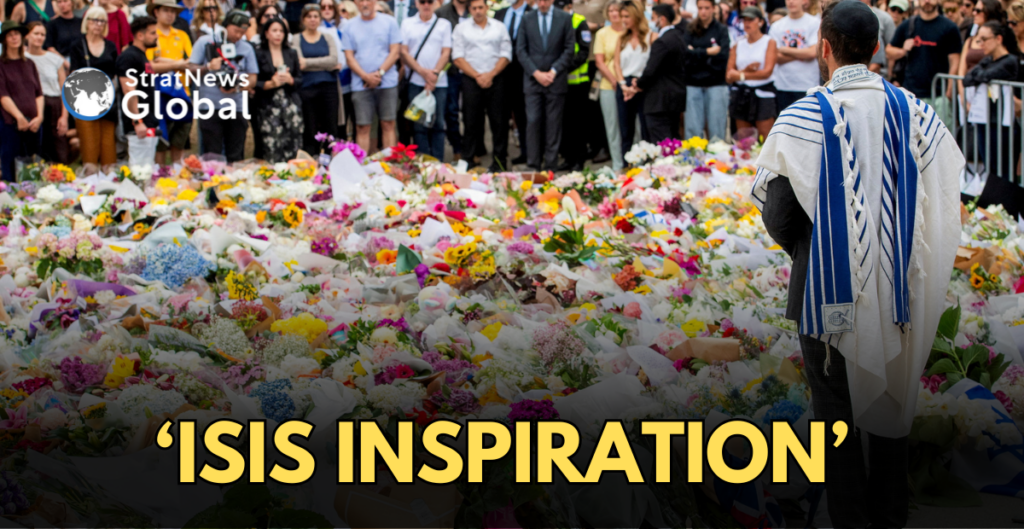
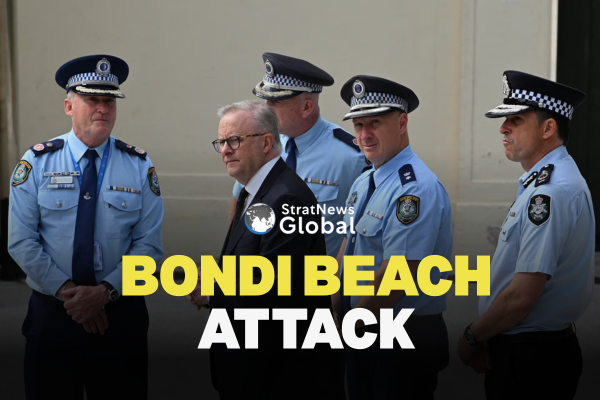
Bondi Attack: Gunmen Inspired By Islamic State: Australian Police
Two alleged gunmen who attacked a Hanukkah event at Sydney’s Bondi Beach had travelled to the Philippines before the assault, which killed 15 people and appeared to be inspired by the Islamic State, police said on Tuesday.
The attack on Sunday was Australia’s worst mass shooting in nearly 30 years, and is being investigated as an act of terrorism targeting the Jewish community.
The death toll in the Bondi Beach attack stands at 16, including one of the alleged gunmen, identified by police as Sajid Akram, 50, who was shot by police. The man’s 24-year-old son and alleged accomplice, identified by local media as Naveed Akram, was in critical condition in the hospital after also being shot.
Australian police said on Tuesday that both men had travelled to the Philippines last month, and the purpose of the trip is under investigation. The Philippines police have said they are investigating the matter.
Islamic state-linked networks are known to operate in the Philippines and have wielded some influence in the south of the country. They have been reduced to weakened cells operating in the southern Mindanao island in recent years, far from the scale of influence they wielded during the 2017 Marawi siege.
Explosive Devices And ISIS Flags
“Early indications point to a terrorist attack inspired by Islamic State, allegedly committed by a father and son,” Australian Federal Police Commissioner Krissy Barrett said at a news conference.
“These are the alleged actions of those who have aligned themselves with a terrorist organisation, not a religion.”
Police also said the vehicle, which is registered to the younger male, contained improvised explosive devices and two homemade flags associated with ISIS, or Islamic State, a militant group designated by Australia and many other countries as a terrorist organisation.
The gunmen, a father and son duo of Pakistani origin, allegedly fired upon hundreds of people at the festival during a roughly 10-minute attack at Bondi Beach, one of Australia’s top tourist destinations, forcing people to flee and take shelter before both were shot by police.
Some 25 survivors are receiving care in several Sydney hospitals, officials said.
Memorial Of Flowers
Israeli Ambassador Amir Maimon visited Bondi on Tuesday and urged the Australian government to take all required steps to secure the lives of Jews in Australia.
“Only Australians of Jewish faith are forced to worship their gods behind closed doors, CCTV, guards,” Maimon told reporters in Bondi, after laying flowers at the temporary memorial and paying his respects to the victims.
“My heart is torn apart … it is insane.”
A string of antisemitic incidents in Australia has unfolded in the past 16 months, prompting the head of the nation’s main intelligence agency to declare that antisemitism was his top priority in terms of threat to life.
At Bondi, the beach was open on Tuesday but was largely empty under overcast skies, as a growing memorial of flowers was established at the Bondi Pavilion, metres from the location of the shootings.
Bondi is Sydney’s best-known beach, located about 8.2 km (5 miles) from the city centre, and draws hundreds of thousands of international tourists each year.
Ahmed al Ahmed, the 43-year-old Muslim father-of-two who charged at one of the gunmen and seized his rifle, remains in a Sydney hospital with gunshot wounds. He has been hailed as a hero around the world, including by U.S. President Donald Trump.
A GoFundMe campaign set up for Ahmed has raised more than A$1.9 million ($1.26 million).
Tougher Gun Laws
Australia’s gun laws are now being examined by the federal government, after police said Sajid Akram was a licensed gun owner and had six registered weapons. Akram received his gun licence in 2023, not 2015 as had been earlier stated, police said on Tuesday.
Home Affairs Minister Tony Burke said gun laws introduced by the previous conservative Liberal-National coalition government following the Port Arthur massacre needed to be re-examined.
Former Liberal Prime Minister John Howard, who introduced the gun restrictions in 1996, said on Tuesday he didn’t want to see gun law reform become a “diversion” from the need to tackle antisemitism.
Fighting Antisemitism
Albanese had let the Jewish community down, Howard told reporters. “He should have done more to fight antisemitism, a lot more,” he said.
The 15 victims ranged from a rabbi who was a father of five, to a Holocaust survivor, to a 10-year-old girl named Matilda Britvan, according to interviews, officials and media reports. Two police officers remained in critical but stable condition in the hospital, New South Wales police said.
Matilda’s aunt has spoken publicly of her family’s heartbreak, saying they were devastated by her death.
“I am beyond belief that this happened. I look at the phone, and I am hoping it’s like a little big joke, not real,” Lina Chernykh told 7NEWS Australia.
(with inputs from Reuters)
Trump Sues BBC For Defamation, Seeks $10 Bn In Damages
President Donald Trump sued the BBC on Monday for defamation over edited clips of a speech that made it appear he directed supporters to storm the U.S. Capitol, opening an international front in his fight against media coverage he deems untrue or unfair.
Trump accused Britain’s publicly owned broadcaster of defaming him by splicing together parts of a January 6, 2021, speech, including one section where he told supporters to march on the Capitol and another where he said “fight like hell”. It omitted a section in which he called for peaceful protest.
Trump’s lawsuit alleges the BBC defamed him and violated a Florida law that bars deceptive and unfair trade practices. He is seeking $5 billion in damages for each of the lawsuit’s two counts.
The BBC has apologised to Trump, admitted an error of judgment and acknowledged that the edit gave the mistaken impression that he had made a direct call for violent action. But it has been said there is no legal basis to sue.
Trump, in his lawsuit filed Monday in Miami federal court, said the BBC, despite its apology, “has made no showing of actual remorse for its wrongdoing nor meaningful institutional changes to prevent future journalistic abuses.”
The BBC is funded through a mandatory license fee on all TV viewers, which UK lawyers say could make any payout to Trump politically fraught.
A spokesman for Trump’s legal team said in a statement that the BBC “has a long pattern of deceiving its audience in coverage of President Trump, all in service of its own leftist political agenda.”
A BBC spokesperson told Reuters earlier on Monday that it had “no further contact from President Trump’s lawyers at this point. Our position remains the same.” The broadcaster did not immediately respond to a request for comment after the lawsuit was filed.
Resignations At BBC
Facing one of the biggest crises in its 103-year history, the BBC has said it has no plans to rebroadcast the documentary on any of its platforms.
The dispute over the clip, featured on the BBC’s “Panorama” documentary show shortly before the 2024 presidential election, sparked a public relations crisis for the broadcaster, leading to the resignations of its two most senior officials.
Trump’s lawyers say the BBC caused him overwhelming reputational and financial harm.
The documentary drew scrutiny after the leak of a BBC memo by an external standards adviser that raised concerns about how it was edited, part of a wider investigation of political bias at the publicly funded broadcaster.
The documentary was not broadcast in the United States.
Trump may have sued in the U.S. because defamation claims in Britain must be brought within a year of publication, a window that has closed for the “Panorama” episode.
Trump’s Other Suits
To overcome the U.S. Constitution’s legal protections for free speech and the press, Trump will need to prove not only that the edit was false and defamatory but also that the BBC knowingly misled viewers or acted recklessly.
The broadcaster could argue that the documentary was substantially true and its editing decisions did not create a false impression, legal experts said. It could also claim the program did not damage Trump’s reputation.
Other media have settled with Trump, including CBS and ABC, when Trump sued them following his comeback win in the November 2024 election.
Trump has filed lawsuits against the New York Times, the Wall Street Journal and a newspaper in Iowa, all of which have denied wrongdoing.
The attack on the U.S. Capitol in January 2021 was aimed at blocking Congress from certifying Joe Biden’s presidential win over Trump in the 2020 U.S. election.
(with inputs from Reuters)
Bondi Beach Attack Fuels Tensions Between Australia and Israel
A deadly attack at a Jewish festival on Sydney’s Bondi Beach has intensified diplomatic friction between Prime Minister Anthony Albanese and Israeli leader Benjamin Netanyahu, while igniting a national debate on antisemitism and security. Albanese has faced growing domestic and international pressure to strengthen his government’s response after Netanyahu accused him of “doing nothing” to confront antisemitic threats.
Albanese Vows Action After Netanyahu Criticism
Speaking on Monday, Albanese urged unity and vowed that his government would take “whatever action is necessary.” He outlined a series of existing measures, including laws against hate speech and incitement to violence, a ban on the Nazi salute, and extended funding for the security of Jewish community organisations.
The Prime Minister also emphasised the need for tighter gun laws, despite Australia already maintaining some of the world’s strictest firearms regulations. “Without stronger safeguards, we risk complacency,” he said.
Jewish leaders expressed grief and anger following the attack. “When antisemitism goes unchecked from the top, these are the things that happen,” said Rabbi Levi Wolff of Sydney’s Central Synagogue, whose friend was among the victims.
Calls for Tougher Measures
Jillian Segal, the government’s special envoy on antisemitism, said the tragedy “did not come without warning,” citing a rise in antisemitic graffiti, vandalism and arson targeting Jewish institutions. Her report released in July urged the government to enhance hate-crime laws, strengthen visa screenings for extremist views, and improve oversight in universities and cultural organisations.
Opposition leader Sussan Ley accused the Labor government of allowing antisemitism to “fester,” calling for full implementation of Segal’s recommendations. “Everything must change from today in how governments respond,” she said.
At the July report launch, Albanese condemned antisemitism as an “evil scourge” and pledged A$25 million to bolster security at Jewish schools and community sites. He also cautioned against conflating criticism of Israel’s policies with hatred of Jewish people. “You should be able to express your view about overseas events,” he said, “but blaming people because they happen to be Jewish crosses the line.”
Protests, Politics and Diplomatic Fallout
Australia’s multicultural balance has complicated the government’s response. Weekly protests against Israel’s actions in Gaza have continued in Sydney since 2023, reflecting divisions within migrant communities, including Australia’s large Lebanese population.
Tensions with Israel worsened in August when Tel Aviv revoked the visas of Australian diplomats in the occupied Palestinian territories after Canberra recognised Palestine a move Foreign Minister Penny Wong called “unjustified.” The same month, Australia expelled Iran’s ambassador after intelligence agencies linked antisemitic arson attacks to Iran’s Revolutionary Guard.
The Bondi attack has also reignited debate over immigration and border control. Opposition parties, under pressure from the populist One Nation party, are preparing new migration proposals. However, Immigration Minister Tony Burke said the suspected gunman was Australian-born and that his father, who also died in the attack, migrated to Australia in 1998.
He highlighted the bravery of Ahmed al Ahmed, a Syrian Muslim bystander who disarmed one of the attackers. “It is very difficult to prevent single acts of terror,” former Prime Minister Malcolm Turnbull told the ABC, calling for unity and resilience in the aftermath.
As Australia mourns, Albanese faces the challenge of balancing national security, free expression, and the need to combat antisemitism all while managing a sensitive diplomatic rift with Israel.
(with inputs from Reuters)
Beijing Targets Former Japan Military Leader After Taiwan Dispute
China has imposed countermeasures against Shigeru Iwasaki, the former chief of staff of Japan’s Self-Defense Forces, intensifying diplomatic strains between the two countries following remarks about Taiwan by Japan’s prime minister that angered Beijing.
Beijing Cites Violation of One-China Principle
The Chinese foreign ministry said on Monday that Iwasaki had violated the one-China principle and the political understanding between China and Japan. The ministry accused him of “seriously interfering in China’s internal affairs” through his comments and activities related to Taiwan.
As part of the sanctions, China has introduced visa restrictions on Iwasaki, frozen his assets within its jurisdiction, and banned any Chinese organisations or individuals from engaging in transactions or cooperation with him.
Rising Friction Over Taiwan
The decision follows recent tensions sparked by comments from Japan’s Prime Minister, which Beijing viewed as challenging its sovereignty claims over Taiwan. China has repeatedly urged Tokyo to avoid involvement in what it considers its domestic affairs.
Tokyo has not yet formally responded to the latest measures, but analysts note the move underscores how Taiwan remains one of the most sensitive and divisive issues in China-Japan relations. The sanctions come amid broader regional friction as Japan deepens security ties with the United States and other allies in the Indo-Pacific.
(with inputs from Reuters)
‘Dhurandhar’ Showcases The Pakistani Mess In Black And White
Aditya Dhar’s film Dhurandhar is setting box office records within days of release, crossing the 350 crore rupee mark effortlessly. It has prompted a piqued Pakistani minister from the Sindh provincial government to announce a counter film.
Whether that happens or not, Dhurandhar is as real as it gets, says Nitin Gokhale, Editor-in-Chief StratNews Global. In a conversation on The Gist, Gokhale who has seen the film, says it is the “portrayal of Pakistani gang wars… some of the characters are very well known in real life too…
And the setting of the film, Lyari in Karachi, it exists even today and was the ugly battle ground as criminal gangs fought for supremacy. Add to that characters like ISI Major Iqbal who unleashed the attack on Mumbai in 2008.
“Your attention is completely on the screen because it’s a very tight screenplay,” said Gokhale, pointing out that “the violence is stylized but they have not shied away from showing flesh and blood … heads being severed and, more interestingly, they’ve juxtaposed this with some of the real events between India and Pakistan. The (Kandahar) hijack and the barely disguised persona of Ajit Doval.”
The film marks a departure from the usual Bollywood film that tried to ensure a balance between India and Pakistan.
“Bollywood always shied away from giving it to Pakistan or portraying Pakistan as it is,” Gokhale said, “(In Dhurandhar) there is no monkey balancing that characterised Hindi films on Pakistan be it Bajrangi Bhaijaan or Ek Tha Tiger.”
Dhurandhar talks realistically about the nexus between the political parties in Karachi and the gangs of Lyari. It unmasks the ugly face of the ISI-gangster nexus that has joined forces to bleed India.
The film includes shots from the Kandahar hijack of Dec 1999, the Mumbai attacks, even fake Indian currency notes printed in Pakistan, all of which are real and find recollection among many even today.
Dhurandhar could be the trendsetter, the harbinger of more such films, perhaps the true story of the execution of Pakistani politician Zulfiqar Ali Bhutto in 1979, or the assassination of his daughter Benazir at a Rawalpindi rally in Dec 2007.
Even better, Indians of this generation need to know the facts behind the Assam agitation that started in 1979 ending only in 1985; or Operation Blue Star of 1984. So many stories to tell.
Tune in for more in this conversation with Nitin Gokhale, Editor-in-Chief, StratNews Global.
Trump’s Policies Propel Democratic Governors Toward 2028 Presidential Race
President Donald Trump’s sweeping policy moves from hard-line immigration raids to budget cuts and redistricting drives are not only reshaping the U.S. political landscape but also giving several Democratic governors a powerful national platform.
California’s Gavin Newsom, Illinois’ JB Pritzker, and Maryland’s Wes Moore have used Trump’s actions to rally their party’s base, sharpen contrasts with the White House, and build their national profiles ahead of the 2028 presidential race.
Rising Voices Against Trump’s Agenda
Trump’s call for Republican-led states to redraw congressional maps, his intensified immigration enforcement in Democratic cities, and deep cuts to federal spending have all provoked sharp backlash. Democratic governors, particularly Newsom, Pritzker, and Moore, have transformed that opposition into political capital.
Newsom, who is openly weighing a 2028 bid, successfully championed a California ballot measure that could expand Democratic representation in Congress. His post-victory speech in Houston far from his home state was widely viewed as a signal of his national ambitions.
Pritzker, meanwhile, has positioned himself as a staunch defender of immigrant rights, signing legislation to limit federal arrests in schools and courthouses. He has also taken his message to New Hampshire and Minnesota, urging Democrats to show greater resolve against Trump.
Moore has attacked Trump’s efforts to slash federal food assistance and shrink the civil service. In response, he restored full SNAP benefits in Maryland and campaigned in swing states, portraying his actions as a direct stand against the administration’s agenda.
Democrats Seek a Counterweight
Following Kamala Harris’s defeat in last year’s presidential election and the Republican takeover of Congress, Democrats are eager for fresh leadership. Strategists say the governors’ assertive opposition to Trump resonates with voters who want their leaders to “put a check on Trump.”
“Newsom’s decision to essentially kick off his 2028 campaign in Houston demonstrated the kind of strategic energy Democrats need nationally,” said Mike Doyle, chair of the Harris County Democratic Party. Pollster Cornell Belcher compared their rise to Barack Obama’s emergence during the George W. Bush era, when opposition to the Iraq war fuelled his ascent.
Social Media and Political Strategy
Trump has fired back, mocking Newsom as “Newscum,” branding Pritzker “crazy,” and accusing Moore of mismanaging crime. The Republican National Committee dismissed the governors as “out of touch,” while Democrats see their defiance as essential.
Among them, Newsom has leveraged social media most effectively, trolling Trump with viral posts and strategic appearances. He has taken his message from South Carolina to Brazil, where he criticised Trump’s absence from global climate talks.
Pritzker and Moore are following suit, building visibility through speeches at key Democratic events across swing states. Moore has also launched his own redistricting effort in Maryland a direct challenge to Trump’s campaign to reshape electoral maps.
Looking Ahead to 2028
A recent Reuters/Ipsos poll showed 64% of Democrats hold a favourable view of Newsom, while Pritzker and Moore remain less known nationally. Still, their growing prominence positions them as leading figures in a party searching for direction and leadership in a Trump-dominated political era.
As the 2028 race quietly begins to take shape, these governors appear determined to define their party’s future not by avoiding confrontation, but by standing squarely against Trump’s influence.
(with inputs from Reuters)
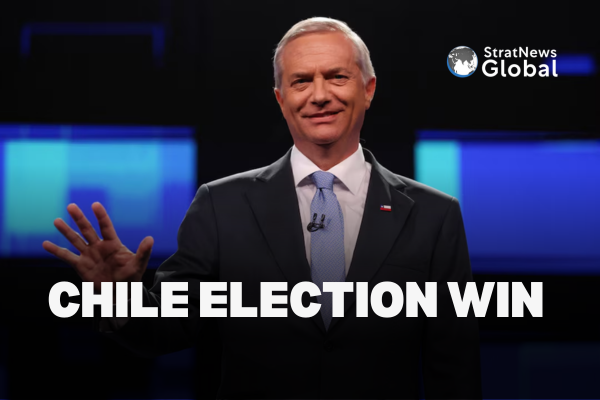
Kast Wins Chile Presidency, Steering Nation to the Right
Jose Antonio Kast has won Chile’s presidential election, securing 58% of the vote and leading the country into its most significant rightward shift since the end of Augusto Pinochet’s military rule in 1990. The far-right candidate defeated government-backed leftist Jeannette Jara, who conceded after receiving 42% in Sunday’s runoff.
Security and Migration at the Core of Kast’s Victory
Kast’s campaign centred on public frustration over rising crime and migration, themes that resonated strongly with voters. Throughout his political career, the veteran conservative has maintained hardline positions, advocating for border walls, deploying the military to high-crime zones, and deporting migrants living in Chile illegally.
Addressing cheering supporters at his Republican Party headquarters in Santiago’s affluent Las Condes district, Kast promised to restore security and order. “Without security, there is no peace. Without peace, there is no democracy, and without democracy, there is no freedom,” he said, pledging to make Chile “free of crime, anxiety and fear.”
He also tempered expectations, warning that there would be “no magical solutions” and that change would take time and persistence.
Chile Joins Latin America’s Rightward Drift
Kast’s win adds to a growing list of right-leaning victories across Latin America, including those of Ecuador’s Daniel Noboa, El Salvador’s Nayib Bukele, and Argentina’s Javier Milei. In Bolivia, the October election of centrist Rodrigo Paz ended nearly 20 years of socialist dominance.
For Kast, this marks his third presidential campaign and second runoff. Once dismissed as too extreme, he has now capitalised on growing public unease over crime and migration. His ability to win even in traditionally leftist regions reflects both shifting voter sentiment and disillusionment with Jara, whose Communist Party affiliation alienated moderates, said Claudia Heiss, a political scientist at the University of Chile.
At his victory rally, 23-year-old engineering student Ignacio Segovia summed up the mood of many Kast supporters: “I grew up in a peaceful Chile. Now you can’t go out peacefully we want that Chile back.”
Governing Challenges Ahead
Despite his decisive win, Kast faces a divided Congress that may complicate his legislative agenda. The Senate remains evenly split between left and right parties, while the lower house’s balance of power lies with the populist People’s Party.
Kast has proposed creating a new immigration enforcement force modelled on U.S. Immigration and Customs Enforcement to detain and deport illegal migrants swiftly. He also plans to cut public spending sharply and roll back regulations to attract investment in Chile’s key copper and lithium sectors.
Markets have already reacted positively, with the peso and stock index strengthening on expectations of more business-friendly policies. However, Kast will have to balance investor optimism with social realities and manage a coalition of voters whose support may not align on every issue.
“He must govern for a diverse electorate,” said Guillermo Holzmann, a political analyst at the University of Valparaíso. “Much of his vote is borrowed not everyone who voted for him shares his ideology.”
On socially conservative issues such as abortion, Kast is expected to tread carefully. Although he is a devout Catholic and father of nine who opposes abortion, polls suggest a majority of Chileans support current reproductive rights, making any rollback politically risky.
Kast’s victory marks a decisive moment for Chile, ushering in a government promising order and stability but facing the challenge of delivering both in a politically divided nation.
(with inputs from Reuters)