

Support us by contributing to StratNewsGlobal on the following UPI ID
ultramodern@hdfcbank

Strategic affairs is our game, South Asia and beyond our playground. Put together by an experienced team led by Nitin A. Gokhale. Our focus is on strategic affairs, foreign policy and international relations, with higher quality reportage, analysis and commentary with new tie-ups across the South Asian region.
You can support our endeavours. Visit us at www.stratnewsglobal.com and follow us on YouTube, Twitter, Facebook and Instagram.
र 500 per month
र 1000 per month
र 5000 per year
र 10000 per year
Donate an amount of your choice
र 500 per month
Donate र 500 per month

र 1000 per month
Donate र 1000 per month
र 5000 per year
Donate र 5,000 per year
र 10000 per year
Donate र 10,000 per year
Donate an amount of your choice
Donate an amount of your choice
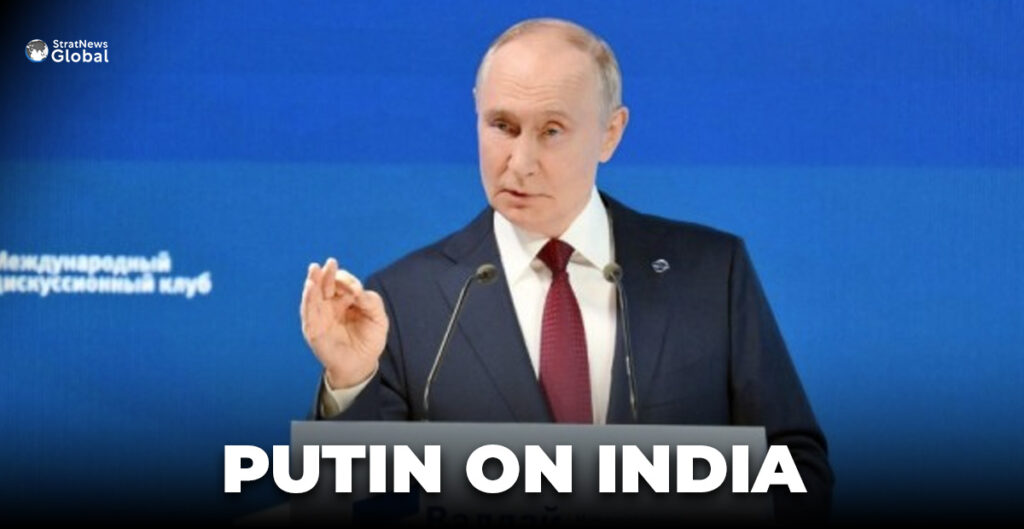
Putin Courts India, Taunts U.S. in Valdai Club Keynote Address
Russian President Vladimir Putin placed India firmly at the centre of Moscow’s foreign and economic policy priorities during his keynote appearance at the Valdai Discussion Club in Sochi on Thursday, October 2, 2025.
In a session that touched on U.S. pressure campaigns, trade balances, and upcoming diplomatic engagements, he repeatedly singled out New Delhi as a partner that Russia could trust and depend upon.
Responding to a question on Washington’s growing attempts to push countries such as China and India to scale back purchases of Russian raw materials and energy, Putin dismissed the idea as both counterproductive and harmful to the U.S. itself.
If tariffs were imposed on goods from countries trading with Russia, American consumers would ultimately pay higher prices due to shortages and inflated logistics costs, he explained. “There’s no politics here; it’s pure economic calculation,” he argued, warning that such measures would lead to sustained inflationary pressures in the U.S. and slow its own economy.
Specifically addressing India, Putin underlined the costs New Delhi would face if it were to bow to American pressure. “If India refuses our energy carriers, it will suffer certain damage, up to $9–10 billion by some estimates,” he said. “And if it doesn’t refuse, then sanctions in the form of high duties will be imposed – and there will also be damage. What will it be? About the same. Then why refuse, if you also have to bear huge domestic political costs?” Besides, the Indian people would never accept a leadership decision that could be perceived as humiliating, and that Prime Minister Narendra Modi would not take such steps, he added.
Putin contrasted Washington’s demands on others with its own actions in the nuclear sector. While urging allies to boycott Russian energy, the U.S. continues to import uranium from Russia for its nuclear power plants. Moscow currently supplies about 25 per cent of U.S. uranium needs, trailing only a U.S.-European consortium that covers around 60 per cent. Russian uranium sales to the U.S. earned Moscow nearly $800 million in the first half of 2025 alone, with annual revenues expected to exceed $1.2 billion. “The Americans buy our uranium because it’s beneficial. And they’re right to do so; we are ready to continue these supplies stably and reliably,” he said.
The Russian leader also looked ahead to his scheduled December visit to India, framing it as a key moment to advance bilateral relations. He described ties between Moscow and New Delhi as having a “special character” dating back to the Soviet era and emphasised that the two states had “never had any problems or interstate frictions at all.”
“Our current trade turnover with India is about $63 billion. India has one and a half billion people, while Belarus has ten [million]. But with Belarus, the turnover is $50 billion, and with India – 63. This clearly does not correspond to our potential capabilities,” he observed. Putin called for solutions to logistical challenges, payment mechanisms, and trade imbalances, pointing to BRICS instruments, bilateral rupee settlements, and electronic payments as possible avenues.
He revealed that Deputy Prime Minister Denis Manturov had been tasked with developing new proposals, together with Indian counterparts, to expand cooperation and address the imbalance. “Together with our Indian friends and partners, we are thinking about how to refine this trade turnover,” he said.
On the political front, Putin stressed that Russia and India coordinate closely in the international arena. “We practically always coordinate our actions. We always listen to and take into account the position of our countries on key issues,” he said, noting the close working relationship between the two foreign ministries.
Cultural and educational ties were also highlighted. Putin pointed to the steady presence of Indian students in Russian universities and the enduring popularity of Bollywood films in Russia. “We are probably the only country in the world, besides India, that on a permanent basis runs an entire channel of Indian films, day and night,” he remarked.
In the defence sphere, he underscored cooperation in joint weapons production, describing it as further proof of the trust underpinning the strategic partnership. “We are engaged in joint production of some very modern and promising types of weapons,” Putin said.
Closing his remarks, the Russian president described his relationship with Modi as personal as well as strategic. “I am looking forward to this trip in early December to meet my friend and reliable partner, Prime Minister Modi,” he concluded.
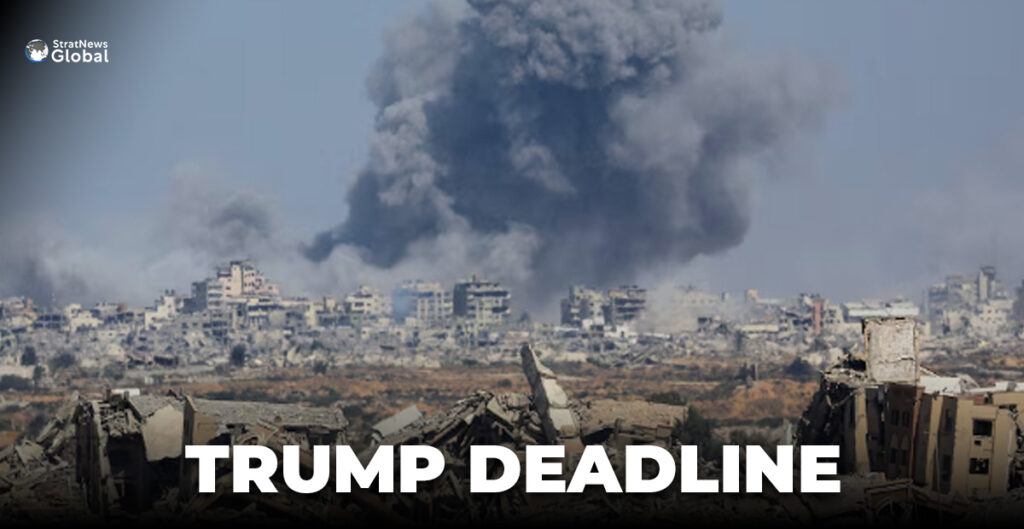
Trump Warns Hamas: Accept Gaza Deal By Sunday Or Face Escalation
U.S. President Donald Trump has given Hamas until Sunday evening to accept his proposal to end the nearly two-year Gaza war with Israel, warning that otherwise “all HELL” would break loose.
“An agreement must be reached with Hamas by Sunday Evening at SIX (6) P.M., Washington, D.C. time,” Trump posted on social media on Friday. “Every Country has signed on! If this LAST CHANCE agreement is not reached, all HELL, like no one has ever seen before, will break out against Hamas.”
The plan specifies an immediate ceasefire, an exchange of all hostages held by Hamas for Palestinian prisoners held by Israel, a staged Israeli withdrawal from Gaza, the disarmament of Hamas and the introduction of a transitional government led by an international body.
Trump first presented his plan to leaders and officials from Egypt, Indonesia, Jordan, Saudi Arabia, Turkiye, Pakistan, Qatar and the United Arab Emirates, on the sidelines of last week’s U.N. General Assembly.
Mediators Qatar and Egypt then shared the 20-point plan with Hamas late on Monday after Israeli Prime Minister Benjamin Netanyahu appeared alongside Trump at the White House and endorsed the document, saying it satisfied Israel’s war aims.
‘Intensive Discussion’ Underway On Hamas Response
Hamas was not involved in the negotiations that led to the proposal, which calls on the Islamist militant group to disarm, a demand it has previously rejected.
Asked whether his group had finalised its response to Trump’s Gaza plan, a Hamas official told Reuters late on Thursday: “Not yet, intensive discussion is underway.” The official said Hamas had held talks with Arab mediators, Turkey and Palestinian factions to shape “the Palestinian response.”
On Tuesday, Trump said he would give Hamas three to four days to accept the plan. On Friday, he described Hamas as a “ruthless and violent threat in the Middle East.”
In his Truth Social post on Friday, Trump made an apparent reference to Israel’s offensive in Gaza City. He said remaining Hamas militants in Gaza are trapped and “will be hunted down and killed” without a deal, and warned “innocent Palestinians” to leave for safer areas of Gaza.
The United Nations has repeatedly said that nowhere in Gaza is safe. Israel blocked Gaza City’s main road on Thursday and has told its million residents to flee south, warning it was their last chance to escape a major offensive.
Trump Plan ‘A Window Of Opportunity’
Gaza City and the surrounding areas are suffering from famine, and it will likely spread, a global hunger monitor determined in late August. Israel stopped all aid for 11 weeks from March until mid-May and says it is improving access, but the U.N. and aid groups say much more is needed.
“President Trump’s Gaza initiative opens a window of opportunity. It offers both a chance for Palestinians to receive life-saving aid at the scale urgently needed, and to bring the hostages home,” U.N. aid chief Tom Fletcher said in a statement on Friday. “We are ready and eager to act.”
Trump’s plan calls for aid to Gaza to be distributed without interference by neutral international groups, with the U.N. promising 170,000 metric tons ready to enter.
Israel began its offensive in Gaza after the October 7, 2023, Hamas-led attack on Israel in which some 1,200 people were killed and 251 taken as hostages back to Gaza, according to Israeli tallies. Israel’s military campaign has killed more than 66,000 people in Gaza, most of them civilians, according to Gaza health authorities.
Trump said in his Friday post that “more than 25,000 Hamas ‘soldiers’ have already been killed.” Hamas rarely discloses fatalities among its fighters.
(With inputs from Reuters)
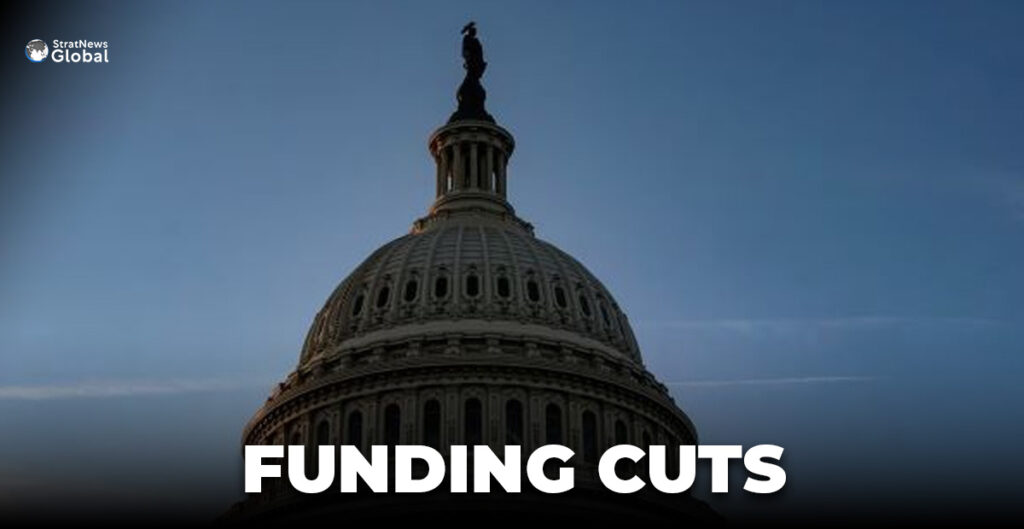
Trump’s Shutdown Tactics Hit Chicago Transit Funding, Targeting Democratic Areas
The Trump administration has withheld $2.1 billion in funding for Chicago‘s transit system, further straining relations between the federal government and Democratic-led cities as the shutdown continues.
Budget director Russ Vought said the money, earmarked for elevated train lines, had been put on hold to ensure it was not “flowing via race-based contracting.”
The administration has now frozen at least $28 billion in funding for Democratic cities and states, escalating Trump’s campaign to use the extraordinary power of the U.S. government to punish political rivals.
He has also threatened to fire more federal workers, beyond the 300,000 he is forcing out this year, and a White House source speaking on condition of anonymity said dozens of agencies have submitted workforce reduction plans.
The Republican president has made Chicago, the nation’s third-largest city, a regular rhetorical punching bag and has threatened to send in National Guard troops. Illinois Governor JB Pritzker is a high-profile critic of Trump and is seen as a possible 2028 Democratic presidential candidate.
The Illinois funding freeze follows moves on Wednesday to halt transit projects in New York, home to the top two Democrats in Congress, and green-energy projects in Democratic-leaning states like California and Colorado.
Democrats said Trump’s actions amount to extortion. “Everyone can see these crooks for what they are,” Democratic Senator Patty Murray of Washington said.
No Sign Of Swift Solution
In Washington, the shutdown stalemate showed no signs of ending. The U.S. Senate is due to vote on dueling Democratic and Republican plans to end the shutdown on Friday, but neither is likely to win passage. If the shutdown continues into a fourth day Saturday, it will be the fifth-longest in U.S. history.
Democrats and Republicans have spent the past several days blaming each other for their failure to keep the government funded beyond October 1, the start of the fiscal year, and they do not appear to have made any headway toward a deal that would allow the money to flow again.
The standoff in Congress has frozen about $1.7 trillion in funds for agency operations, which amounts to roughly one-quarter of annual federal spending. Much of the remainder goes to health and retirement programmes and interest payments on the growing $37.5 trillion debt.
Democrats say any funding package must also expand pandemic-era healthcare subsidies due to expire at the end of December, while Republicans say that issue should be dealt with separately.
House of Representatives Speaker Mike Johnson, a Republican, said he is not troubled by Trump’s pressure campaign, which undercuts Congress’ constitutional authority over spending matters.
“President Trump is just as anxious as we are to get the government back open,” he told reporters. “Is he trying to apply pressure to make that happen? He probably is, yeah. And I applaud that.”
Services Interrupted
The shutdown, the 15th since 1981, has suspended scientific research, financial regulation, and a wide range of other activities. Pay has been suspended for roughly 2 million federal workers, though troops, airport security screeners, and others deemed “essential” must still report to work.
On Friday, the government did not release its monthly unemployment report, leaving Wall Street guessing about the health of the world’s largest economy.
A prolonged shutdown could disrupt air travel and food aid for millions of Americans, and also force federal courts to close. Federal workers would miss their first paycheck in mid-October if the standoff is not resolved by then.
The longest shutdown lasted 35 days in 2018-2019, during Trump’s first term in office.
The Senate has three times already rejected a Republican plan, which would fund the government through November 21, and a Democratic alternative that would also bolster the expiring health subsidies. The chamber will vote on both of those plans again on Friday.
Republicans control both chambers of Congress, but they need at least seven Democratic votes to advance spending legislation in the Senate.
A group of senators from both parties say they have been exploring a compromise. But some Democrats say they do not trust Republicans to honor any agreement that would first reopen the government and then tackle the healthcare subsidies, which were passed as part of a 2021 Democratic COVID relief package and now help 24 million Americans pay for coverage.
(With inputs from Reuters)
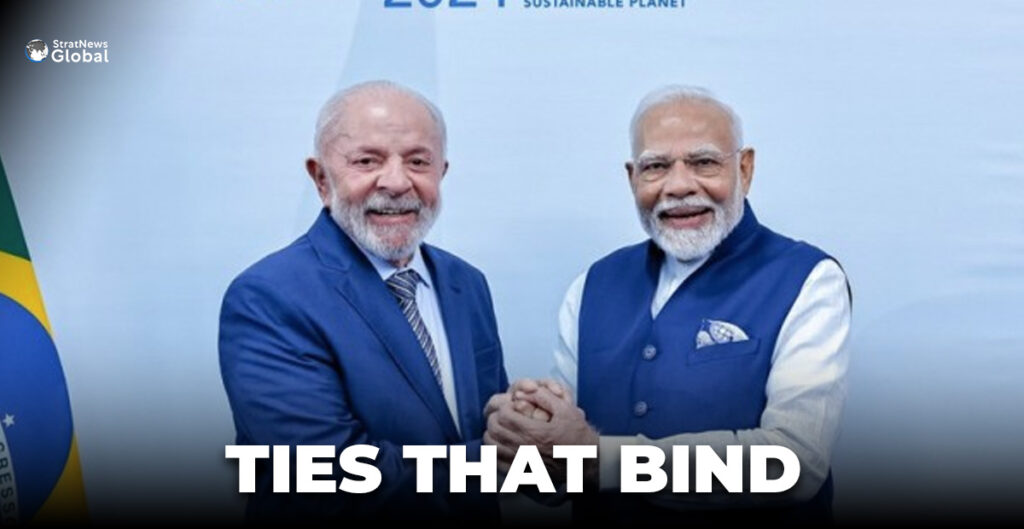
Doval, Brazil NSA Hold Strategic Talks Ahead Of Lula Visit
National Security Adviser Ajit Doval met the Special Advisor to the President of Brazil, Ambassador Celso Luis Nunes Amorim, in New Delhi for the 6th India-Brazil Strategic Dialogue on Friday.
The meeting comes ahead of Brazilian President Luiz Inácio Lula da Silva’s state visit to India in February 2026.
Before that, Brazilian Vice President Geraldo Alckmin will visit India in October, leading a delegation of ministers and business leaders. His trip will follow the 7th meeting of the India-Brazil Trade Monitoring Mechanism at the Trade Secretary level and another round of discussions between NSA Celso Amorim and Ajit Doval on defence industry collaboration and supply chain security.
“Expanding the defence partnership, strengthening digital public infrastructure cooperation, and widening the health sector collaboration are top priorities for President Lula’s engagement with India,” Brazil’s Ambassador to India, Kenneth da Nobrega, told StratNewsGlobal. “NSA Amorim’s visit will focus on taking the defence partnership to the next level.”
President Lula’s visit comes at a time when India is stepping up its attempts to diversify its trade relationships and strengthen cooperation with Global South partners. With U.S. tariffs pressuring emerging economies, India and Brazil are prioritising bilateral cooperation in areas such as food and energy security, defence manufacturing, critical minerals, and digital infrastructure.
Both nations are turning to bilateral trade to offset losses—a theme Prime Minister Narendra Modi discussed with President Lula during their July 9 summit in Brasília. Lula called Modi in early August, days after US President Donald Trump imposed a 50 per cent tariff on both countries, and later convened a virtual BRICS leaders’ meeting on the global economic outlook, which was attended by Dr Jaishankar.
Brazil is positioning itself as a reliable partner in India’s defence ecosystem at a time when global supply chains face severe disruption. With no significant external threats of its own, Brazil sees an opportunity to establish itself as a dependable supplier of defence hardware and components to India.
Both countries are also working to expand the MERCOSUR-India Preferential Trade Agreement, aiming to widen tariff concessions and simplify market access. Talks in August 2025 gave fresh momentum to the initiative, which both sides view as a way to strengthen resilience against external trade shocks.
Digital cooperation is moving in parallel. India and Brazil have exchanged technical insights into their digital payment platforms, UPI and PIX, with the long-term goal of exploring cross-border compatibility. The effort mirrors broader BRICS ambitions to develop financial infrastructure independent of Western-controlled systems like SWIFT.
Private sector enthusiasm is also on the rise. Over 120 Indian and Brazilian business leaders gathered in Mumbai for the Brazil-India LIDE Forum, signalling investor interest in clean energy, infrastructure, mining, pharmaceuticals, and aviation. São Paulo Governor and LIDE Chairman João Doria remarked, “India represents a strategic market for Brazilian industry. Now is the right time to turn interest into action.”
This strengthening partnership reflects a broader trend within BRICS, where member states are exploring alternative trade and financial mechanisms in response to unilateral actions by major powers. U.S. trade policies under the current administration have pushed the bloc to accelerate discussions on local currency trade, the New Development Bank, and a non-Western financial messaging system.
President Lula’s visit, expected to coincide with India’s Presidency of BRICS, is anticipated to inject new momentum into bilateral ties. With shared priorities in food and energy security, industrial innovation, and technology cooperation, the February summit is seen as an opportunity to convert strategic intent into concrete outcomes.
As one senior diplomat observed, “This is more than a ceremonial trip. It is about reimagining our partnership in a rapidly changing world. Brazil and India have complementary strengths, and now is the time to harness them.”
Egypt, Qatar, Turkiye Push Hamas To Accept Trump’s Gaza Peace Plan
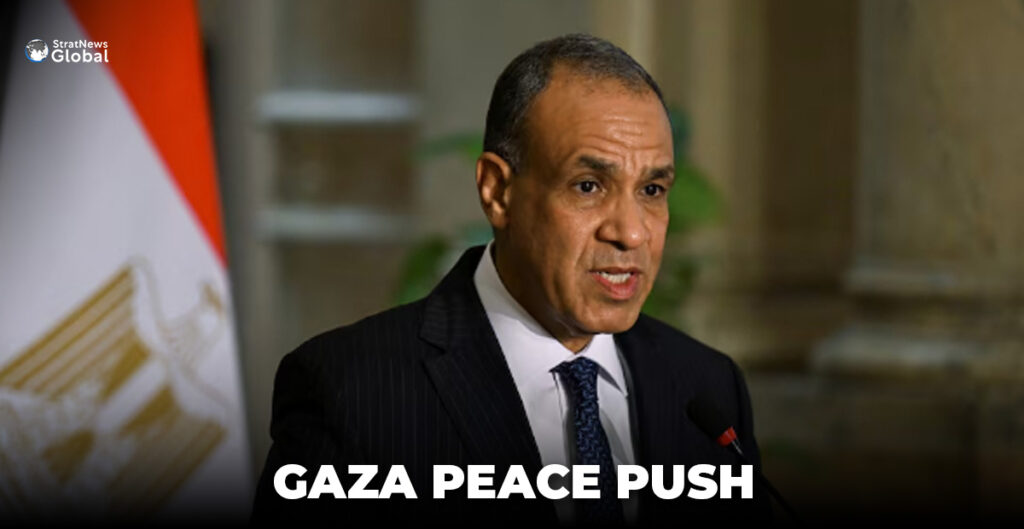
Egypt’s foreign minister on Thursday stated that Cairo, in coordination with Qatar and Turkiye, is urging Hamas to accept United States President Donald Trump’s plan to end the nearly two-year-long conflict in Gaza, warning that rejection could lead to further escalation.
Speaking at the French Institute of International Relations in Paris, Badr Abdelatty said it was clear that Hamas had to disarm and that Israel should not be given an excuse to carry on with its offensive in Gaza.
“Let’s not give any excuse for one party to use Hamas as a pretext for these mad daily killings of civilians. What’s happening is far beyond the seventh of October,” he said, referring to the Islamist group’s 2023 attack on Israel, in which 1,200 people were killed and more than 200 people taken hostage, according to Israeli tallies.
Deadly Offensive
Israel’s offensive has killed over 66,000 people in Gaza, Palestinian health authorities say.
“It is beyond revenge. This is ethnic cleansing and genocide in motion. So enough is enough,” Abdelatty said.
The White House unveiled earlier this week a 20-point document that called for an immediate ceasefire, an exchange of hostages held by Hamas for Palestinian prisoners held by Israel, a staged Israeli withdrawal from Gaza, Hamas disarmament and a transitional government led by an international body.
On Tuesday, Trump gave Hamas three to four days to agree to the plan.
Egypt is a key mediator in efforts to end the Gaza war, and Abdelatty said Cairo was coordinating with Qatar and Turkiye to convince Hamas to respond positively to the plan, but he remained very cautious.
“If Hamas refuse, you know, then it would be very difficult. And of course, we will have more escalation. So that’s why we are exerting our intensive efforts in order to make this plan applicable and to get the approval of Hamas,” he said.
Abdelatty said while he was broadly supportive of Trump’s proposal for Gaza, more talks were needed on it.
“There are a lot of holes that need to be filled; we need more discussions on how to implement it, especially on two important issues – governance and security arrangements,” he said. “We are supportive of the Trump plan and the vision to end war and need to move forward.”
When asked whether he feared the Trump plan could lead to the forced displacement of Palestinians, he said Egypt would not accept that.
“Displacement will not happen, it will not happen because displacement means the end of the Palestinian cause,” he said. “We will not allow this to happen under any circumstances.”
(With inputs from Reuters)
UK Seeks To Cancel Pro-Palestinian Protest In Wake Of Synagogue Assault
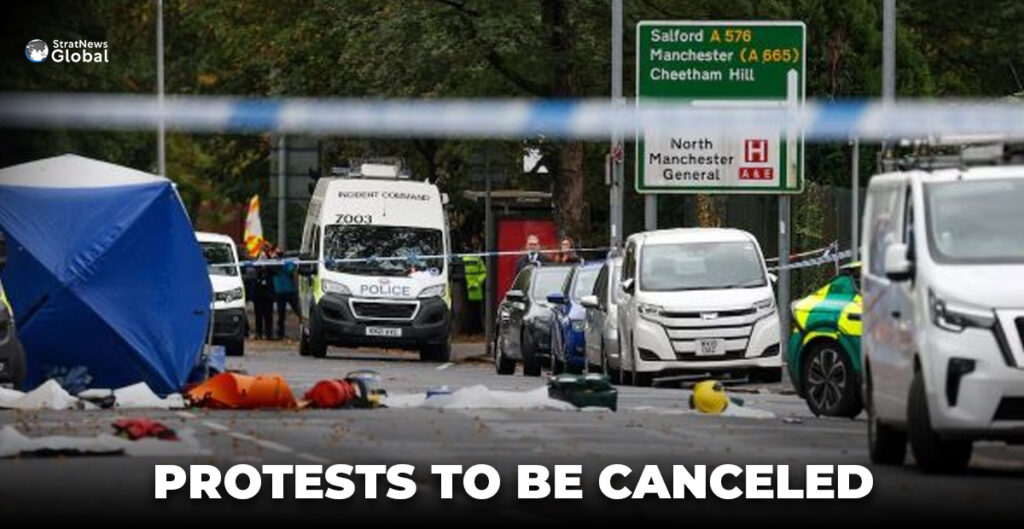
In the aftermath of a violent synagogue attack in northern England, the British government and police issued a joint appeal on Friday for the pro-Palestinian protest in London scheduled this weekend to be canceled or postponed.
Interior minister Shabana Mahmood urged protesters to “take a step back” for a few days to give the Jewish community time to grieve and process what has happened.
Two people were killed on Thursday when a man drove a car into pedestrians and then began stabbing them outside the Heaton Park Hebrew Congregation Synagogue in Manchester.
The attacker has been named by police as Jihad al-Shamie, a 35-year-old British citizen of Syrian descent, who was shot dead at the scene by armed officers.
Protests Over Ban On Pro-Palestinian Group
“The horrific terrorist attack that took place in Manchester yesterday will have caused significant fear and concern in communities across the UK, including here in London,” the Metropolitan Police said on X.
Saturday’s demonstration was organised by Defend Our Juries to oppose the British government’s July decision to ban the pro-Palestinian group Palestine Action under anti-terrorism laws, making it a crime to be a member.
Since then, a number of protests have been held in support of the group, and over 1,500 have been arrested, many of them elderly, for offences relating to the ban.
The Metropolitan Police said they wanted to deploy every available officer to protect communities affected by the Manchester attack but were instead having to prepare for a gathering of more than 1,000 people in London’s Trafalgar Square on Saturday in support of Palestine Action.
“By choosing to encourage mass law breaking on this scale, Defend Our Juries (protest organisers) are drawing resources away from the communities of London at a time when they are needed most,” the police said.
In response to the police, Defend Our Juries said they condemned the attack on the Jewish community in Manchester. They said it was the police’s choice whether or not to make arrests at the protests.
“We urge you therefore to choose to prioritise protecting the community, rather than arresting those peacefully holding signs in opposition to the absurd and draconian ban of a domestic direct action group,” Defend Our Juries said.
In the hours after the attack on Thursday, several pro-Palestinian protests took place in British cities. Police clashed with demonstrators near the prime minister’s official residence at Downing Street, leading to 40 arrests.
(With inputs from Reuters)
Germany Eyes New Powers For Police To Shoot Down Drones After Recent Sightings
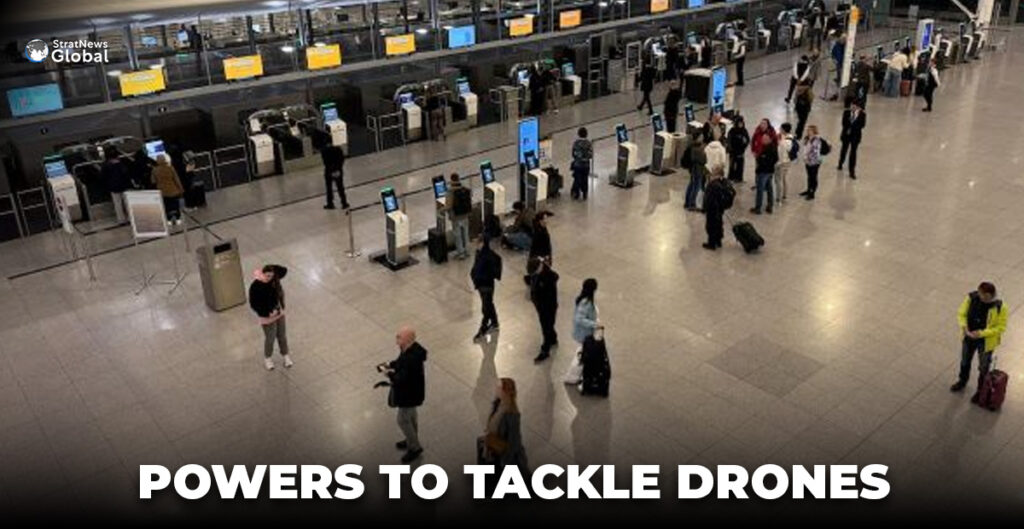
Dozens of flights were canceled or diverted at Germany‘s Munich airport after drone sightings overnight, disrupting travel plans for nearly 3,000 passengers on the eve of a national holiday. The incident prompted politicians to advocate for stricter measures against drone threats, including possible shoot-downs.
The Munich airport disruption was the latest in a series of similar incidents that have rattled European aviation, raising concerns about deniable hybrid attacks on Ukraine’s European allies, possibly directed by Russia. The Kremlin has indeed denied any involvement in the incidents.
The airport said several drone sightings late on Thursday evening had forced air traffic control to suspend operations, leading to the cancellation of 17 flights and disrupting travel for nearly 3,000 passengers, who were provided with camp beds, blankets and food. Another 15 arriving flights were diverted around the region.
“Our police must get the power to shoot drones down,” said Markus Soeder, premier of Bavaria, of which Munich is the capital. He told Bild newspaper: “We need sovereignty over our airspace.”
As airport operations resumed early on Friday morning, passengers checking in for a flight to Varna in Bulgaria, and the departure board showed only a few flights had been cancelled. A flight from Bangkok was the first of the day to land at around 5:25 a.m. (0325 GMT).
Public broadcaster BR said local and national police were investigating the incident. State and federal police had no immediate comment.
Airspace Intrusions
The drones were sighted in the late evening above the airport, a police spokesperson told newspaper Bild. But because it was dark, the sizes and types of the drones could not be determined, he added.
The drone incidents follow airspace intrusions last week that temporarily shut airports in Denmark and Norway, which led European Union leaders at a Copenhagen summit to back plans to bolster the bloc’s defences with anti-drone measures.
“Europe must be able to defend itself,” Danish Prime Minister Mette Frederiksen said after the meeting. Her defence minister spoke on Friday morning of a Russian “hybrid war against NATO and the West”.
European Authorities Accuse Russia
Authorities have not publicly blamed anyone for the Munich drone incident, but some European officials have suggested Russia was behind other recent airspace violations.
“Russia tries to test us. But Russia also tries to sow division and anxiety in our societies,” European Commission chief Ursula von der Leyen said on Wednesday.
Interior minister Alexander Dobrindt, who already plans legislation letting armed forces help shoot down drones, said more money was needed along with research into ways of countering the drone threat.
“The race between the drone threat and drone defences is getting ever tighter,” he told Bild.
Russian President Vladimir Putin joked on Thursday that he would not fly drones over Denmark anymore, but Moscow has denied responsibility for the incidents. European authorities have accused Russia of brazen violations of the region’s airspace, including recent incursions by drones over Poland and fighter jets over Estonia, while Moscow has in turn accused NATO of provocations.
The airport disruption in Munich added to a tense week for the city after its popular Oktoberfest was closed temporarily due to a bomb threat and the separate discovery of explosives in a residential building in the city’s north.
Friday is German Reunification Day, a public holiday.
(With inputs from Reuters)
Chevron Refinery Blaze: Massive Fire Engulfs Jet Fuel Unit In Los Angeles
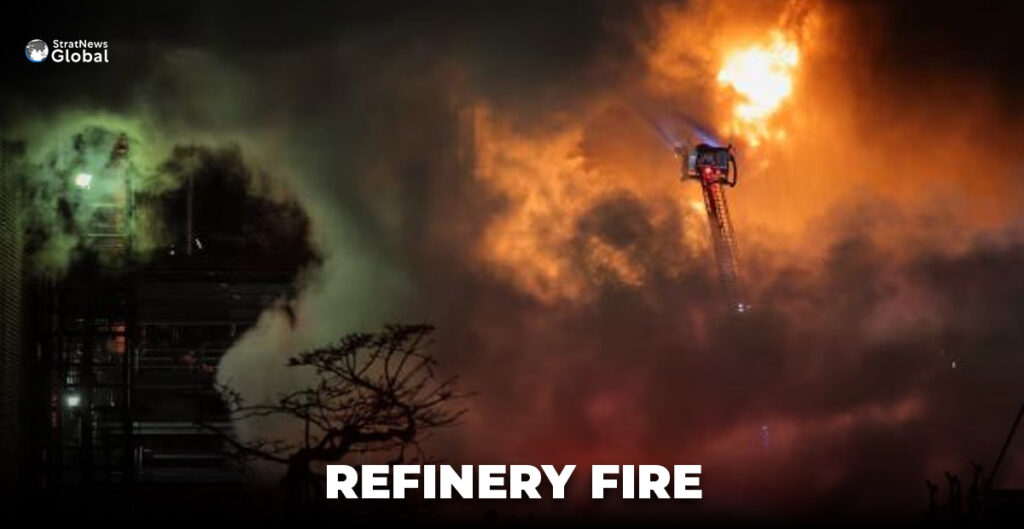
Chevron’s El Segundo refinery near Los Angeles was hit by a massive fire in its jet fuel production unit on Thursday, with flames and smoke billowing into the sky and fuelling worries about supply disruptions in California’s isolated energy market.
No injuries were reported and all workers at the refinery were accounted for, Chevron spokesperson Allison Cook said in an email. Media said the blaze had been contained, though it was still burning early on Friday.
It was not immediately clear what caused the explosion at the facility in the suburb of El Segundo, which supplies jet fuel for Los Angeles International Airport (LAX).
The fire broke out in the refinery’s Isomax 7 unit, which converts mid-distillate fuel oil into jet fuel, two sources said.
It was unclear how it would affect the refinery’s ability to produce jet fuel, and whether wider output had been affected.
Isomax 7 produces jet fuel along with the refinery’s two crude distillation units for LAX airport, located just north of the refinery.
“There is no known impact to LAX at this time,” Los Angeles Mayor Karen Bass said.
U.S. WTI crude futures prices were trading up 46 cents at $60.94 per barrel by 1011 GMT on Friday, on course for a weekly loss of more than 7% on the week.
The fire is unlikely to have a large impact on the wider oil market, two analysts said, but California gasoline prices could rise as the state’s fuel market is isolated from other U.S. refining centers in the Midwest and on the Gulf Coast.
No Injuries Reported
Chevron’s second biggest refinery in the United States, the El Segundo facility supplies a fifth of all motor vehicle fuels and 40% of the jet fuel consumed in southern California.
“Chevron fire department personnel, including emergency responders from the cities of El Segundo and Manhattan Beach are actively responding to an isolated fire inside the Chevron El Segundo Refinery,” Cook, the spokesperson, said.
“All refinery personnel and contractors have been accounted for and there are no injuries.”
Local officials said no evacuation orders were issued for nearby residents, some of whom live in apartment buildings across the street from the refinery.
Residents of Manhattan Beach, located southwest of the refinery, were told to shelter in place until 2 a.m.
Los Angeles residents posted numerous videos of the fire online, saying they were stunned by the noise of the blast. A University of California-San Diego camera captured video of the explosion shortly after 9:30 p.m. PDT (0430 GMT).
The fireball when the fire erupted turned the sky orange in the western Los Angeles area as did the refinery’s safety flare, which was set off due to the blaze.
Safety flares, which emit a tall plume of flame, are used when refineries cannot process hydrocarbons normally.
In addition to Chevron, state and federal safety agencies will investigate the fire after the blaze is extinguished, they said.
In December 2022, an isolated fire in the refinery was quickly extinguished.
The refinery’s total storage capacity is 12.5 million barrels in about 150 major tanks. The sources said they were not sure how much jet fuel was currently in storage.
(With inputs from Reuters)
PoK Turns Battlezone As Protesters Clash With Pak Security Forces, 15 Dead
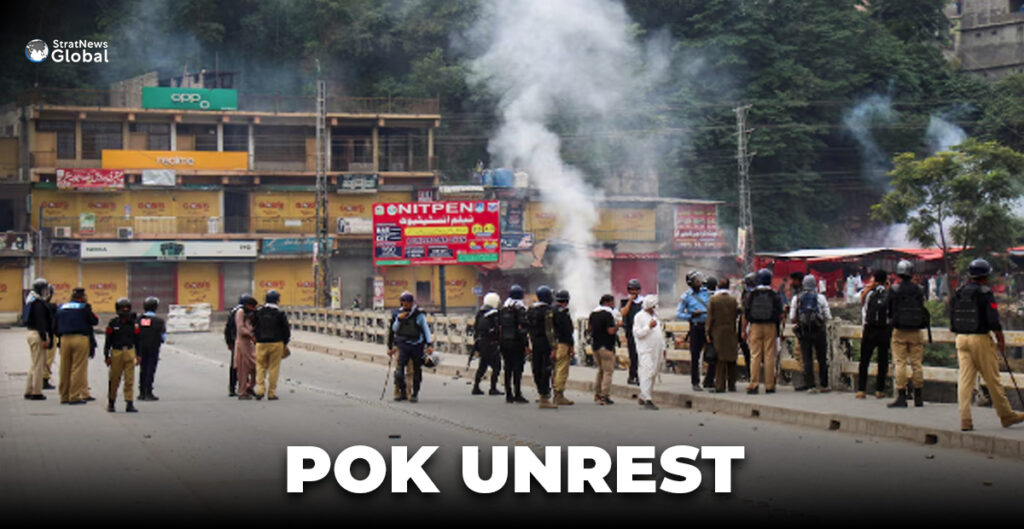
At least 12 civilians were killed after Pakistani security forces opened fire on demonstrators in Pakistan-occupied Kashmir (PoK), which is experiencing one of its most intense waves of unrest in recent years.
Three policemen were also killed in the clash.
Initially triggered by the government’s failure to meet 38 key demands, the agitation has expanded into a larger movement against military excesses, paralysing the region.
Deadly Clashes
On Thursday, the third consecutive day of protests, clashes erupted in Dadyal as the government deployed thousands of additional troops to contain the situation. Violence has spread beyond Muzaffarabad to Rawalakot, Neelum Valley, and Kotli.
Reports indicate that five protesters were killed in Muzaffarabad, another five in Dheerkot, and two in Dadyal. At least three policemen have also lost their lives. More than 200 people have been injured, many critically, with gunshot wounds making up the bulk of casualties.
The demonstrations, organised by the Jammu Kashmir Joint Awami Action Committee (JKJAAC), have brought daily life to a halt.
Protesters are demanding the abolition of 12 assembly seats in PoK reserved for Kashmiri refugees living in Pakistan, as well as tax relief, subsidies on flour and electricity, and completion of long-pending development projects.
Since the protests began on September 29, shops, markets, and businesses have been shuttered. Authorities have also cut off mobile, internet, and landline services, further isolating the region.
‘Kashmir Is Ours’
Videos circulating on social media show massive crowds hurling stones and dismantling shipping containers placed on bridges to block marches in Muzaffarabad.
In other towns, demonstrators defied curfews, chanting slogans such as “Rulers, beware, we are your doom” and “Kashmir is ours, we will decide its fate.”
Analysts note this marks a rare moment in decades where PoK residents are directly challenging both Islamabad and the military establishment.
Sharif Government Under Pressure
Prime Minister Shehbaz Sharif voiced “deep concern” over the deteriorating law and order in PoK and expanded a negotiation panel tasked with finding a way out of the crisis.
His office announced that a transparent probe had been ordered into the shootings, while also urging security forces to exercise restraint.
Sharif, currently in London following a U.S. visit, appealed for peace and said his government was prepared to address the protesters’ concerns through dialogue.
Meanwhile, Nasir Aziz Khan, spokesperson of the United Kashmir People’s National Party (UKPNP), has called for urgent intervention from the United Nations and the wider international community.
Speaking at the UN Human Rights Council’s 60th session in Geneva, Khan warned of an impending humanitarian disaster in PoK and reminded member states of their treaty obligations.
The unrest in PoK comes on the heels of another tragedy last week, when 30 civilians were killed in Pakistan Air Force airstrikes in Khyber Pakhtunkhwa, further underscoring the volatile situation across the country.
Pak Police Assault Journalists
Pakistani police stormed Islamabad’s National Press Club, assaulting journalists and protesters who were demonstrating against atrocities and the ongoing internet shutdown in violence-hit PoK.
The incident sparked widespread outrage across Pakistan, prompting Interior Minister Mohsin Naqvi to order an investigation.
Footage from the scene showed officers hitting journalists with batons and damaging media equipment at the press club, situated in the heart of the capital.
The crackdown occurred while a group of lawyers from the JKJAAC, which is leading the protests in PoK, was holding a peaceful demonstration.
According to Arab News, the government claimed the violence erupted after protesters clashed with police outside the building, with some retreating into the press club.
Police then conducted a lathicharge inside the premises, targeting both protesters and journalists. Videos also show officers forcibly dragging some demonstrators out of the club.
First Round Of Talks
A delegation from the Pakistan federal government held the first round of talks with the protesters on Thursday.
After the talks, federal minister Ahsan Iqbal addressed the media, urging protesters to refrain from actions that could serve the interests of Pakistan’s adversaries.
“Our enemy will seize any opportunity to exploit a crisis in our country. We must avoid igniting a fire that could harm Pakistan’s image, trigger unrest, or endanger lives and property,” Iqbal was quoted as saying by Arab News.
India Delivers Hammer Blow
India on Friday described the large-scale deadly protests in PoK as a “natural outcome of Pakistan’s oppressive policies and systematic exploitation of the region’s resources.”
Speaking at a weekly media briefing in New Delhi, Ministry of External Affairs (MEA) spokesperson Randhir Jaiswal said India was closely monitoring the ongoing demonstrations and the reported brutalities by Pakistani forces against local civilians.
“We have observed reports of protests across several areas of Pakistan-occupied Jammu and Kashmir, along with the atrocities committed by Pakistani forces on innocent people. This unrest is a predictable result of Pakistan’s repressive governance and its systematic plundering of resources in territories under its illegal occupation. Pakistan must be held accountable for these grave human rights violations,” Jaiswal said.
Reiterating India’s position, the MEA spokesperson stressed that Jammu and Kashmir, along with Ladakh, will always remain an integral part of India.
“Jammu and Kashmir and Ladakh are inalienable parts of India and always have been. These territories under Pakistan’s control are our inalienable part,” he added.
(With inputs from IBNS)
Pak Military Build-Up In Sir Creek: What It Means For India
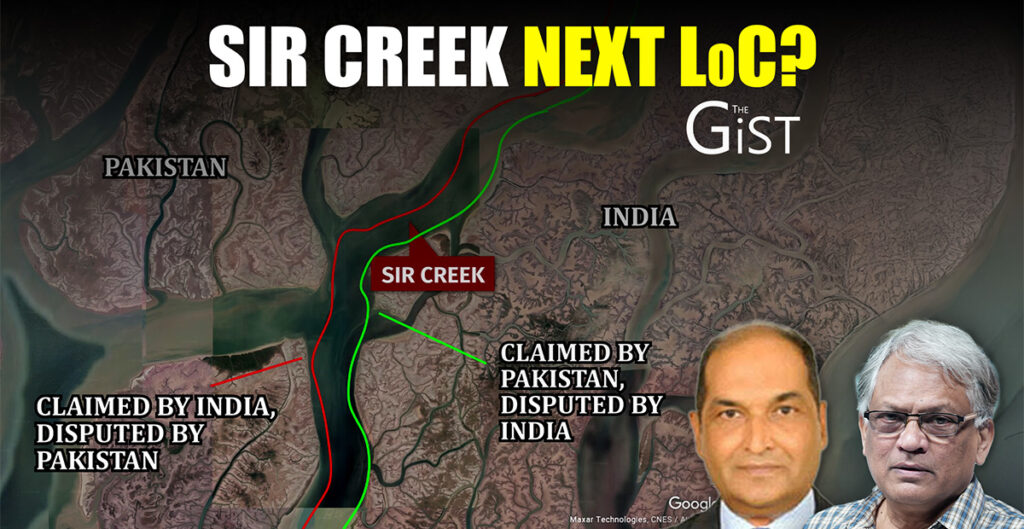
Could India and Pakistan go to war over the Sir Creek? Unlikely as there has been no exchange of fire or any clash in all these years. But Defence Minister Rajnath Singh’s recent comments warning about Pakistan’s military infrastructure upgrades on its side of the creek, suggests something else.
Commodore Abhay Singh, a retired naval officer currently with the Institute for Defence Studies & Analysis in Delhi, told The Gist in an interview that “A major military facility is coming up towards the Keti Bandar (a minor seaport in Sindh 120 km from Sir Creek) … also in the area called Harami Nala on the Pakistan side, 50 square miles has been cleared by the government for a Chinese company.”
He said there is no clarity on what the Chinese company is doing in this area but clearly, the authorities on the Indian side are concerned.
What is the importance of Sir Creek? Apart from being rich in fish, it plays a key role in the maritime boundary demarcation and potentially has implications for the ownership of 10,000 nautical miles of the Arabian Sea.
The dispute over Sir Creek fundamentally is about where the boundary line in the creek runs. Is it in the middle as India says it is? Pakistan rejects it saying the entire creek belongs to it.
Negotiations have been held between the two sides since 1992 and in 2005 there was a meeting to decide on the hydrographic issues since no common data was available. A breakthrough of some kind happened in 2007 when the Indian Coast Guard and the Pakistani Maritime Security Agency jointly carried out a hydrographic survey.
Since then matters have remained in limbo and the 26/11 attacks in Mumbai put everything into a freeze. The only time temperatures go up is when fishermen get caught on the wrong side of the international maritime boundary.
Tune in for more in this conversation with Commodore Abhay Singh of the Institute for Defence Studies & Analysis.