

Support us by contributing to StratNewsGlobal on the following UPI ID
ultramodern@hdfcbank

Strategic affairs is our game, South Asia and beyond our playground. Put together by an experienced team led by Nitin A. Gokhale. Our focus is on strategic affairs, foreign policy and international relations, with higher quality reportage, analysis and commentary with new tie-ups across the South Asian region.
You can support our endeavours. Visit us at www.stratnewsglobal.com and follow us on YouTube, Twitter, Facebook and Instagram.
र 500 per month
र 1000 per month
र 5000 per year
र 10000 per year
Donate an amount of your choice
र 500 per month
Donate र 500 per month

र 1000 per month
Donate र 1000 per month
र 5000 per year
Donate र 5,000 per year
र 10000 per year
Donate र 10,000 per year
Donate an amount of your choice
Donate an amount of your choice




Munich Airport Gradually Reopens Following Late-Night Drone Sightings
Munich Airport announced on Saturday that it was slowly resuming flight operations from 7 a.m. (0500 GMT), cautioning that delays were likely to persist throughout the day, hours after both of the airport’s runways had been shut down for the second time in under 24 hours following reports of a drone sighting.
The airport advised travellers to check with their airlines as it prepared for the restart, two hours later than originally scheduled, after the Friday evening closure.
Dozens of flights had been diverted or cancelled, stranding some 6,500 passengers, authorities said.
European aviation has repeatedly been thrown into chaos in recent weeks by drone sightings that some authorities have blamed on Russia. The Kremlin has denied any involvement.
Flight Ops Hit
Authorities have yet to attribute Thursday’s or Friday’s drone sightings to a specific actor.
“German air traffic control restricted flight operations at Munich Airport as a precautionary measure due to unconfirmed drone sightings and suspended them until further notice,” a statement on the airport website read.
In a later update, the airport said 23 flights were diverted, 12 flights to Munich and 48 departures were cancelled or postponed.
“As on the previous night, the airport and airlines took care of the passengers,” it added. “Camp beds, blankets, drinks and snacks were handed out.”
The previous evening, the captain of a London-bound aircraft whose departure was cancelled told passengers that runways had been closed “because of drone sightings near the take-off and landing runways” and that police helicopters were aloft.
The airport website showed that due arrivals had been diverted starting at 8:35 p.m. (1835 GMT).
Munich airport was closed for several hours late on Thursday and in the small hours after unconfirmed drone sightings that disrupted dozens of flights.
German Interior Minister Alexander Dobrindt promised earlier on Friday to bring forward legislation making it easier for the police to ask the military to shoot down drones.
(With inputs from Reuters)
Trump Administration Plans To Set Record-Low Refugee Cap Of 7,500: Sources
President Donald Trump’s administration is reportedly planning to establish a refugee admissions cap of 7,500 for this fiscal year — the lowest in U.S. history — with priority expected to be given to white South Africans of Afrikaner descent, according to three people familiar with the discussions.
If finalised, the planned cap would be a steep drop from the 125,000 put in place last year under former President Joe Biden and reflect Trump’s restrictive view of immigration and humanitarian protection.
Trump, a Republican, slashed refugee levels during his 2017-2021 presidency as part of a broad crackdown on both legal and illegal immigration. After returning to office in January 2025, he froze refugee admissions, saying they could only resume if it was determined to be in the interest of the U.S.
White South Africans Prioritised
Weeks later, Trump issued an executive order prioritising refugee entries from South Africa’s Dutch-descended Afrikaner minority, saying the white minority group suffered racial discrimination and violence in majority-Black South Africa. South Africa’s government has rejected those claims.
The first group of 59 South Africans arrived in May, reaching a total of 138 by early September, Reuters reported previously.
The White House, State Department and Department of Homeland Security did not immediately respond to requests for comment regarding the planned 7,500-person refugee ceiling in fiscal year 2026, which began on Wednesday. The New York Times first reported the plans.
John Slocum, executive director of Refugee Council USA, urged other elected officials to push Trump to bring in more refugees, saying in a statement that such a low limit would be “jeopardising people’s lives, separating families, and undermining our national security and economic growth.”
Trump officials had previously discussed annual refugee admissions ranging from 40,000 to 60,000, Reuters reported in recent months.
At a side event at the United Nations General Assembly last week, top Trump administration officials urged other nations to join a global campaign to roll back asylum protections, a major shift that would seek to reshape the post-World War Two framework around humanitarian migration.
(With inputs from Reuters)
LDP Picks Takaichi As New Leader, Likely To Become Japan’s First Female PM
Japan’s ruling party on Saturday chose former Economic Security Minister Sanae Takaichi as its new leader, paving the way for her to become the nation’s first female Prime Minister.
In a country that consistently fares poorly in global gender equality rankings, Takaichi’s rise marks a historic milestone — she will be the first woman ever to lead Japan’s long-dominant conservative Liberal Democratic Party (LDP). Known for her staunchly traditional views, she is also considered among the most conservative figures within the male-dominated party.
Takaichi secured her victory in a runoff election against Agriculture Minister Shinjiro Koizumi, the son of former and widely admired Prime Minister Junichiro Koizumi, during an intraparty vote held by the LDP on Saturday.
She succeeds Prime Minister Shigeru Ishiba, as the party strives to rebuild its waning public support and maintain its grip on power following a series of significant electoral setbacks.
Takaichi is widely expected to assume the premiership, given that the LDP continues to hold a commanding majority in Japan’s lower house of parliament, which selects the national leader. Moreover, the fragmented opposition offers little threat to her path toward the top post.
Takaichi Hails ‘New Era’
Celebrating her victory at the LDP headquarters in Tokyo on October 4, 2025, Takaichi declared that a “new era” had begun for Japan’s ruling party.
“Together with all of you, we have carved out a new era for the LDP,” she said, emphasising unity and renewal within the party.
Takaichi’s election sets her firmly on course to become Japan’s first female Prime Minister, a momentous achievement in the nation’s political history.
Following a string of consecutive parliamentary losses that have left the LDP in the minority in both houses, the party sought a leader capable of swiftly confronting Japan’s internal and external challenges while fostering cooperation with key opposition forces to ensure policy continuity.
A conservative nationalist with a proactive and expansionary agenda, the former Economic Security Minister is expected to officially succeed Prime Minister Shigeru Ishiba, as the LDP remains Japan’s most powerful political force in parliament.
(With inputs from IBNS)
Trump Administration Weighs Investment In Greenland Rare Earths Project
Officials in the Trump administration have discussed acquiring a stake in Critical Metals Corp, according to four people familiar with the talks. Such an investment would give Washington a direct foothold in Greenland’s biggest rare earths venture — a project based in the Arctic territory that President Donald Trump once proposed to buy.
If finalized, the deal would mark the latest political twist for the Tanbreez rare earths deposit, which former President Joe Biden successfully lobbied to have sold to New York-based Critical Metals for far less than a Chinese firm was offering.
Washington has recently taken stakes in Lithium Americas and MP Materials underscoring Trump’s desire for the U.S. to benefit from growing production of minerals used across the global economy.
Details of the discussions about Washington’s interest in an equity stake in Critical Metals have not previously been reported. The four sources declined to be named, citing the sensitivity of the negotiations.
Investment In Critical Minerals Projects
“Hundreds of companies are approaching us trying to get the administration to invest in their critical minerals projects,” a senior Trump administration official said in response to a request for comment. “There is absolutely nothing close with this company at this time.”
Critical Metals did not respond to repeated requests for comment via email and phone. Greenland is a semi-autonomous part of Denmark and the Danish Embassy in Washington did not immediately respond to a request for comment.
Rare earths offer strong magnetic properties critical to high-tech industries ranging from electric vehicles to missile systems. Their importance is spurring an intense push for fresh supplies by Western countries looking to lessen their dependence on China’s near total control of their extraction and processing.
Critical Metals, which agreed to buy Greenland’s Tanbreez deposit last year for $5 million in cash and $211 million in stock, applied in June for a $50 million grant through the Defence Production Act, a Cold War-era piece of legislation aimed at boosting production of goods for national security purposes.
In the last six weeks, though, the administration has begun discussions with the company about converting the grant into an equity stake, three of the sources said.
8% Stake Likely
If the deal goes through, a $50 million conversion would mean a roughly 8% stake in the company, although negotiations are not final and the final size of the stake could be higher or the deal itself could collapse, the same three sources said.
Administration officials have considered reallocating $2 billion from the CHIPS Act to fund critical minerals projects, according to reports in August. The law, formally known as the CHIPS and Science Act, was signed into law by then-President Joe Biden in 2022 and aims to lure chip production away from Asia.
The Critical Metals investment discussions were delayed by the administration’s negotiations in recent days for a 5% stake in Lithium Americas, two of the sources said.
The U.S. government shutdown is not expected to affect the negotiations, given that high-level staff involved in the discussions are considered essential government workers, two of the sources said.
Part of the discussion centers on how warrants would be issued to give Washington the stake, one of the sources said. Warrants give their holders the right to buy stock at a set price.
The equity stake would be separate from a $120 million loan the U.S. Export-Import Bank (EXIM) is considering to help the company develop Tanbreez, according to two of the sources. An EXIM spokesperson was not immediately available to comment.
Greenland’s Appeal
Even before Trump expressed an interest in acquiring Greenland, Washington had long-running economic interests in the Danish territory.
Biden officials were visiting Greenland’s capital Nuuk as recently as last November trying to woo additional private investment in the island’s mining sector. Trump also sent Vice President JD Vance to the island in March. One of the largest U.S. Air Force bases is in northern Greenland.
The Tanbreez project is expected to cost $290 million to bring into commercial production, the company has previously said.
The EXIM loan would be used to fund technical work and get the mine to initial production by 2026. Once fully operational, the mine is expected to produce 85,000 metric tons per year of rare earths concentrate. The site also contains gallium, which China subjected to export restrictions last year, and tantalum.
Greenland’s mining sector has developed slowly in recent years, hindered by limited investor interest, bureaucratic challenges and environmental concerns. Currently, only two small mines are in operation.
The remote, cold location of Tanbreez is seen posing challenges to its development, although the deposit is located near a major waterway.
(With inputs from Reuters)
Takaichi And Koizumi Face Runoff To Decide Japan’s Next Prime Minister
A vote to choose Japan’s next prime minister went to a runoff on Saturday, as the ruling Liberal Democratic Party narrowed its choice between Sanae Takaichi, who could become the country’s first female leader, and Shinjiro Koizumi, its youngest contender in modern times.
The Liberal Democratic Party will select either hardline nationalist Sanae Takaichi, 64, or the telegenic political scion Shinjiro Koizumi, 44, to regain trust from a public angered by rising prices and drawn to opposition groups promising big stimulus and clampdowns on foreigners.
The runoff is expected to conclude around 0630 GMT.
A vote in parliament to choose a prime minister to replace Shigeru Ishiba is expected to be held on Oct. 15.
The new LDP president is likely to succeed Ishiba as leader of the world’s fourth-biggest economy because the party, which has governed Japan for almost all the postwar period, is the biggest in parliament.
But this is not assured as the party and its coalition partner lost their majorities in both houses under Ishiba in the past year.
Various other parties, including the fiscally expansionist Democratic Party for the People and the anti-immigration Sanseito have been steadily luring, especially younger voters, away from the LDP.
‘Time For A Reset’
Whoever succeeds Ishiba will inherit a party in crisis.
“The LDP is rotting from within, so it’s about time for a reset,” said Takaichi supporter Osamu Yoshida, 70, speaking outside Shimbashi commuter train station in Tokyo.
Takaichi, the only woman in the race, offers the starkest vision for change, and potentially the most disruptive.
An advocate of late premier Shinzo Abe’s “Abenomics” strategy to jolt the economy with aggressive spending and easy monetary policy, she has previously criticised the Bank of Japan’s interest rate increases.
Such a policy shift could spook investors worried about one of the world’s biggest debt loads.
Farm Minister Koizumi promises to boost wages and provide relief to households struggling with inflation – but within the fiscal restraints set by Ishiba and other recent administrations.
Takaichi has also raised the possibility of redoing an investment deal with U.S. President Donald Trump that lowered his punishing tariffs in return for Japanese taxpayer-backed investment. Koizumi has defended the deal.
Her nationalistic positions – such as her regular visits to the Yasukuni shrine to Japan’s war dead, viewed by some Asian neighbours as a symbol of its past militarism – may rile South Korea and China.
She also favours revising Japan’s pacifist postwar constitution and suggested this year that Japan could form a “quasi-security alliance” with Taiwan, the democratically governed island claimed by China.
If elected, Takaichi said she will travel overseas more regularly than he predecessor to spread the word that “Japan is Back!”
Second-Round Dynamics
The runoff will be decided by 295 LDP lawmakers as well as 47 votes from rank-and-file members, one for each prefecture.
Polling suggests Koizumi has stronger backing in the parliamentary party, giving him an advantage, though Takaichi is more favoured by rank-and-file members.
If selected, Koizumi would be a few months older than Hirobumi Ito when he became Japan’s first prime minister in 1885, under the nation’s prewar constitution.
The winner is expected to hold a press conference around 0900 GMT.
(With inputs from Reuters)
U.S. Forces Destroy Suspected Drug Vessel Near Venezuela, Killing Four
U.S. Defence Secretary Pete Hegseth said on Friday that American forces had destroyed a vessel suspected of smuggling drug near Venezuela, killing four people on board. It marks the fourth similar operation carried out by the United States in recent weeks.
The strike is the latest example of President Donald Trump’s efforts to use U.S. military power in new, and often legally contentious, ways, from deploying active-duty U.S. troops in Los Angeles, to carrying out counter-terrorism strikes against drug trafficking suspects.
Hegseth said Friday’s strike was carried out in international waters and that all of the people killed were men. He said the vessel was transporting “substantial amounts of narcotics – headed to America to poison our people.”
“These strikes will continue until the attacks on the American people are over!!!!,” Hegseth said in a post on X.
In a nearly 40-second video shared by Hegseth, a vessel can be seen moving through the water before a web of projectiles fall on the boat and the surrounding water, causing the boat to explode on impact.
Hegseth said, without providing evidence, that the intelligence “without a doubt” confirmed that the vessel was carrying drugs and that the people on board were “narco-terrorists.” He did not disclose the amount or type of the alleged drugs on board the vessel.
Trump, also without providing evidence, said the boat had enough drugs to kill 25,000 to 50,000 people.
The Venezuelan communications ministry did not immediately reply to a request for comment.
Counter-Drug Operations
In the past, counter-drug operations have been generally carried out by the U.S. Coast Guard, the main U.S. maritime law enforcement agency, not the U.S. military.
But earlier this week, the Pentagon disclosed to Congress in a notification reviewed by Reuters that Trump has determined the United States is engaged in “a non-international armed conflict” with drug cartels. The document aimed to explain the Trump administration’s legal rationale for unleashing U.S. military force in the Caribbean.
Some former military lawyers say the legal explanations given by the Trump administration for killing suspected drug traffickers at sea instead of apprehending them fail to satisfy requirements under the law of war.
Trump has said his administration is also considering attacking drug cartels “coming by land actions that could raise further legal questions.
A large U.S. military buildup is taking place in the southern Caribbean. In additional to F-35 aircraft in Puerto Rico, there are eight U.S. warships in the region, carrying thousands of sailors and marines, and one nuclear-powered submarine.
The Trump administration has provided scant information on the previous strikes, including the identities of those killed or details about the cargo.
Venezuelan President Nicolas Maduro has repeatedly alleged that the U.S. is hoping to drive him from power. Washington in August doubled its reward for information leading to Maduro’s arrest to $50 million, accusing him of links to drug trafficking and criminal groups that Maduro denies.
(With inputs from Reuters)
Trump Urges Israel To Halt Gaza Strikes As Hamas Agrees To Peace Terms
U.S. President Donald Trump on Friday urged Israel to halt its airstrikes on Gaza, saying Hamas has agreed to release hostages and accept key elements of a U.S. peace proposal. However, he noted that crucial issues such as disarmament remain unsettled.
Israeli Prime Minister Benjamin Netanyahu‘s office said Israel was preparing for an “immediate implementation” of the first stage of Trump’s Gaza plan for the release of Israeli hostages following Hamas’ response.
Shortly after, Israeli media reported that the country’s political echelon had instructed the military to reduce offensive activity in Gaza.
The Israeli military chief of staff instructed forces in a statement to advance readiness for the implementation of the first phase of Trump’s plan, without mentioning whether there would be reduction of military activity in Gaza.
Bombing Reported After Trump Announcement
Hamas, the Palestinian terrorist group that controls Gaza, responded to Trump’s 20-point plan after the U.S. president gave the group until Sunday to accept or face grave consequences.
Trump, who has cast himself as the only person capable of achieving peace in Gaza, has invested significant political capital in efforts to end a two-year-old war that has killed tens of thousands and left U.S. ally Israel increasingly isolated on the world stage.
Trump said he believed Hamas had showed it was “ready for a lasting PEACE” and he put the onus on Netanyahu’s government.
“Israel must immediately stop the bombing of Gaza, so that we can get the Hostages out safely and quickly!” Trump wrote on his Truth Social platform.”We are already in discussions on details to be worked out. This is not about Gaza alone, this is about long sought PEACE in the Middle East.”
Netanyahu’s office said Israel “will continue to work in full cooperation with the President and his team to end the war in accordance with the principles set out by Israel, which align with President Trump’s vision.”
Residents said Israeli tanks bombarded Talateeni Street, a major artery in the heart of Gaza City, after Trump’s message to Israel to stop.
Witnesses said Israeli military planes also intensified bombing in Gaza City in the hour after Hamas issued its statement, hitting several houses in the Remal neighbourhood.
There were strikes on Khan Younis but no reports of casualties, residents said.
Pressure On Netanyahu
Before Israel’s latest announcements, families of those being held by Hamas in Gaza called on Netanyahu “to immediately order negotiations for the return of all hostages.”
Domestically, the prime minister is caught between growing pressure to end the war — from hostage families and a war-weary public — and demands from hardline members of his far-right coalition who insist there must be no let-up in Israel’s campaign in Gaza.
Israel began its offensive in Gaza after the October 7, 2023, Hamas-led attack on Israel in which some 1,200 people were killed and 251 taken as hostages back to Gaza, according to Israeli tallies. Israel says 48 hostages remain, 20 of whom are alive.
Israel’s military campaign has killed more than 66,000 people in Gaza, most of them civilians, according to Gaza health authorities. Its assault has destroyed much of the strip while aid restrictions have triggered a famine in parts of Gaza, with conditions dire across the enclave.
A U.N. Commission of Inquiry and multiple human rights experts have concluded that Israel has committed genocide in Gaza. Netanyahu’s government says it has acted in self-defence.
No Decision On Disarmament
Hamas did not say whether it would agree to disarm and demilitarize Gaza — something Israel and the U.S. want but Hamas has rejected before.
It also did not agree to an Israeli withdrawal in stages, as opposed to the immediate, full withdrawal Hamas demands.
A senior Hamas official told Al Jazeera that the group would not disarm before Israel’s occupation of the enclave ends, comments that underscored the gap between the parties.
Qatar has begun coordination with mediator Egypt and the United States to continue talks on Trump’s Gaza plan, the Qatari foreign ministry spokesperson said on X.
Trump’s plan specifies an immediate ceasefire, an exchange of all hostages held by Hamas for Palestinian prisoners held by Israel, a staged Israeli withdrawal from Gaza, the disarmament of Hamas and the introduction of a transitional government led by an international body.
Hamas Welcomes International Efforts
In its response to Trump’s plan, Hamas said it “appreciates the Arab, Islamic, and international efforts, as well as the efforts of U.S. President Donald Trump, calling for an end to the war on the Gaza Strip, the exchange of prisoners, (and) the immediate entry of aid,” among other terms.
It said it was announcing its “approval of releasing all occupation prisoners — both living and remains — according to the exchange formula contained in President Trump’s proposal, with the necessary field conditions for implementing the exchange.”
But Hamas added: “In this context, the movement affirms its readiness to immediately enter, through the mediators, into negotiations to discuss the details.”
The group said it was ready “to hand over the administration of the Gaza Strip to a Palestinian body of independents (technocrats) based on Palestinian national consensus and supported by Arab and Islamic backing.”
Hamas did not make clear whether it would agree to Trump’s proposal that it be barred from exercising political power in Gaza. But the group said it should be “included and will contribute” to any Palestinian national discussion on Gaza’s future.
Hamas has previously offered to release all hostages and hand over administration of the Gaza Strip to a different body.
Earlier on Friday, Trump had warned that “all HELL” would break out in Gaza if Hamas failed to agree to his proposal for the enclave by 6 p.m. ET (2200 GMT) on Sunday.
Hamas was not involved in the negotiations that led to Trump’s proposal.
(With inputs from Reuters)
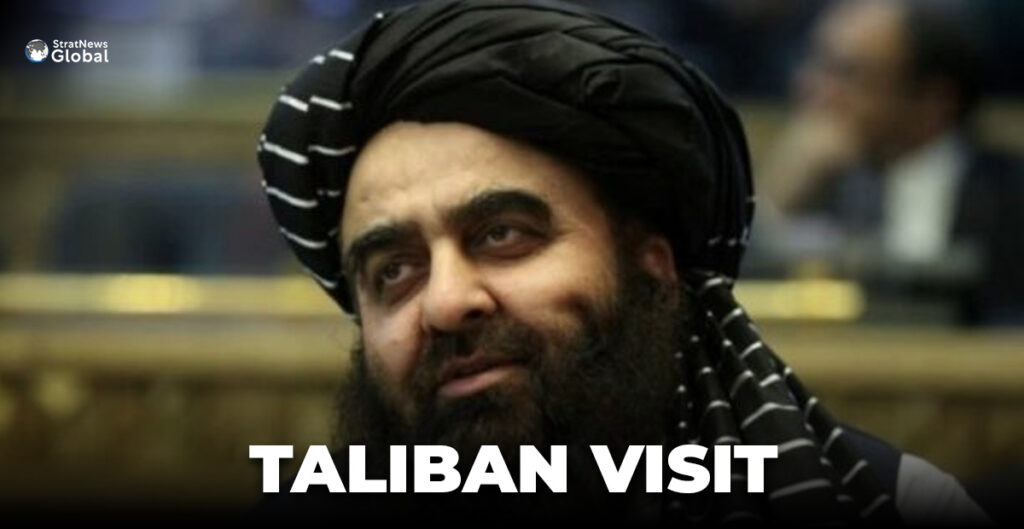
India Faces Taliban Reality With High-Level Visit
Afghanistan’s Foreign Minister Amir Khan Muttaqi is expected to visit India on October 10, after the United Nations Security Council (UNSC) approved a waiver to allow him to travel despite international restrictions. Before arriving in New Delhi, he is scheduled to travel to Moscow on October 6.
The visit, if confirmed, would mark the first high-level trip by a Taliban official to India since the group seized control of Afghanistan in August 2021. The last Afghan leader to travel to New Delhi was then-President Ashraf Ghani, shortly before his government collapsed.
Meanwhile, reports in Hasht-e Subh Daily, an independent Afghan newspaper, have suggested that changes are imminent within the Taliban’s leadership, particularly in the security sector. Rumours point to the possible removal of the interior minister, but no official confirmation has been issued.
Indian officials have stressed that any contact with Taliban representatives is part of New Delhi’s cautious, step-by-step engagement with the regime. India has not extended diplomatic recognition to the Taliban government. However, it maintains a technical mission in Kabul and has been involved in multiple rounds of discussions with Taliban leaders at different venues. Earlier this year, Foreign Secretary Vikram Misri and other senior officials met Muttaqi and other representatives in Dubai.
India has also continued humanitarian aid efforts in Afghanistan, including food supplies, refugee assistance, and support to the health sector. A key moment in recent ties came earlier this year after Operation Sindoor, when External Affairs Minister S. Jaishankar held a phone conversation with Muttaqi. During the call, Jaishankar reaffirmed India’s historical links with the Afghan people and reiterated New Delhi’s willingness to remain engaged.
Separately, Afghanistan saw internet and cell phone services restored on Wednesday after a 48-hour blackout ordered by the Taliban administration. The abrupt disruption had paralysed remittances, trade with neighbouring countries, banking operations, and air travel.
While the Taliban gave no explanation for the outage or its restoration, reports indicated that technical reasons may have been behind the suspension. The disruption added to the daily struggles of Afghans already coping with political uncertainty and economic hardship.
Muttaqi’s anticipated visit will be closely watched in the region as both India and Afghanistan navigate a complex phase in their engagement.
Britain: Synagogue Attack Victim Dies From Accidental Police Gunshot
UK police confirmed that in responding to the Manchester synagogue attack on Friday, their officers unintentionally shot a victim who died, as well as a survivor, while attempting to neutralize the suspect who was perceived to be wearing an explosive device.
In Thursday’s attack two men, Adrian Daulby, 53, and Melvin Cravitz, 66, were killed after a British man of Syrian descent drove a car into pedestrians and then began stabbing people outside Manchester’s Heaton Park Hebrew Congregation Synagogue during Yom Kippur, the holiest day in the Jewish calendar.
The attacker, shot dead by officers at the scene, was not carrying a firearm, said Greater Manchester Police chief constable Steve Watson, though one of those killed suffered a gunshot wound.
“It follows therefore this injury may have been sustained as a tragic and unforeseen consequence of the urgently required action taken by my officers to bring this vicious attack to an end”, Watson said in a statement.
UK Vows To Crack Down On Antisemitism
Watson said another worshipper is believed to have suffered a non life-threatening gunshot wound, and that it is thought both victims were close together behind the synagogue door, as worshippers tried to prevent the attacker from gaining entry.
The police complaints watchdog said it was carrying out an investigation into what happened.
Police have named the attacker as Jihad al-Shamie, 35, and said they could find no records to show he had been referred to the government’s anti-radicalisation programme.
In a statement on Facebook, Shamie’s family said they were in “profound shock” and wanted to distance themselves from what they called his “heinous act”.
The British government vowed to redouble its efforts to tackle antisemitism as the Jewish community reeled from the attack.
Prime Minister Keir Starmer visited the site of the attack and spoke with police and ambulance workers, praising “the degree of professionalism and speed” they showed in their response.
When Deputy Prime Minister David Lammy spoke at a vigil outside the synagogue on Friday he was heckled by people who said “Jews don’t want to live here anymore” and urged him to stop the pro-Palestinian marches that have taken place in British cities regularly since the start of the Gaza war.
Britain, like other European countries and the United States, has recorded a sharp rise in antisemitic incidents in the nearly two years since Gaza conflict began.
Last year was the second worst on record for such incidents, surpassed only by 2023, according to the Community Security Trust, which provides security to Jewish organisations across Britain. It recorded more than 3,500 incidents in 2024.
Many Jewish leaders noted that they were the only faith in Britain that routinely required security at its institutions.
Islamophobic incidents in Britain have also increased since the start of the Gaza war.
Pro-Palestinian Protests
Last month, Starmer announced that Britain was recognising a Palestinian state in the hope of reviving peace for Palestinians and Israelis, a decision decried by Israel as a “huge reward to terrorism”.
Israel has accused Britain of allowing rampant antisemitism to spread through its cities and universities, and repeated that criticism after Thursday’s attack.
Britain’s interior minister, Shabana Mahmood, criticised pro-Palestinian protests that took place hours after the Manchester attack, calling them un-British and dishonourable and urging people to show a bit more “humanity and some love towards a community that is grieving”.
Police meanwhile urged organisers of a planned protest in support of a banned pro-Palestinian group in London this weekend to cancel or postpone the event, saying it would divert police resources needed to protect fearful communities.
Organisers said the protest, the latest in a series in which police have arrested more than 1,500 people, would go ahead, and that it was the police’s choice whether to make more arrests of people “peacefully holding signs”.
Manchester, in northwestern England, is a highly diverse city home to the country’s largest Jewish community outside London.
On Friday morning there was a heavy police presence at the scene of the attack, with debris still lying in the street and bunches of flowers being left nearby.
(With inputs from Reuters)
Apple Complies With Trump Admin, Deletes ICE-Tracking Apps
Apple on Thursday confirmed it removed ICEBlock and similar immigration enforcement-tracking apps from its App Store after a request from President Donald Trump’s administration — a rare move prompted by a demand from the US federal government.
The app alerts users to Immigration and Customs Enforcement agents in their area, which the Justice Department says could increase the risk of assault on US agents.
ICE has been a central part of Trump’s hardline immigration agenda. Its agents have regularly raided and arrested migrants, and rights advocates say free speech and due process are often being infringed in the government’s deportation drive.
Apple’s action may increase scrutiny of tech firms’ growing ties to the Trump administration. Many companies, including the iPhone maker, have sought to avoid clashes with a White House that has not been shy about issuing threats – particularly around tariffs – against specific firms.
“Based on information we’ve received from law enforcement about the safety risks associated with ICEBlock, we have removed it and similar apps from the App Store,” Apple said in an emailed statement.
Fox Business first reported the app’s removal on Thursday. The Justice Department later confirmed that it had contacted Apple to pull the app and that the company complied.
“ICEBlock is designed to put ICE agents at risk just for doing their jobs, and violence against law enforcement is an intolerable red line that cannot be crossed,” US Attorney General Pam Bondi said in a statement.
‘Incredibly Disappointed’
Joshua Aaron, the Texas-based creator of ICEBlock, disputed that characterisation and criticised Apple’s decision.
“I am incredibly disappointed by Apple’s actions today. Capitulating to an authoritarian regime is never the right move,” Aaron told Reuters in an emailed response.
Bondi has previously argued that Aaron is “not protected” under the Constitution and that they are looking at prosecuting him, warning him to “watch out”.
Civilian surveillance of federal immigration agents has grown more assertive since Trump returned to office, with activists saying they aim to protect their communities from aggressive ICE enforcement.
In cities such as Washington, residents also rely on encrypted chats to share enforcement updates, though how often apps like ICEBlock actually alerted neighbors remains unclear.
Six legal experts have told Reuters that surveillance of ICE is largely protected under the US Constitution – as long as the activists don’t interfere with that work. Courts have long held that recording law enforcement activists in public areas is legal.
China Makes The Most Demands
Since Trump took office, ICE has raided multiple facilities with immigrants who are in the US illegally, and has ramped up enforcement with $75 billion in new funding through 2029 for ICE. The agency has also arrested visa holders and permanent US residents targeted by the Trump administration over pro-Palestinian advocacy.
Legal experts have told Reuters that surveillance of ICE is largely protected under the US Constitution, as long as they do not try to obstruct law enforcement.
Apple removed more than 1,700 apps from its App Store in 2024 in response to government demands, but the vast majority – more than 1,300 – came from China, followed by Russia with 171 and South Korea with 79.
Over the last three years, the United States has not appeared as one of the countries where apps were removed due to government demands, according to company application transparency reports.
A majority of Apple’s iPhones are manufactured in China, making the company particularly sensitive to tariff policies. The White House has floated potential taxes on imports of chips included in devices that would hit the company’s substantial imports from China and other countries.
Apple removes thousands of apps from its app store every year, including more than 82,500 in 2024, for other reasons, including design-related issues, fraud or intellectual property infringement. Apple shares were down fractionally on Friday.
(With inputs from Reuters)