

Support us by contributing to StratNewsGlobal on the following UPI ID
ultramodern@hdfcbank

Strategic affairs is our game, South Asia and beyond our playground. Put together by an experienced team led by Nitin A. Gokhale. Our focus is on strategic affairs, foreign policy and international relations, with higher quality reportage, analysis and commentary with new tie-ups across the South Asian region.
You can support our endeavours. Visit us at www.stratnewsglobal.com and follow us on YouTube, Twitter, Facebook and Instagram.
र 500 per month
र 1000 per month
र 5000 per year
र 10000 per year
Donate an amount of your choice
र 500 per month
Donate र 500 per month

र 1000 per month
Donate र 1000 per month
र 5000 per year
Donate र 5,000 per year
र 10000 per year
Donate र 10,000 per year
Donate an amount of your choice
Donate an amount of your choice
Can India Forge A Compact With Afghanistan’s Taliban Regime?
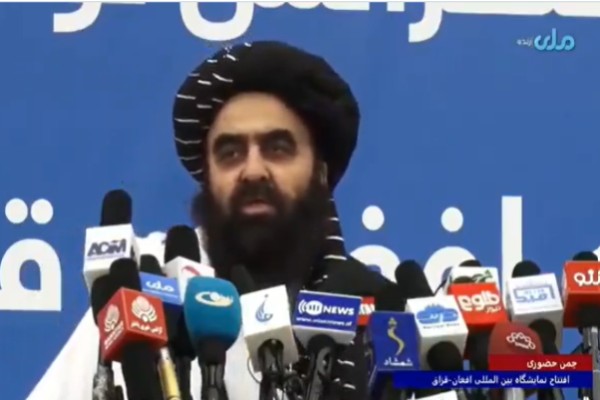
In a diplomatic first since the Taliban returned to power in August 2021, Afghanistan’s Foreign Minister Amir Khan Muttaqi is expected in New Delhi on October 9 for a high-stakes official visit. Though the dates have not been announced officially, the visit comes after a United Nations Security Council exemption allowing him to travel despite international sanctions.
Mawlawi Amir Khan Muttaqi, 55, is a senior Taliban leader with deep roots in the group’s political and ideological leadership. He played a key role during both Taliban regimes and has been the movement’s face in diplomatic engagements across the region. A veteran of the anti-Soviet jihad and a prominent figure in Taliban media and cultural outreach during their first rule, Muttaqi today serves as the Islamic Emirate’s chief diplomat.
Over the past two years, he has been instrumental in outreach efforts to regional powers like China, Iran, and now India. His visit to New Delhi will follow his participation at the Moscow Format summit on October 7, attended by representatives from Central Asia, Russia, China, and Iran.
Visit Agenda
Muttaqi’s visit is expected to focus on several fronts:
- Focus on Recognition: At the top of the Taliban’s wish list is formal recognition by India. While New Delhi has resumed limited engagement and humanitarian aid, it has not formally acknowledged the Taliban as Afghanistan’s legitimate government.
- Humanitarian and Development Assistance: Afghanistan’s economy remains in freefall, with widespread food insecurity and limited access to healthcare. Kabul is expected to request further humanitarian support, particularly in health, agriculture, and education sectors.
- Trade and Connectivity: Talks will likely explore avenues to boost bilateral trade, particularly the export of Afghan dry fruits and medicinal herbs to India. Afghanistan is also keen to leverage Indian ports, especially Chabahar in Iran, as alternative routes to bypass transit hurdles posed by Pakistan.
- Visa and Consular Services: With large numbers of Afghan students, patients, and businesspersons dependent on access to India, consular cooperation will be high on the agenda.
- Security and Counter Terrorism: The Taliban have recently expressed openness to cooperation on regional security. Their condemnation of terror attacks in India has not gone unnoticed in New Delhi, and the visit may further discussions on counter terrorism collaboration.
Afghanistan Is Important
India has long viewed Afghanistan through a strategic and cultural lens. A stable and friendly Kabul government helps counter terrorism, limits Pakistan’s regional influence, and opens up energy and trade corridors to Central Asia.
While connectivity projects like Chabahar Port and the International North-South Transport Corridor remain vital, India also sees Afghanistan as a partner in regional peace. In the past, India invested over $3 billion in infrastructure, education, and development projects in Afghanistan, including the construction of the Afghan Parliament and the Salma Dam.
Since the Taliban takeover, India has pivoted to a humanitarian-centric approach, providing over 50,000 tonnes of wheat, medical aid, and emergency relief, especially during recent earthquakes.
What Afghanistan Wants
The Taliban is looking for diplomatic legitimacy, economic relief, and trade partnerships. While the Taliban enjoy closer ties with China, Iran, and Russia, they have been signalling openness to engage with India, historically a major development partner.
There is also growing disillusionment within the Taliban ranks about Pakistan, especially after Islamabad’s recent expulsion of Afghan refugees and its reluctance to support broader regional connectivity for Afghanistan. India, by contrast, is increasingly seen as a potential stabilizing force and a long-term partner.
Strategic Implications
This visit comes against a backdrop of significant shifts in regional alignments. Afghanistan’s balancing act between Pakistan, Iran, and India, alongside Chinese and Russian interests, reflects a broader reconfiguration of power in South and Central Asia.
For India, welcoming Muttaqi is both a test and an opportunity: a test of whether diplomatic engagement can yield results without formal recognition, and an opportunity to re-establish its influence in Afghanistan amid growing Chinese and Pakistani footprints.
It also signals a growing maturity in India’s foreign policy, one that prioritizes long-term strategic interests and regional stability over ideological opposition.
While recognition of the Taliban regime remains off the table for now, the door to deeper engagement is clearly open. India’s future steps will likely center on the Taliban’s actions, especially regarding human rights, minority protections, and counter terrorism assurances.
Death Toll From Indonesia School Collapse Climbs To 54
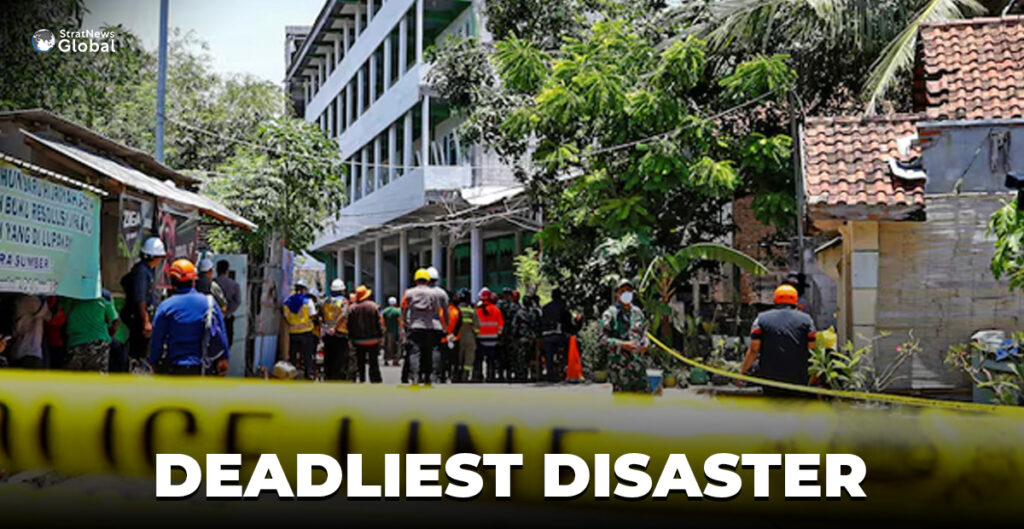
Rescue officials on Monday said the death toll from last week’s school collapse in Indonesia has risen to at least 54, after crews cleared nearly all the debris in what has become the country’s deadliest disaster of the year.
Piles of concrete caved in on hundreds of mostly teenage boys after the collapse of the Al Khoziny Islamic boarding school in the Indonesian town of Sidoarjo, in East Java province, trapping and later killing them.
Using excavators, rescuers late on Sunday cleared 80% of the debris and found bodies and body parts of the mostly teenage victims, the disaster mitigation agency said in a statement.
Budi Irawan, a deputy at the disaster mitigation agency, said a total of 50 people have died based on the bodies recovered, and rescuers were expected to finish their search by the end of Monday for 13 more trapped victims.
‘Deadliest’ Disaster
“The number of victims is the biggest this year from one building,” he told a press conference. “Out of all the disasters in 2025, natural or not, there haven’t been as many dead victims as the ones in Sidoarjo.”
Yudhi Bramantyo, a search and rescue agency official, said at the same news conference that five other body parts were found, indicating the death toll is likely at least 54 people.
Rescuers are continuing their search, with footage shared by the search and rescue agency showing recovery workers carrying orange body bags out of the ruins of the school.
Authorities have said the cause of the collapse was construction work on the upper floors that the school’s foundations could not support.
Across Indonesia, there are about 42,000 Islamic school buildings, known locally as a pesantren, data from the country’s religious affairs ministry shows.
Only 50 pesantren have building permits, Dody Hanggodo, the country’s public works minister, was quoted by local media as saying on Sunday.
It is not immediately clear if Al Khoziny had a building permit. Reuters could not immediately contact school authorities for comment.
(With inputs from Reuters)
Australia Signs First Defence Pact With Papua New Guinea In Over 70 Years
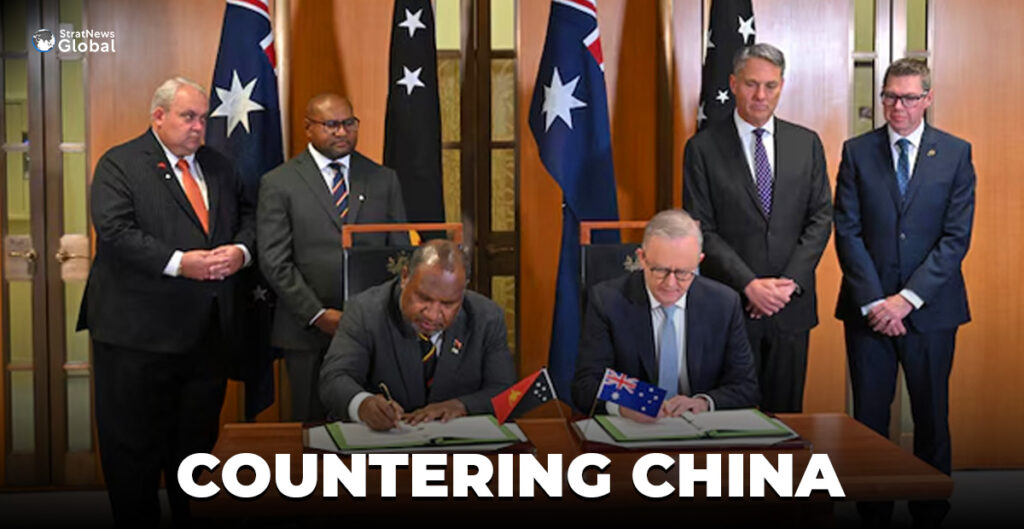
Australia has entered a new defence pact with Papua New Guinea—the first in over seven decades—as Canberra moves to curb China’s growing security influence in the Pacific.
Under the Pukpuk defence treaty, which is the first signed by Papua New Guinea, Australia and its northern neighbour are obliged to come to each other’s aid if attacked.
“This is a historic agreement,” Australian Prime Minister Anthony Albanese told the press in Canberra. “By continuing to build our security relationships in the region, we safeguard our own security.”
The treaty allows as many as 10,000 Papua New Guineans to serve with the Australian Defence Force, under dual arrangements.
Albanese said both nations have agreed “not to undertake any activities or enter into any agreements that would compromise the implementation of this Treaty.”
“This Treaty was not conceived out of geopolitics or any other reason. But out of geography, history, and the enduring reality of our shared neighbourhood,” Papua New Guinea Prime Minister James Marape told the press.
The Papua New Guinea cabinet approved the Pukpuk treaty, which means crocodile, last week.
“We still retain our relationship with China and other nations,” Marape added.
Countering Chinese Influence
China has considerably deepened its trade relations with Pacific Island nations in recent years and is now working to establish diplomatic and security footholds throughout the region.
In response, Australia and its Western partners, notably the United States, have intensified efforts to push back against Beijing’s expanding influence.
In 2022, China concluded a security pact with the Solomon Islands, resulting in the deployment of Chinese police officers across the country. The following year, another policing agreement was reached, further entrenching Beijing’s presence.
As a countermeasure, Canberra announced in December a commitment of A$190 million ($126 million) to bolster the Solomon Islands’ police force and create a new police training facility. A similar arrangement has been established with Tuvalu.
Additionally, in August, Australia signed a $328 million security and economic partnership with Vanuatu, which includes the construction of two data centres, enhanced security cooperation, and support for addressing climate change impacts.
(With inputs from Reuters)
Netanyahu Faces Internal Backlash As Trump Pushes Gaza Peace Plan
A new flashpoint has emerged in Trump’s Gaza plan as Israeli PM Benjamin Netanyahu’s far-right coalition sees a rift. This is likely to derail the U.S. Government’s push to reshape West Asia’s political landscape.
Netanyahu has embraced Trump’s 20-point plan to end the war, which calls for Gaza’s demilitarisation and rules out any future governing role for Hamas. However, allows Hamas members to remain if they renounce violence and surrender their weapons.
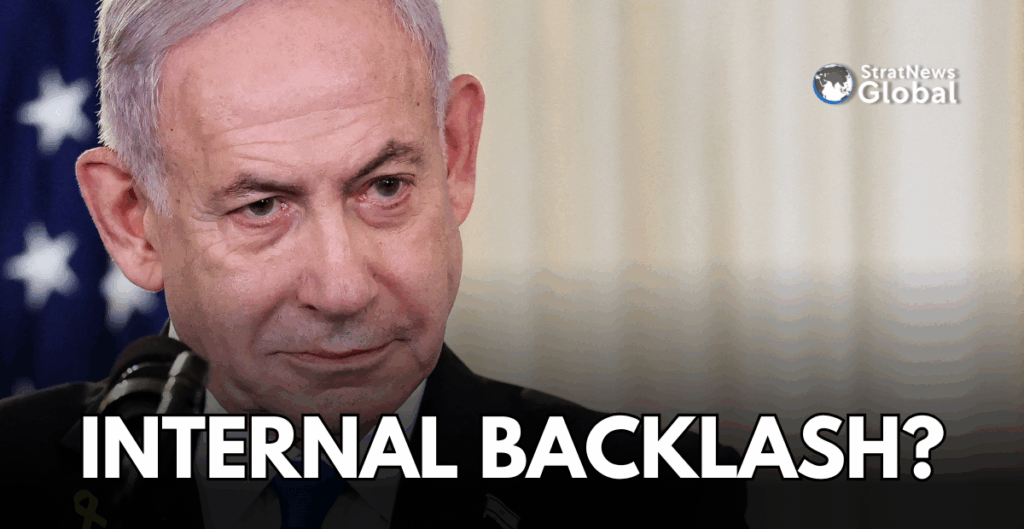
This acceptance from Netanyahu is the reason he is facing a severe backlash from ultra-nationalist allies. They are opposing the plan and mounting pressure on it, which could force the PM into early elections in the country.
‘Revived’ Hamas?
Hamas also responded positively, partially accepting Trump’s plan, saying it was ready to negotiate the hostages’ release and would be part of a “Palestinian national framework” as Gaza’s future is addressed.
But the idea that Hamas could still exist, let alone be in a position to continue discussing the Gaza plan after hostages are released, has enraged Netanyahu’s right-wing coalition partners.
“We cannot agree under any circumstances to a scenario in which the terrorist organisation that brought the greatest calamity upon the State of Israel is revived,” said National Security Minister Itamar Ben-Gvir.
“We will in no way be partners to that,” he said in a post on X after the Sabbath, threatening to quit the government.
If far-right ministers quit because Netanyahu has made too many concessions to end the war, his ruling coalition could collapse a full year before the next election, which must be held by October 2026.
However, insisting on more war in Gaza would antagonise the families of hostages still held by Palestinian militants in Gaza. This could also further alienate a war-weary Israeli public as well as Israel’s international allies.
Continued conflict could also extinguish Israeli hopes that more Arab and Muslim states like Saudi Arabia or Indonesia could join the Abraham Accords, a set of U.S.-backed agreements that normalised relations between Israel and several Arab states, leaving Netanyahu in a fix from both ends.
Trump On Gaza
Expanding the Accords has been a priority for Trump as his administration pursues its own interests in the Middle East. Riyadh, however, has made it clear it will not normalise with Israel until the Gaza war ends and there is a path to Palestinian statehood.
Trump has called for Israel to stop bombing Gaza so talks on his plan can play out, starting with indirect negotiations between Israel and Hamas in Egypt’s Red Sea resort of Sharm el-Sheikh on Monday for the release of all remaining hostages.
Netanyahu sees the plan starting with the release of hostages in exchange for Palestinian prisoners. Of the 48 hostages remaining in Gaza, 20 are believed to be alive. A second phase would focus on disarming Hamas and demilitarising Gaza.
But on Saturday, Finance Minister Bezalel Smotrich said that pausing attacks in Gaza was a “grave mistake”. He said that over time this would erode Israel’s position as it pursues its aims of freeing the hostages, eliminating Hamas and carrying out the demilitarisation of Gaza.
Ben-Gvir and Smotrich, whose parties hold 13 of the Knesset’s 120 seats, have long pushed Netanyahu to pursue sweeping, seemingly unattainable goals in Gaza. If both were to leave the government, it would likely trigger an election.
No Gaza Ceasefire Yet
Israeli government spokesperson Shosh Bedrosian told reporters on Sunday that the military had stopped what ‘certain bombings’ but there was no ceasefire in place.
The military would continue to act for “defensive purposes”, she said. Despite Trump’s call to halt the bombing, Israeli strikes on Gaza over the weekend killed dozens of Palestinians.
(with inputs from Reuters)
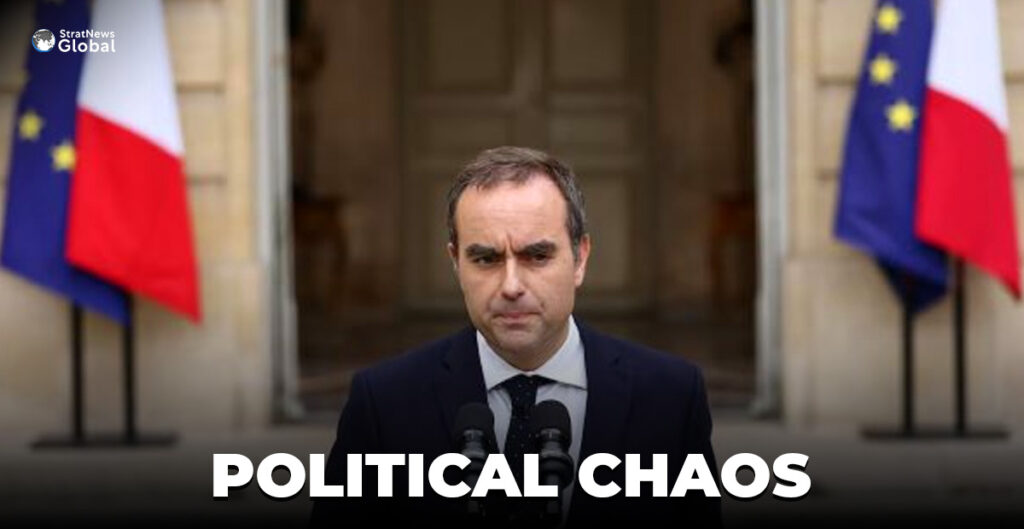
France Plunges Into Turmoil As Newly Formed Government Collapses Within Hours
France was thrown into deeper political chaos on Monday as newly appointed Prime Minister Sebastien Lecornu and his cabinet resigned just hours after taking office.
The abrupt collapse — marking the shortest-lived government in modern French history — sent shockwaves through financial markets, driving down both French stocks and the euro.
The swift resignation was unexpected and marked another major deepening of France‘s political crisis. It came after allies and foes alike threatened to topple the new government.
Lecornu was prime minister for only 27 days. His government lasted 14 hours.
The far-right National Rally immediately urged President Emmanuel Macron to call a snap parliamentary election. The hard left France Unbowed said Macron himself must go.
Rivals Opposed New Cabinet
After weeks of consultations with political parties across the board, Lecornu, a close ally of Macron, had appointed his ministers on Sunday and they had been set to hold their first meeting on Monday afternoon.
But the new cabinet line-up had angered opponents and allies alike, who either found it too right-wing or not sufficiently so, raising questions on how long it could last, with no group holding a majority in a fragmented parliament.
Lecornu handed his resignation to Macron on Monday morning.
“Mr. Sebastien Lecornu has submitted the resignation of his Government to the President of the Republic, who has accepted it,” the Elysee’s press office said.
French politics has become increasingly unstable since Macron’s re-election in 2022 for want of any party or grouping holding a parliamentary majority.
Macron’s decision to call a snap parliamentary election last year deepened the crisis by producing an even more fragmented parliament. Lecornu, who was only appointed last month, was Macron’s fifth prime minister in two years.
“There can be no return to stability without a return to the polls and the dissolution of the National Assembly,” National Rally leader Jordan Bardella said after Lecornu resigned.
Mathilde Panot, of the hard left France Unbowed, said: “Lecornu resigns. 3 Prime Ministers defeated in less than a year. The countdown has begun. Macron must go.”
French Stocks And Euro Fall
Paris’ CAC 40 dropped 2%, on track for the biggest one-day drop since August, as Lecornu resigned, making it the worst-performing index in Europe, as banking shares came under heavy fire, leaving BNP Paribas, Societe Generale, and Credit Agricole down between 5.7% and 7.3%.
The euro slid 0.7% on the day to $1.1665.
France has rarely suffered a political crisis so deep since the creation in 1958 of the Fifth Republic, the current system of government.
The 1958 constitution was designed to ensure stable governance by creating a powerful and highly centralised president endowed with a strong majority in parliament, and to avoid the instability of the periods immediately before and after World War Two.
Instead, Macron – who in his ascent to power in 2017 reshaped the political landscape – has found himself struggling with a fragmented parliament where the centre no longer holds the balance and the far-right and hard-left hold sway.
France is not used to building coalitions and finding consensus.
(With inputs from Reuters)
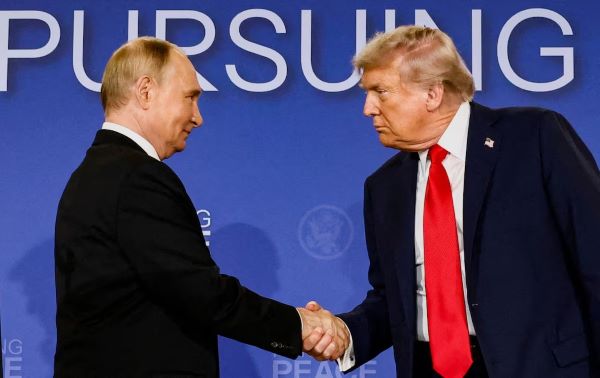
Trump Welcomes Putin’s Proposal To Maintain Nuclear Arms Limits
U.S. President Donald Trump said on Sunday that he viewed Russian President Vladimir Putin’s proposal to keep existing limits on deployed strategic nuclear weapons as a positive step, describing the offer as “a good idea.”
Putin last month offered to voluntarily maintain limits capping the size of the world’s two biggest nuclear arsenals set out in the 2010 New START accord, which expires in February, if the U.S. does the same.
“Sounds like a good idea to me,” Trump told reporters as he departed the White House, when asked about Putin’s offer.
Russia’s U.N. Ambassador Vassily Nebenzia last week had said Moscow was still waiting for Trump to respond to Putin’s offer to voluntarily maintain the limits on deployed strategic nuclear weapons once a key arms control treaty expires.
Any agreement on continuing to limit nuclear arms would stand in contrast to rising tensions between the United States and Russia since Trump and Putin met in Alaska in mid-August given reported incursions of Russian drones into NATO airspace.
Moscow-Washington Relations
Speaking in a video clip released on Sunday, Putin warned that a decision by the United States to supply long-range Tomahawk missiles to Ukraine for strikes deep into Russia would destroy Moscow’s relationship with Washington.
U.S. Vice President JD Vance said last month that Washington was considering a Ukrainian request to obtain missiles that could strike deep into Russia, including Moscow, though it is unclear if a final decision has been made.
Trump, who has expressed disappointment in Putin for not moving to end the war in Ukraine, was not asked directly on Sunday about the prospect of supplying Tomahawks to Ukraine.
“This will lead to the destruction of our relations, or at least the positive trends that have emerged in these relations,” Putin said in a video clip released on Sunday by Russian state television reporter Pavel Zarubin.
One U.S. official and three other sources said that the Trump administration’s desire to send long-range Tomahawk missiles to Ukraine may not be viable because current inventories are committed to the U.S. Navy and other uses.
Trump is touring a U.S. Navy aircraft carrier, the George H.W. Bush, off the coast of Virginia on Sunday, and will give a speech on a second carrier, the Harry S. Truman, later.
Tomahawk cruise missiles have a range of 2,500 kilometres (1,550 miles). If Ukraine got the missiles, the Kremlin and all of European Russia would be within target.
(With inputs from Reuters)
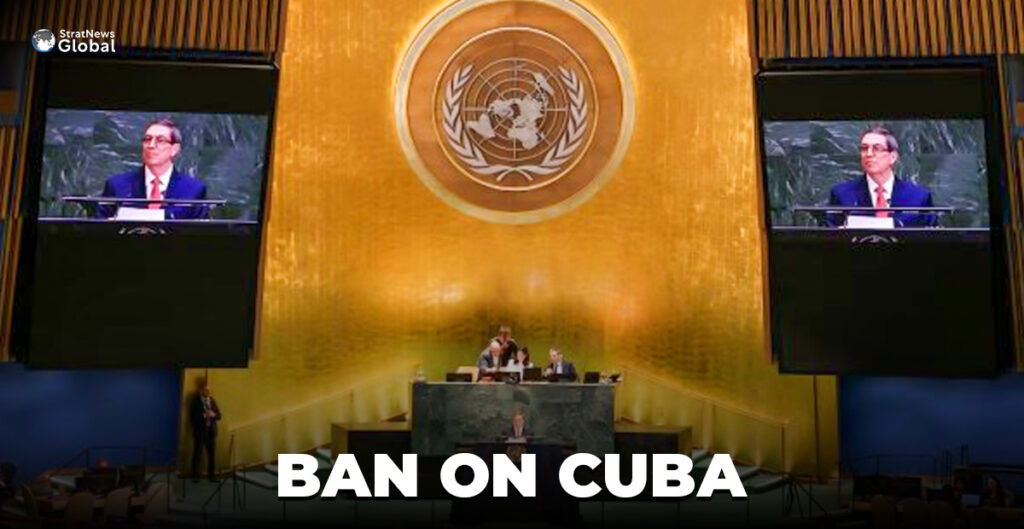
Trump Administration Pushes UN Allies To Shun Cuba Amid Ukraine Conflict
The Trump administration has directed American diplomats to campaign against a forthcoming UN resolution urging the U.S. to lift its decades-old embargo on Cuba. According to an internal State Department cable, Washington is citing evidence of Cuban involvement in Russia’s war in Ukraine as part of its effort to rally allies against Havana.
As part of the administration’s campaign, U.S. diplomats will tell countries that the Cuban government is actively supporting Russia’s invasion of Ukraine with up to 5,000 Cubans fighting alongside Moscow’s forces.
The October 2-dated unclassified cable sent to dozens of U.S. missions directed American diplomats to urge the governments to oppose the non-binding resolution, which has passed in the U.N. General Assembly by wide margins year after year since 1992.
Officials at the Permanent Mission of Cuba to the United Nations did not immediately respond to a request for comment for this story.
Last year, the General Assembly adopted the resolution with 187 countries voting in favor. The United States and Israel were the only countries that voted against it, while Moldova abstained.
Since returning to office in January, Trump has doubled down on sanctions, returning Cuba to a U.S. list of state sponsors of terrorism, tightening financial and travel restrictions and sanctioning third-country nationals who host Cuban doctors.
Trump has also recently toughened his stance towards Moscow, threatening financial penalties against buyers of Russian oil and allowing U.S. intelligence agencies to share information with Ukraine to help its attacks on energy assets inside Russia.
Cuba’s ‘Corruption And Incompetence’
The cable said that the U.N. resolution was “incorrectly” blaming the United States for Cuba’s problems which it said were caused by Cuba’s “own corruption and incompetence.” It added that the objective of this push was to demonstrate the administration’s opposition, significantly reducing the number of “yes” votes.
“”No” votes are preferred but abstentions or absent/not voting are also useful,” the cable said, adding that Washington needed “allies and like-minded partners” in this push.
The United States has piled dozens of new sanctions on the Communist-run Caribbean island since a trade embargo was put in place following Fidel Castro’s 1959 revolution.
The U.N. vote can carry political weight, but only the U.S. Congress can lift the Cold War-era embargo.
The Cuban government blames U.S. sanctions for the grueling crisis the country is mired in, the worst economic downturn in decades characterized by shortages of basic goods, collapsing infrastructure and runaway inflation.
The State Department said Cuba was using the annual U.N. resolution as a mechanism to victimize itself and that it did not deserve the support from America’s democratic allies.
“The Trump Administration will not remain on the sidelines or support an illegitimate regime that undermines our national security interests in our region,” a State Department spokesperson said in emailed comments on Saturday.
For years, U.S. tactics to weaken support for the non-binding U.N. resolution have focused on the legality of the embargo, how the U.S. provided exceptions for food and medicine and highlighted Cuba’s human rights, the cable said.
Cuban Mercenaries In Ukraine
All of these approaches have failed to influence the vote, it added. The cable provided nearly two dozen talking points, many of which accused Cuba of squandering its limited resources, denying its people basic human rights and being a threat to international peace.
Cuba and its President Miguel Diaz-Canel were actively supporting Russia’s war in Ukraine, one of the talking points said.
“After North Korea, Cuba is the largest contributor of foreign troops to Russia’s aggression, with an estimated 1000-5000 Cubans fighting in Ukraine,” the cable said.
The State Department spokesperson declined to provide further details on the Cuban fighters but said Washington was aware of the reports that they were fighting alongside Russian troops in Ukraine.
“The Cuban regime has failed to protect its citizens from being used as pawns in the Russia-Ukraine war,” the spokesperson said.
In recent weeks, Ukrainian officials warned U.S. lawmakers about the growing scale of recruitment of Cuban mercenaries by Russia to fight in Ukraine.
The cable also accused the Cuban government of undermining democracies in the Western Hemisphere, as tensions have been mounting between Washington and Venezuela, Cuba’s most important political and economic ally. T
he U.S. military has carried out strikes in the Caribbean on boats out of Venezuela that it claimed were carrying drugs. The latest U.S. attack took place on Friday.
On Wednesday, Cuban Foreign Minister Bruno Rodriguez called for the United Nations to stop the United States from starting a war in the region. He said fighting drug trafficking in the name of U.S. national security was a “crude and ridiculous pretext” for aggression.
(With inputs from Reuters)
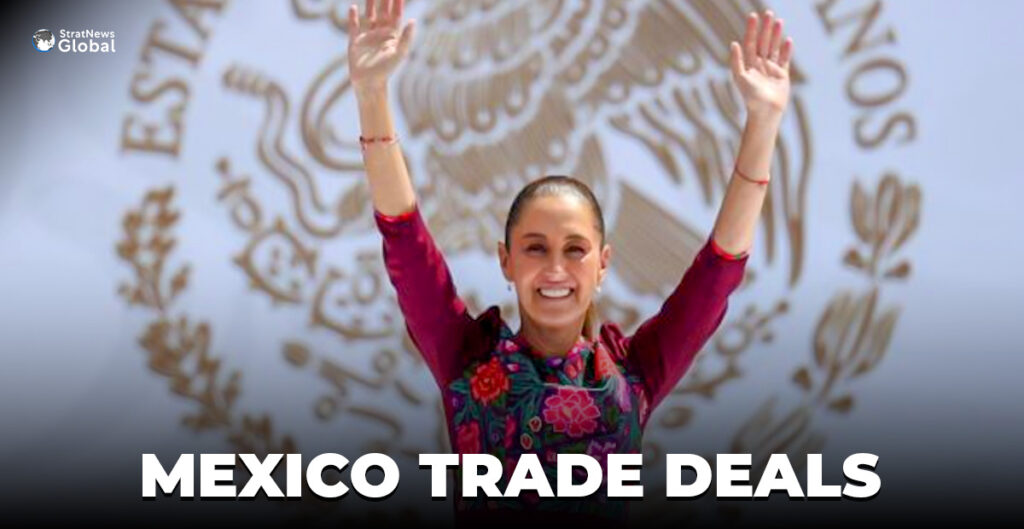
Mexico: Sheinbaum Confident Of Reaching Trade Deals, Plans New Tech Initiatives
Mexican President Claudia Sheinbaum said on Sunday she is optimistic of securing favourable trade agreements with the United States and other international partners.
She added that her government is also preparing to unveil new projects aimed at strengthening the country’s technology sector and boosting local innovation.
“I am confident we will reach a good agreement with the United States and all nations of the world regarding our trade relations,” she told a packed ceremony celebrating her first year in office in Mexico City’s central Zocalo square.
Made-In-Mexico Projects
Sheinbaum said her government would in the coming weeks present advances in made-in-Mexico projects developing electrical vehicles, semiconductors, satellites and drones, as part of a plan aligned with the changing trade environment.
The plan includes developing a local artificial intelligence, she said.
Elected last year and benefiting from approval ratings surpassing 70%, the climate scientist and former Mexico City mayor has spent much of her term navigating a complex relationship with the United States, Mexico’s top trade partner.
Latin America’s No. 2 economy has been largely spared the brunt of Trump administration tariffs thanks to a free trade agreement with the U.S. and Canada that is up for review next year.
Meanwhile, Mexico has also announced its own set of tariffs on countries with which it does not hold trade agreements – notably China – which analysts have seen as a response to pressure from Washington as it wages a trade war with Beijing.
As she presented her government’s accomplishments during her first year in office, Sheinbaum reiterated her government’s commitment to protecting the nation’s sovereignty and made a tongue-in-cheek nod to U.S. President Trump deciding earlier this year to rename the shared gulf between their countries.
“Raise your hands, let’s put it to a vote: who agrees that the train that will run from Mexico City to Nuevo Laredo should be called the Gulf of Mexico Train,” she asked to a round of applause, and declared the result a majority.
(With inputs from Reuters)
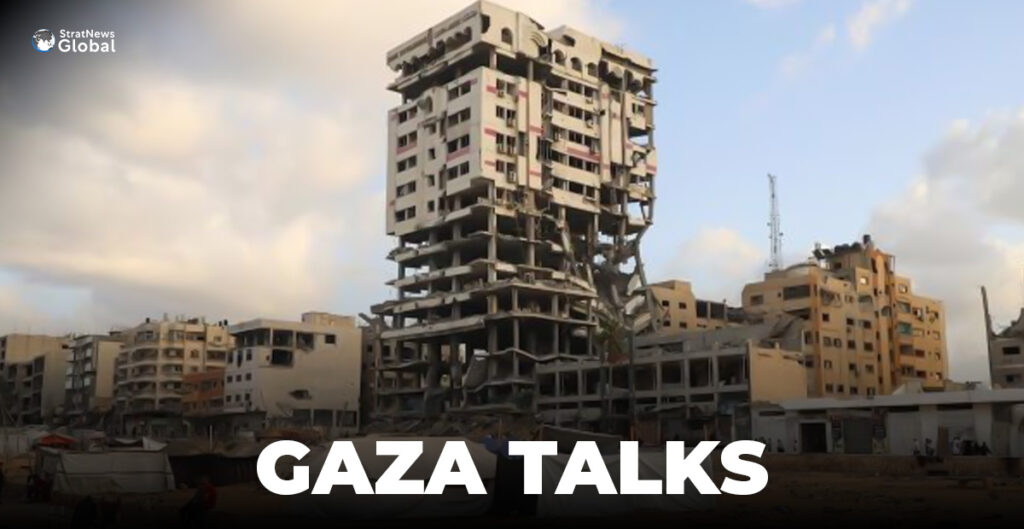
Hamas Delegation Arrives In Egypt For Gaza Talks Aimed At Ceasefire And Hostage Release
Hamas representatives reached Egypt on Sunday for negotiations with Israel that the United States hopes will bring an end to the fighting in Gaza and secure the release of hostages. U.S. officials said the coming days would be crucial to the effort.
Israeli negotiators led by Strategic Affairs Minister Ron Dermer were to travel to Egypt on Monday for negotiations in the Red Sea resort of Sharm el-Sheikh about the release of hostages, part of U.S. President Donald Trump’s plan to end the nearly two-year Gaza war.
“We will know very quickly whether Hamas is serious or not by how these technical talks go in terms of the logistics,” U.S. Secretary of State Marco Rubio told NBC News’ “Meet the Press” on Sunday about the release of 48 remaining hostages in Gaza, 20 of whom are alive.
Trump said later on Sunday negotiations were advancing rapidly. “I am told that the first phase should be completed this week, and I am asking everyone to MOVE FAST,” he said in a social media post.
The first phase deals with the release of hostages in exchange for the release of Palestinian prisoners.
Peace Efforts
A Hamas delegation, led by the group’s exiled Gaza chief, Khalil Al-Hayya, landed in Egypt late Sunday to join representatives of the U.S. and Qatar for talks over the implementation of the most advanced effort yet to halt the conflict.
It was the first visit by Hayya to Egypt since he survived an Israeli strike in Doha, the Qatari capital, last month.
Trump has promoted a 20-point plan aimed at ending the fighting in Gaza, securing the release of remaining hostages, and defining the territory’s future. Israel and Hamas have agreed to parts of the plan.
Hamas on Friday accepted the hostage release and several other elements but sidestepped contentious points, including calls for its disarmament — which it has long rejected.
Trump welcomed Hamas’ response, saying he believed Hamas had shown it was “ready for a lasting PEACE.” He told Israel to stop bombing Gaza immediately, but its attacks on the enclave have continued.
‘Comprehensive Deal’ Before Ceasefire
An official briefed on the talks in Egypt said negotiators would focus on hammering out a comprehensive deal before a ceasefire can be implemented.
“This differs from earlier rounds of negotiations which followed a phased approach, where the first phase was agreed and then required more negotiations to reach subsequent phases in the ceasefire,” the official said.
“These subsequent rounds of negotiations is where things broke down previously and there is a conscious effort among mediators to avoid that approach this time around.”
Rubio told ABC’s “This Week” that a timeline for finalising an agreement to release the hostages was uncertain but that talks “cannot take weeks or even multiple days. We want to see this happen very fast.”
Israeli Attacks Continue
The plan has stirred hopes for peace among Palestinians, but there was no let-up of Israeli attacks on Gaza on Sunday. Planes and tanks pounded areas across the enclave, killing at least 19 people, local health authorities said.
Four of those killed were seeking aid in the south of the strip, and five were killed in an airstrike in Gaza City in the early afternoon, they said.
Ahmed Assad, a displaced Palestinian man in central Gaza, said he had been hopeful when news broke of Trump’s plan, but said nothing had changed on the ground.
“We do not see any change to the situation; on the contrary, we don’t know what action to take, what shall we do? Shall we remain in the streets? Shall we leave?” he asked.
In a sign of Israeli optimism over the Trump plan, the shekel currency hit a three-year high against the dollar and Tel Aviv stocks reached an all-time high.
End Of War?
Some people in Tel Aviv shared that sentiment. “It’s the first time in months that I’m actually hopeful. Trump has really instilled a lot of hope into us,” said resident Gil Shelly.
Domestically, Israeli President Benjamin Netanyahu is caught between growing pressure to end the war — from hostage families and a war-weary public — and demands from hardline members of his coalition who insist there must be no let-up in Israel’s campaign in Gaza.
Far-right Finance Minister Bezalel Smotrich said on X that halting attacks on Gaza would be a “grave mistake.” He and Security Minister Itamar Ben-Gvir have threatened to bring down Netanyahu’s government if the Gaza war ends.
But opposition leader Yair Lapid of the centrist Yesh Atid party has said political cover will be provided so the Trump initiative can succeed and “we won’t let them torpedo the deal”.
Israel began attacking Gaza after the October 7, 2023, Hamas-led attack on Israel in which some 1,200 people, mostly civilians, were killed and 251 taken hostage, according to Israeli tallies.
Israel’s campaign, which has killed more than 67,000 people in Gaza, most of them civilians, according to Gaza health authorities, has led to its international isolation.
(With inputs from Reuters)
‘India Should Pursue Its Interests In Afghanistan, Forget Morality, Ethics’
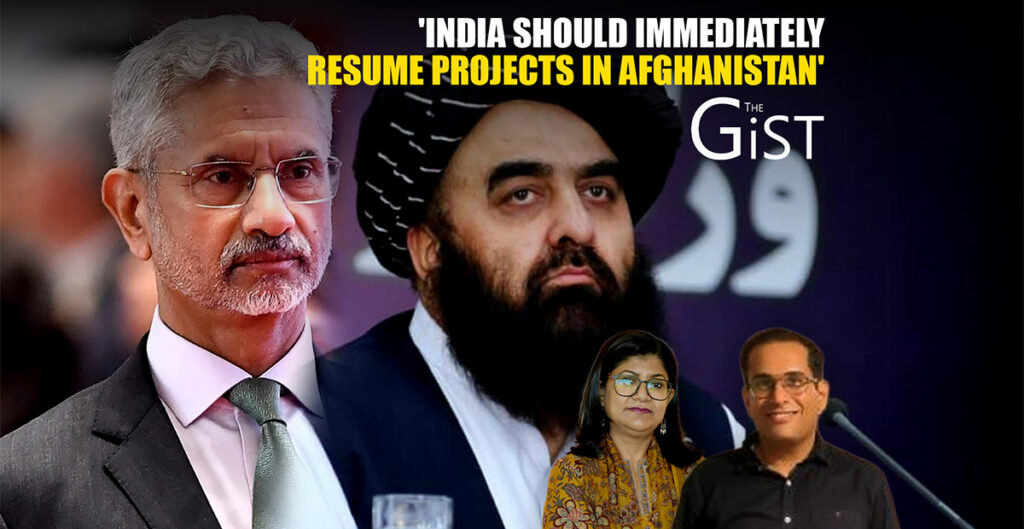
Afghan Foreign Minister Amir Khan Muttaqi’s visit to India this week is “calculated realpolitik”, says Raghav Sharma, Professor and Director, Centre for Afghanistan Studies at the School of International Affairs, O.P Jindal Global University.
“I think India does realize that there are limitations to how much it can maneuver and that the political realities in the country have changed,” he told StratNews Global on The Gist show.
“India needs to engage the Taliban in order to secure its interests. Securing state interests, cannot be viewed always from the trope of morality or ethics.”
Sharma, who has worked in the humanitarian sector in Afghanistan and taught under the ‘Good Governance Afghanistan Program’ at Germany’s Willy Brandt School of Public Policy, stressed that India had been reaching out to the Taliban ever since they reclaimed Kabul and declared victory on 15 August, 2021.
New Delhi had been talking to the Taliban at a high level since the beginning of this year when Foreign Secretary Vikram Misri met Muttaqi in Dubai, which was the first such top-level engagement between both sides.
This was followed up by the first ever phone-call between Muttaqi and External Affairs Minister S. Jaishankar in May, days after Operation Sindoor.
Sticking Points
While many commentators are calling the upcoming visit as a grant of recognition to the Taliban regime, Sharma said “sticking points” between both countries still remain.
So far, only Russia has formally recognized the interim Taliban government in Kabul. In July 2025, Russia removed the Taliban from its list of banned terrorist organisations, which it had been on for over 20 years. The Taliban flag was raised for the first time at the Embassy of the Islamic Emirate of Afghanistan (IEA) in Moscow.
“I wouldn’t say it’s a step necessarily, that is going to lead to recognition anytime soon, but certainly it’s a calibrated, ramping up of the relationship. This has been in the works for quite some time. Eventually it may lead to a recognition but I think that’s still a long way off because there are many other sticking points as far as recognition of the Taliban is concerned,” said Sharma.
He added, “Certainly it’s (the visit) going to bolster ties and bolster the level of engagement between India and the Afghan Taliban.”
During the Taliban’s previous rule, India neither engaged the Taliban nor accorded official recognition. However, during the IC-814 hijack, former foreign minister Jaswant Singh had sought Taliban’s cooperation to secure the release of Indian hostages as the Indian Airlines flight landed in Kandahar.
According to Sharma, who is author of ‘Nation, Ethnicity and the Conflict in Afghanistan: Political Islam and the Rise of Ethno–Politics (1992-1996)’, the visit also needs to be analysed from the purview of the Taliban’s rising tensions with Pakistan.
“The Taliban’s return to power hasn’t quite panned out in the way that the (Pakistani) Generals in Pindi (Rawalpindi) would have wanted it to. They wanted to choreograph it in a completely different manner. It hasn’t panned out in that way,” he pointed out.
“For the Taliban the visit is significant because it also helps them play to their domestic constituency and try and shore up legitimacy which their opponents have often tried to undermine by saying that the Taliban are actually puppets of Rawalpindi, and that they lack complete agency and in its Rawalpindi which brought them back into power.”
Sharma believes the visit might result in a few deliverables in terms of resumption of visas for Afghan nationals willing to travel to India, restarting two-way trade and appointment of envoys in each other’s country, who due to lack of a formal recognition, will act as “representatives”.
He says New Delhi should take advantage of the visit and resume the stalled projects in Afghanistan, which will enable India to regain its footprints in that country.