

Support us by contributing to StratNewsGlobal on the following UPI ID
ultramodern@hdfcbank

Strategic affairs is our game, South Asia and beyond our playground. Put together by an experienced team led by Nitin A. Gokhale. Our focus is on strategic affairs, foreign policy and international relations, with higher quality reportage, analysis and commentary with new tie-ups across the South Asian region.
You can support our endeavours. Visit us at www.stratnewsglobal.com and follow us on YouTube, Twitter, Facebook and Instagram.
र 500 per month
र 1000 per month
र 5000 per year
र 10000 per year
Donate an amount of your choice
र 500 per month
Donate र 500 per month

र 1000 per month
Donate र 1000 per month
र 5000 per year
Donate र 5,000 per year
र 10000 per year
Donate र 10,000 per year
Donate an amount of your choice
Donate an amount of your choice

Youth-Led Protests Highlight Vulnerabilities In Morocco’s Economic System
The youth-led unrest that swept Morocco last week exposed widespread frustration over poverty and inadequate public services, contrasting sharply with the government’s narrative of ambitious infrastructure projects and new stadiums planned for the 2030 World Cup.
The protests in major cities – inspired by similar revolts in Nepal, Madagascar and Peru – devolved into riots in rural towns and remote cities. Three people were shot dead as they tried to storm a security headquarters, and over 400were arrested, before the violence eased.
The unrest was the most widespread since the 2011 Arab Spring protests, which prompted King Mohammed VI to devolve some powers to parliament. It was also the most violent since the 2016 protests in the Rif region.
The protests expose a challenge for authorities as they try to maintain order and the pace of economic development while burnishing Morocco’s international image ahead of the World Cup, to be co-hosted with Spain and Portugal.
Demands For Better Healthcare, Education
Morocco has set itself apart from other non-oil Arab economies by pouring billions into roads, rail, ports, renewable energy and manufacturing.
Poverty has been cut almost in half, according to the country’s statistics agency, and living standards in parts of the northwest coast rival Europe.
Central bank data projects GDP growth of 4.6% this year from 3.8% last year. Last month, the S&P credit rating agency gave Morocco, one of Africa’s most diversified economies, a coveted “investment-grade” label.
But protesters complain that the prosperity has not been evenly distributed. Their main demands have been better healthcare and education, often drawing an explicit comparison to the rapid pace of tournament preparations.
One refrain – “We do not want the World Cup. Health first” – was deployed at a hospital in the southern coastal town of Agadir last month after eight women died there in childbirth.
Naji Achoui, a 24-year-old medical student who joined a demonstration outside Morocco’s parliament in Rabat, said he was motivated by working in an emergency room that lacked basic equipment such as a CT scanner. “I see poor people suffering every day because of the dire conditions in public hospitals,” he said.
Research from CESE, the country’s economic and social council, last year found that a quarter of Moroccans between 15 and 24 years old are not in education, employment or training.
Jihane Ratma, 19, who studies management in Sale, near Rabat, pointed to the school system’s failures. “We reject violence, but both the youth who protest peacefully and those engaging in riots are all victims of public policies,” she said.
Protesters Mobilise Online
Reactions to the protests suggest officials were initially wrongfooted. At first, rallies were banned and police thwarted attempts to gather.
By the time authorities pivoted to engagement, hundreds of cars and dozens of buildings, including banks and a police station, had been ransacked or torched.
“The government and members of parliament buried their heads in the sand, leaving the security forces to deal with the fallout of failed policies,” Mohamed Agdid, a retired police official, told Reuters.
The confusion was likely compounded by the anonymous character of the group calling itself “GenZ 212” – a reference to Morocco’s dialling code – which mobilised protesters online using gaming app Discord, TikTok and Instagram.
Membership in its Discord server surged from 3,000 to 188,000 in just a week.
Pressure On Rural Areas
The protests took a particularly violent turn in rural areas such as Ait Amira, an agricultural town in Morocco’s southern breadbasket region.
Over three decades, the population there has more than quadrupled, from 25,000 to around 113,000, as seasonal labourers poured in to work on nearby farms.
Services have not kept up. Joblessness is rife, and illegal construction is booming. Even the language has changed, with Amazigh supplanted by Moroccan Arabic. “Ait Amira was a tinderbox waiting to explode,” Khalid Alayoud, a sociologist and activist, said.
Such problems are accompanied by a deepening loss of faith in conventional politics. Trust in political parties dropped to 33% in 2023 from 50% a year earlier, according to a survey by the Moroccan Institute for Policy Analysis, a think tank.
Since the violence calmed, officials have struck a conciliatory tone. Employment Minister Younes Sekkouri acknowledged the “sincerity” of the protesters’ demands, and Prime Minister Aziz Akhannouch – whose resignation many protesters demanded – said dialogue was the only path forward.
Many are waiting to see what the king will say when he addresses parliament’s opening this month. Protesters have steered clear of red lines, including the monarchy.
In one statement, GenZ 212 quoted a 2017 speech by the king in which he admonished officials to “either discharge your obligations fully or withdraw from public life.”
(With inputs from Reuters)
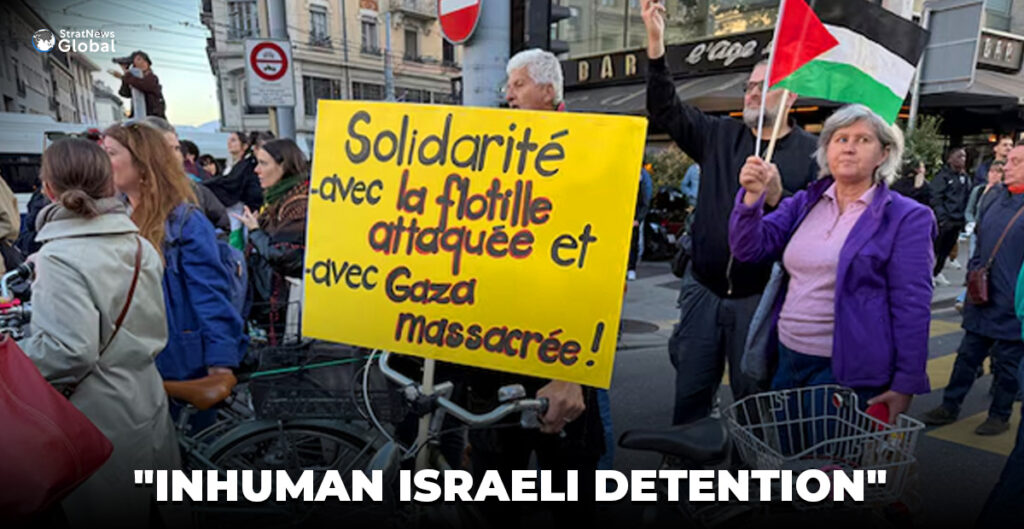
Swiss, Spanish Gaza Flotilla Activists Claim ‘Inhumane Detention’ In Israel
Swiss and Spanish activists who participated in an international flotilla attempting to deliver aid to Gaza last week alleged that they were subjected to inhumane conditions while in detention by Israeli forces.
Among nine members of the flotilla who arrived home in Switzerland, some alleged sleep deprivation, lack of water and food, as well as some being beaten, kicked, and locked in a cage, the group representing them said in a statement.
An Israeli foreign ministry spokesperson rejected the allegations.
Spanish activists also alleged mistreatment on their arrival in Spain late on Sunday after being deported.
“They beat us, dragged us along the ground, blindfolded us, tied our hands and feet, put us in cages and insulted us,” lawyer Rafael Borrego told reporters at Madrid’s airport.
Israel’s Minister of Justice Yariv Levin said on Monday that 170 flotilla activists have been deported, and of the 309 still in custody in Israel, 200 were expected to be expelled in the next 24 hours.
Swedish activists on Saturday claimed that climate campaigner Greta Thunberg was shoved and forced to wear an Israeli flag during her detention, while others said they had clean food and water withheld and had their medication and belongings confiscated.
Israel Says Claims Are Complete Lies
Israel’s foreign ministry has described widespread reports of detainees being mistreated after the flotilla was intercepted as “complete lies”.
A spokesperson told Reuters over the weekend that all detainees were given access to water, food, and restrooms, adding: “They were not denied access to legal counsel and all their legal rights were fully upheld”.
A Spanish detainee bit a female medical worker at Ketziot Prison following a routine exam before her deportation, causing minor injuries treated on site, the ministry said.
On Sunday, the Swiss Embassy in Tel Aviv visited the ten Swiss nationals still being held in prison and said all were “in relatively good health, given the circumstances.” It added it was doing everything possible to ensure their prompt return.
Former Barcelona Mayor Ada Colau, who was also on the flotilla, said there had been “mistreatment, but that was nothing compared to what the Palestinian people suffer every day”.
Spanish journalists Carlos de Barron and Nestor Prieto said Israeli authorities signed a statement on the deported activists’ behalf, claiming they had entered Israel illegally.
“They placed documents in Hebrew in front of us, denying us the right to a translator, and we did not receive consular assistance because they did not allow the (Spanish) consul to enter the port of Ashdod,” Prieto said.
Consular staff have visited activists at the prison, according to statements from several countries whose citizens were detained.
More activists were expected to be released on Monday and sent to Athens.
(With inputs from Reuters)
At least 20 Killed As Heavy Rain Triggers Landslides In West Bengal’s Darjeeling
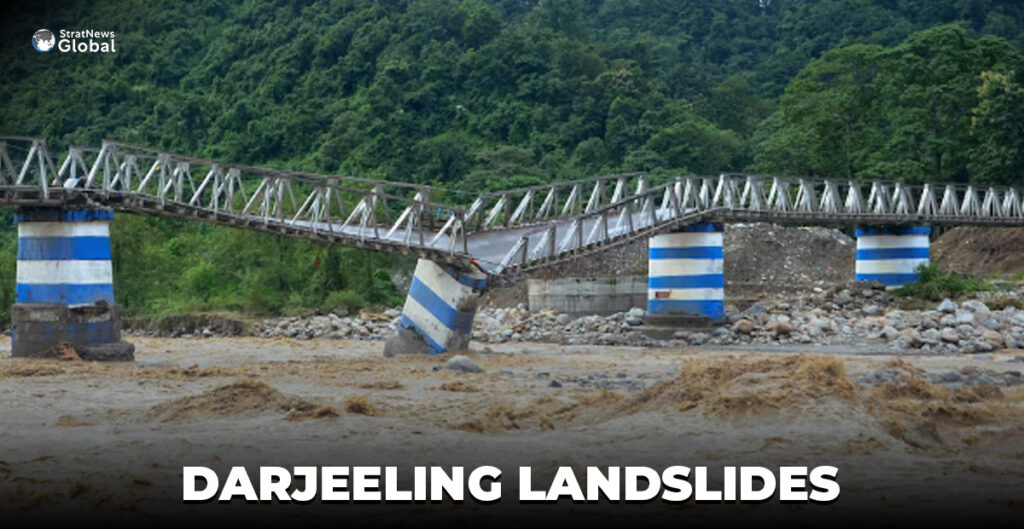
At least 20 people, including children, have lost their lives, and several others were injured as heavy rains triggered massive landslides across the Mirik and Darjeeling hills in West Bengal on Sunday, sweeping away homes, disrupting road networks, isolating villages, and stranding hundreds of tourists.
Reports compiled by the NDRF and district administration confirm fatalities in multiple locations, including Sarsaly, Jasbirgaon, Mirik Basti, Dhar Gaon (Mechi), Nagrakata, and the Mirik Lake area.
‘Alarming’ Situation
North Bengal Development Minister Udayan Guha described the loss of life as tragic and termed the situation “alarming,” telling the media, “As of now, the death toll is 20. It is likely to rise. I am on my way to the affected areas.”
According to NDRF officials, Mirik has been the worst-hit, with at least 11 deaths reported, while seven injured individuals have been rescued from the area. In Darjeeling, seven people have died, and rescue operations are ongoing, assisted by local administration, police, and disaster response teams.
Darjeeling Sub-Divisional Officer Richard Lepcha confirmed, “Seven deaths have been reported due to a major landslide in Darjeeling subdivision triggered by heavy rainfall since last night. Rescue and relief operations are underway.”
CM Describes Flood As ‘Grave’
West Bengal Chief Minister Mamata Banerjee described the flood situation in North Bengal as “grave” and said she would personally visit the region on Monday to assess the damage.
Speaking to a Bengali television channel, she noted that heavy rainfall in Bhutan had led to overflowing waters into North Bengal.
“This disaster is unfortunate — natural calamities are beyond our control. I have been monitoring the situation since 6 am and held virtual meetings with officials from five affected districts along with the chief secretary,” she said.
Banerjee added that more than 300 mm of rain in just 12 hours caused severe flooding and landslides at seven locations, comparing the situation to the intense flooding Kolkata experienced last month.
She said she would travel to Siliguri on Monday afternoon with Chief Secretary Manoj Pant after the Durga Puja Carnival in Kolkata, which involves over 100 puja committees.
Thousands of tourists remain stranded due to road blockages and landslides. The CM urged visitors not to panic and assured them of arrangements for safe evacuation. “Hotels must not overcharge them. Their safety is our responsibility,” she said.
Banerjee also announced that families of those killed would receive government compensation and a job for one family member, although the compensation amount has not been specified.
PM, President Condole
Prime Minister Narendra Modi expressed condolences over the deaths, stating that the situation in Darjeeling and the surrounding areas is being closely monitored.
In a post on X, he said, “Deeply pained by the loss of lives due to a bridge mishap in Darjeeling. Condolences to those who have lost their loved ones. May the injured recover soon. We are committed to providing all possible assistance to those affected.”
Social media visuals reveal extensive road damage covered with debris, highlighting the scale of disruption. Rescue teams from the State Disaster Management Department and Darjeeling district administration, along with local volunteers, have been deployed to aid recovery efforts.
President Droupadi Murmu also expressed condolences on X, offering prayers for successful rescue operations and a speedy recovery for the injured.
“The tragic loss of lives due to heavy rain and landslides in Darjeeling, West Bengal, is distressing. I express my heartfelt condolences to the bereaved families. I pray for the success of rescue and relief operations and wish a speedy recovery to those injured,” she said.
IMD Issues Red Alert
The India Meteorological Department (IMD) has issued a red alert for extremely heavy rainfall in sub-Himalayan West Bengal, including Darjeeling and Kalimpong, until October 6, warning of further landslides and road blockages due to saturated soil conditions.
The NDRF reported that road connectivity remains severely affected across the Darjeeling district and North Sikkim, with an iron bridge connecting Siliguri to the Mirik-Darjeeling route damaged, cutting off access to several areas. One village in Mirik remains marooned due to flooding and blocked roads.
(With inputs from IBNS)
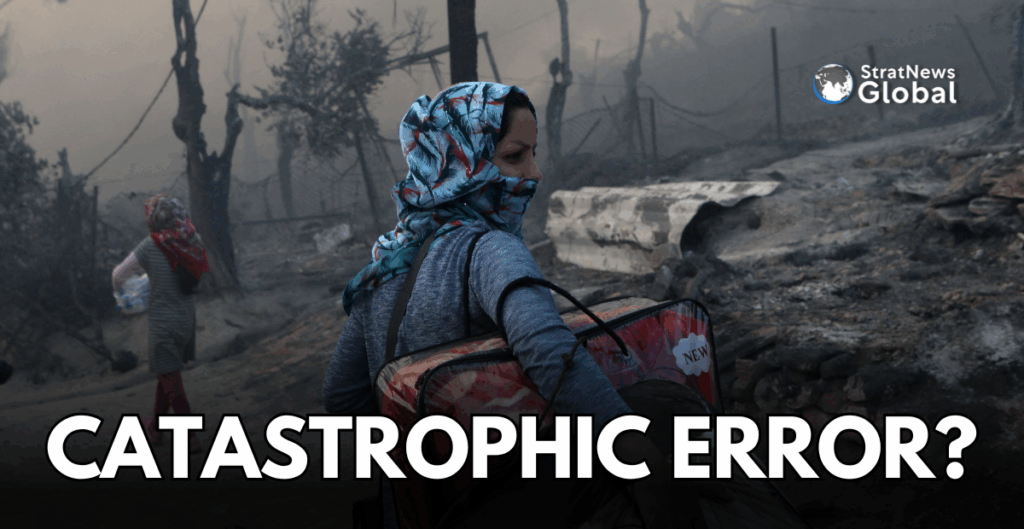
Changing Refugee Asylum Rules Would Be Catastrophic Error: UNHCR
The head of the UNHCR, the agency for refugees, said that bowing to pressure to reform the refugee convention and asylum system would be a “catastrophic error”.
Filippo Grandi spoke to member states during an annual UNHCR meeting in Geneva. His comments form a response to U.S. moves to sharply narrow the right to asylum and reshape the post-World War Two framework around humanitarian migration.
“Pressures to reform asylum are not made in good faith, but represent yet another attack on international solidarity, at a time when many countries continue to welcome refugees,” he added.
Changing Asylum Protection
Last month, top U.S. officials urged other nations to join a global campaign to roll back asylum protections, saying migrants should seek asylum in the first country they enter, not a nation of their choosing.
Asylum should be temporary, with the host country deciding when conditions back home had improved enough for their return, they said.
U.S. President Donald Trump’s administration is also preparing to set a refugee admissions cap at 7,500 people this fiscal year, a record low that prioritises white South Africans of Afrikaner ethnicity, according to sources.
UNHCR Budget Cuts
As conflict drives displacement in the Democratic Republic of Congo, Myanmar, Sudan, Ukraine and Gaza, UNHCR also faces its most severe budget cuts in its history, said the Chairperson of Monday’s meeting in Geneva, Marcelo Vazquez Bermudez.
Almost 5,000 jobs have been cut this year, more than a quarter of UNHCR’s workforce, and the agency has had to downscale its presence in 185 offices, including southern Africa, Grandi said. More job cuts are expected.
UNHCR projects it will end the year with $3.9 billion in funding, about 25% less than last year, Grandi said.
Aid agencies have been rocked by funding cuts from major donors, led by the U.S. and other Western powers, which have prioritised defence spending prompted by growing fears of Russia.
(with inputs from Reuters)
Germany Must Improve Defence, But Avoid Putin’s ‘Escalation Trap’: Defence Minister
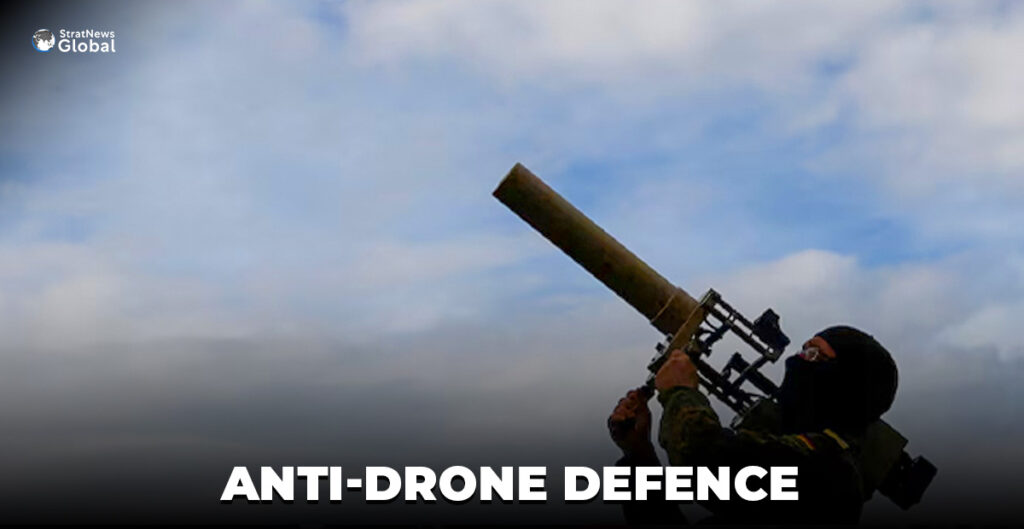
Germany needs to enhance its anti-drone defences, the defence minister stated, while cautioning that a rushed response to Russian airspace incursions could play into “Putin’s escalation trap.”
German defence minister Boris Pistorius’ remarks in an interview with Handelsblatt newspaper followed drone sightings at Munich Airport that cancelled dozens of flights and stranded over 10,000 passengers this weekend.
Authorities have yet to attribute blame, but officials have said Russia was responsible for dozens of recent aircraft incursions and sightings in the airspace of Ukraine‘s European allies.
“Putin knows Germany very, very well,” Pistorius said of the Russian President, who was a KGB agent in East Germany in the 1980s.
“We mustn’t fall into Putin’s escalation trap,” he added. “If we shot an aeroplane down, he would claim the airspace violation was just pilot error and we had shot down an innocent young man,” he told Handelsblatt.
State Role In Defence Companies
Germany needed to take an overview of all relevant threats, not just drone incursions, in order to draw links between seemingly unrelated events, he said.
“Say there are lots of forest fires or power cuts in several regions at the same time,” he said. “All relevant data for assessing Germany’s security situation must flow to a single point.”
Germany should follow France in taking active state stewardship of important defence companies.
“Firms with key technologies need to be preserved,” he said. “We need the state shares, I’m convinced of it: also to ensure that know-how and jobs are kept in Germany.”
Decision On FCAS Needs To Come Soon
Pistorius also warned that without a clear commitment by all three governments to the joint Franco-German-Spanish warplane project FCAS, Germany would withdraw.
“I’ll talk with my counterparts as soon as there is a French government,” he said. “The Chancellor and I are in full agreement that there needs to be a decision by the end of the year… Otherwise, we will pull the plug.”
He issued a pointed warning to Washington with respect to rumours of a “kill switch” in its F-35 warplane that would control how customers used it.
“If there were such limitations – of which there is no sign – U.S. industry would immediately look unreliable, and nobody would buy from them,” he said.
(With inputs from Reuters)
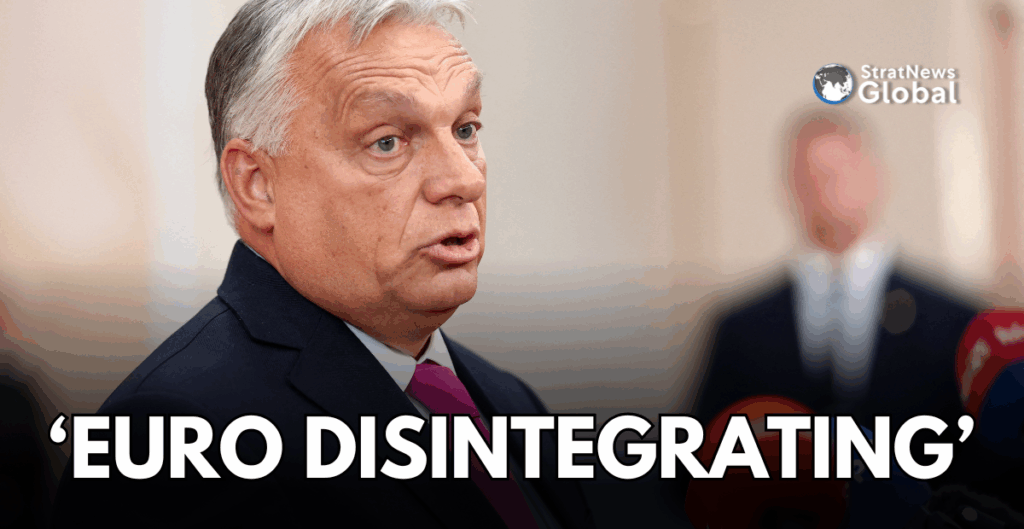
Hungary PM Orban Says ‘EU Disintegrating’ On Euro Adoption
In an interview with economic news site EconomX, Hungarian Prime Minister Viktor Orban said that Hungary should not adopt the euro currency as the European Union is “disintegrating”. He also added that Hungary should not tie its fate closer to the bloc.
Hungary depends for most of its trade on the 27-member bloc and has modernised its economy with billions of euros of EU funds since it joined two decades ago. It currently does not meet the conditions for euro adoption.
In power since 2010, Orban has become an increasingly vocal critic of the EU, which has suspended billions of euros of funds for Hungary due to the nationalist leader’s rule-of-law reforms.
“Hungary should not tie its fate closer to the European Union than now, and adopting the euro would be the closest possible link,” he said.
Hungary Elections
Unlike Denmark, Hungary does not have a legal opt-out from joining the currency bloc. Some of its neighbours in the EU’s eastern wing, including Poland, the Czech Republic and Romania, also remain outside the euro area, at least for now.
Orban’s comments were in stark contrast to the policy agenda of his surging opposition rival Peter Magyar, who is campaigning on a pledge to unfreeze suspended EU money and bring one of the EU’s poorer economies closer to euro adoption.
Parliamentary elections are going to be held in the spring of 2026. The date has not yet been set.
ECB Policy
While Orban has avoided direct comment on central bank policy since Mihaly Varga, his former finance minister, took over in April, he said on Monday that the bank’s 6.5% main interest rate, the EU’s joint-highest, was “higher than it could be”.
The bank marked a year-long pause in rate easing in September, which has helped the forint strengthen to a 15-month high versus the euro as the bank seeks to stem a flow of domestic savings towards foreign currencies, including the euro.
(with inputs from Reuters)
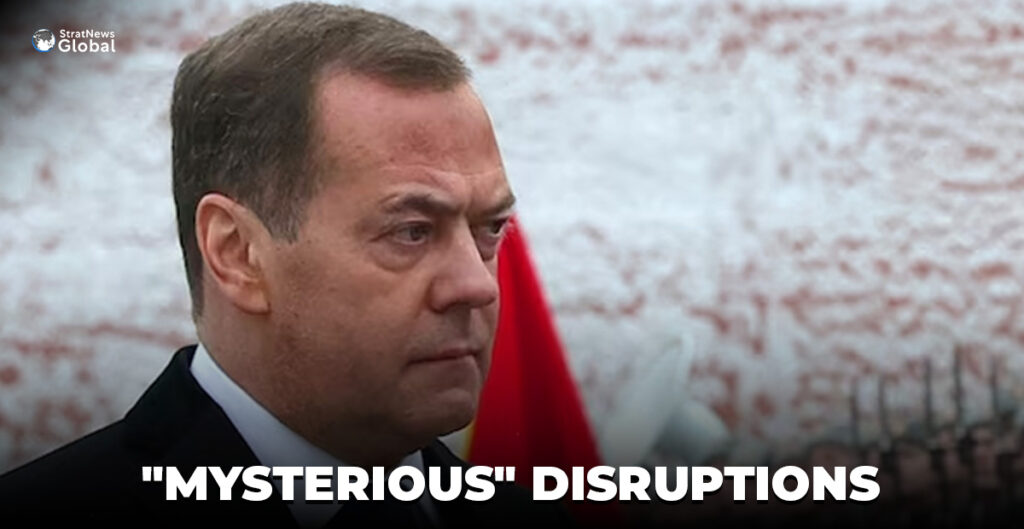
Ex-Russian President Medvedev Calls European Drone Disruptions Mysterious
Former Russian President Dmitry Medvedev stated on Monday that the source of a recent wave of drone disruptions across several European countries remains unknown, but emphasised that the incidents serve as a stark reminder to Europeans of the ongoing dangers posed by war.
Medvedev, now deputy chairman of Russia’s Security Council, played down the theory that recent disruption, including to airport traffic in Germany and Denmark, was the result of any actions connected to Russia or forces sympathising with it.
“People who sympathise with our country (in Europe) will not waste their resources by coming out of hiding. Our ‘agents and moles’ are waiting for a separate order,” Medvedev wrote on his official Telegram channel.
Medvedev, who has built a reputation for himself as an outspoken anti-Western hawk, said the main thing, regardless of who was responsible, was that European citizens had got a taste of what a war could mean for their continent, something he accused French President Emmanuel Macron and German Chancellor Friedrich Merz of stoking for political and financial reasons.
“The main thing is that short-sighted Europeans feel the danger of war on their own skin. That they fear and tremble like dumb animals in a herd being driven to slaughter,” said Medvedev, who said he hoped people might then turn on Merz and Macron.
European talk of using frozen Russian assets to fund Ukrainian arms purchases, along with talk of shooting down Russian planes which stray into European airspace and plans to assemble “a drone wall”, have angered Russian government officials who have repeatedly said they have no intention to attack any NATO member state despite claims to the contrary.
Oslo Drone Sighting
Norway’s Oslo Airport temporarily paused one or several landings early on Monday after a report of a drone sighting near the airport, its operator Avinor said.
“One or more aircraft waited in the air until the situation was clarified. No aircraft departed for alternative airports,” an Avinor spokesperson said.
The Norwegian news agency cited police as saying they had received a report around midnight that a Norwegian Air pilot thought he saw three to five drones during an approach to the airport.
Avinor said there had been no further disruptions to air traffic.
NTB reported, citing police, that the observation remained unverified.
European aviation has been repeatedly thrown into chaos in recent weeks by drone sightings and air incursions, including at airports in Copenhagen, Oslo and Munich.
(With inputs from Reuters)
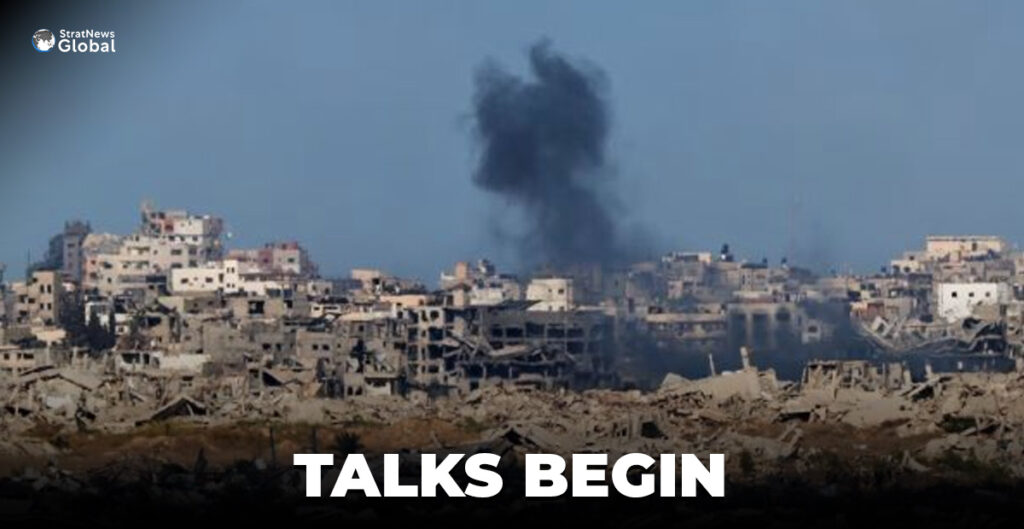
Trump-Backed Gaza Talks Begin In Egypt Amid Low Hopes For Swift Deal
Hamas representatives arrived in Egypt on Monday for negotiations with Israel aimed at ending the Gaza war and securing the release of hostages.
The talks are part of a U.S.-brokered plan led by President Donald Trump, but key issues such as the disarmament of Hamas remain unresolved, making a quick agreement unlikely.
Talks were set to begin as the war reaches its two-year mark with the majority of 2.2 million Gazans homeless and hungry in a sea of rubble after Israeli strikes that have killed over 67,000 Palestinians, mainly civilians, Gaza health officials say.
Israelis are still haunted by October 7, 2023 when Hamas-led terrorists stormed over the border into Israeli communities, killing 1,200 people, mostly civilians, and taking 251 hostages, according to Israeli tallies – the single bloodiest day for Jews since the Holocaust. Hamas’ attack ignited the war.
Israeli negotiators were due to travel to Egypt’s Red Sea resort of Sharm el-Sheikh later in the day for talks focused on freeing hostages, part of the U.S. president’s 20-point blueprint for ending the conflict.
Quick Breakthrough Unlikely
A Palestinian official close to the talks was sceptical about prospects of a breakthrough given deep mutual mistrust, saying Hamas and other Palestinian factions worried that Israel might ditch negotiations once it recovered the hostages.
The Israeli delegation includes officials from spy agencies Mossad and Shin Bet, Prime Minister Benjamin Netanyahu’s foreign policy adviser Ophir Falk and hostages coordinator Gal Hirsch.
However, Israel’s chief negotiator, Strategic Affairs Minister Ron Dermer, was only expected to join later this week, pending developments in the negotiations, according to three Israeli officials. Spokespeople for Dermer and the prime minister did not immediately comment.
The Hamas delegation is led by the group’s exiled Gaza leader, Khalil Al-Hayya, whose visit to Egypt was the first since he survived an Israeli airstrike in Doha, the Qatari capital, last month designed to kill top Hamas officials.
Negotiators from Hamas will seek clarity on the mechanism to achieve a swap of remaining hostages – both alive and dead – for Palestinian prisoners held in Israel, as well as an Israeli military withdrawal from Gaza and a ceasefire, according to a statement put out by the Islamist group late on Sunday.
A thorny issue is likely to be the Israeli demand, echoed in Trump’s plan, that Hamas disarm, something the group insists cannot happen unless Israel ends its occupation and a Palestinian state is created, a Hamas source said.
Netanyahu Against Palestinian State
Netanyahu, whose country has become internationally isolated over its devastation of Gaza, says a Palestinian state will never transpire, defying Western countries that have newly recognised Palestinian independence.
An official briefed on the negotiations said he expected the round of talks kicking off on Monday would not be quick.
Negotiations would last at least a few days if not longer. Prompt agreement is unlikely as the goal is to clinch a comprehensive deal with all details worked out before the ceasefire can begin to be implemented, the official said.
Hamas and Israel have agreed to the fundamentals of Trump’s plan, though not key details, but the president was optimistic.
“I am told that the first phase should be completed this week, and I am asking everyone to MOVE FAST,” Trump said in a social media post.
Trump’s plan, which has won backing from Western and Arab states, is the most advanced effort yet to halt the war, the longest, most destructive and deadliest ever in generations of conflict between Israel and the Palestinians.
Germany Says Talks Are ‘More Promising’
German Foreign Minister Johann Wadephul said the talks were more promising than previous iterations as “for the first time in two years, it is not just about a ceasefire, but about a viable political solution”.
Trump, who brokered normalisation deals with Israel and several Arab states during his first term in 2020, has said his Gaza plan could usher in a wider peace across the Middle East and transform the region.
The first phase of the talks deals with the release of hostages in exchange for Palestinians jailed in Israel. There are 48 remaining hostages in Gaza, 20 of whom are alive.
Hamas on Friday approved a hostage release and some other elements of Trump’s plan but sidestepped trickier points, including calls for it to disarm and yield power in Gaza.
Palestinians Are ‘Hopeful’
Palestinians who have watched numerous efforts to end the war through mediation by Egypt, Qatar and the United States fail are hoping all the same for a quick agreement this time.
“If there is a deal, then we survived, if there isn’t, it is like we have been sentenced to death,” said Gharam Mohammad, 20, who is displaced along with her family in central Gaza.
Domestically, Netanyahu is caught between growing pressure to end the war — from hostage families and a war-weary public — and demands from ultra-nationalist members of his coalition who insist there must be no let-up in efforts to annihilate Hamas.
Far-right Finance Minister Bezalel Smotrich said on X that ceasing the military campaign would be a “grave mistake.” He and Security Minister Itamar Ben-Gvir have threatened to bring down Netanyahu’s government if the war ends.
(With inputs from Reuters)
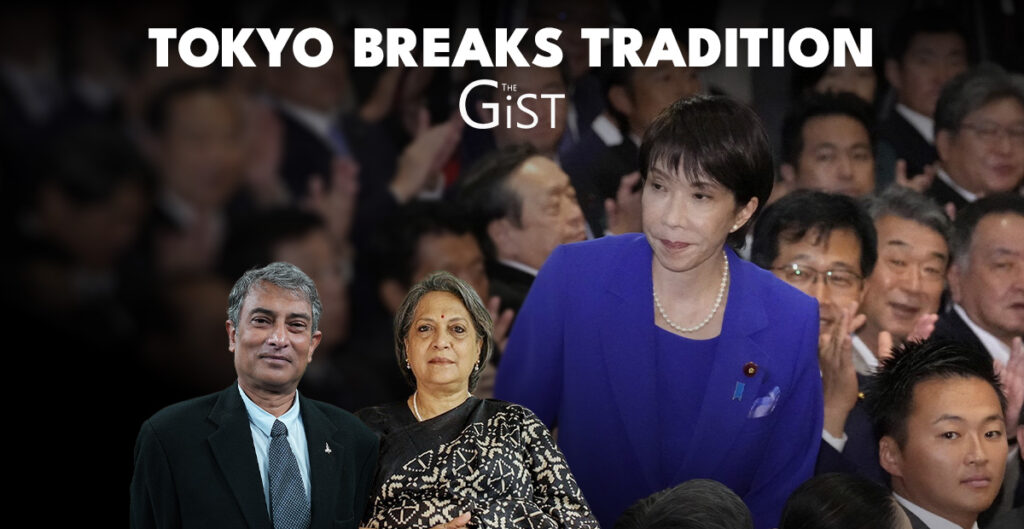
India Eyes Stronger Ties with Japan’s First Woman Leader
The election of Sanae Takaichi as Japan’s first woman prime minister marks a historic political moment, but also signals a potential shift in regional dynamics and global markets. Deepa Gopalan Wadhwa, India’s former ambassador to Japan, says the development is significant not just for Tokyo, but also for New Delhi and the wider world.
Takaichi, known for her conservative leanings and hawkish security views, has long been seen as a protégé of former Prime Minister Shinzo Abe. Wadhwa notes that her rise reflects a continuation of Abe’s policy legacy, particularly efforts to make Japan a “normal nation” in military terms. While constitutional revision to loosen Japan’s postwar pacifist restraints may be difficult, Wadhwa expects Takaichi to push for reinterpretations that allow a more assertive security posture—moves that will be closely watched in Beijing and Seoul.
For India, Wadhwa sees largely positive trends. Japan has been a close strategic partner, especially under Abe, with defence and technology ties deepening over the past 15 years. Takaichi’s emphasis on security and increased defence budgets is expected to further bolster cooperation. With the U.S. appearing less invested in the Indo-Pacific, India and Japan may find even greater convergence in addressing regional security challenges, including those posed by China.
On the economic front, markets have already reacted: the Nikkei index surged, and the yen weakened after her election. Wadhwa points out that Japan’s global economic weight means these shifts will ripple outward, affecting U.S. Treasury markets and global trade flows. For India, Takaichi’s background as economic security minister could mean more Japanese investments in critical sectors like semiconductors, energy, and defence.
However, challenges remain. Takaichi’s campaign rhetoric included anti-foreigner and anti-tourism themes, reflecting domestic anxieties over immigration and overtourism. Yet, Japan’s demographic decline leaves little choice but to rely on immigrants and foreign workers, including skilled Indian professionals. Wadhwa expects people-to-people exchanges, particularly in technology and services, to continue growing despite conservative undercurrents.
Ultimately, Wadhwa believes India-Japan ties are on stable footing, with bipartisan support in both countries ensuring continuity. Takaichi’s tenure may sharpen Japan’s strategic profile and reinforce its partnership with India, even as her policies test the balance between conservatism at home and pragmatism abroad.
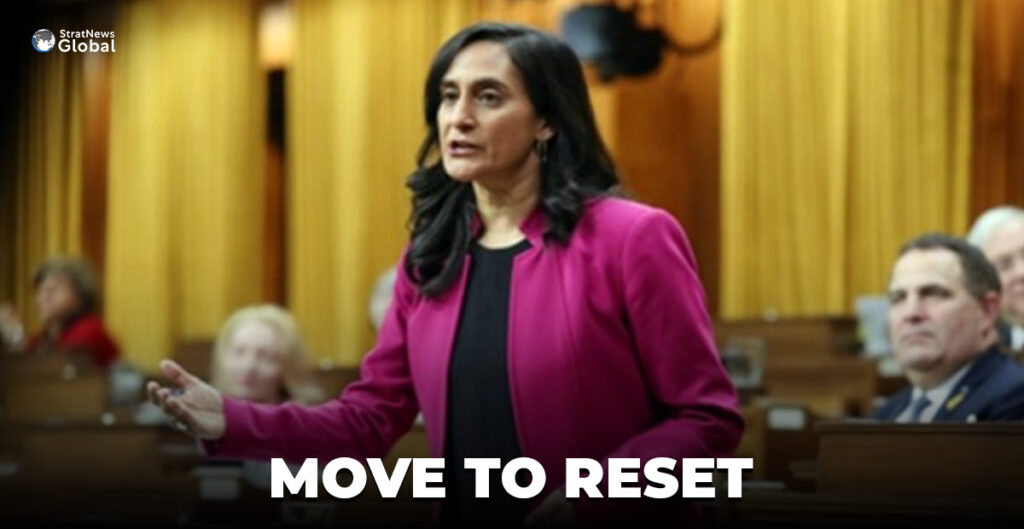
Canada’s Foreign Minister To Visit India Amidst Hopes Of Reset
Canadian Foreign Minister Anita Anand is expected to visit India on October 13–14, in what will be the first ministerial-level engagement between the two countries since relations plunged in 2023.
She will hold talks in New Delhi with External Affairs Minister S. Jaishankar as both governments attempt to reset ties after a prolonged diplomatic standoff.
The visit comes against the backdrop of efforts to restore normalcy, including the reappointment of high commissioners and the easing of restrictions on diplomatic staff. The two sides also resumed security-level talks last month when their national security advisors met in New Delhi. Anand’s trip is aimed at carrying that momentum forward.
Counter-terrorism and security cooperation are expected to feature prominently in the discussions, particularly collaboration on intelligence sharing and tackling transnational organized crime. Both governments have signalled the need to cooperate on law enforcement despite the strains of the past two years.
The most difficult issue remains the fallout from the Nijjar and Pannun cases. Hardeep Singh Nijjar, a Sikh separatist leader, was killed in British Columbia in June 2023. In September that year, then–Prime Minister Justin Trudeau accused Indian agents of involvement, prompting India to expel Canadian diplomats. Relations dropped to historic lows.
The situation shifted in April 2025, when Mark Carney became Canada’s prime minister and indicated a softer approach toward India. By August, both countries had appointed new high commissioners, and quiet talks resumed.
The U.S. and Canadian investigations into assassination plots linked to Sikh separatist leaders continue to weigh heavily on ties. A 61-page U.S. court filing in September alleged links between Nijjar’s killing and a failed attempt to assassinate Gurpatwant Singh Pannun.
The documents cite communications involving former Indian intelligence officer Vikas Yadav and alleged middleman Nikhil Gupta. India has denied the allegations, with the Ministry of External Affairs declining to comment on the proceedings and accusing critics of drawing premature conclusions.
The situation is further complicated by the Lawrence Bishnoi Gang, which the Canadian government recently designated a terrorist entity. The group, with an international network, has been linked to Nijjar’s killing and has claimed responsibility for fresh shootings in Canada.
Diplomatic observers say Anand’s visit is significant because it shows a willingness on both sides to engage despite unresolved disputes. For Canada, it represents an opportunity to stabilize ties with a key Indo-Pacific partner while pursuing sensitive legal cases. For India, it will be a measure of Ottawa’s seriousness in preventing separatist politics from dictating the bilateral agenda.
While few expect major breakthroughs, the fact that such high-level talks are taking place is seen as an indication that both countries are prepared to move forward cautiously. Anand’s meetings in New Delhi are expected to set the tone for future dialogue and may help lay the groundwork for a more pragmatic relationship.