

Support us by contributing to StratNewsGlobal on the following UPI ID
ultramodern@hdfcbank

Strategic affairs is our game, South Asia and beyond our playground. Put together by an experienced team led by Nitin A. Gokhale. Our focus is on strategic affairs, foreign policy and international relations, with higher quality reportage, analysis and commentary with new tie-ups across the South Asian region.
You can support our endeavours. Visit us at www.stratnewsglobal.com and follow us on YouTube, Twitter, Facebook and Instagram.
र 500 per month
र 1000 per month
र 5000 per year
र 10000 per year
Donate an amount of your choice
र 500 per month
Donate र 500 per month

र 1000 per month
Donate र 1000 per month
र 5000 per year
Donate र 5,000 per year
र 10000 per year
Donate र 10,000 per year
Donate an amount of your choice
Donate an amount of your choice


Illinois Takes Legal Action To Stop National Guard Deployment Amid Trump–State Tensions
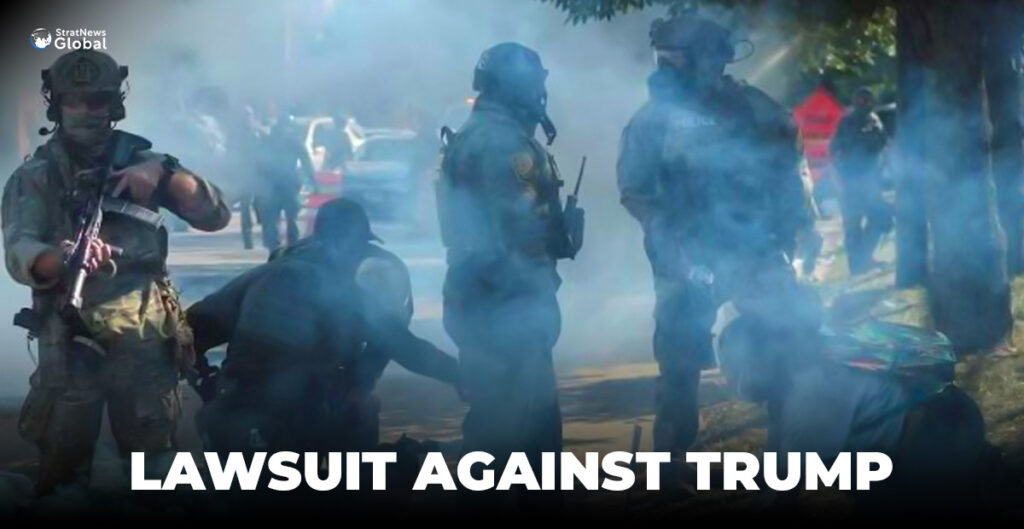
On Monday, U.S. President Donald Trump was sued by the state of Illinois and the city of Chicago in an effort to prevent National Guard troops from being sent to the city, even as hundreds of guardsmen from Texas were already on their way to the nation’s third-largest metropolis.
Trump then escalated the widening clash with Democratic-led states and cities over the domestic use of military forces, threatening to invoke the Insurrection Act as a means to circumvent court restrictions on deploying troops where they are unwanted by local officials.
Illinois had sued in response to Pentagon chief Pete Hegseth’s orders over the weekend to bring 300 Illinois National Guard members under federal control and then to mobilize another 400 Texas National Guard troops for deployment to Chicago.
While Illinois’ request for a temporary restraining order plays out, U.S. lawyers told a court hearing on Monday that Texas National Guard troops were already in transit to the state. Trump then issued another memorandum calling up 300 Illinois National Guard troops, reinforcing Hegseth’s previous order.
U.S. District Judge April Perry allowed the federal government to continue the deployment in Chicago while it responds to Illinois’ suit. She set a deadline of midnight Wednesday for the U.S. to reply.
The Illinois dispute came after a federal judge in Oregon on Sunday temporarily blocked Trump’s administration from sending any National Guard troops to police the state’s largest city, Portland.
Trump Might Invoke Insurrection Act
Shortly after Perry’s ruling, Trump told reporters in the Oval Office he might invoke the Insurrection Act of 1792, which would allow troops to directly participate in civilian law enforcement, for which there is little recent precedent.
“I’d do it if it was necessary. So far, it hasn’t been necessary. But we have an Insurrection Act for a reason. If I had to enact it, I’d do that,” Trump said. “If people were being killed and courts were holding us up, or governors or mayors were holding us up, sure, I’d do that.”
Later, when asked in an interview with Newsmax television whether he would invoke the law, Trump repeated that he would only use it if necessary, and then referenced Portland, Oregon, where the mayor and governor oppose deploying the National Guard to quell protests.
“If you take a look at what’s been going on in Portland, it’s been going on for a long time, and that’s insurrection. I mean, that’s pure insurrection,” Trump said.
The law has been used sparingly, in extreme cases of unrest. The law was last invoked by President George H.W. Bush in 1992, when the governor of California requested military aid to suppress unrest in Los Angeles following the trial of Los Angeles police officers who beat Black motorist Rodney King.
Democratic States Pushing Back
Today, Democratic-led states and cities are pushing back against Trump’s attempt to deploy military forces into cities, which the White House says are needed to protect federal government employees from “violent riots” and “lawlessness.”
Democratic leaders counter that their cities are being illegally targeted and falsely portrayed as awash in crime.
Trump has expanded the use of the U.S. military in his second term, which has included deploying troops along the U.S. border and ordering them to kill suspected drug traffickers on boats off Venezuela without due process.
National Guard troops are state-based militia forces that answer to their governors except when called into federal service.
Trump has ordered them to Los Angeles, Chicago, Washington, D.C. and Portland, prompting lawsuits from state and local leaders.
Legal Action Against Trump
Chicago’s lawsuit is the fourth legal action opposing Trump’s unprecedented use of soldiers to police U.S. cities. Courts have not yet reached a final decision in any of those cases, but judges in California and Oregon have made initial rulings that Trump likely overstepped his authority.
The Illinois lawsuit alleges the Republican president is deploying the military to Illinois based on a “flimsy pretext” that an ICE facility in a suburb of Chicago needs protection from protesters.
Illinois Governor J.B. Pritzker, in a press conference, accused Trump of unnecessarily escalating tensions by attempting to add National Guard troops to heavily armed federal police from Immigration and Customs Enforcement and other agencies already operating in Chicago.
Pritzker said those officers have fired tear gas and rubber bullets on peaceful protesters, with U.S. citizens, including children, being “traumatized and detained.”
“Donald Trump is using our service members as political props and as pawns in his illegal effort to militarize our nation’s cities,” Pritzker said.
“Donald Trump’s deranged depiction of Chicago as a hellhole, a war zone and the worst and most dangerous city in the world was just complete BS,” Pritzker said.
Trump, responding to Pritzker, reiterated his contention that Chicago was “like a war zone,” saying Pritzker and Chicago Mayor Brandon Johnson had lost control.
“It’s probably worse than almost any city in the world. You could go to Afghanistan, you can go to a lot of different places, and they probably marvel at how much crime we have,” Trump said.
(With inputs from Reuters)
Japan: Growing Anti-Immigration Sentiment As Economy Stagnates
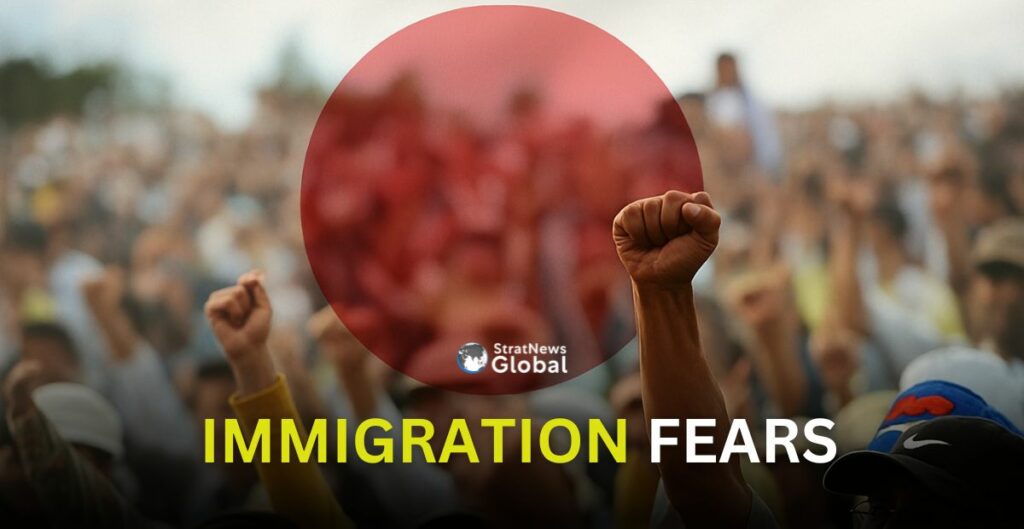
As Japan grapples with an ageing population, economic stagnation, and rising living costs, anti-immigration sentiment has increasingly found a place in national political debates. Concerns over shrinking workforces and social instability have fueled anxiety about foreign influence, shaping both policy and public discourse.
Amidst this, the Sanseito party, led by Sohei Kamiya gained a lot of traction on the political sphere. The party propagates a ‘Japanese First’ agenda that rejects large scale immigration with emphasis on tough restrictions on foreign workers and promoting traditional family values.
In July 2025 upper house elections, the far-right Sanseito party significantly increased representation from one seat to 15 in the 248-member chamber, resonating with the wider pool of voters.
Japan’s outgoing Prime Minister Shigeru Ishiba’s plan to bring in foreign skilled workers has drawn sharp criticism amid growing concerns over an economic slowdown, as Japan’s shrinking population struggles with growing social and economic instability.
Japan saw a surge in anti-immigration protests when Japan International Cooperation Agency (JICA) announced that it has designated four Japanese cities as ‘home towns’ for African countries. The poorly communicated initiative, intended to strengthen the friendly ties between two nations met with backlash highlighting the xenophobia simmering among the Japanese people amidst the anxiety of the future.
The same fears extend to security and foreign presence. Okinawa prefecture, home to the largest concentration of US military bases in Japan, has long been a focal point of local protests and national debates over the American military presence.
The protests against the Japan–US military drills in Okinawa reflect the same anxieties that fuel anti-immigration sentiment across the country. People fear that foreign influence, whether through workers or troops, could disrupt national security and social stability.
Japanese people have also expressed frustration over misbehaving tourists who disregard local customs and cultural values, further intensifying apprehension about outsiders and feeding into the broader anti-immigration sentiment.
Japan’s political landscape is shifting. Where immigration was once a marginal issue, it now takes the front-row space in national debates. Yet, with an aging population and declining birth rate, the country must walk a tightrope in managing its approach.
Polish Court Prolongs Detention Of Ukrainian Suspect In Nord Stream Case
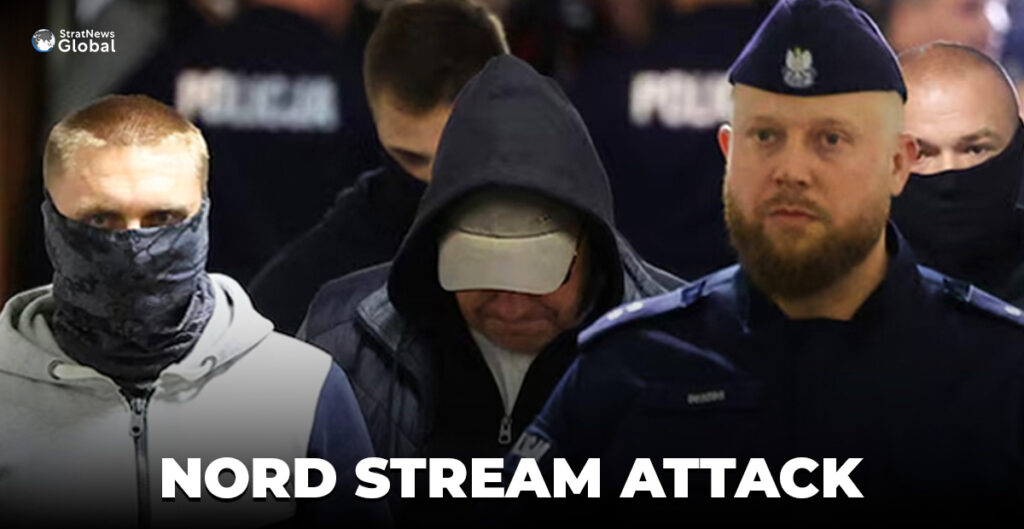
A Polish court on Monday decided that the Ukrainian diver sought by Germany for his alleged role in explosions damaging the Nord Stream gas pipeline must remain in custody for an additional 40 days, according to his lawyer.
Volodymyr Z. was detained near Warsaw last Tuesday, and the court decided he would be kept in custody for seven days. The court decided on Monday to extend his detention while a decision is made on whether to transfer him to Germany based on a European arrest warrant.
Described by both Moscow and the West as an act of sabotage, the explosions marked an escalation in the Ukraine conflict and squeezed energy supplies. No one has taken responsibility for the blasts, and Ukraine has denied any role.
Another Ukrainian man suspected of coordinating the attacks was arrested in Italy in August and has planned to fight extradition to Germany.
“The court rejected the prosecutor’s request for a 100-day pre-trial detention, instead ordering it for 40 days,” Volodymyr Z.’s lawyer, Tymoteusz Paprocki, told journalists.
Paprocki said previously that his client had done nothing wrong and would plead not guilty.
A court spokesperson said he would remain in custody until November 9.
Germany’s top prosecutors’ office said in an earlier statement that the diver was one of a group of people who were suspected of renting a sailing yacht and planting explosives on the pipelines, which run from Russia to Germany, near the Danish island of Bornholm in September 2022.
He faces accusations of conspiring to commit an explosive attack and of “anti-constitutional sabotage”, the German prosecutors added.
Mysterious Blasts
In September 2022, one of the two lines of the Nord Stream 2 pipeline was damaged by mysterious blasts, along with both lines of Nord Stream 1 that carried Russian gas to Europe.
Both the U.S. and Ukraine have denied having anything to do with the attacks, as has Russia. Moscow, without providing evidence, blamed Western sabotage for the blasts, which largely severed Russian gas supplies to the lucrative European market.
Denmark and Sweden closed their Nord Stream pipeline investigations in February 2024, leaving Germany as the only country continuing to pursue the case.
Danish authorities concluded there was “deliberate sabotage of the gas pipelines” but found “insufficient grounds to pursue a criminal case”, while Sweden closed its investigation, citing a lack of jurisdiction.
(With inputs from Reuters)
India Weighs Launching Nationwide Climate-Linked Insurance Programme
The Government of India has initiated preliminary discussions with domestic insurers to develop a nationwide climate-linked insurance programme, intended to streamline payouts following extreme weather events, such as heatwaves and floods.
The scheme would adopt a parametric insurance model, where policyholders receive a pre-determined payout when specific weather thresholds such as rainfall, temperature or windspeed are breached.
Should the discussions bear fruit, India – among the nations most prone to extreme weather events – could become one of the first major economies to roll out such a programme.
The move would also help the government, which now uses funds earmarked for disasters to help states with adverse climate events, rein in costs as insurers would be taking on more risk.
“We’ve seen the frequency and severity of adverse climate events go up, and based on that, this discussion with the government also started,” Ramaswamy Narayanan, chairperson of state-run reinsurer GIC Re, told Reuters.
Under a parametric model, payouts can be made very quickly, whereas in traditional insurance, payments are based on the loss sustained, and assessments can take years. Parametric insurance can also be used to offer coverage in areas where traditional insurance is rare.
Federal government officials are backing the idea, though no formal proposal has been floated yet, according to a government official. The official and a separate insurance executive, both of whom declined to be identified, also said the discussions are taking place.
The National Disaster Management Authority, the finance ministry and GIC Re and other top insurers are exploring coverage options and funding mechanisms, the official added.
The ministry, the disaster management agency and India’s insurance regulator IRDAI did not immediately respond to Reuters requests for comment.
Interest in parametric insurance is on the rise globally. For instance, in 2023, Fiji became the first Pacific Island nation to adopt a sovereign parametric insurance policy, securing coverage against tropical cyclones.
The use of financial instruments to mitigate climate risk is also expected to feature prominently at the COP30 summit in Brazil this November, part of the United Nations Environment Programme’s finance initiative.
Seeking Cover
India ranks sixth globally in climate vulnerability, according to the Germanwatch Global Climate Risk Index 2025, which tracked events between 1993 and 2022.
During this period, India experienced over 400 extreme weather events, resulting in at least 80,000 deaths and economic losses of around $180 billion.
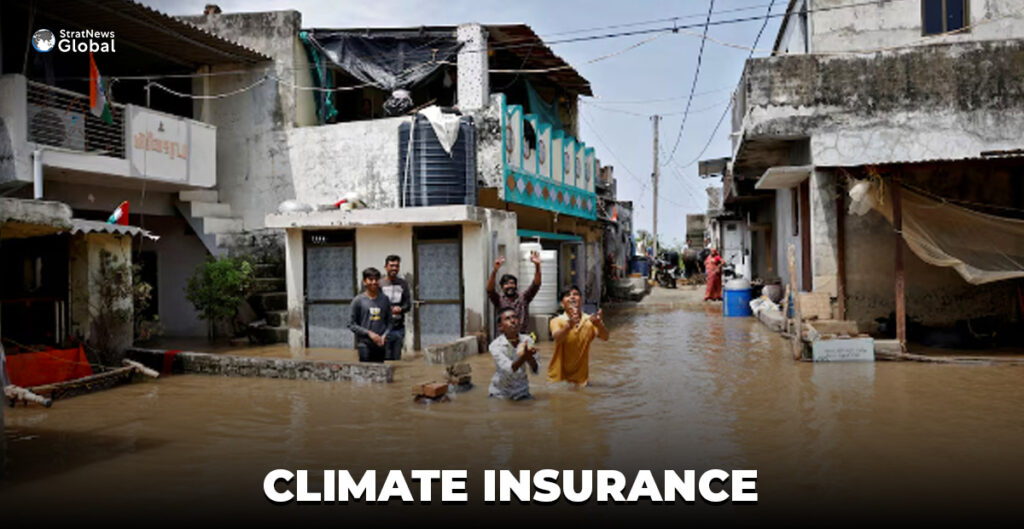
In recent years, key agricultural states such as Punjab and Assam have reported crop and livelihood losses due to flooding, while flash floods and landslides in Uttarakhand and Jammu and Kashmir have destroyed homes, roads and bridges.
The federal government is considering multiple financing options, including tapping existing disaster relief funds or levying small charges on utility bills to fund premiums, according to the government official.
“If it aligns with the rules of urban local bodies, tiny deductions from utility bills could be considered, with a consortium of insurers entering contracts with municipal corporations,” the official added.
Separate from federal-level discussions, some states have piloted such schemes and even more are in talks with insurers to secure parametric coverage, seven industry executives said.
Last year, a group of 50,000 self-employed women in Rajasthan, Gujarat and Maharashtra states received $5 payouts when temperatures exceeded 40°C between May 18 and May 25.
The tiny northeastern state of Nagaland, which gained India’s first disaster risk coverage from SBI General Insurance in 2024, received its first payout of $119,000 in May after excessive rainfall earlier in the year.
The southern state of Kerala’s co-operative milk marketing federation also introduced a scheme to protect cattle farmers against the losses suffered in the summer when higher temperatures lead to decreased milk production.
“States are looking at a window for medium-term implementation. These conversations are gathering pace, and every insurance company is attentive to opportunities,” a senior executive at a leading private insurer said.
(With inputs from Reuters)
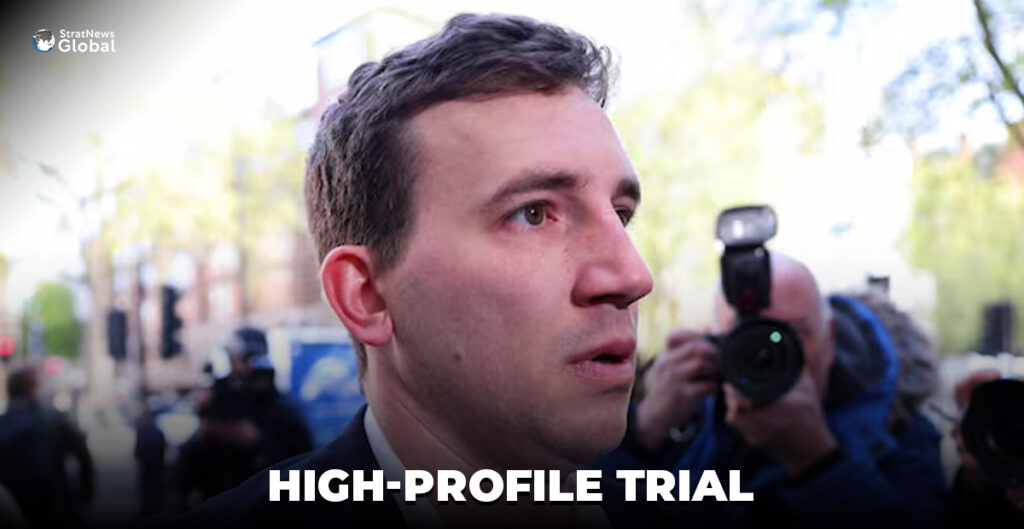
UK Govt Denies Culpability After Collapse Of High-Profile China Spy Trial
The British government swiftly sought to deflect blame on Monday after the high-profile trial of two men accused of spying for China collapsed.
Officials stated the decision to halt the proceedings was made by prosecutors, who reportedly relied on and misinterpreted the language used by the previous government’s China policy, thereby clearing the current administration of responsibility for the failure.
In an unexpected move, British prosecutors last month dropped charges, opens new tab of spying for China against two men just weeks before they were due to go on trial.
The men, Christopher Cash, 30, a former director of the China Research Group think tank, and Christopher Berry, 33, were first arrested in March 2023, and in April the following year were charged with passing politically sensitive information to a Chinese intelligence agent. They denied all the accusations against them.
The charges were made under the Official Secrets Act which specifies it is a crime to communicate any documents which might be useful to “an enemy”.
In the last week, British newspapers have reported that the government’s refusal to describe China as an enemy for the purposes of the court case – because of a desire to maintain good links with Beijing – had undermined the case against them.
Prime Minister Keir Starmer’s spokesperson said on Monday that the previous government’s policy was to call China an “epoch-defining challenge” but stopped short of calling the country an enemy.
The “evidence in relation to this case is based on the previous government’s policy that obviously was relevant at the time” the spokesperson told reporters.
The Conservatives, who were in government until 2024, and other opposition political parties have accused Starmer’s Labour government of deliberately collapsing the trial to avoid upsetting China.
Legal experts said there were other issues which could have influenced the decision to drop the charges, including not wanting to reveal intelligence about how British spies operate.
The prime minister’s press secretary said the National Security Act passed in 2023 would in future allow prosecutors to put spying suspects on trial in a wider set of circumstances.
(With inputs from Reuters)
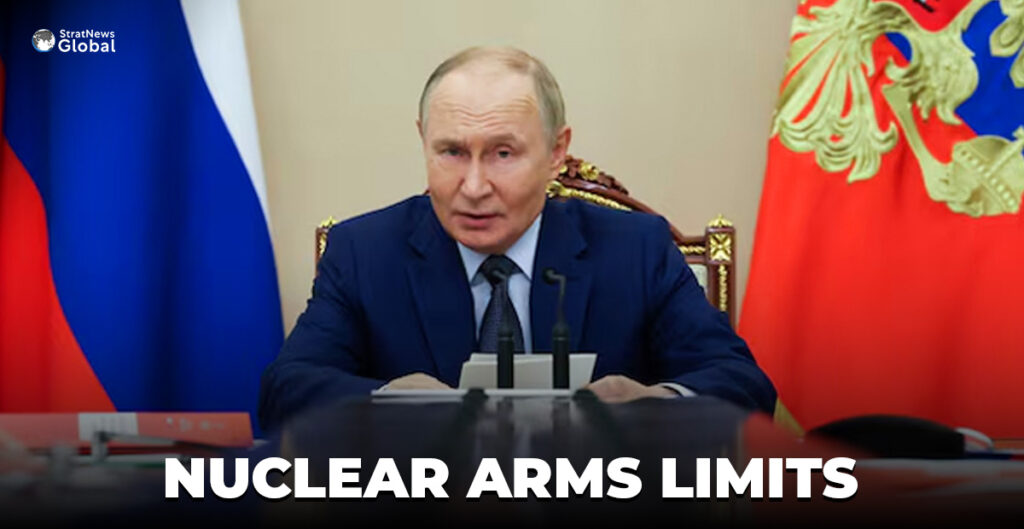
Russia Welcomes Trump’s Positive Response To Putin’s Nuclear Arms Proposal
Russia on Monday welcomed a potential breakthrough in nuclear arms talks, praising U.S. President Donald Trump’s endorsement of President Vladimir Putin’s recent offer.
Putin had proposed voluntarily preserving the limits on nuclear weapons set by the existing New START treaty for an additional year, a proposal Trump publicly called “a good idea.”
Putin in September offered to voluntarily maintain for one year the limits on deployed strategic nuclear weapons set out in the New START Treaty, the last remaining Russian-U.S. arms control treaty, which expires on Feb. 5, 2026.
When asked about the proposal, Trump told reporters on Sunday that it “sounds like a good idea to me.”
“Of course, we welcome such a statement,” Kremlin spokesman Dmitry Peskov told reporters. “We believe that this already gives grounds for optimism that the United States will support this initiative of President Putin.”
Russia and the United States are by far the biggest nuclear powers with approximately 87 percent of the world’s total inventory of nuclear weapons – more than enough to destroy the world many times over. Russia has a total inventory of 5,459 nuclear warheads while the United States has 5,177, according to the Federation of Atomic Scientists
Russia’s U.N. Ambassador Vassily Nebenzia had said Moscow was still waiting for Trump to respond to Putin’s offer to voluntarily maintain the limits on deployed strategic nuclear weapons once a key arms control treaty expires.
Any agreement on continuing to limit nuclear arms would stand in contrast to rising tensions between the United States and Russia since Trump and Putin met in Alaska in mid-August given reported incursions of Russian drones into NATO airspace.
Speaking in a video clip released on Sunday, Putin warned that a decision by the United States to supply long-range Tomahawk missiles to Ukraine for strikes deep into Russia would destroy Moscow’s relationship with Washington.
U.S. Vice President JD Vance said last month that Washington was considering a Ukrainian request to obtain missiles that could strike deep into Russia, including Moscow, though it is unclear if a final decision has been made.
Trump, who has expressed disappointment in Putin for not moving to end the war in Ukraine, was not asked directly on Sunday about the prospect of supplying Tomahawks to Ukraine.
(With inputs from Reuters)
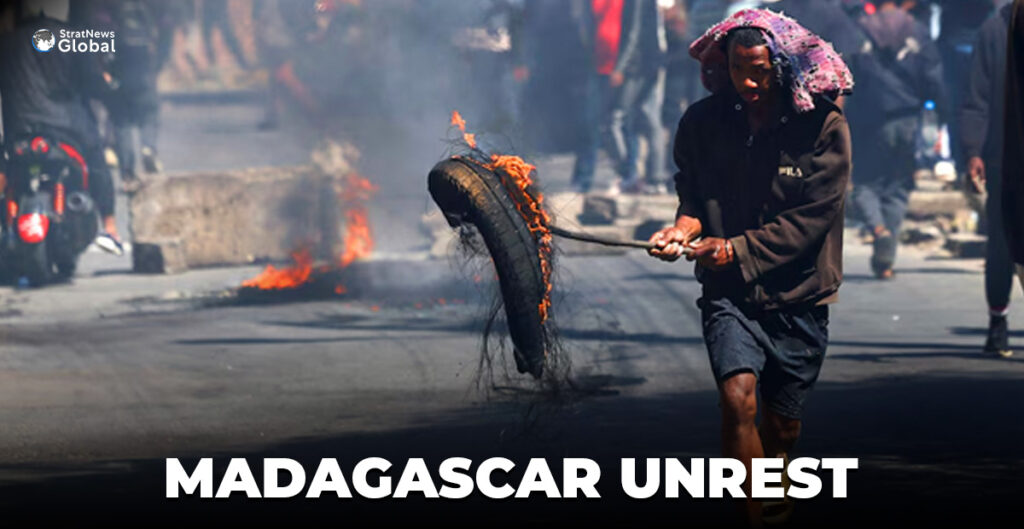
Madagascar Protests Escalate, Demanding President Rajoelina’s Resignation
Anti-government protests flared up for a third consecutive week across several Madagascar cities on Monday, with agitators now directly calling for the resignation of President Andry Rajoelina.
The protests, which began last month over basic service failures like water and power cuts, have broadened into widespread political discontent, leading police in the capital, Antananarivo, to fire teargas to disperse the crowds, many of whom were university students.
Police in Antananarivo fired teargas to disperse the marchers, a Reuters reporter said. Many were university students who seized on protests last month against water and power cuts to air broader grievances against the government.
The Reuters Tariff Watch newsletter is your daily guide to the latest global trade and tariff news. Sign up here.
Inspired by similar “Gen Z” marches in Kenya and Nepal, the protests are the largest wave of unrest on the Indian Ocean Island nation in recent years, giving voice to discontent over rampant poverty and high-level corruption.
Madagascar television stations showed images on Monday of police officers confronting protesters in the southern city of Toliara and the northern city of Diego Suarez.
Despite significant mineral wealth, biodiversity and agricultural land, Madagascar is among the poorest countries in the world, having seen income per capita fall 45% between independence in 1960 and 2020.
Rajoelina fired his cabinet last week, but many demonstrators are now demanding the 51-year-old leader resign himself.
The United Nations said that at least 22 people were killed and more than 100 injured in the initial days of the protests, figures the government has rejected.
Rajoelina said in a speech on Friday that he was ready to listen to the protesters’ grievances but ignored calls for his resignation.
A spokesperson for Rajoelina’s office told Reuters over the weekend that the protest movement was being “exploited by political actors who are seeking to destabilise the country”.
“President Rajoelina remains committed to dialogue, to accelerating solutions that improve people’s daily lives,” she said in a statement.
In a separate statement on Monday, the presidency said some civil society organisations had met Rajoelina on Saturday, without providing details.
Other organisations said in their own statement that they had refused to participate because authorities had not provided assurances that demonstrations could go ahead unhindered and that arrested protesters would be released.
(With inputs from Reuters)
Right-Wing Activists Fill Dublin Streets With Irish Flags, Fuelling Immigration Debate
Right-wing activists are filling Dublin’s streets with Irish tricolour flags, a campaign that is dividing communities and intensifying a heated debate over immigration.
Supporters say the flags, informally attached to lamp-posts without permission, are a simple expression of patriotism – and many react furiously to the idea of restricting the flying of the national flag.
Opponents say the flags, which mirror a similar campaign in England, are designed to intimidate and to mark neighbourhoods as being for non-immigrants only.
“I’ve never been embarrassed by the Irish flag, but I think it’s now being used as a flag of hate,” said Ashley Nelson, a 52-year-old civil servant, whose neighbourhood was one of the first where flags appeared. “This is racism, this is ‘Ireland for the Irish’; it’s disgusting.”
While no group has admitted to raising the flags, far-right activists are their loudest defenders. Some locals sympathetic to the flags voice openly anti-immigrant views.
‘Gone Down An Awful Lot’
“You can’t blame the people, losing their heads putting flags up. These (immigrants) are going around as if they own the place,” said Martin Kidd, 62.
He described the inner city as having “gone down an awful lot” due to the rise in the number of immigrants over the past 20 years. He said if local authorities tried to remove the flags, “there’ll be resistance”.
Forty-seven percent of the inhabitants of Dublin’s North Inner City local electoral area were born outside Ireland, according to the 2022 census, compared to 25% for Dublin county as a whole.
Ireland, historically a country of emigration driven by poverty, is almost unique in Europe in having no far-right members of parliament.
But this century, it has generally become more prosperous, and the greater ethnic mix on its streets bears witness to its pull on migrants.
Recent years have brought a sharp rise in the profile of anti-immigrant groups; however, thousands have rallied to demand curbs on immigration.
Anti-immigrant activists helped trigger large-scale rioting in Dublin in 2023, and there have been arson attacks on asylum-seeker accommodation.
Authorities have so far done nothing to curb the spread of the flags, which are also appearing in other towns.
“Inaction is creating an environment where a low level of intimidation towards ethnic minorities is tolerated and permitted,” said North Inner City Councillor Janet Horner, complaining of “big tension” in the council between those who want action and those who want to avoid confrontation.
Dublin City Council said it was reviewing the issue with local representatives, and that a “comprehensive risk assessment” was required before flags could be removed.
Eoin Meehan, a North Inner City resident aged 58, said: “I can tell you now, if they take them down, there’ll be twice as many put up.”
While several recent immigrants said they were not aware of anti-immigrant symbolism, many who came longer ago and people from racial minorities, said they were deeply disturbed.
“I will look at an area like that and be like, ‘Oh, maybe they don’t want me here’, which is so messed up,” said Ahmed Karim Tamu, a 25-year-old activist and rapper whose parents moved to Ireland from Sierra Leone. “It’s really upsetting.”
(With inputs from Reuters)
Georgia Charges Five Protest Leaders With Plotting Government Overthrow
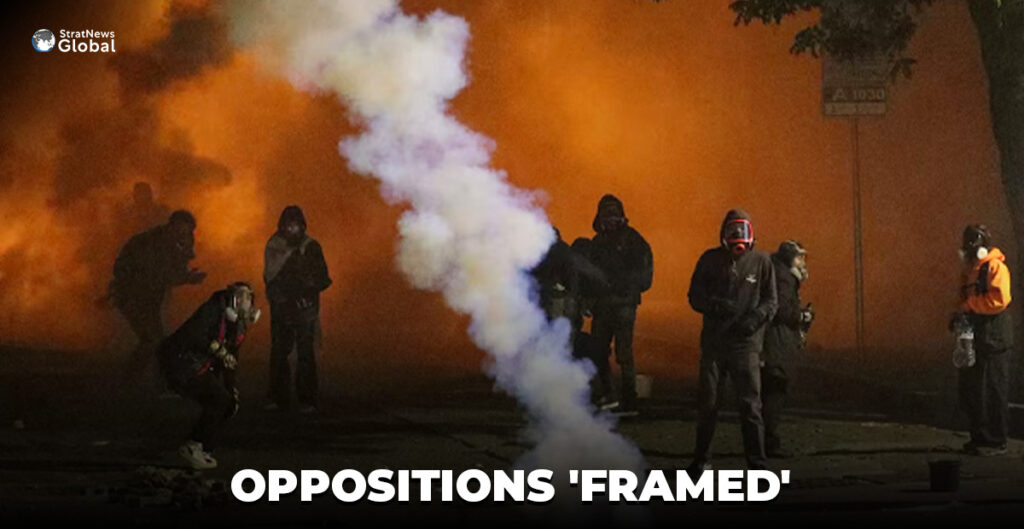
Georgia‘s prosecutors on Monday charged five opposition figures with plotting government overthrow following Saturday’s protests, which erupted into clashes between police and demonstrators in the South Caucasus capital of the 3.7 million-strong country.
Georgian opposition supporters rallied in central Tbilisi on Saturday, with some leaders promising a “peaceful revolution” on the day of local elections that were boycotted by the largest opposition blocs.
Minutes before polls closed, a smaller group of protesters attempted to seize the presidential palace, before being repelled by riot police using gas and water cannon.
The charges against the five men carry a maximum prison sentence of nine years. Officials have said the protests represented an attempt to seize power.
Massive Protests
Georgia has been rocked by protests for over a year, with supporters of the opposition accusing the ruling Georgian Dream party of authoritarianism, and of seeking to drag the country, once among the Soviet Union‘s most pro-Western successor states, back towards Russia, allegations it rejects.
The protest movement has dwindled in recent months, though nightly demonstrations still close Tbilisi’s central Rustaveli Avenue.
In October 2024, Georgian Dream won a comfortable victory in parliamentary elections. The opposition said the outcome was fraudulent; Georgian authorities said the polls were free and fair.
Under Georgian Dream, ties with Western countries have soured. In November, the party said it was freezing European Union accession talks, abruptly halting a long-standing national goal.
Georgian Dream says it is not pro-Russian and that it eventually wants to join the EU, whilst also keeping the peace with Moscow and preserving what it calls Georgia’s traditional Orthodox Christian values.
The party is widely seen as controlled by billionaire ex-prime minister Bidzina Ivanishvili, who is sanctioned by the U.S. for what it calls his promotion of Russian interests.
(With inputs from Reuters)
Iran, France Report Progress On Prisoner Exchange Agreement
Iran and France on Monday signalled that negotiations were making progress regarding the release of two French citizens held in Iran in exchange for an Iranian national detained in France.
Iran has been holding Cecile Kohler and her partner, Jacques Paris, since 2022. An 18-year-old French-German cyclist, Lennart Monterlos, is also being held in Iran after his arrest in June.
France has repeatedly accused Iran of holding Kohler and Paris arbitrarily, keeping them in conditions akin to torture in Tehran’s Evin prison and not allowing proper consular protection. The Islamic Republic denies the accusations.
Iranian Foreign Minister Abbas Araqchi suggested in mid-September that the French nationals could be exchanged for Mahdieh Esfandiari, an Iranian student living in the French city of Lyon who was arrested this year over anti-Israel social media posts.
“The decision regarding the release of these two individuals and Mrs Esfandiari is currently being reviewed by the competent authorities,” Iranian Foreign Ministry spokesperson Esmaeil Baghaei told a news conference on Monday.
‘This Will Happen Soon’
“We hope that once the necessary procedures are completed, this will happen soon.”
Outgoing French Foreign Minister Jean-Noel Barrot told France Inter radio on Monday: “We have solid prospects of being able to bring them back in the coming weeks.”
He added: “We remain fully mobilised and demand their immediate and unconditional release.”
According to the semi-official Iranian news agency Tasnim, Iran acquitted French-German national Lennart Monterlos of espionage charges, the chief justice of the southern province of Hormozgan said on Monday.
France, in September, dropped its case before the International Court of Justice against Iran for violating the right to consular protection of its citizens, a move that signalled there had been progress in efforts to reach a deal.
The case at the ICJ or World Court was widely seen as a bid to pressure Iran over the detention of its citizens. Iran has accused the pair of spying for Israel’s Mossad intelligence service.
(With inputs from Reuters)