

Support us by contributing to StratNewsGlobal on the following UPI ID
ultramodern@hdfcbank

Strategic affairs is our game, South Asia and beyond our playground. Put together by an experienced team led by Nitin A. Gokhale. Our focus is on strategic affairs, foreign policy and international relations, with higher quality reportage, analysis and commentary with new tie-ups across the South Asian region.
You can support our endeavours. Visit us at www.stratnewsglobal.com and follow us on YouTube, Twitter, Facebook and Instagram.
र 500 per month
र 1000 per month
र 5000 per year
र 10000 per year
Donate an amount of your choice
र 500 per month
Donate र 500 per month

र 1000 per month
Donate र 1000 per month
र 5000 per year
Donate र 5,000 per year
र 10000 per year
Donate र 10,000 per year
Donate an amount of your choice
Donate an amount of your choice
Newly Elected Western Germany Mayor In Intensive Care After Stabbing Attack
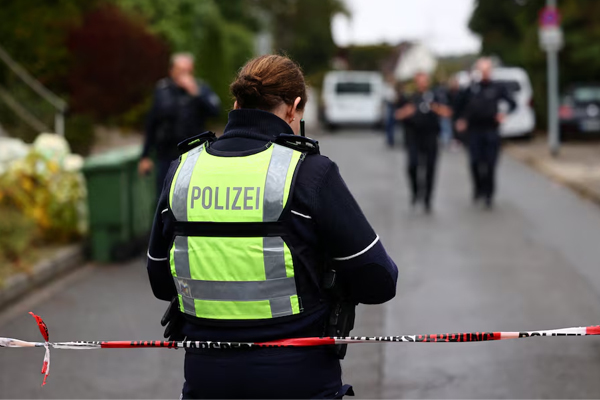
A newly elected mayor in western Germany was hospitalized in critical condition on Tuesday after being found with multiple stab wounds, local authorities said.
Iris Stalzer, 57, dragged herself back into her house after being stabbed around midday, broadcaster WDR reported. Bild newspaper said she had stab wounds to her neck and abdomen.
Prosecutors and police said in a joint statement their inquiry was looking into every possibility and said: “Close family involvement cannot be ruled out at the present time.”
DPA news agency reported that her son and daughter, aged 15 and 17, had been taken in for questioning. Stalzer was airlifted to hospital and was still in intensive care, the authorities’ statement said.
Bild cited investigators saying her son had told police his mother had been attacked by several men.
The police and prosecution statement did not address the content of the media reports.
The attack comes after a region-wide election campaign that politicians in North Rhine-Westphalia, Germany’s largest state, said was distinguished by the viciousness and rawness of its tone.
Stalzer, a Social Democrat, is due to take office in November after being elected mayor of Herdecke in the Ruhr region.
Police searching for evidence sealed off the road around the house of the labour lawyer, who has for years been a fixture of local politics in Herdecke, a historic town of 20,000 people. She ousted a conservative mayor with the backing of the Greens.
Conservative Chancellor Friedrich Merz called for a swift investigation.
Violence Against Politicians
A study published in May found 60% of politicians in Germany had experienced violence at least once, with one in five saying it had made them more reluctant to appear in public.
Even though the motive was unclear, the case raised memories of the 2019 murder of conservative local government president Walter Luebcke, a supporter of then chancellor Angela Merkel’s refugee policy, who was shot by a far-right activist as he smoked a late-night cigarette on his terrace at home.
Four years before that, Henriette Reker was stabbed by a right-wing extremist the day before she was elected mayor of Cologne. She made a full recovery and is due to leave office later this year.
(With inputs from Reuters)
Czech Election Winner Babis Warns Of Higher 2026 Budget Deficit
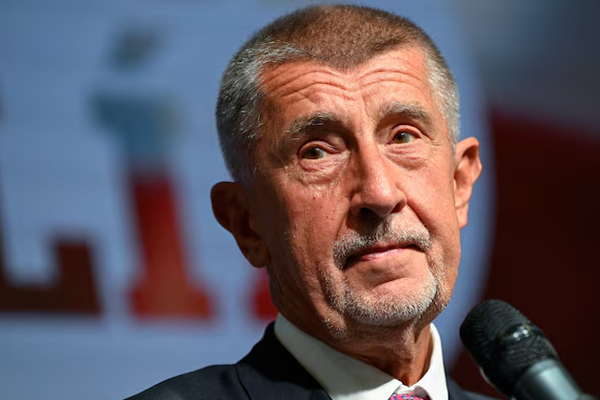
Czech opposition leader Andrej Babis, whose populist ANO party won the weekend’s parliamentary election, said on Tuesday that the country’s 2026 budget deficit could exceed the outgoing government’s forecast, signalling a possible shift in fiscal policy.
Babis said about 60 billion crowns ($2.9 billion) was lacking for road building and other projects in the pipeline which will otherwise need to be put on hold.
The outgoing centre-right government submitted a 2026 central state budget plan targeting a deficit of 286 billion crowns, up from 241 billion seen in the 2025 budget.
But Babis said the deficit increase would likely be bigger due to what he said were missing funds for already planned projects.
Babis In Talks To Form Govt.
“It will end up by a higher deficit, how else can it end up, unless we find some other solution,” Babis told reporters in a televised briefing.
The Finance Ministry said the budget, which the government had approved in September, was done in accordance with budget legislation and reflected the outgoing government’s priorities.
It gave no details on Babis’ specific comments about unfunded plans.
The draft budget will be decided by the next parliament, which is due to first meet on November 3.
Babis, whose party promised higher wages and tax cuts as part of campaigning, is in talks to form a government with two fringe parties, one of which has called for a substantial deficit reduction.
Even if the talks are successful, the new cabinet cannot take office before November, leaving little time for 2026 budget adjustments by the end of the year.
Alena Schillerova, an ANO finance expert and former finance minister in a previous Babis government, said on Monday that it was likely the country would start 2026 on a provisional budget, which would limit discretionary spending at 2025 levels.
Prime Minister Petr Fiala’s government has cut the overall fiscal gap below the European Union limit of 3% of gross domestic product and expects a 1.9% deficit this year.
The higher deficit expected in the 2026 central budget versus the 2025 plan is mainly due to costs of loans for a new nuclear power plant and the expiration of a windfall tax levied mainly on energy company CEZ (CEZP.PR).
($1 = 20.8480 Czech crowns)
(With inputs from Reuters)
Madagascar President Calls For National Dialogue After Protesters Issue Ultimatum
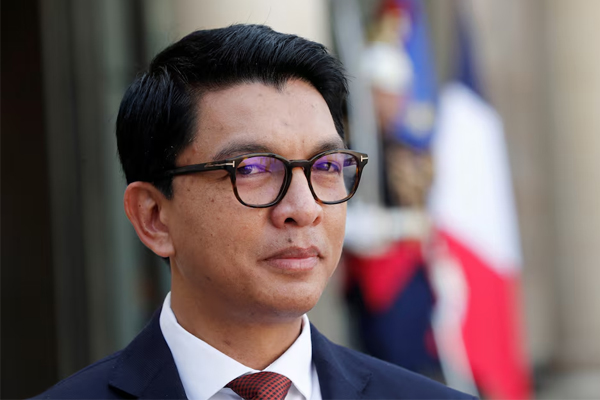
Madagascar’s President Andry Rajoelina said he will convene a national dialogue on Wednesday with political and civic groups after youth protesters gave him 48 hours to meet their demands or face a nationwide strike.
On Monday, Rajoelina named army General Ruphin Fortunat Zafisambo as the new prime minister a week after he fired his cabinet in a move intended to address some of the grievances that sparked the demonstrations on September 25.
But the reshuffle has failed to placate the protesters who initially took to the streets over water and electricity shortages in the impoverished African nation but have since expanded their demands to call for Rajoelina’s resignation.
Inspired by similar “Gen Z” marches in Kenya and Nepal, the protests are the largest wave of unrest on the Indian Ocean island nation in recent years, giving voice to discontent over rampant poverty and high-level corruption.
“Together, we must unite to fight against these evils and to build a new society founded on solidarity and mutual respect,” Rajoelina said in a message on Tuesday on his office’s Facebook page.
“To that end, a national dialogue and consultation will be held to listen to people’s concerns and to develop lasting solutions to the issues that affect us.”
He said that the talks scheduled on Wednesday afternoon would be attended by spiritual leaders, students, youth representatives, and others.
The protesters did not specify their demands, but in the past they have called for Rajoelina to leave office, apologise to the nation, and dissolve the senate and the election commission.
On Tuesday, dozens of protesters marched in the capital before police dispersed them, privately owned digital news platform 2424.MG reported – a sharp drop from previous demonstrations, which have seen hundreds gather in cities across Madagascar.
The United Nations says at least 22 people have so far died in the protests while 100 others have been injured. The government has rejected the figures.
In a statement posted on the protest movement’s verified Facebook page, the demonstrators also rejected the appointment of the new prime minister and described it as a “cosmetic manoeuvre.”
(With inputs from Reuters)
Tanzania Police Probe Reported Abduction Of Government Critic
Tanzanian police said they are investigating reports that a former ambassador and outspoken government critic was abducted from his home, after his family alleged he was forcibly taken by unidentified men.
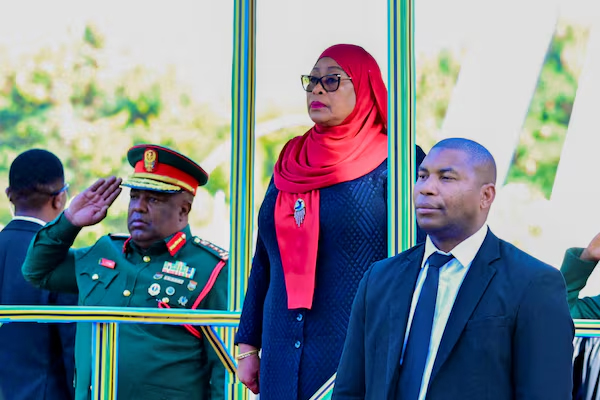
Several critics of the government of President Samia Suluhu Hassan, who will stand for re-election on October 29, have disappeared since last year, with opposition parties alleging a campaign of abductions.
Humphrey Polepole, who resigned as ambassador to Cuba in July and has repeatedly and harshly criticised Tanzania’s ruling party in the months since, went missing from his home in the commercial capital Dar es Salaam early on Monday, his brother, Godfrey Polepole, told Reuters.
“The main door entering the house was broken and the door to the bedroom was broken as well,” he said. “There was a lot of blood from the sitting room all the way to the bedroom and the bloodstains continued even outside toward the gate area.”
Hassan, who won plaudits after coming to power in 2021 for easing repression of political opponents that was rampant under her predecessor, ordered an investigation last year into reports of abductions, but no official findings have been made public.
Government spokesperson Gerson Msigwa did not immediately respond to a phone call or text message seeking comment.
In a statement on September 29, the government rejected allegations by Human Rights Watch that it was cracking down on its critics ahead of the election and called accounts of abductions “a major source of concern for the government”.
David Misime, a police spokesperson, said the force was investigating reports of Polepole’s abduction.
“The Police Force has seen the reports being circulated on social media by his relatives that he has been kidnapped. We have already begun working … to ascertain the truth,” he said in a statement late on Monday.
After resigning as ambassador, Polepole launched a series of broadsides during online press briefings against the ruling Chama Cha Mapinduzi (CCM), accusing it of flouting party rules by choosing Hassan as its presidential candidate, engaging in corruption and abducting government critics.
Hassan’s government has also faced human rights scrutiny over the arrest in April of Tanzania’s main opposition leader, Tundu Lissu.
Lissu went on trial on Monday for treason over what prosecutors said was a speech calling on the public to rebel. He has pleaded not guilty and said the charges are politically motivated.
(With inputs from Reuters)
Trump’s Insurrection Act Warning Ignites Tensions With Democratic Cities
U.S. President Donald Trump’s warning to implement the Insurrection Act, allowing military deployment in domestic emergencies, has heightened tensions with Democratic cities. The move has escalated a legal showdown over executive power, as National Guard troops from Texas gear up to patrol Chicago streets.
The president told reporters on Monday he would consider utilizing the Insurrection Act, a law enacted more than two centuries ago, to sidestep any court rulings restricting his orders to send Guard troops into cities over the objections of local and state officials.
“We have an Insurrection Act for a reason,” Trump said. “If people were being killed and courts were holding us up, or governors or mayors were holding us up, sure, I’d do that.”
The law, which gives the president authority to deploy the military to quell unrest in an emergency, has typically been used only in extreme cases, and almost always at the invitation of state governors.
The act was last invoked by President George H.W. Bush during the Los Angeles riots of 1992.
Insurrection Act Exception To Rule
Under federal law, National Guard and other military troops are generally prohibited from conducting civilian law enforcement. But the Insurrection Act operates as an exception to that rule and would give troops the power to directly police and arrest people.
Using the act would represent a significant escalation of Trump’s campaign to deploy the military to Democratic cities, an extraordinary assertion of presidential power.
Last week, in a speech to top military commanders, Trump suggested using U.S. cities as “training grounds” for the armed forces, alarming Democrats and civil liberties groups.
Trump has ordered Guard troops to Chicago, the third-largest U.S. city, and Portland, Oregon, following his earlier deployments to Los Angeles and Washington, D.C. In each case, he has done so despite staunch opposition from Democratic mayors and governors, who say Trump’s claims of lawlessness and violence do not reflect reality.
Protests In Chicago And Portland
In Chicago and Portland, protests over Trump’s immigration policies had been largely peaceful and relatively limited in size, according to local officials.
Since Trump surged federal agents to the Chicago area last month, residents have responded with mostly small demonstrations.
In most of Chicago, people have commuted to work, gone to the theater and flocked to beaches to enjoy unseasonably warm weather in a city where violent crime has fallen sharply – far from the “war zone” conditions Trump has described.
Protests have been much less disruptive than the unrest in 2020 triggered by the death of George Floyd, an unarmed Black man, at the hands of Minneapolis police officers.
The most regular demonstration has taken place outside an immigration processing facility in the Broadview suburb, where up to several dozen people have been engaged in increasingly violent standoffs with federal immigration officers, who have fired tear gas and rubber bullets from the roof of the facility at protesters.
Several people, including at least one reporter, have been arrested, and dozens of people have been injured by the agents’ chemical munitions.
Illinois Governor Accuses Trump
Illinois Governor JB Pritzker, a Democrat, accused Trump of intentionally trying to foment violence in Chicago, which the president could then use to justify further militarization.
“Donald Trump is using our service members as political props and as pawns in his illegal effort to militarize our nation’s cities,” Pritzker told reporters on Monday.
Illinois and Chicago sued the Trump administration on Monday, seeking to block orders to federalize 300 Illinois Guard troops and send 400 Texas Guard troops to Chicago. During a court hearing, Justice Department lawyers told a federal judge that hundreds of Texas Guard troops were already in transit to Illinois.
The judge, April Perry, permitted the deployment to proceed for now but ordered the U.S. government to file a response by Wednesday.
Separately, a federal judge in Oregon on Sunday temporarily blocked the administration from sending any National Guard troops to police Portland, the state’s largest city.
National Guard troops are state-based militia who normally answer to the governors of their states and are often deployed in response to natural disasters.
During Trump’s deployments to various cities, the Guard has been limited to protecting federal agents and property, though the Defence Department has said troops have the authority to detain people temporarily to prevent immediate harm.
A federal judge ruled last month that troops in Los Angeles overstepped their authority by controlling crowds and blocking traffic. The Trump administration has argued those actions were legal to protect federal agents conducting immigration raids and has appealed the decision.
Legal Challenges
Any effort by Trump to invoke the Insurrection Act would also likely face legal challenges. The law has rarely been interpreted by the courts, but the Supreme Court has ruled that the president alone can determine if the act’s conditions have been met.
Those conditions include when the U.S. government’s authority is facing “unlawful obstructions, combinations or assemblages or rebellion.”
The act, a version of which was first enacted in 1792, has been used by past presidents to deploy troops within the U.S. in response to crises such as the 1794 Whiskey Rebellion and the rise of the Ku Klux Klan after the American Civil War.
But the last time another president deployed the National Guard in a state without a request from the governor was 1965, when President Lyndon Johnson sent troops to protect civil rights demonstrators in Montgomery, Alabama.
(With inputs from Reuters)
Myanmar: Groups Sue Telenor Over Data Sharing With Junta
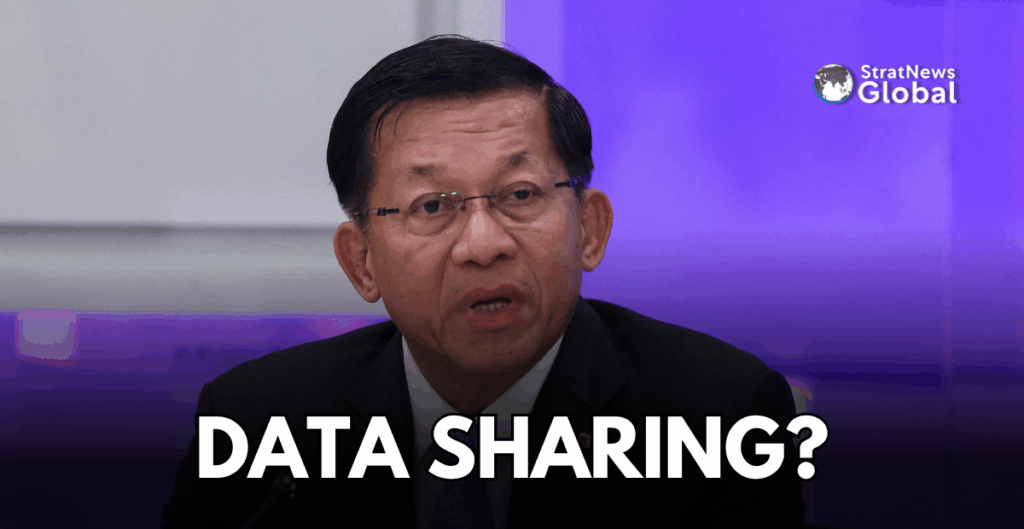
Myanmar civil society groups said on Tuesday they are suing the Norwegian telecoms giant Telenor. They alleged that the giant is sharing customer data with the ruling military, which allowed the junta to track, imprison and kill civilians.
Telenor was one of the largest foreign investors in Myanmar. It sold its business in Myanmar after the 2021 military coup to avoid European Union sanctions. This move was done after pressure from the junta to activate intercept surveillance technology.
However, before selling to a new majority-owner with a history of business ties to the military, the claimants allege that Telenor handed over data from some of its 18 million customers to comply with requests from the military.
Telenor’s Stance
In response, Telenor said in a statement to Reuters that it did not see anything in the legal notice that had not already been addressed, including in previous police and court investigations in Norway.
It said the company found itself in a “terrible and tragic situation” in Myanmar with “no good options” as disobeying orders from the junta would have “been perceived as terrorism and sabotage, and would have put employees in direct danger.”
“Like all operators in any country, Telenor Myanmar was legally required to provide traffic data to the authorities,” the company said.
Joseph Wilde-Ramsing of the Centre for Research on Multinational Corporations (SOMO), a nonprofit organisation working with the civil society groups, said the data handed over included “call logs and location data that could be used to track down the junta’s political opponents and their family members”.
In a statement, the groups said they had sent a pre-action letter to Telenor, the first step in bringing a lawsuit. They said the sale of Telenor to majority-owner Shwe Byain Phyu in March 2022 effectively granted the military “unfettered access” to customer data.
Shwe Byain Phyu and Myanmar’s military government have not responded to the claims yet.
Myanmar Crisis
Myanmar has been in crisis since the coup and ensuing military crackdown on protests, which sparked a nationwide armed rebellion.
The junta has killed almost 7,000 people and arrested close to 30,000, according to the Assistance Association for Political Prisoners, a nonprofit monitoring group. The military denies accusations it has targeted civilians and says it is fighting “terrorists”.
The civil society groups bringing the lawsuit, Defend Myanmar Democracy and the Myanmar Internet Project, said several people were arbitrarily detained and tortured in custody after their Telenor data was shared, and at least one person was killed.
Lawmaker Executed
Phoe Zeya Thaw, a popular hip hop artist and lawmaker, was executed alongside three other activists accused of helping carry out “terror acts” in 2022, prompting an international outcry.
The lawmaker’s wife, Tha Zin, who is among the claimants, said in the statement she was “terribly disturbed and shocked” by Telenor’s link to his arrest. She added that his arrest came a few weeks after the firm passed data from his cell phone to the military.
The statement did not cite specific evidence, but a lawyer at Simonsen Vogt Wiig, the firm representing the groups, said the decision to hand over data went “all the way to the top” of Telenor.
Ko Ye, another claimant in the lawsuit, told Reuters many Myanmar people chose to use Telenor’s network because they believed it was the safest option due to its international connections.
(with inputs from Reuters)
Canadian PM Carney Visits White House Again For Trade Talks
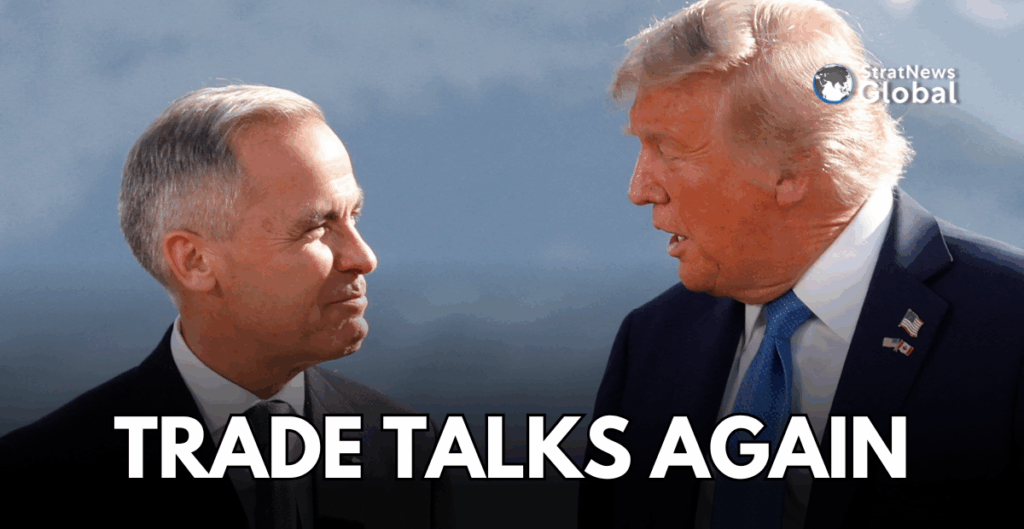
Canada’s Prime Minister Mark Carney is making his second visit to the White House in five months on Tuesday under increasing pressure to address U.S. tariffs on steel, autos and other goods that are hurting Canada’s economy.
A Canadian government official and several analysts played down the chances of an imminent trade deal with U.S. President Donald Trump. They said the mere fact that discussions are continuing should be considered a success for Carney.
US-Canada Tariffs
The prime minister last visited the Oval Office in May, when he bluntly told Trump that Canada would never be for sale in response to Trump’s repeated threat to purchase or annex Canada.
Since then, Carney has made numerous concessions to Canada’s biggest trading partner, including dropping some counter-tariffs and scrapping a digital services tax aimed at U.S. tech companies.
The PM’s office has said the working visit will focus on forging a new economic and security relationship with the U.S.
While the majority of Canada’s exports are entering the United States tariff-free under the U.S.-Canada-Mexico free trade agreement, tariffs have pummeled Canada’s steel, aluminium and auto sectors and a number of small businesses.
“The reality is that right now, Canadian products have among the lowest tariff rates,” said Jonathan Kalles, a former adviser to Carney’s predecessor, Justin Trudeau. “You don’t want to poke the bear when things could be much worse,” he said, adding that any meeting with Trump is a calculated risk.
“Carney will probably get a better deal through private negotiations, not the pomp and ceremony of going to the White House,” he said.
Mounting Pressure On Carney
Carney won an election in April, promising to be tough with Trump and secure a new economic relationship with the United States. Shachi Kurl, president of the Angus Reid Institute, said polls show Canadians have largely been willing to give Carney time to deal with Trump.
“But that amount of time is finite,” Kurl said, noting pressure may build with job losses mounting and economic growth hobbled by U.S. tariffs. The U.S. is the destination for nearly three-quarters of Canadian exports.
Canada’s opposition leader, Pierre Poilievre, has criticised Carney’s approach to Trump, noting the prime minister’s earlier pledge to “negotiate a win” by July 21.
Asa McKercher, a specialist in Canada-U.S. relations at St. Francis Xavier University, said Carney’s meeting with Trump would be a success if there is any recognition that Canada has moved to address some of Trump’s persistent grievances.
“Carney has just set up this new defence agency and boosted military spending, so it would be great if Trump could reduce some of those sectoral tariffs on autos,” McKercher said, citing Trump’s past complaint that Canada is a “military free-rider.”
(with inputs from Reuters)
Sudan: ICC Convicts First Janjaweed Leader Over Darfur Atrocities
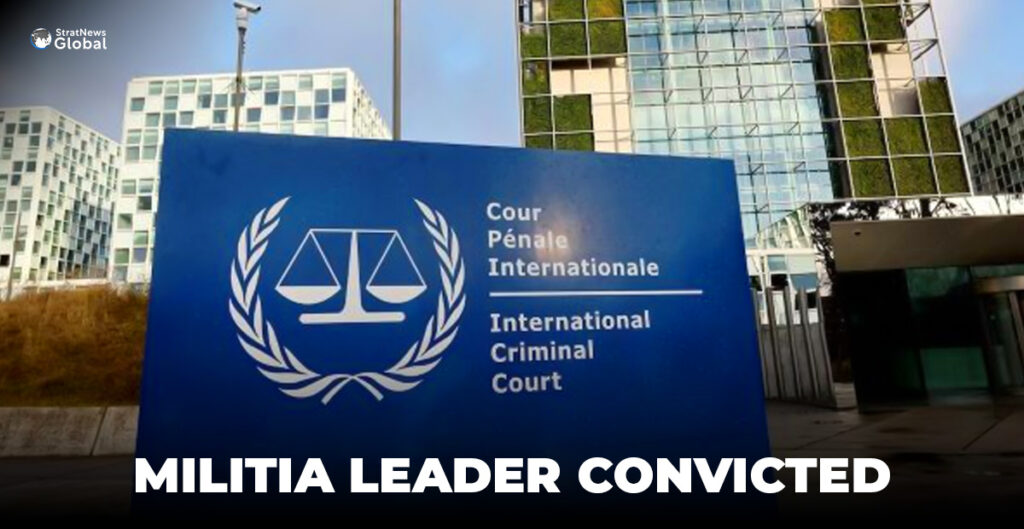
The International Criminal Court on Monday found a Janjaweed militia commander guilty of war crimes committed in Sudan’s Darfur region more than two decades ago, marking the court’s first conviction linked to the conflict.
The court found Ali Muhammad Ali Abd-Al-Rahman guilty of 27 counts of crimes against humanity and war crimes, including rape, murder and persecution. His sentence will be determined at a later date after a new round of hearings.
The conviction in the first and only trial looking at crimes in Sudan since the case was referred to the court by the United Nations Security Council in 2005 is a landmark for the ICC.
Darfur’s conflict first erupted in 2003 when mostly non-Arab rebels took up arms against Sudan’s government, accusing it of marginalising the remote western territory.
Sudan’s then government mobilised mostly Arab militias, known as the Janjaweed, to crush the revolt, unleashing a wave of violence that the U.S. and human rights groups said amounted to genocide.
Guilty Of Multiple Charges
Presiding judge Joanna Korner said the trial chamber unanimously found Abd-Al-Rahman, also known by the nickname Ali Kushayb, guilty of all the war crimes he had been charged with and dismissed his defence that he was the victim of mistaken identity.
“He encouraged and gave instructions that resulted in the killings, the rapes and destruction committed by the Janjaweed,” she said.
Korner added that he gave orders to “wipe out and sweep away” non-Arab tribes and told soldiers “don’t leave anyone behind. Bring no one alive”.
Victims of the Darfur conflict said the milestone judgment had restored some faith in the ICC and its slow procedures.
“As victims, the ruling is a victory for us and for justice, because the crimes he committed had huge impacts for the last 22 years. We were displaced, made refugees in camps,” said Jamal Abdallah, 32, who was displaced from his home in West Darfur as a child by the Janjaweed in 2003.
U.N. rights chief Volker Turk said the conviction was “an important acknowledgment of the enormous suffering endured by the victims of his heinous crimes, as well as a first measure of long overdue redress for them, and their loved ones”.
Court Still Seeking Former Sudanese President
There are still outstanding arrest warrants against Sudanese officials, including one accusing former President Omar al-Bashir of genocide charges.
According to Sudanese army sources, Bashir and former defence minister Abdelrahim Mohamed Hussein are in military custody in northern Sudan.
While sources said another ICC fugitive, interior minister Ahmed Haroun, was at large after escaping prison at the outbreak of war, Reuters met him in northern Sudan in April of this year. At the time, he dismissed the ICC as a colonialist institution.
People displaced from the villages Kushayb raided watched the hearing around a Starlink terminal in Kalma camp in South Darfur.
“We have been waiting for more than 20 years for this day… we hope there will be reparations for what we have lost,” said one elderly man.
Since the start of the ICC trial three years ago, conflict has erupted again in Sudan.
The new fighting that erupted in April 2023 between the Sudanese Armed Forces and the paramilitary Rapid Support Forces has unleashed waves of ethnically-driven killings, caused mass displacement, and created what the U.N. has called the world’s worst humanitarian crisis.
“The same people who were there in the 2000s are in the RSF now. The reason they repeat their crimes is lack of accountability,” said Abdallah, who said the RSF displaced him again in 2023.
(With inputs from Reuters)
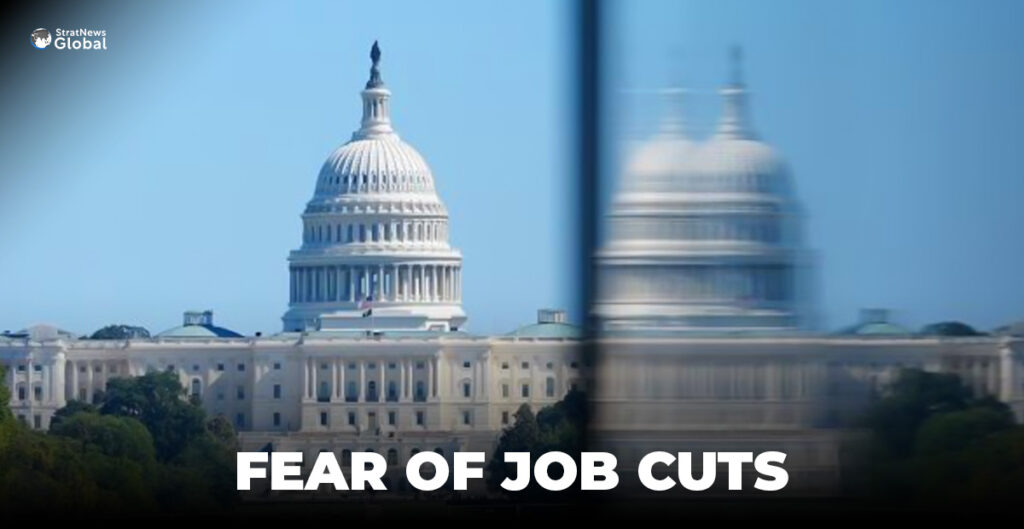
No Layoffs Yet, But Shutdown Could Impact Jobs: White House
On Monday, the White House clarified that government employees weren’t yet being laid off due to the shutdown, as President Donald Trump had suggested, but warned that job losses could still happen as the standoff is poised to continue into a seventh day.
The Republican-led Senate for a fifth time rejected duelling measures to fund federal agencies, with insufficient support for both a Republican proposal to fund operations through November 21 and a Democratic version that would also extend healthcare subsidies due to expire at the end of the year.
Trump told reporters at the White House that he would be open to a deal on the subsidies, which help 24 million people buy health insurance through the Affordable Care Act – a law that Republicans bitterly opposed for years.
Shoring up the expiring subsidies has been Democrats’ main demand and primary reason for voting against the Republican plan.
Negotiations Ongoing
But on the sixth day of the shutdown, the Republican president and top Senate Democrat Chuck Schumer could not even agree whether the two sides were talking, with Trump saying there were negotiations ongoing and Schumer saying there weren’t.
The Republican-led House of Representatives was not in session, and House Speaker Mike Johnson said he had no plans to reopen it until the government was funded.
The standoff has frozen about $1.7 trillion in funds for agency operations, which amounts to roughly one-quarter of annual federal spending. Much of the remainder goes to health and retirement programs and interest payments on the growing $37.88 trillion debt.
During the shutdown’s first week, the Trump administration has cut off some federal funds to Democratic-led cities and states and continued to raise the specter of mass firings, though none appeared to be forthcoming.
Previous shutdowns have not forced the government to fire any workers, though hundreds of thousands are typically told not to work.
White House Disagrees With Trump On Layoffs
Trump said on Sunday night that layoffs were taking place “right now,” but White House Press Secretary Karoline Leavitt said on Monday he had been referring to those furloughed since Congress allowed funding to expire on October 1.
The White House budget office “is continuing to work with agencies on who, unfortunately, is going to have to be laid off if this shutdown continues,” she said at a news briefing.
Labor unions representing federal workers have sued to prevent that from happening, arguing that such layoffs would violate a law that includes criminal penalties.
The administration has already frozen at least $28 billion in infrastructure funds for New York, California and Illinois — all home to sizable Democratic populations and critics of the president.
But Democratic leaders showed no sign of knuckling under to the White House’s hardball tactics, which have caused unease among some centrist Republicans who fear the approach could make the impasse harder to overcome.
The partial shutdown, the 15th since 1981, was on track to stand alone as the fourth-longest in U.S. history on Tuesday, exceeding the six-day length of a 1995 shutdown. The longest shutdown lasted 35 days in 2018-2019, during Trump’s first term in office.
While border guards, airport security screeners and other “essential” employees remained on the job without pay, other government activities ground to a halt. The Federal Register, which typically lists more than 100 proposed regulations and other notices daily, only showed four entries on Monday morning.
Pressure To End Standoff
Pressure to end the standoff could mount next week, when 1.3 million troops and other military workers are due to miss their paychecks for the first time since the shutdown began.
Air travel could be another factor. More of the nation’s 13,000 air traffic controllers have been calling in sick since the shutdown began, which could lead to flight delays, Transportation Secretary Sean Duffy said. Lawmakers resolved the last shutdown in 2019 after absences of controllers and airport security screeners spiked.
Republicans hold a 53-47 Senate majority but need the votes of at least eight Democrats to meet the chamber’s 60-vote threshold for most legislation, since Republican Senator Rand Paul opposes the stopgap funding measure. So far only two Democrats and an independent who caucuses with them have crossed the aisle.
Some Democrats want a deal on healthcare subsidies in place before open enrollment for next year begins on November 1.
Johnson said a solution could not be reached quickly.
“We’ve got probably 100 ideas for reforms on the table, but I can’t snap my fingers this afternoon and make that happen,” he said on the Hugh Hewitt radio show.
(With inputs from Reuters)
India In Moscow Format Talks As Taliban Steps In
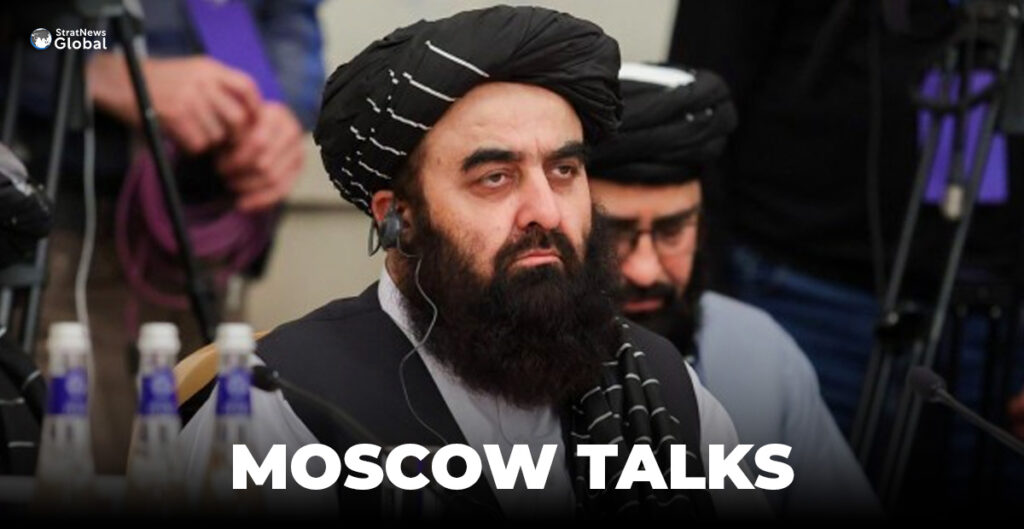
Russia has urged regional powers to fully integrate Afghanistan into political and economic frameworks, as the seventh round of the Moscow Format talks opened in Moscow on Tuesday with the Taliban attending as official participants for the first time.
India was represented at the meeting by its ambassador to Russia Vinay Kumar. The development comes ahead of Afghan Acting Foreign Minister Amir Khan Muttaqi’s scheduled visit to India on October 9 and 10.
Addressing delegates from 10 regional countries, Russian Foreign Minister Sergey Lavrov said that the long-term security and development of the region depended on Kabul’s inclusion in multilateral initiatives. “Ensuring the security and well-being of our region presupposes Kabul’s involvement in political processes, in multilateral associations, and in the implementation of joint economic projects,” he said.
The meeting brought together senior representatives from India, Russia, China, Iran, Pakistan, and five Central Asian nations — Kazakhstan, Kyrgyzstan, Tajikistan, Turkmenistan, and Uzbekistan — with Belarus attending as a guest delegation.
For the first time since the Taliban’s return to power in August 2021, the group participated in the Moscow Format as an official delegation, marking a notable diplomatic shift in regional engagement. Russia, which recognised the Taliban-led government earlier this year, has called on regional countries to expand cooperation with Kabul, crediting the administration with maintaining internal security despite limited resources.
An Indian delegation led by Ambassador @VKumar1969 participated in the 7th Moscow Format Consultations on Afghanistan hosted by the Russian Foreign Ministry on 7 October 2025 in Moscow. As a civilisational and contiguous neighbour of Afghanistan, India supports an independent,… pic.twitter.com/eNMesoP8dl
— India in Russia (@IndEmbMoscow) October 7, 2025
The Moscow Format was established in 2017 as a six-party mechanism involving Russia, Afghanistan, India, Iran, China and Pakistan as a regional platform for dialogue on Afghanistan. It was later expanded with the inclusion of more countries, and meetings were held in Moscow in 2017 and 2018.
Lavrov also reiterated Moscow’s opposition to any foreign military presence in Afghanistan or its neighbouring countries. “The deployment of military infrastructure by third countries on Afghan territory, or in neighbouring states under any pretext, is unacceptable,” he said. Russian envoy Zamir Kabulov dismissed reports about renewed U.S. interest in Bagram Air Base, calling them baseless.
During the consultations, participating countries reaffirmed support for Afghanistan’s sovereignty and territorial integrity and emphasised the importance of its economic revival. They urged the development of trade and investment partnerships between Afghanistan and regional countries, highlighting the need to advance projects in healthcare, agriculture, poverty alleviation, and disaster management.
The joint statement issued after the meeting underlined collective opposition to the politicisation of humanitarian aid and urged greater international support for Afghanistan’s recovery. Delegates also stressed the need to strengthen counter-terrorism cooperation, emphasising that Afghan soil should not be used to threaten the security of neighbouring countries.
The parties further called upon countries “mainly responsible for the current predicament in Afghanistan” to fulfil their commitments to the country’s economic recovery and stability. They also reaffirmed their stance that any attempt to deploy foreign military infrastructure in Afghanistan or nearby states would harm regional peace.
With India’s participation and the Taliban’s formal inclusion, the Moscow Format has taken on renewed significance. The discussions are expected to lay the groundwork for expanded regional cooperation and stability ahead of Muttaqi’s upcoming visit to New Delhi.