

Support us by contributing to StratNewsGlobal on the following UPI ID
ultramodern@hdfcbank

Strategic affairs is our game, South Asia and beyond our playground. Put together by an experienced team led by Nitin A. Gokhale. Our focus is on strategic affairs, foreign policy and international relations, with higher quality reportage, analysis and commentary with new tie-ups across the South Asian region.
You can support our endeavours. Visit us at www.stratnewsglobal.com and follow us on YouTube, Twitter, Facebook and Instagram.
र 500 per month
र 1000 per month
र 5000 per year
र 10000 per year
Donate an amount of your choice
र 500 per month
Donate र 500 per month

र 1000 per month
Donate र 1000 per month
र 5000 per year
Donate र 5,000 per year
र 10000 per year
Donate र 10,000 per year
Donate an amount of your choice
Donate an amount of your choice




Bollywood To Light Up Britain Again In 2026
The United Kingdom and India are set to strengthen their cultural and creative partnership with three major Bollywood films confirmed to be shot across the UK beginning in 2026.
The announcement was made by UK Prime Minister Keir Starmer during his visit to Yash Raj Studios in Mumbai, marking a new phase in the two countries’ longstanding cinematic and cultural collaboration.
The films will be produced by Yash Raj Films (YRF), one of India’s largest and most successful studios, and are expected to create more than 3,000 jobs while driving significant investment into local UK economies. The partnership reflects a growing effort to deepen cooperation between the two countries across film, music, literature, theatre, and other creative industries.
YRF’s decision to return to the UK after an eight-year gap underscores both the historical ties and the commercial advantages of filming there. “The UK has been an important part of our journey, and we have shot some of our most loved films there,” said Akshaye Widhani, CEO of YRF. “As we return to film in the UK, we also see this as a way to bring our creative industries closer. We are excited about what this renewed collaboration can offer to both sides.”
YRF is simultaneously developing Come Fall in Love, an English-language musical adaptation of Dilwale Dulhania Le Jayenge, in the UK. The stage production aims to introduce Indian storytelling to broader international audiences, bridging cultural traditions through performance.
Prime Minister Keir Starmer, who visited Yash Raj Studios accompanied by delegates from the British Film Institute (BFI), the British Film Commission, Pinewood Studios, Elstree Studios, and Civic Studios, described the move as emblematic of the UK’s creative ambition. “Bollywood is back in Britain, and with it comes jobs, opportunity, and cultural collaboration,” he said. “This is a clear example of how our creative ties with India are creating real outcomes, both economically and culturally.”
The announcement forms part of the Programme of Cultural Cooperation 2025, a government-to-government framework designed to expand partnerships between UK and Indian institutions in areas such as museums, heritage, publishing, and performing arts. The framework supports touring exhibitions, artist residencies, and training exchanges, offering opportunities for collaboration and skill development among younger professionals in both countries.
An updated Film Co-Production Framework complements this initiative by allowing producers from India and the UK to access production incentives and financial benefits in both countries. The mechanism encourages the sharing of expertise in post-production, visual effects, and design, helping stories travel more fluidly across markets and platforms. It also aligns with both governments’ efforts to boost creative economies through soft power diplomacy and cultural export.
According to the UK government, the creative industries contribute more than £12 billion to the British economy annually and support around 90,000 jobs. The new wave of Bollywood productions is expected to add further momentum to this sector, especially in regional economies that host filming locations.
Industry leaders have welcomed the renewed partnership. “India and the UK have deep connections through film, and this cooperation creates opportunities for both countries to benefit culturally and economically. These productions can help bring new audiences together and support industry growth on both sides,” said Ben Roberts, CEO of the British Film Institute.
“Working with studios like Yash Raj Films helps build creative partnerships that are grounded in shared experience. This opens the door to further cooperation in areas like post-production, VFX, and technical training,” added Adrian Wootton, CEO of the British Film Commission.
Starmer’s India visit — his first since taking office — is part of a broader trade mission aimed at expanding ties in business, education, and technology, in addition to culture and film. For both governments, the creative sector is increasingly seen as an instrument of diplomacy, economic growth, and people-to-people engagement.
The cultural relationship between India and the UK extends well beyond film. The Indian diaspora, which makes up about 2.6% of the UK population, has long contributed to the country’s social, political, and cultural life. More than 65,000 UK-based companies are owned by members of the Indian diaspora, playing a vital role in job creation and local economies. This community has also served as a bridge between the two nations’ creative industries, supporting cultural exchange and shared narratives.
Lisa Nandy, the UK’s Secretary of State for Culture, described the Bollywood partnership as a natural continuation of the two nations’ creative alignment. “Both countries have strong creative sectors and strong connections through people and shared stories,” she said. “Producing Bollywood films in the UK is a natural next step. It supports jobs, gives audiences more to enjoy, and builds on the creative partnerships we’ve been developing.”
Anushka Shah, CEO of Civic Studios — a production company operating in both countries — highlighted the growing appetite for storytelling that crosses borders and tackles shared global issues. “As a company with roots in both countries, we see great value in stories that connect communities across borders,” she said. “We’re especially excited to work on films that address themes that matter globally.”
The deepening collaboration between the UK and Indian film sectors reflects a broader recognition of cultural industries as powerful vehicles for international engagement. For decades, Bollywood has used the UK’s landscapes and architecture as cinematic backdrops, while British cinema and theatre have found growing audiences in India. What began as location-based cooperation has now evolved into a structured partnership that combines storytelling, commerce, and policy.
By facilitating new productions, expanding creative frameworks, and fostering artistic exchange, both countries aim to ensure that cultural cooperation becomes a sustained driver of growth.
As Starmer’s announcement demonstrated, this is not just about the return of Bollywood to Britain but about reinforcing the creative and economic bond between two countries with a shared history and a shared vision for the future of global storytelling.
China Accuses Taiwan President Of ‘Prostituting’ Himself Following Trump Praise
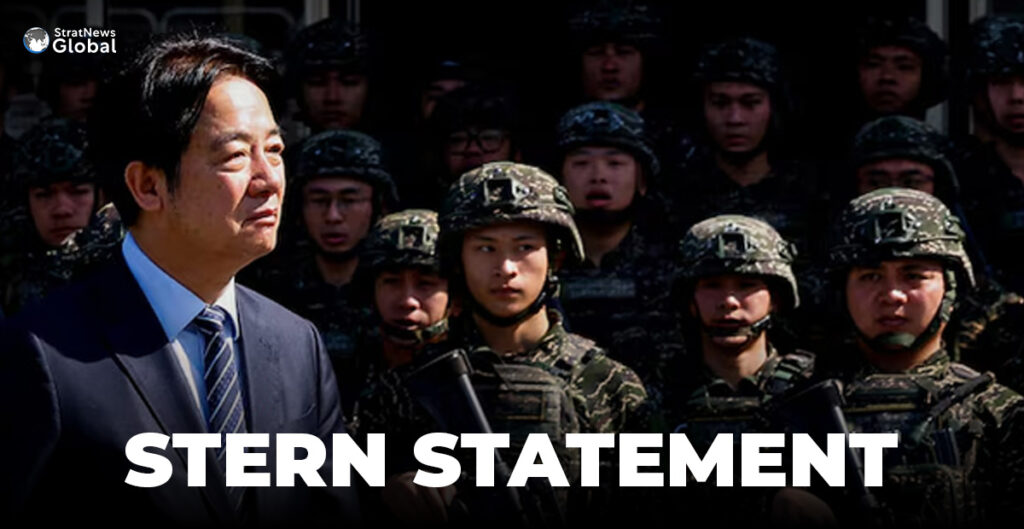
Taiwan President Lai Ching-te is “prostituting” himself to foreign powers in an attempt to gain their favour, but his efforts are doomed to fail, China’s government said Wednesday following his interview praising U.S. President Donald Trump.
China, which views democratically-governed Taiwan as its own territory, has a special dislike of Lai, saying he is a “separatist” and rebuffing his repeated offers of talks. Lai says only Taiwan’s people can decide their future.
In an interview released this week with a conservative U.S. radio show and podcast, Lai said Trump should get the Nobel Peace Prize if he could convince Chinese President Xi Jinping to abandon the use of force against Taiwan. Trump and Xi are expected to meet this month at a regional summit in South Korea.
Responding to the interview, in which Lai also talked about China’s military threats and increased defence spending, China’s Taiwan Affairs Office said Lai was “spouting nonsense”, showing his true nature as a manufacturer of crises and destroyer of peace.
Since taking office last year, Lai has been “rampantly propagating separatist fallacies”, it said.
Stern Statement
Using unusually strong wording, the statement added: “He has engaged in unprincipled foreign pandering and bottomless selling out of Taiwan, squandering the flesh and blood of the people, prostituting himself and throwing in his lot with foreign forces”.
There was no immediate response from Taiwan’s government.
The Chinese statement said efforts to seek independence through relying on foreign forces were doomed to fail.
“Lai Ching-te and the ‘Taiwan independence’ forces are but ants shaking a tree: they will ultimately be swept into the dustbin of history,” it added.
The statement also comes just two days before Lai gives his key national day speech on Friday.
China, which has never renounced the use of force to bring Taiwan under its control, staged a day of war games around the island last year shortly after that same event in what it said was a warning to “separatist acts”.
Lai says that the Republic of China – Taiwan’s formal name – and the People’s Republic of China are “not subordinate to each other”.
The Republic of China government fled to Taiwan in 1949 after losing a civil war with Mao Zedong’s communists. No peace treaty has ever been signed, and neither government officially recognises the other to this day.
(With inputs from Reuters)
How Emperor Akbar’s Birth Was ‘Timed’: Mughals Had Deep Belief In Astrology
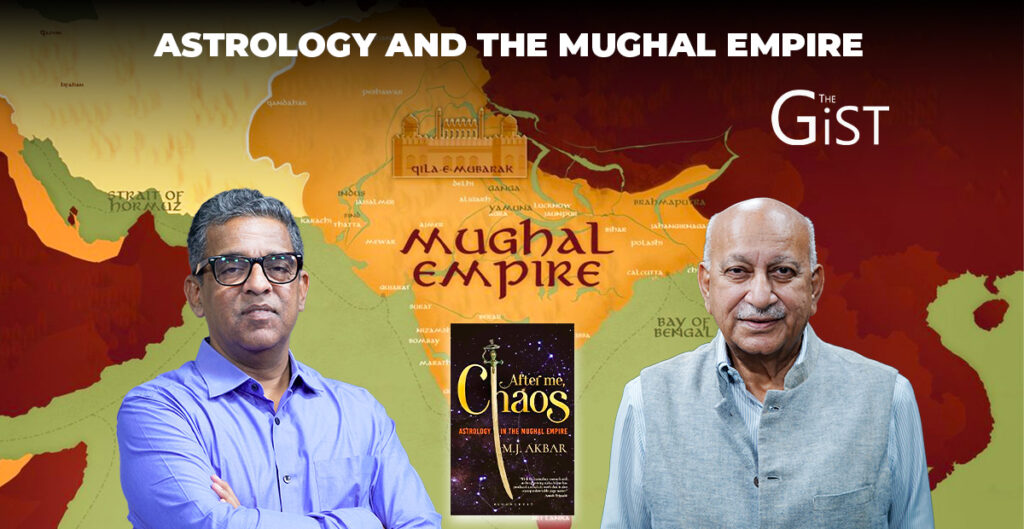
Mughal rulers had a deep, almost unshakeable belief in astrology. And it stemmed largely from culture, says MJ Akbar. His new book ‘After Me, Chaos: Astrology in the Mughal Empire’ dwells on how the ancient science shaped many decisions of each of the Mughal emperors.
Babar had limited belief in astrology but it was still there. Humayun, during whose time the empire was just 14 years old and on the verge of collapse, too was a believer in it. The real Mughal period began with Akbar and lasted over 150 years. “It was because principally one of the most important foundational value systems was that they did not confuse religion with culture,” MJ Akbar told StratNews Global Editor-in-Chief Nitin A. Gokhale. Religion can be dated to a certain time but culture is eternal, as old as humankind, he added.
The book is replete with interesting facts, sourced from autobiographies or authorised biographies of Mughal rulers and official chronicles. One of them pertains to the birth of Humayun’s son, Akbar.
Humayun was away closer to Akbar’s birth and had left behind his astrologer Maulana Chand to record the exact time of birth. The idea was to ensure there was no confusion when the child’s horoscope was prepared. Soon after, the labour pangs began. The astrologer was worried that the child may be delivered before the auspicious moment (that presumably comes once in 1000 years). He then got hold of a woman with ‘hideous’ looks and thrust her face closer to that of the empress. That proved shocking enough for the expectant mother. Her labour pain subsided and the child was finally born when the stars were in the ‘desired’ places. And the child went on to become the greatest ruler the Mughal empire had.
The book also has nuggets about Aurangzeb who too was an ardent believer in astrology but was reluctant to acknowledge it in public. He was crowned twice, and astrologers decided the timings.
Tune in to this fascinating conversation with MJ Akbar for more.
Caretaker French PM Lecornu Hints Budget Deal Could Avert Snap Election
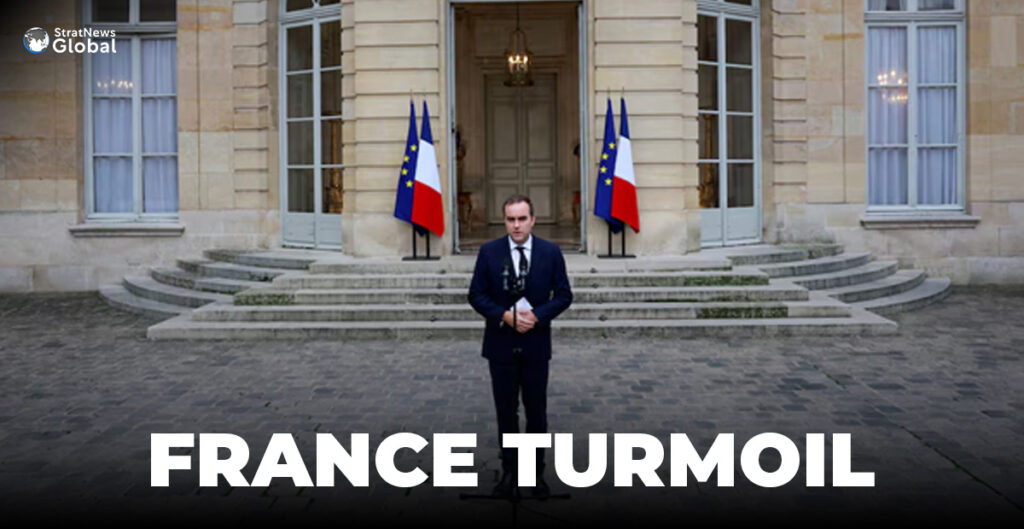
France‘s caretaker Prime Minister Sebastien Lecornu expressed cautious optimism on Wednesday, suggesting that a budget deal could be reached by year-end, reducing the likelihood of a snap election.
Lecornu’s remarks came as he was set to wrap up talks on Wednesday with various parties and report back to President Emmanuel Macron on whether he has found a way to end France’s worst political crisis in decades.
Budget Before December 31?
“There is a willingness to have a budget for France before December 31 of this year,” Lecornu told reporters after meetings on Tuesday with conservatives and centre-right parties, and before meeting the Socialist Party.
“And this willingness creates momentum and convergence, obviously, which reduces the prospects of dissolution (of parliament),” he said.
Lecornu added that he would meet Macron later on Wednesday, as planned, to discuss the results of his meetings and see if a deal was possible.
Oppositions’ Snap Election Push
Macron has faced repeated opposition calls in recent days to call snap parliamentary elections, or else resign, to end the political crisis.
Lecornu, France’s fifth prime minister in two years, tendered his and his government’s resignation on Monday, hours after it was announced on Sunday, making it the shortest-lived administration in modern France.
That came after allies and foes alike had threatened to topple the new government, with Lecornu saying that would make it impossible for him to do his job.
Last-Ditch Talks
Lecornu, a Macron loyalist, said he would now see in talks on Wednesday what concessions the Socialists and Greens would want to agree to back a budget deal.
Based on his talks so far, he said he hoped a deal could be reached on bringing France’s budget deficit down to between 4.7% and 5%, from a target of 5.4% in 2025.
(With inputs from Reuters)
Gaza-Bound Aid Flotilla Reports Interception By Israeli Forces
A fleet of ships (flotilla) trying to deliver aid to the war-torn Gaza Strip was intercepted by Israeli forces in international waters on Wednesday, the coalition behind the convoy said, marking the second such incident this week.
The Freedom Flotilla Coalition (FFC) is an international network of pro-Palestinian activist groups that organises civilian maritime missions aimed at breaking Israel’s blockade of Gaza to deliver humanitarian aid to Palestinians in the enclave.
The flotilla’s vessels and passengers were safe, had been transferred to an Israeli port and were expected to be deported promptly, Israel’s foreign ministry said in a statement on X.
“Another futile attempt to breach the legal naval blockade and enter a combat zone ended in nothing,” the ministry said.
Sumud Flotilla Interception
The incident was the second such event in recent days, after Israel had intercepted about 40 vessels and detained more than 450 activists, including Swedish climate campaigner Greta Thunberg, in an aid convoy, the Global Sumud Flotilla (GSF), that was also attempting to deliver supplies to Gaza.
Israel said it expelled 171 activists on Monday, including Thunberg, bringing the total deported so far to 341, out of 479 people it detained when it captured the flotilla attempting to break its naval blockade of Gaza.
The FFC said Israeli forces “hijacked the humanitarian fleet,” adding that the “ships were illegally intercepted … Participants – humanitarians, doctors and journalists from across the world – have been taken against their will and are being held in unknown conditions.”
“The Israeli military has no legal jurisdiction over international waters,” it said. “Our flotilla poses no harm.”
The ships carried aid worth more than $110,000 in medicines, respiratory equipment and nutritional supplies intended for Gaza’s starving hospitals, it added on its Instagram account.
Gaza authorities say about 67,000 people have been killed and the Palestinian enclave devastated by Israel’s assault since the October 7, 2023, attack by Hamas.
Israel says 1,200 people were killed and 251 taken to Gaza as hostages in the Hamas attack.
(With inputs from Reuters)
UK PM Starmer Eyes Swift India Trade Deal During High-Level Visit
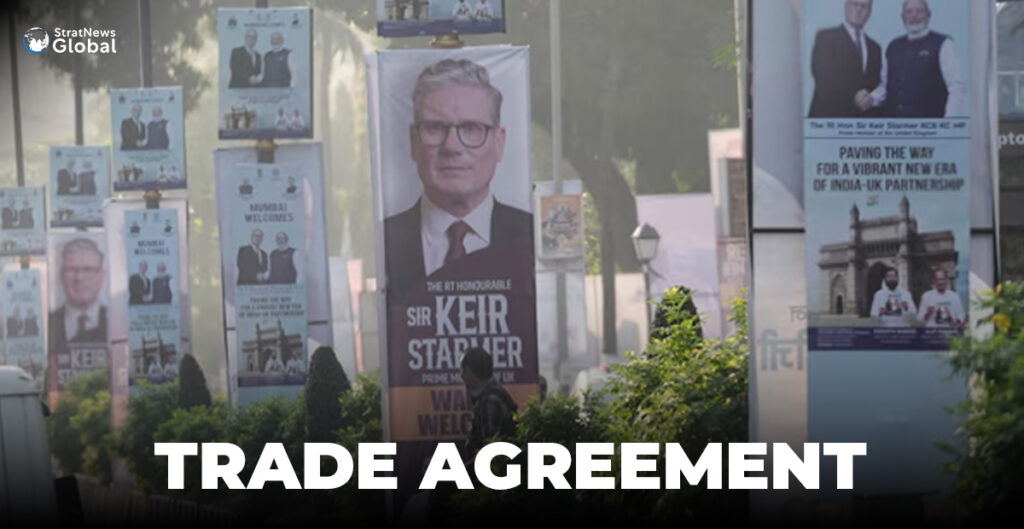
British Prime Minister Keir Starmer said he aims for an India trade deal to be implemented as soon as “humanly possible” as he kicked off a two-day visit on Wednesday, accompanied by over a hundred leaders from business, cultural, and academic sectors.
Britain and India signed a free trade agreement in July during a visit by Prime Minister Narendra Modi, sealing a deal to cut tariffs on goods from textiles to whisky and cars, and allow more market access for businesses.
Talks on the trade pact were concluded in May after three years of stop-start negotiations, with both sides hastening efforts to clinch a deal in the shadow of tariff turmoil unleashed by U.S. President Donald Trump.
The deal between the world’s fifth- and sixth-largest economies aims to increase bilateral trade by a further 25.5 billion pounds ($34 billion) by 2040.
But the government has said that the projections were a floor, not a ceiling, to the ambition of the deal, and the visit with executives from the likes of oil major BP, engine maker Rolls-Royce and telecom firm BT was aimed at maximising Britain’s biggest post-Brexit trade deal.
‘Huge Opportunities’
“It provides huge opportunities,” Starmer told the delegates of the trade mission on arrival in Mumbai, adding he had asked his team to implement the deal as “quickly as humanly possible.”
“I think the opportunities are already opening up… Our job is to make it easier for you to seize the opportunities.”
Starmer will hold bilateral talks with Modi on Thursday. Both sides have said they are looking to ratify the deal and bring it into effect within the next year.
Growth is one of Starmer’s key priorities as he tries to reverse his Labour Party’s slide in the polls, with a November fiscal budget expected to show a tricky fiscal picture.
Shevaun Haviland, Director General of the British Chambers of Commerce business group, said that Starmer should avoid taxing businesses again at the budget, but also drive growth through building ties with countries like India and the Gulf, where trade talks are ongoing.
“We’ve got partners all over the world, and that should be our role,” she told reporters, adding that Britain could seek free trade deals while also dealing with fallout from a global trade war and negotiating to lower U.S. tariffs, saying, “I think that the government is big enough to do both.”
(With inputs from Reuters)
Japan’s Likely Next Premier Takaichi Faces Ruling Coalition Backlash
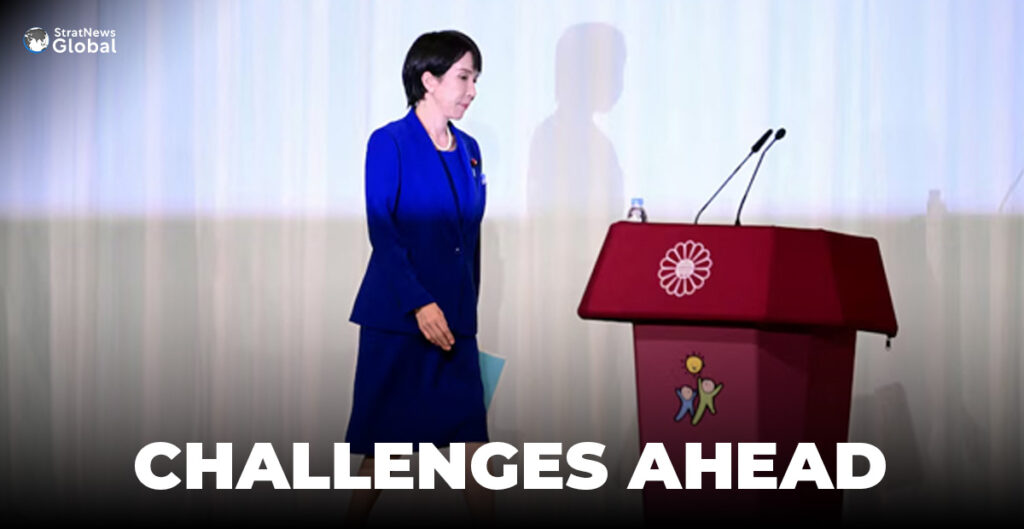
Japan’s likely next prime minister, Sanae Takaichi, is already encountering criticism from her ruling party’s long-standing coalition partner, a conflict that could delay—or, in extreme cases, threaten—her premiership.
Hardline conservative Takaichi, selected by the Liberal Democratic Party as its new head in a weekend vote, held a meeting on Tuesday with the leader of their moderate partner Komeito to discuss their concerns about some of her positions.
While Takaichi is widely expected to win approval in parliament to become Japan’s first female premier later this month, it is not guaranteed, as the ruling coalition does not have a majority.
If Komeito splits, Takaichi may seek to broker alliances with other parties, including the fiscally-expansionist Democratic Party for the People (DPP), further fraying investor nerves about one of the world’s most indebted countries.
“Everybody does think that Takaichi probably has the upper hand,” said Kei Okamura, managing director at asset manager Neuberger Berman in Tokyo. “It’s just a matter of how big a hand that is.”
A vote in parliament had been expected to take place on October 15, but is likely to be pushed back as coalition talks rumble on, LDP sources said. U.S. President Donald Trump is due to visit Japan at the end of the month.
Opposition Seeks Alternative Candidate
Komeito, a socially liberal party affiliated with a lay Buddhist organisation, has been in an alliance with the LDP since 1999 and is often seen as a brake on its more hawkish leanings, such as its step back from pacifism.
The party has criticised Takaichi’s tough language on foreigners and visits to the Yasakuni Shrine – seen by neighbours as a symbol of Japan’s past militarism. It also wants the LDP to take a tougher response to a fundraising scandal that has rocked the party.
No Conclusion Reached
After Tuesday’s talks, Komeito leader Tetsuo Saito told reporters he had raised these issues with Takaichi in talks that lasted around 90 minutes, but reached no conclusion.
Meanwhile, the main opposition Constitutional Democratic Party (CDP) has called for other parties to rally behind an alternative candidate for prime minister.
If that happens, the DPP’s charismatic leader Yuichiro Tamaki, an advocate for major stimulus and tax cuts, would be a strong candidate, local media cited the CDP’s secretary general, Jun Azumi, as saying on Wednesday.
Opposition parties can put forward their own candidates when parliament meets to vote on the next premier.
Any candidate who secures a simple majority in the first round wins approval. If not, a run-off poll follows between the two candidates with the most votes.
However, getting agreement between a disparate band of opposition parties to challenge Takaichi remains a remote possibility, political analysts say.
Takaichi “is almost nailed on”, said Paul Nadeau, a political science associate professor at Temple University in Tokyo.
(With inputs from Reuters)
Trump Considers Scrapping Major Clean Energy Project Funds
The Trump administration is reviewing plans to withdraw billions of dollars in federal support for clean energy projects, including funding for auto manufacturing and carbon capture, a list of targeted programmes has revealed.
Projects on the list include two major direct air capture hubs that received billion-dollar awards from former President Joe Biden’s administration, including one that involves oil company Occidental.
Semafor reported the list earlier and said it could impact $12 billion in projects.
Also on the list is $500 million awarded last year to General Motors to convert its Lansing Grand River Assembly Plant in Michigan to EVs; $335 million for Stellantis to convert the shuttered Belvidere Assembly plant in Illinois to build mid-size electric trucks; and $250 million for Stellantis to convert its Indiana Transmission Plant in Kokomo to produce EV components.
Last week, the Department of Energy announced plans to cancel $7.56 billion in financing for hundreds of clean energy projects it said would not provide sufficient returns to taxpayers.
The Energy Department is also considering rescinding a $32 million award to Hyundai Mobis which operates a Stellantis supplier in Ohio to produce plug-in hybrid components and battery packs and $89 million for Harley-Davidson expand its York, Pennsylvania plant for EV motorcycle manufacturing.
Also on the list is a $80 million award for Blue Bird to convert a former Georgia plant to build electric school buses; and $75 million to engine company Cummins to convert part of an existing Indiana plant to make zero-emission components and electric powertrain systems.
The DOE also is considering cutting $208 million for the Volvo Group to upgrade plants in Maryland, Virginia and Pennsylvania to increase EV production capacity.
Future Plans Of The Energy Department
The Energy Department said in a statement it “continues to conduct an individualized and thorough review of financial awards made by the previous administration. No determinations have been made other than what has been previously announced.”
Occidental, GM, Harley-Davidson and Stellantis declined or did not immediately comment.
The total sum of the grants in question was uncertain. The list included some projects that DOE said in May it canceled.
The previous cancellations included $331 million at an olefins plant carbon reduction at Exxon’s Baytown, Texas refinery; $500 million to Heidelberg Materials, US in Louisiana; and $375 million to Eastman Chemical Company in Texas
White House budget director Russell Vought said in a post on X last week that the administration would terminate nearly $8 billion in climate-related funding in 16 Democratic-led states, including California and New York.
(With inputs from Reuters)
Hamas Claims It Submitted List Of Israelis And Palestinians For Swap Deal
Hamas said on Wednesday that it had submitted a list of Israeli hostages and Palestinian prisoners for a swap deal and expressed optimism about Egypt-based talks under U.S. President Donald Trump’s Gaza peace plan.
Negotiations are focused on the mechanisms to halt the conflict, withdrawal of Israeli forces from Gaza and the swap deal, the Palestinian militant group added.
The timing of the implementation of the first phase of President Donald Trump’s 20-point initiative has not been agreed upon so far during talks in the Egyptian resort town of Sharm el-Sheikh, said a Palestinian source close to the negotiations.
‘Optimistic’ Trump
Trump expressed optimism about progress toward a deal on Tuesday, the second anniversary of Hamas’ attack on Israel that triggered Israel’s assault on Gaza.
A U.S. team, including special envoy Steve Witkoff and Jared Kushner, Trump’s son-in-law who served as Middle East envoy during Trump’s first term, will take part in the talks over a plan that has come closest to silencing the guns.
But officials on all sides urged caution over the prospects for a rapid agreement.
Israeli Strategic Affairs Minister Ron Dermer – Prime Minister Benjamin Netanyahu’s close confidant – was due to join the talks on Wednesday afternoon, according to an Israeli official.
Qatari Prime Minister Sheikh Mohammed bin Abdulrahman al-Thani, a key mediator, and Turkish spymaster Ibrahim Kalin, will also take part in the ceasefire negotiations in Sharm el-Sheikh on Wednesday, according to sources familiar with the matter.
‘Permanent, Comprehensive Ceasefire’
Hamas wants a permanent, comprehensive ceasefire, a complete pullout of Israeli forces and the immediate start of a comprehensive reconstruction process under the supervision of a Palestinian “national technocratic body”.
Israel, for its part, wants Hamas to disarm, which the group rejects.
U.S. officials suggest they want to initially focus talks on a halt to the fighting and the logistics of how the Israeli hostages in Gaza and Palestinian detainees in Israel would be freed.
In the absence of a ceasefire, Israel has pressed on with its offensive in Gaza, increasing its international isolation.
Global outrage has mounted against Israel’s assault, which has internally displaced nearly Gaza’s entire population and set off a starvation crisis. Multiple rights experts, scholars and a U.N. inquiry say it amounts to genocide. Israel calls its actions self-defence after the 2023 Hamas attack.
According to Gaza authorities, some 67,000 people have been killed in Israel’s assault. It followed the October 7, 2023, attack by Hamas, when 1,200 people were killed and 251 taken to Gaza as hostages, according to Israel’s tallies.
(With inputs from Reuters)
Pakistan Most Influenced By China, Says Report, India Least Dependent
Pakistan heads a list of 10 countries considered the most influenced by China, according to the first ever study on the global influence wielded by the People’s Republic. Comparatively, India ranks at the bottom when it comes to China’s influence.
The study called the China Index published by China In The World Network (CITW) and partnered by the Taiwan-based CSO Doublethink Lab, collects data on China’s global influence to create a comparative geographical analysis.
“The China Index serves as a tool for societies to monitor their country’s relationship with China, uncover its influence and advocate for responsible bilateral ties,” the study says.
Doublethink Labs is an independent non-profit staffed by a team of 20 professionals structured across administration, Digital Intelligence, Global Research and Social Engagement. They work with civil society organisations across the Indo-Pacific and connect with partners in over 100 countries through the CITW network.
The China Index study covers 101 countries and nine thematic domains: Academia, Domestic Politics, Economy, Foreign policy, Law Enforcement, Media, Military, Society and Technology.
It also looks at Exposure, Pressure and Alignment to measure China’s influence. How does economic dependence translate into influence, what about media partnerships that convey a certain message and image about China, also are there financial or political benefits.
Based on this, the China Index puts Pakistan at the top of the table of 10 countries citing its long standing strategic partnership with China, its deep integration into the BRI, close military and security partnerships and heavy reliance on Chinese digital and telecom infrastructure.
It says that Pakistan is most influenced by China in the domains of Technology, Military and Foreign Policy.
No.2 on the list is Cambodia because of direct support from Beijing, heavy investments in infrastructure and technology, and security initiatives that have strengthened ties between the law enforcement agencies of the two countries.
Third on the list is Singapore because of the Chinese language media presence, tech and trade integration with Chinese firms and the strong academic partnerships with Chinese academia. China has made deep inroads into Singaporean society and also in terms of technology.
Indonesia is 7th on the list due to strong military collaboration including joint exercises, strong economic ties given China is a major investor and Beijing’s role in digital and infrastructure development.
Of the 101 countries surveyed in the China Index, India figures at 100 on the dependence table with El Salvador at the very bottom. While there are indications of a thaw in the India-China relationship, there is nothing to suggest the distrust that has been growing over a decade is diminishing.
Rather, India is still to make up its mind on opening the doors to Chinese investment, while the latter continues to hold back despite assurances on supply of rare earth magnets. Its close ties to the Pakistani military and opposition to the listing of terrorist groups in the United Nations indicates China sees India as a rival in Asia and therefore its rise must be stopped, delayed or diverted.