

Support us by contributing to StratNewsGlobal on the following UPI ID
ultramodern@hdfcbank

Strategic affairs is our game, South Asia and beyond our playground. Put together by an experienced team led by Nitin A. Gokhale. Our focus is on strategic affairs, foreign policy and international relations, with higher quality reportage, analysis and commentary with new tie-ups across the South Asian region.
You can support our endeavours. Visit us at www.stratnewsglobal.com and follow us on YouTube, Twitter, Facebook and Instagram.
र 500 per month
र 1000 per month
र 5000 per year
र 10000 per year
Donate an amount of your choice
र 500 per month
Donate र 500 per month

र 1000 per month
Donate र 1000 per month
र 5000 per year
Donate र 5,000 per year
र 10000 per year
Donate र 10,000 per year
Donate an amount of your choice
Donate an amount of your choice
What Does America’s Sale of AIM-120 Missiles To Pakistan Mean To India?
Pakistan may soon receive advanced AIM-120 AMRAAM missiles from the United States, a move that coincides with improving ties between Washington and Islamabad. The development follows the U.S. Department of War’s (formerly Department of Defence) notification modifying a previous contract with defence manufacturer Raytheon to include Pakistan among its buyers for the state-of-the-art air-to-air missiles.
An NDTV report states that the contract modification, valued at over USD 41.6 million, is part of a larger deal worth more than USD 2.5 billion. It covers the production of AIM-120C8 and D3 variants for multiple foreign military sales recipients, including the United Kingdom, Poland, Pakistan, Germany, Finland, Australia, Japan, and several others. However, as per an India Today report, Islamabad is the only one with ties to China. Delivery under the contract is expected to be completed by May 2030, according to the notification.
Implications For India
An NDTV article states that while the exact number of AIM-120 missiles that Pakistan may receive remains unclear, the move has fuelled speculation about possible upgrades to the Pakistan Air Force’s (PAF) F-16 fleet. The AIM-120 is compatible primarily with the F-16, the PAF’s mainstay fighter. The Express Tribune, a Pakistani daily report, suggests that the F-16 fighter jet was used during the February 2019 aerial engagement between India and Pakistan, when an IAF MiG-21 flown by Wing Commander Abhinandan Varthaman was shot down.
Defence analyst publication Quwa notes that Pakistan currently operates the AIM-120C5 variant, acquired in 2010, along with its F-16 Block 52 fighters. The C8 variant reportedly represents a major improvement over earlier models and is the export equivalent of the AIM-120D, used by the U.S. Air Force.
Renewed Pakistan-USA Ties
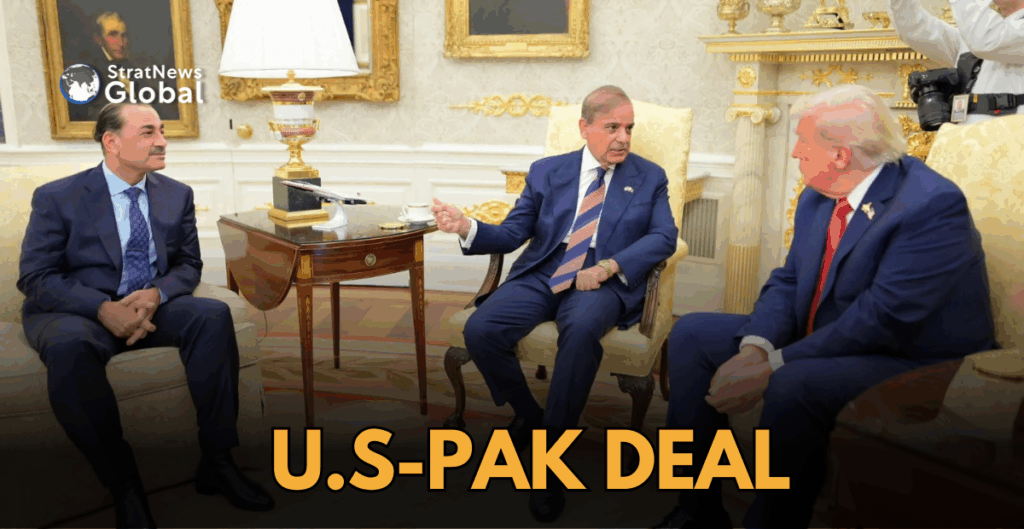
The approval comes just weeks after U.S. President Donald Trump hosted Pakistan’s Prime Minister Shehbaz Sharif and Army Chief Asim Munir at the White House, signalling a renewed phase of engagement between the two countries. The missile deal follows Pakistan’s dispatch of mineral samples to Washington under a rare earths cooperation agreement — a sign of deepening strategic exchanges.
Islamabad has publicly credited President Trump for mediating the ceasefire between the two nuclear-armed neighbours, although New Delhi maintains that the truce followed direct military talks between their respective Directors General of Military Operations.
Lazlo Krasznahorkai Wins 2025 Nobel Prize In Literature
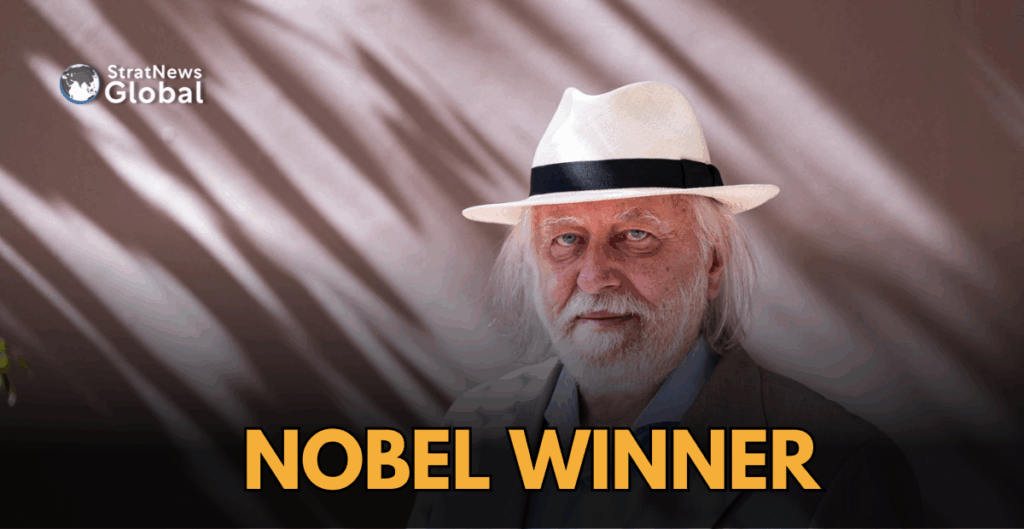
Hungarian writer Laszlo Krasznahorkai won the 2025 Nobel Prize in Literature on Thursday, “for his compelling and visionary oeuvre that, in the midst of apocalyptic terror, reaffirms the power of art”.
“Laszlo Krasznahorkai is a great epic writer in the Central European tradition that extends through Kafka to Thomas Bernhard, and is characterised by absurdism and grotesque excess,” the Swedish Academy, which awards the prize, said in a statement.
“But there are more strings to his bow, and he also looks to the East in adopting a more contemplative, finely calibrated tone.”
Asia Travels
The settings of Krasznahorkai’s novels move across central Europe’s remote villages and towns, from Hungary to Germany, before skipping to the Far East, where his travels to China and Japan left deep-seated impressions on Krasznahorkai.
The American critic Susan Sontag crowned Krasznahorkai contemporary literature’s “master of the apocalypse”, the Academy said, “a judgement she arrived at after having read the author’s second book, Melancholy of Resistance”.
About Krasznahorkai
Krasznahorkai is the second Hungarian to win the prize, worth 11 million Swedish crowns ($1.2 million), after Imre Kertész in 2002. The newest Nobel prize winner was born in the small town of Gyula in southeast Hungary, near the Romanian border.
His breakthrough 1985 novel, Satantango, is set in a similarly remote rural area and became a literary sensation in Hungary.
Krasznahorkai also had a close creative partnership with Hungarian filmmaker Bela Tarr. Several of his works have been adapted into films by Tarr, including “Satantango”, which runs to more than seven hours, and “The Werckmeister Harmonies”.
Krasznahorkai’s writing may resonate with readers immersed in news from Russia’s war in Ukraine or the Palestinian-Israeli conflict.
“We seem to have entered the 21st century in a more hostile and bleak environment than we hoped for at the end of the 20th,” said Jason Whittaker, Professor of Communications at the University of Lincoln.
“So actually … some of the bleak and darkly comic elements of books such as Satantango actually will resonate with many more readers than previously.”
(with inputs from Reuters)
Pope Leo Echoes Francis In Critique Of Trump’s Border Policies
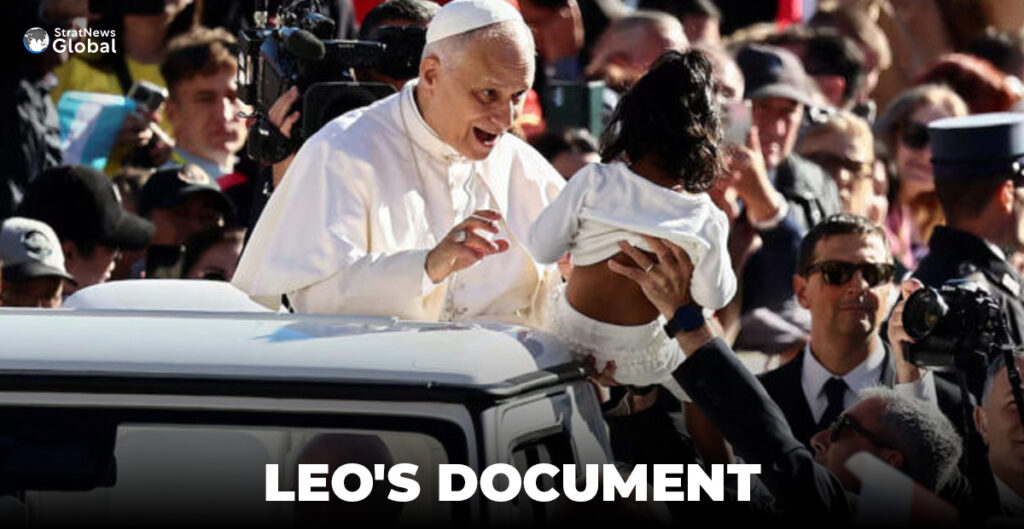
In his first major statement released on Thursday, Pope Leo made an urgent appeal for global support for immigrants, invoking one of the late Pope Francis’ strongest criticisms of US President Donald Trump’s anti-immigration policies.
Leo’s document, known as an apostolic exhortation, is focused on the needs of the world’s poor. It calls for widespread changes to the global market system to address rising inequality and to help people living paycheck-to-paycheck.
The 104-page text started as a writing project by Francis, who was unable to complete it before his death in April after 12 years leading the global Church of 1.4 billion people. It was finished by Leo, the first US pope.
“I am happy to make this document my own – adding some reflections – and to issue it at the beginning of my own pontificate,” Leo writes at the beginning of the text.
Cardinal Michael Czerny, a senior adviser to both Francis and Leo, said that while the new document was started by the late pope it represents Leo’s positions.
“This is Pope Leo’s document,” Czerny told a Vatican press conference.
Criticism Of Border Walls
Elected in May to replace Francis, Leo has shown a much more reserved style than his predecessor, who frequently criticised the Trump administration.
But Leo has been ramping up his disapproval in recent weeks, drawing heated backlash from some prominent conservative Catholics.
“The Church, like a mother, accompanies those who are walking,” the pontiff writes in the document, titled “Dilexi te” (I have loved you). “She knows that in every rejected migrant, it is Christ himself who knocks at the door of the community.”
“Where the world sees threats, (the Church) sees children; where walls are built, she builds bridges,” Leo says, referencing Francis’ 2016 criticism of Trump as “not Christian” because of the president’s plan in his first term to build a wall on the US-Mexico border.
The White House has said Trump was elected based on his many promises, including to deport “criminal illegal aliens”.
Warns Of ‘Cesspool’ Without Moral Dignity
The number of people living in poverty “should constantly weigh upon our consciences”, the document said.
“There is no shortage of theories attempting to justify the present state of affairs or to explain that economic thinking requires us to wait for invisible market forces to resolve everything,” it said.
“The poor are promised only a few ‘drops’ that trickle down, until the next global crisis brings things back to where they were.”
The document signals that Leo shares some of the same priorities of Francis, who shunned many of the trappings of the papacy and frequently criticised the global market system as not caring for society’s most vulnerable people.
“The illusion of happiness derived from a comfortable life pushes many people towards a vision of life centered on the accumulation of wealth and social success at all costs, even at the expense of others,” the text says.
“Either we regain our moral and spiritual dignity or we fall into a cesspool.”
(With inputs from Reuters)
Chinese Booster Shot For Indian Pharma Exports A Market Trap?
“Spoke to my friend President Trump and congratulated him on the success of the historic Gaza peace plan. Also reviewed the good progress achieved in trade negotiations. Agreed to stay in close touch in the coming weeks.”
That post from Prime Minister Narendra Modi’s X handle confirmed that it’s not all gloom and doom on the India-US front, and that the two sides continue to talk on Trump’s 50% tariffs on Indian goods.
Did the Chinese anticipate this? Check out this news story in The Pharma Letter, a London-based publication providing news and analysis of the global pharmaceutical and biotech industries.
China unlocks $15 billion market for Indian pharma with tariff cut, ran the headline of a report dated dated Oct 6. The report said:
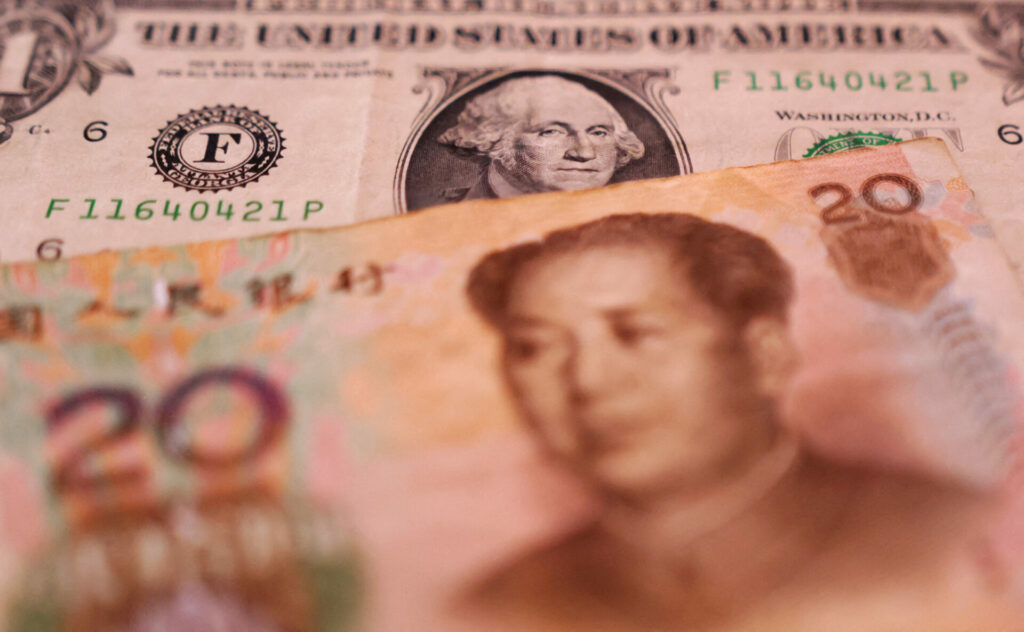
“China has announced the immediate removal of the 30% import duty on Indian pharmaceutical products… the Chinese policy shift is expected to redirect up to 30% of India’s US-bound pharma shipments towards China.”
It noted the timing of China’s announcement, that India’s $50 billion pharma export sector is “battling a steep 100% tariff on branded and patented drug imports imposed by the US.”
Abhijit Das, who specialised in trade issues during his years in government, told StratNewsGlobal that “China is positioning itself ahead of a possible meeting between Modi and Trump later this month.
“While there is no word as yet to suggest a meeting will happen in Kuala Lumpur, Malaysia, the Chinese would like to preempt that possibility and the likelihood of a breakthrough in their relationship, especially over US tariffs on Indian goods.”
In his view the Chinese move to cut import duties is good for India but do note that Indian pharma buys a lot of precursors from China that are processed into medicines of various kinds.
Opening up of the Chinese market will help India’s domestic pharma industry, but does that also spell greater dependence on an opaque, unpredictable and adversarial nation?
Das believes China may also be signalling its readiness to address India’s ballooning $100 billion trade deficit with that country. India has accused of China using tariff and non-tariff measures to keep Indian products out and has demanded a level playing field, but to no avail.
The Chinese announcement comes ahead of Russian President Putin’s direction to his government to boost the import of Indian drugs. The Pharma Letter notes “a high-level bilateral meeting late last month between JP Nadda, India’s health minister and Nikolai Patrushev, deputy prime minister of the Russian Federation.”
Better times on the horizon for Indian pharma it would appear, but as the Chinese have demonstrated so many times in the past, there are no free lunches.
China could demand something else in return, less barriers to its goods, freer flow of Chinese investments in sectors India may consider strategic, maybe even a free trade agreement at a time when India has sealed two and is negotiating for at least two more (US, Europe).
Last month, Commerce Minister Piyush Goyal was quoted in the media as saying, “I will allow time to take a decision (on Press Note 3 changes). I will not preempt what will happen in the future.”
Press Note 3 was implemented in April 2020 following the Galwan Valley clashes between India and China. It was aimed to prevent any “opportunistic takeover or acquisition” of Indian companies especially those in strategic sectors (defence, telecom, digital etc).”
Commerce Ministry officials were quoted by Moneycontrol as confirming that “The government is considering changes in certain sectors, particularly solar, and those where the domestic industry has sought relaxations. The focus is to balance investment inflows while safeguarding sensitive areas.”
FDI norms for sectors like IT and data-driven services are also being examined to ensure there are no strategic or security risks before opening up further, Moneycontrol reported. The green signal will come from the prime minister.
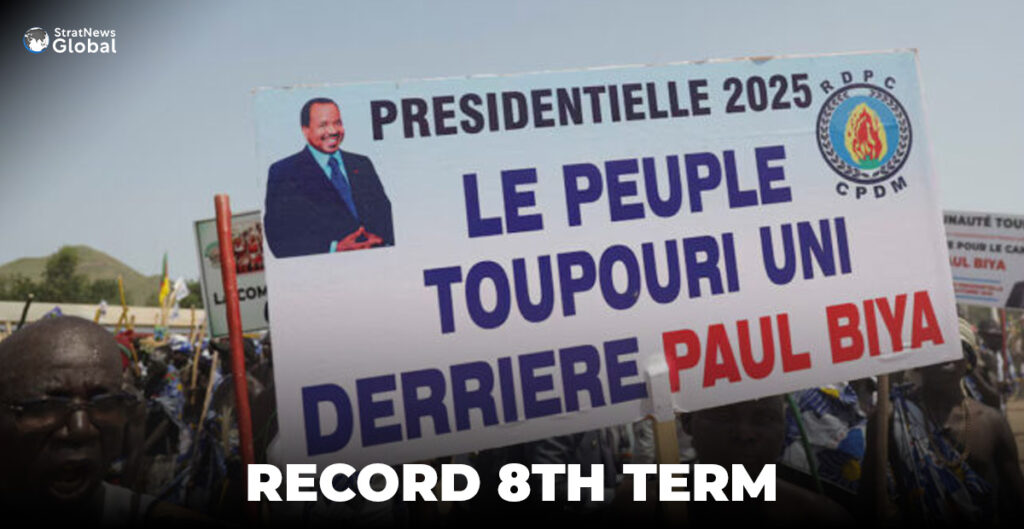
Cameroon: Biya Seeks Eighth Term Amid Rising Dissent
Cameroon’s long-serving President Paul Biya is set to contest a historic eighth term on Sunday, aiming to extend his decades-long grip on power despite growing public frustration and a strong challenge from a former government spokesperson.
Biya took office in 1982 and has held a tight grip on power ever since, doing away with the presidential term limit in 2008 and winning re-election by comfortable margins.
His government has denied claims of ballot stuffing and manipulating the courts to sideline opponents.
Maurice Kamto, Biya’s top challenger in the 2018 election, has been disqualified this time and the remaining contenders have failed to rally around a unity candidate, boosting the president’s victory chances.
Unusual Censorship
Biya rarely appears in public, fuelling consistent speculation that he is in poor health. The government last year banned public discussion of the topic.
He has attended one campaign rally this year, on Tuesday in the northern city of Maroua, where he thanked people for their support “despite the false omens, the slander, the fabrications”.
He acknowledged complaints about basic services like roads and electricity in the cocoa and oil-producing country.
“I am well aware of the problems that are of concern to you. I am aware of the unfulfilled expectations that make you doubt the future,” he said. “I can assure you that these problems are not impossible to overcome.”
Ex Spokesperson Becomes Challenger
The challenger drawing the biggest crowds is Issa Tchiroma Bakary, a former government spokesperson who previously served as employment minister but announced in June that he was defecting.
Tchiroma has accused Biya of mismanaging Cameroon’s resource wealth, leaving it dependent on international financial institutions.
“Their failure is everywhere,” he said of the ruling party while campaigning. All Cameroonians are fed up with their management.”
It is unclear whether the energy of Tchiroma’s rallies will translate into votes.
“One is left with the impression that if this mobilisation is transferred into the ballot box then change is coming,” said Pippie Hugues, a Cameroonian political analyst.
“However, the reverse might be true. We have seen such mobilisation in 2018, and nothing changed.”
Raoul Sumo Tayo, senior researcher with the Pretoria-based Institute for Security Studies think tank, said Tchiroma might perform well in cities but would struggle in rural areas where the ruling party has a strong turnout operation fuelled by patronage.
“The ruling party is likely to be declared the winner of the election,” he said. “Nevertheless, Tchiroma has demonstrated a strong ability to mobilise support to contest the results.”
Twelve candidates are running in the election, and Cameroon does not hold run-offs, meaning the top vote-getter on Sunday wins.
Results must be announced within 15 days.
(With inputs from Reuters)
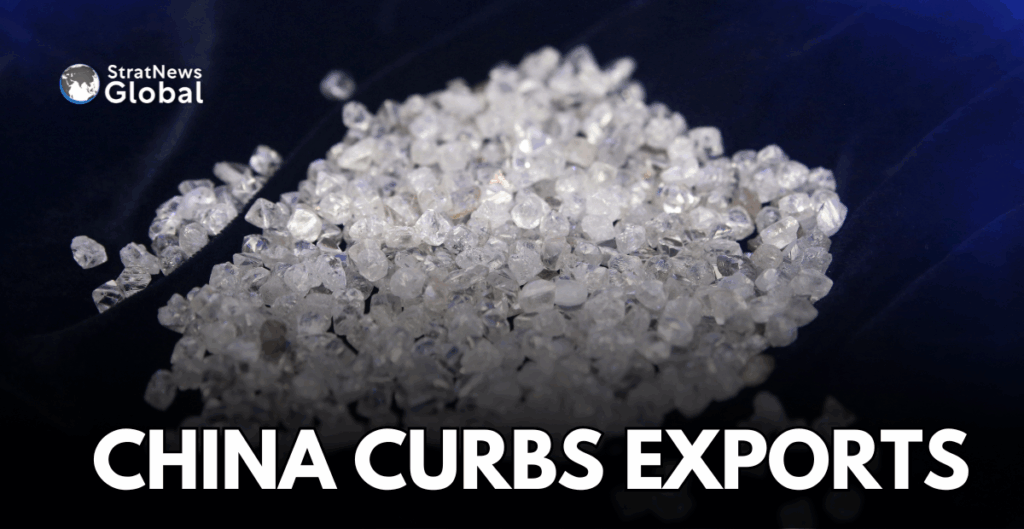
China Tightens Grip Over High Tech, Bans Artificial Diamond Export
China on Thursday announced export curbs on some types of artificial diamonds set to take effect just before the U.S.-China tariff truce is scheduled to end. This move will further tighten Beijing’s grip over high-tech manufacturing supply chains.
Certain artificial diamond micropowders, single crystals, wire saws and grinding wheels will require an export licence from November 8, China’s commerce ministry and customs authority said in a statement.
Beijing’s Stronghold
Diamond, one of the hardest known materials, is crucial to high-precision manufacturing. It is commonly used for ultra-fine polishing of semiconductors, machining hard metals and ceramics in quantum devices, and dissipating heat in advanced electronic systems.
Artificial diamonds also have dual-use military applications, and are used to tool munitions and in the production of radar components.
In a separate statement, the two authorities also announced export controls on certain lithium-ion batteries, key manufacturing equipment, and artificial graphite anode materials, measures that could further strengthen Beijing’s hold over the global clean energy supply chain.
The world’s second-largest economy on Thursday also added five new rare earth elements to its export control list, as it looks to strengthen its negotiating position amid trade tensions with the United States.
Protecting ‘National Security’
Citing a need to protect its “national security,” the raft of export control curbs comes ahead of an expected meeting later this month between U.S. President Donald Trump and his Chinese counterpart, Xi Jinping.
The two superpowers appear to be struggling to chart a path just before the end of their current tariff truce, a 90-day pause from August 11 that ends around November 9. U.S. and Chinese officials met after last month’s Madrid summit, widely viewed as a breakthrough for its TikTok deal, to discuss technical issues that predated the meeting.
China exported $30 million worth of the types of artificial diamonds and related equipment targeted by the new export controls to the U.S. in 2024, according to Chinese customs data. The U.S. was the third-largest buyer of diamond powders, behind India and South Korea, and the third-largest buyer of grinding wheels, behind Vietnam and India.
(with inputs from Reuters)
Musk Reaches Deal With Ex-Twitter Executives
Elon Musk and X Corp have reached a settlement in a lawsuit by four former top executives at Twitter, including former CEO Parag Agrawal, who claim they were not paid $128 million in promised severance pay after Musk acquired the social media company and fired them.
The terms of the settlement, which were first announced in a filing in San Francisco federal court last week, were not disclosed. A federal judge on October 1 pushed back filing deadlines and a hearing in the case so the settlement can be finalised.
In August, X agreed to settle a separate lawsuit by rank-and-file Twitter employees who lost their jobs during mass layoffs and claimed they were owed $500 million in unpaid severance.
The cases are among a series of legal challenges that Musk, the world’s richest person, has faced after he acquired Twitter for $44 billion in 2022, cut more than half of its workforce and renamed it X.
When Twitter Became X
X and lawyers for the former Twitter executives did not immediately respond to requests for comment. The plaintiffs are Agrawal; Ned Segal, Twitter’s former chief financial officer; Vijaya Gadde, its former chief legal officer; and Sean Edgett, its former general counsel.
The former executives say that Musk falsely accused them of misconduct and forced them out of Twitter after they sued him for attempting to renege on his offer to purchase the company.
Musk then denied the executives the severance pay they had been promised for years before he acquired Twitter, according to the lawsuit. The plaintiffs say they each are owed one year’s salary and hundreds of thousands of dollars’ worth of stock options.
Musk and X have denied wrongdoing and said the executives were fired over their performance.
(with inputs from Reuters)
Macron Seeks Sixth French PM In Under Two Years To Navigate Budget Crisis
French President Emmanuel Macron on Thursday began searching for his sixth prime minister in less than two years, aiming to find a leader capable of guiding the budget through a legislature beset by crisis.
Macron’s office said on Wednesday he would appoint a new prime minister within 48 hours, after outgoing Prime Minister Sebastien Lecornu held two days of talks to seek a way out of France’s worst political crisis in decades.
The political paralysis has made it deeply challenging to pass a belt-tightening budget, demanded by investors increasingly worried by France’s yawning deficit.
“The question that is posed today is whether there are enough people who are responsible,” government spokesperson Aurore Berge told RTL radio. “I think this is the last chance.”
Lecornu Says A Budget Deal Is Possible
Lecornu tendered his and his government’s resignation on Monday, hours after announcing the cabinet line-up, making it the shortest-lived administration in modern France.
He said in a television interview on Wednesday that, during talks, Macron asked him to hold with party leaders after he resigned, he had learned that a majority of lawmakers opposed holding a snap parliamentary election and that there was a path, even if a tough one, to passing a budget by year-end.
Another key issue is Macron’s 2023 pension overhaul, which gradually raises the retirement age from 62 to 64. Members of the left have called for the law to be repealed or suspended.
What’s Next?
For now, rival parties have largely stuck to their views on how to proceed, and there has been no indication of who could be the next prime minister.
The Socialists said Macron should appoint a prime minister from the left. The Republicains, who are part of the outgoing government, said they would not support a leftist premier.
Meanwhile, Manuel Bompard, of the hard-left France Unbowed (LFI), repeated his calls for Macron to resign. Jordan Bardella, president of the far-right National Rally (RN), reiterated his party’s demand for a new parliamentary election.
On the streets of Paris, people said they hoped for more stability.
“Well, having a prime minister who stays in office would be a good start, I think,” said Mathilde Marcel, 40. “And then, obviously, things need to move forward and reforms need to be implemented.”
The crisis has caused jitters on financial markets, but bonds held onto gains from the day before on optimism that France can avoid a snap parliamentary election and agree on a budget.
(With inputs from Reuters)
Trump’s National Guard Deployments Face Legal Challenges In Two States
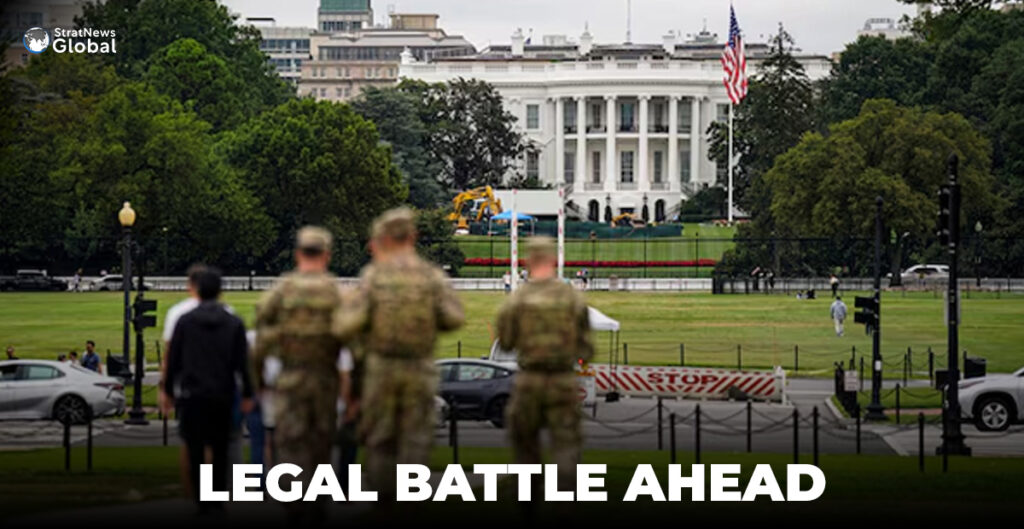
President Donald Trump’s unprecedented National Guard deployments face more scrutiny on Thursday, with two court hearings in separate U.S. states as governors opposing the militarisation of their cities challenge the federal government.
A federal judge in Illinois will decide whether to temporarily stop the National Guard from deploying to Chicago, and an appeals court in California will review Trump’s initial appeal over his decision to send troops to Portland, Oregon, which a federal judge blocked over the weekend.
A coalition of 24 states on Wednesday filed a brief in support of Oregon and California’s lawsuit opposing the National Guard deployment in Portland. In urging the appeals court to uphold the lower court, the states argued that the deployment defies the U.S. Constitution, overrides the state of Oregon’s authority, and endangers communities in Portland.
As the legal battles play out, 500 National Guard troops stand at the ready near Chicago.
US National Guard
National Guard troops are state-based militia forces that, despite wearing U.S. Army uniforms, answer to their governors except when called into federal service. They are more typically deployed to assist with natural disasters.
Trump says the troops are necessary to protect federal Immigration and Customs Enforcement officers, who he says are under threat from street protesters and Democratic elected officials who have refused to cooperate with the White House. Democratic governors and mayors, in turn, have accused the president of manufacturing a crisis out of political motivations.
Trump is facing four lawsuits over his troop deployments to Portland, Los Angeles, Washington, D.C. and Chicago. The deployments have been ruled illegal by the two trial courts that have reached early decisions, as judges ruled that protests in Los Angeles and Portland did not warrant a military response.
But the California court has so far been overruled by the same appeals court that will oversee the Portland case, saying the president’s military decisions must be given great deference.
Trump officials have branded as violent the street protests against his immigration crackdown, though the demonstrations have mostly been small and peaceful, especially when compared to the 2020 demonstrations that erupted across the country following the killing of George Floyd by Minneapolis police.
Outside an ICE detention facility in Broadview, Illinois, about 12 miles (20 km) west of Chicago, a dozen protesters gathered outside on Wednesday evening, smoking, vaping and eating burgers as they awaited the arrival of the National Guard.
National Guard members from Texas and Illinois were expected to arrive to protect the facility in support of ICE officers, who have fired pepper balls, tear gas and rubber bullets at demonstrators.
Protesters raised concerns that the National Guard troops would escalate tensions.
“I guess I’m ready to get hit by a live round,” said Will Creutz, 22, an administrative assistant from Chicago whose body is already bruised from pepper ball strikes. “When I survive this and I’m able to think about what I did when something horrible was happening, I will be able to sleep peacefully knowing that I did something.”
Several hundred people marched in downtown Chicago on Wednesday evening, protesting the deployment.
In addition to the usual slate of protest chants, people shouted “Todos somos Silverio” or “We are all Silverio” after the fatal shooting of immigrant Silverio Villegas Gonzalez by ICE agents in a Chicago suburb in September.
The Chicago police presence was relatively light at the event, with no obvious sign of federal agents.
(With inputs from Reuters)
Trump Leaves Allies Uncertain Over Additional Russia Sanctions, EU Envoy Says
Sanctions are clearly impacting Russia’s economy, but United States President Donald Trump is leaving allies uncertain about whether he will approve additional measures, even though Washington is a party to the G7 agreement to coordinate actions against the Kremlin, the EU’s sanctions chief told Reuters.
Last week, the Group of Seven (G7) nations – the U.S., Japan, Canada, Britain, France, Germany and Italy – agreed to coordinate and intensify sanctions against Moscow over its war in Ukraine by targeting countries that buy Russian oil and thereby enable sanctions circumvention.
Those countries were not named, but India, China, NATO-member Turkey and others have significantly increased their Russian crude purchases since Moscow invaded Ukraine in February 2022.
The U.S. has imposed an extra 25% tariff on imports from India to pressure New Delhi to halt its purchases of discounted Russian crude oil, bringing total punitive duties on Indian goods to 50%.
But Washington made no such move towards other Russian crude importers. It is also not clear if Washington would support any further sanctions against the Kremlin.
“That’s sort of the great unknown of the situation,” EU sanctions envoy David O’Sullivan told Reuters in an interview.
“There are signs he (Trump) is losing patience with President Putin … but whether that will lead him to conclude that America should put additional sanctions on Russia is an open question,” he said, adding the U.S. needed to catch up to the rest of the G7 on sanctions after its earlier focus on peace between Russia and Ukraine.
For example, the EU, Britain, and Canada lowered the G7 price cap on Russian crude oil to $47.60 a barrel as of early September from $60 previously, but the U.S. did not join, a move O’Sullivan called “regrettable”.
Trump has been pushing for tariffs on major importers of Russian crude, but O’Sullivan said many countries in the EU, as well as Canada and Britain, are “less convinced” they would work and believe pressure on ports, the shadow fleet, and refineries would be more effective.
Western powers want to capitalise on Russia’s slowing economy by cutting off more of Moscow’s still significant revenues from oil and gas.
O’Sullivan said he would welcome more U.S. pressure on EU members Slovakia and Hungary to end their oil and pipeline gas purchases – a sticky issue for the bloc. Meanwhile, the EU wants to accelerate the phase-out of its Russian liquefied natural gas (LNG) imports in its proposed 19th package of sanctions.
O’Sullivan said Western sanctions against Russia were clearly working. “All the indicators in the Russian economy are flashing red,” he said.
“All of this is indicative of the extent of the pressure Russia is under as a result of our sanctions. But of course, they are constantly creating new means of circumvention and new ideas about how to get around these sanctions, and we have to close those loopholes.”
Tougher On China
With the U.S. commitment to additional sanctions uncertain, the EU is pursuing a parallel strategy by targeting Russia’s key enabler: China.
The EU, Ukraine and its allies view China as a central node in Moscow’s sanctions evasion network by facilitating the flow of battlefield goods and advanced microelectronics used in drones and missiles.
Efforts to engage Beijing have stalled as China denies doing anything other than “normal trade” with Russia three years into the Ukraine war.
“For example, drones, which may be technically speaking non-military until they’re made military – but … they don’t accept that this is circumvention,” O’Sullivan said.
“We are slowly starting to address the issue of bad actors in China.”
Brussels began listing more significant entities in third countries in its recent sanctions. Its 18th package added two Chinese banks and India’s second-largest refining complex, while the 19th package, which is still being negotiated, is expected to list independent Chinese refineries and central Asian banks.
“We do see evidence that China is a platform for the import and re-export to Russia of quite significant numbers of battlefield goods … We would infinitely prefer to have a more constructive, systemic dialogue with China, but so far they seem unwilling,” he added.
(With inputs from Reuters)