

Support us by contributing to StratNewsGlobal on the following UPI ID
ultramodern@hdfcbank

Strategic affairs is our game, South Asia and beyond our playground. Put together by an experienced team led by Nitin A. Gokhale. Our focus is on strategic affairs, foreign policy and international relations, with higher quality reportage, analysis and commentary with new tie-ups across the South Asian region.
You can support our endeavours. Visit us at www.stratnewsglobal.com and follow us on YouTube, Twitter, Facebook and Instagram.
र 500 per month
र 1000 per month
र 5000 per year
र 10000 per year
Donate an amount of your choice
र 500 per month
Donate र 500 per month

र 1000 per month
Donate र 1000 per month
र 5000 per year
Donate र 5,000 per year
र 10000 per year
Donate र 10,000 per year
Donate an amount of your choice
Donate an amount of your choice
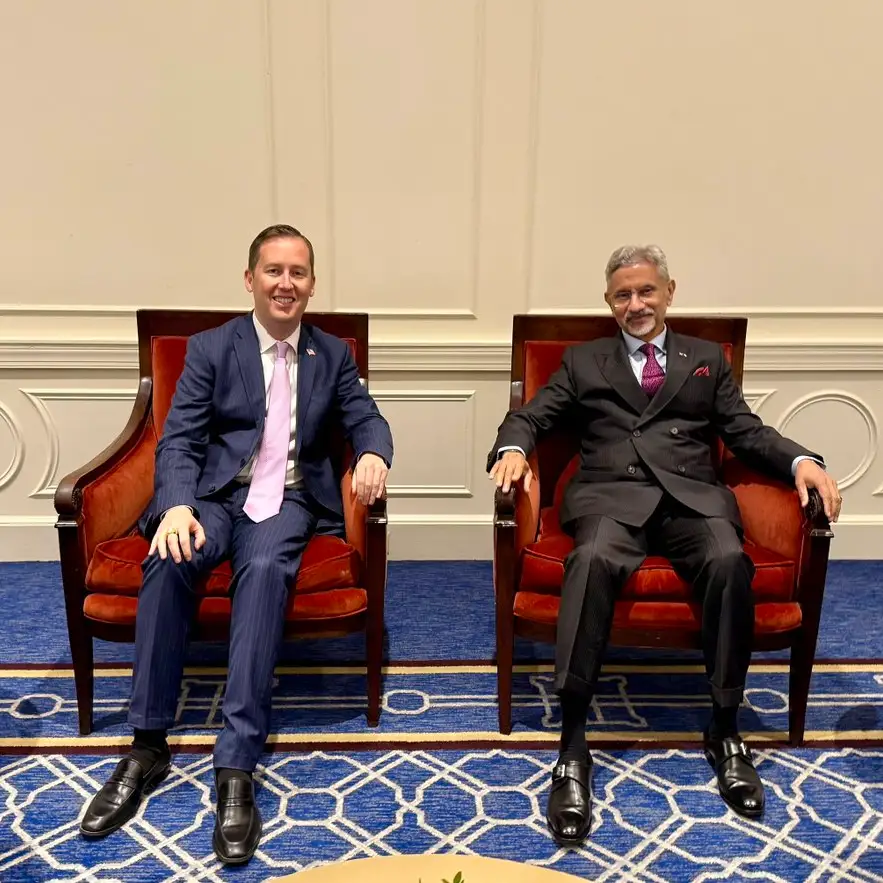


Trump’s India Envoy Sergio Gor Arrives With Hands Full
US Ambassador-designate to India Sergio Gor is in Delhi amid speculation about a Modi-Trump meeting later this month in Malaysia. Gor is accompanied by Michael Rigas, deputy secretary for management and resources.
The US State Department confirmed that Gor and Rigas will meet senior Indian officials to discuss a “wide range of bilateral issues,” including trade, immigration policy, regional security, and cooperation in the Indo-Pacific.
Diplomatic Pressures
The visit comes at a time of strains in bilateral relations chiefly over Trump’s tariffs on Indian goods, the hike in H-1B visa fees and diverging views on regional developments.
The timing is also notable as Afghanistan’s foreign minister is currently in India, raising speculation about possible discussions involving security coordination and US interest in regaining access to the Bagram airbase, once a central hub for US operations in the region.
Critical Minerals
One of the key areas of focus during the visit is expected to be critical minerals. In July, the four Quad nations (India, the US, Australia, and Japan), launched the Quad Critical Minerals Initiative, aimed at strengthening and diversifying the supply chains for materials vital to technology and clean energy sectors.
US officials, including Secretary of State Marco Rubio, have highlighted the need to not only secure raw material sources but also invest in processing and refining capabilities, areas where cooperation with India is being explored.
High-Level Engagements
Despite tensions, the two sides have kept up the conversation, Though these conversations are informal and largely symbolic, they signal an ongoing interest in keeping diplomatic channels open as both countries assess their priorities.
Gor, recently confirmed by the US Senate, will be looking to establish working relationships with Indian counterparts during his visit. Discussions are expected to cover a mix of strategic, economic, and regional topics.
Palestinians Return Home After Israel-Gaza Ceasefire Deal
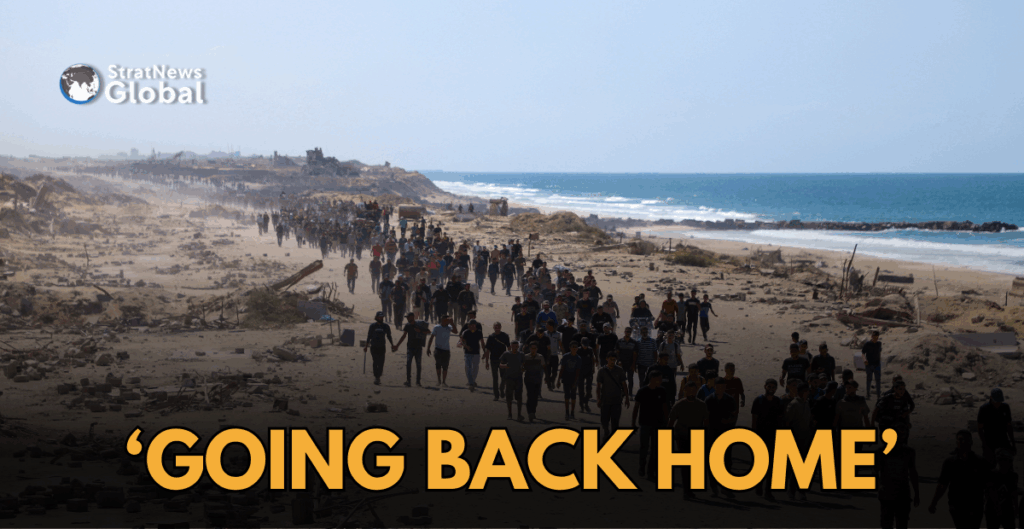
As Israel ‘s troops began pulling back from some parts of Gaza on Friday under a ceasefire deal with Hamas, some residents returned to shattered neighbourhoods, unsure about their safety after two years of warfare.
“Thank God my house is still standing,” said Ismail Zayda, 40, in the Sheikh Radwan area in Gaza City. “But the place is destroyed, my neighbours’ houses are destroyed, entire districts have gone.”Is it over? They said it is. Why does no one come out and tell us whether there is a ceasefire and we can stop being afraid?”
Israel’s government ratified the ceasefire with Hamas in the early hours of Friday, clearing the way to pull back troops and fully suspend hostilities in Gaza within 24 hours. Israeli hostages held there are to be freed within 72 hours after that, in return for Palestinian prisoners held in Israel.
The first phase of U.S. President Donald Trump’s initiative to end the two-year war in Gaza calls for Israeli forces to withdraw from some of Gaza’s major urban areas, though they will still control roughly half of the enclave’s territory.
Once the agreement is operating, trucks carrying food and medical aid will surge into Gaza to help civilians, hundreds of thousands of whom have been sheltering in tents after Israeli forces destroyed their homes and razed entire cities to dust.
Israeli Forces Pull Out
“The government has just now approved the framework for the release of all of the hostages – the living and the deceased,” Israeli PM Benjamin Netanyahu’s X account said.
In Khan Younis, in the southern Gaza Strip, some Israeli troops pulled back from the eastern area near the border, but tank shelling was heard, according to residents in contact with Reuters.
In Nusseirat camp in the centre of the enclave, some Israeli soldiers dismantled their position and headed east towards the Israeli border, but other troops remained in the area after gunfire was heard in the early hours of Friday.
Israeli forces pulled out from the road along the Mediterranean coast into Gaza City, where hundreds of people had gathered, hoping to return to the enclave’s main urban centre, which has been under Israeli assault for the past month. Gunfire nearby made many reluctant to move, and only a few were attempting to cross on foot, residents said. Rescue workers in Gaza City began missions in areas they had been unable to reach before. Medics said at least 10 bodies were recovered from previous strikes.
‘War Is Over’
The war has deepened Israel’s international isolation and upended the Middle East, spreading into a regional conflict that drew in Iran, Yemen and Lebanon. It also tested the U.S.-Israeli relationship, with Trump seeming to lose patience with Netanyahu and pressuring him to reach a deal.
So Israelis and Palestinians alike rejoiced after the ceasefire deal was announced. This is the biggest step yet to end two years of war in which over 67,000 Palestinians have been killed, and to return the last hostages seized by Hamas in the deadly attacks that provoked it.
The exiled Gaza chief of Hamas, Khalil Al-Hayya, said he had received guarantees from the United States and other mediators that the war was over.
Twenty Israeli hostages are still believed to be alive in Gaza, while 26 are presumed dead, and the fate of two is unknown. Hamas has indicated that recovering the bodies of the dead may take longer than releasing those who are alive.
(with inputs from Reuters)
Taliban’s Delhi Visit Sparks Dangerous Escalation
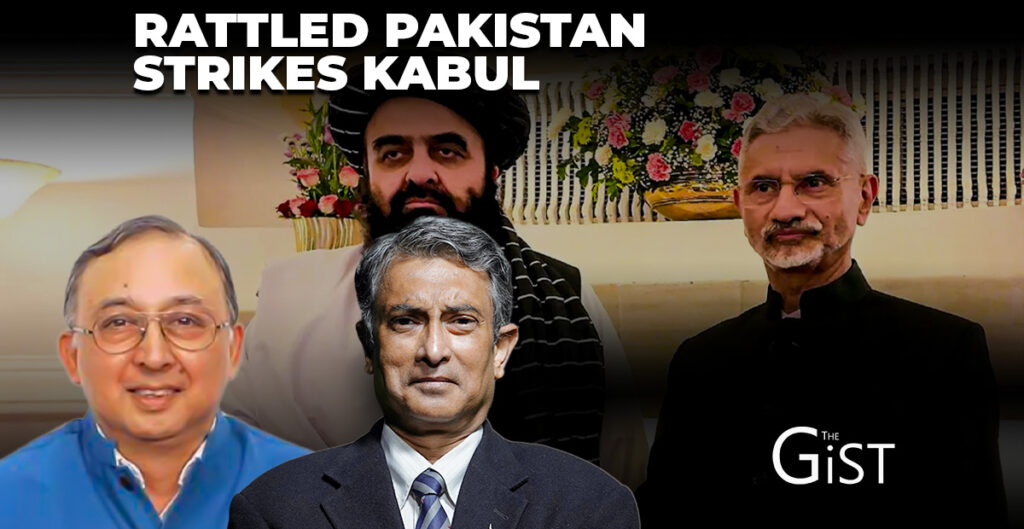
Speaking hours after the strikes — which came days after a deadly TTP ambush inside Pakistan and while Taliban foreign minister Amir Khan Muttaqi was on his first official visit to New Delhi — Devasher described the operation as “a dramatic escalation” whose timing was deliberate.
He said Islamabad appeared rattled by Muttaqi’s warm reception in India and New Delhi’s decision to upgrade its technical mission in Kabul to an embassy. “They have been strutting about saying they control the Taliban… and here is the Taliban Afghan minister, who’s gone out of his way and gone and visited India,” he said, suggesting those factors helped precipitate the strikes.
On India’s assurances that the Taliban would protect diplomatic personnel, Devasher said the Taliban would have given “cast-iron” guarantees but added that it is now up to them to ensure those promises are fulfilled.
Asked whether India might formally recognise the Taliban, he argued New Delhi is likely to follow international consensus. Two conditions, he said, complicate recognition: the absence of an inclusive government and the Taliban’s treatment of women. Meanwhile, India’s plan to build housing for Afghans expelled from Pakistan was seen by Devasher as both a humanitarian gesture and a signal — a continuation of India’s people-to-people ties and relief assistance to a traumatised population.
Devasher traced the Kabul-Islamabad enmity to structural issues such as the unresolved Durand Line, and warned that ungoverned, rugged eastern regions of Afghanistan remain sanctuaries for extremist groups. While asserting the Taliban have no expansionist agenda, he cautioned that organisations like ISIS and al-Qaida could “radiate outwards” and pose threats to Central Asia and India.
Diplomatic efforts alone will not suffice. Asked to look ahead, his prognosis was bleak: “It’s going to get a lot worse,” he said, arguing cycles of injury and revenge will prolong the conflict unless political order and governance in the region change.
Venezuelan Politician Maria Machado Wins Nobel Peace Prize 2025
Venezuelan opposition leader Maria Corina Machado won the Nobel Peace Prize on Friday for promoting democratic rights in her country and her struggle to achieve a transition to democracy, the Norwegian Nobel Committee said.
Machado, a 58-year-old industrial engineer who lives in hiding, was blocked in 2024 by Venezuela’s courts from running for president and thus challenging President Nicolas Maduro, who has been in power since 2013.
“When authoritarians seize power, it is crucial to recognise courageous defenders of freedom who rise and resist,” it said in its citation.
“She is a key, unifying figure in a political opposition that was once deeply divided — an opposition that found common ground in the demand for free elections and representative government,” said Jørgen Watne Frydnes, chair of the Norwegian Nobel committee.
Trump’s Dreams Shattered
The lead-up to this year’s award had been dominated by U.S. President Donald Trump’s repeated public statements that he deserved to win the Nobel Peace Prize.
The committee took its final decision before a ceasefire and hostage deal under the first phase of Trump’s initiative to end the war in Gaza was announced on Wednesday.
Ahead of the Nobel announcement, experts on the award had also said Trump was very unlikely to win as his policies were seen as dismantling the international world order that the Nobel committee cherishes.
However, it is not a surprising thing for a US President to want a Nobel Prize. Three sitting US presidents have won this title so far: Theodore Roosevelt in 1906, Woodrow Wilson in 1919 and Barack Obama in 2009. Jimmy Carter won the prize in 2002, a full two decades after leaving office. Former Vice President Al Gore received the prize in 2007.
The Nobel Peace Prize, worth 11 million Swedish crowns, or about $1.2 million, is due to be presented in Oslo on December 10, the anniversary of the death of Swedish industrialist Alfred Nobel, who founded the awards in his 1895 will.
(with inputs from Reuters)
India Reopens Kabul Embassy, Restores Full Diplomatic Ties With Afghanistan
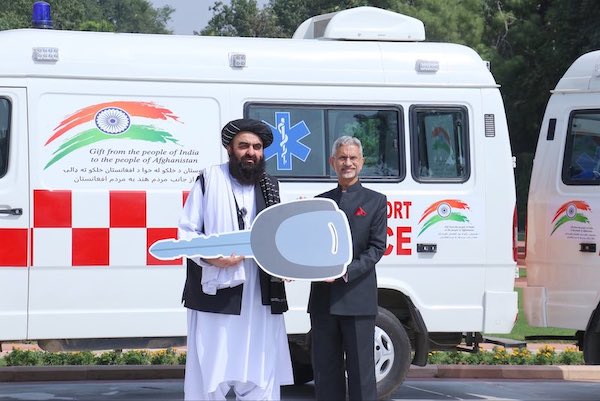
India has officially reopened its embassy in Kabul and restored full diplomatic relations with Taliban-led Afghanistan, External Affairs Minister S. Jaishankar announced on Friday after meeting Afghanistan’s acting Foreign Minister Amir Khan Muttaqi.
“I am pleased to announce the upgrading of India’s technical mission in Kabul to the status of the Embassy of India,” Jaishankar said, according to India Today. “India remains fully committed to the sovereignty, territorial integrity, and independence of Afghanistan,” he added.
The move marks a major shift in India’s cautious re-engagement with Afghanistan since the Taliban seized power in 2021. At that time, New Delhi had closed its embassy and consulates, evacuating its diplomatic staff following the collapse of the previous government.
Although India has yet to formally recognise the Taliban regime, reopening the embassy signals a pragmatic step toward normalization of ties amid evolving regional realities.
Muttaqi’s visit marks the first by a senior Taliban leader to India since the fall of Kabul in August 2021. The discussions reportedly covered humanitarian cooperation, regional security, and economic connectivity.
The development comes as tensions between Afghanistan and Pakistan have deepened, particularly following Islamabad’s mass deportation of Afghan refugees. Observers say India’s renewed diplomatic presence in Kabul represents a strategic recalibration of its Afghanistan policy as regional power equations continue to shift.
(With inputs from IBNS)
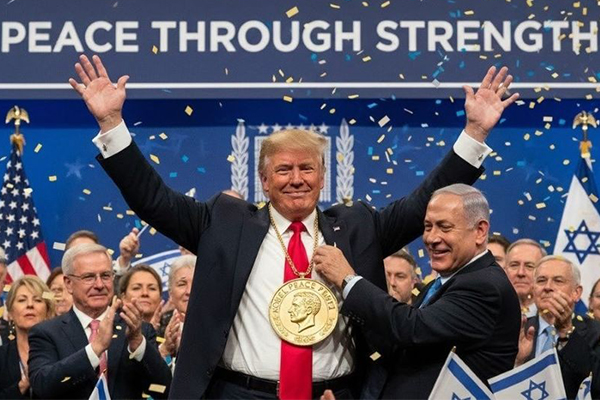
Give Donald Trump The Nobel Peace Prize: Benjamin Netanyahu Amid Gaza Deal
Israeli Prime Minister Benjamin Netanyahu on Friday urged the Nobel Committee to award the 2025 Nobel Peace Prize to U.S. President Donald Trump, saying he “deserves it” for his role in brokering a Gaza ceasefire agreement.
“Give @realDonaldTrump the Nobel Peace Prize — he deserves it,” Netanyahu wrote on X. His office shared the post alongside an image — apparently AI-generated — depicting Netanyahu presenting the award to Trump.
The remark came just hours before the official announcement of this year’s Nobel Peace Prize winner.
Earlier this year, Netanyahu formally nominated Trump for the Peace Prize, presenting a letter of nomination during their meeting in Washington.
Trump, meanwhile, renewed his criticism of former U.S. President Barack Obama, claiming Obama received the Nobel Peace Prize in 2009 “for doing nothing” and for “destroying the nation.”
Speaking to reporters at the White House, Trump said: “Obama got elected, and they gave it to him for absolutely nothing. He didn’t even know why.”
Obama was awarded the 2009 Nobel Peace Prize eight months into his first term for his “extraordinary efforts to strengthen international diplomacy and cooperation between peoples.”
Trump contrasted that with his own record, claiming credit for securing peace in Gaza and ending “eight wars.” He said he was not seeking the award but wanted recognition for his efforts to “save lives.”
The comments came shortly after Israel confirmed that all parties had signed the first phase of a Gaza ceasefire and hostage-release agreement in Cairo — a deal Trump described as part of his 20-point peace plan for the region.
Israeli government spokesperson Shosh Bedrosian said the final draft of phase one was signed Thursday morning in Egypt, adding that all hostages — both living and deceased — would be released within 72 hours.
Under the terms of the agreement, Israel will withdraw its troops from Gaza and release hundreds of Palestinian prisoners in exchange for the hostages. The deal also allows for a large-scale inflow of humanitarian aid to the enclave, where the United Nations has declared a famine.
The Israel Defense Forces said preparations were underway for a phased withdrawal in line with the ceasefire terms.
(With inputs from IBNS)
Pakistan Strikes Kabul Amid Afghan Foreign Minister’s Maiden India Visit
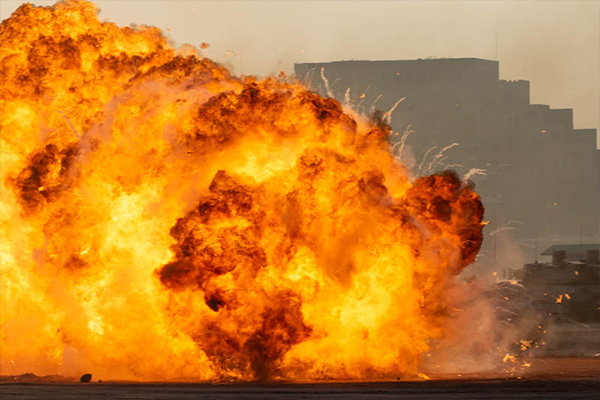
Pakistan carried out an airstrike in Afghanistan‘s capital Kabul on Thursday night coinciding with Afghan Foreign Minister Amir Khan Muttaqi’s maiden India visit, media reports said.
The airstrike took place at 10 pm local time.
The Pakistani jets launched an attack on Tehreek-e-Taliban Pakistan (TTP) camps in Kabul escalating the confrontation with Afghanistan, which is currently under the Taliban regime.
The strike, which took place near Shahid Abdul Haq Square, was aimed to eliminate TTP chief Noor Wali Mehsud, who is leading the organisation since 2018, reports said.
An audio message, which surfaced, claimed Mehsud is safe, denying any report that asserted his death.
Multiple witnesses have reported the sound of a fighter jet, two massive explosions and subsequent automatic gunfire.
Pakistan has been accusing Afghanistan of funding and arming TTP for a long time.
The attack is significant as it took place when the relationship between Afghanistan and Pakistan significantly deteriorated and India has ramped its terms with the Taliban regime, which took over the country in 2021.
Muttaqi, who held bilateral talks with India’s External Affairs Minister S Jaishankar, is on a nine-day trip to India beginning on October 9.
There have been several recent attacks by the TTP on Pakistani security forces in the past.
The most recent attack was on October 7 when TTP militants carried out an ambush on a paramilitary convoy.
The attack involved roadside bombs followed by gunfire.
Eleven Pakistani soldiers were killed (including two officers) while 19 militants were also killed in ensuing operations.
The attack on Kabul occurred within 24 hours of Pakistani Defence Minister Khawaja Asif’s stern warning to Taliban.
(With inputs from IBNS)
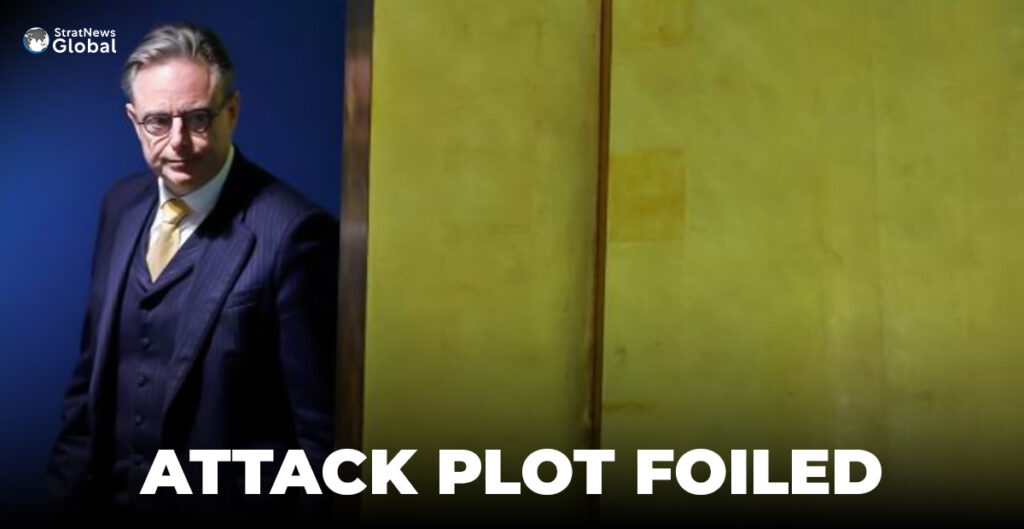
Plot Against Belgium’s PM And Other Politicians Thwarted, Officials Say
Belgian authorities on Thursday said they had foiled a plot to attack several politicians, including Prime Minister Bart de Wever. The announcement came from the public prosecutor’s office and Deputy Prime Minister Maxime Prévot.
“The news of a planned attack targeting Prime Minister Bart de Wever is extremely shocking,” Prevot wrote on X.
“It highlights that we are facing a very real terrorist threat and that we have to remain vigilant,” he added.
Authorities believe the plot was “jihadist-inspired” and involved plans to use drones carrying explosives, with one suspect’s home housing an improvised device and 3D printer parts.
Belgium has had to contend with attacks from people associated with Islamic State, as well as rising insecurity from feuding drug gangs, over the last decade.
Two Suspects Arrested
Belgian Justice Minister Annelies Verlinden wrote on X that the police operation against the cell had possibly prevented an attack from being carried out on Thursday.
The Belgium federal public prosecutor’s office said two suspects had been arrested and were being questioned by Antwerp police as a result of the operation.
“This judicial intervention is part of an investigation into, among other things, attempted terrorist murder and participation in the activities of a terrorist group,” it said in a statement.
“There are indications that the intention was to carry out a jihadist-inspired terrorist attack targeting politicians,” added the prosecutor’s office.
It said searches of the houses of suspects in Antwerp had turned up a device that looked similar to an improvised explosive device, a bag of steel balls and indications that the group aimed to use a drone as part of their attack.
In March 2016, 32 people were killed in suicide bomb explosions at Brussels airport and in the city’s metro in attacks claimed by Islamic State, while in October 2023 a self-proclaimed Islamist terrorist shot dead two Swedish citizens who had been in Brussels for an international soccer match.
(With inputs from Reuters)
U.S. Opts Out Of Joint Climate Statement By World Bank Directors
A joint statement released this week by 19 of the World Bank’s 25 executive directors voiced strong backing for the institution’s climate initiatives, setting them at odds with the United States, its biggest shareholder, and a few allied nations that withheld support.
The executive directors for the U.S., Russia, Kuwait and Saudi Arabia declined to sign the document; Japan and India – both negotiating trade deals with the U.S. – abstained, a source familiar with the matter said.
The directors, who represent 120 countries, issued the statement after a board meeting with World Bank management, underscoring their expectation that the bank will stick to its climate change action plan goals, including a pledge to devote 45% of its annual financing to climate-related projects.
The document reflects the deep divide separating most other countries from the U.S. and a handful of allies over climate change. It comes days before the start of the annual meetings in Washington of the World Bank and International Monetary Fund. The U.S. is the largest shareholder in both institutions and plays a big role in shaping their work and agendas.
European Union’s Support
It was reported this week that the European Union will double down on its support for reforming global development banks to do more to fight climate change.
In April, at the last IMF-World Bank meetings, U.S. Treasury Secretary Scott Bessent called on both institutions to refocus on their core mandates and said they were devoting too much time and resources to topics like climate change.
The leaders of both institutions have gone largely silent on climate change since U.S. President Donald Trump took office, and the issue is not highlighted in next week’s agenda. Trump last month dismissed climate change as a “con job.”
The statement also called for aligning the bank’s work with the Paris climate accord, from which U.S. President Donald Trump withdrew shortly after taking office in January. It also called for continuing to factor climate change into its core diagnostic work.
“We reaffirm our support for the World Bank Group’s leadership role across the (International Financial Institutions) on climate and nature action, advocating for and supporting countries’ demand for low carbon, climate resilient, and nature positive pathways,” the statement said.
The directors also called for further work in some areas under the bank’s current Climate Change Action Plan, supporting workers as their countries transition away from coal, a shift described as “complex but essential for energy transition.”
More work was also needed in helping countries design and implement long-term national climate and development plans, and developing effective carbon markets, the letter said.
The statement listed several areas that were being demanded by client countries but are not covered by the bank’s current climate change plan, including addressing pollution, mainstreaming nature and scaling adaptation and resilience efforts.
(With inputs from Reuters)
U.S. And Finland Sign Agreement On Icebreaker Ships For Arctic Security
On Thursday, U.S. President Donald Trump and Finnish President Alexander Stubb approved an agreement for the U.S. Coast Guard to purchase up to 11 icebreaker vessels aimed at enhancing national security in the Arctic.
Trump and Stubb have established friendly ties since Trump regained power in January, and the two met in March at the president’s Mar-a-Lago club in Florida and played a round of golf.
The two leaders approved a memorandum of understanding on icebreaker cooperation that is intended to lay the foundation for commercial agreements between the U.S. Coast Guard and Finnish companies.
‘Finest Icebreakers’
Under the agreement, Finland will build four “Arctic security cutters” at shipyards in Finland, and then the U.S. will leverage Finnish expertise to construct up to seven new ASCs in shipyards located in the United States.
“We’re buying the finest icebreakers in the world, and Finland is known for making them,” Trump said, sitting side by side with Stubb in the Oval Office.
Stubb called it a “huge strategic decision” by Trump “because we all know that the Arctic is important strategically.”
The 11 Arctic security cutters – new medium icebreakers to be used by the U.S. Coast Guard – are expected to cost about $6.1 billion, a White House official said.
Trump also said the United States would defend Finland, a NATO ally, if Russian President Vladimir Putin were to order an attack, but “I don’t think he’s going to do that.”
Stubb also played down the short-term Russian risk to Finland, saying in an interview Moscow was not an “imminent military threat.”
Trump has consistently called for the United States to acquire as many as 40 new icebreakers to enhance U.S. national security in the Arctic and counter the growing influence of China and Russia.
At the moment, Russia itself has around 40 icebreakers, many times the nearest country, putting the major NATO nemesis at a potentially significant advantage in the far north.
“I think people are waking up to the reality that we need to strengthen our deterrence so that a conflict (with Russia) will not be possible,” Stubb said in an interview following his visit with Trump.
Investment In Maritime Industry
Three of the 11 ships will be built by international shipbuilder Davie in Galveston, Texas, and four will be built by Bollinger Shipyards in Houma, Louisiana, the official said.
The aim is for the first icebreaker to be delivered by 2028. The official said the deals would result in billions of dollars of new investment in the U.S. maritime industrial base and add thousands of skilled trades jobs for Americans.
The Coast Guard’s polar fleet currently includes only two operational Arctic security cutters, the official said.
Stubb Plays Intermediary
Trump and Stubb, who at times serves as an intermediary between Trump and Ukrainian President Volodymyr Zelenskyy, were also set to discuss Russia’s invasion of Ukraine.
Asked if he has transmitted any messages from his visit with Zelenskyy last month to Trump, Stubb said that his government “always” communicates “back and forth” between the men, while declining to discuss details.
Trump, who spent the first several months of his term trying to rewarm his relationship with Putin, has in recent weeks hardened his rhetoric toward the Kremlin.
While Trump is considering a number of moves to up the pressure on Moscow to end its invasion of Ukraine, most of Ukraine and Europe’s most ambitious asks – such as new sanctions and tariffs – have so far gone unheeded.
“Obviously we have seen that he has moved with Russia from carrot to stick,” Stubb said. “And then we see what he decides himself. He’s a very independent man on these types of issues.”
The last time Stubb was in Washington, during an August visit with several other European leaders, Trump and NATO allies said they intended to put together a comprehensive plan for security guarantees for a post-war Ukraine.
Stubb implied political buy-in was still needed to get that plan in place.
“I think that we have made advances,” Stubb said. “Especially on the military side, they’re pretty much a done deal. And then we have to decide on how we do them on the political side.”
‘People Need To Be More Finnish’
Stubb broadly played down concerns about a possible movement of U.S. troops out of Europe as part of an ongoing U.S. force posture review, arguing Trump remains committed to Europe. He added that he does not see Russia – which shares a 830-mile border with the Nordic nation – as an “imminent military threat” to Finland.
In June, the chief of Germany’s foreign intelligence service said Germany had obtained intelligence indicating Russia was determined to extend its confrontation with Europe beyond the borders of Ukraine, and that Kyiv was “only a step on the journey westward.”
“To be honest, I think people need to be a little bit more Finnish, which means be calm, cool, collected, take a sauna or take an ice bath,” Stubb said asked about assessments that Russia could invade a NATO country in the coming years. “Prepare.”
Finland is the world’s leading producer of icebreakers, with about 80% of existing ships designed by its companies, and about 60% of them built at its shipyards, the Helsinki government said last year.
Finnish leaders have long advocated for icebreaker deals with the United States but such attempts have previously been rebuffed by strict interpretation of the Jones Act, U.S. legislation that prioritizes domestic businesses in the maritime industry.
However, a 2021 congressional report found that the Jones Act did not apply to icebreakers and that the president could authorize exceptions to other legal restrictions on construction of vessels in foreign shipyards.
(With inputs from Reuters)