

Support us by contributing to StratNewsGlobal on the following UPI ID
ultramodern@hdfcbank

Strategic affairs is our game, South Asia and beyond our playground. Put together by an experienced team led by Nitin A. Gokhale. Our focus is on strategic affairs, foreign policy and international relations, with higher quality reportage, analysis and commentary with new tie-ups across the South Asian region.
You can support our endeavours. Visit us at www.stratnewsglobal.com and follow us on YouTube, Twitter, Facebook and Instagram.
र 500 per month
र 1000 per month
र 5000 per year
र 10000 per year
Donate an amount of your choice
र 500 per month
Donate र 500 per month

र 1000 per month
Donate र 1000 per month
र 5000 per year
Donate र 5,000 per year
र 10000 per year
Donate र 10,000 per year
Donate an amount of your choice
Donate an amount of your choice

Russia Seeks To Rekindle ‘Spirit of Alaska’ As Tensions Resurface With U.S.
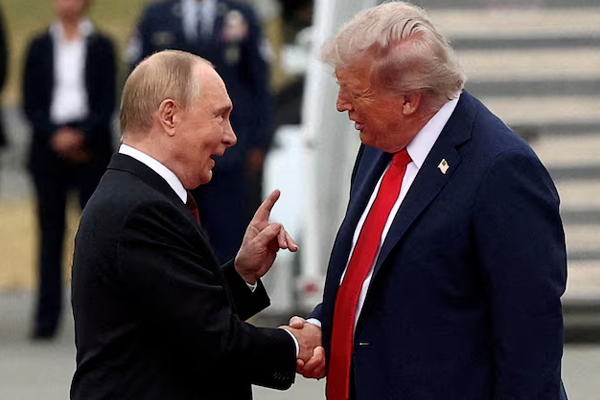
Two months after Donald Trump and Vladimir Putin shared a seemingly cordial handshake at a military base in Alaska — a moment widely viewed as the start of a thaw in U.S.-Russia relations — Moscow now appears uncertain whether the so-called “spirit of Alaska” endures.
For Russia, the Anchorage summit on August 15 carried dual objectives: persuading President Trump to press Ukraine and European allies toward a peace deal favourable to Moscow, and reviving the broader framework of U.S.-Russia rapprochement that had briefly appeared within reach.
Russian Deputy Foreign Minister Sergei Ryabkov said this week there had been scant progress on either front and “powerful momentum” had been lost. Moscow had signalled it was ready to rebuild ties but Washington had not reciprocated, he said.
“We have a certain edifice of relations that has cracked and is collapsing,” Ryabkov said. “Now the cracks have reached the foundation.”
More Studies Required: Putin
After Ryabkov spoke, a Kremlin aide and Putin’s spokesman underlined that contacts with Washington continue, and the Russian leader sounded more optimistic than Ryabkov when asked about Ukraine and ties with the U.S. on Friday.
“These are complex issues that require further study. But we remain on the basis of the discussion that took place in Anchorage,” Putin told a press conference.
His aide later told the Kommersant newspaper that Russia had agreed to unspecified concessions or reciprocal steps at the Alaska summit it would be ready to make if Trump got certain things from Ukraine and the Europeans.
Such a contrast in tone among senior officials is rare in Moscow and highlights the delicacy and sensitivity of the twin-track approach Russia is taking – combining flattery and warnings to adapt to diplomatic reversals since the summit.
Trump’s Frustration
While a Trump initiative has raised hopes of peace in Gaza, he is frustrated by his failure to broker an end to fighting in Ukraine and has soured, at least publicly, on Russia.
There is no new Trump-Putin meeting on the agenda, no date has been set for the next talks on improving ties, and Washington, without an ambassador in Moscow since June, has not sought Russia’s approval to send a successor.
Trump has spoken of possibly supplying Tomahawk cruise missiles to Ukraine, hitting a nerve with Putin, who said it would destroy what is left of U.S.-Russia ties.
Trump has also said he wants Putin and Ukrainian President Volodymyr Zelenskiy to hold direct talks, but there appears no near-term prospect of that happening as the tempo of the war increases.
In a rhetorical U-turn, Trump has suggested Ukraine could win back all its lost territory, while dismissing Russia as “a paper tiger,” a snipe shrugged off by Moscow.
Appeal To Shared Values
In response, Russia has tried playing good cop, bad cop – with officials at times appearing to threaten tough responses to U.S. action and at others underlining shared values.
Putin offered to voluntarily maintain limits on deployed strategic nuclear weapons set out in the last arms control treaty with the U.S. once it expires next year if Washington does the same.
Trump said “it sounds like a good idea,” but there has been no formal U.S. response.
At a foreign policy conference this month, Putin praised Trump’s efforts to broker peace in Ukraine and made a series of U.S.-focused statements likely to appeal to him.
Putin praised Michael Gloss, the son of a CIA official killed in Ukraine fighting on Russia’s side, saying he represented “the core of the MAGA movement, which supports President Trump.”
He also condemned the murder of Trump ally Charlie Kirk , saying Kirk had defended the “traditional values” which he said Gloss and Russian soldiers in Ukraine were giving their lives to defend.
Kirill Dmitriev, head of Russia’s sovereign wealth fund and Putin’s special envoy, often underlines shared views and values with Trump to try to warm up ties – at times denigrating Trump’s opponents and praising his special envoy, Steve Witkoff.
Kremlin aide Yuri Ushakov went so far as to say Russia would back Trump’s candidacy for the Nobel Peace Prize.
Pushback, Warnings And Disappointment
But warnings have continued, and pushback against Trump’s talk of supplying Tomahawk missiles to Ukraine was immediate.
Putin said such a step would require the direct involvement of U.S. military personnel, destroy bilateral relations and usher in a new stage of escalation.
Andrei Kartapolov, who heads Russian parliament’s defence committee, said Moscow would shoot down Tomahawk missiles and bomb their launch sites if the U.S. supplied them, and find a way to retaliate against Washington that hurts.
In other terse comments, Ryabkov said Russia would quickly carry out a nuclear test if the U.S. did the same, and that Moscow would “get by” if Washington did not take up Putin’s nuclear arms control offer.
Ryabkov also backed off a Russian offer to discuss the fate of U.S. nuclear fuel at a nuclear plant Moscow controls in southern Ukraine, and spoke of how Russia was withdrawing from an agreement with the U.S. to destroy weapons-grade plutonium.
“After the summit in Alaska, there was hope that Trump was ready to continue dialogue with Russia and take our interests into account,” wrote Andrei Baranov, a commentator for pro-Kremlin newspaper Komsomolskaya Pravda.
“Donald has now thoroughly disappointed us with his trademark inconsistency.”
(With inputs from Reuters)
UK Court Overturns Man’s Conviction For Burning Koran Outside Turkish Consulate
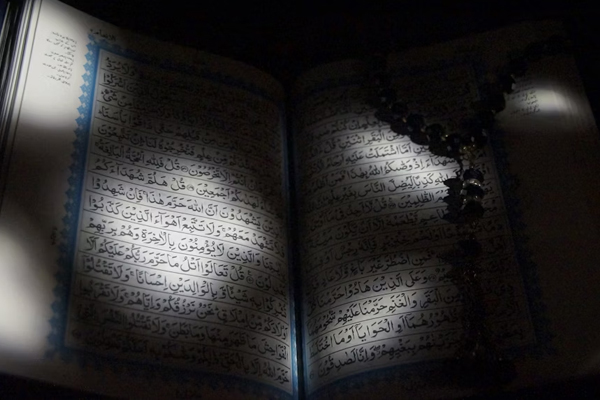
A man who was convicted of a religiously aggravated public order offence for burning a copy of the Koran outside the Turkish consulate in London has won his appeal, with the court overturning his conviction on Friday.
Hamit Coskun, 51, was fined 240 pounds ($325) at London’s Westminster Magistrates’ Court in June after being convicted of an offence by shouting “Fuck Islam” as he held aloft the burning book near the consulate in central London in February.
The decision to overturn that verdict after an appeal at London’s Southwark Crown Court was hailed by his supporters as an important triumph for freedom of expression.
“Hamit Coskun’s protest was a lawful act of political dissent,” Stephen Evans, chief executive of the National Secular Society which supported his case, said in a statement. “There is no need to condone the nature of his demonstration – what is important is that it was not criminal.”
Coskun, whose father was Kurdish and his mother Armenian and who lived in central England, had denied the charge and said on social media he was carrying out a protest against the Turkish government. While he was holding the book aloft, he was attacked by a man with a knife who kicked and spat at him.
In its appeal ruling, the court said prosecutors had not properly shown that his behaviour was disorderly nor that it was within the hearing or sight of a person likely to be caused distress.
“Today’s decision reaffirms the vital principle that free speech protects the right to offend, shock, or disturb – even when it challenges deeply held religious beliefs,” Evans said.
(With inputs from Reuters)
Putin Says Russia Can Handle U.S. Refusal To Extend Nuclear Treaty
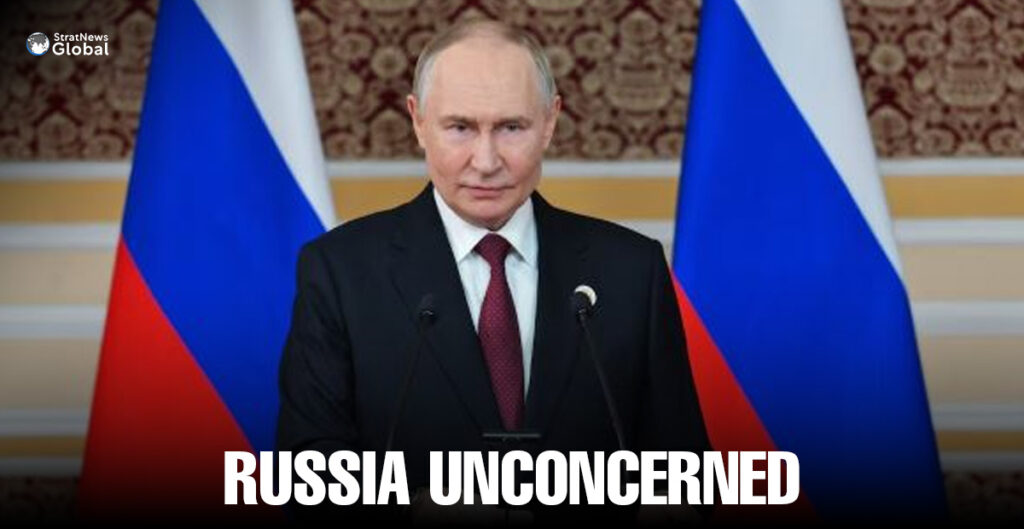
Russian President Vladimir Putin said on Friday that Moscow is advancing its development of strategic weapons and would face no serious consequences if the United States chose not to extend the warhead limits outlined in the nuclear arms treaty set to expire next year.
He said it would, however, be a shame if nothing remained of the arms control framework between the two countries, which have by far the world’s biggest nuclear arsenals.
Speaking to reporters at a summit in Tajikistan, Putin said an arms race was already in progress.
Russia has said it is willing to voluntarily extend the warhead limits defined in the New START nuclear treaty, which expires in February, if the United States is willing to do the same. Washington has not yet formally agreed to the proposal.
“Will these few months be enough to make a decision on an extension? I think it will be enough if there is goodwill to extend these agreements. And if the Americans decide they don’t need it, that’s not a big deal for us,” Putin said.
New-Generation Nuclear Weapons
He added that Russia was continuing to develop and test new-generation nuclear weapons.
“We’re ready to negotiate if it’s acceptable and useful for the Americans. If not, then no, but that would be a shame, because then there would be nothing left in terms of deterrence in the area of strategic offensive weapons.”
For the second time in a week, Putin referred to the possibility that other countries, which he did not name, might carry out a nuclear test – something only North Korea has done this century. He has said that Russia would also perform a test if this happens.
Security experts say a test by one country would have a knock-on effect, prompting other nuclear powers to do the same, raiing geopolitical tensions further from their current, already high, levels.
“There’s always a temptation to test the effectiveness of the same fuel that’s been in missiles for many, many years. All of this is being simulated on computers, and experts believe that is sufficient, but some of these same experts believe repeat tests are necessary,” Putin said.
“So some countries are thinking about it; as far as I know, they’re even preparing, and that’s why I said that if they do it, we’ll do the same.”
That would be good from a security perspective, but bad from the point of view of curbing the arms race, he said.
“But in this same context, extending the New START Treaty for at least a year is a good idea.”
(With inputs from Reuters)
France: Macron Consults Party Leaders As PM Appointment Deadline Looms
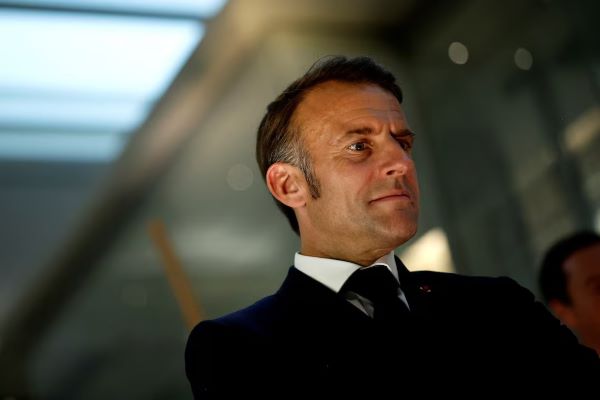
French President Emmanuel Macron met with senior political leaders at the Élysée ahead of his self-imposed deadline on Friday to appoint a new prime minister, as the head of France’s central bank cautioned that ongoing political uncertainty was undermining economic growth.
Macron, 47, is searching for his sixth prime minister in under two years and will need to find a figure whose appeal spans the centre-right to centre-left in order to steer the budget for 2026 through a fragmented and fractious parliament.
Ahead of the meeting, the president’s Elysee office said the gathering needed to be a “moment of collective responsibility,” which political pundits quickly interpreted as a signal he could call snap parliamentary elections if no consensus candidate was found.
Party leaders from the left, right and centre arrived at the Elysee, but the far-right National Rally (RN) and hard-left France Unbowed (LFI) – two of the largest political parties in the National Assembly – were excluded.
It was unclear how long Friday’s talks would last. Macron’s 48-hour deadline to name a new premier is due to expire later on Friday night.
Who Will Be The Next PM?
The daily Le Parisien newspaper reported that Macron intended to reappoint Sebastien Lecornu, who resigned as prime minister on Monday after just 27 days in the post, and that the president did not rule out a snap vote if other party leaders reject the proposal. Lecornu was not due to attend the meeting at the Elysee, which did not respond to a request for comment.
Other names that have been floated in political circles include veteran centrist Jean-Louis Borloo, the head of the public auditor Pierre Moscovici, and Nicolas Revel, a technocrat who leads the Paris hospitals administration.
Reappointing Lecornu would risk alienating the political leaders whose backing Macron needs to form a broad-based government that can get a budget over the line.
Complex Budget Talks
Wrangling over a budget that can both rein in the country’s deficit while meeting the conflicting demands of both the left and conservatives has been going on for weeks, with Socialist demands for a repeal of a 2023 pensions reform and for heavier taxation of the rich proving big stumbling blocks.
“People tell me: ‘He’s going to test the Lecornu 2 hypothesis on you.’ If that’s the case, I wish him good luck,” Green party chief Marine Tondelier told TF1 television.
Gabriel Attal, a former Macron prime minister and head of the president’s Renaissance party, cautioned against naming the next premier without wider support.
“I fear that trying the same method … of naming a prime minister before there has been a compromise will produce the same effects,” Attal told France 2 television.
France’s mainstream parties are keen to avoid a snap election. Opinion polls forecast the RN would be the main beneficiary and that another hung parliament would be the most likely result.
France Faces Deepest Crisis
The crisis is the deepest that France, the euro zone’s second-largest economy, has seen for decades. The turmoil was precipitated in part by the president’s failed gamble on a snap election last year that further weakened his minority in parliament.
The central bank chief, Francois Villeroy de Galhau, forecast the political uncertainty would cost the economy 0.2 percentage points of gross domestic product. Business sentiment was suffering but the economy was broadly fine, he said.
“Uncertainty is … the number one enemy of growth,” Villeroy told RTL radio.
Villeroy said it would be preferable if the deficit did not exceed 4.8% of GDP in 2026. The deficit is forecast to hit 5.4% this year, nearly double the European Union’s cap.
Macron’s second-to-last prime minister, Francois Bayrou, was ousted by the National Assembly over his plans for 44 billion euros in savings to bring the deficit down to 4.6%.
Rating agencies issued a fresh round of warnings about France’s sovereign credit score this week after Lecornu said on Monday his government was resigning, just 14 hours after he had announced his cabinet line-up.
(With inputs from Reuters)
UK Regulator Targets Google’s Search Dominance
Google may soon have to alter how its search engine functions in the UK, after becoming the first company to face action under new powers granted to Britain’s competition regulator aimed at curbing the dominance of Big Tech.
Competition regulators have long had Alphabet-owned Google in their sights and Britain’s landmark ruling on Friday designating Google as having strategic market status in online search, gives the UK’s regulator more power to step in.
“We have found that Google maintains a strategic position in the search and search advertising sector – with more than 90% of searches in the UK taking place on its platform,” the Competition and Markets Authority’s Executive Director for Digital Markets Will Hayter said.
Possible Interventions
The CMA’s move enables it to intervene to ensure Google’s search services are “open to effective competition”. It is not a finding of wrongdoing and does not trigger any immediate changes, but the regulator can impose fines for non-compliance and has direct enforcement powers.
It outlined changes it could require in June, such as fairer ranking in search, easier access to alternative search engines for consumers and more controls for publishers over how their content is used in AI-generated responses. It is expected to consult on any planned interventions later this year.
Google’s Senior Director for Competition Oliver Bethell said: “Many of the ideas for interventions that have been raised in this process would inhibit UK innovation and growth, potentially slowing product launches at a time of profound AI-based innovation.”
Google announced last month it would invest 5 billion pounds in Britain.
New Front Against Google
The ruling was the CMA’s first under new powers to tackle Big Tech. The CMA’s second probe into mobile operating systems could also result in Google receiving a designation, focused on Android.
The US Federal Trade Commission launched an investigation into Google and Amazon’s search advertising last month, while the US Department of Justice wants to force Google to sell off some of its advertising technology tools.
The European Union hit Google with a $3.45 billion antitrust fine last month for anti-competitive practices in its adtech business.
More Control For Consumers And Publishers
A shift in the political backdrop in Britain makes major intervention less likely, lawyers have said.
After the CMA gained its new powers, the government told it to focus on growth and minimise uncertainty for business. It made former Amazon executive Doug Gurr the CMA’s interim chair in January.
Tom Smith, competition lawyer at Geradin Partners and former CMA director, said there was a strong case for removing some of the market distortions caused by Google’s monopoly position.
That includes giving website operators more control over how their content is used for AI training, and would remove some of Google’s unfair advantage over other AI companies, he said.
Google’s Gemini AI assistant was not currently in the scope of the CMA’s designation, the regulator said, but other AI-based search features, such as AI Overviews and AI Mode, were.
(With inputs from Reuters)
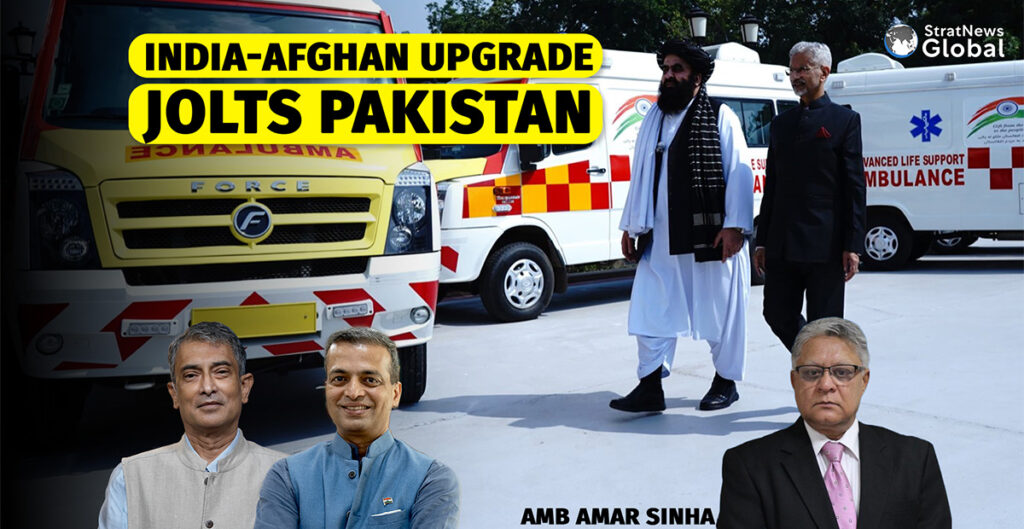
Handshakes Vs Airstrikes: India Steps Up Taliban Ties, Pakistan Bombs Kabul
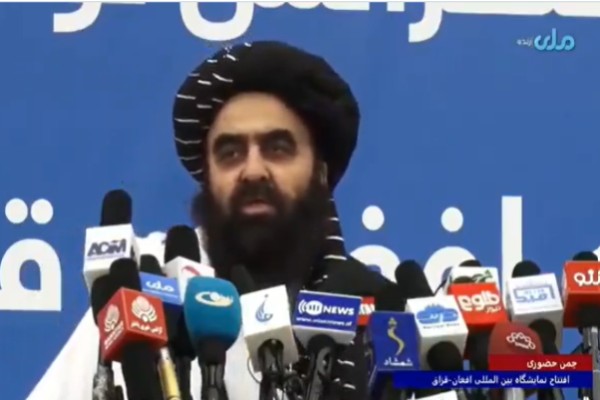
India has upgraded its ‘technical mission’ in Kabul to full embassy status. External Affairs Minister (EAM) S. Jaishankar made the decision public on Friday in a meeting with Afghanistan’s Foreign Minister Maulvi Amir Khan Muttaqi in Delhi. On ‘The Gist’, India’s Former Ambassador to Afghanistan, Amar Sinha speaks to StratNews Global‘s Amitabh P. Revi and Ramananda Sengupta on the step-by-step pragmatic approach that New Delhi has been adopting. Muttaqi’s visit marks the first by a senior Taliban leader to India since they retook Afghanistan for the second time in August 2021.
From StratNews Global’s Archives
StratNews Global conducted a rare one-on-one interview with Minister Muttaqi in Kabul in August 2022. Watch our other interviews on that trip, including one with Taliban Spokesperson Zabihullah Mujahid, a woman journalist and the former Tolo TV head here.
India-Afghanistan Joint Statement
In a joint statement, the EAM “expressed his deep appreciation to Afghanistan for its strong condemnation of the terrorist attack in Pahalgam, Jammu and Kashmir, India on 22 April 2025 as well as for the sincere condolences and solidarity expressed with the people and Government of India. Both sides unequivocally condemned all acts of terrorism emanating from regional countries.
Terrorism Concerns
Both sides emphasized respect for each other’s sovereignty and territorial integrity. External Affairs Minister appreciated Afghan side’s understanding of India’s security concerns. The Afghan Foreign Minister reiterated the commitment that the Afghan government will not allow any group or individual to use the territory of Afghanistan against India.
Considering Afghanistan’s pressing requirement for economic recovery and development, both sides agreed that India would further deepen its engagement in development cooperation projects, particularly in the sectors of healthcare, public infrastructure and capacity-building –
Afghan e-Scholarships
In the field of capacity-building, India continues to offer scholarships to Afghan students under the e-ICCR scholarship scheme. Other avenues for Afghan students to pursue studies at Indian universities under the ICCR and other scholarship programmes are under active consideration.
India expressed its willingness to assist the Afghan government in reconstructing residential buildings in the earthquake affected areas.
The two sides reviewed the progress of Indian humanitarian assistance programmes to Afghanistan.The Foreign Minister expressed appreciation to the Government of India for its comprehensive and generous humanitarian support, including in providing crucial material aid to address the urgent needs of forcibly repatriated refugees in Afghanistan.
Both sides discussed ways to further strengthen cooperation in sports, especially cricket, to advance cultural interactions.
Air Freight Corridor
Air freight Corridor, which will further enhance direct trade and commerce between the two countries. The new corridor is expected to streamline connectivity and boost bilateral trade.
The Afghan side invited Indian companies to invest in the mining sector which would help strengthen the bilateral trade and commercial relations.
Appreciating India’s assistance in construction and maintenance of India-Afghanistan Friendship Dam (Salma Dam) in Herat, both sides also underscored the importance of sustainable water management and agreed to cooperate on hydroelectric projects with a view to addressing Afghanistan’s energy needs and support its agricultural development.
Both sides agreed to maintain close communication and continue regular engagement” .
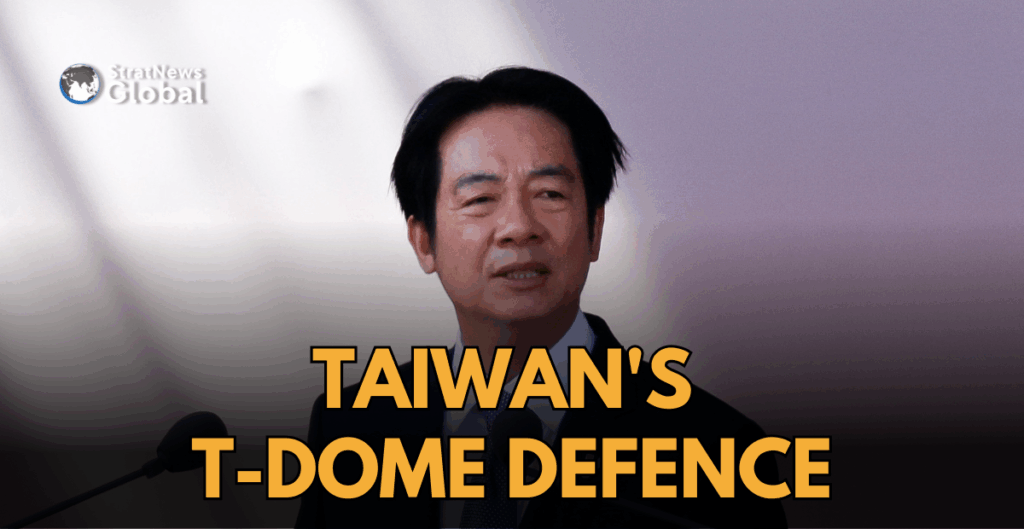
Taiwan Unveils ‘T-Dome’ Air Defence System As China Threats Intensify
Taiwan will build a new multi-layered air defence system called “T-Dome” to defend itself against enemy threats and increase defence spending, President Lai Ching-te said on Friday, calling on China to renounce the use of force to seize the island.
Democratically governed Taiwan has faced increased military and political pressure from China, which views the island as its own territory despite the strong objections of the government in Taipei.
Taiwan is ramping up defence spending and modernising its armed forces, but faces a China that has a far larger military and is adding advanced new weapons such as stealth fighter jets, aircraft carriers and a huge array of missiles.
Defence Safety Net
Lai said in his National Day address that Taiwan is determined to spend more on defence, and would propose a special budget for military spending by the end of the year, showing the government’s determination to protect the island.
“The increase in defence spending has a purpose; it is a clear necessity to counter enemy threats and a driving force for developing our defence industries,” he said.
“We will accelerate our building of the T-Dome, establish a rigorous air defence system in Taiwan with multi-layered defence, high-level detection, and effective interception, and weave a safety net for Taiwan to protect the lives and property of citizens,” Lai said, to applause from the crowd.
T-Dome System
Reuters reported on Thursday that he would unveil the “T-Dome”, which one source said would aim to be like Israel’s Iron Dome.
A senior presidential office official told reporters that the “T-Dome” spending plans would be included in the budget proposal to come by the end of the year.
Taiwan’s existing air defence systems are primarily based around the U.S.-made Patriot and the Taiwan-developed Sky Bow missiles.
Taiwan unveiled its latest air defence missile last month at a major arms show in Taipei, called Chiang-Kong, which is designed to intercept mid-level ballistic missiles and reach airspace higher than the Patriots.
(with inputs from Reuters)
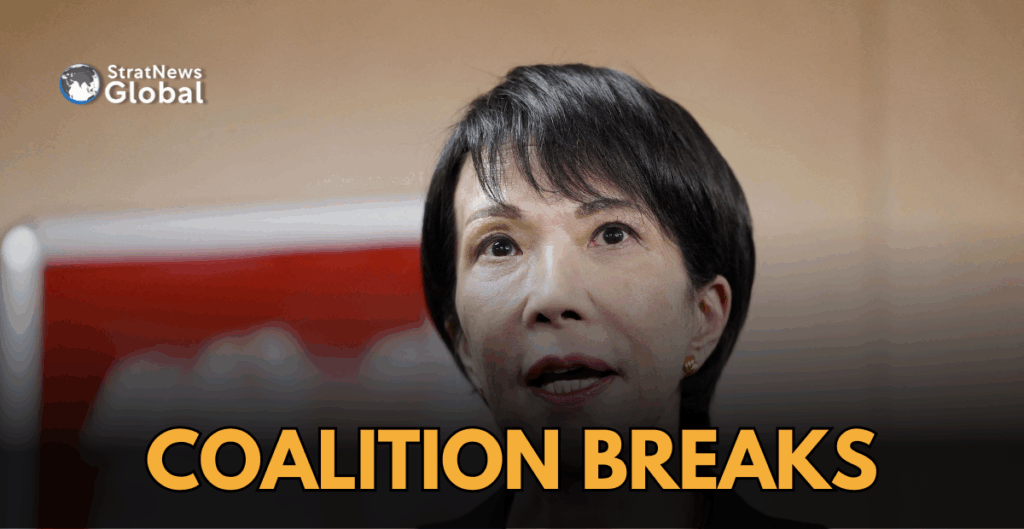
Japan: PM Takaichi’s Premiership In Danger As Ruling Coalition Splits
Japan’s ruling coalition broke up on Friday, with junior partner Komeito rebelling against the Liberal Democratic Party’s new hardline leader, Sanae Takaichi, in a move that casts doubt over her premiership bid.
Takaichi, selected by the LDP as its new head in a weekend vote, must win approval in parliament to become Japan’s first female prime minister later this month.
While her party holds the largest number of seats, it is short of a majority, and the main opposition party has called for other parties to rally behind an alternative candidate.
Komeito Breaks Partnership
Komeito leader Tetsuo Saito told party members that the 26-year partnership had broken down over an “inadequate” explanation by the LDP over its handling of a political funding scandal that has dogged the ruling group for years.
He said Komeito would not back Takaichi in the parliamentary vote on the next prime minister, originally expected to he held around October 15 but likely to be pushed back by the hiatus.
The LDP is 37 seats short of a majority in parliament’s lower house.
Opposition parties can put forward their own candidates when parliament meets to vote on the next premier.
Any candidate who secures a simple majority in the first round wins approval. If not, the two candidates with the most votes go into a run-off.
Opposition Challenges
With Komeito gone, Takaichi may seek to broker alliances with other parties, including the fiscally-expansionist Democratic Party for the People (DPP).
But the main opposition Constitutional Democratic Party has suggested it may support the DPP’s charismatic leader Yuichiro Tamaki as a candidate to challenge Takaichi for the premiership.
Takaichi’s selection as LDP leader last week dampened market expectations for a near-term interest rate hike, sending stocks higher and weakening the yen. She is known for her staunch support of former Prime Minister Shinzo Abe’s “Abenomics” stimulus policies.
Komeito’s No.2 official, Secretary General Makoto Nishida, told a press conference that Japan had entered an “era of the multi-party system” and that his party would strive to become “the axis of centrist, reform-oriented political forces.”
The LDP, which has governed Japan for most of the postwar period, also has a minority in the less powerful upper house of parliament.
(with inputs from Reuters)
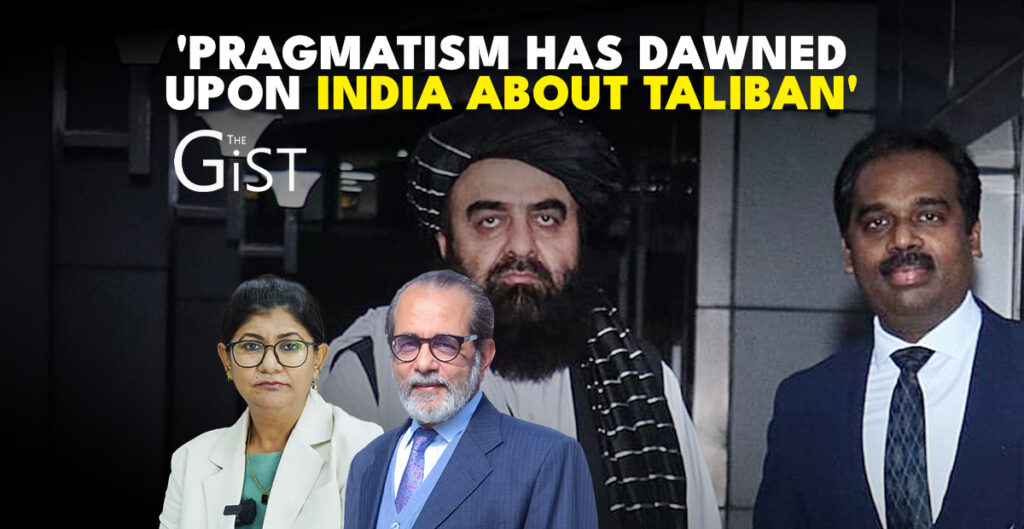
Taliban 2.0 Very Different From Earlier Avatar: Ex-Envoy Rakesh Sood
Four years since the Taliban returned to power in Kabul, Afghanistan’s foreign minister is in Delhi, a move which Rakesh Sood, former ambassador to that country, described as pragmatic.
“This is a step forward … There were signs of this happening right from the beginning of this year. Initially we closed our embassy because we had not established any contacts with the Taliban. In fact, they had reached out to us (but India did not engage with them),” Sood, who has also served in Islamabad, told StratNews Global on The Gist.
He said after the Taliban established their international office in Doha, Qatar in 2013, the United States, Russia, Germany, Norway, Turkey, Iran, Saudi Arabia, UAE, started engaging with them, particularly with Mullah Baradar, who was then based there. Baradar is currently Deputy Prime Minister of Afghanistan.
“Somehow, we decided to not engage with them (the Taliban) and which is why when the Taliban takeover happened in 2021, we felt insecure and obviously had to close down the embassy within 48 hours and evacuate all the Indians from there,” Ambassador Sood said.
“However, I’m glad that people started thinking a little more pragmatically. And after a year or so, we then opened a technical mission. We did not send an ambassador, but we had a technical mission because we continued to provide humanitarian assistance,” he said.
During his first face-to-face bilateral meeting in New Delhi with Muttaqi, External Affairs Minister Jaishankar said India will re-open its embassy in Kabul and underscored the “sovereignty and territorial integrity” of Afghanistan.
A Lot That’s Different
According to Sood, there is a “lot” that is “very different” from the Taliban which ruled Afghanistan during the period 1996-2001 to the Taliban of today, which has now got full control of the country.
“The first time the Taliban came to power, we certainly did not engage with them because the Taliban also took a hostile attitude towards us, and we saw that. And at the same time, the Taliban did not have full control over their country.
“There was a Northern Alliance, which continued to resist the takeover by the Taliban across the entire country. And although they were getting squeezed, there is no doubt about it, but still the Northern Alliance kept up a fight,” he said, adding at that time Taliban was backed by the Pakistani military.
“In 1996, the Taliban was backed by the Pakistani military. So, there was a lot of difference. We, along with Russia and Iran were providing active assistance to the Northern Alliance that was resisting the Taliban. Yes. So, the relationship with the Taliban was quite different.”
The Taliban today has a “hostile relationship” with Pakistan and it has committed to India that they will not allow cross-border terrorism. Afghanistan was one of the first countries in the region to condemn the Pahalgam terror attacks that took place in April 2025.
“The Taliban government that came to power in 2021 has been at pains to tell us that they are not engaged in any terrorist activity, although there are a number of internationally proscribed terrorist groups that they seem to host. But they have repeatedly assured us that they will not permit any of these to undertake any adverse actions in India,” he said.
“So there is a difference, ideologically speaking, with the Taliban that is now there as compared to the Taliban that was earlier there, which was completely dependent on Pakistan. Today’s Taliban is not that dependent on Pakistan.”
Tune in for the interview now running on StratNews Global’s YouTube channel.
India, Afghanistan Clear Decks For Expanded Engagement Across Sectors
India and Afghanistan have launched a new phase of their dedicated Air Freight Corridor, to increase market access for Afghan goods, support Indian exports, and create more stable trade pathways between the two countries.
It will be especially useful for transporting perishable goods such as fresh and dried fruits, vegetables, and herbs.
The initiative was confirmed following talks between External Affairs Minister S. Jaishankar and Afghan Foreign Minister Mawlawi Amir Khan Muttaqi in New Delhi.
Trade, Mining Cooperation
The Afghan side encouraged Indian businesses to explore investment opportunities in the mining sector. Discussions included the development of infrastructure projects and improving supply chains across both countries.
A joint statement said the two sides agreed to explore cooperation in hydroelectric projects. The Salma Dam in Herat build by India, was cited as a key example of how Delhi could help meet Afghanistan’s energy and irrigation needs.
They also discussed water resource management and expanding electricity access for Afghan communities.
Healthcare Projects
The joint statement mentioned the ongoing healthcare support from India which includes:
- A new 30-bed hospital in Kabul’s Bagrami district.
- An Oncology Centre and Trauma Centre in the capital.
- Five maternity health clinics in the provinces of Paktika, Khost, and Paktia.
- Replacement of heating systems at the Indira Gandhi Institute of Child Health in Kabul.
India will also gift 20 ambulances to Afghanistan. A symbolic handover was done by Jaishankar during the meeting earlier in the day today.
So far, around 75 prosthetic limbs have been provided to Afghan citizens under Indian-supported initiatives.
Educational Support
India continues to offer scholarships to Afghan students under the e-ICCR programme, with more academic options being planned under existing scholarship frameworks. Educational cooperation remains a key area of engagement.
Humanitarian Assistance
India’s humanitarian aid to Afghanistan covers food supplies, disaster relief materials, school stationery, and pesticides. The Indian side confirmed its continued commitment to supporting Afghanistan’s urgent needs, including for communities affected by forced displacement.
The Afghan side welcomed India’s continued humanitarian outreach and noted its impact across various sectors.
Connectivity Efforts
The original Air Freight Corridor was launched in 2017, with the first cargo flight arriving in Delhi from Kabul in June of that year. This initiative followed discussions between Prime Minister Narendra Modi and former Afghan President Ashraf Ghani in 2016.
India has supported alteralso allowed Afghan trucks to use the Attari land border crossing and supporting development at Chabahar Port in Iran, alongside trilateral cooperation with Tehran.These efforts aim to improve regional access for Afghan exports and create new trade channels through South Asia.
- India’s key exports to Afghanistan include pharmaceuticals, textiles, cereals, dairy, poultry, and spices.
- Afghanistan’s major exports to India are fresh and dried fruits, nuts, raisins, vegetables, oil seeds, and semi-precious stones.