

Support us by contributing to StratNewsGlobal on the following UPI ID
ultramodern@hdfcbank

Strategic affairs is our game, South Asia and beyond our playground. Put together by an experienced team led by Nitin A. Gokhale. Our focus is on strategic affairs, foreign policy and international relations, with higher quality reportage, analysis and commentary with new tie-ups across the South Asian region.
You can support our endeavours. Visit us at www.stratnewsglobal.com and follow us on YouTube, Twitter, Facebook and Instagram.
र 500 per month
र 1000 per month
र 5000 per year
र 10000 per year
Donate an amount of your choice
र 500 per month
Donate र 500 per month

र 1000 per month
Donate र 1000 per month
र 5000 per year
Donate र 5,000 per year
र 10000 per year
Donate र 10,000 per year
Donate an amount of your choice
Donate an amount of your choice


Pakistan: Terrorist Attack On Dera Ismail Khan Police Academy Leaves Seven Officers Dead
On Saturday, terrorists launched an assault on a police training school in the Ratta Kulachi area of Dera Ismail Khan district in Pakistan, killing seven officers and at least six attackers, according to media reports.
The assailants, described as Khawarij by the Central Police Office, rammed an explosives-laden truck into the school’s main gate, triggering a massive blast, Dunya News reported.
Heavily armed attackers wearing multiple uniforms then stormed the facility, prompting a fierce gun battle with police personnel.
Officials said police officers fought back with “great bravery,” engaging the terrorists in an extended exchange of fire as the attackers hurled grenades inside the compound.
Seven officers were killed in the fighting, while several others sustained injuries and were taken to nearby hospitals for treatment.
This incident is part of a broader surge in terrorist activities in the region.
Authorities responded swiftly to the assault, cordoning off the area and conducting clearance operations to ensure no further attackers remained.
They said around 200 trainee officers and staff members were safely evacuated from the premises.
Continuing Threat From Terrorist Groups
Inspector General of Khyber Pakhtunkhwa Police Zulfiqar Hameed told Pakistani media that the area had been cleared and that a search and clean-up operation was underway.
The attack in Dera Ismail Khan reflects a continuing threat from terrorist groups in Pakistan’s northwest, particularly in Khyber Pakhtunkhwa province. Security analysts say the region has long been a hotspot for insurgent activity.
Over the past decade, attacks on police academies and checkpoints have been used by terrorists to undermine state authority and create instability in the area.
The Pakistani government has repeatedly pledged to strengthen counterterrorism measures, including intelligence-sharing and military operations along the Afghanistan border, to curb the influence of extremist networks.
Analysts warn that despite these efforts, the persistence of local support networks and porous borders continues to pose a challenge.
(With inputs from IBNS)
Disputed: Barahoti Is A Potential India-China Flashpoint, But Could Be Resolved?
In this new series Disputed, we look at those sections of the India China boundary that could be potentially more easy to resolve. We begin with Barahoti in the Middle Sector, which, along with Sikkim, could comprise the “early harvest” the Chinese have talked about. The facts and arguments cited here are based on Defence Ministry records.
The Barahoti grazing grounds in Uttarakhand’s Chamoli district, is at a height of 14,000 feet. The area is as remote as it is picturesque. No proposals have been made by India or China on resolving this dispute since the nor is there as yet any schedule for talks.
According to the Indian Defence Ministry, Barahoti is one of the first disputed areas along the India-China boundary. That situation arose in 1955 when India sent police patrols to Barahoti to establish the precise location of Tunjun La, a pass leading into Tibet.
The Chinese objected, lodged protests and sent their own personnel into Barahoti, leading India to protest. Later that year, China set up a camp in Barahoti naming that area as “Wu Je” and that it belonged to Tibet.
But were the Chinese entirely clear about where Barahoti was? The Chinese counsellor in India claimed it was 12 km north of the Tunjun La when actually it is south of it.
In June 1956, the Chinese suggested both sides refrain from sending troops into Barahoti until a diplomatic settlement was arrived at. This was along roughly similar lines to an Indian proposal to “neutralise” the area made the previous year.
In 1957 no forces were sent by either side although protest notes continued to be exchanged culminating in a conference in Delhi in April 1958. The two sides agreed on not sending any armed personnel into Barahoti but the Chinese said civilian personnel should be allowed.
Since then that practice has continued but some disturbing signals: China’s claim about the size of Barahoti changed, from 150 sq. km to 776 sq. km voiced at the border talks in 1960. This was done by claiming, for the first time, that Barahoti included two areas Sangcha Malla and Lapthal lying to the south.
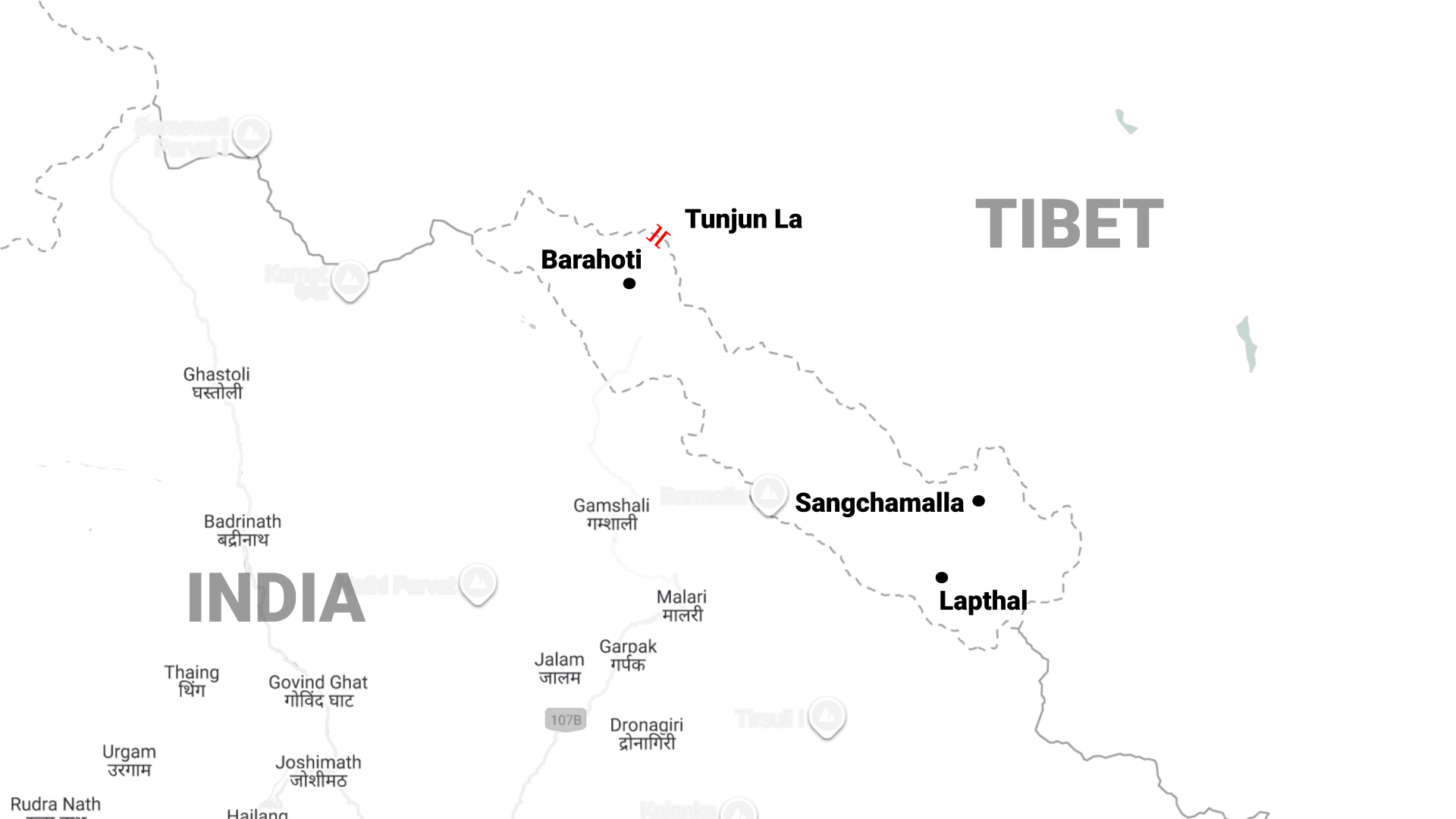
In India’s view, the area under dispute is no more than 80 sq. km. China’s claim therefore is exaggerated, giving the impression it is seeking to build leverage.
The Chinese claims only underscored a major Indian problem, the difficulties in physically dominating Barahoti which involved crossing the Chorhoti Pass at an altitude of more than 21,300 feet. But a physical presence was required so Capt. Narinder Kumar (later colonel), was tasked with the job.
By April 1961 he had established an all-weather post at Rimkhin, which is just short of the ridge line that descends into the Barahoti bowl. Five months later the post was shut down after experiencing difficulties with maintaining supplies during the winter. The post was re-established in April 1962 with a platoon strength of troops (about 30 men).
The Chinese promptly responded by sending troops at regular intervals into the Barahoti area, reportedly deploying around five battalions and laying tracks from Tholing to the Indian border, a distance of roughly 15 km at the nearest point.
The ground situation did not escalate during the 1962 war. After the war, Barahoti was “demilitarised by mutual agreement”, thereby giving credence to the terminology of Demilitarized Zone.
In 1995, Barahoti was accepted as one of the eight “Mutually Agreed Disputed Areas” by both sides during the Expert Group meeting. IN 2000-2001, during the exchange of Middle Sector maps, about 378 sq. km of area difference had emerged in respective LAC perceptions.
China maintains that Barahoti is under the jurisdiction of Dapa Dzong district of Tibet and claims approximately 740 sq. km of Indian territory in this area.
Thus even today, Barahoti remains a potential flash point in the Middle Sector. Opposite the Barahoti Bowl, the major Chinese garrison is located at Thoiing and other minor deployments are at Poling and Dapa Dzong.
The Chinese road communications in this area is also well developed with natural surface roads coming up to the Mana Pass, Niti Pass and Tunjun La that are right on the boundary. As the area is served with specific road arteries surrounded by mountains, it is of utmost importance to defend these road axes against any Chinese aggression.
Hence the concept of defending all the axes by holding defences in tiered form holds merit and forms the fundamentals of the defence of Barahoti.
Italy: Meloni Seeks To Ban Burqa And Niqab In Public Areas
The Brothers of Italy party, led by Prime Minister Giorgia Meloni, has proposed legislation to prohibit burqas and niqabs in public areas, citing fears of “Islamic separatism,” according to media reports.
The proposed legislation would prohibit the use of garments covering the face in all public places, including shops, schools and offices.
The burqa is a full-body garment that covers a woman from head to foot, including a mesh screen over the eyes. The niqab is a veil for the face that leaves the area around the eyes clear.
Violators could face fines ranging from 300 to 3,000 euros (approximately USD 350–3,500), according to local media reports.
Lawmaker Andrea Delmastro, one of the bill’s initiators, said on Facebook: “Religious freedom is sacred, but it must be exercised openly, in compliance with our Constitution and the principles of the Italian state.”
Religious Radicalisation And Hatred
Sara Kelany, head of immigration for the Brothers of Italy, said during a press conference on Wednesday that the bill would also address the regulation of mosque funding and strengthen laws against forced marriages.
The legislation was aimed at combating “religious radicalisation and religiously-motivated hatred”, the introductory text said.
“It is a bill that will essentially deal with regulating the funding of mosques, and with preventing and banning the use of the full-face veil. It also emphasizes legislation against forced marriages. In Italy, we apply our laws based on a specific set of values,” Kelany said, as quoted by Politico.
The draft law reportedly includes stricter penalties for forced marriages and requires religious groups not formally recognized by the state to disclose any foreign funding sources.
France became the first country in the world to ban the wearing of full-face veils in public in 2011. Since then, several other nations have introduced similar restrictions on face coverings in public spaces.
(With inputs from IBNS)
Joe Biden Begins Radiation Therapy For Prostate Cancer
Former US President Joe Biden has begun radiation therapy as part of his ongoing treatment for prostate cancer, his spokesperson confirmed to CNN.
The 82-year-old, who turns 83 next month, was diagnosed earlier this year with an aggressive form of the disease that has spread to his bones. The announcement marks the next stage in his treatment plan, which also includes hormone therapy.
The spokesperson for the former president said, “As part of a treatment plan for prostate cancer, President Biden is currently undergoing radiation therapy and hormone treatment.” However, no timeline has been provided for how long the treatment will continue.
Aggressive Form Of Prostate Cancer
Biden’s personal office had revealed in May that he was suffering from an “aggressive form” of prostate cancer that had already metastasised to his bones.
In an interview with CNN shortly after the diagnosis, the former president said he remained optimistic about his recovery. “The expectation is we’re going to be able to beat this,” Biden told CNN. “It’s not in any organ, it’s in – my bones are strong, it hadn’t penetrated. So, I’m feeling good.” He added that he had also begun a pill regimen as part of his treatment.
Medical experts say prostate cancer is among the most common forms of cancer in men, particularly in older age.
According to Biden’s medical team, his Gleason score — a grading system used to assess the aggressiveness of prostate cancer — was 9, which indicates the most serious form of the disease.
Treatment And Past Health Procedures
Doctors say that patients with high-risk prostate cancer can still lead relatively normal lives with appropriate treatment, which may include hormone therapy, radiation, or chemotherapy.
In addition to prostate cancer, Biden has also undergone treatment for skin cancer. Last month, he had Mohs surgery to remove cancerous lesions from his skin. This follows a similar procedure in 2023, during his presidency, when a lesion removed from his chest tested positive for basal cell carcinoma.
His physician at the time, Dr Kevin O’Connor, said “all cancerous tissue was successfully removed” and that Biden would continue regular dermatological surveillance.
Basal cell carcinoma is the most common type of skin cancer and is typically slow-growing and curable. Despite his ongoing medical treatments, Biden’s office has said he remains in good spirits and continues to follow his doctors’ advice closely.
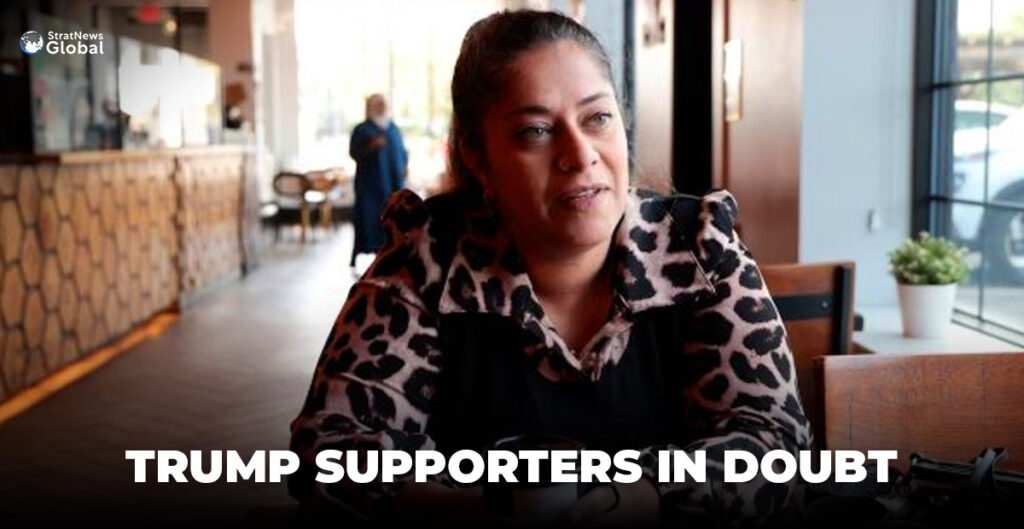
Arab American Trump Supporters Cheer Gaza Deal But Doubt Its Longevity
Samra’a Luqman, a lifelong Democrat turned vocal supporter of U.S. President Donald Trump, helped mobilize Arab American voters in Dearborn, Michigan, during his 2024 campaign, driven by hopes that he could bring an end to the Gaza conflict.
Now, after Trump helped to broker a ceasefire deal, Luqman feels thrilled and a bit vindicated after months of backlash from neighbours angry over Trump’s support for Israel.
“It’s almost an ‘I told you so moment,'” said Luqman, who is Yemeni American. “No other president would have been able to force Bibi to approve the ceasefire,” she said, referring to Israeli Prime Minister Benjamin Netanyahu.
Luqman and other Arab American Trump supporters expressed guarded optimism to the media about the recently announced agreement, but said they worried that Israel could violate the ceasefire, as it has done in the past in Gaza and Lebanon.
“We’re all holding our breath,” said Mike Hacham, a Lebanese American political consultant and Dearborn resident who campaigned hard for Trump in 2024. “I gotta give credit where credit is due … but this isn’t a peace deal. It’s just the end of a bloody war and those lives that were lost on the Israeli side and the Palestinian side aren’t going to be brought back.”
Arab Americans’ Mistrust Of Israel
Israeli airstrikes in Qatar and other Arab nations in recent months fueled deep mistrust of Israel among Michigan’s more than 300,000 people of Arab heritage. But the agreement is the biggest step yet to end two years of war that Palestinian health authorities have said killed more than 67,000 people in Gaza.
In addition to a ceasefire, the deal calls for releasing the last 20 of 250 hostages seized by Hamas when it started the war with the October 7, 2023, attacks that killed more than 1,200 people, according to the Israeli government.
It comes after months of deepening frustration among Arab Americans over what they see as Trump’s failure to rein in Netanyahu and end the war. Trump’s renewed ban on travel from several majority-Muslim countries and crackdowns on freedom of speech targeting pro-Palestinian protesters have also unnerved many, according to more than a dozen Arab American voters who backed Trump in Michigan last year and spoke to the media in recent weeks.
Many of those interviewed also felt disappointed that their community’s support — thousands of votes that helped to push Trump to victory in Michigan — did not translate into more senior high-profile posts for Arab Americans and Muslims in his administration.
It remains unclear whether the ceasefire deal will sway skeptical voters as Trump’s Republicans face competitive congressional and gubernatorial elections in Michigan next year, as well as the 2028 presidential election.
Hacham said Trump would be hailed as a “champion of peace” after brokering the Gaza ceasefire, but added that Arab American voters could turn against him and other Republicans if it fails.
“We are willing to abandon the Republicans and move back to the Democrats,” Hacham said. “We’ve shown Donald Trump that we have the power to swing whichever way we want.”
Democrats’ Switch To Trump
Trump won Michigan by more than 80,000 votes in 2024, reversing his 154,000-count loss to Democrat Joe Biden in 2020. An October 2024 Arab American Institute poll had shown Trump favoured by 42% of Arab Americans nationwide versus 41% for Kamala Harris — down 18 percentage points from Biden’s share in 2020.
In addition to anger over the Gaza war, Trump’s 2024 campaign tapped into concerns raised by some conservative community members about Democrats’ defence of transgender rights, Luqman said. She expected those voters probably would stick with Republicans.
But a larger group of Arab Americans voted for Trump in 2024 “out of spite” at Democrats, and their continued support for the Republican Party likely depends on what happens with Gaza, Luqman said.
“I don’t think they’ve found their political home with the Republicans just yet,” she said, adding that Trump’s pressure on Netanyahu could “solidify support for JD Vance in the next election and for the midterms for any Republicans that run.”
Imam Belal Alzuhairi joined Trump on stage in Michigan just days before the 2024 election, alongside 22 other clerics, convinced that he offered the best chance for peace, but he said many Yemeni Americans later grew disenchanted after Trump reimposed a travel ban on many Muslim countries.
“Now, a lot of people are very upset. They are fearing for themselves and their families. There’s a mistrust after the travel ban,” he said.
After facing personal backlash for his endorsement, the Yemeni American cleric says he is pulling out of “soul-consuming” politics to focus on religion and his family.
Trump Administration Moves To Tamp Down Frustration
Special envoy Richard Grenell, a Michigan native tapped by Trump to lead his outreach to Arab American and Muslim voters, returned to the Detroit area last month for his first in-person meetings with community leaders since November.
His mission? To tamp down the mounting frustration and prevent Arab Americans from swinging to the Democratic Party, as they did after Republican President George W. Bush’s invasion of Iraq in 2003.
Alzuhairi, Luqman and a dozen others grilled Grenell at a coffeehouse in Dearborn over the travel ban and U.S. arms sales to Israel. At a separate session, he was asked why the administration is not doing more to help Christians in Iraq.
Grenell, former acting director of intelligence during Trump’s first term, said the dialogue was important.
“I continue to believe that the Arab and Muslim communities in Michigan are the key to winning the state,” Grenell said. “I know these leaders well and they want and deserve access to political decision makers.”
Although Grenell faced tough questions from Arab American leaders during four events in the Detroit area, he said he would remain closely engaged, and emphasized Trump’s commitment to peace around the world.
“You can’t show up right before an election and expect to be a credible voice for any community,” he said.
Ali Aljahmi, a 20-year-old Yemeni American who helped to galvanize young Arab Americans for Trump with a video viewed nearly 1 million times on X, credited him for coming to Dearborn twice during the 2024 campaign.
But it’s too soon to predict the next election, said Aljahmi, whose family operates four restaurants in the Detroit area.
“Trump promised a lot,” he said. “Okay, you came and showed your face, but I still think it’s a mixture. Three years from now, we’ll see what they’re doing.”
(With inputs from Reuters)
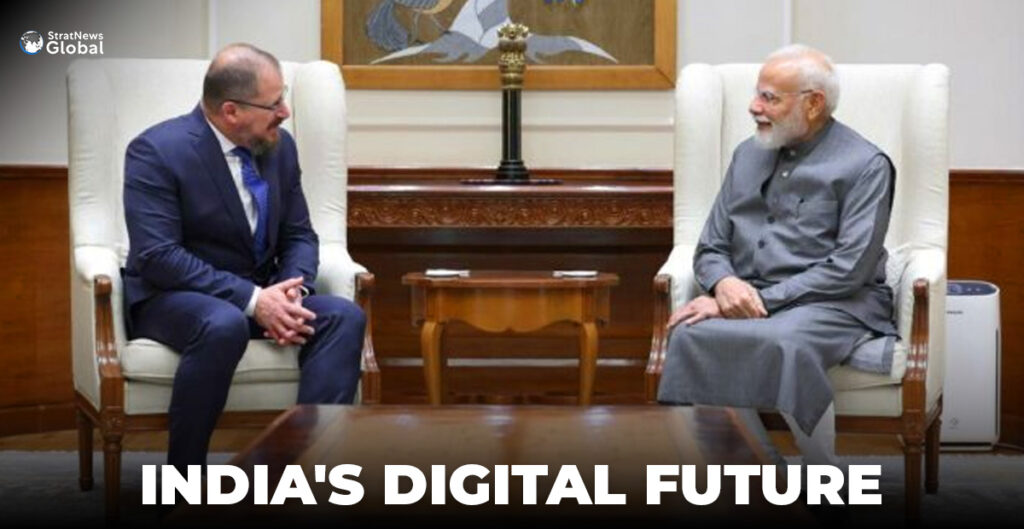
Qualcomm CEO, PM Modi Talk India’s Digital Future
Prime Minister Narendra Modi met Cristiano R. Amon, president and chief executive officer of US-based chip giant Qualcomm, to discuss India’s progress in artificial intelligence, semiconductor development, and digital innovation.
The meeting, held earlier this week, highlighted growing collaboration between the Indian government and leading global technology firms in advancing India’s role in the digital and AI ecosystem.
During the meeting, the Prime Minister appreciated Qualcomm’s contribution to India’s semiconductor and AI missions and said that the country offers immense talent and scale to drive the next phase of technological growth.
Modi shared details of the meeting on social media, writing, “It was a wonderful meeting with Cristiano R. Amon and discussing India’s strides in AI, innovation and skilling. Great to see Qualcomm’s commitment towards India’s semiconductor and AI missions. India offers unmatched talent and scale to build technologies that will shape our collective future.”
Strengthening India–Qualcomm Partnership
Qualcomm CEO Cristiano Amon expressed gratitude to the Prime Minister for the interaction and reaffirmed the company’s commitment to India’s digital and innovation goals. He said the discussion focused on expanding collaboration in support of the IndiaAI and India Semiconductor Missions and the upcoming transition to 6G technologies.
“Thank you, PM @narendramodi, for the great conversation on fostering a broader partnership between @Qualcomm and India in support of the IndiaAI and India Semiconductor Missions, as well as the transition to 6G. We are encouraged by the opportunities to develop an Indian ecosystem across AI smartphones, PCs, smart glasses, auto, industrial and more,” Amon wrote on X, sharing photos from the meeting.
The company has been working closely with India’s technology and research ecosystem for several years, playing a key role in advancing local manufacturing, research, and innovation in wireless communication and AI.
Focus On India’s Digital Future
Earlier this week, Qualcomm India reiterated its long-term commitment to helping shape India’s digital future. Speaking at the India Mobile Congress (IMC) 2025, the company showcased innovations in Edge AI, 6G, connected homes, and advanced computing platforms. It emphasised that its technologies are driving India’s digital transformation through inclusive, sustainable, and globally competitive solutions.
At IMC 2025, Qualcomm presented its vision for an intelligent and connected India under three key pillars — Personal AI, Physical AI, and Industrial AI. The company also highlighted how its technologies have supported India’s journey from 3G to 5G and are now paving the way for 6G through local R&D efforts, strategic collaborations, and early-stage research initiatives.
Qualcomm further underlined the importance of Edge AI and 5G as the twin foundations of India’s digital future, reaffirming its goal of working closely with the Indian government and industry partners to build a strong technology ecosystem.
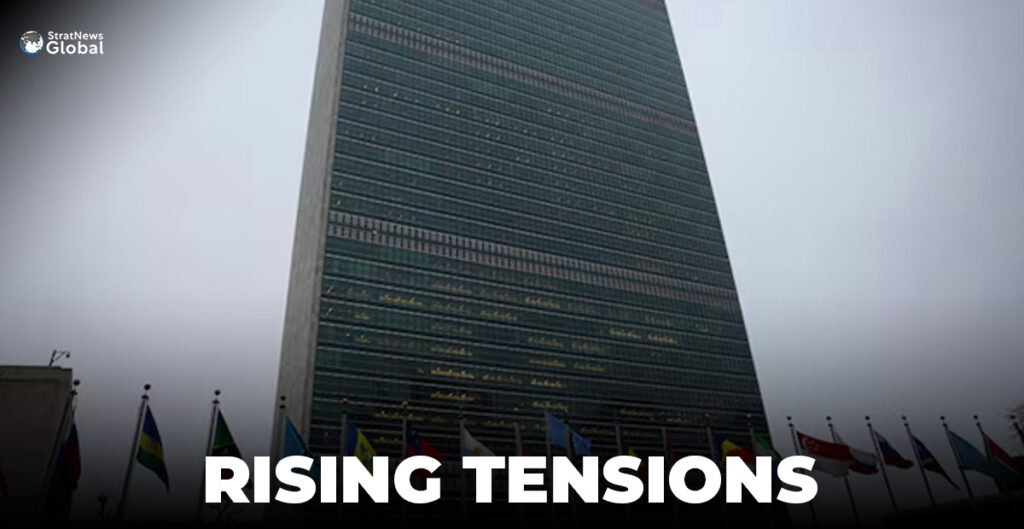
UN Security Council Expresses Concern Over Escalating US-Venezuela Tensions
United Nations Security Council (UNSC) members on Friday voiced concern over rising tensions between the United States and Venezuela, while Russia accused Washington of following a shoot-first “cowboy” approach in targeting alleged drug boats.
Russia’s Ambassador to the United Nations, Vassily Nebenzia, told a meeting of the 15-member U.N. council that Venezuela had every reason to believe the United States was ready to move from threats to action against it.
Countries including U.S. allies France, Greece and Denmark called for de-escalation and dialogue to resolve tensions, and adherence to international law.
The United States has struck several vessels allegedly carrying drugs off the coast of Venezuela in recent weeks. The U.S. representative to the U.N. meeting, John Kelly, said Washington “will not waver in our action to protect our nation from narco terrorists.”
The strikes – part of what the Trump administration has called a conflict with drug cartels – have alarmed Democratic lawmakers and raised questions as to their legality as Trump expands the scope of presidential power.
Nebenzia said Russia condemned the strikes as gross violations of international law and human rights, adding that “boats that people were on were simply fired upon in the high seas without a trial or investigation.” He said this was done “according to the cowboy principle of ‘shoot first’.”
“And now we’re being asked to retroactively believe that there were criminals on board,” he said.
Venezuela’s Warning
Venezuela’s ambassador to the U.N., Samuel Moncada, told the U.N. meeting that, based on the U.S. military build-up in the region and Washington’s “belligerent action and rhetoric”, his country was “facing a situation in which it is rational to anticipate that in the very short term an armed attack is to be perpetrated against Venezuela.”
Panama’s deputy U.N. ambassador, Ricardo Moscoso, said while his country recognised legitimate concerns about drug trafficking, piracy and other illicit activities in regional waters, “we emphasise that beyond military responses, it is possible to confront this scourge through coordinated and sustainable strategies.”
“Panama believes that the transnational threats facing our region demand joint responses based on respect for international law and supported by a shared commitment to peace and stability in our hemisphere,” he said.
Paris supported multilateral initiatives to curb trafficking and strengthen border controls, said France’s deputy U.N. envoy Jay Dharmadhikari, adding that this must be done with respect for international law, including human rights law, and “in this context, states must refrain from any unilateral armed action.”
(With inputs from Reuters)
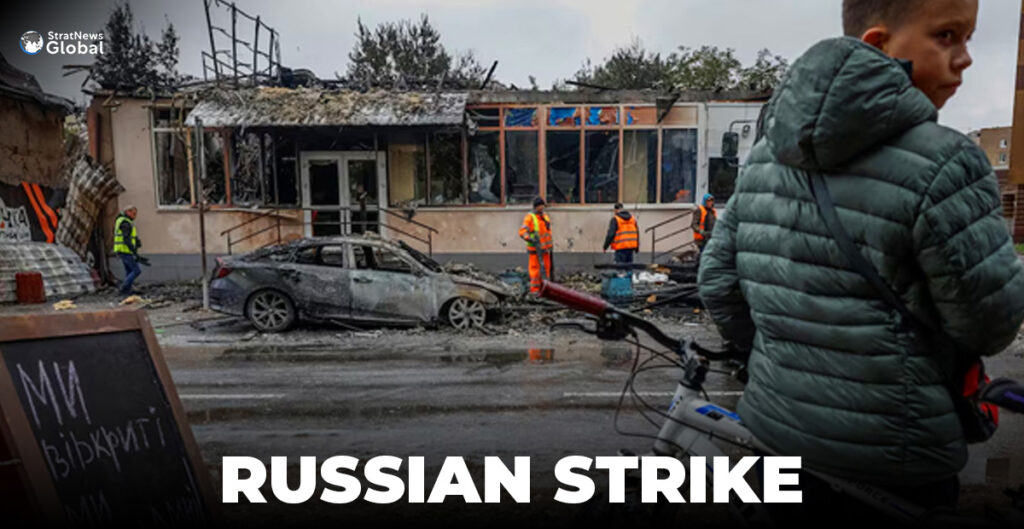
Power Restored After Russian Strikes Leave Thousands In Kyiv Without Electricity
Emergency crews restored electricity to much of Ukraine on Friday after Russian drone and missile strikes hit energy facilities, leaving large parts of Kyiv and other regions without power and water.
In the latest mass attack targeting the energy system as winter approaches, electricity was interrupted in nine regions, and over a million households and businesses were temporarily without power across the country.
In southeastern Ukraine, a seven-year-old was killed when his home was hit, and at least 20 people were injured.
Officials reported Russian attacks in different parts of the country throughout Friday. An official near the Russian border in the Chernihiv region said one person was killed when a car belonging to the local energy utility was hit by a drone.
In Kyiv, an apartment block in the city centre was damaged by a projectile, while on the left bank of the Dnipro that divides the capital, crowds waited at bus stops with the metro out of action. People filled water bottles at distribution points.
“We didn’t sleep at all,” said Liuba, a pensioner, as she collected water. “From 2:30 a.m., there was so much noise. By 3:30, we had no electricity, no gas, no water. Nothing.”
By evening, the private power company DTEK said electricity had been restored to all Kyiv residents. It said power had also been restored in areas outside the capital and in the Dnipropetrovsk region in the southeast.
Ukraine’s energy ministry said more than 800,000 customers had at one point suffered power cuts in Kyiv.
Calls For Air Defences, Sanctions Enforcement
Ukrainians are bracing for a tough winter, as the full-scale war launched by Russia’s February 2022 invasion nears its fourth anniversary. Russia has intensified attacks on the energy system in recent weeks, striking power plants and gas production facilities, and local authorities are struggling with the scale of repairs.
“They can’t demonstrate anything real on the battlefield… so they will attack our energy sector,” President Volodymyr Zelenskyy told reporters in Kyiv.
Calling for more support from allies, he said that 203 main energy facilities in the country needed air-defence protection.
Energy Minister Svitlana Hrynchuk met G7 ambassadors and representatives of some of Ukraine’s biggest energy companies to discuss how allies could help protect the country against further attacks and repair the damage.
“The blow is strong, but it is definitely not fatal,” Zelenskyy said.
Speaking later in his nightly video address, Zelenskyy said Putin had deliberately launched the overnight attacks when world attention was focused on the “valuable opportunity” to move towards Middle East peace after the ceasefire agreement in Gaza.
“This marks a new record of Russian depravity, to intensify terrorist strikes and target civilian lives at such a moment,” he said.
Ukraine’s air force said it had downed 405 of 465 drones and 15 of 32 missiles in this attack. Ukraine’s stretched air defences are no match for regular barrages on such a scale.
According to Zelenskyy, Russia deliberately waited for bad weather to attack, and the inclement conditions reduced the efficiency of Ukraine’s air defences by between 20% and 30%.
Russia said its overnight strikes were in response to Ukraine’s attacks on Russian civilian facilities.
Ukraine regularly launches drone strikes against Russia’s military and oil installations, although they are generally on a far smaller scale. Kyiv says it wants to force Moscow to negotiate a peace deal in good faith.
Commuters Stranded Amid Transport Disruptions
For many Kyiv residents, the day started with power cuts, disruptions in the water supply and transport delays.
“We had no power or water when I left my house. I can’t get to work because the subway is not operating and buses are overflowing,” Anatoliy, a 23-year-old student, told Reuters.
Prime Minister Yulia Svyrydenko said the assault was among the heaviest concentrated strikes on energy infrastructure and reported significant damage.
Her deputy, Oleksiy Kuleba, said two million customers in Kyiv temporarily faced problems with water supplies.
DTEK said its thermal power plants had suffered significant damage without providing details.
(With inputs from Reuters)
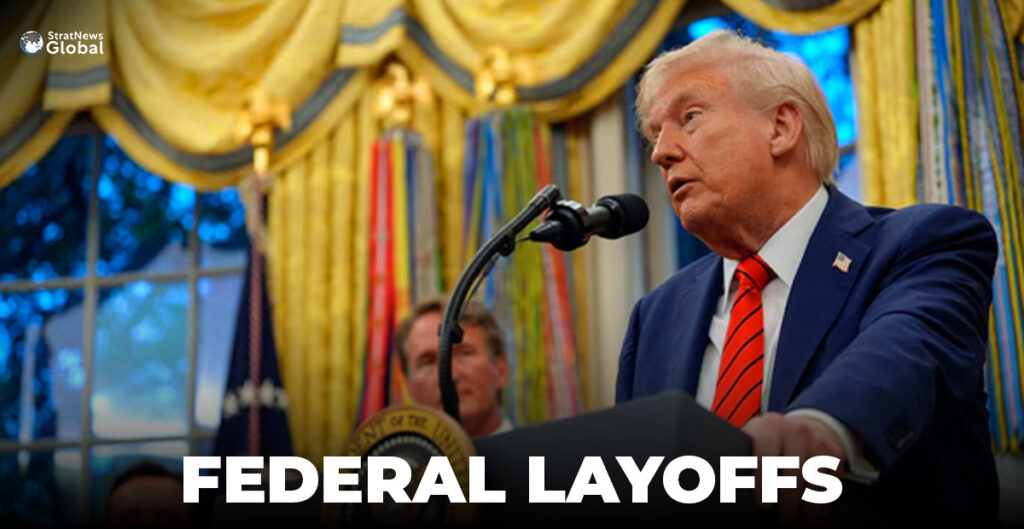
White House Fires Thousands Of Federal Employees, Citing Govt Shutdown
U.S. President Donald Trump on Friday blamed Democrats for his decision to dismiss thousands of federal employees nationwide, following through on his threat to slash the government workforce amid the shutdown.
Job cuts were underway at the Treasury Department, the U.S. health agency, the Internal Revenue Service and the departments of education, commerce, and Homeland Security’s cybersecurity division, spokespeople said, but the total extent of the layoffs was not immediately clear. Roughly 300,000 federal civilian workers had already been set to leave their jobs this year due to a downsizing campaign initiated earlier this year by Trump.
“They started this thing,” Trump told reporters during an event in the Oval Office, calling the job cuts “Democrat-oriented.”
Trump’s Republicans hold majorities in both chambers of Congress, but need Democratic votes in the U.S. Senate to pass any measure that would fund the government.
Democrats are holding out for an extension of health-insurance subsidies, arguing health costs will increase dramatically for many of the 24 million Americans who get their coverage through the Affordable Care Act.
Trump has repeatedly threatened to fire federal workers during the shutdown standoff, in its 10th day on Friday, and has suggested his administration will aim primarily at parts of the government championed by Democrats.
Trump has also ordered the freezing of at least $28 billion in infrastructure funds for New York, California and Illinois – all home to sizable populations of Democratic voters and critics of the administration.
The Justice Department said in a court filing that more than 4,200 federal employees had gotten layoff notices at seven agencies, including more than 1,400 at the Treasury Department and at least 1,100 at the Department of Health and Human Services.
Democrats Say They Won’t Relent
Democrats said they will not cave to Trump’s pressure tactics.
“Until Republicans get serious, they own this – every job lost, every family hurt, every service gutted is because of their decisions,” Senate Democratic Leader Chuck Schumer said.
Labour unions representing federal workers have sued to stop the layoffs, saying they would be illegal during a shutdown.
The administration said in a Friday court filing that the unions’ request should be denied because they lack the legal right to sue over federal personnel decisions.
A federal judge is due to hear the case on October 15.
The government is required by law to give workers 60 days’ notice ahead of any layoffs, though that can be shortened to 30 days.
Some Republicans objected to the layoffs, including Senator Susan Collins, the chair of the Senate Appropriations Committee.
“Regardless of whether federal employees have been working without pay or have been furloughed, their work is incredibly important to serving the public,” Collins said in a statement.
Targeting Furloughed Workers
Earlier in the day, White House budget director Russell Vought wrote on social media that “The RIFs had begun,” referring to so-called reductions in force. A spokesperson for the budget office characterised the cuts as “substantial,” without offering further details.
The announcement came on the same day that many federal workers were due to get reduced paychecks that do not include any pay for the days since the shutdown began. Hundreds of thousands have been ordered not to report to work, while others have been ordered to keep working without pay. The nation’s 2 million active-duty troops will miss their October 15 paycheck entirely if the shutdown is not resolved before then.
Employees across multiple divisions of the Department of Health and Human Services have received layoff notices, communications director Andrew Nixon said. The 78,000 workers at the sprawling agency monitor disease outbreaks, fund medical research, and perform a wide range of other health-related duties.
Agency Staff Targeted
Nixon said the layoffs were targeted at agency staff who have been ordered not to work, but did not provide further details. Roughly 41% of agency staff have been furloughed.
Layoffs have also begun at the Treasury Department, according to a spokesperson who requested anonymity.
A labour union official, Thomas Huddleston of the American Federation of Government Employees, said in a court filing he had been told Treasury was preparing 1,300 layoff notices. Those layoffs could hit the tax-collecting Internal Revenue Service, which has been targeted for steep job cuts this year. Some 46% of the agency’s 78,000 employees were furloughed on Wednesday.
Layoffs have also begun at the Department of Housing and Urban Development, the union said.
Officials also confirmed job cuts at the Education Department, which Trump has vowed to shutter completely, and the Commerce Department, which handles weather forecasting, economic data reports, and other tasks.
Other media outlets reported layoffs at the Environmental Protection Agency, the Department of Energy and the Department of the Interior. Spokespeople at those agencies did not immediately respond to requests for comment.
The Department of Homeland Security said layoffs were taking place at the Cybersecurity and Infrastructure Security Agency, which incurred Trump’s wrath after the 2020 election when its director said there was no evidence voting systems were compromised. Trump falsely claims that he lost the election to Democrat Joe Biden due to voter fraud.
The Department of Transportation and the Federal Aviation Administration are not affected, according to a source familiar with the situation.
(With inputs from Reuters)
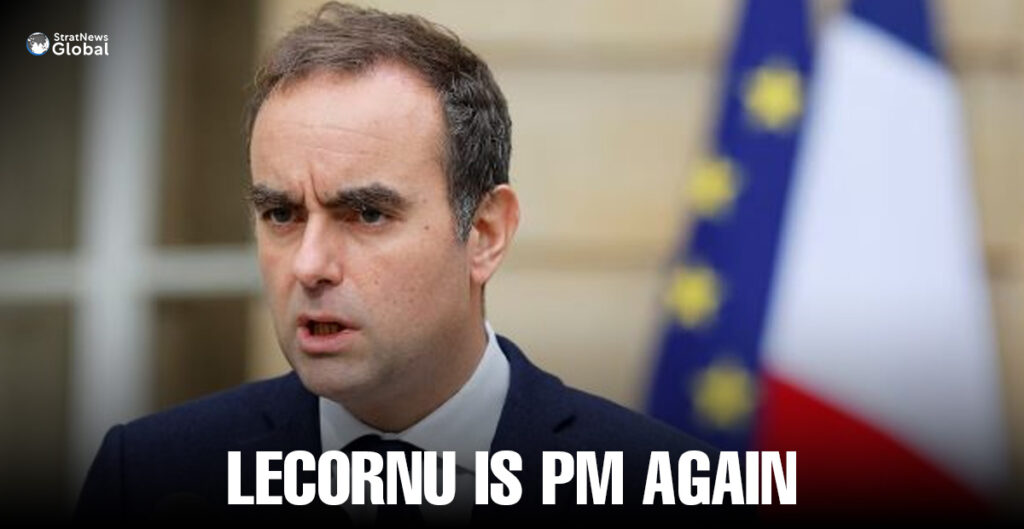
France: Macron Reappoints Lecornu As Prime Minister Amid Political Backlash
French President Emmanuel Macron on Friday reinstated Sebastien Lecornu as prime minister, just days after his resignation, a decision that drew sharp criticism from political rivals who vowed to reject the reformed government in an upcoming vote.
Macron, 47, will hope loyalist Lecornu can draw enough support from a deeply divided parliament to pass a 2026 budget. Faced with France’s worst political crisis in decades, many of Macron’s rivals have demanded he either call fresh parliamentary elections or resign.
The immediate reaction to Lecornu’s appointment from the far right and hard left was scathing, suggesting his second stint as prime minister will be no easier than his first, which ended on Monday when he resigned after just 27 days in office.
“The Lecornu II government, appointed by Emmanuel Macron who is more isolated and out of touch than ever at the Elysee Palace, is a bad joke, a democratic disgrace and a humiliation for the French people,” National Rally party president Jordan Bardella posted on X.
Budget 2026: Lecornu’s Most Pressing Task
There was no immediate reaction from the leadership of the Socialists and the conservative Republicans, both of whom will be crucial to Lecornu’s survival.
Lecornu’s most pressing task will be to deliver a budget to parliament by the end of Monday.
“I accept – out of duty – the mission entrusted to me by the President of the Republic to do everything possible to provide France with a budget by the end of the year and to address the daily life issues of our fellow citizens,” he wrote on X.
“We must put an end to this political crisis that exasperates the French people and to this instability that is harmful to France’s image and its interests.”
Lecornu added that whoever joined his government would have to renounce their personal ambitions to succeed Macron in 2027, a contest that has injected instability into France’s weak minority governments and fractious legislature. He pledged his cabinet would “embody renewal and diversity.”
Macron’s entourage said Lecornu had “carte blanche”, in a sign the president was leaving his prime minister plenty of wiggle room to negotiate a cabinet and budget.
Left Parties Oppose Macron’s Decision
Macron earlier convened a meeting of mainstream party leaders to rally support around his choice, but angered leftist parties when they found out one of their own would not be named as prime minister.
Another collapsed government would raise the likelihood of Macron calling a snap election, a scenario seen benefiting the far right the most.
France’s political turmoil, which has dented growth and spooked financial markets, was in large part triggered by Macron’s decision last year to hold a legislative election, a gamble that delivered a hung parliament split between three ideologically opposed blocs.
The country’s push to get its finances in order, requiring budget cuts or tax hikes that no party can agree on, has only deepened the malaise.
If the National Assembly cannot find common ground on a budget in the time given, emergency legislation may be needed to keep the country running next year on a roll-over budget.
Future Of Pension Reforms
The country’s central bank chief, Francois Villeroy de Galhau, forecast on Friday that the current political uncertainty would cost the economy 0.2 percentage points of gross domestic product. Business sentiment was suffering but the economy was broadly fine, he said.
“Uncertainty is … the number one enemy of growth,” Villeroy told RTL radio.
Fraught budget negotiations have cost Macron three prime ministers in less than 12 months.
Central to the most recent budget negotiations have been the left’s desire to repeal Macron’s 2023 pension reforms that lifted the retirement age, and tax the wealthy more heavily.
Those demands have been hard to square with the conservatives, whose support Macron also needs to pass a budget.
In Friday’s meeting, Macron offered to delay raising the retirement age as far as 64 by one year to 2028. Green leader Marine Tondelier described the concession as insufficient.
The deficit is forecast to hit 5.4% this year, nearly double the European Union’s cap. Lecornu recently said he envisaged a 2026 deficit between 4.7% – 5%.
(With inputs from Reuters)