

Support us by contributing to StratNewsGlobal on the following UPI ID
ultramodern@hdfcbank

Strategic affairs is our game, South Asia and beyond our playground. Put together by an experienced team led by Nitin A. Gokhale. Our focus is on strategic affairs, foreign policy and international relations, with higher quality reportage, analysis and commentary with new tie-ups across the South Asian region.
You can support our endeavours. Visit us at www.stratnewsglobal.com and follow us on YouTube, Twitter, Facebook and Instagram.
र 500 per month
र 1000 per month
र 5000 per year
र 10000 per year
Donate an amount of your choice
र 500 per month
Donate र 500 per month

र 1000 per month
Donate र 1000 per month
र 5000 per year
Donate र 5,000 per year
र 10000 per year
Donate र 10,000 per year
Donate an amount of your choice
Donate an amount of your choice


Australia Reviews Critical Minerals Strategy As Trump And Albanese Prepare For Key Talks
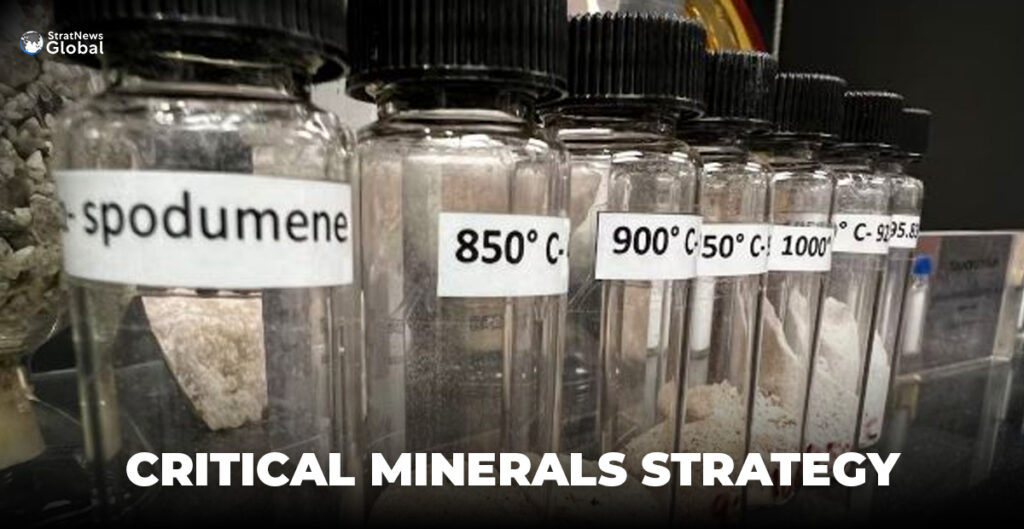
Australia is developing a framework for its critical minerals reserve that will prioritize sales of future production rather than maintaining a physical stockpile, industry sources said, as Prime Minister Anthony Albanese and U.S. President Donald Trump prepare to meet next week.
Australia‘s critical minerals task force hosted a call last week with miners and project developers across a range of metals as it steps up industry consultations, according to four sources familiar with the matter.
The task force is seeking by the end of the year to have finalised its policy recommendations for the structure of a A$1.2 billion ($782 million) stockpile of minerals that it believes is vulnerable to supply disruption. The stockpile, which is expected to focus on rare earths, is expected to be ready by the second half of 2026.
Australia was previously willing to sell shares in its reserve to allies, including Britain, according to media reports.
Key Supplier Of Rare Earths
The push comes as Australia seeks to leverage its strategic importance as a key supplier to its allies ahead of a meeting between Prime Minister Anthony Albanese and U.S. President Donald Trump in Washington on Oct. 20. Australia’s resource and trade ministries declined to comment.
Last week, Beijing tightened export restrictions on rare earths ahead of talks between Trump and Chinese President Xi Jinping at the end of the month. China produces more than 90% of the world’s processed rare earths and rare earth magnets and has used export restrictions to throttle shipments, amplifying global concerns about supply chain vulnerabilities.
“We’ve got vast resources of the critical minerals that the world is going to need to decarbonise, to build data centres, to process AI,” trade minister Don Farrell told Australian broadcaster ABC on Sunday.
“We need to have a broad range of customers, firstly to provide us with the capital to extract the products, but secondly, to ensure that we’ve got guaranteed markets to sell these critical minerals,” he said.
“We’ve been talking to the Europeans … the Japanese, the Koreans and of course we’re talking with the Americans.”
‘Listen Mode’
According to the sources, government officials are eager to show that they are in “listen mode.” One person said that companies have been asked to make written submissions.
Rather than stockpiling critical metals, participating governments would agree on annual supplies for future years and miners would sell those metals directly to consumers. The volume of that supply would then be deducted from the amount owed under a bilateral deal.
“It’s more like a financial instrument than a physical stockpile,” one of the sources said.
Australian officials have yet to determine how risks will be managed for smaller markets like heavy rare earths, where most of the world’s prices are tied to a China-based index that Western developers say is artificially set too low.
Earlier this year, the U.S. government offered a multibillion-dollar deal to support its flagship rare earths producer, MP Materials, which included a minimum price that buyers must pay.
Australia has said it is considering a similar plan, but sources said it would seek to reduce its financial exposure.
“In an ideal world, Australia doesn’t spend any money and acts more like a facilitator, so the other (consumer) countries are underwriting a floor price,” a source said.
Another idea that is circulating would have Australia contributing trades or material to back a “functioning Western price index,” one source said. Another source said this idea was unlikely to work because the market size was too small to be liquid.
($1 = 1.5340 Australian dollars)
(With inputs from Reuters)
Pakistan: Anti-Israel Clashes Get Violent, Five Dead
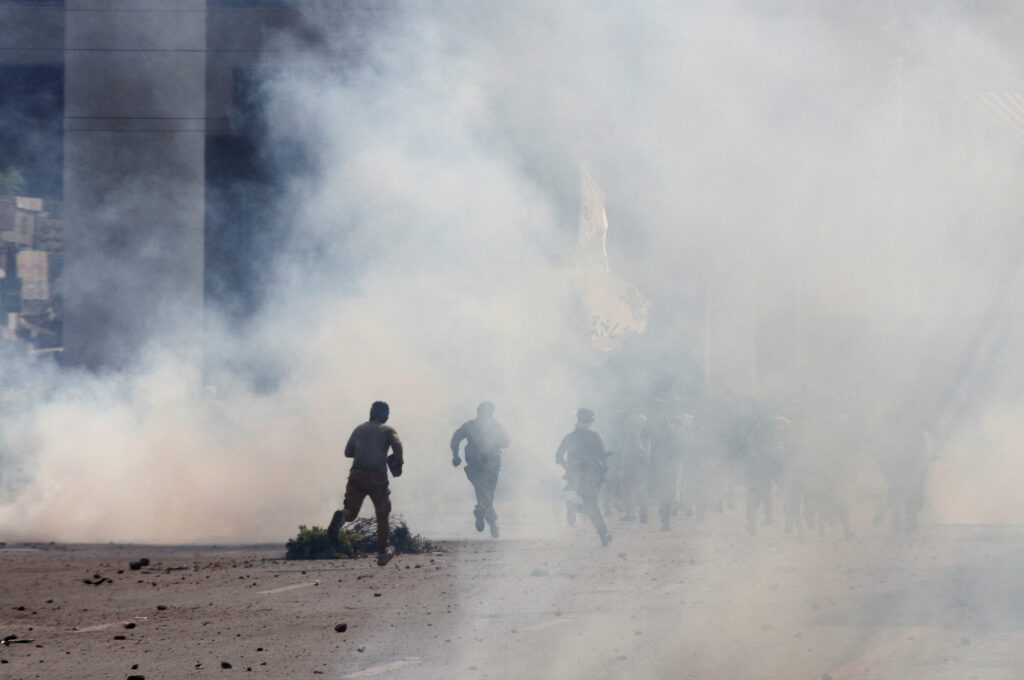
At least five people were killed when police in Pakistan clashed with members of a hardline Islamist group at a pro-Gaza, anti-Israel protest on the country’s busiest highway, police said.
The far-right Tehrik-e-Labaik Pakistan, whose massive and often violent street protests have been a thorn in the side of multiple Pakistan governments, had called for the march ahead of American President Donald Trump’s announcement last week of a ceasefire deal to end the Israel-Gaza war.
The march from the eastern metropolis of Lahore to the capital Islamabad, a nearly 400 km (248 miles) walk, along the historic Grand Trunk Road, started on Friday and has led to several clashes with the police, who have tried to slow its movement.
Protests And Fire
On Monday, police said they had launched an operation to disperse hundreds of protesters in the town of Muridke when the group’s supporters opened fire on officers and set over 40 vehicles on fire in clashes that lasted for over three hours.
Those killed included a police officer, three protesters and a bystander, police said in a statement. Dozens on both sides were injured, it added.
Scores of protesters have also been arrested, police added. The entry and exit routes to the capital, blocked by authorities since the march started, were partially reopened on Monday.
Tehrik-e-Labaik said it was the police who opened fire on its supporters, killing and wounding several. Its leader, Saad Rizvi, was also injured, sustaining three bullet wounds, the group said.
A provincial government spokesperson did not respond to a request for a comment about the group’s claims.
Israel-Gaza Conflict
Rizvi told a news conference on Sunday that his supporters only wanted to march up to Islamabad to express solidarity with the people of Palestine.
“Our march is against Israel’s atrocities,” he said, adding that the group had previously run campaigns to boycott Israeli products.
Hamas freed the last 20 surviving Israeli hostages on Monday under the ceasefire deal, which aims to end a war that began on October 7, 2023, after a Hamas attack that killed around 1,200 people, with 251 taken hostage.
Israeli airstrikes, bombardments and armoured ground assaults have laid waste to Gaza, killing more than 67,000 Palestinians, the enclave’s health officials say, causing a humanitarian disaster.
(with inputs from Reuters)
India, Canada Chart New Roadmap For Renewed Ties
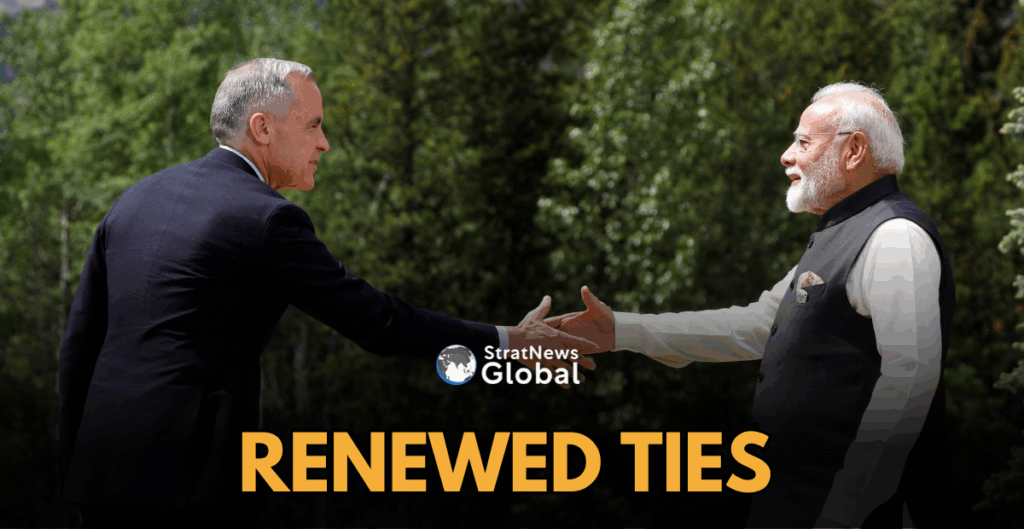
India and Canada agreed on Monday on a new roadmap for their relations after talks between their foreign ministers in New Delhi, as both countries seek to mend ties strained over the killing of a Canadian Sikh separatist.
The two countries, both of which are looking to diversify trade away from the United States due to tariff announcements, agreed to collaborate on areas like critical minerals, trade and agricultural value chains, a joint statement said.
“Reviving this partnership will not only create opportunities for enhanced economic cooperation but also help mitigate vulnerabilities arising from shifting global alliances,” it said.
After Strained Ties
The statement followed a meeting between Canada’s Foreign Minister, Anita Anand, and PM Modi, along with Dr Jaishankar.
“Both of our governments agree on the importance of elevating the relationship,” Anand said in her opening remarks at the meeting with Jaishankar.
Ties between India and Canada were strained for almost two years after then-Prime Minister Justin Trudeau accused New Delhi in 2023 of involvement in the killing of a Canadian Sikh separatist, Hardeep Singh Nijjar.
India denied Canada’s allegations of involvement in the murder and, in turn, accused Ottawa of fostering separatist groups on its soil.
India-Canada Relations
In June this year, Trudeau’s successor Mark Carney hosted Modi at the G7 summit in Kananaskis in the Canadian province of Alberta.
India is Canada’s top source of temporary foreign workers and international students, as well as an important market for pulses such as lentils and yellow peas.
Canada is home to an influential Sikh community. Indian leaders say there are some fringe groups there that are still sympathetic to the cause of an independent Sikh state called Khalistan to be carved out of Hindu-majority India.
(with inputs from Reuters)
India-US Trade Talks Expected This Week: Reuters
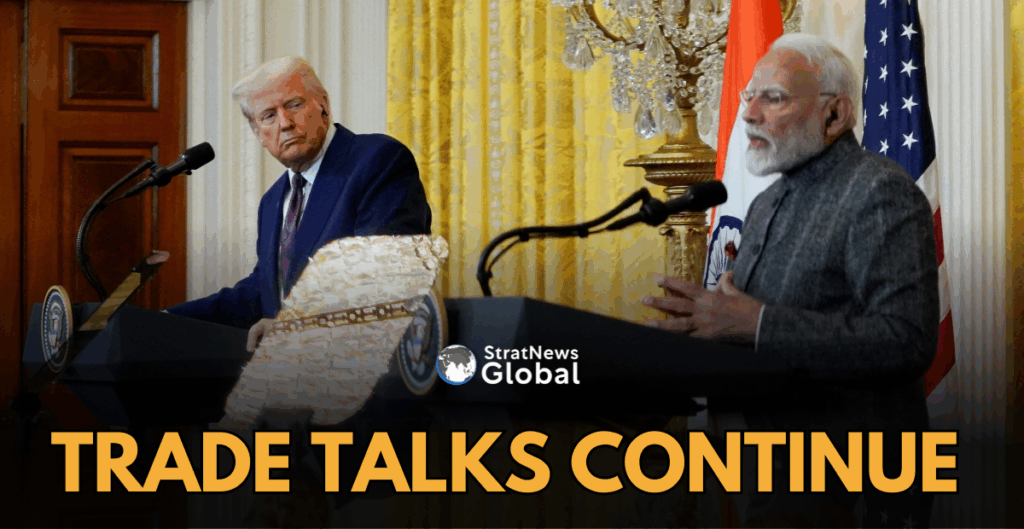
India and the U.S. are set to hold trade talks this week, with New Delhi pledging to import American energy and gas, according to a Reuters report. It says that the aim is to address Washington’s concerns over its Russian oil purchases, an official said.
Talks between India and the U.S. were suspended briefly in August after the Trump administration announced tariff hikes of up to 50% on Indian goods, accusing New Delhi of financing Russia’s war in Ukraine by continuing to buy Moscow’s oil despite Western sanctions.
However, discussions resumed in September after U.S. President Donald Trump struck a conciliatory tone in public remarks and spoke to PM Modi on the phone, raising hopes for a breakthrough.
Purchasing Energy
The official, speaking on condition of anonymity due to the sensitivity of the issue, said India was looking to increase purchases of energy and gas from the U.S.
The move follows U.S. ambassador-designate Sergio Gor’s meetings over the weekend with PM Modi and later with Commerce Secretary Rajesh Agrawal on strengthening bilateral trade and investment.
“During my visit to India, I met with Commerce Secretary Agrawal and discussed US-India economic ties, including increased investment in the United States,” Gor said on ‘X’ on Sunday.
Indian officials held “constructive” talks with U.S. counterparts in Washington last month, the US government said, in a Reuters report. It added that both sides agreed to push for an early conclusion of a mutually beneficial trade deal.
India-U.S. Trade
The U.S. has imposed tariffs that are hurting exports of textiles, leather goods, gems & jewellery, and food products in India. New Delhi is now looking to diversify markets and offer incentives to exporters.
India’s exports to the United States fell to $6.86 billion in August from $8.01 billion in July, trade ministry data showed, with exporters reporting further declines in September.
Negotiations began in February 2025, targeting a deal to double bilateral trade to $500 billion by 2030.
The two sides have held five rounds of trade talks, with the sixth – postponed in August – now expected to lead to the first phase of the deal next month, as agreed by Trump and Modi.
When asked about the Trump administration’s calls for greater Indian investment in the U.S., the source said New Delhi was not opposed and viewed overseas investments by Indian firms positively, similar to China’s approach.
(with inputs from Reuters)
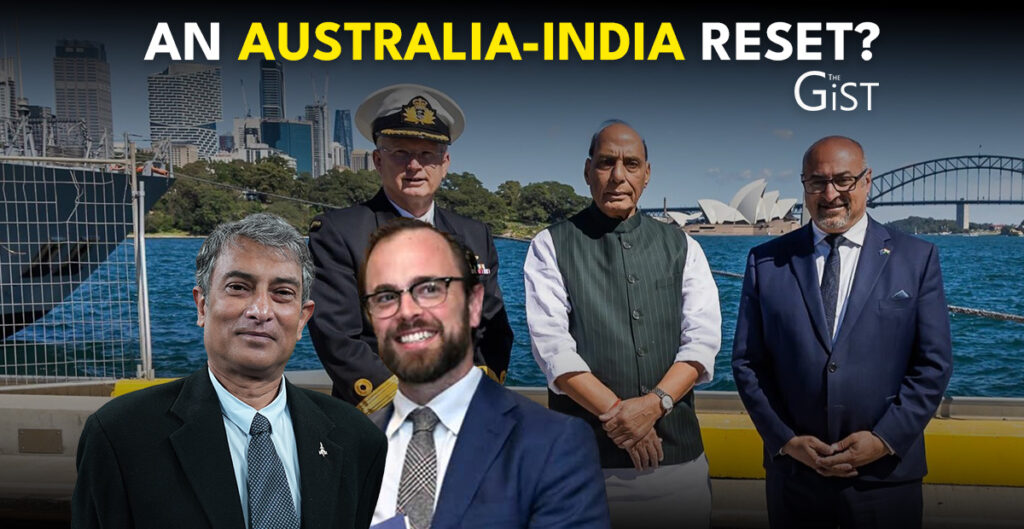
“No Longer Low-Hanging Fruit”: India–Australia Ties Mature
India and Australia’s defence partnership has reached a new level of maturity, says Kim Herriot-Darragh, Research Fellow at the Australia India Institute, describing Defence Minister Rajnath Singh’s recent visit to Australia as symbolically significant. “We’re now moving from plucking the low-hanging fruit in the relationship towards genuine cooperation,” he said.
Darragh highlighted the practical value of recent agreements such as mutual air-to-air refuelling, noting that they enhance operational flexibility. “It involves a fairly technical level of operations and cooperation, and really helps extend the mutual range of each other’s air forces,” he explained.
Reflecting on the progress since Australia’s withdrawal from the Quad in 2008, Darragh said the two countries had advanced remarkably. “We’ve made such progress that expectations are now very high,” he observed, adding that defence organisations were now “building the basics of trust” to enable quick, coordinated responses when required.
He identified “India literacy” as one of Australia’s continuing challenges. While there is growing enthusiasm for collaboration, both nations are focused on self-reliance, which complicates industrial cooperation. “Both countries seek to make, produce and sell rather than buy from each other,” he noted, urging a deeper understanding of each other’s industrial environments.
On China, Darragh said Australia’s stance had hardened. “Both seek to manage tensions and engage where there is merit, but be resolute when red lines are crossed,” he remarked. Revelations about Chinese interference in Australian politics, he added, had accelerated this strategic recalibration.
Darragh stressed that Australia must not engage with Pacific nations merely as a counter to China but because “these regions are important in their own right.” He acknowledged some “missteps” in the Pacific but saw opportunities for cooperation with India in managing regional influence sensitively.
Looking ahead, he called for “organic, working-level cooperation” rather than reliance on top-down political momentum. “It shouldn’t be enough that we just sign an agreement and it makes a good announcement,” he said.
On Australia’s ties with Pakistan, Darragh described Canberra’s approach as “carefully calibrated,” focused on education and dialogue rather than arms sales. However, he suggested that resources could be redirected to smaller Indian Ocean countries where “they may go further and complement India’s own efforts.”
China Detains Dozens Of House Church Pastors In Massive Crackdown
Over the weekend, Chinese police detained dozens of pastors from one of the country’s largest underground churches, marking the biggest crackdown on Christians since 2018, according to a church spokesperson and relatives.
The detentions, which come amid renewed China-US tensions after Beijing dramatically expanded rare earth export controls last week, drew condemnation from Secretary of State Marco Rubio, who called on Sunday for the pastors’ immediate release.
‘New Wave Of Religious Persecution’
Pastor Jin Mingri, the founder of Zion Church, an unofficial “house church” not sanctioned by the government, was detained at his home in the southern city of Beihai on Friday evening, said his daughter, Grace Jin, and a church spokesperson, Sean Long.
“What just happened is part of a new wave of religious persecution this year,” said Long, adding that police had questioned more than 150 worshippers and stepped up harassment at in-person Sunday services in recent months.
Speaking to Reuters from his home in the United States, Long added that around the same time, authorities detained nearly 30 pastors and church members nationwide, but later released five.
About 20 pastors and church leaders remain in detention, he added.
Police in Beihai could not be reached by telephone for comment. China’s ministry of public security did not immediately respond to a faxed request for comment.
Jin, 56, is being held in Beihai City No. 2 Detention Centre on suspicion of “illegal use of information networks”, an official detention notice that Long provided to Reuters showed. The charge carries a maximum jail term of seven years.
‘Concerning To Us’
Supporters fear Jin and other pastors could eventually be indicted on charges of illegally using the internet to disseminate religious information.
“He’s been hospitalised in the past for diabetes. We’re worried since he requires medication,” Grace Jin said. “I’ve also been notified that lawyers are not allowed to meet the pastors, so that is very concerning to us.”
The crackdown comes a month after new rules from China’s top religion regulator banned unauthorised online preaching or religious training by clergy, as well as “foreign collusion”.
Last month, President Xi Jinping also vowed to “implement strict law enforcement” and to advance the Sinicisation of religion in China.
China has more than 44 million Christians registered with state-sanctioned churches, the majority Protestant, official figures show.
But tens of millions more are estimated to be part of illegal “house churches” that operate outside the control of the ruling Communist Party.
Zion Church, with about 5,000 regular worshippers across nearly 50 cities, rapidly added members during the COVID-19 pandemic through Zoom sermons and small in-person gatherings, Long said.
The church was founded by Jin, also known as Ezra, in 2007, after he quit as a pastor for the official Protestant church.
A graduate of the elite Peking University, Jin converted to Christianity after witnessing the 1989 Tiananmen crackdown, Long added.
In 2018, police shut down its church building in Beijing, the capital, during a crackdown on major house churches. Earlier this year, police temporarily detained 11 Zion Church pastors, Long said.
The government placed travel restrictions on Jin in 2018, so that he could not visit his wife and three children who had resettled in the United States, Grace Jin said.
“I think he had always known that there was a possibility he would be imprisoned,” she added.
Dozens of police officers forcibly intercepted Jin last month while he was trying to board a US-bound flight from the commercial hub of Shanghai, and restricted his travel outside Beihai, said Bob Fu, the founder of Christian NGO ChinaAid.
“The key underlying reason is that Zion Church has grown explosively into a well-organised network in recent years, which of course must scare the Communist Party leadership,” said Fu.
(With inputs from Reuters)
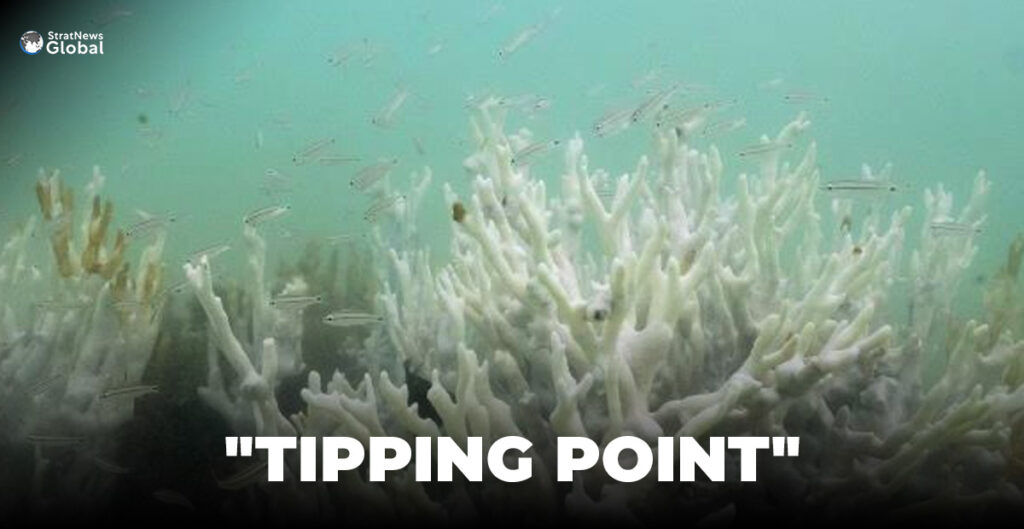
Climate Crisis Reaches Tipping Point With Coral Reefs Near Collapse, Scientists Say
Scientists warned on Monday that global warming is surpassing critical thresholds sooner than anticipated, with the world’s coral reefs suffering an almost irreversible decline, a development they described as the first major “tipping point” signalling the onset of climate-induced ecosystem collapse.
The warning in the Global Tipping Points report by 160 researchers worldwide, which synthesizes groundbreaking science to estimate points of no return, comes just weeks ahead of this year’s COP30 climate summit being held at the edge of the Amazon rainforest in Brazil.
That same rainforest system is now at risk of collapsing once the average global temperature warms beyond just 1.5 degrees Celsius based on deforestation rates, the report said, revising down the estimated threshold for the Amazon.
Also of concern if temperatures keep rising is the threat of disruption to the major ocean current called the Atlantic Meridional Overturning Circulation, or AMOC, which helps to ensure mild winters in northern Europe.
“Change is happening fast now, tragically, in parts of the climate, the biosphere,” said environmental scientist Tim Lenton at the University of Exeter, who is the lead author of the report.
Some Positive Signs
Lenton noted positive signs when it came to phasing out the fossil fuels most responsible for climate change. Renewables, for example, accounted for more electricity generation than coal this year for the first time, according to data from the nonprofit think tank Ember.
“Nobody wants to be just traumatized and disempowered,” Lenton said. “We still have some agency.”
The scientists implored countries at November’s COP30 to work toward bringing down climate-warming carbon emissions.
Scientists have been surprised by how quickly changes are unfolding in nature, with average global temperatures already having warmed by 1.3-1.4 degrees Celsius (2.3 to 2.5 degrees Fahrenheit) above the preindustrial average, according to data from U.N. and EU science agencies.
Earth’s Warmest Years
The last two years were Earth’s warmest on record, with marine heatwaves that stressed 84% of the world’s reefs to the point of bleaching and, in some cases, death. Coral reefs sustain about a quarter of marine life.
For corals to recover, the world would need to drastically ramp up climate action to reverse temperatures back down to just 1 degree C above the preindustrial average, the scientists suggested.
“The new report makes clear that each year there is an increase in the scope and magnitude of the negative impacts of climate change,” said Pep Canadell, a senior scientist at Australia’s CSIRO Climate Science Centre.
The world is currently on track for about 3.1 degrees C of warming in this century, based on national policies.
(With inputs from Reuters)
Hamas Starts Freeing Israeli Hostages As Trump Arrives In Israel
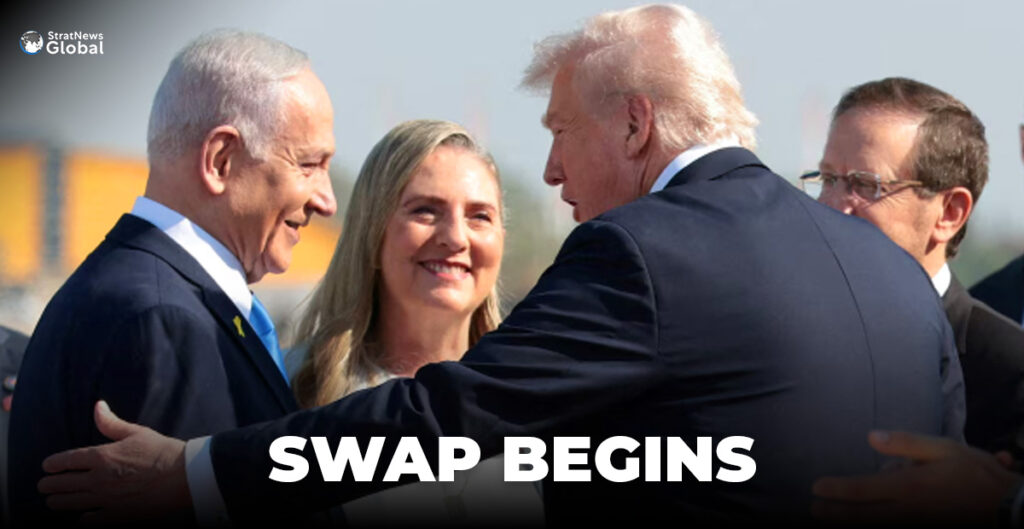
Hamas released the first seven of 20 surviving Israeli hostages on Monday, marking a pivotal moment in efforts to end two years of devastating war in Gaza under a ceasefire brokered by United States President Donald Trump, who arrived in Israel to address its parliament.
As thousands of people cheered, hugged and wept in Tel Aviv’s Hostages Square, Israel’s military said it had received seven living hostages after their transfer out of the Gaza Strip by the Red Cross.
“I am so excited. I am full of happiness. It’s hard to imagine how I feel this moment. I didn’t sleep all night,” said Viki Cohen, mother of hostage Nimrod Cohen, as she travelled to Reim, an Israeli military camp where the hostages will be transferred.
The military said the Red Cross was en route to receive more of the remaining 13 confirmed living hostages, who were all expected to be released on Monday. Bodies of some of the 28 dead hostages, and another two whose fate is unknown, will also be released on Monday, along with nearly 2,000 Palestinian detainees and convicted prisoners held in Israel.
Leaders Meet To Discuss Lasting Peace
In Gaza, about a dozen masked and black-clad gunmen, apparently members of Hamas’ armed wing, arrived at Nasser Hospital, where a stage and chairs had been laid out to welcome returning Palestinian prisoners.
“I hope that these images can be the end to this war. We lost friends and relatives, we lost our houses and our city,” said Emad Abu Joudat, 57, a Palestinian father of six from Gaza City, as he watched the handover preparations on his phone.
The releases are one of the most important parts of the first phase of the ceasefire agreement concluded last week in the Egyptian resort of Sharm el-Sheikh, where Trump and more than 20 other world leaders will be convening later on Monday.
The U.S. mediated the agreement along with Egypt, Qatar and Turkey, with the next phase calling for an international body – a “Board of Peace” – led by Trump.
Progress towards a lasting peace now hinges on global commitments that may be taken up at Monday’s summit, but much could yet go wrong.
Further steps in Trump’s 20-point plan have yet to be agreed by the two sides. Those include how the demolished Gaza Strip will be governed once fighting ends, and the ultimate fate of Hamas, which has rejected Israel’s demands that it disarm.
The group’s appearance on Monday with fighters gathered at Nasser Hospital underscored the likely difficulty of assuaging Israeli concerns about the Islamist militant group’s continued hold over Gaza, which it has ruled since 2007.
Further sticking points may include Israel’s own continued withdrawal from the Gaza Strip beyond the lines to which it pulled back in recent days, and moves towards the creation of a Palestinian state, something rejected by many Israelis.
Trump landed in Israel shortly after the announced release of the first group of hostages to a hero’s welcome.
Israeli Prime Minister Benjamin Netanyahu stood waiting at the airport as Air Force One taxied in, then accompanied Trump by limousine as a band played.
Trump will become only the fourth U.S. president to address the Knesset (parliament), following Jimmy Carter in 1979, Bill Clinton in 1994 and George W. Bush in 2008. He will be awarded Israel’s highest civilian honour later this year, Israeli President Isaac Herzog said.
Two Years Of Conflict
Two years of war have reduced Gaza to a sea of rubble, with nearly all its 2.2 million people homeless, and caused a humanitarian disaster on a huge scale. It has also reshaped the Middle East through spillover Israeli conflicts with Iran, Lebanon’s Hezbollah and Yemen’s Houthis.
Near Israel’s Reim camp, where the hostages will be brought to be taken to hospitals, people lined the road waving Israeli flags on which a yellow ribbon – the symbol of remembrance for the hostages – was interwoven with the blue Star of David.
At Israeli prisons, some 1,966 Palestinian detainees boarded buses, and most were expected to be released at Gaza’s Nasser Hospital on Monday, an official involved in the operation said.
In a statement on Monday, the armed wing of Hamas affirmed its commitment to the terms and timeline of the deal, contingent on Israel’s adherence. It said Israel agreed to a ceasefire and swap deal after it failed to free the hostages through its military offensive.
U.N. aid chief Tom Fletcher said on X that Israel had approved the delivery of more emergency supplies, and the main U.N. aid agency working in Gaza, UNRWA, urged Israel to let it work unhindered in the territory.
The conflict was sparked by a Hamas attack on October 7, 2023, that killed around 1,200 people in Israel, with 251 taken hostage, according to Israeli tallies. Israeli airstrikes and ground assaults have since devastated Gaza, killing more than 67,000 Palestinians, the enclave’s health officials say.
Israeli critics of Netanyahu, including hostages’ families, accused him of deliberately prolonging the war to placate his far-right government coalition partners, whose backing is crucial to his political survival.
The International Criminal Court last year issued arrest warrants for Netanyahu for alleged war crimes and crimes against humanity, which Israel denies.
(With inputs from Reuters)
Google Flags Concerns Over Australia’s Social Media Ban
Alphabet-owned Google on Monday said enforcing a proposed Australian law to ban social media use for those under 16 would be “extremely difficult,” warning that the move is unlikely to make children any safer online.
Governments and tech firms around the world are closely watching Australia, which in December will become the first country to block the use of social media by people younger than 16.
Social media platforms will not be required to conduct age verification procedures; instead, they will be asked to use artificial intelligence and behavioural data to reliably infer age.
‘Unintended Consequences’
In a parliamentary hearing on online safety rules on Monday, YouTube’s senior manager of government affairs in Australia, Rachel Lord, said the government’s programme was well-intentioned, but it could have “unintended consequences”.
“The legislation will not only be extremely difficult to enforce, it also does not fulfil its promise of making kids safer online,” Lord said.
When asked if Google was lobbying officials in Washington to raise the issue when Australian Prime Minister Anthony Albanese meets US President Donald Trump in Washington next week, Google Australia’s government affairs director Stef Lovett said her US colleagues were aware of the issues that the company faces in Australia.
In July, Australia added YouTube to a list of sites covered by the legislation – reversing an earlier decision to exempt it due to its popularity with teachers – following complaints from other tech firms. Google contends that YouTube is a video-sharing site, not a social media platform.
Alternatives Urged
“Well-crafted legislation can be an effective tool to build on industry efforts to keep children safer online,” Lord said. “But the solution to keeping kids safer online is not stopping them from being online.”
Instead, she said, online safety tools must be used to protect children and parents should be given the controls to guide their online experiences.
Australia, concerned about the impact of social media on the mental health of young people, passed its Online Safety Amendment in November 2024. It gave companies a year to comply and they face a December 10 deadline to deactivate the accounts of underage users.
(With inputs from Reuters)
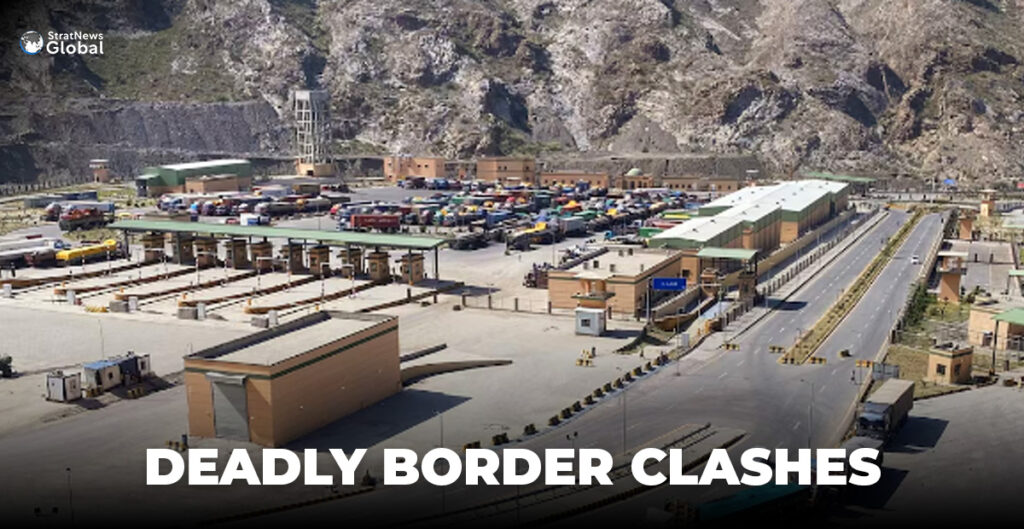
Pakistan-Afghanistan Border Closed After Dozens Killed In Overnight Clashes
Dozens of fighters were killed in overnight border clashes between Pakistan and Afghanistan, both countries confirmed on Sunday, marking the most intense fighting between the neighbours since the Taliban seized power in Kabul.
The Pakistan military said that 23 of its soldiers were killed in the clashes. The Taliban said nine of its members were killed.
Tensions have risen after Islamabad demanded the Taliban take action against militants who have stepped up attacks in Pakistan, saying they operate from havens in Afghanistan. The Taliban, which came to power in 2021, denies that Pakistani militants are present on its soil.
Each side said it inflicted far higher casualties on the other side, without providing evidence. Pakistan said it had killed more than 200 Afghan Taliban and allied fighters, while Afghanistan said that it had killed 58 Pakistani soldiers.
Reuters was not able to independently verify the figures.
Pakistani Airstrikes Trigger Retaliatory Attacks
On Thursday, Pakistan carried out airstrikes in Kabul and on a marketplace in eastern Afghanistan, according to Pakistani security officials and the Taliban, setting off retaliatory attacks by the Taliban. Pakistan has not officially acknowledged the airstrikes.
Afghan troops opened fire on Pakistani border posts late on Saturday. Pakistan said that it had responded with gun and artillery fire.
Both nations claimed to have destroyed border posts of the other side. Pakistani security officials shared video footage, which they said showed Afghan posts being hit.
The exchanges were mostly over on Sunday morning, Pakistani security officials said. But in Pakistan’s Kurram area, intermittent gunfire continued, according to local officials and residents.
Afghanistan’s ministry of defence had previously said that their operation had finished at midnight local time.
Kabul said on Sunday that it had halted attacks at the request of Qatar and Saudi Arabia. The two Arab Gulf nations had released statements of concern about the clashes.
“There is no kind of threat in any part of Afghanistan’s territory,” the Taliban administration’s spokesman, Zabihullah Mujahid, said Sunday. “The Islamic Emirate and the people of Afghanistan will defend their land and remain resolute and committed in this defence.”
Mujahid said that fighting was ongoing in some areas.
Border Crossings Closed
Pakistani officials said on Sunday Pakistan had closed crossings along the 2,600-km (1,600-mile) border with Afghanistan, a disputed colonial-era frontier known as the Durand line drawn up by the British in 1893.
The two main border crossings with Afghanistan, at Torkham and Chaman, and at least three minor crossings, at Kharlachi, Angoor Adda and Ghulam Khan, were closed on Sunday, local officials said.
The Pakistani airstrikes coincided with a rare visit to India by a Taliban leader, Foreign Minister Amir Khan Muttaqi, which resulted in an announcement by India on Friday to upgrade relations. India is Pakistan’s longstanding adversary, with the trip causing concern in Islamabad.
(With inputs from Reuters)