

Support us by contributing to StratNewsGlobal on the following UPI ID
ultramodern@hdfcbank

Strategic affairs is our game, South Asia and beyond our playground. Put together by an experienced team led by Nitin A. Gokhale. Our focus is on strategic affairs, foreign policy and international relations, with higher quality reportage, analysis and commentary with new tie-ups across the South Asian region.
You can support our endeavours. Visit us at www.stratnewsglobal.com and follow us on YouTube, Twitter, Facebook and Instagram.
र 500 per month
र 1000 per month
र 5000 per year
र 10000 per year
Donate an amount of your choice
र 500 per month
Donate र 500 per month

र 1000 per month
Donate र 1000 per month
र 5000 per year
Donate र 5,000 per year
र 10000 per year
Donate र 10,000 per year
Donate an amount of your choice
Donate an amount of your choice



Belgium Hit By Nationwide Strike, Flights And Public Transport Disrupted
A nationwide general strike in Belgium on Tuesday forced the grounding of most flights at the country’s two main airports and caused major disruptions to public transport across Brussels.
About 80,000 people demonstrated between Brussels’ Gare du Nord and Gare du Midi train stations, crossing the entire city centre, Brussels police estimated. A few dozen people were detained by police following incidents that included fires set on the capital’s big boulevards.
The strike was the latest in a series of protests this year against the government’s proposals to reform pensions and the labour market.
All flights due to depart from Brussels International Airport and about half of those scheduled to land were cancelled as staff from the security firm providing X-ray screening walked out on Tuesday, a spokesperson for the airport said.
No plane is taking off or landing at the country’s second largest airport, in Charleroi, 60 km (40 miles) south of Brussels, according to its website.
Most of the Brussels underground train, bus and tram lines were cut as a result of the strike, public transport operator STIB said in a post on social media platform X.
Protests Against Pension Reforms
“What really mobilises people are pensions,” Thierry Bodson, leader of the FGTB union, said on the French-language state radio station RTBF on Tuesday. FGTB has more than 1.5 million members, according to its website.
Bodson added that the reform would not only reduce income for future retirees but also introduce uncertainty by changing how state pensions are calculated.
“The pension at 67 years old is a challenge for people who do physical work,” said civil servant Michael Mary, 53, while he was marching in Brussels. The planned reform would add conditions to people who want to retire early. The pension age is being gradually moved up to 67.
The strikers, led by the country’s main unions and backed by activist groups such as Greenpeace and Oxfam, are opposing the ruling federal coalition led by Prime Minister Bart De Wever, which announced a series of reforms seeking to cut government spending.
De Wever, from the nationalist New Flemish Alliance (N-VA), became prime minister in February and now heads a predominantly right-wing coalition. He has pledged to reduce deficits without raising taxes but is facing challenges in finalising next year’s budget.
(With inputs from Reuters)
India, Mongolia To Boost Defence, Security Ties, To Collaborate In Critical Minerals
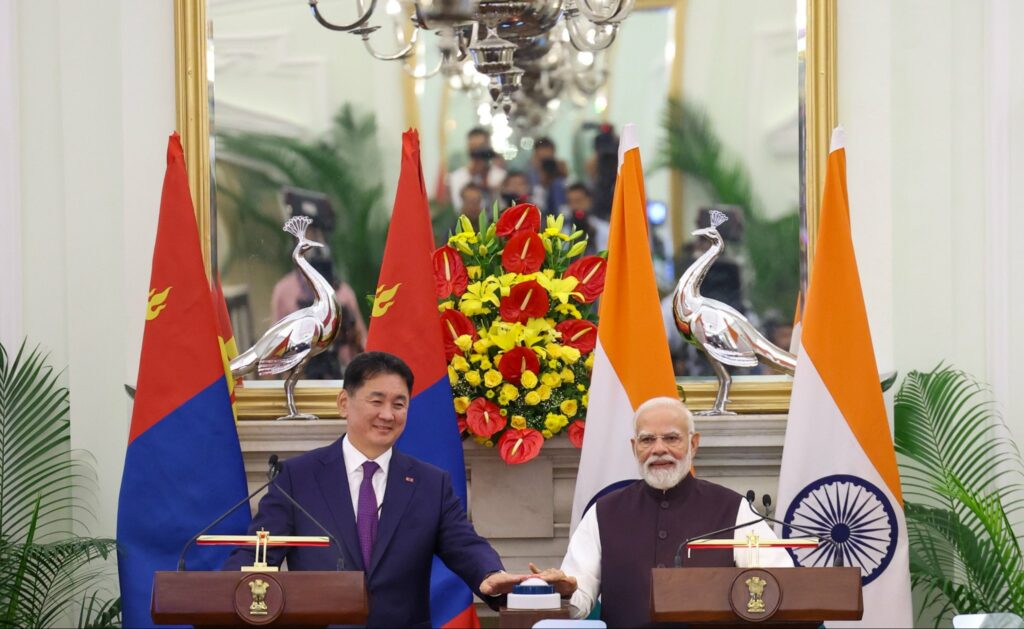
“This visit is special as we celebrate 10 years of our strategic partnership and 70 years of bilateral relations,” with that Prime Minister Modi welcomed Mongolia’s visiting President Khurelsukh Ukhnaa.
President Ukhnaa signed his country’s entry into the International Solar Alliance and backed India’s campaign for a permanent seat in the UN Security Council. The two leaders released a postage stamp and then sat down for talks to enhance cooperation across defence, development, trade, energy, connectivity, culture, and spiritual ties.
“Joint exercises like Nomadic Elephant and Ex-Khaan Quest have helped strengthen our defence engagement,” senior diplomat P Kumaran said at a post-talks briefing. “Mongolia values these engagements and has expressed interest in expanding training and capacity-building programs,” he said.
India reiterated its support in continuing defence training, providing equipment, and enhancing cooperation in cybersecurity.
Kumaran confirmed that Mongolia was seeking upgrades to the India assisted Cyber Security Training Centre established for the Mongolian armed forces.
India is appointing a Resident Defence Attaché at its embassy in Ulaanbaatar, fulfilling a long-standing Mongolian request.
Energy, Critical Minerals
The ongoing construction of the $1.7 billion oil refinery in Mongolia, financed by India’s largest Line of Credit, is a flagship project in bilateral relations.
President Ukhnaa called it “strategically important for Mongolia’s energy independence” and thanked Indian companies for their role. India and Mongolia are now exploring joint oil and gas exploration, in addition to refining.
According to Kumaran, “Mongolia is keen on collaborating in exploration and prospecting. They have extended an invitation to India to invest in oil exploration in their territory.”
On critical minerals, he said “Mongolia has significant reserves of coking coal, copper, gold, and even uranium. We are exploring options for procurement and logistics, especially via the Trans-Siberian Railway through Russia, to diversify supply chains.”
Mongolia’s location and mineral wealth offer strategic opportunities for India’s resource security, especially as the two nations pursue resilient supply chains.
Improving Connectivity
President Ukhnaa stressed the need for new transport and logistics gateways and revealed plans for direct flights between the two countries.
“A Mongolian air carrier is preparing to offer charter flights to New Delhi and Amritsar later this year,” Kumaran said during the briefing.
He said both sides are evaluating the economic feasibility of such routes and are hopeful that recent visa facilitation measures, including granting e-visas at no charge to Mongolian nationals, will improve travel and people-to-people ties.
Agriculture, Dairy
During the talks, Modi had stressed India’s commitment to supporting Mongolia’s rural development.
“We are ready to collaborate in modern farming techniques, digital agriculture, and food processing, in line with Mongolia’s development priorities,” he said.
Kumaran added that Mongolia, with its vast grasslands and sparse population, is looking to develop large-scale plantations and dairy industries. India could assist in precision farming, wool processing, and value-added agri-products.
Mongolia has also invited Indian support for gold and wool industries, aiming to develop these into value-added export sectors for third markets.
Cultural Ties
India will send the holy relics of Lord Buddha’s disciples to Mongolia next year. More important is what Modi promised the Mongolian president.
“We will send a Sanskrit teacher to Gandan Monastery to support in-depth study of Buddhist texts. Nalanda University has played a vital role in Buddhism in Mongolia, and today we have agreed to strengthen this historic connection by linking Nalanda with Gandan Monastery.”
An ICCR orientation program will bring eight Mongolian students and faculty to India.
Ten MoUs were signed covering immigration, geology, yoga and others. Quick impact projects to be done by India will target small communities and are expected to improve livelihoods and social infrastructure in remote parts of Mongolia.
A highlight of the Monglian leader’s visit was the planting of a sapling under the “Ek Ped Maa Ke Naam” campaign, which echoed President Ukhnaa’s “One Billion Trees” initiative in his own country.
“This visit has resulted in substantive outcomes — both symbolic and practical. It lays a strong foundation for closer collaboration in the years to come,” said Kumaran.
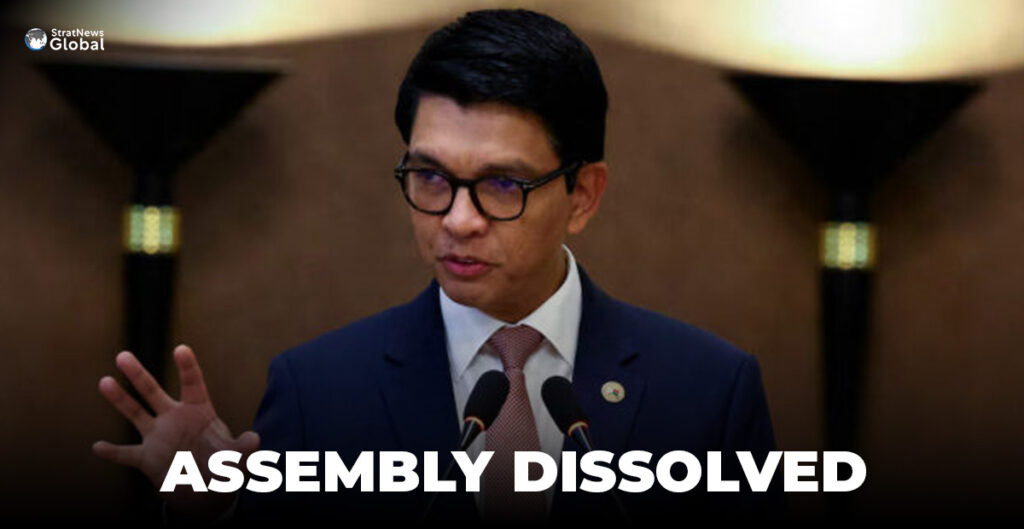
Madagascar President Rajoelina Dissolves Assembly
Madagascar’s President Andry Rajoelina on Tuesday announced the dissolution of the lower house of parliament, intensifying the standoff with Gen Z-led protesters and sections of the military that had earlier forced him to flee the country.
A presidency decree on Facebook said the 51-year-old Rajoelina had consulted with the leaders of the National Assembly and the upper house Senate, but the legality of his gambit was unclear.
In a defiant address from an undisclosed location on Monday evening, Rajoelina refused to step down despite weeks of Gen Z protests demanding his resignation and widespread defections in the army.
Forced To Flee
Rajoelina said he had been forced to move to a safe place because of threats to his life. An opposition official, a military source and a foreign diplomat told Reuters he had fled the country on Sunday aboard a French military plane.
In a separate post on X, Rajoelina said the decision to dissolve the national assembly, which would pave the way for new elections to be held in 60 days at the earliest, was “necessary to restore order” in Madagascar.
“The people must be heard once again. It’s time for the youth,” he said.
However, the leader of the opposition in the National Assembly disputed it. “This decree is not legally valid … the president of the National Assembly says he was not consulted,” said Siteny Randrianasoloniaiko, who is also the assembly vice president.
Escalating Demonstrations
The opposition has been trying to gather enough signatures to launch impeachment proceedings against Rajoelina in parliament, where the ruling coalition commands a majority.
Demonstrations erupted in the country on September 25 over water and power shortages and quickly escalated into an uprising over broader grievances, including corruption, bad governance and a lack of basic services.
The anger mirrored recent protests against ruling elites elsewhere, including Nepal and Morocco.
On Tuesday, at Antananarivo’s 13 May Square, along the main drag lined with palm trees and French colonial buildings, thousands of protesters danced, marched, sang songs and waved banners denouncing Rajoelina as a French stooge because of his dual citizenship and support from Madagascar’s former coloniser.
Many were waving Malagasy flags and the signature Gen Z protest banner of a skull and crossbones from the Japanese “One Piece” anime series.
French President Emmanuel Macron said on Tuesday that constitutional order must be preserved and that while France understood the grievances of the youth, they should not be exploited by military factions.
CAPSAT Deserts Rajoelina
Rajoelina has appeared increasingly isolated after losing the support of CAPSAT, an elite unit which had helped him to seize power in a 2009 coup.
CAPSAT joined the protesters over the weekend, saying it would refuse to fire on them and escorting thousands of demonstrators in the main square of the capital Antananarivo.
It later said it was taking charge of the military and appointed a new army chief, prompting Rajoelina to warn on Sunday of an attempt to seize power.
The paramilitary gendarmerie and the police have since broken ranks with the president.
Madagascar, where the average age is less than 20, has a population of about 30 million, three-quarters of whom live in poverty. GDP per capita plunged 45% from the time of independence in 1960 to 2020, according to the World Bank.
(With inputs from Reuters)
Google Announces $15 Billion AI Data Centre In Visakhapatnam
Google on Tuesday announced plans to invest $15 billion over five years to establish an AI data centre in Andhra Pradesh — marking its largest investment in India to date.
The US tech giant’s plan comes amid a tense diplomatic standoff between New Delhi and Washington over tariffs and a stalled trade deal, as Prime Minister Narendra Modi has urged a boycott of foreign goods.
Indian infotech and finance ministers attended the New Delhi event at which Google Cloud CEO Thomas Kurian said the data centre in Andhra Pradesh would be the company’s “largest AI hub” outside the United States.
“This long-term vision we have is to accelerate India’s own AI mission,” Kurian said.
Google has committed to spending about $85 billion this year to build out data centre capacity as big tech companies invest heavily to build new infrastructure in their competition to meet booming demand for AI services.
The data centre campus in the port city of Visakhapatnam will have an initial capacity of 1 Gigawatt.
US-India Tension
US-based multinationals face growing boycott calls in India, as business executives and Modi supporters have stoked anti-American sentiment to protest against the tariff of 50% on imported Indian goods.
“This initiative creates substantial economic and societal opportunities for both India and the United States,” Google said in a statement, without referring to the tariffs.
In recent weeks, Indian officials have privately met many executives of US companies to say they are committed to providing an easy business environment despite the discontent over US tariffs, two sources told Reuters on condition of anonymity.
A Billion Internet Users
Microsoft and Amazon have already poured billions into building data centres in India, a critical growth market where nearly a billion users access the internet.
Indian billionaires Gautam Adani and Mukesh Ambani have also unveiled investments in building capacity for data centres.
Adani Group and India’s Airtel have partnered with Google to build the infrastructure for its new project, which also includes construction of a new international subsea gateway.
AI requires enormous computing power, pushing demand for specialised data centres that enable tech companies to link thousands of chips together in clusters.
Earlier, state officials had estimated the investment at $10 billion for the centre, which they said would generate 188,000 jobs.
Google parent Alphabet Inc counts India as a key growth market where its YouTube video services has most users, and Android phones dominate smartphone usage.
However, the US firm has been battling many antitrust challenges in India over its business practices, and also faces a lawsuit from a Bollywood couple challenging YouTube’s AI policy.
(With inputs from Reuters)
Deterrence, Diplomacy And Deoband: India’s Afghan Strategy In A Shifting Region
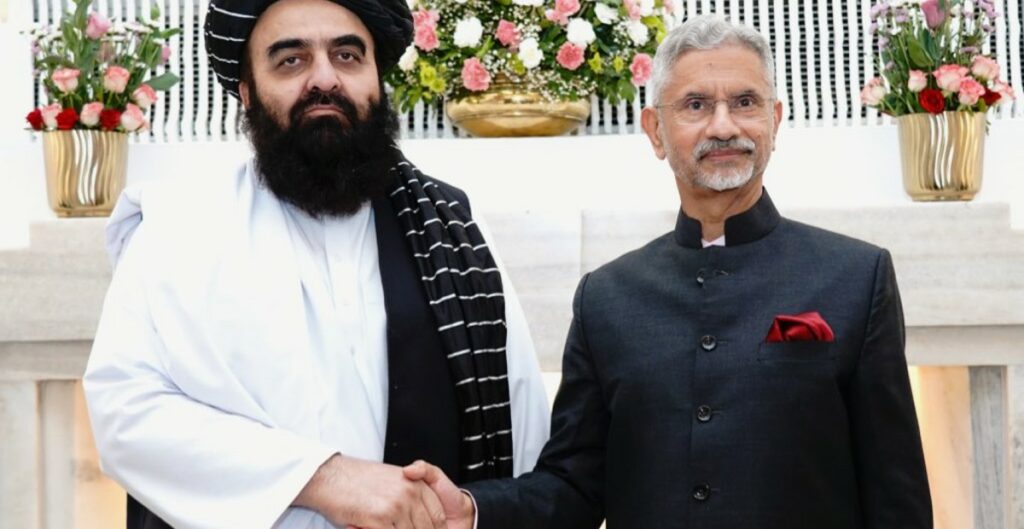
Afghan Foreign Minister Amir Khan Muttaqi’s arrival in New Delhi on October 9, 2025, just two days after attending the Moscow Format on Afghanistan, marked a decisive inflection in South Asia’s geopolitical calculus. His visit culminated in the upgradation of India’s technical mission to a full-fledged embassy in Kabul and the launch of a direct India-Afghanistan air freight corridor, underscoring a clear departure from Pakistan’s long-standing influence over Kabul.
Muttaqi’s stop at Darul Uloom Deoband added a deeply symbolic dimension. There, he was conferred the honorary title “Qasmi” and a Hadith Sanad, granting him authority to teach Hadith, an extraordinary recognition for a foreign cleric. The gesture reflected India’s move from political to theological diplomacy, reclaiming the moderate Hanafi–Deobandi narrative from Pakistan’s Wahhabi radicalism. It also signalled that India’s engagement with Afghanistan was not merely transactional but civilizational.
The Moscow Format: Regional Consensus For Stability
Just days earlier, on October 7, 2025, the Moscow Format consultations on Afghanistan brought together Russia, China, Iran, Pakistan, India and the Central Asian republics in a rare show of regional alignment. The joint statement categorically declared that “any attempts to deploy foreign military infrastructure in Afghanistan or neighboring states are unacceptable”, a direct rebuttal to U.S. President Donald Trump’s call to “retake Bagram Airbase.”
With Russia’s formal recognition of the Islamic Emirate, the Taliban participated for the first time as a full member. The message was unambiguous: Afghanistan’s destiny must be shaped by its neighbours, and engagement, rather than isolation, is the pathway to regional stability. Moscow has thus positioned itself as the convener of a new Eurasian consensus, one that increasingly aligns with India’s calibrated approach toward Kabul.
Operation Sindoor: Recalibrating Deterrence
New Delhi’s diplomatic reactivation followed the strategic reverberations of Operation Sindoor, India’s cross-border counter-terror strike in May 2025. Launched in retaliation for the Pahalgam terror attack, the operation targeted militant infrastructure and leadership deep inside Pakistan. Army Chief General Upendra Dwivedi described it as a “decisive and surgical response”. Executed with precision on May 6, without civilian or military casualties, the strikes reflected India’s doctrine of credible deterrence with calibrated restraint.
The operation redefined regional perceptions, exposing Pakistan’s internal vulnerabilities and reinforcing India’s capacity for proportional response. Kabul and Moscow both took note: India was no longer a reactive actor but a strategic balancer combining resolve with responsibility.
Pakistan’s Internal Fragility
While India consolidates its strategic position, Pakistan faces an unravelling within. From Pakistan-occupied Kashmir (PoK) to Balochistan, unrest has intensified. The Baloch Yakjehti Committee reports escalating protests over enforced disappearances and economic neglect, met with heavy-handed crackdowns. In PoK, public anger over taxes, electricity shortages and governance failures has laid bare Islamabad’s weakening authority.
Economically, Pakistan remains on life support—IMF-dependent, burdened by inflation and crippled by chronic energy deficits. Meanwhile, a resurgent Tehrik-e-Taliban Pakistan (TTP) has conducted over 600 attacks in 2025 alone, claiming more than 2,500 lives since 2021. These overlapping crises—economic, political and security—reveal a fractured state struggling to manage its contradictions, even as India demonstrates growing strategic coherence.
Afghanistan’s Strategic Autonomy
Amid Pakistan’s decline, the Taliban regime has begun asserting strategic autonomy. With the end of two decades of war and the U.S. withdrawal, Kabul’s foreign policy has pivoted toward regional integration. India’s pragmatic engagement and the Taliban’s participation in the Moscow Format signal a deliberate decoupling from Islamabad’s traditional tutelage.
Muttaqi’s visit produced a joint assurance that Afghan territory would not be used against India, a breakthrough in bilateral trust. New Delhi responded by expanding cooperation in health, education, mining, and infrastructure—anchored by the new air corridor bypassing Pakistan. The Deoband engagement added ideological depth, re-rooting Afghan Islam within its Hanafi–Deobandi tradition, distinct from Pakistan’s militarised Wahhabism.
India’s Development Footprint: Risk, Resilience And Respect
India’s presence in Afghanistan has always been defined by risk and resilience. Even during the most violent years between 2001 and 2021, Indian engineers, doctors and diplomats served under constant threat. They endured attacks yet continued their mission, earning deep respect among ordinary Afghans.
- On July 7, 2008, a suicide bombing at the Indian embassy in Kabul killed four Indians, including a senior diplomat and the Defence Attaché and 60 Afghans.
- In February 2010, coordinated hotel attacks in Kabul claimed nine Indian lives, including doctors and two Army officers.
- Indian engineers working on projects like the Zaranj–Delaram Highway were abducted, killed or targeted repeatedly in provinces such as Farah, Nimroz and Zabul.
These sacrifices forged a bond of trust that transcends governments and regimes. Over two decades, India invested over $3 billion in reconstruction—the largest contribution by a regional power. From the Afghan Parliament and power lines to hospitals, schools, and roads, scholarships for Afghan students in India, India’s development footprint has touched every sphere of Afghan life.
Cricket, Culture And Civilisational Ties
Cricket, a shared passion, has emerged as a bridge of hearts between the two nations. India’s investment in Afghan cricket, hosting the national team and integrating Afghan players into the IPL, has transformed sport into a vector of diplomacy. Figures like Rashid Khan have become household names, embodying friendship and mutual admiration.
This cultural affinity extends beyond sport. From Tagore’s “Kabuliwala”, which immortalised Afghan warmth in Indian memory, to Bollywood’s enduring popularity in Kabul, the people-to-people connection remains profound. Hindi cinema and Indian television dramas have long offered Afghans a window into Indian life stories of family, morality and hope that have endured even amid war and censorship. These civilizational linkages, rooted in shared emotion and narrative, continue to underpin Afghan goodwill toward India.
India’s Strategic Imperatives
The convergence of deterrence, diplomacy, and soft power presents India with a historic opportunity to redefine its Afghan strategy. The roadmap ahead must rest on five interlinked pillars:
- Post-Sindoor Deterrence: Maintain intelligence dominance and operational readiness to deter terrorism while avoiding escalation.
- Deepened Diplomatic Engagement: Transition from humanitarian relief to strategic cooperation in education, healthcare, intelligence sharing and infrastructure.
- Connectivity through Chabahar and Air Corridors: Strengthen trade links bypassing Pakistan, connecting India with Afghanistan and Central Asia.
- Strategic Economic Partnerships: Mobilise public-private investment in Afghanistan’s mining and energy sectors, building economic interdependence.
- Religious and Ideological Outreach via Deoband: Promote moderate Deobandi-Hanafi scholarship to counter radical Wahhabism and stabilise the theological centre.
Regional Consensus Building: Coordinate with Russia, Iran and Central Asia to stabilise Afghanistan and prevent Pakistan’s manipulation of Afghan territory.
Conclusion: Strategic Clarity In A Fractured Region
The post-Sindoor landscape offers India an unprecedented moment of strategic clarity. Through a calibrated blend of deterrence, diplomacy and cultural engagement, New Delhi can redefine its role not just in Afghanistan but across Eurasia.
Muttaqi’s visit to Deoband, the restoration of India’s embassy in Kabul and the rise of Afghan cricket symbolise a quiet realignment accompanied by the erosion of Pakistan’s influence, the assertion of Afghan sovereignty and India’s emergence as a stabilising regional force.
India’s strength lies not only in its military resolve but in its capacity to shape narratives, connect civilisations and build trust. By intertwining hard power with cultural diplomacy, New Delhi positions itself not as a transient actor but as the region’s indispensable stabiliser.
The essence of India’s Afghan playbook rests on a trinity: Deterrence, Diplomacy and Deoband—a synthesis of power, principle and persuasion defining India’s civilisational approach in a shifting regional order.
(The author is a geopolitical analyst and strategic advisor who writes on South Asia, multipolarity and civilisational statecraft. Views expressed in this article are personal.)
Australia Launches Campaign Backing Teen Social Media Ban
Australia has rolled out a multimillion-dollar campaign promoting its upcoming world-first social media ban for teens, calling it “for the good of our kids” as the December launch nears.
The A$14 million campaign, titled “For The Good Of”, will roll out across TV, billboards, and “ironically” social media starting Sunday, Communications Minister Anika Wells said on Tuesday.
Wells said the campaign aims to spread awareness about the changes coming for families, encouraging parents to “start having conversations” about the ban with their children.
‘For The Good Of Young People’
“It’s called For The Good Of, and it means for the good of our kids. We’re doing these things, ultimately, for the good of young people in Australia,” she told reporters.
The 45-second video shows a number of children absorbed in their phones while a voiceover says: “For the good of Kirsty, for the good of Lucy and Anya, for the good of Sam, for the good of Holly, for the good of Noah, for the good of their wellbeing.”
It then adds: “From December 10, people under the age of 16 will no longer have access to social media accounts. It’s part of a new law to keep under-16s safer online.”
Australia’s ban was passed into law in November 2024 and aims to delay teens’ ability to set up social media accounts from the current age of 13 until the age of 16.
Prime Minister Anthony Albanese’s centre-left government said research showed the over-use of social media was harming young teens, including causing misinformation, enabling bullying and harmful depictions of body image.
Closely Watched Implementation
Governments around the world are closely watching Australia’s implementation of the ban, while social media platforms have pushed back on it.
In a parliamentary hearing on Monday, YouTube said the programme could have “unintended consequences” and would be “extremely difficult” to enforce. The Alphabet-owned video-sharing site has also flagged taking legal action against its inclusion in the ban.
Wells, the communications minister, said she was meeting with social media platforms this week, including Meta, TikTok and Snapchat, to “re-enforce the government’s expectation about how they will enforce the law”.
“I am confident they understand their obligations under Australian law and they will deliver upon their obligations,” she said.
(With inputs from Reuters)
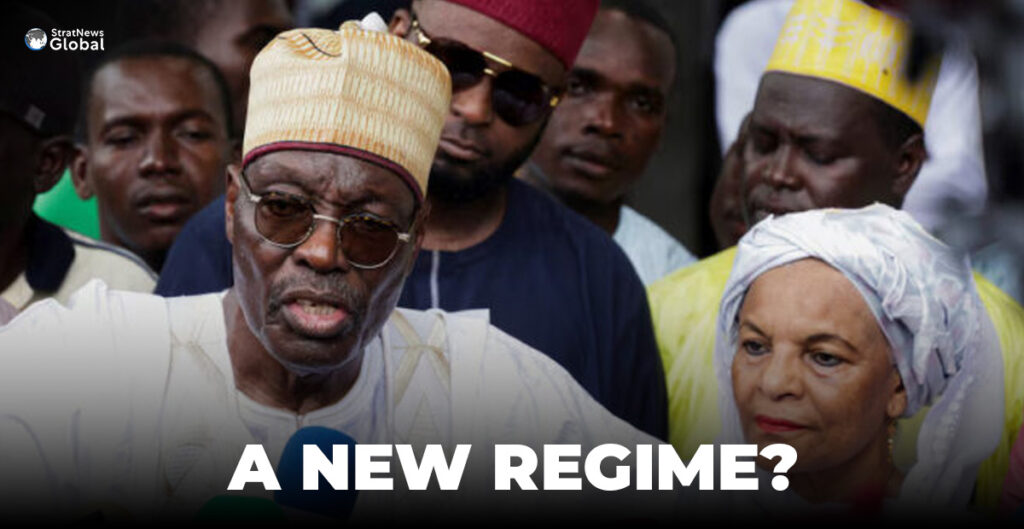
Cameroon: Tchiroma Declares Win, Urges Biya To Concede
Opposition candidate Issa Tchiroma on Monday night claimed victory in Cameroon’s October 12 presidential election, urging President Paul Biya to gracefully accept defeat and respect the will of the people.
“Our victory is clear. It must be respected,” Tchiroma said in a speech on his Facebook page from his hometown of Garoua in the north of the Central African state. “The people have chosen. And this choice must be respected.”
Seeking An 8th Term
Tchiroma, 76, a former government spokesperson and employment minister, broke ranks with Biya earlier this year and mounted a campaign that drew large crowds and endorsements from a coalition of opposition parties and civic groups.
Biya, 92, the world’s oldest serving head of state, is seeking an eighth term after 43 years in power. Analysts had expected his control over state institutions and a fragmented opposition to give him an edge in the election, despite growing public discontent over economic stagnation and insecurity.
Tchiroma praised voters for defying intimidation and staying at polling stations late into the night to protect their ballots.
“I also thank candidates who have already sent me their congratulations and recognised the will of the people,” Tchiroma said.
“We have placed the regime before its responsibilities: either it shows greatness by accepting the truth of the ballot box, or it chooses to plunge the country into turmoil that will leave an indelible scar in the heart of our nation,” he warned
The government has not officially responded to Tchiroma’s declaration.
‘High Treason’
However, Minister of Territorial Administration Paul Atanga Nji warned over the weekend that any unilateral publication of results would be considered “high treason,” adding that only the Constitutional Council has the authority to announce the winner.
Cameroon’s electoral law allows results to be published and posted at polling stations, but final tallies must be validated by the Constitutional Council, which has until October 26 to announce the outcome.
Tchiroma said he would soon release a region-by-region breakdown of vote tallies compiled from publicly posted results.
“This victory is not that of one man, nor of one party. It is the victory of a people,” he said.
He also called on the military, security forces and government administrators to remain loyal to the “republic, not the regime”.
Cameroon’s single-round electoral system awards the presidency to the candidate with the most votes. More than 8 million people were registered to vote in the election.
(With inputs from Reuters)
Australia Will Soon Pay Another Billion Dollars For AUKUS Submarine Programme, Minister Confirms
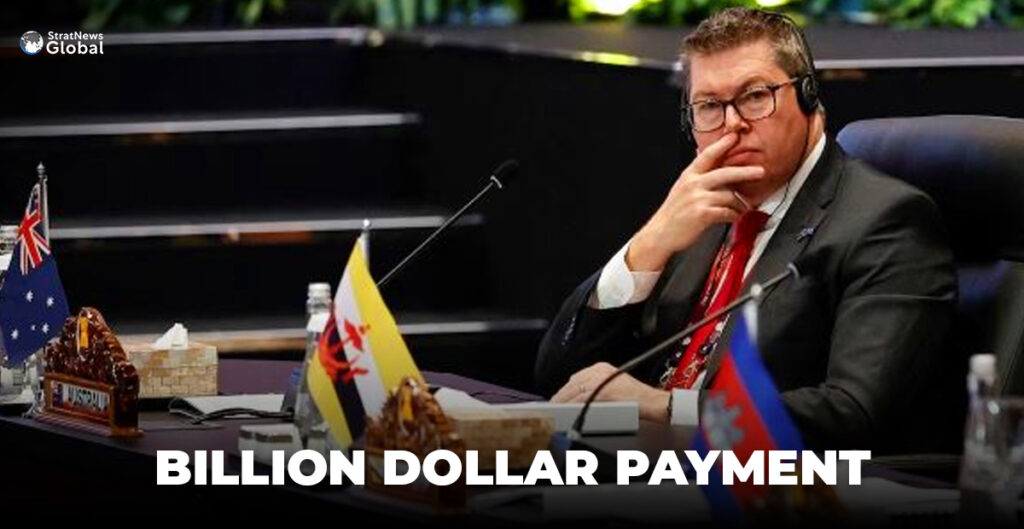
On Tuesday, Defence Industry Minister Pat Conroy said in Washington that Australia will soon make its second billion-dollar payment to support U.S. nuclear submarine shipyards, ahead of Prime Minister Anthony Albanese’s official visit next week.
The AUKUS agreement to transfer nuclear-powered submarines to Australia is being reviewed by the Pentagon, although Australia has expressed confidence the deal, which also includes Britain, will proceed.
In its first phase, Australia has pledged 3 billion U.S. dollars to boost U.S. submarine production rates, to later allow the sale of three Virginia submarines to Canberra, with a 2025 deadline for the first $2 billion.
“We’ve made a billion dollars. The plan is to provide another billion dollars shortly,” Conroy told reporters in Washington, where he said he is meeting with Trump administration and defence industry officials.
Albanese – Trump Meeting
Albanese will travel to Washington next week for an official visit and his first formal meeting with U.S. President Donald Trump, with the AUKUS defence partnership expected to be a focus of talks.
Defence Minister Richard Marles told reporters in Canberra on Tuesday that Australia was contributing to a Pentagon review of AUKUS and had “a sense of when this will conclude”, without disclosing the timing.
Australia is shifting to a model of defence co-development and co-production with the United States, including for the manufacture of guided weapons, and Albanese would highlight this to Trump, Conroy said.
Australia expects to manufacture up to 4,000 Lockheed Martin guided missiles annually from a new factory to begin production by the end of the year, including supplying U.S. defence needs, he said in a television interview with Sky News Australia.
Australia is also working with the United States and Lockheed Martin to develop a longer range Precision Strike Missile reaching “in excess of a thousand kilometres”, he added.
“This is one example of us shifting to a co-design, co-development, co-production, co-sustainment model where we work in partnership with the United States and deepen the industrial base of both countries,” he said.
(With inputs from Reuters)
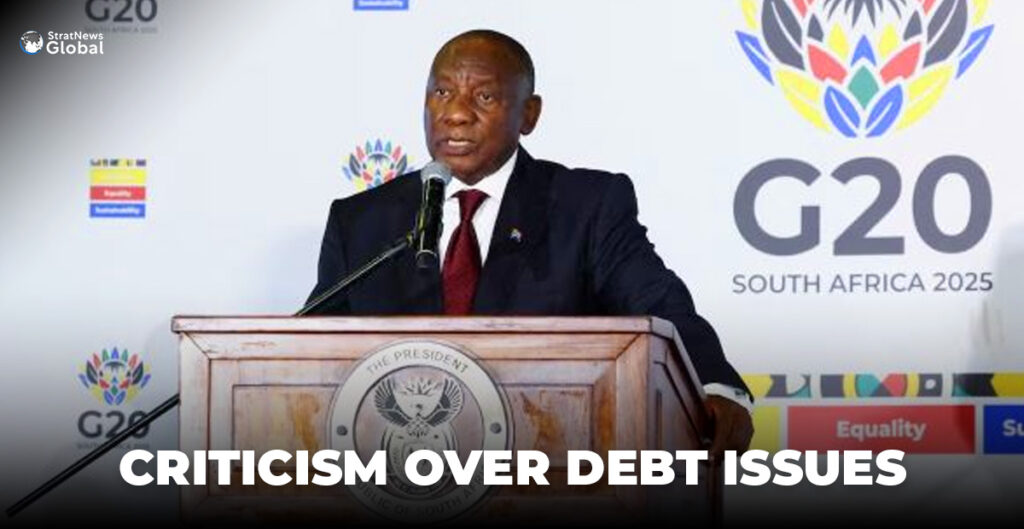
Civil Groups Criticize South Africa For Inaction On Debt Issues At G20
On Monday, 165 organizations condemned South Africa for making little progress on debt sustainability during its G20 presidency, urging the country to advance reforms before handing over leadership to the United States on December 1.
In a letter to South African President Cyril Ramaphosa released on the first day of the annual International Monetary Fund and World Bank meetings in Washington, the groups called for “the cancellation of all unsustainable and illegitimate debts, from all creditors” to protect funds needed for education, health, gender equality and climate resilience.
They also urged the G20 to push for “radical reforms” of debt restructuring processes, back creation of both an African Credit Rating Agency and a “Borrowers Club” to facilitate cooperation among debtor countries, and to push for an agreement to sell IMF gold reserves to set up a debt relief fund.
Developing countries, already saddled with high debt levels, have faced additional burdens given U.S. President Donald Trump’s sweeping tariffs. The World Bank in April said half of some 150 developing countries are either unable to make debt service payments or at risk of getting there.
Total debt in emerging markets rose by $3.4 trillion in the second quarter to a record of more than $109 trillion, according to recent data from the Institute of International Finance.
Inadequate Progress In Debt Restructuring Processes
“Despite some progress under the G20’s Common Framework, current debt arrangements remain inadequate,” the groups wrote in the letter. “Restructuring processes are too slow, debt reductions too shallow, and the sharing of responsibility between public and private creditors deeply unequal.”
Signed by the European Network on Debt and Development (Eurodad), Amnesty International, the Malala Fund and ActionAid International, among others, the letter lauded Ramaphosa’s decision to make debt sustainability one of four priorities for South Africa’s presidency, but said “so far nothing tangible let alone ambitious has been achieved.”
“While this year’s G20 has been put forward as an ‘African G20’, there is no evidence that any progress has been made on the debt crisis facing Africa and many other countries worldwide during the South African presidency,” the groups said, adding that it was not too late for the country to leave its mark.
The United States is due to assume the G20 presidency on December 1, shortly after a leaders summit to be attended by U.S. Vice President JD Vance instead of Trump.
“Developing economies are currently experiencing the highest borrowing costs in nearly two decades while debt payments are crowding out vital domestic resources and diverting them away from development,” the groups said.
They noted that African countries are charged much higher interest rates than countries in other regions with comparable credit ratings and macroeconomic indicators, costing them some $74.5 billion per year in excess interest payments, according to data compiled by the United Nations Development Program.
Failure to address the debt challenges and offer low-income countries decisive debt reductions meant action to address climate change would remain “out of reach” for most countries.
(With inputs from Reuters)
MI5 Issues Rare Warning Over Foreign Espionage Targeting UK Parliament
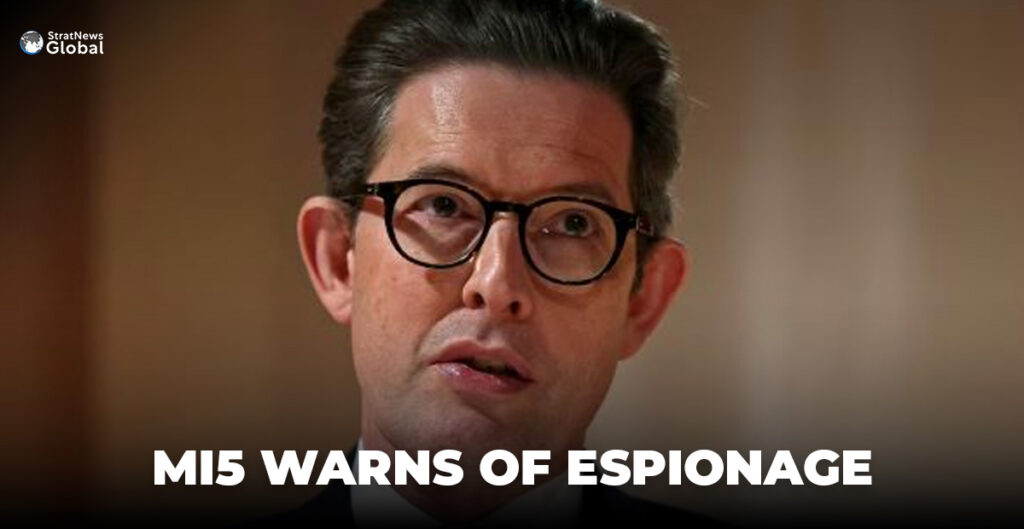
MI5, Britain’s domestic intelligence agency, has publicly cautioned members of parliament that they are the target of espionage by China, Russia, and Iran, in what the agency described as a deliberate attempt to weaken the nation’s democratic system.
The warning comes a week after prosecutors said they had to abandon the trial of two British men charged with spying on members of parliament for China because the British government had not provided evidence showing China was a threat to its national security.
MI5 warned politicians and their staff to look out for spies seeking to elicit information from them by blackmail or phishing attacks, cultivating long-term and deep relationships with them, or making donations to influence their decisions.
“When foreign states steal vital UK information or manipulate our democratic processes they don’t just damage our security in the short-term, they erode the foundations of our sovereignty,” MI5 Director General Ken McCallum said.
‘Take Action To Protect Yourself’
MI5 urged politicians to “keep track of odd social interactions”, including frequent requests to meet privately, and to be careful if there is “overt flattery”.
In remarks accompanying the advice to members of parliament, McCallum said: “Everyone reading this guidance cares deeply about the role they play in UK democracy. Take action today to protect it – and yourself.”
In January 2022, MI5 sent out an alert notice about lawyer Christine Lee, alleging she was “involved in political interference activities” in the United Kingdom on behalf of China’s ruling Communist Party.
The warning was circulated to lawmakers by the House of Commons speaker, who said MI5 had found that Lee had “facilitated financial donations to serving and aspiring parliamentarians on behalf of foreign nationals based in Hong Kong and China”.
Lee later sued MI5 in a bid to clear her name, but lost the case.
While British Prime Minister Keir Starmer has sought to thaw ties with China since taking office last year, London and Beijing have repeatedly traded spying accusations, with British security services warning of Chinese attempts to infiltrate its political and business communities.
In the case of the recently abandoned trial, China’s embassy in London said in a statement: “We have emphasised from the outset that the allegation about China instructing the relevant British individuals to ‘steal British intelligence’ is entirely fabricated and malicious slander, which we firmly reject.”
(With inputs from Reuters)