

Support us by contributing to StratNewsGlobal on the following UPI ID
ultramodern@hdfcbank

Strategic affairs is our game, South Asia and beyond our playground. Put together by an experienced team led by Nitin A. Gokhale. Our focus is on strategic affairs, foreign policy and international relations, with higher quality reportage, analysis and commentary with new tie-ups across the South Asian region.
You can support our endeavours. Visit us at www.stratnewsglobal.com and follow us on YouTube, Twitter, Facebook and Instagram.
र 500 per month
र 1000 per month
र 5000 per year
र 10000 per year
Donate an amount of your choice
र 500 per month
Donate र 500 per month

र 1000 per month
Donate र 1000 per month
र 5000 per year
Donate र 5,000 per year
र 10000 per year
Donate र 10,000 per year
Donate an amount of your choice
Donate an amount of your choice

Aid Trucks Enter Gaza As Dispute Over Hostage Bodies Temporarily Paused
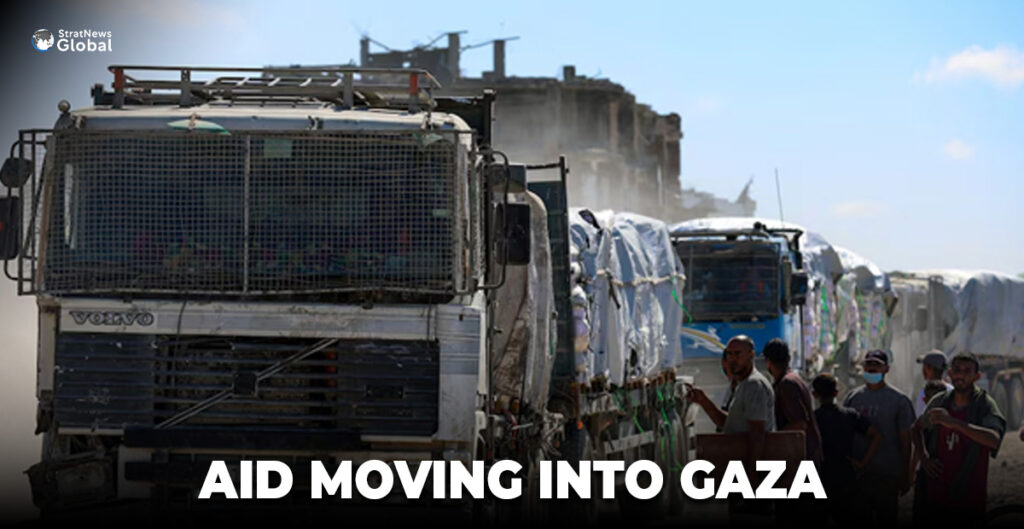
Aid trucks entered Gaza on Wednesday as Israel resumed preparations to open the main Rafah crossing following a dispute over returning the bodies of deceased hostages that had threatened the fragile ceasefire with Hamas.
Israel had threatened to keep Rafah shut and reduce aid supplies because Hamas was returning bodies too slowly, showing the risks to a truce that has stopped two years of devastating warfare in Gaza and freed all living hostages held by Hamas.
However, the militant group returned more Israeli bodies overnight, and an Israeli security official said on Wednesday preparations were under way to open Rafah to Gazan citizens, while a second official said that 600 aid trucks would go in.
More Hostage Bodies Returned
Hamas returned four bodies confirmed as dead hostages on Monday and another four bodies late on Tuesday, though Israeli authorities said one of those bodies was not that of a hostage.
The dispute over the return of bodies still has the potential to upset the ceasefire deal, along with other major issues that are yet to be resolved.
Later phases of the truce call for Hamas to disarm and cede power, which it has so far refused to do. It has launched a security crackdown, parading its power in Gaza through public executions and clashes with local clans.
Longer-term elements of the ceasefire plan, including how Gaza will be governed, the make-up of an international force to take over there and moves towards the creation of a Palestinian state have yet to emerge.
Twenty-one bodies of hostages remain in Gaza, though some may be very hard to find or recover because of the destruction during the conflict. An international task force is meant to find them.
The deal also requires Israel to return the bodies of 360 Palestinian militants killed in battle. The first group of 45 was handed over on Tuesday and was being identified, said Palestinian health authorities.
Aid Entry And Border Crossing
The war has caused a humanitarian catastrophe in Gaza, with nearly all inhabitants driven from their homes, a global hunger monitor saying famine was present in the enclave and health authorities overwhelmed.
Reuters video showed a first group of trucks moving from the Egyptian side of the border into the Rafah crossing at dawn on Wednesday, some tankers carrying fuel and others loaded with pallets of aid.
However, it was not clear if that convoy would complete its crossing into Gaza as part of the 600 trucks that were due to enter the enclave on Wednesday – the full daily complement required under the ceasefire plan. Aid trucks entered Gaza through other crossings.
“Humanitarian aid continues to enter the Gaza Strip through the Kerem Shalom Crossing and other crossings after Israeli security inspection,” the Israeli security official said.
Israel’s public broadcaster Kan reported that Wednesday’s aid deliveries would include food, medical supplies, fuel, cooking gas and equipment to repair vital infrastructure.
Underscoring the political challenges facing the truce, Israel’s far-right National Security Minister Itamar Ben-Gvir, an opponent of the ceasefire plan, said on X that the aid delivery was a “disgrace”.
“Nazi terrorism understands only force, and the only way to solve problems with it is to wipe it off the face of the earth,” he added, accusing Hamas of lies and abuse over the return of hostages’ bodies.
Rafah is due to be opened to Palestinian inhabitants of Gaza, either entering or exiting the enclave. But Gazans awaiting medical evacuation told Reuters they had not yet received notification from the World Health Organisation to prepare for travel.
Violence In Gaza
Several other Palestinian factions present in Gaza have backed the days-long Hamas security crackdown as it battles local clans that had tried to take over areas of the territory during the conflict.
The Popular Front for the Liberation of Palestine, one of the groups backing the Hamas crackdown, described the clans being targeted as “hubs of crime”.
The ceasefire envisaged Hamas initially restoring order in Gaza, and U.S. President Donald Trump, who brokered the deal, endorsed Hamas’ crackdown on rival gangs, while warning it would face airstrikes if it did not later disarm.
Palestinian Authority chairman Mahmoud Abbas condemned the public executions after a video, which was authenticated by Reuters, showed masked gunmen shooting dead seven bound, kneeling men in a Gaza street.
Abbas’ office called the killings a crime and a “blatant violation of human rights”.
Israeli forces inside Gaza have pulled back to what the truce deal calls a yellow line just outside the main cities. Israeli Defence Minister Israel Katz said it would immediately enforce any violation of the line.
(With inputs from Reuters)
EU’s Anti-Russia ‘Drone Wall’ Push Faces Political, Technical Roadblocks
Hours after around 20 Russian drones breached Polish airspace last month, European Commission President Ursula von der Leyen called for a “drone wall” to defend Europe’s eastern flank.
Drone incidents over airports in Denmark and Germany in the following weeks reinforced European leaders’ view that the continent urgently needs better protection against such threats.
But the “drone wall” proposal remains in flux, according to more than half a dozen officials and diplomats familiar with internal EU deliberations who spoke to Reuters about the project.
“Our capabilities are really, for the time being, quite limited,” said European Defence Commissioner Andrius Kubilius, who is playing a leading role in fleshing out the proposal.
Kubilius told Reuters the EU would need to draw heavily on Ukrainian expertise, honed over nearly four years countering waves of Russian drones.
Defence Test
The drone project is a test of the EU’s ambitions to play a greater role in defence – traditionally the preserve of national governments and NATO – as well as Europe’s ability to take more responsibility for its own security, as demanded by U.S. President Donald Trump.
The Commission, the EU’s executive body, has been trying to win over southern and western European governments, which argued the original idea was too focused on the bloc’s eastern border when drones could pose a threat across the whole continent.
The proposal is also caught up in a power struggle over who should control major European defence projects, with Germany and France wary of handing power to the Commission, diplomats say.
Some EU officials questioned the name “drone wall”, arguing it implies a false promise of security when no system will be able to repel every drone.
To try to win more support, the Commission has broadened the original concept – from an integrated thicket of sensors, jamming systems and weapons along the eastern border to a continent-wide web of anti-drone systems.
As first reported by Reuters on Tuesday, the Commission plans to switch to the term “European Drone Defence Initiative” in a defence policy “roadmap” to be unveiled on Thursday.
If it goes ahead, the project would be a bonanza for makers of anti-drone systems – from startups in the Baltic states to bigger defence industry players such as Germany’s Helsing and Rheinmetall.
The Commission has not said how much the proposal would cost, but geopolitical consultancy RANE said it could generate billions of euros in orders.
But without broad support from European governments, the plan will struggle to secure access to EU funding, experts said.
“The path to realisation remains long and fraught with constraints,” said Matteo Ilardo, RANE’s lead Europe analyst, pointing to big challenges “in terms of cost, scale and cross-border integration”.
Jets Vs Drones
Baltic countries, along with Poland and Finland, pitched the idea of a “drone wall” to the European Commission last year, a spokesperson for Estonia’s border guard told Reuters.
The countries applied for funding from an EU civilian border management fund, with the aim of deploying sensors and drones to combat people smuggling, the spokesperson said.
The project initially failed to gain traction at the EU level.
But the idea evolved into a more defence-focused concept after Ukrainian Deputy Prime Minister Mykhailo Fedorov gave a presentation to von der Leyen in April in Brussels on how Ukraine counters Russian drone attacks, EU officials said.
The Russian incursion into Polish airspace on September 9 highlighted how ill-prepared EU countries currently are to tackle the threat posed by swarms of drones, adding to the sense of urgency.
NATO deployed F-35 and F-16 fighter jets, helicopters and a Patriot air defence system collectively worth billions of dollars to respond to Russian Gerbera drones – based on Iranian Shahed models – that cost a tiny fraction of the price.
“A 10,000-euro drone shot down with a million-euro missile – that’s not sustainable,” Kubilius told a defence conference in Brussels on Tuesday.
French, German Scepticism
Once the Commission has fleshed out its proposal, EU governments will decide whether to give it the green light.
Diplomats say smaller countries see more value in having the Commission as a coordinator on such projects. But big countries such as France and Germany, which are used to handling large procurement initiatives themselves, want to retain control.
Neither German Chancellor Friedrich Merz nor French President Emmanuel Macron has so far embraced the proposal.
At an EU summit in Copenhagen earlier this month, Macron said the threat of drones was “more sophisticated, more complex” than the idea of a drone wall suggested.
Countries wanting to cooperate on an anti-drone system can use national budgets and the EU’s 150 billion euro SAFE loans scheme for defence projects. But if the EU gives the project the status of a European Defence Project of Common Interest, countries involved would have access to a broader range of EU funding.
The EU would also have to agree on who would run the project – member countries, the Commission, another EU body or some combination of all of those.
(With inputs from Reuters)
Fresh Clashes On Pakistan-Afghanistan Border Kill Over A Dozen Civilians, Soldiers
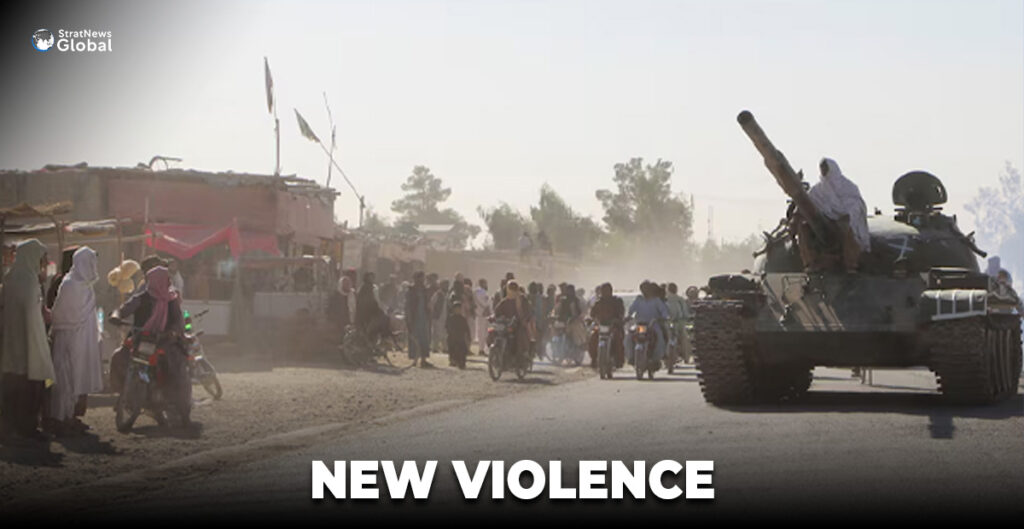
Fresh clashes erupted on Wednesday along the tense Pakistan–Afghanistan border, killing over a dozen civilians and soldiers and shattering a fragile calm following weekend battles that left dozens dead.
The weekend fighting was the worst between the neighbours since the Taliban seized power in Kabul in 2021, despite regular clashes between their security forces along the contested 2,600 km (1,600-mile) frontier.
The Afghan Taliban said more than a dozen of its civilians were killed and 100 wounded as Pakistani forces launched attacks in the early hours of Wednesday in the district of Spin Boldak.
Pakistan said four of its civilians were wounded in attacks by “Taliban forces” in the district of Chaman, which is opposite Spin Boldak across the frontier.
Fighting between troops and militants in a second incident in Pakistan’s border district of Orakzai killed six Pakistani paramilitary soldiers and wounded six, two security officials told Reuters.
Nine militants were also killed, they said, adding that the violence broke out during a search in the area by troops after a militant attack last week killed 11 Pakistani soldiers.
The Pakistani military did not immediately respond to a request for comment on the Orakzai clash. But it dismissed as “outrageous and blatant lies” Kabul’s accusation that Pakistan had launched the attack in Spin Boldak.
Border Shut
The recent friction between the two former allies erupted after Islamabad demanded that the Afghan Taliban administration tackle militants who have stepped up attacks in Pakistan, saying they operate from havens in Afghanistan.
The Taliban accuses the Pakistani military of conspiring against Afghanistan by spreading misinformation, provoking border tension, and sheltering ISIS-linked militants to undermine the country’s stability and sovereignty.
Pakistan’s military denies the charges and points to attacks in Pakistan by ISIS-K, or Islamic State Khorasan, the regional affiliate of the Islamic State group active in the region.
It opposes the Taliban and has carried out bombings targeting civilians, officials and foreign interests.
The neighbours have closed several crossings along their border in the aftermath of the fighting, bringing trade to a halt and stranding scores of vehicles laden with goods.
Pakistan is the main source of goods and food supplies for landlocked, impoverished Afghanistan.
Last week’s clashes drew international concern, with China urging protection for both its citizens and investments, Russia calling for restraint, and U.S. President Donald Trump saying he could help end the conflict.
The latest tension between Pakistan and Afghanistan has coincided with Afghan Taliban Foreign Minister Amir Khan Muttaqi’s first visit to Pakistan’s arch-rival, India.
On the visit, India and Afghanistan decided to upgrade ties, with New Delhi saying it would reopen its embassy in Kabul, while the Afghan Taliban plans to send its diplomats to India.
(With inputs from Reuters)
Hegseth Presses NATO Allies To Fund More Arms For Ukraine
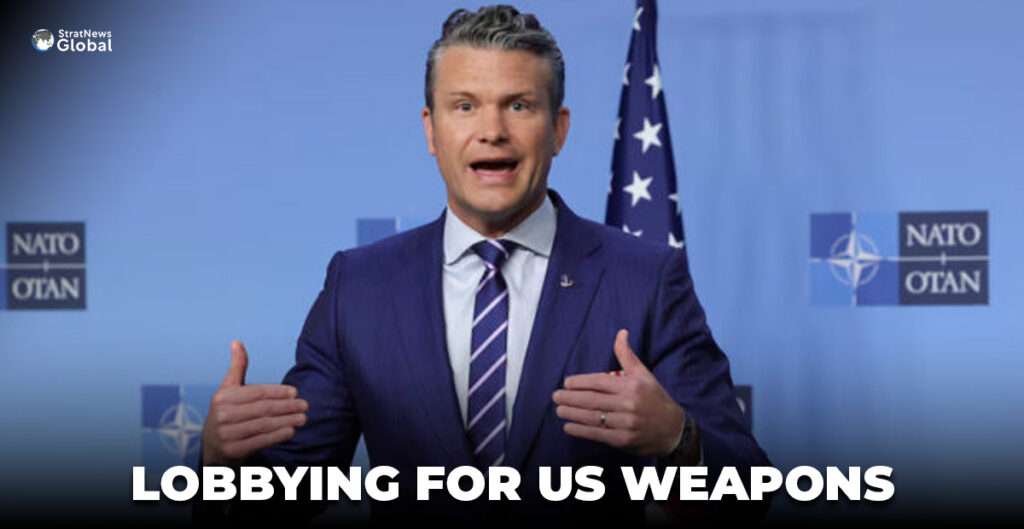
US Defence Secretary Pete Hegseth on Wednesday urged NATO allies to step up their spending on American-made weapons for Ukraine, after a report flagged a sharp drop in military aid during July and August.
“You get peace when you are strong. Not when you use strong words or wag your fingers, you get it when you have strong and real capabilities that adversaries respect,” he told reporters ahead of a meeting with his NATO counterparts at the alliance’s headquarters in Brussels.
Bringing Conflict To ‘Peaceful Conclusion’
Hegseth urged allies to ramp up investment in the Prioritized Ukraine Requirements List (PURL) programme, which replaced US arms donations to Ukraine and now requires allies to pay for US weapons deliveries.
“Our expectation today is that more countries donate even more, that they purchase even more to provide for Ukraine, to bring that conflict to a peaceful conclusion,” he said.
NATO Secretary-General Mark Rutte said he expected further pledges, noting that $2 billion already had been committed through the mechanism.
“NATO is stronger than ever & fairer: European Allies & Canada are pulling their weight and stepping up to equalise defence spending with the US. Looking forward to continue working together to keep our fighting forces powerful & preserve peace,” Rutte tweeted.
Short Of Expectations
However, this amount falls short of the $3.5 billion Ukrainian President Volodymyr Zelenskyy had hoped to secure by October.
Sweden, Estonia, and Finland pledged contributions on Wednesday, but countries including Spain, Italy, France, and Britain have faced criticism for holding back.
Ukraine remains heavily reliant on US weapons as it braces for another winter of conflict with Russia.
Military Aid Falls By Over 40%
The Kiel Institute for the World Economy reported on Tuesday that military aid to Ukraine fell by 43% in July and August compared with the first half of the year.
According to the institute, most military support now flows through the PURL initiative, which by August had been joined by Belgium, Canada, Denmark, Germany, Latvia, the Netherlands, Norway and Sweden.
(With inputs from Reuters)
Madagascar’s New Strongman: Who Is Col Michael Randrianirina?
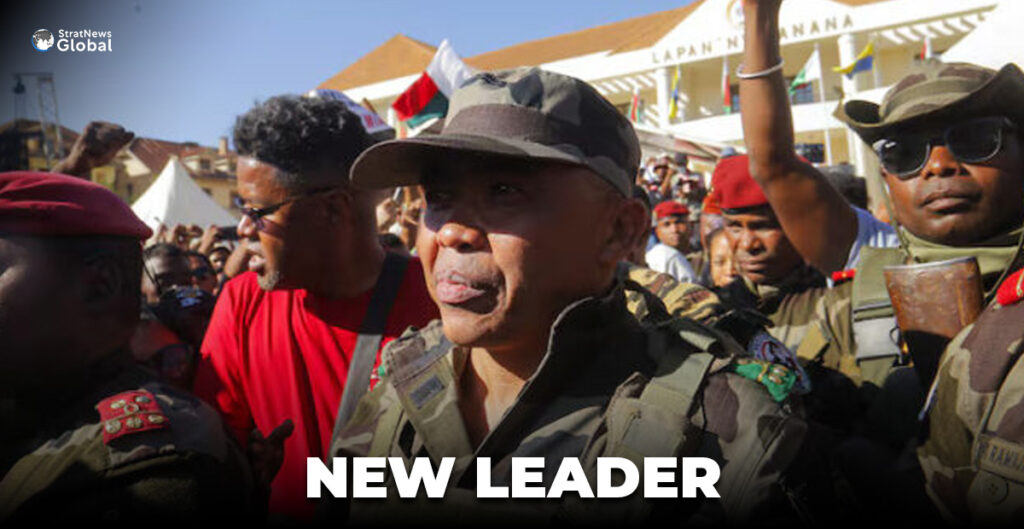
Colonel Michael Randrianirina, a senior officer in the elite CAPSAT unit, has seized control in Madagascar after President Andry Rajoelina fled amid escalating Gen Z protests.
He swiftly suspended key institutions — including the Senate and Constitutional Court — and said a transitional government would rule for up to two years before elections.
Following are key facts about Randrianirina:
Randrianirina is part of Madagascar’s elite military CAPSAT unit, the group that brought now-deposed president Andry Rajoelina to power in a 2009 coup.
Since taking control this week, he has suspended the southern African country’s institutions, including the Senate, electoral commission and top legal bodies, including the High Constitutional Court that validated his takeover as interim president. He said it might take up to two years to hold elections to transition back to a civilian government.
Breaking Ranks
Randrianirina became a vocal critic of Rajoelina in recent years and was arrested on suspicion of instigating an army mutiny on 27 November 2023, for which he was charged, brought before court and sent to prison all on the same day.
He was released in February 2024, after being given a suspended sentence for attacking state security, and returned to CAPSAT.
On October 11, as the Gen Z protests against Rajoelina gathered steam, Randrianirina recorded a video in which he called on Madagascar’s security forces to disobey orders to open fire on protesters. Some CAPSAT soldiers then joined the protests after that declaration of support.
Rising Through The Ranks
He was born in the village of Sevohipoty, in the region of Androy, on the southernmost tip of the Indian Ocean island. He is 51 years old, although the exact date of his birth is not public knowledge, nor is his family background.
He was governor of Androy between 2016 and 2018, later becoming head of an infantry battalion in the city of Toliara until 2022. Then he was promoted to a senior role in CAPSAT.
(With inputs from Reuters)
From Exclusion To Outrage: How The Taliban Sparked A Storm In Delhi With A Press Conference
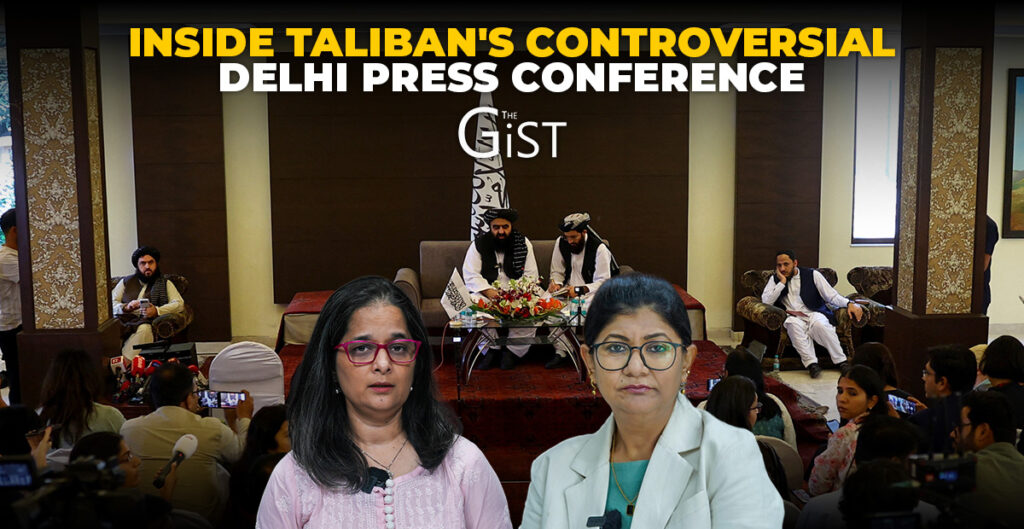
A press conference in New Delhi by Afghanistan’s Taliban foreign minister, Amir Khan Muttaqi, set off a storm of controversy after women journalists were barred from attending the first event. The uproar was immediate, with many Indian reporters condemning the discrimination and questioning why the Taliban’s restrictive practices were being tolerated on Indian soil.
Speaking on StratNews Global’s ‘The Gist‘, Nayanima Basu, who attended the second press conference that was called by the Taliban as a direct result of the outrage over the first, explained the sequence of events and how the two press conferences were convened. Following public outrage after the first, a second press conference was hastily organised on Sunday, October 12, 2025, this time open to all reporters, including women.
Muttaqi attempted to explain the exclusion as a ‘technical issue,’ a claim few found convincing. During the second interaction, he faced tough questions about women’s rights, the killing of Reuters photojournalist Danish Siddiqui, and Afghanistan’s deteriorating security situation. While he answered every question, even some in Hindi, Basu noted that many of his responses were evasive or false, especially his claim that men and women were treated equally in Afghanistan.
“I got attacked on X and also on social media that that (the venue) is Afghanistan’s territory. It is really not so because we have not given formal recognition to the Taliban government yet,” explained Nayanima. “Unless you do that and we know what is going on inside the embassy, right now, it is not really Afghanistan’s territory, so to say.”
Interestingly, the embassy staff in Delhi, including Afghan nationals and Indians, reportedly refused to hoist the Taliban’s white flag or serve the delegation, keeping instead the former Afghan republic’s tricolour on display. This silent protest underscored India’s ambiguous stance – engaging with the Taliban out of necessity while withholding formal recognition.
With Afghanistan, India has engaged in pragmatic diplomacy: balancing humanitarian outreach and security interests with a regime it fundamentally disagrees with. As Nayanima Basu noted, engagement is essential given China’s growing presence in Afghanistan and the tensions between Kabul and Islamabad. Yet, she warned, India must ensure dialogue does not normalise Taliban ideology or its suppression of women’s rights.
US Strike On Suspected Drug Boat Near Venezuela Kills Six, Says Trump
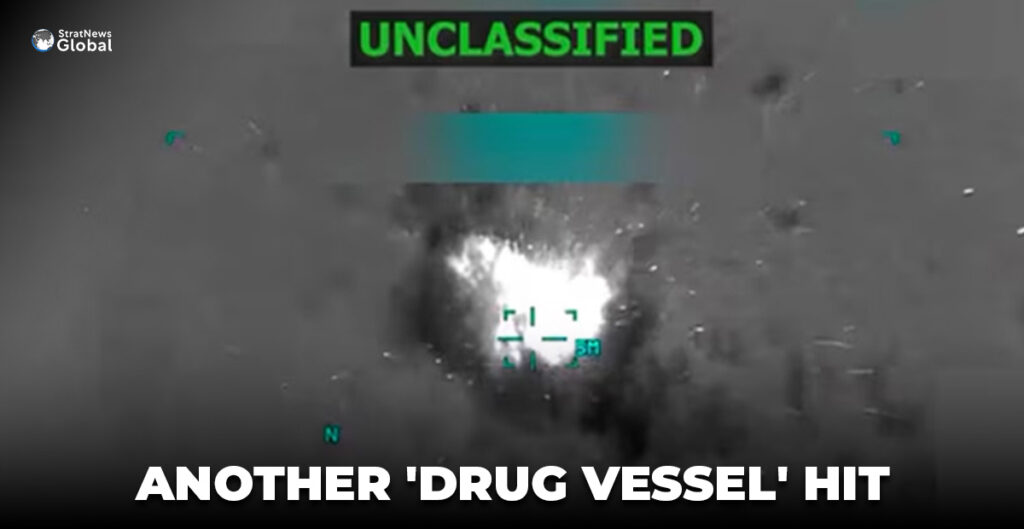
A U.S. strike on a vessel off Venezuela’s coast on Tuesday killed six suspected drug traffickers, President Donald Trump said, marking the latest operation amid a U.S. military buildup in the region.
The strike is the most recent example of Trump’s efforts to use U.S. military power in new, and often legally contentious, ways, from deploying active-duty U.S. troops in Los Angeles to carrying out counter-terrorism strikes against drug trafficking suspects.
In a post on Truth Social, Trump said the strike had been carried out against a designated terrorist organisation, but he did not provide any details on which group.
“Intelligence confirmed the vessel was trafficking narcotics, was associated with illicit narcoterrorist networks,” Trump said, without providing evidence.
A roughly 30-second video, which Trump posted, appeared to show a stationary vessel in a body of water being hit with a projectile before exploding.
‘Non-International Armed Conflict’
The Pentagon recently disclosed to Congress that Trump has determined the United States is engaged in “a non-international armed conflict” with drug cartels.
Some former military lawyers say the legal explanations given by the Trump administration for killing suspected drug traffickers at sea instead of apprehending them fail to satisfy requirements under the law of war.
A large U.S. military buildup is taking place in the southern Caribbean. In addition to F-35 aircraft in Puerto Rico, there are eight U.S. warships in the region, carrying thousands of sailors and marines, and one nuclear-powered submarine.
The Trump administration has provided scant information on the previous strikes, including the identities of those killed or details about the cargo.
Venezuelan President Nicolas Maduro has repeatedly alleged that the U.S. is hoping to drive him from power. Washington in August doubled its reward for information leading to Maduro’s arrest to $50 million, accusing him of links to drug trafficking and criminal groups that Maduro denies.
(With inputs from Reuters)
South Korea Issues Cambodia Travel Ban
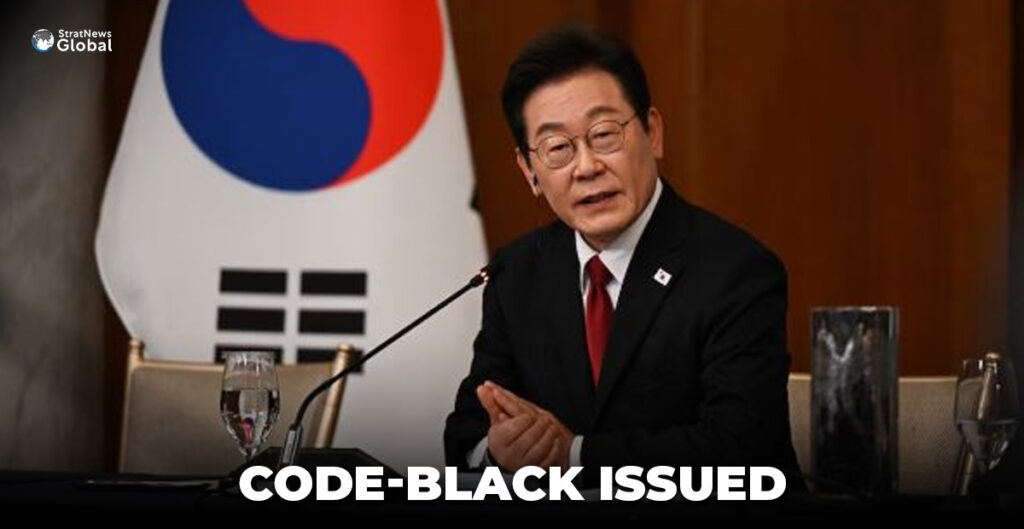
South Korea on Wednesday imposed a “code-black” travel ban on parts of Cambodia and sent a high-level delegation to assist citizens reportedly trapped in scam compounds, aiming to rescue those held against their will.
Vice Foreign Minister Kim Jina is leading the team to Cambodia to look for a resolution to the involvement of South Koreans in the “complex” scam industry, South Korea’s National Security Adviser Wi Sung-lac said.
South Korea’s intelligence agency is also involved, a presidential spokesperson said separately.
‘Fraudulent Employment’
The foreign ministry issued a new travel ban for parts of Cambodia, including Poipet and Kampot, and an advisory to leave regions, including Sihanoukville.
It cited recent increases in cases of detention and “fraudulent employment”. A “code-black” ban is the most serious travel ban with orders for citizens to leave.
More than 1,000 South Koreans are believed to be among about 200,000 people of various nationalities involved in the scam compounds in Cambodia, Wi told reporters.
The United Nations estimates the scam centres, which have emerged in Southeast Asia since the COVID-19 pandemic, generate billions of dollars in revenue for criminal networks every year, targeting victims around the world through phone and online scams.
Student’s Death Triggers ‘Code-Black’ Response
The South Korean action follows the death of a South Korean student who was lured into working in a scam centre in Cambodia with the promise of hefty wage. He allegedly died after being tortured by a criminal gang.
Last week, South Korea summoned the Cambodian ambassador over the death as well as the detention of its nationals by cybercrime gangs, urging Phnom Penh to take action.
‘Exaggerated’ Reports?
In June, Amnesty International accused the Cambodian government of “deliberately ignoring” abuses by crime groups and a “pattern of state failures” that enabled a billion-dollar industry to flourish.
The Cambodian government rejected allegations of inaction and said the human rights group’s report was “exaggerated”.
South Korean police and its foreign ministry have worked on more than 300 reports filed this year by relatives of nationals believed to be missing in Cambodia, and about 80% of these cases have been resolved, Wi said.
The government is working on 72 cases and plans to bring back about 60 people who had been rounded up since July by Cambodian authorities, he said, adding many others were believed to be missing or held against their will.
Wi said the government faced constraints given that Cambodia had the right to respond to crimes in the country and said the best course of action for South Korea was to help and cooperate.
(With inputs from Reuters)
Chinese Airlines Reject Trump’s Proposal To Ban Flights Over Russia On US Routes
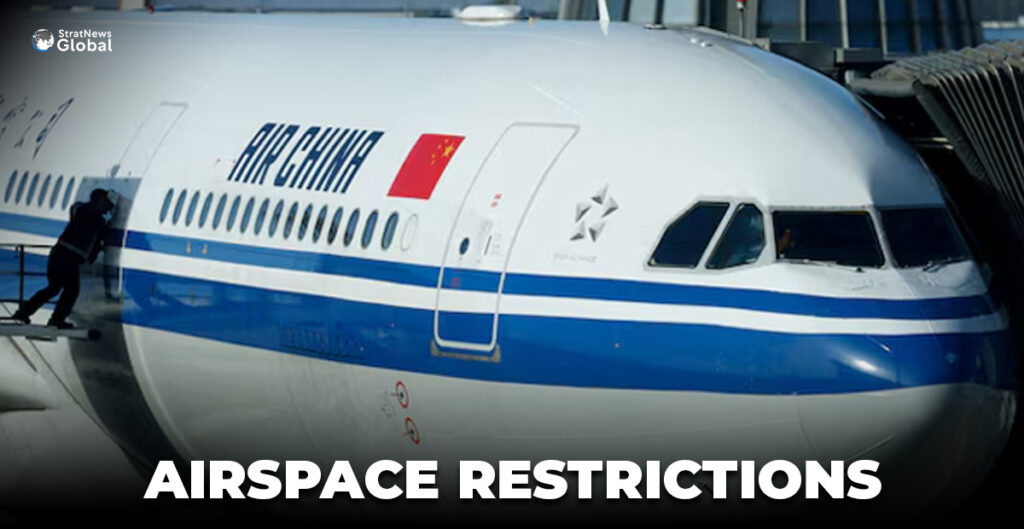
Major Chinese airlines on Tuesday urged the Trump administration to scrap a plan banning flights over Russia on U.S. routes, warning it would lengthen travel times, raise airfares, and potentially disrupt certain services.
Last week, the U.S. Transportation Department proposed banning Chinese airlines from flying over Russia on routes to and from the United States, saying the reduced flight time puts American carriers at a disadvantage.
China Eastern, one of six Chinese airlines that sent letters, said in a filing with USDOT that the move could extend the flight time on some of its most important routes by two to three hours, significantly increase risks of missed connections and boost fuel consumption.
Air China and China Southern said the decision would adversely affect a substantial number of passengers in the United States and China.
China Southern projected that at least 2,800 passengers scheduled to travel during the peak holiday season of November 1 to December 31 would need to be rebooked, “jeopardising their travel plans.”
Separately, United Airlines urged the Trump administration to extend the prohibition to Cathay Pacific, which flies over Russia on flights to the United States from Hong Kong and other Hong Kong-based carriers.
United says the Russia restrictions mean it is “effectively barred from resuming non-stop China service on previously served routes such as Newark/New York, Washington, D.C., and Chicago.”
Russian Airspace Restrictions
Russia has barred U.S. airlines and many other foreign carriers from flying over its airspace in retaliation for Washington’s banning Russian flights over the U.S. in March 2022 after Russia invaded Ukraine.
Chinese airlines were not banned and have been using this advantage to increase market share compared to non-Chinese carriers on international routes.
A spokesperson for China’s foreign ministry on Friday said the restrictions were not conducive to person-to-person exchanges.
Airlines for America, a major trade group representing carriers American Airlines, Delta Air Lines and United Airlines, praised the effort but also called on USDOT to continue to “maintain parity in the number of passenger flights available to U.S. and Chinese airlines, by ensuring that the level of passenger capacity stays reasonably tied to marketplace demand.”
(With inputs from Reuters)
India, Brazil Seek To Enhance Trade, Boost Strategic Partnership
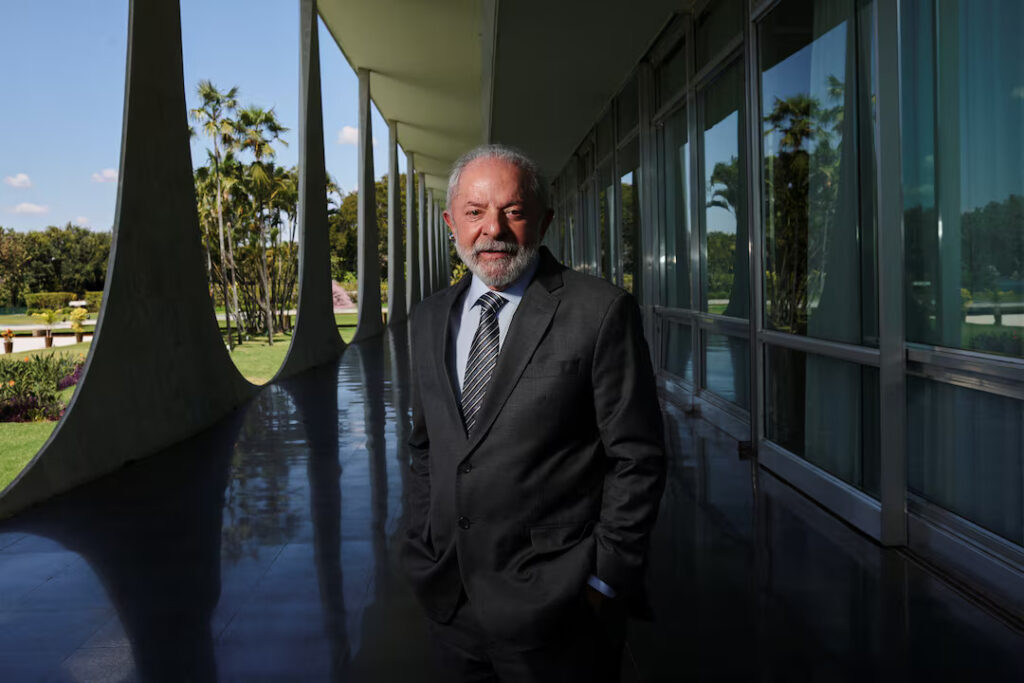
The ground is being laid for a visit to India, perhaps early next year, by Brazil’s President Lula da Silva. Brazil’s Vice-President and Minister for Development, Industry & Trade Geraldo Alckmin begins a three-day visit beginning Wednesday.
The agenda: deepen the bilateral strategic partnership with the shared goal of doubling trade to $20 billion over the next five years. The agenda also reflects broader priorities of the Global South, which is securing reliable energy supplies, ensuring sustainable food systems, and reforming multilateral economic governance.
The immediate focus for Alckmin and his Indian counterpart Commerce Minister Piyush Goyal, is to review progress on bilateral trade and investment, identify new priority sectors—particularly in renewables, agri-tech, and industrial innovation, and set a concrete roadmap toward the shared trade target.
In a statement ahead of his departure, Vice President Alckmin underlined the legal and institutional steps being taken to solidify this economic cooperation. He announced the signing of two presidential decrees on behalf of his President:
- Agreement on Cooperation and Facilitation of Investments (ACFI) between Brazil and India, creating a more secure and transparent environment for cross-border investments.
- Modernize the bilateral agreement on the avoidance of double taxation, reducing fiscal burdens and promoting ease of doing business between the two countries.
“We are on our way to India for a mission to expand trade, investments, and job generation for both nations,” Alckmin said, stressing that this is not just a diplomatic visit but part of a larger strategic mission to align economic growth with social development across the Global South.
Alckmin will also participate in the India-Brazil Business Forum, meet Indian industry leaders, and visit the All India Institute of Ayurveda, reflecting growing collaboration in wellness and healthcare, sectors critical to post-pandemic recovery and resilience in the Global South.
Discussions are expected to touch upon critical energy partnerships, sustainable industrial development, and cooperation in multilateral forums like BRICS and G20.
Brazil is already India’s largest trading partner in Latin America, with bilateral merchandise trade reaching $12.19 billion in FY 2024–25. With both countries committed to diversifying trade and reducing barriers, their renewed engagement through this visit marks a significant step toward a more equitable and interconnected Global South.
As emerging economies face shared challenges around climate resilience, energy transition, and fair market access, the visit of Vice President Alckmin represents a timely and strategic opportunity to drive coordinated action and shared prosperity.