

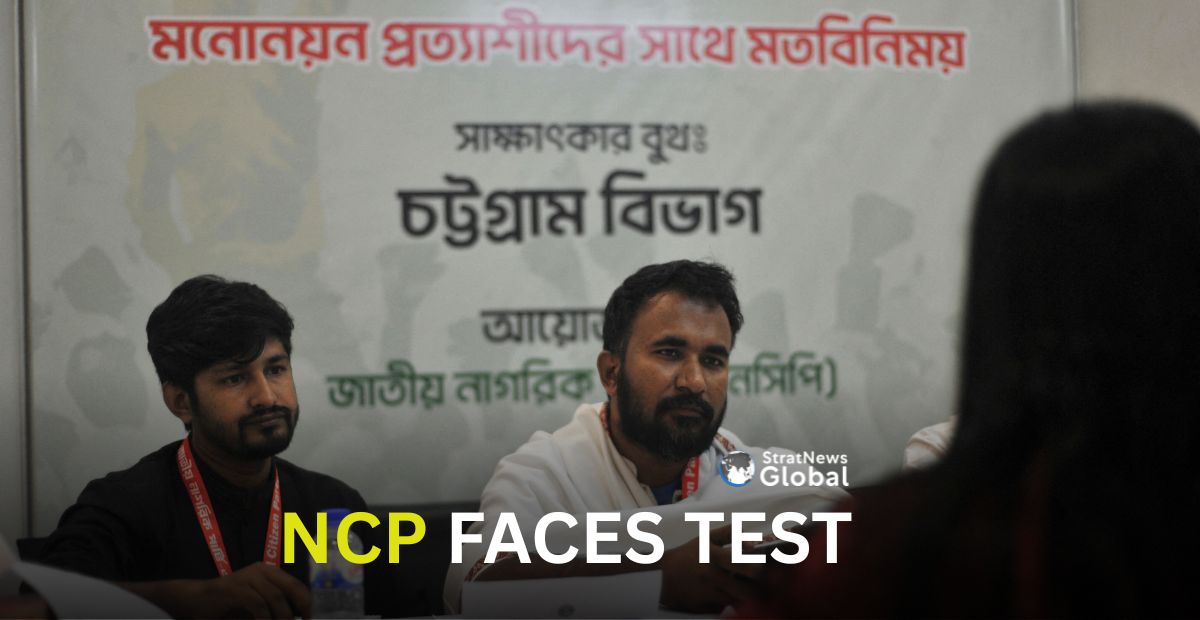
Thousands in Bangladesh rallied behind the students who ousted Sheikh Hasina and formed the National Citizen Party (NCP) this year, but the group now struggles to convert street power into votes as it confronts entrenched rivals with vast networks ahead of February’s polls.
“Our organisation is weak because we haven’t had enough time to build it,” said its chief Nahid Islam, prominent in last year’s deadly anti-government protests who served briefly in the caretaker administration under Nobel laureate Muhammad Yunus.
Polls Show Party Pushed To Third Place
Opinion polls show the NCP, which aims to contest all 300 seats, in third place, with support of just 6%, far behind the Bangladesh Nationalist Party (BNP) of former Prime Minister Khaleda Zia, which leads with 30%.
Even the hardline Jamaat-e-Islami will do better than the NCP, coming in second with 26%, a December poll by a U.S.-based non-profit, the International Republican Institute, showed.
Another sign of growing disenchantment was the party’s failure to win a single seat in September’s student body election at Dhaka University, the epicentre of the uprising that forced Hasina to flee to New Delhi.
Hasina’s Awami League, which remains barred from contesting the election, has warned of unrest if the ban is not lifted, a threat that could imperil Bangladesh’s textile industry, the world’s second biggest garment exporter.
Talks For Political Alliance
Hampered by a skeletal structure, scarce funds, and a stance on key issues such as rights for women and minorities widely seen as unclear, the NCP is holding talks with other parties, including the BNP and Jamaat-e-Islami, leaders say.
Money is another hurdle, Islam said, as members rely on salaries from full-time jobs, small donations and crowdfunding to keep campaigns afloat.
Some young people are still inclined to support the party, seeing it as striving for a more egalitarian culture in a political landscape shaped by money, muscle and dynastic power.
(With inputs from Reuters)




 struggles to convert street power into votes as it confronts entrenched rivals with vast networks ahead of polls.)