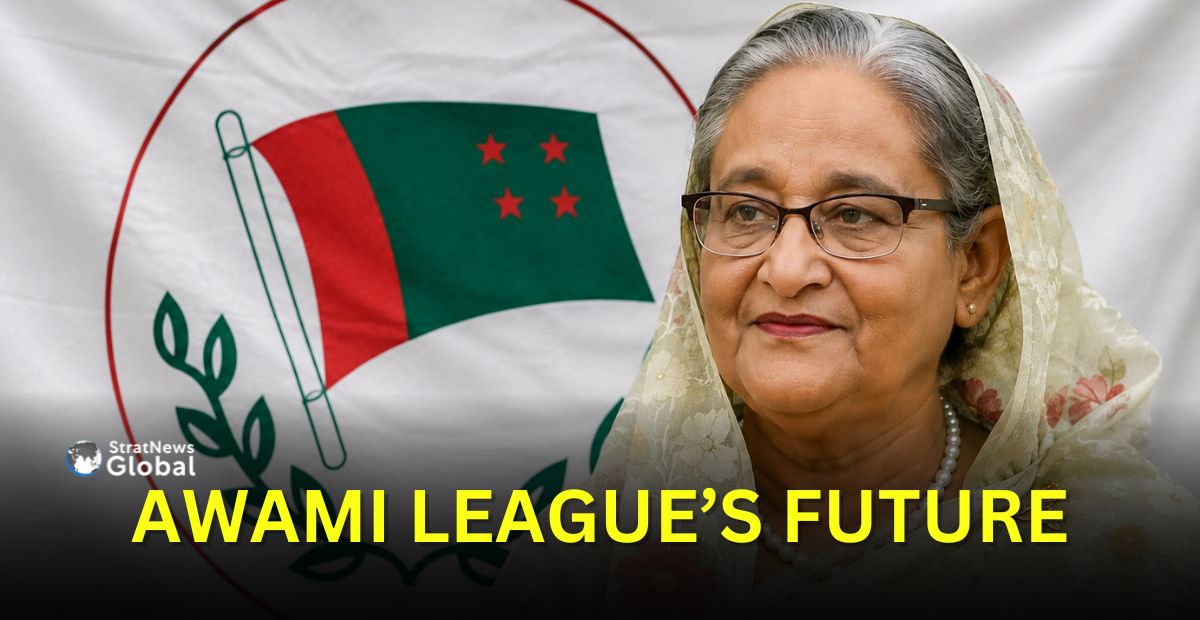
Two words, “refined” and “reformed”, are doing the rounds among party members of the Awami League, the former ruling party in Bangladesh. Those words only seem to apply to party members still in Bangladesh, not those in exile in India or in other parts of the world.
Both words are in the context of getting around their current status, which is that its activities are banned and registration suspended. So the iconic boat symbol is not even visible. Out of sight is out of mind they say, and party members and lower level officials had pushed hard for a set of so called “reformed” leaders to lead the party in the elections. Sheikh Hasina didn’t bite and the move came to nought.
But according to a report in the English-language edition of Prothom Alo, many believe that if the party wants to regain acceptability — both internationally and among a significant section of the domestic public — it would need to send a visible message of change. But Hasina has refused to step down.
“The main problem is that most of the Awami League leadership is sitting outside Bangladesh,” says Sreeradha Datta, Professor at OP Jindal University. Only those who were not so powerful are within the country and they have nothing to look forward to. The oldest and largest party should have a better strategy in place, she adds.
Currently, the party’s actions remain limited to coordinating with leaders in exile, sudden processions, isolated rallies with slogans and provocative political activity inside the country.
Although it is the oldest party, AL’s overall presence in Bangladesh has been somewhat abysmal since July 2024. A huge number of youth in Bangladesh are still extremely upset about what AL did during the July uprising. The current condition of Awami League’s party offices, leaders’ homes, and symbolic spaces is proof of the public anger that still remains.
Datta adds, “I think there has to be some kind of acknowledgement because Awami is still in denial about any wrongdoing in the July 2024 events. That being said, Awami is difficult to wipe out completely. End of the day, Bangladesh wants to be a robust multi-party democratic nation, and that will not be possible if Awami League is not part of the electoral landscape.”
Datta suggests that the future will involve some kind of a midway house where they both meet. “There is no doubt that Awami League needs to return and revive itself, but how is the moot question!”
For now, Diplomat reports that Awami League’s future remains trapped between two realities: it has been deeply discredited in the eyes of many Bangladeshis, yet remains too historically rooted and socially entrenched to be easily erased from the country’s politics.