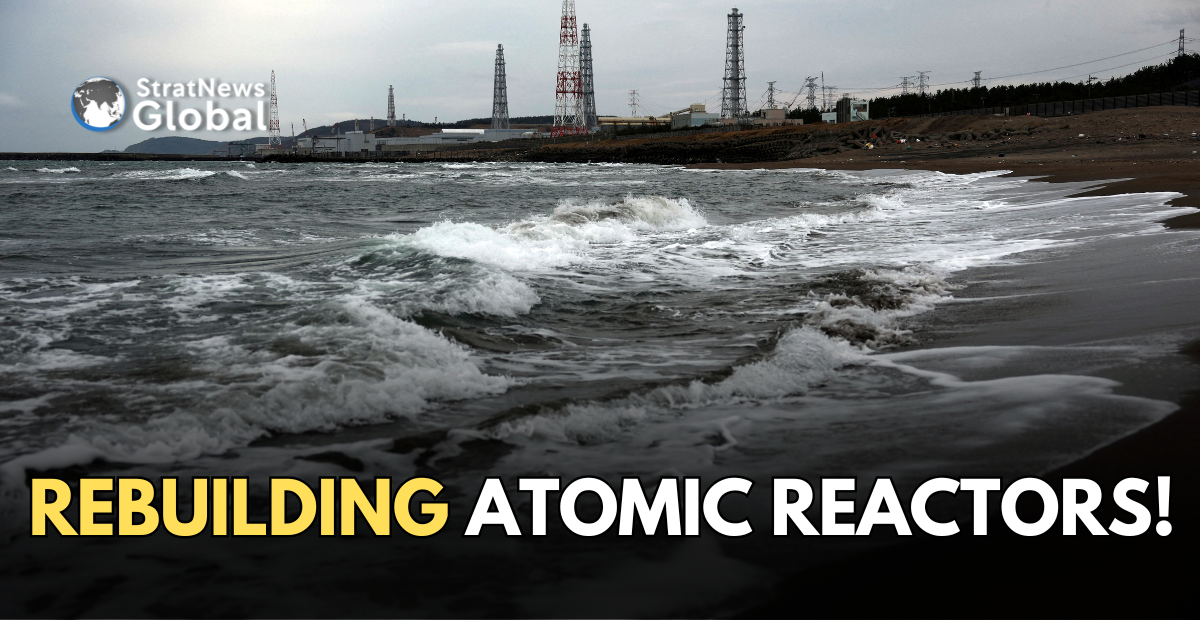
Japan needs to rebuild between two and five ageing nuclear reactors by the 2040s and as many as 11 to 14 by the 2050s to secure stable power supply, the Ministry of Economy, Trade and Industry said in a policy proposal on Friday.
The proposal, outlined at a meeting on nuclear policy, reflects a shift towards greater reliance on atomic energy to help meet rising power demand and reduce costly fuel imports.
Maximising Nuclear Power
The 14 new nuclear power plants would have a capacity of about 16 gigawatts (GW), METI said.
Japan shut its 54 operating nuclear reactors after the 2011 Fukushima nuclear disaster, due to public fear about the industry’s safety standards. Of the 33 units that remain operable, 15 have been restarted.
Tokyo last year revised its basic energy policy to maximise the use of nuclear power. However, many reactors are approaching or exceeding their 60-year operational lifespans, raising concerns about a future decline in nuclear capacity even if restarts of idled plants continue.
By setting concrete replacement targets, the government aims to improve predictability for utilities, the draft said.
The move also come as demand for electricity is expected to rise sharply, driven by data centres for AI.
Safety Concerns
Under the current energy plan, Japan aims to double the share of nuclear power in its electricity mix to around 20% by fiscal 2040. Prime Minister Sanae Takaichi is a strong backer of nuclear power, seeking to ease the bill for imported coal, gas and oil, which fuel 60% to 70% of Japan’s power generation.
Public trust in nuclear energy has yet to fully recover following safety concerns and recent controversies, including Chubu Electric’s falsification of seismic risk assessments for its Hamaoka nuclear plant.
Kyodo News reported that reactor operating lifespans are capped at 60 years and some plants in Japan have already been running for around 50 years.
There are now 24 reactors undergoing decommissioning work at 11 nuclear power stations. Some of the replacement reactors could be built at the Mihama power station in Fukui Prefecture and the Sendai complex in Kagoshima Prefecture.
(with inputs from Reuters)