Sitting at the crossroads of Central Asia and Eastern Europe, Kazakhstan is the world’s largest landlocked country rich in oil, gas, uranium and strategic minerals.
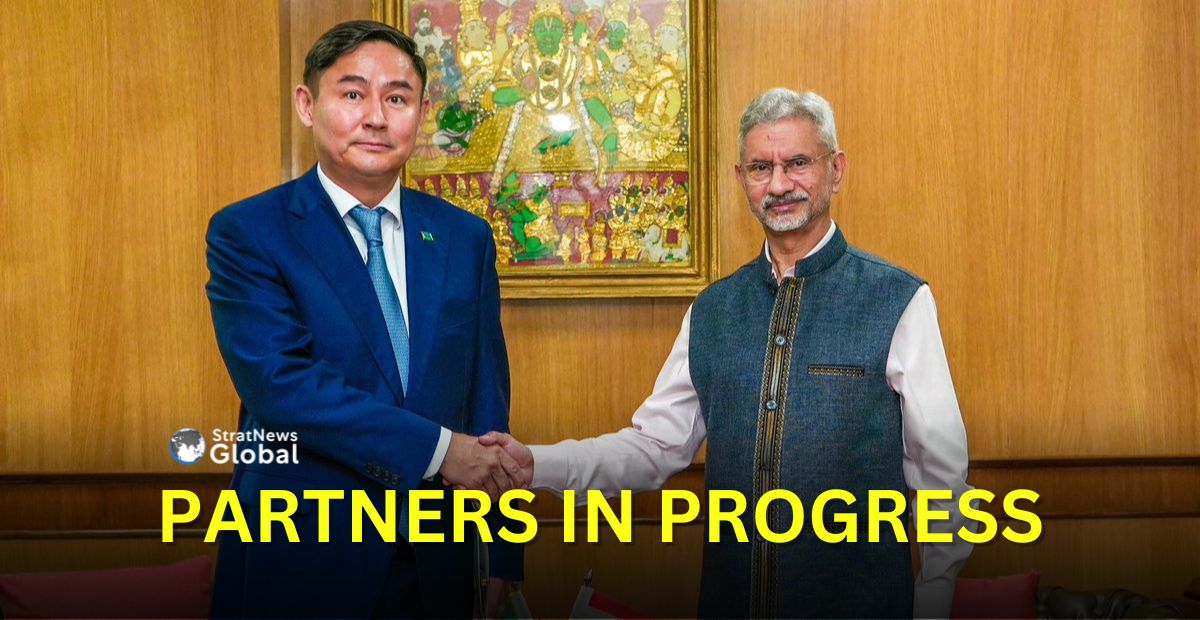
“Kazakhstan can make a meaningful contribution to India’s energy security through the stable and long-term supply of uranium, oil, and coal,” its Ambassador Yeskarayev told StratNewsGlobal in an interview.
“As the world’s largest producer of uranium, Kazakhstan already plays a key role in supporting India’s peaceful nuclear energy program,” he noted.
Earlier this year, India signed an agreement with Kazatomprom for the supply of $4 billion worth of uranium concentrates. Exactly how many tons of uranium that will translate into will be known only later. But the four year period beginning 2019, India bought 5000 tons of Kazakh uranium. In 2009, it was over 2000 tons.
Given India’s expansive plans for generating nuclear power, seen as green and clean, and building more nuclear plants including exploring the use of small modular reactors, Kazakhstan saw strategic wisdom in a government to government deal.
“At the same time, Kazakhstan’s oil and coal exports can contribute to diversifying India’s energy import sources, helping to strengthen overall energy security and reduce dependence on limited supply routes,” Ambassador Yeskarayev said.
However, energy cooperation cannot be separated from connectivity. For Kazakhstan, improving transport links is essential to unlocking the full potential of bilateral trade.
“One of the most promising routes is the International North-South Transport Corridor (INSTC), which connects Central Asia with India through Iran,” he says. “This corridor is seen as a key mechanism for improving regional connectivity and trade efficiency.”
“A particularly important element of this route is the Chabahar port in Iran, which provides direct access to the Indian Ocean and significantly shortens logistics chains for energy and cargo transportation,” he said.
“In the long term, the development of INSTC infrastructure could help reduce transportation costs, shorten delivery times, and improve supply chain resilience, benefiting both energy and broader trade cooperation.”
However, INSTC is yet to take off in a meaningful way for India, while Chahbahar port remains hostage to US-Iran tensions and of course the war.
Kazakhstan is hopeful negotiations between India and the Eurasian Economic Union (EAEU) on a free trade agreement will make quick headway.
“Several rounds of discussions have already taken place, reflecting a shared interest in expanding trade and economic cooperation,” the ambassador noted.
Yet when he speaks about the future, it is technology that is the focus of the discussion.
“Kazakhstan views India as a global leader in information technology, digital platforms, artificial intelligence, fintech, science, and innovation,” he says.
For Kazakhstan, collaboration in digital and high-tech sectors represents one of the most exciting frontiers of the bilateral relationship. Areas such as artificial intelligence, cybersecurity, fintech, digital governance and software development offer significant opportunities for cooperation.
“There is also significant potential in supporting startup ecosystems, technological entrepreneurship, and digital skills development, which are essential for long-term innovation growth,” he says.
“Both countries can expand academic exchanges, develop joint research projects, and strengthen partnerships between universities and research institutions.”
He believes cooperation in STEM education and advanced technologies can help prepare the next generation of highly skilled professionals while strengthening scientific links between the two nations.
“The space sector is another promising area, including Earth observation, remote sensing, satellite technologies for agriculture and disaster response, geospatial information systems, satellite communications, and the commercialization of space services,” he says. “These areas offer clear practical benefits for both sides.”
Beyond space, he points to digital healthcare, AgriTech, green technologies, Industry 4.0 and smart manufacturing as emerging sectors where the two countries can work together to drive innovation and sustainable development.
“A key priority is also expanding academic mobility, including exchanges of students, researchers, and faculty members, joint degree programs, scholarships, internships, and training initiatives,” he says.
“In this regard, Kazakhstan highly values India’s contribution through ITEC and ICCR scholarship programs, which play an important role in strengthening educational and academic ties.”
He sees opportunities for establishing joint research centres and laboratories, including on platforms such as alem.ai, while training specialists in data science, software engineering and artificial intelligence through initiatives such as Tech Orda.
“Closer cooperation between innovation ecosystems, including Astana Hub and Indian startup and research communities, can significantly support technology transfer, startup development, and access to global markets,” he says.
“Finally, strengthening business-to-business ties and investment cooperation will be essential to unlocking new opportunities, supporting joint ventures, and further diversifying bilateral trade flows between the two countries,” he says.
Beyond economics and technology, the ambassador also views India as an increasingly important actor in Central Asia.
“India has significantly strengthened its engagement with Central Asia, including Kazakhstan, through the India-Central Asia Dialogue, which serves as an important platform for regular consultations on security, trade, connectivity, energy, and cultural cooperation,” he says.
He described the first India-Central Asia Summit in January 2022 as a major milestone that elevated the partnership to the highest political level and institutionalized regular engagement.
More recently, meetings held in New Delhi in June 2025 reinforced cooperation in trade, investment, connectivity and sustainable development.
“Overall, these mechanisms demonstrate India’s growing role as a reliable and long-term partner of Central Asia, contributing to a more stable, interconnected, and prosperous Eurasian region,” he says.