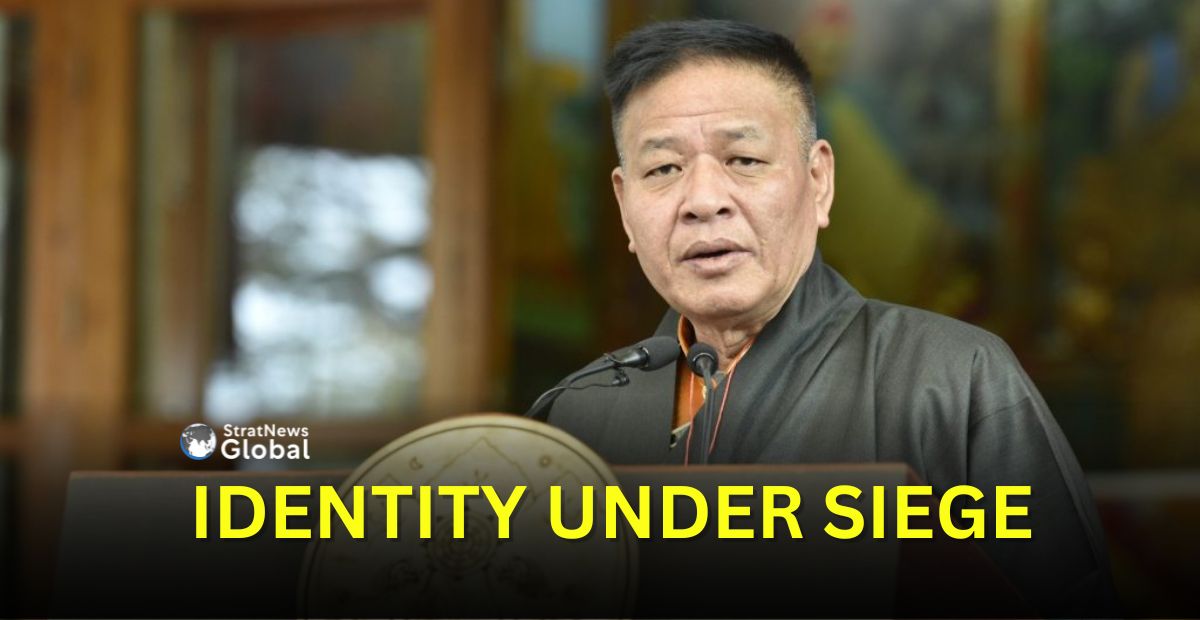
China’s new ethnic law is only “legalising genocide” in Tibet, said Penpa Tsering, President, Central Tibetan Administration (CTA), or the Tibetan Government-in-Exile.
At an address in Delhi on China’s “Ethnic Unity Law” organised by the Tibet Policy Institute, he said “At first glance, the legislation appears benign. It speaks of unity, harmony, national cohesion, and the forging of a shared identity. These are words that, in almost any society, evoke positive aspirations. Yet history reminds us that some of the gravest injustices have been committed in the language of peace, order, and unity.”
To Tibetans, he said, the Ethnic Unity Law represents the legal codification of a decades-long campaign aimed at transforming Tibetan identity, weakening Tibetan culture, restricting religious life, and replacing a distinct civilisation with a state-defined conception of national identity.
“In essence, this tantamount to China committing crime against humanity and legalising genocide in Tibet,” he warned.
Rather pompously titled as the Law on Promoting Ethnic Unity and Progress, it was approved by President Xi Jinping in May this year and comes into effect on July 1.
It represents a pivotal shift in China’s approach to ethnic relations, officially codifying a significant policy transformation that has unfolded over the past decade. Rather than promoting local ethnic autonomy, the law emphasizes the cultivation of a cohesive ‘Chinese national identity’, reflecting the government’s intention to foster greater unity among the diverse ethnic groups within the nation.
This comprehensive legislation underscores a commitment to reshaping the narrative around ethnic identity in China, aligning it more closely with national unity and the overarching goals of the state.
“The law gives the appearance of legitimacy to policies that would otherwise be recognised for what they are. China is not creating a new system in Tibet. It is giving an old system a legal mask. What has existed for decades under the language of stability maintenance development and poverty alleviation is now formally presented as ethnic unity. The vocabulary has changed. The objective has not,” Tsering said.
The law serves as a powerful tool that can potentially target individuals all over the globe—no matter their location—who dare to criticise the Chinese regime or its oppressive policies of forced assimilation. The extent of this jurisdiction raises serious concerns about freedom of speech and the consequences faced by dissenters worldwide.
“International human rights law recognises that every person has the right to preserve his language, practise his religion, enjoy his culture, and transmit these traditions to future generations. Yet China’s long-standing policies in Tibet, now reinforced through the New Ethnic Unity Law, stand in contravention of the very international human rights instruments to which China is a signatory,” he added.