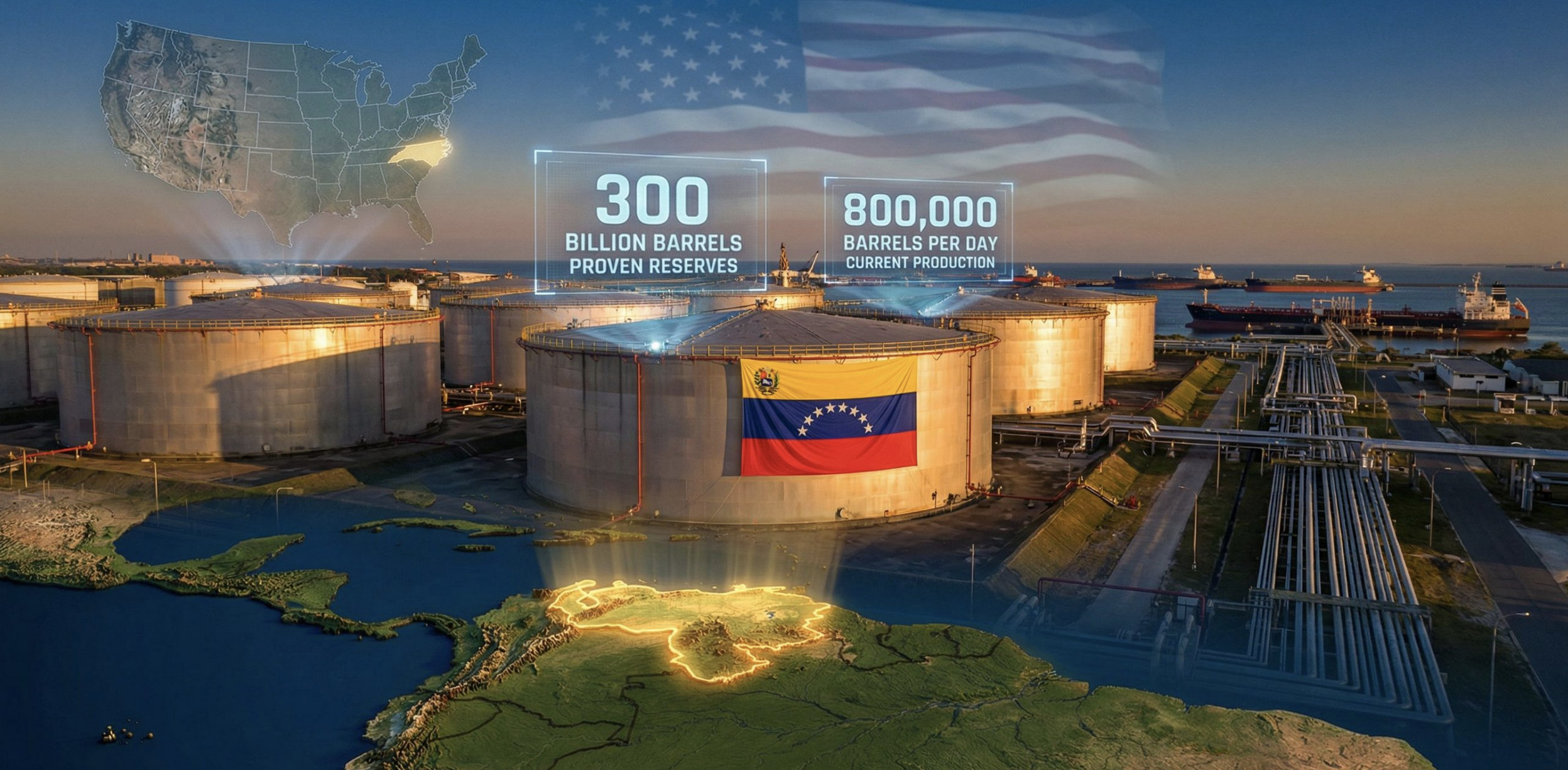
Since the US capture (or kidnap) of Venezuela’s head of state (not the first time, recall Manuel Noriega of Panama in 1989), Latin America has reason to wonder if it presages Washington’s renewed involvement in the continent, overthrowing or destabilising existing governments not for ideological reasons, but something tangible: natural resources. And if it’s oil today it could be critical minerals tomorrow.
Dr Paola Andrea Baroni of Universidad Siglo 21, one of the top universities in Cardoba, Argentina, told StratNewsGlobal that “Maduro’s kidnapping and arrest delivers a severe setback to the Chavista regime without guaranteeing its collapse.”
The distinction is important. A weakened state does not automatically become a governable or compliant one, especially in a country where political power is deeply embedded in security institutions.
“It reinserts Latin America, long viewed as the US’s backyard, onto Washington’s geopolitical radar, spotlighting oil resources as a core driver,” she warns, with “pragmatic realism not ideology driving policy.”
Venezuela’s oil is not merely an economic asset; it is leverage in a global system increasingly defined by energy insecurity and rivalry with China.
Resource-rich states of South America such as Brazil, Colombia and Chile have been critical of the US action, because they know that if the intervention becomes standard for acquiring strategic assets, then this will apply to any resource-rich country.
But Baroni’s warning of instability is well taken: how will Venezuela (or any other South American nation similarly taken over) will be governed, who will represent the country while negotiating with Washington, and how society will respond, suggests that resource control through force may generate instability rather than predictable access.
That unease is echoed in Cuba. Havana described the US operation as a criminal act and a grave violation of international law, framing it as part of a long-standing campaign to reassert U.S. dominance in the hemisphere.
Cuba links the intervention to Venezuela’s natural wealth and warns that the move is intended to intimidate the entire region. The reference to the Monroe Doctrine is not symbolic nostalgia but a claim that resource control is once again being enforced through military means.
Delhi-based Livia Rodríguez, Chief Correspondent of Prensa Latina, has no doubt that Washington seeks “to replace the Venezuelan regime with a puppet regime that will allow the United States and large corporations to steal the oil and all the resources of the South American country.”
She suspects that “Venezuela is the first piece in a broader plan against all of Latin America,” regardless of ideological orientation. In a world racing to secure lithium, rare earths, and other critical minerals essential for energy transitions and military technologies, Latin America’s resource base becomes a strategic prize. Oil remains central, but it is no longer the only driver.
Cuba’s statement reinforces this regional reading. By invoking the Proclamation of Latin America and the Caribbean as a Zone of Peace, Havana frames the intervention as an attack not just on Venezuela but on a collective regional commitment.
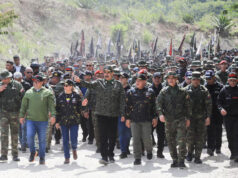
Rodríguez also challenges the assumption that such operations succeed politically. Despite the shock of the attack, she believes that “the people are in the streets, but demanding the return of their constitutional president.”
This suggests that interventions designed to secure resources may provoke resistance that complicates governance and disrupts extraction rather than stabilizing it.
The operation in Venezuela cannot be separated from the global rush for energy and critical minerals. Whether this approach strengthens U.S. influence or accelerates regional fragmentation remains unclear. But in an era where oil and minerals shape power, sovereignty itself may become negotiable.