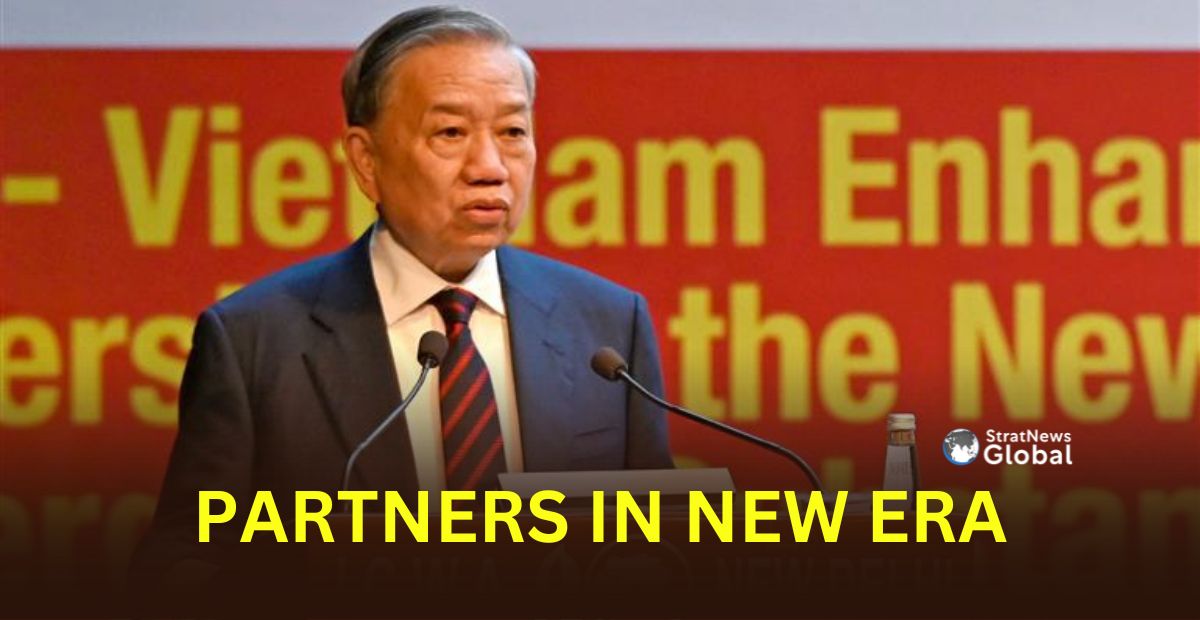
Speaking at the 56th Sapru House Lecture at Indian Council of World Affairs, Vietnamese President To Lam delivered a speech that was as much about history and shared memory as it was about strategy and the future.
His address on the title “Vietnam–India Comprehensive Strategic Partnership in the New Era”, reflected Vietnam’s growing confidence on the global stage and its belief that ties with India are becoming increasingly central in a rapidly changing Asia.
To Lam repeatedly described Vietnam and India as natural partners, countries connected not by geography, but by history, anti-colonial struggles, culture and shared strategic interests.
Carrying a strong sense of historical continuity, he remembered the figures such as Ho Chi Minh, Jawaharlal Nehru and Mahatma Gandhi who shaped an early bond between the two countries.
Lam also emphasized the civilisational links that continue to influence Vietnamese society today. The speech also highlighted the strong cultural links between the two countries, from Buddhism and Hindu heritage sites in Vietnam to the growing popularity of yoga and the familiarity many Vietnamese have with the Ramayana, showing the lasting influence of Indian culture in Southeast Asia.
To Lam praised India’s rise as a technological and economic power, highlighting its digital economy, innovation ecosystem and space programme through ISRO and role of IITs. He also mentioned Vietnam’s Doi Moi reforms shaping its economy.
He called India as Vietnam’s indispensable partner in an uncertain regional order.
To Lam repeatedly stressed the importance of strategic autonomy, multilateralism and a rules-based international system. He praised India’s “Act East” policy and its growing role in forums such as the G20 and BRICS, while also emphasizing ASEAN centrality and the need for an open Indo-Pacific.
Looking forward, Lam identified several new areas where Vietnam wants stronger cooperation with India, particularly in semiconductors, artificial intelligence, digital transformation, pharmaceuticals and clean energy. He invited Indian pharmaceutical companies to expand manufacturing in Vietnam for the wider Southeast Asian market and described science and technology cooperation as a future “keystone” of bilateral ties.
To Lam also stressed that the partnership is no longer driven only by governments and diplomacy, but increasingly by people-to-people connections. With more than 80 direct flights operating every week and nearly one million travellers moving between the two countries annually, he said educational exchanges, tourism, research collaboration and youth engagement would play a major role in shaping the next chapter of Vietnam-India relations.