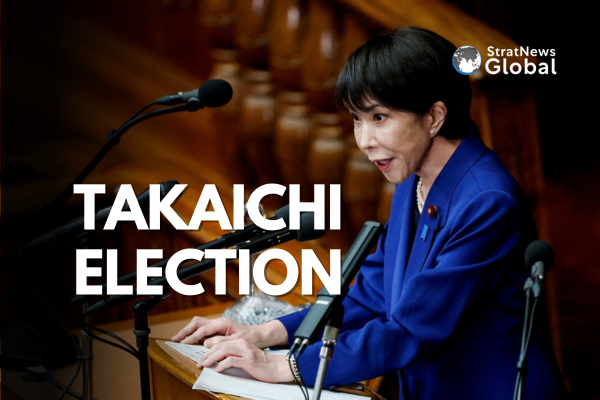
Japanese Prime Minister Sanae Takaichi may call an early general election in February, the head of her coalition partner said on Sunday, following reports that she is considering dissolving parliament as soon as it reconvenes later this month.
It would be the first electoral test for Takaichi, Japan’s first female prime minister and a self-described admirer of Britain’s Margaret Thatcher. Since taking office in October, she has maintained high public approval, bolstered by her assertive foreign policy stance and expansive economic agenda. However, her tough approach towards China has triggered a major diplomatic confrontation with Beijing.
Coalition Signals Election Shift
Hirofumi Yoshimura, leader of the Japan Innovation Party (Ishin), told public broadcaster NHK that he recently met Takaichi and sensed a shift in her thinking on election timing. “I wouldn’t be surprised if she made the decision as reported by the media,” he said. The Yomiuri Shimbun reported on Friday that Takaichi is weighing election dates of either 8 or 15 February.
Although Yoshimura confirmed that they did not discuss specific dates, his comments reinforced speculation that an announcement could come soon after parliament reconvenes on 23 January. The Internal Affairs Ministry added to the speculation on Saturday when it urged regional election committees to prepare for a possible snap poll, a move analysts said made an early election all but certain.
Election Timing Could Delay Budget Approval
Takaichi has so far declined to confirm the reports, saying in a separate NHK interview that her immediate priority is ensuring people feel the benefits of her government’s stimulus measures. She has directed her ministers to push through the supplementary budget for the current fiscal year and secure parliamentary approval for the next one.
“At present, I am focusing on ensuring that the public feels the benefits of our stimulus policies aimed at cushioning the blow of inflation,” Takaichi said.
Her first budget as prime minister, worth about $783 billion, centres on large-scale spending designed to revitalise Japan’s economy. However, a February election could delay parliamentary approval, forcing her government to pass a temporary stop-gap budget. The yen fell against the U.S. dollar on Friday following reports of her possible election plan.
Tetsuo Saito, head of the opposition Komeito party, said a February vote would make it “impossible to pass the budget by the fiscal year-end” at a time when Japan’s economy faces a “critical phase.”
Economic Challenges and Diplomatic Strains
Japan’s economy has endured the impact of higher U.S. tariffs and persistent food inflation, which continues to weigh on household spending. Takaichi’s ability to pass her budget and deliver visible improvements in living standards will be key to sustaining public support.
At the same time, a sharp deterioration in ties with China has emerged as a major risk. The dispute began in November when Takaichi said a Chinese attack on Taiwan could constitute an existential threat to Japan, potentially justifying a military response. Beijing condemned her remarks, issued travel warnings for Japan, cancelled bilateral meetings, and imposed export bans on dual-use materials vital to Japan’s defence industry.
Takaichi told NHK that China’s export restrictions targeting Japan were “against international protocols and unacceptable.” She said Japan was engaging in diplomatic talks with Beijing while working with Group of Seven partners to strengthen supply chains and reduce reliance on “a particular country.”
Political Stakes and Leadership Ambitions
A strong election result would consolidate Takaichi’s authority within the ruling Liberal Democratic Party (LDP) and its coalition partner, Ishin. The alliance currently holds a narrow majority in the lower house but lacks control of the upper house.
Political analyst Shigenobu Tamura said the government’s readiness measures suggested that an early election was a “done deal.” Yoshihiko Noda, leader of the main opposition Constitutional Democratic Party, said he had expected Takaichi to wait until the budget passed but now believed she would dissolve parliament on 23 January.
Japan’s next general election is not required until October 2028, giving Takaichi flexibility to choose her moment. A decisive victory in February could strengthen her grip on power and cement her reputation as one of Japan’s most assertive postwar leaders.
with inputs from Reuters