Taiwan needs a “hornet’s nest” of drones to help deter conflict and provide security, the top U.S. diplomat to the democratically governed island said on Thursday.
The U.S., Taiwan’s most important international backer and arms supplier despite the lack of formal diplomatic ties, has strongly backed the government’s military modernisation plan and increased defence spending.
Game-Changing Opportunity
Taiwan says it needs to bolster its defences in the face of a stepped-up threat from China, which views the island as its own territory.
Speaking at a forum on drones in the central city of Taichung, Raymond Greene, director of the American Institute in Taiwan and the de facto U.S. ambassador, said drones represented a “game-changing opportunity” to enhance Taiwan’s security and reinforce peace in the broader region.
The U.S. and Taiwan can anchor “democratic” drone production and strengthen the collective deterrence posture of the free world, Greene said.
“Fortunately for Taiwan, drones have significantly boosted defenders, even when facing overwhelming odds,” he added, referring to the war in Ukraine.
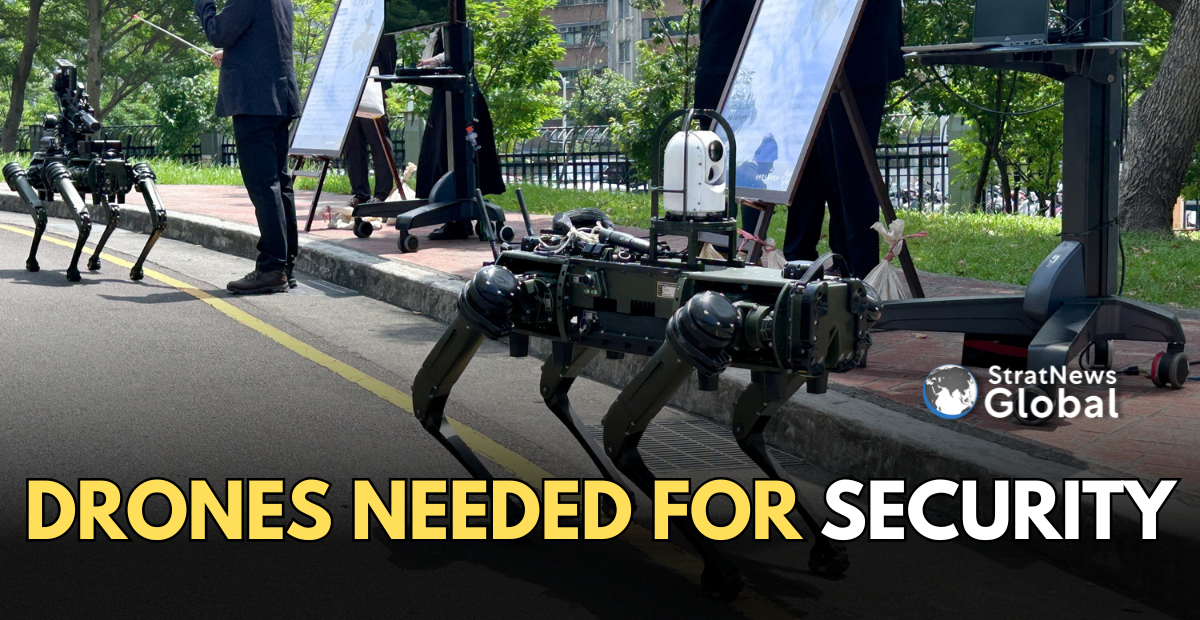
“Nothing will deter conflict more effectively than turning Taiwan into a hornet’s nest of air, surface, and subsurface drones.”
Taiwan’s Priorities As China Threat Grows
While Taiwan’s government has prioritised drones and other asymmetric systems, in May the opposition-dominated parliament passed only two-thirds of the $40 billion in extra defence spending President Lai Ching-te had asked for, earmarking funds only for U.S. arms.
The government has now proposed a new, T$210 billion ($6.59 billion) package for surveillance, coastal attack and small unmanned surface drones to the end of 2031.
The Kuomintang (KMT), Taiwan’s main opposition party, this week proposed its own drone legislation, with a spending cap set at T$240 billion over six years, and annual spending capped at T$40 billion.
Its plan would fund drones from the main budget rather than a special budget, which is what the government wants.
On Wednesday, Taiwan President Lai Ching-te said the need for drones was pressing.
“Facing changes in the geopolitical situation and the evolution of modern warfare, building asymmetric combat capabilities is a national defence project that is a race against time,” he told a meeting of his Democratic Progressive Party.
Lai rejects Beijing’s sovereignty claims, saying only the island’s people can decide their future.
(with inputs from Reuters)