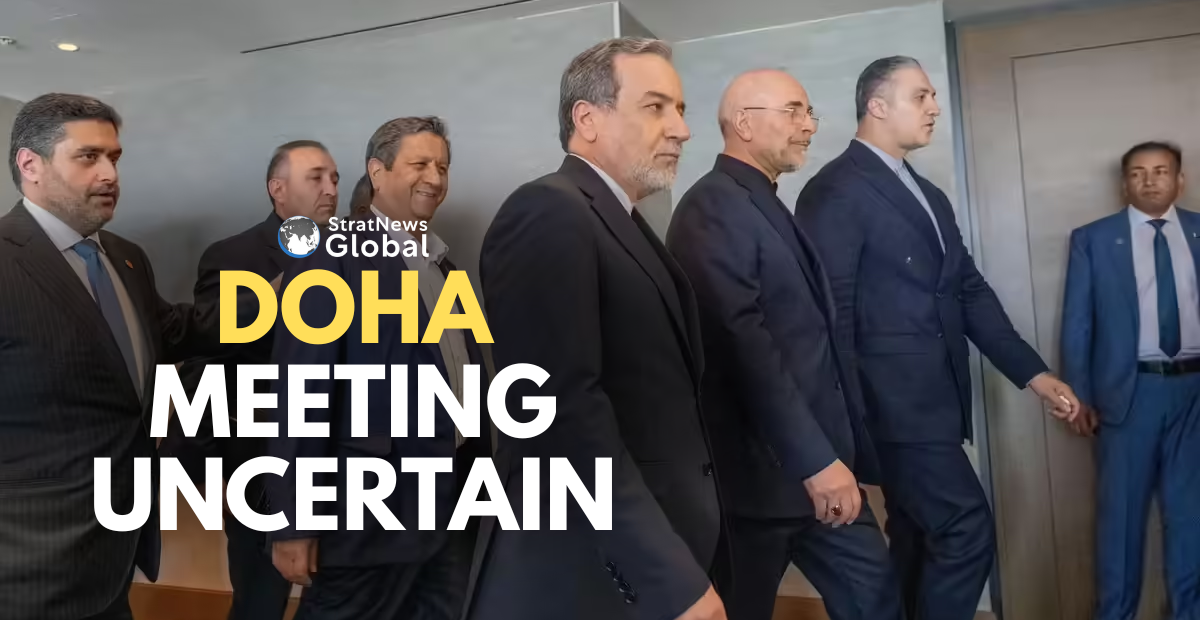
Iran said on Monday that no negotiations with the United States are scheduled in Doha this week, despite Washington announcing that senior envoys would travel to Qatar for discussions.
The conflicting statements underscore the uncertainty surrounding the interim ceasefire agreed on 17 June after four months of conflict between Iran and the United States.
Washington and Tehran at Odds
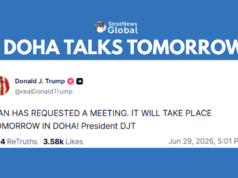
US President Donald Trump is sending his son-in-law Jared Kushner and special envoy Steve Witkoff to lead the American delegation, according to White House Press Secretary Karoline Leavitt.
Iran confirmed that a technical delegation would travel to Qatar but insisted the visit had “no relation” to the American delegation.
“We will not have any negotiation meetings at any level with the American side in the coming days,” Iranian Foreign Ministry spokesperson Esmaeil Baghaei said.
Ceasefire Under Pressure
The disagreement comes after renewed missile exchanges over the weekend tested the ceasefire aimed at ending a conflict that has disrupted global oil shipments through the Strait of Hormuz.
Under the 17 June memorandum of understanding, both countries agreed to work towards implementing a 14-point framework covering the ceasefire, Iran’s nuclear programme and negotiations for a permanent settlement.
However, both sides have repeatedly accused each other of violating the agreement.
Strait of Hormuz Remains a Flashpoint
The conflict has significantly affected maritime traffic through the Strait of Hormuz, a key global shipping route that previously handled around one-fifth of the world’s oil trade.
Iran has sought to strengthen its negotiating position by asserting greater control over the waterway, announcing plans to charge transit fees and warning vessels that leave designated shipping lanes.
The United States has accused Iran of attacking commercial vessels in recent days, while Iran launched missiles and drones targeting US military facilities in Kuwait and Bahrain over the weekend.
Trump Cautious Ahead of Doha Visit
Speaking at the White House, Trump said the planned Doha meeting “is going to be perhaps important, perhaps not.”
He maintained that the United States remained in a strong military position while reiterating that Iran must not be allowed to develop a nuclear weapon.
According to an Iranian official, a meeting in Doha may still take place on Tuesday, focusing on managing security in the Strait of Hormuz rather than broader political negotiations.
Another official said US and Iranian technical teams could hold separate discussions with Qatari and Pakistani mediators on Wednesday.
Political Pressure Builds in Washington
The uncertainty surrounding the peace process comes as Trump faces increasing criticism at home.
Special envoy Steve Witkoff and Secretary of State Marco Rubio briefed members of Congress on Monday, but Democratic Senate leader Chuck Schumer criticised the administration, calling the briefing “deficient, and devoid of details.”
Schumer also questioned the benefits of the agreement, arguing that Iran would gain billions of dollars in oil revenue while retaining leverage over the Strait of Hormuz.
Frozen Assets and Oil Prices
Iranian President Masoud Pezeshkian said $6 billion of the country’s frozen assets held in Qatar would be released under the agreement, describing the memorandum as “a great victory for the Iranian people.”
Oil prices rose more than 1% following the latest hostilities, reflecting market concerns over the stability of the ceasefire.
Meanwhile, French President Emmanuel Macron said France was working with Oman to reduce tensions and support efforts to clear mines from the Strait of Hormuz.
Iran’s Deputy Foreign Minister Kazem Gharibabadi rejected the proposal, insisting that any mine-clearing operations would be conducted solely by Iran under the terms of the 14-point agreement.
(with input from Reuters)