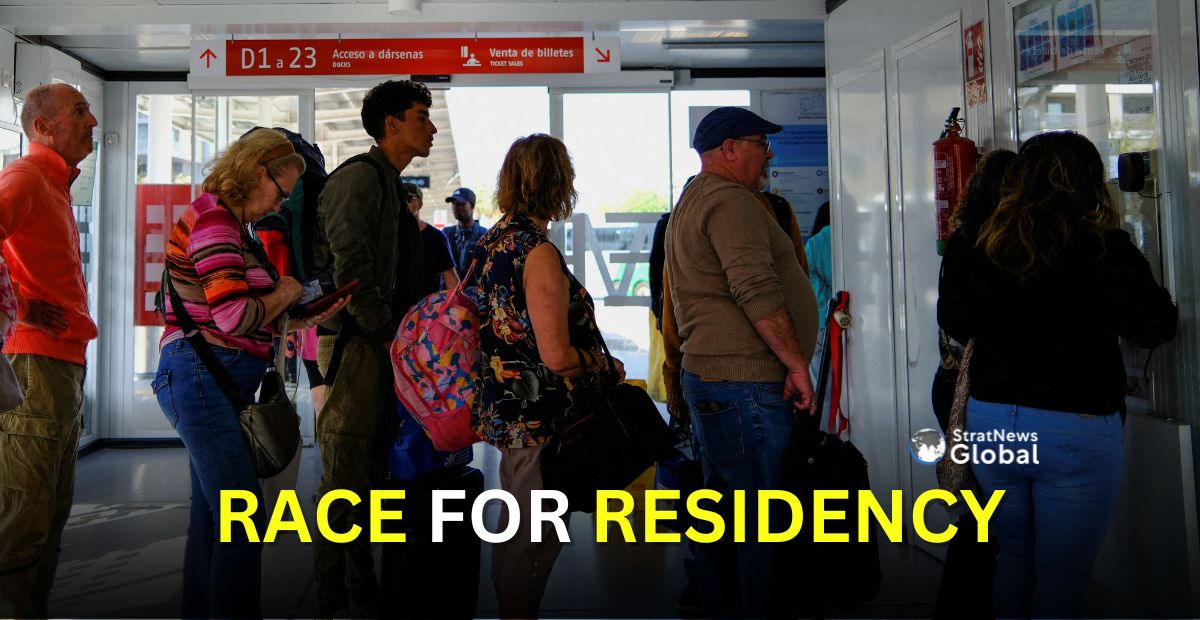
Several non-governmental organisations in Spain are urging undocumented migrants to register as a special mass regularisation programme nears its deadline, after drawing around one million applicants in just a few weeks and set to close on Tuesday.
In the final hours before the cutoff, NGOs have intensified efforts to reach and assist migrants still trying to secure the documentation needed for a one-year residence permit, in a country where an estimated 840,000 people work informally and the process of obtaining legal status can take more than a year.
Rights groups CEAR and Cepaim urged migrants to submit applications even if they were still waiting for required documents from home countries like Mali, Iran or Venezuela.
Between April and June, the Spanish government received almost double the 500,000 registrations it had expected.
NGOs are also trying to ease anxiety among migrants who have not yet applied, in a country with a relatively open approach to foreign arrivals.
On Friday, the number of applications submitted reached 1.27 million, according to Cesar Perez, the union leader for Spain’s immigration officers.
Bureaucratic Hurdles
Juan Segura, director-general of Cepaim, said migrants were being advised to submit applications because they would get additional time to provide missing documents.
Experts say migrants from conflict-affected countries like Iran or Mali have faced obstacles legalising documents at Spanish consulates, a process that is also complex in Algeria and Nigeria.
Venezuelans have encountered delays obtaining apostilles for criminal record certificates, while Spain’s policy changes forced asylum seekers to switch to this procedure early in June, leaving less time to prepare documentation.
“This meant some Venezuelans had less time to gather the necessary documents,” Segura said, adding that many now faced difficulties and extending the deadline would be advisable.
The Migration Ministry has said it does not plan to extend.
CEAR argues a permanent solution is needed so migrants do not have to spend two years in irregular status before obtaining residency.
Concerns Over Rejections
Silvana Cabrera, who heads an NGO in Valencia, said application platforms had experienced problems in recent hours.
“It’s a distressing situation … many migrants may not manage to register.”
NGOs fear that at least 20% of the roughly 1 million applications could be rejected, partly due to missing documents and limited administrative flexibility.
Jose Luis Quiroga, a Colombian migrant who arrived hours after the eligibility cutoff, submitted his application on the advice of the NGO Aculco.
“There’s no certainty, but it seems unfair they wouldn’t approve my application just because I was four hours late,” he said.
(With inputs from Reuters)