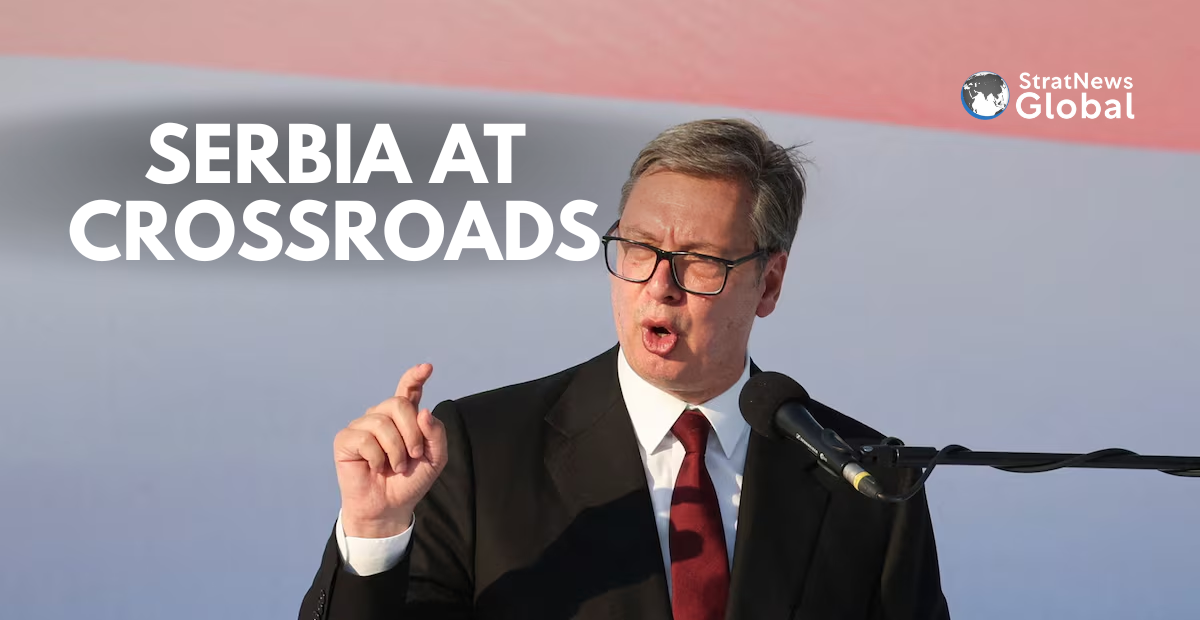
Thousands of protesters descended on the Serbian city of Kraljevo on Sunday, keeping up pressure on President Aleksandar Vucic a day after he said he would step down within weeks to pave the way for early presidential and parliamentary elections.
Although many protesters expressed satisfaction over Vucic’s resignation, they fear he may not fully relinquish power. Analysts say he may try to run for prime minister and install an ally in the presidency so he can continue to wield power. “I cannot imagine that he will step down and leave power to someone else,” said Marko Djokic, a 41-year-old IT expert who returned home for the protests.
Vucic, in power as prime minister or president for 12 years, has faced months of student-led protests sparked by the collapse of a concrete awning at a railway station in Novi Sad in late 2024 that killed 16 people. The incident became a symbol of what many Serbians see as government mismanagement and corruption under Vucic. The protests have been the largest in Serbia since the overthrow of Slobodan Milosevic in 2000. Vucic denies any corruption.
Protesters Rally In The Heat
On Sunday, people braved a heat wave to gather at a central square in Kraljevo, where banners read “Students are winning.” Thousands waved Serbian flags as they rallied peacefully. “We cannot go on like this, things need to change,” said Ilija Cordasic, who joined from Zrenjanin. Jelena Danicic, a Serbian-language professor, said before the rally: “This is not just a political struggle but a fight between good and evil.”
EU And Russia Watching Closely
Analysts expect Brussels and Moscow to be watching closely how events unfold. The EU has condemned the use of force against peaceful protesters and raised concerns about press freedom and judicial independence.
Serbia, a candidate to join the EU, still has strong ties with Russia and China, and Vucic has walked a fine diplomatic line balancing those relationships. Before joining the EU, Serbia must improve its rule of law, ensure free and fair elections, root out corruption and organised crime, align its foreign policies with the bloc, and establish relations with Kosovo, which declared independence in 2008.
(with input from Reuters)