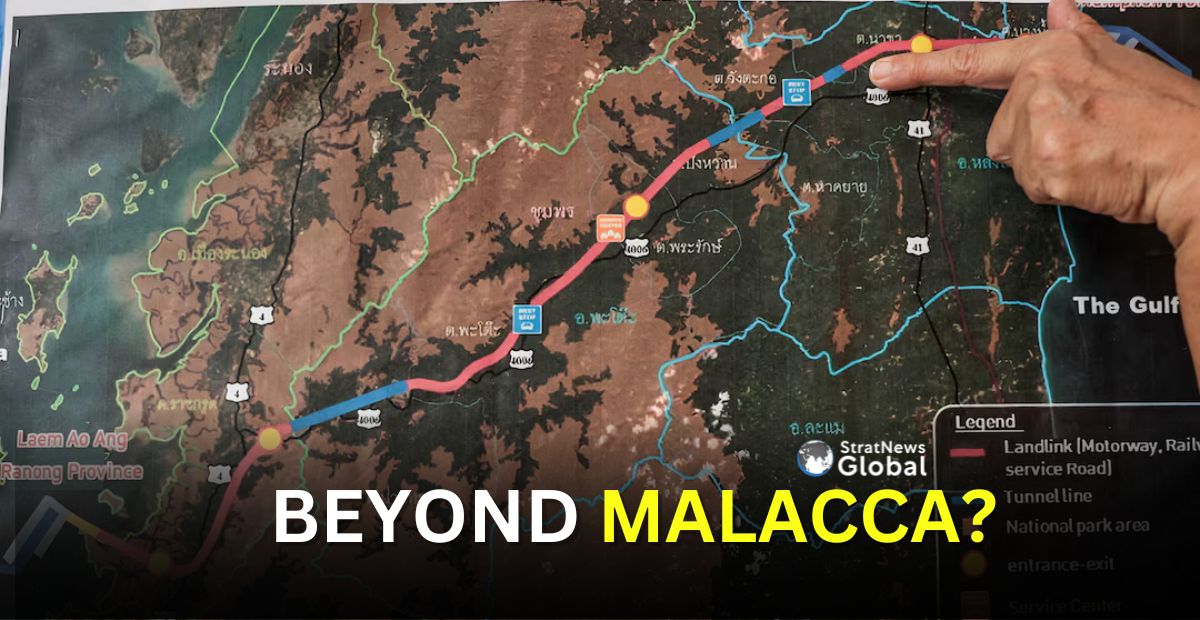
Thailand’s proposed 1 trillion baht ($30.45 billion) Land Bridge aims to bypass the congested Malacca Strait by linking new deep-sea ports at Chumphon on the Gulf of Thailand and Ranong on the Andaman coast. But residents like Chaiyaporn, who has fished in the area all his life, fear the project will threaten their livelihoods.
Interviews by Reuters with local communities, officials and experts reveal a project promising faster trade and lower shipping costs, but facing logistical challenges, local resistance and difficulties attracting investors.
While analysts doubt it can rival the Malacca Strait as a major global shipping route, they say it could still serve as a strategic corridor to strengthen Thailand’s energy security and export capabilities.
Alternative To Malacca
An internal government presentation seen by Reuters says the proposed corridor could reduce logistics costs by nearly 30% and cut transit times by up to 14 days for cargo moving between southern China and ports in the Indian Ocean serving South Asia and the Middle East.
The project centres on a standard-gauge railway linking the two deep-sea ports across a 90-km corridor, with capacity to handle up to 20 million TEUs annually. It will be supported by a meter-gauge rail connection to Thailand’s national network, as well as highways and local roads.
Thai government estimates suggest the route could make cargo shipments between the Gulf of Thailand and the Andaman Sea up to 10% cheaper and six days faster than routes through Singapore, thanks largely to reduced congestion.
Diplomatic Balancing Act
A Thai government-appointed panel, currently reviewing the projects and its previous impact assessment reports, is due to submit its findings before the end of July.
First proposed around 2020, the Land Bridge is the latest version of a long-running infrastructure plan that previously stalled due to policy shifts and funding challenges. Unlike earlier proposals, it focuses on ports, railways and logistics rather than petrochemicals and industrial estates.
Experts say the project still faces major hurdles, including convincing shipping companies that transferring cargo overland can compete with the seamless transit offered by the Malacca Strait. Investor interest remains cautious due to the project’s huge costs and uncertain policy environment.
The plan also carries geopolitical risks. Analysts warn that significant involvement by Chinese firms could spark domestic concerns over foreign influence, forcing Thailand to carefully balance economic ambitions with regional sensitivities.
(With inputs from Reuters)