For years, Venezuela has been reduced to a single word in global discourse: oil. But it hides a far more complex situation, one that blends economic collapse, geopolitical rivalry, internal factional warfare, and a quiet recalibration of U.S. power in the Western Hemisphere.
The recent developments surrounding President Nicolás Maduro’s removal, Delcy Rodríguez’s elevation, and Washington’s growing grip on Venezuelan crude are not about democracy, elections, or even immediate profits. They are about control, leverage, and timing and they reveal how Cold War–style politics are returning in a new, more transactional form.
Venezuela was one of Latin America’s most modern societies. Its universities attracted talent from across the region, its professionals had global exposure, and its private sector, especially banking, telecom, and insurance, was unusually sophisticated by regional standards.
The entrepreneurial culture existed long before “startups” became fashionable elsewhere. Caracas was once a regional hub for finance and consumption, not unlike Miami or São Paulo today.
That world unravelled after 2014, when sanctions, mismanagement, and political paralysis triggered one of the largest peacetime migrations in modern history. Millions left not because they wanted to, but because survival demanded it. Those who stayed adapted to scarcity, not growth. And when a society is locked in survival mode, long-term nation-building becomes nearly impossible.
The Oil Story
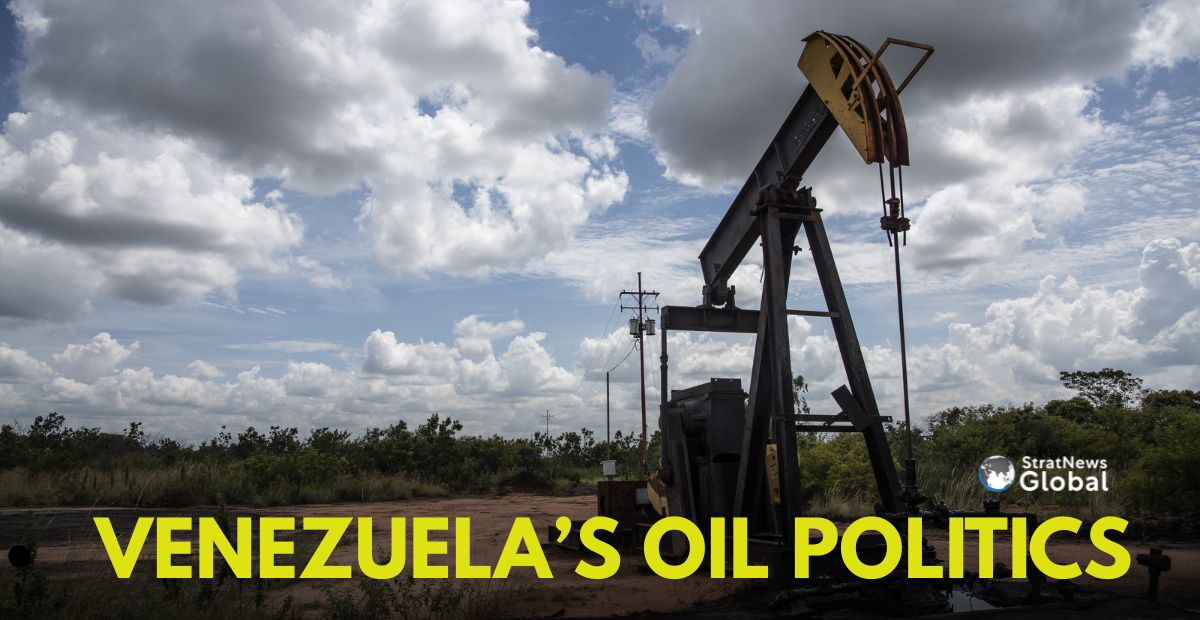
Venezuela holds the largest proven oil reserves on Earth, around 303 billion barrels. But this statistic is misleading.
Most of that oil is heavy crude, which is expensive to extract, technically demanding, and slow to monetize. It requires advanced infrastructure, steady electricity, political stability, and refineries designed to process it. Venezuela today has none of those conditions at scale.
However, the United States does. Refineries along the U.S. Gulf Coast, especially in Texas and Louisiana, are among the world’s best equipped to handle heavy crude. Over the past four decades, the U.S. has become increasingly dependent on such oil, even as its own production surged.
This created a paradox: The US produces more oil than ever but still needs foreign heavy crude to keep its refining system profitable. Venezuela fits that need perfectly. On paper.
The idea that Venezuela can quickly “pay for itself” through oil is unreal. Experts say that reviving production from current levels to even modest historical output would require tens of billions of dollars, years of work, and a stable political settlement. Heavy crude does not generate fast cash. It generates slow, capital-intensive returns.
Even U.S. oil majors understand this. Chevron’s presence in Venezuela is cautious and limited. Other Western companies remain hesitant, not because oil isn’t there, but because risk still overpowers reward. Which raises a key question: What is it about?
Delcy Rodríguez
She is not an accidental leader. She is a long-time Chavista insider, daughter of a slain revolutionary, and one of the most articulate defenders of the Bolivarian project on the global stage.
She has spent years confronting U.S. diplomats, dismantling sanctions narratives at international forums, and framing Venezuela’s isolation as part of a broader system of financial coercion. Her critique of sanctions, linking them to global inequality and even conflicts like Palestine, has resonated far beyond Venezuela.
This is precisely why claims that she is a “traitor” do not fully add up. What is more plausible is something different: a negotiated survival pact. By allowing Maduro to be removed without dismantling the Chavista power structure, Rodríguez preserved the military, the party apparatus, and the armed collectives that actually control the country.
In return, Washington avoided a chaotic collapse and blocked a hostile opposition takeover. This is not regime change. It is regime modification.
Why was Nobel Prize winner Marina Machado sidelined? Her fatal mistake was strategic, not moral. She believed power would arrive from outside, delivered cleanly, decisively, and backed by Washington. Latin American history suggests otherwise. Transitions that succeed usually involve ugly compromises, amnesties, and coexistence with former enemies.
Machado offered none of that. She positioned herself as an existential threat to the existing order, leaving millions with nothing to lose. In such conditions, resistance is guaranteed. By contrast, Rodríguez represents continuity without Maduro, a formula foreign mediators have quietly floated for years.
Washington did not choose democracy. It chose containment.
The Bigger Board
Venezuela is also a chessboard square in a much larger game.
- China remains a major buyer of Venezuelan oil
- Russia holds similar heavy crude reserves
- Weakening Venezuela’s independent leverage indirectly weakens both
At the same time, the real near-term prize may not be Venezuela at all, but Guyana, where massive new oil discoveries promise faster, cleaner returns. Maduro’s territorial claims over Guyana’s oil-rich Essequibo region represented a serious threat to Western energy security. Neutralizing Caracas also neutralizes that risk.
What is emerging is not a restoration of democracy, but a new doctrine: economic trusteeship without formal occupation. Under recent agreements, Venezuelan oil marketing, revenue flows, and even procurement are increasingly routed through U.S. discretion. Elections are postponed indefinitely. Sovereignty exists in name, not in practice.
This aligns with Washington’s updated security doctrine: countries that depend most on the U.S. will be bound through exclusive contracts and controlled access.
Simón Bolívar warned of this nearly two centuries ago. His words feel uncomfortably current.
Who Actually Won?
- Maduro lost power
- Machado lost relevance
- The Venezuelan people remain trapped
- The United States gained leverage without rebuilding a nation