Did you know that Arunachal Pradesh is a “Core Interest” of China’s? According to the US War Department’s annual report to Congress at the close of 2025, China’s conceptualisation of “Core Interest” now includes Arunachal Pradesh.
This brings to four the number of China’s “Core Interests”: they include Taiwan since 2003, and broadened in 2008 to cover Tibet after then French President Sarkozy met the Dalai Lama. The third was Japan’s Senkaku islands that China refers to as Diaoyu.
Arunachal has been steadily rising on China’s radar since the 2000s when the then Chinese ambassador described the whole of the state as part of his country. There followed stapled visas for people from Arunachal and then a serious incident in Dec 2022 when Beijing tried to militarily change the status quo in Yang-tse, in the Tawang sector.
Along with other issues including the attacks in the Galwan Valley, it underscored the point that China views India as its “primary long-term competitor” in Asia. It explained Beijing’s refusal to settle the boundary dispute, encouraging Pakistan’s anti-India policies and seeking to “box it” into the South Asian enclosure.
It is also offering no concession on trade, no relaxing the non-tariff barriers that keep out Indian goods despite friendly noises by China’s ambassador in Delhi. No softening on the supply of critical minerals either, forcing India to look elsewhere. In other words, China is not going to help India’s rise.
Foreign Minister Wang Yi’s recent claim of mediating between India and Pakistan in the wake of Operation Sindoor, is meant to drive home the point that India is alone, has no diplomatiic support and therefore carries no weight in international circles.
He also referred to India and the US in competition with each other, which made no sense at all given America’s $30 trillion GDP against India’s $4 trillion.
Important here to understand how each side uses terminology. When China talks about peace, it may imply acceptance of a regional order that reflects its growing influence. India sees peace as mutual respect, equality, and adherence to agreements both sides have signed. This difference in interpretation makes communication har67der.
As China’s power grows, the boundary dispute recedes in importance, it is something to be managed. For India, the border is deeply tied to sovereignty and national dignity. So, even though troops have stepped back, it has only created physical distance not a real reassurance.
Today, most of the relationship is handled through military meetings and procedures, while political talks are limited and very careful. This approach keeps things stable and avoids tension, but it does not bring clarity, and it does not build trust.
Their widely divergent political systems adds complexity to the relationship. Their wider contested geopolitics is another issue: both countries seek leadership in the Global South and participate in forums like the SCO and BRICS, where cooperation exists alongside hidden competition.
India focuses on mutual respect and strategic independence, while China often calls to counter ‘Cold War mentalities.’ These messages are interpreted differently in New Delhi, which aims for a multipolar world where a no single power has too much influence.
Recent diplomatic moves like the resumption of direct flights after five years, issue of tourist visas, and renewed SCO engagements, signal a desire to reset the relationship’s tone. These steps, however, are often symbolic rather than strategic breakthroughs.
Leaders meet and agree to cooperate, but such cooperation are often shared interests rather than shared principles. And while India seeks a balanced foreign policy that hedges between great powers, China continues to press for positions that reflect its own security and status considerations.
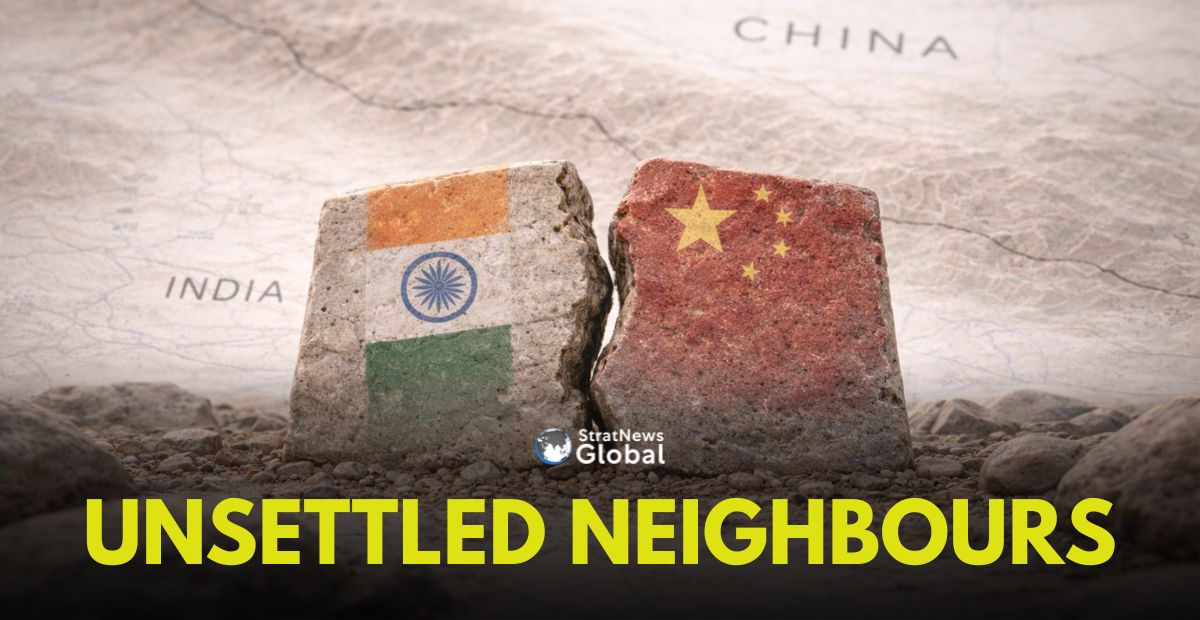
Today, India and China remain two civilizations with overlapping vocabularies but distinct political grammars, and until that deeper difference is acknowledged and addressed, their relationship will endure, but not reconcile.