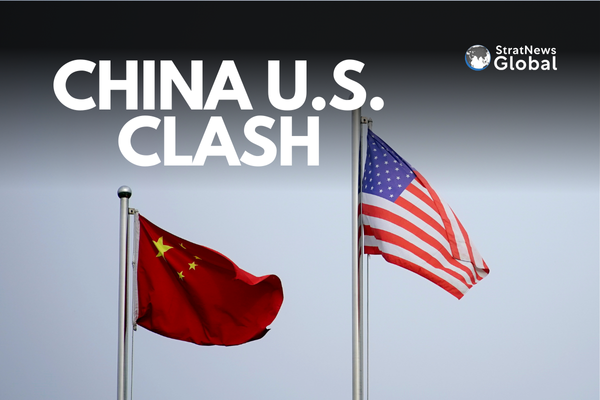
The U.S. military operation in Venezuela has handed China an opportunity to criticise Washington’s global conduct, but analysts say it will not hasten any Chinese military move on Taiwan. They believe Beijing will instead use the episode to strengthen its international messaging and highlight what it calls U.S. hypocrisy on issues of sovereignty and international law.
China’s Broader Strategic Response
Analysts argue that Chinese President Xi Jinping’s plans regarding Taiwan remain separate from developments in Latin America and are shaped mainly by domestic priorities. Nonetheless, President Donald Trump’s surprise strike that captured Venezuelan leader Nicolas Maduro has given Beijing a fresh opening to challenge U.S. moral authority.
“Washington’s long-standing arguments that Chinese actions violate international law are now undermined by its own conduct,” said William Yang of the International Crisis Group. “It’s creating a lot of openings and cheap ammunition for China to push back against the U.S. in the future.”
China has long claimed Taiwan as its own province and asserts sovereignty over almost the entire South China Sea, positions contested by several Southeast Asian nations. While Chinese ministries and Taiwan’s presidential office have not commented, Beijing has condemned the U.S. operation, calling it a violation of international law and a threat to Latin American peace.
State media were quick to seize on the incident. The Xinhua news agency described the strike as “naked hegemonic behaviour,” saying it exposed Washington’s “predatory order based on U.S. interests.”
Taiwan’s Situation Remains Distinct
Taiwan continues to face growing military pressure from Beijing. China conducted extensive war games around the island last week, showcasing its capacity to isolate Taiwan in a crisis. Despite that, experts believe China will not use the Venezuelan situation as justification for immediate aggression.
“Taking over Taiwan depends on China’s developing but still insufficient capability rather than what Trump did in a distant continent,” said Shi Yinhong, professor of international relations at Renmin University.
Neil Thomas, a fellow on Chinese politics at the Asia Society, noted that Beijing treats Taiwan as a domestic issue. “China will want to project a clear contrast with Washington, portraying itself as a promoter of peace and stability,” he said. “Xi does not care about Venezuela more than he cares about China. He’ll be hoping the U.S. operation turns into a quagmire.”
Rising Risks and Political Reactions
Wang Ting-yu, a senior Taiwanese lawmaker from the ruling Democratic Progressive Party, dismissed suggestions that China might emulate the U.S. strike. “China has never lacked hostility toward Taiwan, but it lacks the feasible means,” he said. “China is not the United States, and Taiwan is certainly not Venezuela. If China could pull it off, it would have done so long ago.”
Still, the situation could raise Taiwan’s strategic anxieties and lead Taipei to seek stronger backing from Washington. On China’s social media platform Weibo, discussion of the U.S. attack surged on Sunday, with some users urging Beijing to take lessons from Trump’s move.
Lev Nachman, a political science professor at National Taiwan University, said Taiwan’s government was likely to issue only cautious remarks. “What Trump’s actions could do is help Xi Jinping’s narrative by giving him more justification for future pressure on Taiwan,” he said.
with inputs from Reuters