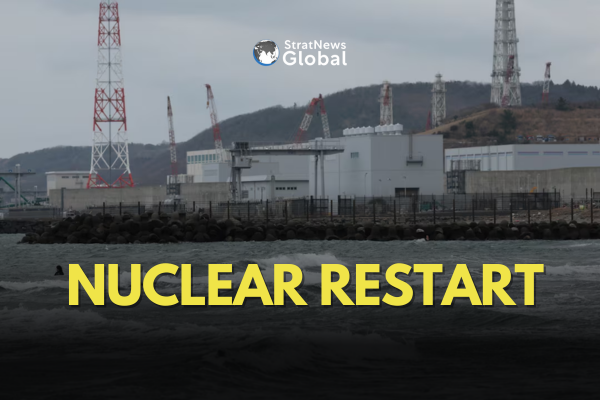
Japan took its most significant step toward reviving nuclear energy in nearly 15 years as Niigata Prefecture on Monday approved the restart of the Kashiwazaki-Kariwa plant, the world’s largest nuclear facility. The decision marks a defining moment in the nation’s gradual return to nuclear power since the 2011 Fukushima disaster.
Located about 220 kilometres northwest of Tokyo, the seven-reactor Kashiwazaki-Kariwa plant was among 54 reactors shut down after the earthquake and tsunami that crippled Fukushima Daiichi in the worst nuclear crisis since Chernobyl. The restart will be the first by Tokyo Electric Power Company (TEPCO), operator of the Fukushima plant, since that catastrophe.
Niigata’s assembly passed a vote of confidence in Governor Hideyo Hanazumi, who endorsed the restart last month, clearing the last political hurdle for the plant to resume operations.
Divided Public Reaction and Local Protests
Despite the assembly’s approval, public sentiment in Niigata remains deeply divided. About 300 protesters gathered outside the prefectural assembly in cold winter weather, holding placards reading “No Nukes” and “Support Fukushima.” The demonstrators sang Furusato, a nostalgic song about homeland ties, as they voiced opposition to the restart.
“Is TEPCO qualified to run Kashiwazaki-Kariwa?” one protester shouted. The crowd answered in unison: “No!”
TEPCO spokesperson Masakatsu Takata said the company is “firmly committed to never repeating such an accident” and pledged that residents would “never experience anything similar.” Public broadcaster NHK reported that TEPCO may restart the first reactor on 20 January, although the company has not confirmed a date.
A survey conducted in October found that 60% of Niigata residents believe conditions for restarting the plant have not been met, while nearly 70% expressed concern about TEPCO’s management. In a bid to rebuild trust, the utility has promised to invest 100 billion yen (£520 million) in the region over the next decade.
Among those protesting was 52-year-old farmer Ayako Oga, who fled the Fukushima exclusion zone in 2011. “We know firsthand the risk of a nuclear accident and cannot dismiss it,” she said, recalling her ongoing trauma from the disaster.
Energy Security at the Forefront
Japan’s government views the restart as vital to national energy security. The Ministry of Trade and Industry estimates that reactivating just one reactor at Kashiwazaki-Kariwa could boost electricity supply to the Tokyo region by 2%. Prime Minister Sanae Takaichi, in office since October, has strongly backed nuclear restarts to reduce dependence on imported fossil fuels, which currently generate up to 70% of Japan’s electricity.
Last year, Japan spent 10.7 trillion yen (£61 billion) on imported coal and liquefied natural gas—about one-tenth of total import costs. Officials say the country must increase nuclear generation to stabilise energy prices and achieve its decarbonisation goals.
Tokyo aims to double the share of nuclear power in its energy mix to 20% by 2040, in part to support growing demand from power-intensive industries and artificial intelligence data centres.
A Milestone for Japan’s Nuclear Revival
Industry analysts see the Kashiwazaki-Kariwa decision as a turning point. Joshua Ngu, vice-chairman for Asia Pacific at consultancy Wood Mackenzie, described it as “a critical milestone” for Japan’s energy strategy.
Other utilities are also moving forward: Kansai Electric Power announced in July that it would begin site surveys for Japan’s first new reactor since Fukushima.
However, Governor Hanazumi remains cautious, expressing hope that Japan will ultimately reduce reliance on nuclear energy. “I want to see an era where we don’t have to rely on energy sources that cause anxiety,” he said.
For survivors of Fukushima like Oga, the restart evokes painful memories. “As a victim of the nuclear accident, I wish that no one ever again suffers the damage of a nuclear disaster,” she said, her voice breaking amid chants of “Never forget Fukushima’s lessons!”
(with inputs from Reuters)