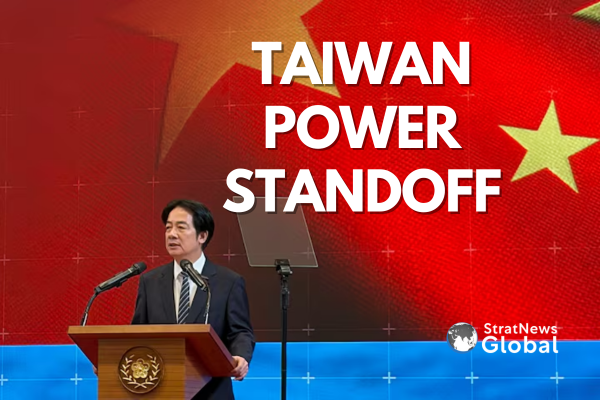
Taiwan’s political system has entered a stalemate after President Lai Ching-te’s government refused to implement amendments to a local spending law passed by the opposition-controlled parliament. The administration argues the proposal is fiscally unsound and was pushed through without proper consultation, while the opposition accuses Lai of defying the will of the legislature.
Power Struggle After a Divided Election
The current impasse stems from Taiwan’s January 2024 elections, which saw Lai of the Democratic Progressive Party (DPP) win the presidency but lose control of parliament to the Kuomintang (KMT) and its smaller ally, the Taiwan People’s Party. Although the DPP governs the executive branch, the opposition now dominates the legislature and has used its numbers to block government policies, including the national budget, while advancing its own bills.
Both sides have traded accusations of constitutional violations over the disputed spending law. Two recall votes earlier this year, targeting several KMT lawmakers and backed by civic groups aligned with the DPP, failed to gain traction in July and August.
Impeachment and Confidence Vote Scenarios
The opposition has threatened to impeach Lai, labelling him a “dictator” for rejecting parliament’s decisions. However, impeachment requires support from two-thirds of lawmakers — a threshold the opposition cannot reach. Even if successful, the case would go to the Constitutional Court, which is currently paralysed by a separate political dispute over judicial appointments.
A more feasible move would be a no-confidence vote against Premier Cho Jung-tai. If passed, President Lai could dissolve parliament within 10 days and call new legislative elections within 60 days. Although this would be unprecedented, KMT lawmakers have so far indicated little appetite for such a step, wary of triggering another vote that could reshuffle political power.
Broader Implications and Chinese Pressure
The confrontation comes amid heightened Chinese military and political pressure on Taiwan. Beijing, which claims the island as its own territory, has labelled Lai a “separatist” and ignored his repeated calls for dialogue. The domestic gridlock has also stalled key defence initiatives, including Lai’s proposed $40 billion supplementary military budget, which the opposition has refused to debate in parliament.
Looking Ahead
Taiwan’s next major elections are scheduled for November 2026, when voters will choose city mayors and county chiefs. While primarily local, these contests often serve as a national bellwether ahead of the next presidential and legislative elections in early 2028. In the 2022 local polls, the KMT secured 14 of 22 municipalities and counties, compared with the DPP’s five a result that underscored shifting political sentiment across the island.
(with inputs from Reuters)