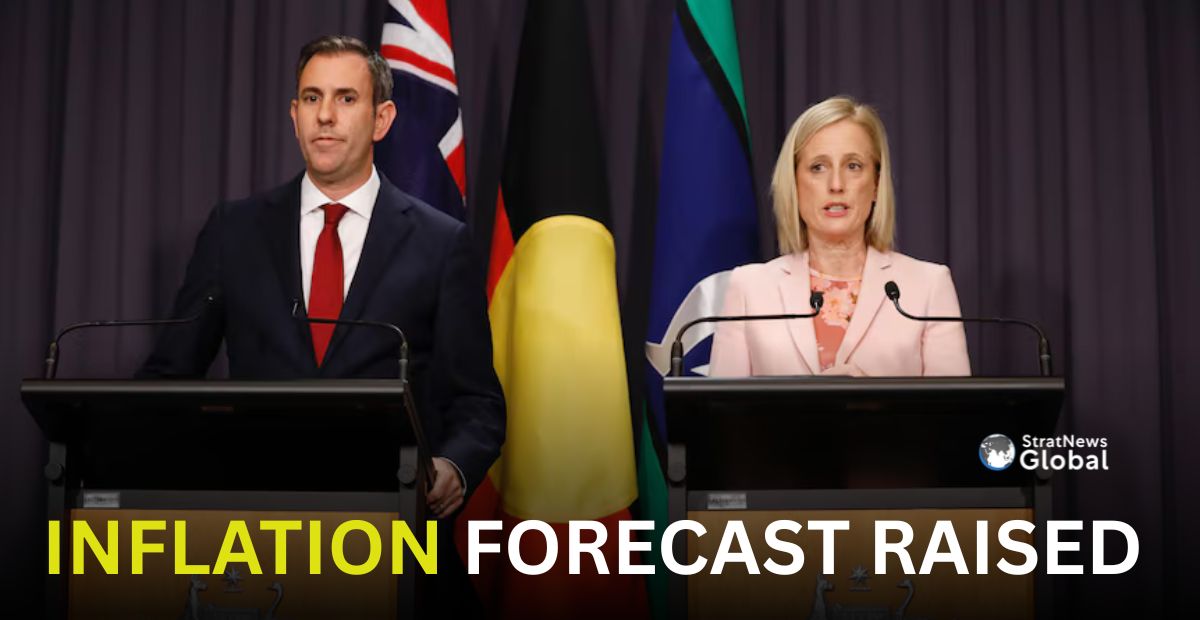
Australia’s government on Wednesday sharply raised its inflation forecast but it still added to its annual spending plans, leaving monetary policy to counter rising cost pressures.
In its Mid-Year Economic and Fiscal Outlook (MYEFO), the Treasury boosted its forecast for inflation to 3.75% in the current year ending June 2026 to reflect the recent price surge, up from 3% in its main budget last March.
That drove forecasts for nominal gross domestic product (GDP) sharply higher to a whopping 5.25% this financial year, a strong result that would lift tax receipts by A$15 billion.
However, that was offset by a A$9.1 billion increase in payments, which left the budget deficit only a little smaller than previously projected at A$36.8 billion ($24.39 billion).
“While inflation has increased recently, this is similar to the experiences in many advanced economies and is partly due to temporary factors,” said the Treasury.
“However, the increase in services inflation and prices of newly constructed dwellings could be more persistent, and are in line with the sustained recovery in demand.”
Monetary Policy Challenges
The Reserve Bank of Australia has cut interest rates three times this year to 3.6% but a recent spike in inflation – with the monthly headline measure surging to 3.8% in October – has forced policymakers to warn that rate hikes might be needed next year.
Two of the four major banks – the National Australia Bank and the Commonwealth Bank of Australia – are now expecting the Reserve Bank of Australia to raise interest rates in February next year. NAB even called for a second hike in May.
Westpac on Wednesday also abandoned its rate cut calls, saying it now sees rates on hold throughout 2026.
Fiscal Balance and Growth
Treasury expects economic growth to pick up to 2.25% in the financial year, largely unchanged from before. However, that is still above the RBA’s estimates of trend growth of 2% and could generate more inflationary pressures.
The unemployment rate is seen edging up slightly to a peak of 4.5%, from 4.25% before.
The Treasury projected a deficit of A$36.8 billion for the current 2025/26 year. That compared with a forecast of A$42.1 billion in its pre-election Budget last March, but came above forecasts of about A$32 billion by analysts.
The projected deficit for the three years to 2028/29 is now A$106.6 billion, more or less what was expected in March.
(With inputs from Reuters)