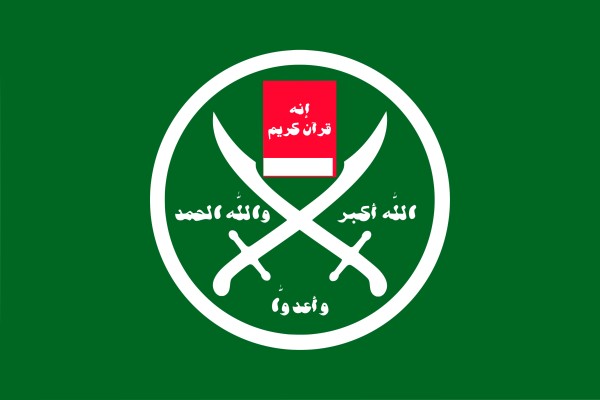
Drawing on extensive historical, ideological and behavioural evidence, a new research study by the Sawab Center examines how the Society of the Muslim Brothers, better known as the Muslim Brotherhood (MB), has shaped political Islam for nearly a century while repeatedly failing to deliver effective or inclusive governance.
The paper argues that the Brotherhood is not merely a political party or social movement but a revolutionary ideological project whose aims ultimately conflict with the structure of modern states.
Despite tactical adjustments across decades and geographies, the Brotherhood’s core commitments—to re-Islamising society, rejecting territorial states, and pursuing the long-term establishment of a caliphate—remain intact and consistently shape its governance outcomes, it says.
Founded in Egypt in 1928, the Brotherhood expanded across the Arab world and later into Europe and North America, building a transnational support structure influenced by key figures such as Hassan al-Banna, Sayyid Qutb, and Yusuf al-Qaradawi.
The paper notes that the Brotherhood’s appeal has fluctuated, with significant setbacks after the 2013 overthrow of Egypt’s FJP government and recent proscription in Jordan following allegations of involvement in regional weapons plots. Yet its institutional footprint in Europe remains resilient, providing the movement organisational refuge at a time when its popularity has waned in the Middle East.
The study highlights that the Brotherhood’s model of governance emerges from an ideological architecture that seeks to reshape society before seizing political authority. Al-Banna’s call for totalising re-Islamisation, coupled with opposition to the nation-state and adversarial politics, continues to define MB thinking.
Even in rare instances where the Brotherhood held direct power—such as Egypt from 2011 to 2013 or Hamas in Gaza—it failed to secure stability, deliver competent administration, or protect minorities and women. These failures, the paper argues, stem not from mismanagement alone but from an ideological rigidity fundamentally at odds with democratic pluralism and state institutions.
Central to this ideological rigidity is the Brotherhood’s longstanding rejection of the nation-state and territorial sovereignty. From al-Banna to Mahdi Akef, senior figures have explicitly denied the legitimacy of national identity, insisting that the only true political community is the transnational ummah governed under a restored caliphate.
Statements dismissing Egyptian, Syrian, or broader Arab identities illustrate a worldview in which state borders are temporary aberrations, foreign-imposed impositions to be replaced by Islamic rule. This ideological position recurs across MB’s writings and speeches, reinforcing the tension between its aspirations and the structure of contemporary political order.
The paper also underscores how this universalist project drives the Brotherhood’s conceptualisation of the caliphate, a revived transnational authority intended to supplant national governance. Al-Banna envisioned the MB’s Supreme Guide as the deputy of a future caliph, and the movement’s intellectual lineage drew from modernist Islamism, Sufism, nationalism, and European fascist thought.
This eclectic mix animated a revolutionary political agenda that informed subsequent Islamist movements across the Middle East, Africa, and South Asia, including groups that would later adopt more extreme or violent methods.
Authoritarian tendencies form another recurring theme. The paper argues that despite attempts to appear moderate in the early 2000s, the Brotherhood consistently rejects legal equality, human rights, and gender parity. While the FJP welcomed female political participation in 2011, it opposed gender equality in constitutional debates and international forums.
Similar patterns emerged in Tunisia, Yemen, Libya, and Syria, where MB-linked groups promoted restrictive interpretations of women’s roles and resisted pluralistic norms. The study links this to the movement’s conspiratorial worldview, which fosters internal cohesion but alienates reformists and fuels public mistrust.
One of the most striking findings concerns the Brotherhood’s sophisticated use of semantic ambiguity. The paper details how the MB deploys “fiqh al mafahim”, a strategic linguistic practice that enables leaders to signal different intentions to insiders and outsiders. Terms like “democracy”, “human rights”, and “civil state” are frequently repurposed, while classical concepts such as tawhid are reinterpreted to delegitimise political pluralism.
This intentional ambiguity, the study argues, has allowed the MB to obscure its illiberal objectives while engaging with electoral politics. Examples span Egypt’s 2007 platform, Libya’s post-2011 discourse, and Tunisia’s Nahda movement, which often presented divergent messages in Arabic and English.
The paper situates the Brotherhood’s ambivalence toward violence within a broader ideological tradition. Although MB leaders frequently describe the movement as peaceful, its strategic posture has long been contextual.
From al-Banna’s promotion of “the art of death” and the creation of paramilitary structures in the 1930s to the influence of Qutb’s writings on groups ranging from Al Jihad to Al Qaeda and Daesh, the MB’s ideological ecosystem has consistently incubated extremist actors.
The study lists numerous historical links between MB members and violent groups, as well as endorsements of figures such as bin Laden by senior Brotherhood leaders. It concludes that violence is not an aberration but a foreseeable outcome of an ideology that rejects political compromise and demands uncompromising religious authenticity.
The paper extends this analysis to the broader revolutionary nature of Islamism. Citing thinkers like Hannah Arendt and John Gray, it argues that such movements invariably yield instability and repression. The MB’s governance record, from Egypt to Gaza, reflects the destructive consequences of ideological absolutism in practice.
A significant portion of the research examines the MB’s entrenchment in Western democracies, where legalist Islamism—not violent jihad—poses a growing challenge. Through political parties, lobbying networks, financial levers, and demographic influence, the Brotherhood works to reshape social norms and contest the boundaries of liberal discourse.
This strategy, the paper argues, represents a subtle threat: while nonviolent, it seeks to erode democratic order from within by promoting norms incompatible with secular pluralism. Yet the study stresses that Europe’s Muslim populations overwhelmingly reject terrorism, and political Islam should not be conflated with Islam itself.
In its conclusion, the paper asserts that the Brotherhood remains committed to a revolutionary project aimed at establishing permanent Islamist rule, whether through gradual social infiltration or violent rupture.
The consistent pattern across contexts—mismanagement, repression, ideological rigidity, and proximity to violence—suggests a movement unable to adapt to the demands of modern governance. The study calls for stronger counter-extremism strategies, greater intelligence cooperation, and clearer exposure of semantic evasion to safeguard global political resilience.