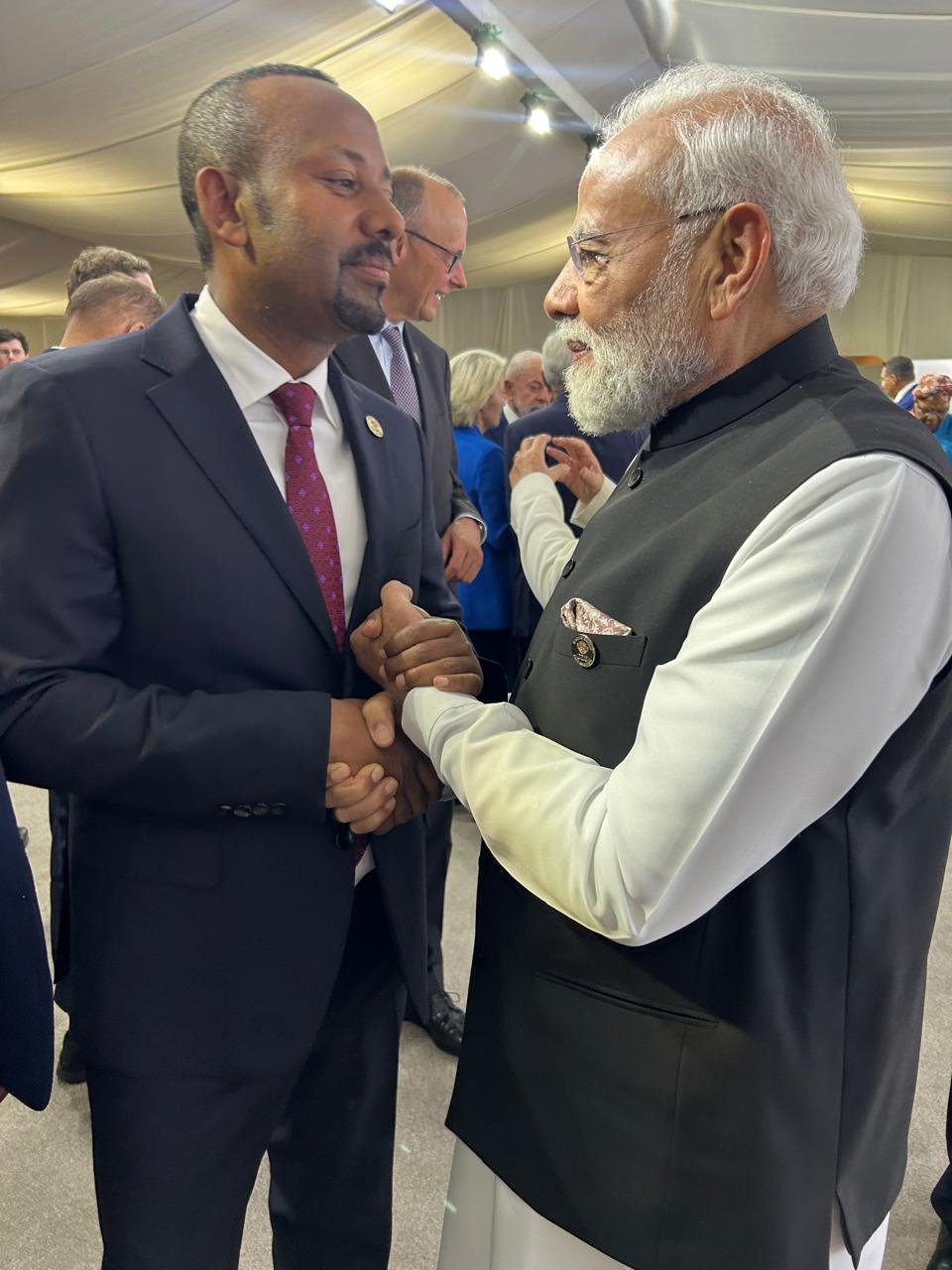
Prime Minister Narendra Modi is off to Ethiopia on a two-day visit (Dec 16-17). Indian officials see Addis Ababa as a natural partner in Africa’s ongoing transformation, given the country’s population size, strategic location and rapidly diversifying economy.
Modi’s upcoming trip is expected to result in new understandings on:
- digital public infrastructure; agricultural technology; clean energy and rural power systems; railway modernisation; manufacturing and investment; defence cooperation; and, education, skilling and governance.
Ethiopia’s emergence as Sub-Saharan Africa’s third-largest economy and a member of the African Continental Free Trade Area (AfCFTA) gives Indian companies reasons to explore new opportunities in sectors ranging from renewable energy to logistics and fintech.
Over the years, New Delhi has financed and supported major infrastructure systems, from electricity transmission lines to rural power networks, from agriculture-linked facilities to railway corridors that connect production centres with markets. These projects have positioned India as one of Ethiopia’s most dependable economic partners.
Today, more than 650 Indian firms operate in Ethiopia, spanning manufacturing, textiles, pharmaceutical production, ICT services and agro-processing. Their combined investment commitments cross $5 billion, and Ethiopian officials frequently acknowledge that Indian enterprises have become some of the country’s largest private employers.
Momentum for enhanced cooperation increased after Modi’s meetings with Ethiopian Prime Minister Abiy Ahmed Ali at the G20 Summit in Johannesburg. The two leaders discussed technology partnerships, training ecosystems, and digital transformation, areas Ethiopia is targeting as it modernises state institutions and public services.
In Delhi, a recent visit by a senior Ethiopian delegation further consolidated this direction. Governors, vice-governors and ministers attended a week-long programme at India’s National Centre for Good Governance, where they studied India’s tech-driven governance models. They were introduced to tools such as AI-enabled grievance systems, remote digital certification, satellite-based land mapping and online up-skilling platforms for civil servants.
According to officials, the delegation’s participation demonstrated Ethiopia’s “deep commitment to institutional reform and knowledge exchange,” even as the country navigates internal challenges.
Defence Relations
Another highlight of the growing relationship is defence cooperation. Earlier this year, officials from New Delhi and Addis Ababa held their first Joint Defence Cooperation meeting. The session created a formal mechanism for routine strategic dialogue.
Both sides reviewed training programmes for officers, possibilities for joint exercises, military medical collaboration and opportunities for cooperation with Indian defence manufacturers. The broader aim is to support capacity-building in areas where Ethiopia seeks modernisation.
Ethiopia’s participation in the UN Troop Contributing Countries Chiefs’ Conclave in India this year added another layer to this evolving security partnership.
Education and Culture
Generations of Ethiopian students have studied in India, especially in engineering, agriculture and technology fields. Hundreds are currently enrolled in doctoral and postgraduate programmes, while several institutions in Ethiopia continue to collaborate with Indian universities on academic research and curriculum development.
These exchanges build on historic cultural links stretching as far back as early maritime trade between Indian ports and the Horn of Africa.
Both New Delhi and Addis Ababa have sharpened their engagement in multilateral forums. India’s backing of Ethiopia’s entry into BRICS reflects the trust placed in Ethiopia’s role as a voice for the African continent. The countries also support reforms that amplify Global South perspectives in global decision-making structures.
The prime minister will also visit Oman and Jordan.