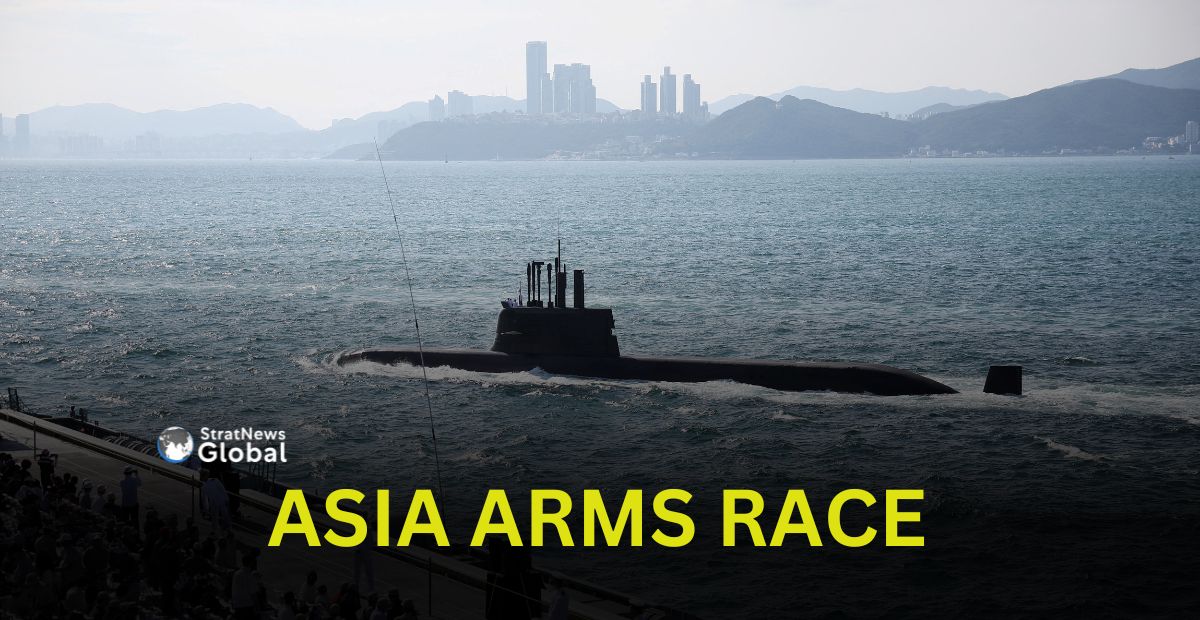
South Korea’s push for nuclear-powered submarines has advanced after President Donald Trump’s endorsement, ending decades of U.S. resistance and granting fuel access under a bilateral nuclear pact — a move that could reshape Asia’s security dynamics and intensify the regional arms race.
Still, South Korea’s rapidly developing programme could irk China and pressure Japan to develop similar capabilities, analysts and former military officials say.
“Submarines are highly effective attack systems. An arms race in the region is inevitable,” said Choi Il, a retired South Korean Navy submarine captain.
Seoul argues nuclear propulsion is crucial to counter North Korea’s undersea threats, including submarine-launched ballistic missiles. It has repeatedly said it will not acquire nuclear weapons and respects the non-proliferation regime.
South Korean President Lee Jae Myung on Wednesday described the deal as a major achievement from his meeting with Trump and said it would enhance security flexibility and defence autonomy.
North Korea claims to be developing similar capabilities, with state media showing leader Kim Jong Un inspecting what it said was a nuclear-powered submarine in March.
Countering China
South Korean lawmaker and defence expert Yu Yong-weon said, since nuclear-powered submarines are faster and can remain underwater far longer than diesel-powered equivalents, they would enhance monitoring of North Korean submarines.
Seoul’s acquisition could also push Japan to rethink its stance, Yu said.
Tokyo was caught off guard by Trump’s backing of Seoul’s nuclear submarine ambitions, expecting U.S. support would favor Japan first, according to a source.
Defense Minister Shinjiro Koizumi said nuclear propulsion remains an option, though no studies are underway. Officials noted Japan would seek U.S. help if it pursues such submarines, which could extend operations into the Pacific and potentially enable a future second‑strike capability.
South Korea’s ambitions align with U.S. objectives to counter China’s military influence. U.S. Chief of Naval Operations Admiral Daryl Caudle described China as a “pacing threat” and said recently in Seoul he anticipates South Korea’s nuclear submarines playing a future role in regional deterrence.
President Lee assured Chinese President Xi Jinping last month the submarines would be defensive and to deter North Korea, according to Wi Sung-lac, South Korea’s national security adviser.
North Korean state media warned that Seoul’s submarine plan could trigger a “nuclear domino” effect.
(With inputs from Reuters)