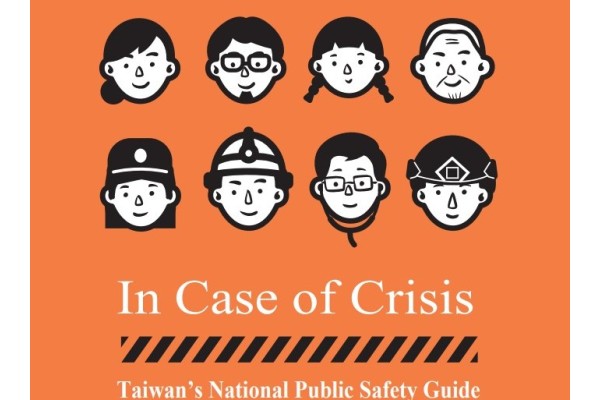
Taiwan’s new 2025 civilian defence handbook arrives at a moment when the island is attempting to rethink what preparedness actually means.
Gone is the textbook-like, jargon-heavy manual meant mainly for bureaucrats; in its place is a colourful, user-friendly guide that speaks to ordinary people in everyday language. The shift is deliberate, and it reflects a broader political reorientation—one that aims to make resilience not just a military concept but a civic habit.
This evolution is unpacked in an article published by the Prospect Foundation and written by Marcin Mateusz Jerzewski, Head of the Taipei Office of the European Values Center for Security Policy. His assessment is clear: the handbook is a meaningful step forward, but it also reveals the limits of policy that must straddle politics, public psychology, and the harsh arithmetic of deterrence. What the manual represents is as important as what it leaves out.
Since the first civilian handbook appeared in 2022, Taiwan has steadily expanded the document’s purpose. What began as a local-government reference tool became, in 2023, a broader guide on emergency preparedness. The 2025 version reframes the entire exercise around “whole-of-society defence”, linking self-help and mutual aid to national security. This framing tracks with the William Lai administration’s prioritisation of civil resilience as a cornerstone of defence policy, now reinforced institutionally through a new Whole-of-Society Defence Resilience Committee chaired by the president himself.
The message is unmistakable: deterrence is no longer the military’s job alone. But deterrence today is not merely about tanks and aircraft. The handbook’s explicit inclusion of “cognitive warfare” and disinformation points to the nature of modern conflict. Taiwan is one of the world’s most persistently targeted democracies when it comes to influence campaigns, and the manual takes a rare, unambiguous stance: any claim of Taiwan’s capitulation, especially during a crisis, should be presumed false.
This blunt warning acknowledges a reality demonstrated repeatedly in Ukraine, the Baltic states, and elsewhere—that psychological disruption often precedes physical confrontation. By encouraging “social immunity”, the handbook tries to inoculate the public against panic, rumour, and the paralysis they can induce.
Yet the presentation itself — bright graphics, a softer tone, simplified checklists — hints at the political balancing act behind the project. The Lai government cannot afford to appear alarmist or feed claims of “militarising society”, accusations routinely levelled by the opposition Kuomintang (KMT).
As Jerzewski observes, the need to keep civil defence politically tolerable may be one reason the handbook leans heavily on blockade and cyberattack scenarios while downplaying the possibility of sustained bombardment or invasion. For a society that must be psychologically prepared for the worst, this may be too cautious.
Even the practical recommendations reveal the tension between aspiration and reality. Citizens are now advised to be self-sufficient for a week instead of three days — a welcome change, but almost certainly inadequate in the event of a prolonged blockade.
The guide points residents to civil-defence shelters, yet many of those shelters remain poorly marked, inconsistently maintained, or in some urban areas physically unsuitable. The gap between guidance and infrastructure risks undermining public confidence, especially if people discover in a crisis that the map and the landscape do not align.
That credibility gap is crucial. Taiwan’s experience during the pandemic showed that public trust can turn coordinated policy into effective action. But that same period also revealed the strains of political polarisation, and civil defence sits even closer to the heart of partisan disagreement. If the public begins to perceive preparedness messaging as political messaging, the entire resilience framework weakens. This is the Achilles’ heel of whole-of-society defence: it depends not only on planning but on belief.
Where Jerzewski’s analysis is most pointed is in outlining what Taiwan could gain by linking its efforts more deeply to those of like-minded democracies. The Nordic and Baltic states, with their long experience in whole-of-society security, offer both cautionary lessons and practical templates. Finland’s model of civilian-military integration, Lithuania’s investment in information hygiene, and the Baltic states’ regular public-participation drills all provide examples of what a mature resilience system looks like. Taiwan, by contrast, is still in the early stages of building such structures.
Existing platforms, such as the Global Cooperation and Training Framework (GCTF), could serve as accelerators. The article outlines a range of concrete possibilities: embedding European experts in Taiwan’s resilience committee; establishing secondments between ministries and think tanks; co-developing public-communication strategies; and even conducting joint resilience audits.
These proposals are not theoretical. They mirror the steps taken by the Baltic states after Russia’s 2014 annexation of Crimea—steps that helped them harden their societies against hybrid threats long before full-scale war returned to Europe.
In this sense, the 2025 handbook is important not because it solves the problem of preparedness, but because it reframes it. It nudges Taiwanese society away from the assumption that civil defence is something done by officials somewhere else. It asks citizens to think of themselves not as bystanders in a geopolitical struggle, but as actors whose choices matter in the first hours of a crisis. That cultural shift — gradual, imperfect, and politically contested — is itself a form of deterrence.
Still, the handbook’s most striking contribution may be its unspoken admission: Taiwan cannot rely solely on hard power, nor on the assumption that conflict will follow predictable patterns. Civil-defence planning is no longer a technocratic exercise; it is a social contract. Whether that contract succeeds will depend on infrastructure, political consensus, and the willingness of citizens to participate meaningfully in their own security—all of which remain uncertain.
Taiwan’s new civil-defence guide is thus both progress and a warning. It signals a government intent on preparing its people, but it also highlights the work left undone. In the end, resilience is not printed into a handbook; it must be built, tested, and lived.