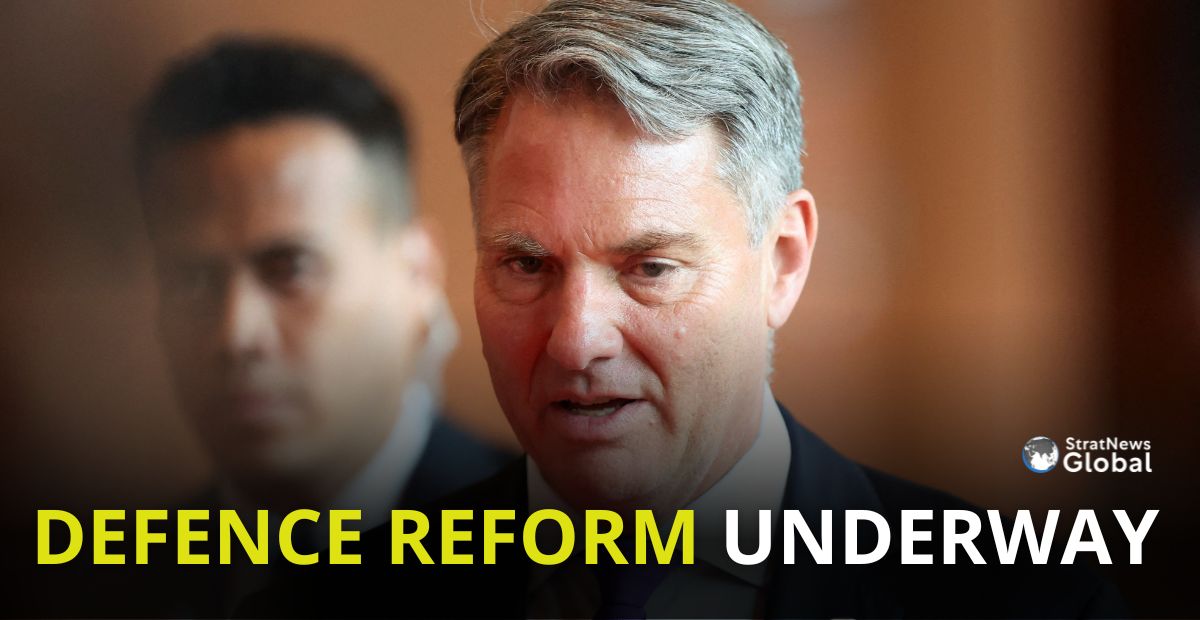
Australia will revamp its defence department by establishing a Defence Delivery Agency and naming a national armaments director, aiming to enhance the efficiency of defence spending and project delivery, Defence Minister Richard Marles announced on Monday.
The changes to start in July next year will merge the existing Capability Acquisition and Sustainment Group, Guided Weapons and Explosive Ordnance Group, and Naval Shipbuilding and Sustainment Group. The new agency will report directly to the defence minister.
The three groups are currently responsible for nearly 40 per cent of defence spending.
Reforms and Budget Impact
“This is one of the most significant reforms to defence that we have seen. It will greatly change the way defence operates,” Marles said in a press briefing in Canberra.
The reforms “will see a much bigger bang for buck for the defence spend”, as Australia plans to spend an extra A$70 billion over the next decade, Marles said.
According to the ABC report, the government assured that the merger would not lead to job losses, emphasizing instead its goal to strengthen the department’s capacity to handle complex projects as Australia moves forward with the ambitious AUKUS nuclear submarine program.
Reducing Reliance on Consultants
Defence Industry Minister Pat Conroy said the Labor government had already reduced reliance on consultants in Defence while simultaneously strengthening in-house expertise to manage increasingly complex contracts.
“We’ve brought in 500 highly skilled public servants across these three areas and cut a substantial number of contractors and consultants,” he stated.
Defence industry representatives have repeatedly argued that the department is overly top-heavy, slow-moving, and risk-averse.
The government has long signaled plans for a restructure, with Deputy Prime Minister Richard Marles criticizing the department’s performance in June and saying that “everything was on the table” regarding potential reforms.
Defence currently operates with an annual budget of nearly $60 billion, but that is expected to grow to around $100 billion by 2034, driven by China’s rapid military expansion and pressure from the Trump administration on allies like Australia to increase defence spending.
(With inputs from Reuters/agencies)