The proposed Great Nicobar development project is one of the most significant strategic infrastructure initiatives undertaken by India in recent decades.
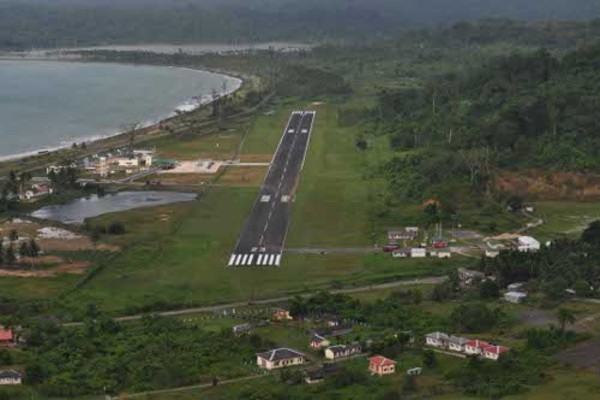
Estimated to cost more than ₹72,000 crore, the project combines four major components: an international container transhipment terminal, a dual-use airport capable of supporting both civilian and military operations, a power plant and a planned township.
Taken together, these facilities are intended to transform Great Nicobar from a remote island outpost into a major maritime hub at the eastern edge of the Indian Ocean.
The project’s importance begins with geography.
Great Nicobar lies close to the Six Degree Channel, one of the principal sea lanes connecting the Indian Ocean with the Pacific through the Malacca Strait.
A substantial share of global trade, including energy supplies destined for East Asia, passes through these waters. Few countries possess sovereign territory so close to one of the world’s most important maritime chokepoints.
For decades, India has maintained a military presence in the Andaman and Nicobar Islands but has not fully exploited the strategic advantages offered by their location. The Great Nicobar project seeks to change that by creating permanent infrastructure capable of supporting commercial activity, military operations and maritime surveillance.
The strategic rationale has become stronger as competition in the Indo-Pacific has intensified. China’s growing naval presence in the Indian Ocean, the expansion of dual-use port facilities across the region and increasing competition over sea lanes have elevated the importance of maritime infrastructure.
A developed Great Nicobar would provide India with enhanced maritime domain awareness, shorter response times and improved logistical support for naval and air operations across the eastern Indian Ocean.
The island would also strengthen India’s ability to monitor traffic moving through critical shipping routes and support humanitarian assistance and disaster-relief missions in a region frequently affected by cyclones, earthquakes and tsunamis.
The economic argument is equally important.
India remains dependent on foreign ports for a significant portion of its transhipment cargo. Containers originating from Indian ports are often routed through Colombo, Singapore or other regional hubs before reaching their final destinations. This dependence increases costs and limits India’s influence over regional maritime trade.
A deep-water transhipment terminal at Great Nicobar could help India capture a larger share of this traffic. Its natural draft allows it to accommodate some of the world’s largest container vessels, a key requirement for any successful transhipment hub.
Policymakers argue that even partial success would reduce dependence on foreign facilities while strengthening India’s position in global shipping networks.
The project’s design reflects this broader objective. The port, airport, power plant and township are intended to function as an integrated ecosystem. A transhipment hub requires reliable energy, transportation links, a skilled workforce and supporting urban infrastructure. The government’s position is that none of the components can succeed independently; each reinforces the viability of the others.
The project also fits within larger national objectives. It aligns with India’s Act East policy, supports the SAGAR vision for the Indian Ocean and complements efforts to expand connectivity with Southeast Asia.
As supply chains diversify and maritime trade assumes greater importance, infrastructure located near major shipping corridors is likely to become an increasingly valuable national asset.
Critics have raised concerns about environmental impacts and indigenous communities. These concerns deserve scrutiny, particularly given the ecological significance of the island.
However, government agencies argue that extensive environmental assessments have been conducted, mitigation measures incorporated and large portions of the island will remain under protected status.
Officials also maintain that tribal safeguards have been built into project planning and that no physical displacement of indigenous communities is envisaged.
The central question is whether the costs of inaction are greater than the risks of development.
India has long sought to become a leading maritime power, yet strategic influence depends not only on naval capabilities but also on infrastructure. Geography offers opportunities only when supported by ports, airfields, logistics networks and population centres capable of sustaining long-term activity.
Great Nicobar offers India a rare opportunity to convert a geographic advantage into lasting strategic and economic capability.
The island’s location cannot be replicated elsewhere. If developed successfully, it could become a critical node in India’s maritime architecture, strengthening trade, enhancing security and extending India’s reach across the Indo-Pacific.
The debate over Great Nicobar is therefore larger than a single infrastructure project. It is about whether India is prepared to invest in strategic geography and build the capabilities required for a larger role in the Indian Ocean.
The answer is clear: opportunities of this scale are rare, and postponing them carries costs of its own.