Amnesty International said in a report released Tuesday that Indonesian authorities, including the military, have used online disinformation campaigns to label activists and journalists as “foreign agents” and suppress dissent, sometimes resulting in physical threats.
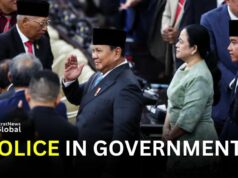
The findings add to concerns that Indonesia, the world’s third-largest democracy, is sliding back toward military influence under President Prabowo Subianto, a former special forces commander who has expanded the armed forces’ role in civilian affairs since taking office in 2024.
The rights group found that the disinformation campaigns were being driven by social media accounts that appeared to be affiliated to military units and to Prabowo’s Gerindra party.
Online Attacks, Offline Harm
In March last year, human rights activists, including Andrie Yunus from the Commission for Missing Persons and Victims of Violence, protested against the expansion of the military’s presence in Indonesia.
The following day, a video falsely labelling them as foreign agents went viral. Amnesty’s metadata analysis found it was first uploaded by three accounts owned by Gerindra party offices before being amplified by 31 accounts affiliated with 27 military units on Instagram, Facebook, X, and Youtube.
A year later, Andrie Yunus was the victim of an acid attack, allegedly by four military officers now being tried in a military court.
Accounts linked to military units also amplified false claims that Tempo – a magazine known for hard-hitting investigative reporting – was acting as a foreign agent, Amnesty said.
That same month, Tempo’s office was sent decapitated animal carcasses in a bid to intimidate them.
“Sustained disinformation campaigns have been deployed to delegitimize civil society actors, journalists and rights defenders and use foreign agent labels to justify or even in some cases encourage physical violence,” said Chanatip Tatiyakaroonwong, the report’s author.
‘Foreign Agents’
Since taking office, Prabowo has cited the role played by “foreign agents” at least 25 times in key speeches, Amnesty said, including during last year’s deadly student-led protests. Evidence for the claims has not been made public.
Energy minister Bahlil Lahadalia also accused environmental group Greenpeace of acting on behalf of foreign interests following its protests against mining in Papua’s biodiversity-rich Raja Ampat islands, Amnesty said.
Bahlil’s statement triggered disinformation campaigns against Greenpeace, including attempts to link it to Papuan armed separatist groups, it said.
Social media platforms such as Meta, TikTok, X and YouTube’s content moderation and engagement-driven algorithms allowed disinformation to spread rapidly, with most documented posts remaining online for months, Amnesty said.
(With inputs from Reuters)